























- From Books to Battlefield Thinking: Defence Preparedness Begins in the Minds of Citizens
- Kalam & Kavach 3.0: Intellectual Sovereignty Matters for India’s Strategic Future
- “A Strong Nation Cannot Think in Compartments” : Weaponising JAI Through I²
By Sangeeta Saxena
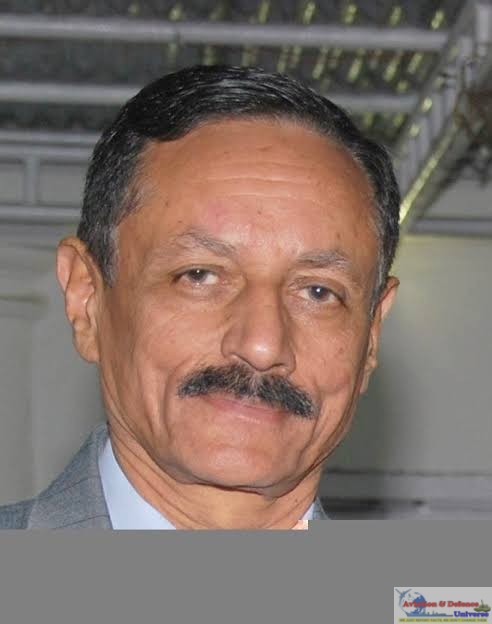
 New Delhi. 11 May 2026. At a time when India is redefining its strategic posture amid evolving geopolitical realities, the role of intellectual capital in national security has become more significant than ever. Few individuals have contributed as consistently to India’s strategic discourse as Rajan Arya, Founder of Pentagon Press. Through decades of specialised defence publishing and policy engagement, he has championed the idea that strategic sovereignty begins with intellectual sovereignty.
As Kalam & Kavach 3.0 approaches, Arya speaks candidly about the need to bridge institutional silos, strengthen strategic dialogue, and transform ideas into actionable national capability. In this insightful conversation with ADU, he explains why books, platforms, and policy must work together to shape a stronger and more self-reliant Bharat, and why the nation’s future security will depend as much on informed minds as on military might. In a frank and lucid interview,he explains how nation-building is achieved through ideas and strategic dialogue, and why intellectual strength is as critical as military strength in building a secure and Viksit Bharat.
ADU. You have spent decades building Pentagon Press into a leading publisher on defence subjects. What was behind the creation of Kalam & Kavach?
Rajan Arya. For me, Pentagon Press has never been just a publishing house—it is a national mission. Nations are not secured only by borders, but by awareness, understanding, and strategic clarity among the citizens.
Books shape thought, but platforms create action, movement. Over the years, I realised that while we were documenting India’s strategic journey, there was a need to bring together the voices of soldiers, scholars, policymakers, and youth on one platform to assist in exchange of ideas that could lead to more effective strategies.
Kalam & Kavach was born out of that conviction. If publishing preserves the nation’s strategic memory, dialogue energises its future. Bharat today needs both—depth of thought and unity of purpose.
ADU. Do you see fragmentation in India’s defence thinking?
Rajan Arya. Yes—and it concerns me deeply. Fragmentation is not just operational; it is also intellectual. Brilliant minds exist across the Services, academia, industry, and policy—but often in silos, bereft of the contributions of the others.
A strong nation cannot think in compartments. Strategic strength comes from coherence—when ideas flow freely, when institutions listen to and collaborate with each other, and when knowledge becomes collective power.
Through Pentagon Press and platforms like Kalam & Kavach, we are attempting to break these silos and build a culture of integrated strategic thinking—because a Viksit Bharat must first be a strategically aligned, composite Bharat.
ADU. What is new in Kalam & Kavach 3.0?
Rajan Arya. This edition moves from discussion to direction—from formulation to implementation.
India stands at a defining moment. Jointness, Atmanirbharta, and technological transformation are no longer mere aspirations; they are necessities. Kalam & Kavach 3.0 is designed to produce outcomes, not just conversation—culminating in a White Paper that would contribute to institutional continuity.
We cannot afford to just talk. We must act—and act together.
ADU. How do books, conferences, and policy connect?
Rajan Arya. They are all instruments of nation-building. Books give us depth, continuity, and intellectual rigour. Platforms provide immediacy, exchange, and alignment. When they are documented and carried forward, they shape policy and institutional memory.
At Pentagon Press, we believe that ideas are not abstract—they are strategic assets. A nation that respects ideas builds long-term strength. A nation that ignores them risks strategic drift.
ADU. What does “Weaponising JAI through I²” symbolise?
Rajan Arya. To me, it is a call for maturity and responsibility. Jointness, Atmanirbharta, and Innovation must move beyond slogans—they must become behaviour. The addition of Integration and Implementation is crucial. India has always had intent; now we must execute it on the ground. This is about transforming national will into national capability.
ADU. How important are knowledge partnerships?
Rajan Arya.There are essential institutions like CENJOWS and BHISHM that bring depth, continuity, and credibility. As a publisher, I strongly believe that nations grow stronger when institutions are strengthened. Platforms like Kalam & Kavach must amplify institutional wisdom, not replace it.
ADU. What role does specialised defence publishing play today?
Rajan Arya. A very critical one—perhaps more than ever before.In an age of noise, instant opinions, and fake disseminations, serious subjects like national security demand depth, discipline, and documentation. Pentagon Press was built on the belief that India must develop its own strategic voice—not borrowed, not reactive, but rooted in its own realities and aspirations.
Publishing, in that sense, is nation-building. It creates intellectual sovereignty—and intellectual sovereignty is the foundation of strategic sovereignty.
ADU. How does Kalam & Kavach avoid becoming just another event?
Rajan Arya. Intent defines outcome. Kalam & Kavach is not designed as a ceremonial gathering—it is structured as a working platform. We use curated discussions, cross-sector participation, and outcome-driven documentation to ensure continuity.
The White Paper approach ensures that ideas do not fade but evolve in a particular direction. For us, Kalam & Kavach is not only an event; it is an evolving national institution.
ADU. What is the role of the private sector in defence today?
Rajan Arya. The private sector is now central to India’s defence transformation. A strong Bharat requires innovation, agility, and industrial strength. The future lies in collaboration—government, armed forces, industry, start-ups, and academia working as one ecosystem. Our platforms must reflect this reality and encourage co-creation, not just conversation.
ADU. Your long-term vision for Kalam & Kavach?
Rajan Arya. My vision is clear—the nation comes first, before everything and anything else. Kalam & Kavach must evolve into a permanent national platform—intellectually credible, strategically relevant, and globally respected. A forum where ideas are debated with honesty, shaped with responsibility, and implemented with commitment.
We believe that ultimately, defence preparedness is not necessary only for the battlefield—it is built in the minds of citizens.
If, through Pentagon Press and Kalam & Kavach, we can inspire even a fraction of India’s youth to think strategically, act responsibly, and carry the spirit of the soldier in their mindset, then we are confident that we are contributing to a stronger, safer, and truly Viksit Bharat.
In this compelling interaction, Rajan Arya underscores that national security is not built solely through weapons and warfare, but through ideas, institutions, and intellectual preparedness. From advocating integrated strategic thinking to emphasising the importance of implementation, knowledge partnerships, and private-sector participation, his vision for Kalam & Kavach reflects a broader mission of nation-building through dialogue and strategic awareness.
For Arya, publishing is more than dissemination—it is the preservation of national memory and the creation of intellectual sovereignty. His long-term vision seeks to transform Kalam & Kavach into a credible national institution that inspires collaboration across the armed forces, academia, industry, and youth. The interview ultimately reinforces a powerful message: a truly Viksit Bharat will emerge not only from economic or military strength, but from a society capable of thinking strategically, acting collectively, and placing the nation above all else.



















































































-A4-Size-(2)_page-0001.jpg)