































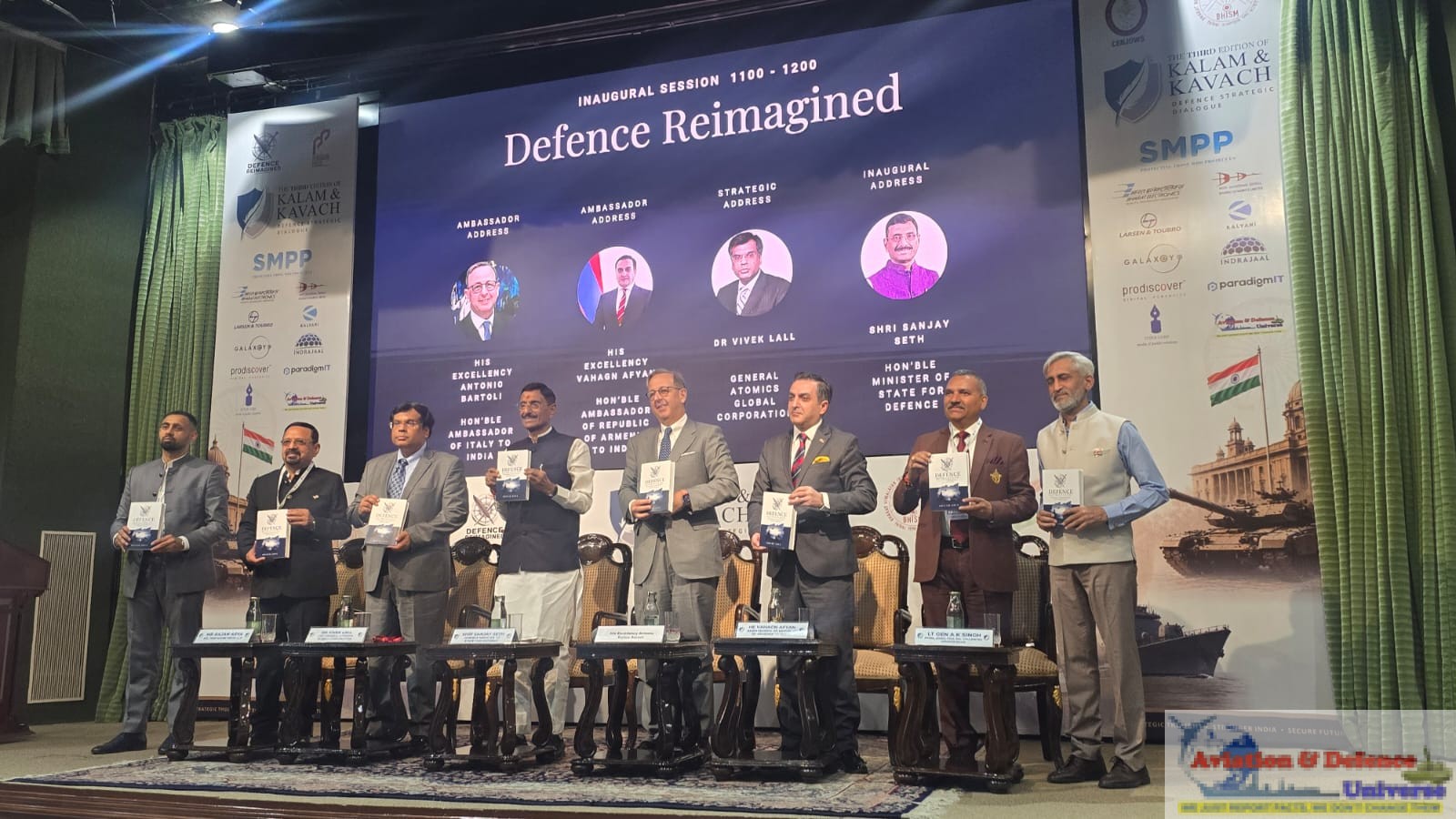
- Beyond Weapons and Warfare: An Argument Where Ancient Wisdom Meets Modern Warfare
- From Kautilya to Cyber Warfare to Jointness, Dharma and AI: Vision for India’s Defence Future
- Built on Author’s Conversations with India’s Finest Strategic Minds
By Sangeeta Saxena
New Delhi. 20 May 2026. At a time when India’s defence discourse is increasingly dominated by technology, procurement timelines, border tensions, and geopolitical competition, Shivam Arya’s Defence Reimagined attempts something far more ambitious. It seeks not merely to discuss military modernisation, but to redefine the philosophical foundations of India’s strategic thinking.
The book released recently during the defence seminar Kalam & Kavach 3.0, argues that India’s rise as a military power cannot rely solely on imported doctrines, advanced weapon systems or technological superiority. Instead, Shivam Arya proposes that India’s future strategic identity must emerge from a synthesis of civilisational wisdom, indigenous capability, ethical statecraft and modern warfare concepts. The central proposition is striking: India’s greatest strategic advantage lies not only in missiles, drones or AI, but in its ability to combine power with restraint, technology with ethics, and warfare with dharma.
 Structured across multiple thematic sections, the book moves from strategic philosophy to joint military reforms, artificial intelligence, cyber warfare, space power, maritime strategy, indigenous defence production and the future of military ethics. It is simultaneously a strategic manifesto, a philosophical intervention and a policy-oriented defence text.
Shivam Arya’s acknowledgements in Defence Reimagined reveal the depth of consultation and intellectual engagement that shaped the book. He makes it clear that a work of this scale on national security could not have emerged in isolation, but was built through years of conversations with officers, scholars, policymakers, defence technologists and industry leaders. His gratitude to the defence forces officers is not merely formal; it reflects how their operational experience, institutional memory and strategic insight gave the book its practical grounding and credibility.
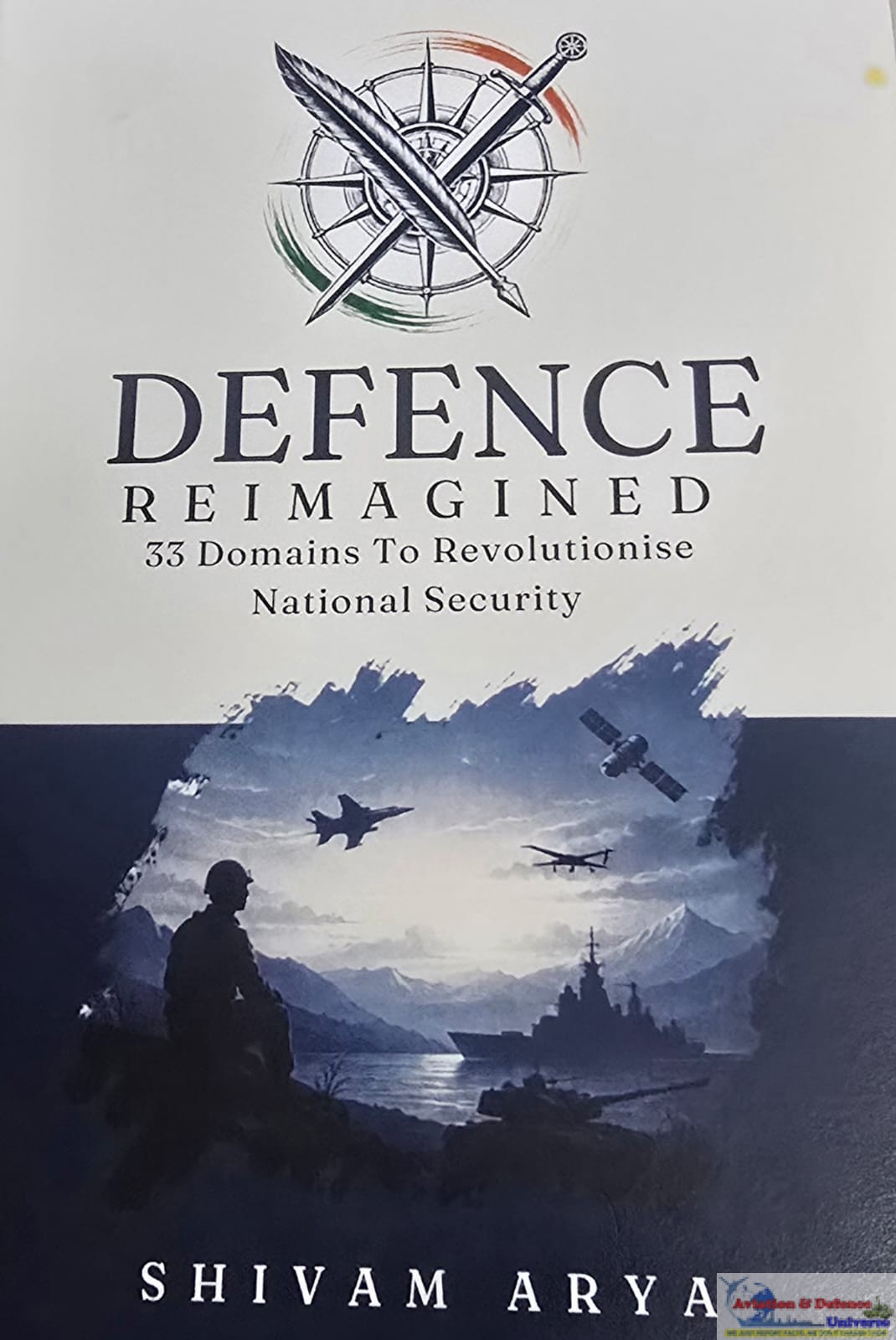
The introduction of Defence Reimagined: 33 Domains to Revolutionise National Security by Shivam Arya serves not merely as an opening note, but as a strategic roadmap to the intellectual architecture of the book. Written with clarity, ambition and conceptual depth, the introduction establishes the tone for what is clearly intended to be a comprehensive Indian strategic manifesto for the future.
Shivam Arya structures the introduction as a guided journey through the book’s eight thematic sections and thirty-three chapters, allowing readers to understand both the thematic coherence and strategic intent behind the work. Rather than offering a conventional summary, the introduction functions as a conceptual orientation into India’s evolving security environment — spanning civilisational thought, military reforms, maritime strategy, cyber warfare, artificial intelligence, space power, defence industrialisation, and grand strategy.
One of the most striking features of the book is its insistence that India’s strategic future must emerge from its own civilisational consciousness. Shivam Arya repeatedly returns to the argument that Indian strategic thinking cannot merely imitate Western doctrines, but must rediscover indigenous traditions rooted in Kautilya, the Mahabharata, and the concept of dharma. This framing gives the introduction a distinctly Indian philosophical identity, separating it from many contemporary defence texts that rely solely on Western strategic paradigms.
 The language of the book is accessible yet intellectually serious. Shivam Arya writes with the confidence of a strategic commentator who seeks to bridge the gap between specialist defence discourse and wider public understanding. Complex themes such as theatre commands, cyber deterrence, swarm warfare, digital sovereignty, semiconductor geopolitics and quantum technology are introduced in clear and engaging prose without oversimplification. This balance between readability and strategic depth becomes one of the book’s strongest qualities.
Another significant strength lies in the way the book creates continuity between the various sections . Shivam Arya does not treat military domains in isolation. Instead, he presents national security as an interconnected “system of systems” where maritime power links with space surveillance, cyber capability influences deterrence, and industrial self-reliance underpins military autonomy. This systems-thinking approach gives the introduction conceptual sophistication and reinforces the central thesis of the book: that India’s rise as a major power will depend on strategic integration rather than isolated military modernisation.
The book also reveals the author’s broader ideological orientation toward Atmanirbharta and strategic autonomy. India’s defence future, according to Shivam Arya, cannot rely permanently on imported systems or fragmented institutions. Through discussions on private defence industry, startups, indigenous manufacturing, and defence innovation ecosystems, the introduction positions self-reliance not merely as an economic slogan but as a strategic necessity. This theme is woven consistently across the roadmap of the chapters.
Particularly compelling is the treatment of emerging warfare domains such as information warfare, narrative management, psychological operations and AI-enabled conflict. The book demonstrates an awareness that future wars will not be fought solely through conventional military force but also through influence, perception, and technological dominance. Shivam Arya’s references to “the battle for the mind” and “narrative as a weapon” reflect a modern understanding of hybrid warfare and strategic communication.
Each section is introduced almost like a campaign briefing, with thematic transitions that maintain narrative momentum. The progression from India’s civilisational foundations to military reforms, then toward technological domains and finally grand strategy, gives the book a logical strategic evolution. Readers are not overwhelmed by technicality because the author carefully situates each chapter within a larger national security framework.
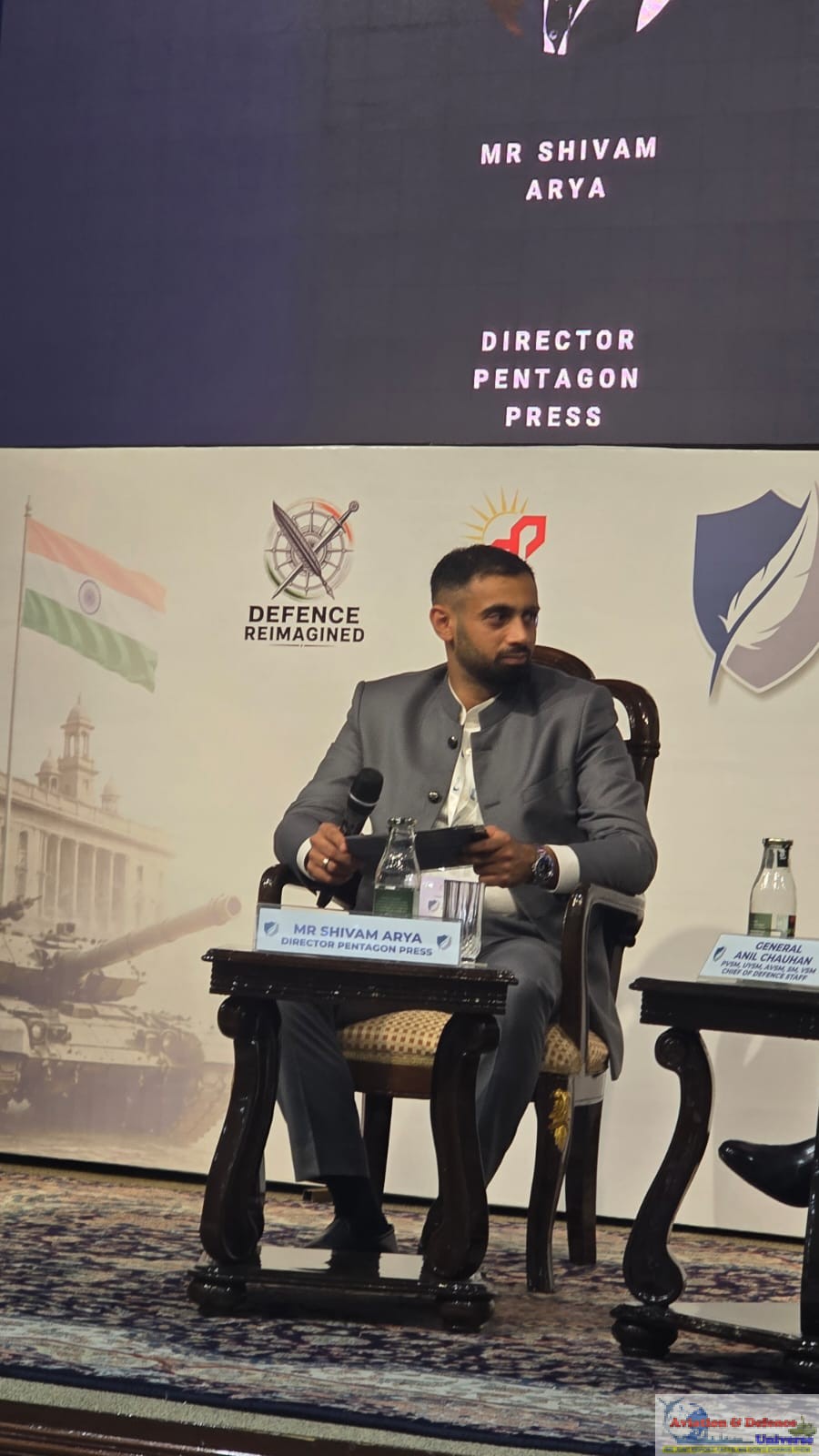 At the same time, the book is unapologetically ambitious. Shivam Arya envisions India not merely as a regional military power, but as a civilisational state capable of shaping the future global order. This ambition is evident in phrases that frame India as a “global standard-setter” and a potential “different kind of great power.” While some readers may view this tone as idealistic, it undeniably gives energy and purpose.
Importantly, the writing succeeds because it speaks simultaneously to multiple audiences. Defence professionals may appreciate the operational and doctrinal framing; policymakers may recognise the reform-oriented agenda; students of strategic studies may value the synthesis of classical and modern strategic thought; and general readers may find the accessible style inviting rather than intimidating.
Ultimately, Defence Reimagined by Shivam Arya achieves something uncommon in defence literature: it transforms a complex national security discourse into an intellectually engaging, strategically coherent, and distinctly Indian narrative. It does not merely introduce a book; it introduces a worldview — one that argues India’s future security will depend on the successful fusion of technology, strategy, ethics, institutional reform, and civilisational confidence.
His language is persuasive, aspirational and policy-driven. At times, the prose resembles a strategic vision document more than an academic text, making complex military concepts accessible to both strategic experts and general readers. The writing is reflective, philosophical and narrative-driven. he effectively uses anecdotes and operational examples to connect ancient wisdom with contemporary strategic dilemmas. The narrative style makes institutional reforms understandable even to non-specialist readers. The use of vivid operational examples helps simplify complex organisational debates. The writing at times becomes more analytical and instructional. Unlike heavily academic defence literature, Defence Reimagined consciously aims to reach military professionals, policymakers, students and general readers alike. The prose combines strategic analysis, philosophical reflection, operational examples and visionary commentary. This creates a style that sits between: strategic doctrine, policy commentary and civilisational discourse. At times, the aspirational tone may appear overly optimistic, but it also gives the book emotional and intellectual energy.
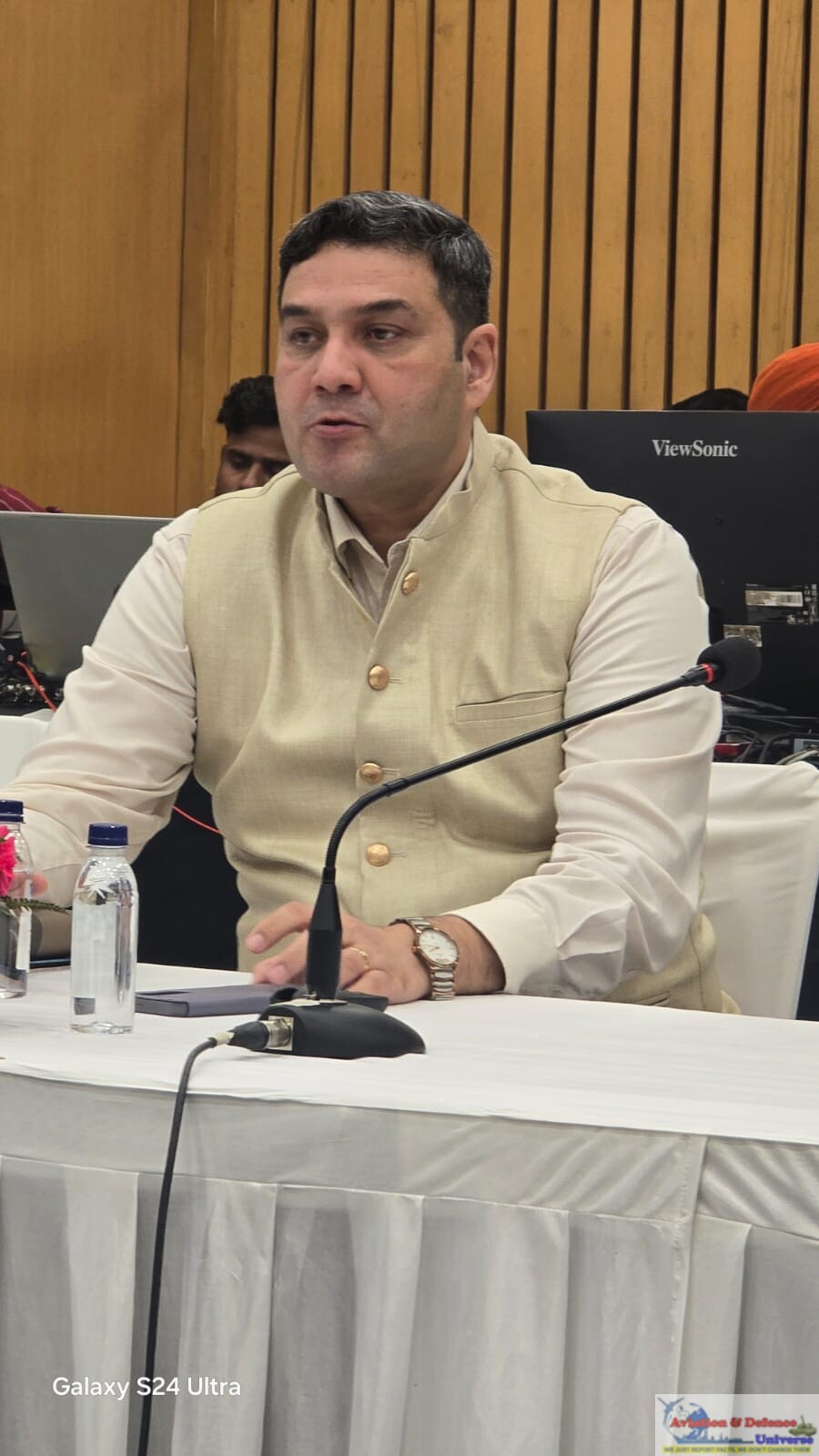
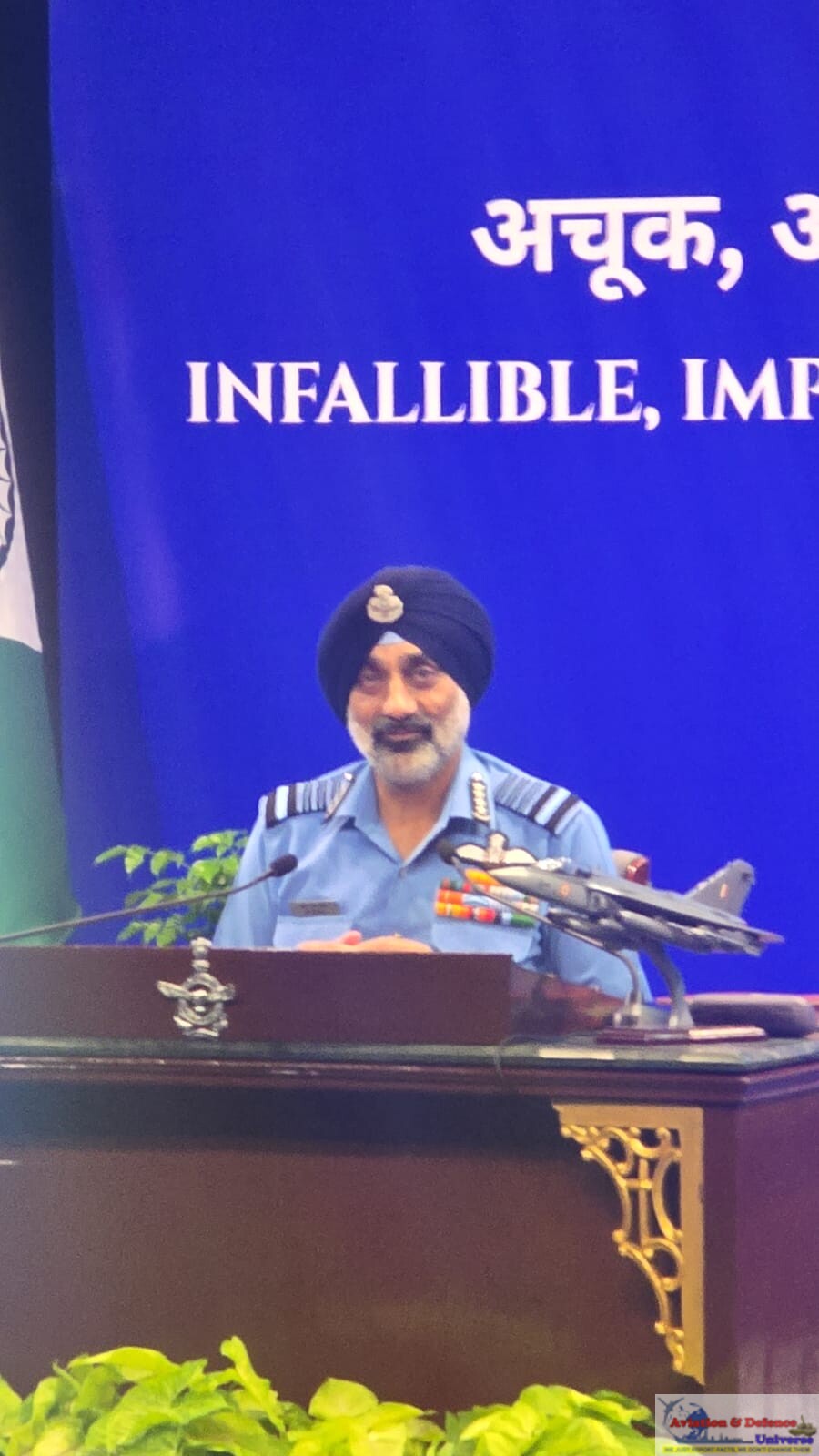
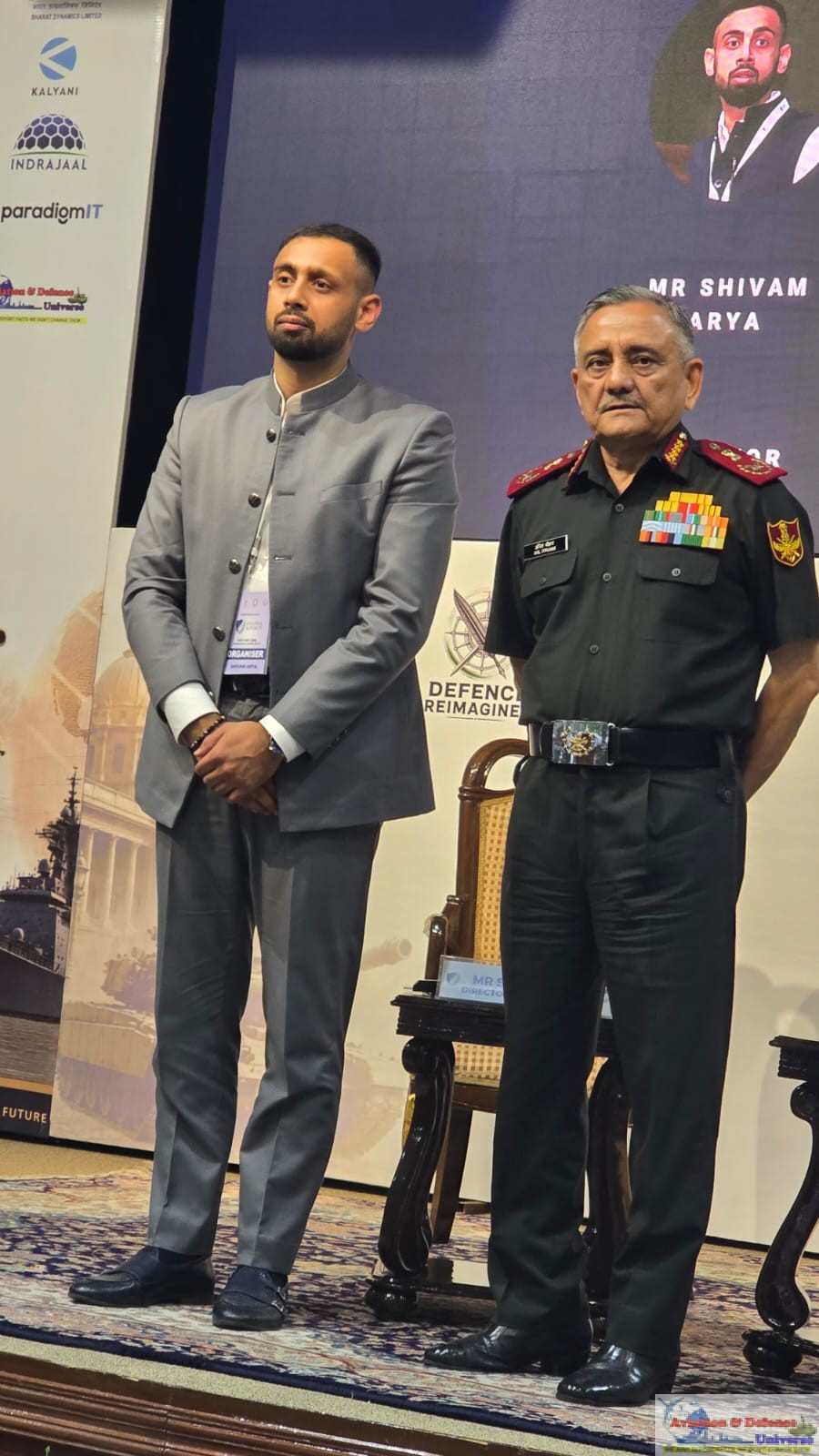 His gratitude towards the guests who appeared on his podcast Diary Of A Publisher reflects the intellectual journey that eventually shaped Defence Reimagined. Through sustained conversations with military officers, veterans, scholars, policymakers, technologists and defence industry leaders, the podcast became more than a platform for dialogue; it became a classroom of strategic learning. Each guest brought with them lived experience, professional insight and domain expertise, sowing seeds of knowledge in Shivam’s mind on defence, security, technology, civil-military relations and India’s strategic future. These interactions helped him connect ideas across disciplines, understand operational realities beyond theory, and develop the confidence to translate complex national security debates into accessible writing. In that sense, Defence Reimagined stands not only as Shivam Arya’s individual work, but also as a tribute to the many voices from India’s strategic community who educated, challenged and inspired him through Diary of a Publisher. He conducted a Fireside Chat with India’s Chief of Defence Staff (CDS) after the book release.
Defence Reimagined by Shivam Arya is not simply a military studies book. It is an attempt to redefine how India thinks about national power, warfare, technology, and statecraft. Across its 33 chapters, the book consistently argues that India’s strategic future must emerge from a fusion of indigenous wisdom, institutional reform, technological innovation, and ethical responsibility. The greatest strength of the book lies in its ability to connect ancient strategic thought with future warfare domains such as artificial intelligence, cyber conflict, drones, narrative warfare, and multi-domain operations. Shivam Arya’s writing remains accessible despite the complexity of the subjects discussed, making the book valuable for defence professionals, policymakers, students, and general readers alike.
At times, the work becomes idealistic in its projections, and some chapters could have benefited from stronger empirical counterarguments. Yet the intellectual ambition of the book is undeniable. It succeeds in creating a distinctly Indian strategic narrative at a time when debates on defence modernisation, self-reliance, and integrated warfare are becoming increasingly important.
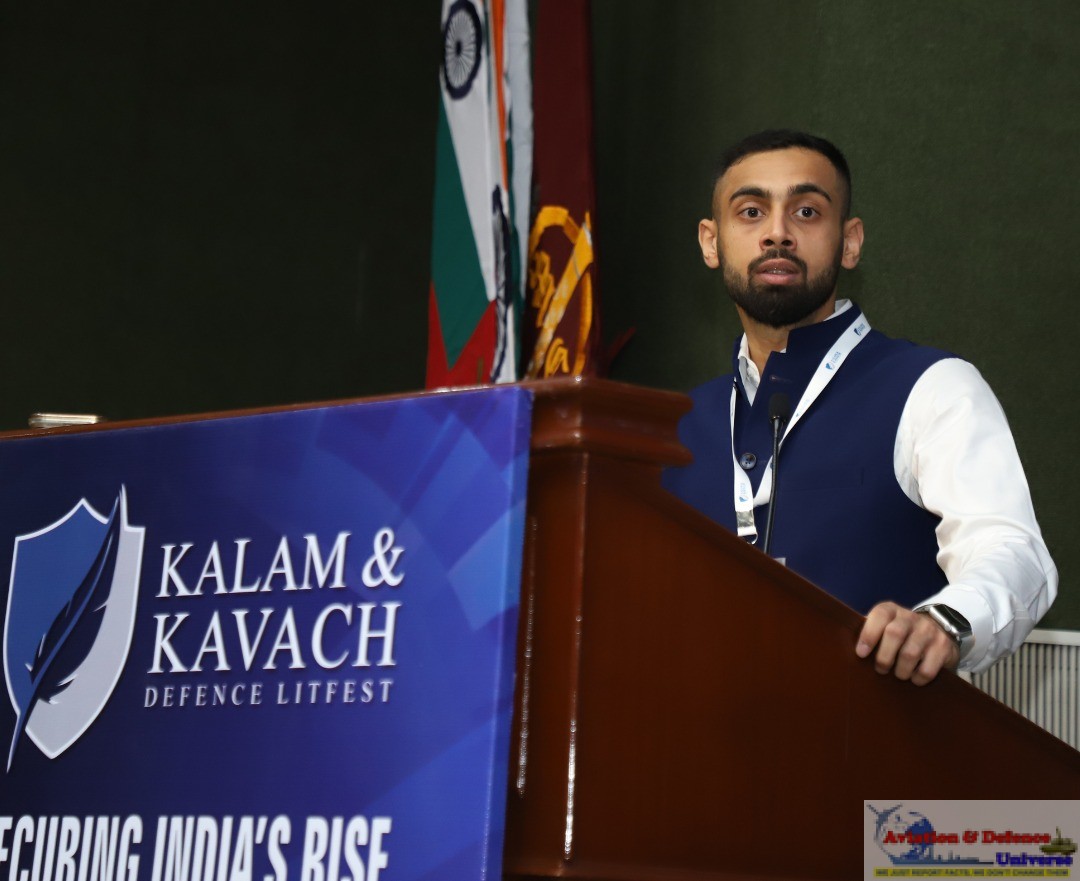 What makes Defence Reimagined particularly remarkable is not merely its sweep across 33 strategic domains, but the fact that such a mature, deeply researched, and intellectually ambitious work has been authored by Shivam Arya before the age of thirty. At an age when most writers are still discovering their voice, Shivam Arya demonstrates an extraordinary command over military affairs, strategic thought, emerging technologies, civilisational philosophy and national security architecture. The book reflects not only rigorous study, but also unusual clarity of vision, institutional understanding, and the ability to synthesise complex defence concepts into accessible strategic discourse.
What stands out most is the author’s confidence in thinking beyond conventional frameworks — connecting Kautilya to cyber warfare, maritime strategy to space power and AI ethics to battlefield transformation with rare coherence. In many ways, the book signals the emergence of a new generation of Indian strategic thinkers who are as comfortable discussing quantum warfare and semiconductor geopolitics as they are engaging with India’s civilisational strategic heritage. For a writer so young to produce a work of such breadth, seriousness and national relevance is both impressive and significant for the future of Indian strategic literature. Ultimately, Shivam Arya’s Defence Reimagined is a significant contribution to contemporary Indian defence literature — one that seeks not merely to analyse India’s military future, but to shape it.
Defence Reimagined : 33 Domains To Revolutionise National Security
Publisher: Pentagon Press
Author: Shivam Arya
Publication Date: May 2026
Genre: National Security / Military History
Pages: 340
ISBN: 978-81-685612-6-7
Price: Rs. 995/-
Rating: ★★★★★
Recommended for: Students, defence professionals, policymakers, educators and every Indian seeking to understand India’s Defence & National Security.




















































































-A4-Size-(2)_page-0001.jpg)