




























- Man Remains the Weakest Link : The Case for Aviation Psychology in Safety
- Beyond Machines: Why Human Psychology Must Shape Accident Investigation
By Sangeeta Saxena
New Delhi . 22 April 2026 . As aviation systems become increasingly advanced, a critical paradox continues to challenge the industry: while technology has significantly reduced mechanical failures, human error still accounts for nearly 70–75% of aviation accidents. This stark reality has brought renewed attention to the role of human factors and aviation psychology in accident investigation and safety management. The discussion highlighted the limitations of conventional investigative frameworks and underscored the urgent need to integrate psychological analysis into safety protocols to better understand and mitigate human error in complex aviation environments.
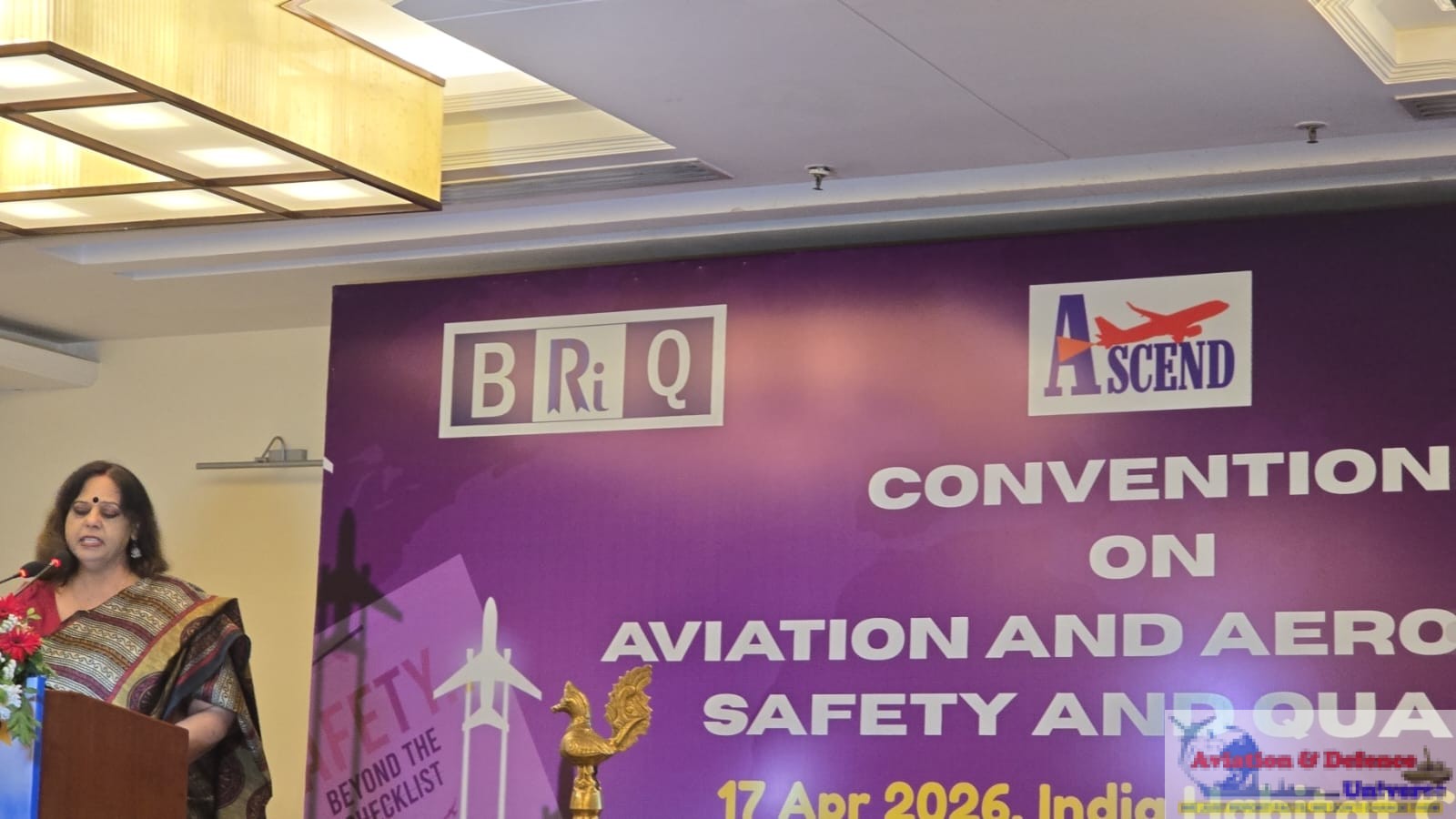
“Lack of Skill especially during approach phase of the flight in inadvertent or unknown conditions can be reason of the disaster. It is Skill that can save the situation. Most important is the Cognitive Parameter more precisely lack of judgement & incorrect decision making. Most important human factor is ability to focus & keep our emotions at bay. And in any condition strictly following the SOP & not Violating the established guidelines is a must,” Kuhu Ganguli reiterated in her address at the Convention on Aviation & Aerospace Safety and Quality held recently at Indian Habitat Centre.
Kuhu Ganguly is the only Scientist from DRDO to be trained & Certified in ACCIDENT Investigation from UK. She is trained in Human Factors in Accident Investigation from Cranfield University, UK. She has worked as an Aviation Psychologist in Directorate of Aerospace Safety (DAS), Indian Air Force’s Head Quarters for 15 years & also with Army aviation & Air India and retired in 2025 after 35 years of experience.
Aviation, widely regarded as one of the most demanding professions, operates within a high-stakes environment where precision, decision-making, and situational awareness are critical. Despite advancements in aircraft technology and safety systems, accident trends indicate that human error remains a persistent and dominant factor. While existing mechanisms such as Courts of Inquiry comprehensively examine technical failures, physiological conditions, and procedural lapses, a significant gap remains in assessing the psychological state of pilots—before, during, and after incidents.
The aviation ecosystem functions as a closed-loop man-machine interface, where the pilot is an integral component. While machines have evolved with enhanced capabilities, automation, and reliability, the human element has not undergone a comparable transformation. A pilot’s cognitive abilities, emotional stability, stress levels, and mental fatigue can vary significantly depending on operational and environmental conditions. In high-pressure scenarios, this variability can directly impact performance, making the human element the most vulnerable link in the system.
 Kuhu stressed, “Man-Machine interface has evolved, as the pilot has better training, is better polished skillset & is more aware of the Cockpit. Similarly, the machine(Cockpit) is designed with FBW ( Fly By Wire) technology & AI components , wherein it can automatically handle more of the pilots workload, has saviour/ sophisticated warning systems & is more user friendly. However in Crisis the pilot becomes Vulnerable & hence the weakest link in the chain of events. We are at our worst during unforeseen stress & difficulties. Our Cognitive parameters at times are paralyzed and it takes a few seconds to regain our equilibrium. Unfortunately , in Flying even the split seconds are crucial.”
Human Factors, as a discipline, examines the psychological, social, physical, and biological aspects of human performance in aviation. It seeks to optimise the interaction between humans and machines by improving design, training, and operational processes. The modern cockpit demands that pilots perform multiple tasks simultaneously—monitoring systems, making rapid decisions, processing information, and maintaining situational awareness—all while managing stress and fatigue. The increasing complexity of next-generation aircraft has only amplified these demands.
A critical concern raised during the discussion was the lack of structured focus on aviation psychology in accident investigations. While physical health and procedural adherence are routinely analysed, deeper insights into a pilot’s mental state, decision-making patterns, and organisational pressures are often overlooked. Factors such as stress, fatigue, cognitive overload, and workplace culture can significantly influence pilot behaviour and performance, yet remain underexplored in formal investigations.
“ Stigma with respect to counselling in pilots has lessened a lot in today’s aviation world. If the bond of confidentiality is established & the Counsellor is professional , then his/ her work will speak for itself. We must remember that the distressed pilot gets an opportunity to vent out his/her feelings/ and confusions in a non threatening environment is half the battle won. Finally, it is the efficiency of the Counsellor that speaks. He/She can also together with HR plan an orientation programme with a wellness capsule to sensitise the Sr / Jr. Pilots, Instructors etc. It is the scientific approach that dispels the cloud of Stigma,” she explained further.
The organisational climate also plays a crucial role. A culture that prioritises performance over safety, discourages reporting of errors, or fails to address mental well-being can inadvertently contribute to accidents. Understanding these underlying factors is essential for building a proactive safety ecosystem rather than a reactive one. The discussion emphasised that addressing human error requires a holistic approach—one that combines psychological insights with training, simulation, and organisational reforms. Developing targeted training modules that incorporate behavioural science, decision-making under stress, and cognitive resilience can significantly enhance pilot performance and reduce error rates.
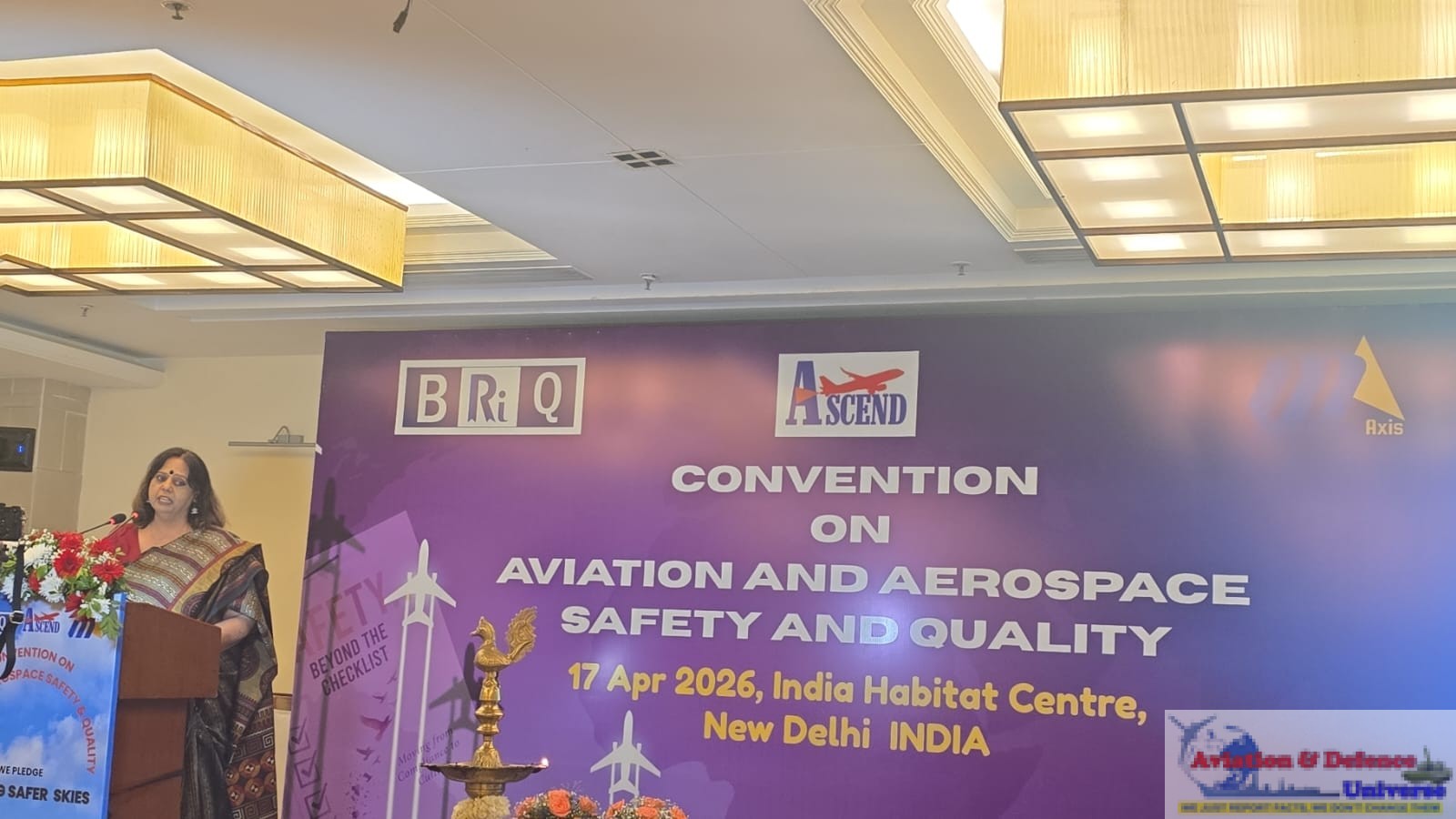 “Moreover, during unforeseen difficulties the human mind falls in the trap of emotional overload & panic. To recover the Aircraft we need to be clear in our minds, invariably wrong decisions, judgement errors take place in this small time gap,” she concluded.
The growing recognition of human factors and aviation psychology marks a critical shift in how the industry approaches safety. While technological advancements have transformed aviation, the human element remains central—and vulnerable. Integrating psychological analysis into accident investigations, strengthening training frameworks, and fostering a supportive organisational culture are essential steps toward reducing human error. As aviation continues to evolve, the path to safer skies lies not only in better machines, but in a deeper understanding of the human mind that operates them.














































































-A4-Size-(2)_page-0001.jpg)