


 18th BRICS Summit



















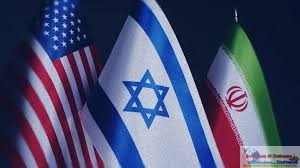
- Ceasefire Without Closure: Inside the High-Stakes US–Iran Standoff
- Strait of Hormuz at the Centre: Diplomacy, Deterrence, and a Region in Flux
- Failed Venue of Talks between US & Iran : Pakistan
By Jai Kumar Verma
New Delhi. 20 April 2026. As tensions between Washington and Tehran escalated into a dangerous phase of open confrontation, West Asia found itself on the brink of a wider conflict with global implications. What began as targeted military strikes quickly evolved into a multi-actor regional crisis, drawing in key Gulf states and raising alarm over the security of the strategically vital Strait of Hormuz. In this volatile backdrop, a fragile two-week ceasefire emerged—not as a resolution, but as a temporary pause in hostilities. The negotiations that led to this uneasy truce reflected a complex interplay of military pressure, economic concerns, and entrenched geopolitical rivalries, underscoring how close the region had come to a far more destructive confrontation.

The diplomatic push behind these talks was driven by urgent, overlapping priorities. Foremost was the need to avert a full-scale war that could engulf the Middle East and destabilize international security. Equally pressing was the imperative to steady volatile global oil markets, already rattled by disruptions and uncertainty. Finally, negotiators sought to confront Iran’s enduring nuclear ambitions, an issue that has long complicated relations with the West. Together, these objectives reflected both immediate crisis management and deeper structural concerns shaping the geopolitical landscape.
The selection of Islamabad as the venue for United States, Iran talks reflected Pakistan’s diplomatic positioning, maintaining working relations with both U.S. and Iran. However, hosting such high-stakes negotiations carried inherent risks, given the deep mistrust between the two sides and limited prospects for a breakthrough. Pakistan’s motivations extended beyond facilitation. It sought to reassert its strategic relevance in Washington’s policy framework amid signs of declining importance. At the same time, Islamabad may have acted as a discreet intermediary, enabling back-channel communication and even transmitting key proposals when formal diplomatic routes stalled.
There are reports indicating that Saudi Arabia and Qatar extended significant financial assistance to Pakistan at a critical juncture. This support, estimated at around $5 billion, was primarily aimed at stabilising Pakistan’s fragile economy and easing pressure on its foreign exchange reserves, particularly as Islamabad prepared to repay approximately $3.5 billion in debt to the United Arab Emirates.
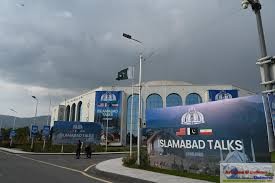 As this financial backing coincided with Pakistan’s role in hosting the U.S. Iran peace talks, there is no verified evidence to suggest that the funds were explicitly provided to finance or organise the negotiations. However, the timing has led Pakistan watchers to interpret the assistance within a broader strategic context—where economic support, diplomatic engagement, and regional stability efforts appear increasingly interconnected.
Regional compulsions also shaped Pakistan’s role. Its security ties with Saudi Arabia and economic links with Iran placed it in a delicate balancing act, particularly amid rising tensions between Riyadh and Tehran. Hosting the talks allowed Pakistan to project itself as a responsible regional actor while managing competing interests.
Operationally, Pakistan demonstrated diplomatic agility—facilitating logistics, security, and engagement with stakeholders such as China and Gulf states. While it succeeded in bringing adversaries to the table and sustaining limited de-escalation, it ultimately fell short of securing a lasting agreement, underscoring both its relevance and its limitations as a mediator.
The United States delegation was led by Vice President JD Vance. Two key participants included Jared Kushner son in law of Trump and Steve Witkoff. The Iran delegation was headed by Speaker of Parliament Mohammad Bagher Ghalibaf, Foreign Minister Abbas Araghchi and other senior officials from diplomatic and economic sectors were also part of the delegation.
The negotiations stretched over nearly twenty-one hours, unfolding across multiple rounds marked by formal sessions, back-channel contacts, and the exchange of draft proposals. The agenda was both expansive and contentious, reflecting the complexity of the crisis. Key issues included the contours of a possible ceasefire, the security and free flow of shipping through the strategically vital Strait of Hormuz, and the future of Iran’s nuclear programme. Economic dimensions, particularly sanctions and financial relief, were central to the discussions, as were regional flashpoints such as Lebanon, where tensions involving Iranian-backed actors continued to complicate the broader diplomatic picture.
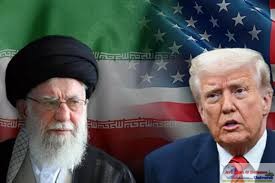 The United States approached the talks with a security-driven framework, anchored in a set of non-negotiable demands. Washington insisted that Iran abandon any pathway to nuclear weapons, significantly curtail uranium enrichment, and submit to rigorous international inspections under the International Atomic Energy Agency. It also pressed for guarantees of unimpeded navigation through the Strait of Hormuz, given its global economic significance. Additionally, the U.S. sought a rollback of Iran’s support to regional proxies, including groups such as Hezbollah. Overall, the American position reflected a willingness to consider calibrated concessions, but only within a framework that prioritised long-term security assurances.
Iran, for its part, framed its position around sovereignty, economic relief, and regional recognition. Tehran demanded the lifting of U.S.-imposed sanctions and raised the issue of reparations for damage caused by military strikes. It also sought acknowledgment of its strategic role in the Strait of Hormuz and pushed for a ceasefire in Lebanon as part of a broader regional de-escalation. Crucially, Iran refused to relinquish its nuclear programme entirely, viewing it as both a sovereign right and a marker of technological advancement. While Washington sees a nuclear-capable Iran as a threat to Israel and Gulf states, Tehran regards it as a necessary deterrent.
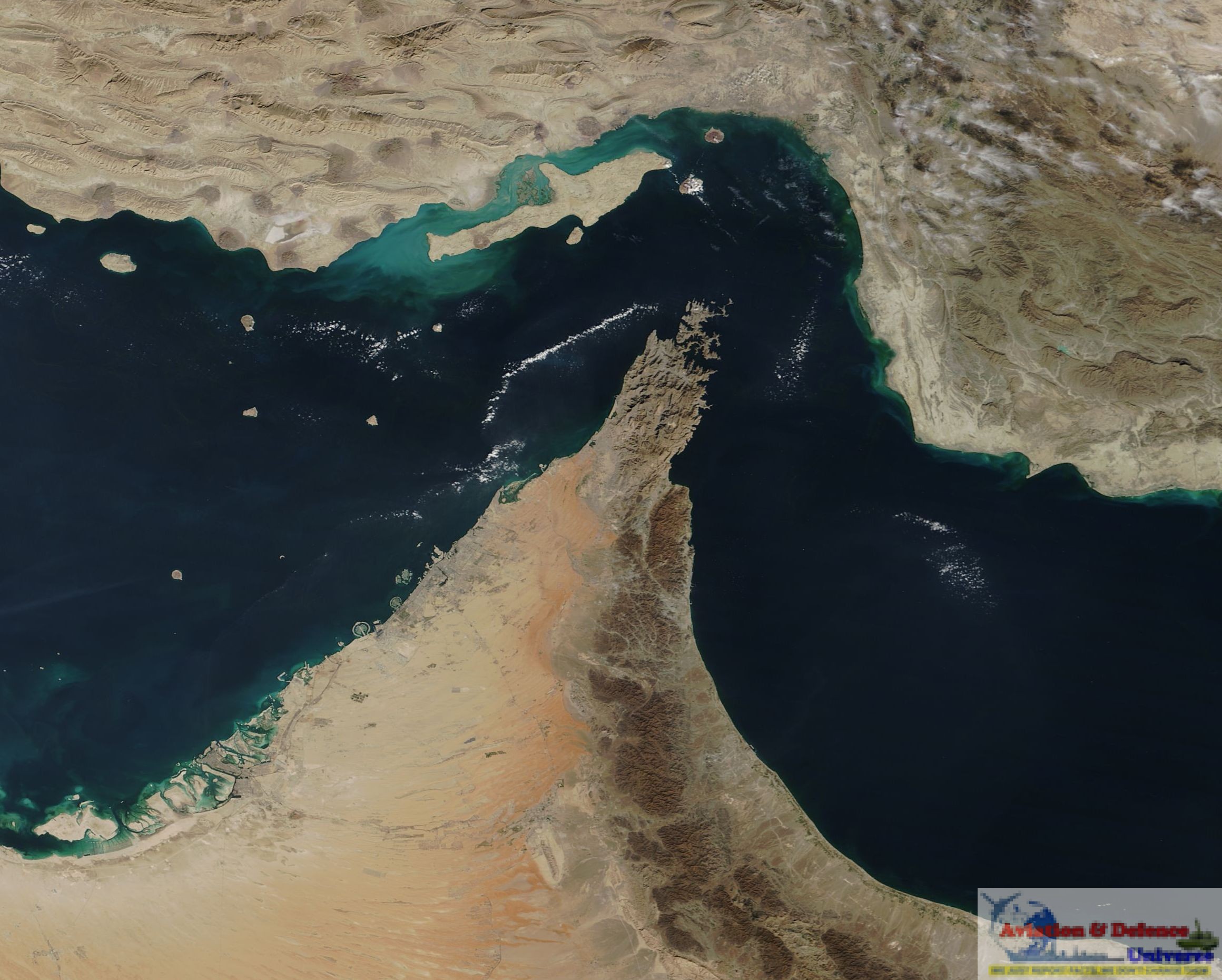 The Strait of Hormuz remains central to the crisis, carrying nearly a fifth of the world’s oil supplies and serving as a critical lifeline for major economies such as China, India and Europe. Control over this narrow waterway has thus become a strategic flashpoint. Iran has sought to assert a dominant role in the strait, framing it as integral to its regional influence, while the United States has insisted on unfettered navigation, arguing that any disruption constitutes a global, not merely bilateral, concern. Compounding tensions, Tehran has resisted demands to curb its ballistic missile arsenal and has shown little willingness to scale back its wider military footprint across the region.
The collapse of the U.S. Iran negotiations was rooted in structural, strategic, and political constraints that made meaningful progress within a limited timeframe unrealistic. The talks attempted to address an overly ambitious agenda, ranging from Iran’s nuclear programme to regional conflicts, sanctions relief, and maritime security, within barely a day of negotiations. Such compressed diplomacy was insufficient to resolve disputes that have evolved over decades. A fundamental divide persisted: the United States demanded strict limits and monitoring, while Iran defended its nuclear programme as sovereign, causing deadlock.
Deep-seated mutual distrust further undermined the process. Iran remains sceptical of U.S. commitments, citing past sanctions and withdrawals from agreements, while the U.S. views Iran’s regional posture and missile programme with concern. Both sides accused each other of inflexibility, with Iran dismissing U.S. demands as excessive and Washington arguing that Tehran refused key concessions.
Complicating matters were broader regional dynamics, including tensions involving Israel, Lebanon, and the strategic Strait of Hormuz—through which roughly one-fifth of global oil supplies transit. The U.S. emphasises freedom of navigation, whereas Iran views the waterway as central to its strategic leverage. Ultimately, maximalist negotiating positions and domestic political pressures on both sides constrained compromise. Leadership in Washington sought a robust agreement, while Tehran remained wary of appearing to yield under external pressure, ensuring that diplomacy ended in stalemate rather than settlement. History suggests that such negotiations often stall repeatedly before progress is achieved, underscoring the enduring, if fragile, relevance of diplomatic engagement. The talks failed as neither side demonstrated the flexibility required to bridge core differences, particularly on security and sovereignty concerns. As a result, the negotiations ended abruptly, reinforcing scepticism about near-term breakthroughs.
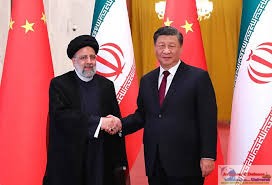 The broader diplomatic environment surrounding the talks was shaped significantly by regional and global powers, with China emerging as the most consequential external actor. China’s role has been both strategic and multidimensional. As a major energy importer, Beijing has a direct stake in stability in the Gulf, particularly the uninterrupted flow of oil through the Strait of Hormuz. At the same time, it has deepened its economic and strategic engagement with Iran, including long-term investment. Reports from the United States government suggest that China has been providing military support to Iran indirectly, while also cautioning Washington over maritime access in the Strait of Hormuz. China has also positioned itself as a counterweight to United States influence, advocating dialogue while cautioning against any disruption to maritime trade routes. Its growing diplomatic footprint in West Asia, demonstrated in past mediation efforts, underscores its ambition to shape regional outcomes. Overall, while multiple actors shaped the diplomatic context, China’s expanding economic leverage and strategic assertiveness have made it the pivotal external player in the evolving equation. Overall, China is navigating the crisis with a long-term perspective, aiming to preserve stability while reinforcing its role as a significant diplomatic and economic player and of the big brother of the region.
Among West Asian countries, Saudi Arabia and key Gulf states have played a balancing role. While aligned with Washington on security concerns, they have increasingly supported de-escalation to avoid regional instability that could threaten energy markets and domestic security. Their quiet diplomatic engagement has helped sustain channels for dialogue.
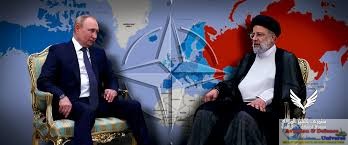 Russia’s approach to the ongoing U.S.–Iran conflict reflects a mix of caution, calculated support, and strategic opportunism. Moscow has steered clear of direct military involvement, instead extending limited intelligence and logistical backing that enables Iran to sustain its position without drawing Russia into a larger confrontation. On the diplomatic front, it has projected itself as a potential intermediary, advocating for a balanced and lasting resolution while working alongside partners such as China to challenge U.S. positions in global forums. The crisis has also brought economic advantages, with higher oil prices boosting Russian revenues amid uncertainty in the Strait of Hormuz. At the same time, Russia is leveraging the situation to strengthen its footprint in West Asia, maintaining a careful balance—supporting Iran where necessary while avoiding deeper entanglement and benefiting from the strategic distraction of the United States elsewhere.
India’s approach to the ongoing U.S.– Iran conflict reflects a careful balance between restraint, diplomacy, and the protection of national interests. New Delhi has avoided taking sides, choosing instead to advocate for dialogue and de-escalation while maintaining neutrality. At the same time, it has remained actively engaged 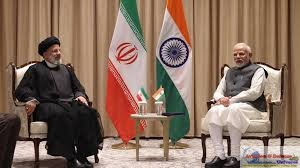 with both Washington and Tehran to secure critical priorities, particularly uninterrupted energy supplies and safe passage through the Strait of Hormuz, which is vital for India’s oil imports. By sustaining communication with Iran while deepening its strategic partnership with the United States, India continues to uphold its principle of strategic autonomy. Given its balanced relationships, India is increasingly seen as a potential bridge-builder, though it has so far opted for quiet, behind-the-scenes engagement. Overall, India is navigating a complex geopolitical landscape with a focus on stability, economic security, and diplomatic flexibility. Its role has been restrained but not insignificant. With strong ties to both Iran and Gulf states and a heavy dependence on regional energy supplies, New Delhi has consistently supported stability and freedom of navigation, while avoiding overt involvement in the negotiations.
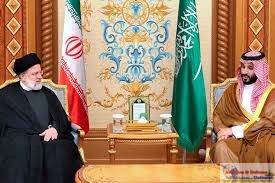 The two-week ceasefire in West Asia offers a momentary respite but does little to resolve the deeper structural tensions between the United States and Iran. The collapse of negotiations highlights the persistence of strategic mistrust, conflicting national priorities, and the limitations of compressed diplomacy in addressing long-standing disputes. As regional and global powers continue to shape the evolving dynamics—from China’s growing influence to the cautious balancing of Gulf states—the path ahead remains uncertain. While diplomacy is likely to return as the only viable long-term solution, any meaningful progress will depend on shifts in both political will and ground realities. Until then, the ceasefire stands as a fragile buffer in a region where the risks of escalation remain ever-present.
The latest reports suggest that US–Iran negotiations are expected to resume soon as both sides signal willingness to continue diplomatic engagement despite recent setbacks. Officials indicate discussions could restart within days, possibly before the current ceasefire deadline expires. With a fragile truce in place, renewed negotiations are seen as critical to preventing further escalation and stabilising the region amid growing international pressure for a diplomatic resolution. Pakistan’s role drew mixed assessments, where some viewed it as gaining diplomatic visibility, critics argued that its perceived alignment with Washington limited its effectiveness as a mediator.
(Jai Kumar Verma is a Delhi-based strategic analyst and Life Member of United Services Institute of India and member of The Manohar Parrikar Institute for Defence Studies and Analyses. The views in the article are solely the author’s. He can be contacted at editor.adu@gmail.com)


































































-A4-Size-(2)_page-0001.jpg)