

 18th BRICS Summit












- Bombay Sappers at 248: Preserving Legacy While Preparing for Future Warfare
- From Mobility to Multi-Domain Operations: The Evolving Role of Combat Engineers
- How the Bombay Sappers Are Adapting to AI, Drones and Multi-Domain Warfare
By Sangeeta Saxena
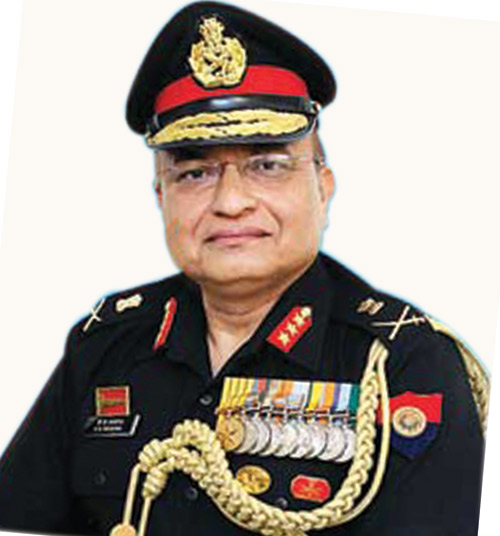
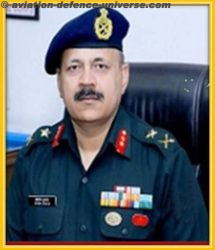
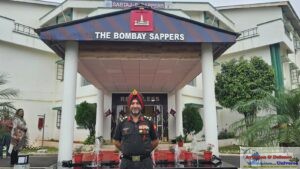 Dimapur, Nagaland/New Delhi. 07 May 2026. With a legacy dating back to 1777, the Bombay Engineer Group & Centre, widely known as the Bombay Sappers, remains one of the most distinguished institutions of the Indian Army. Over centuries, the Bombay Sappers have built a formidable reputation through their contributions in wars, combat engineering, disaster relief, infrastructure development, adventure sports, and nation-building initiatives. As warfare rapidly evolves with the integration of Artificial Intelligence, drones, robotics, cyber capabilities, and multi-domain operations, the role of combat engineers is undergoing a major transformation. In this interview with Aviation & Defence Universe (ADU), Brig. PS Jyoti, VSM, Commandant, Bombay Engineer Group & Centre, discusses how the institution is balancing tradition with technological modernisation, preparing next-generation combat engineers for future battlefields, and fostering innovation, jointness, and self-reliance under the vision of Atmanirbhar Bharat.
ADU. The Bombay Engineer Group has a long and distinguished history. How do you see its legacy evolving in today’s military context and what and what are the core responsibilities of the Centre in shaping the next generation of combat engineers?
Brig.PS Jyoti. Bombay Sappers legacy dates back to 1777, and ever since raising it has performed exceptionally well in all wars pre and post-independence. The Bombay Sappers have also performed well in all other fields incl Sports, HADR, IS duties, Adventure etc earning accolades and recognition at National and International level, thus, proving their never dying spirit of “Sarvatra”.
The glorious legacy has been a great motivating factor for the entire Bombay Sappers fraternity as we are the only ones amongst the three groups of having the rare distinction of being conferred with highest gallantry awards of Param Vir Chakra, Victoria Cross and Ashok Chakra, thus proving the heroics of valour and courage. The Group also holds the unique distinction of having a COAS, three VCOAS and six Army Commanders.
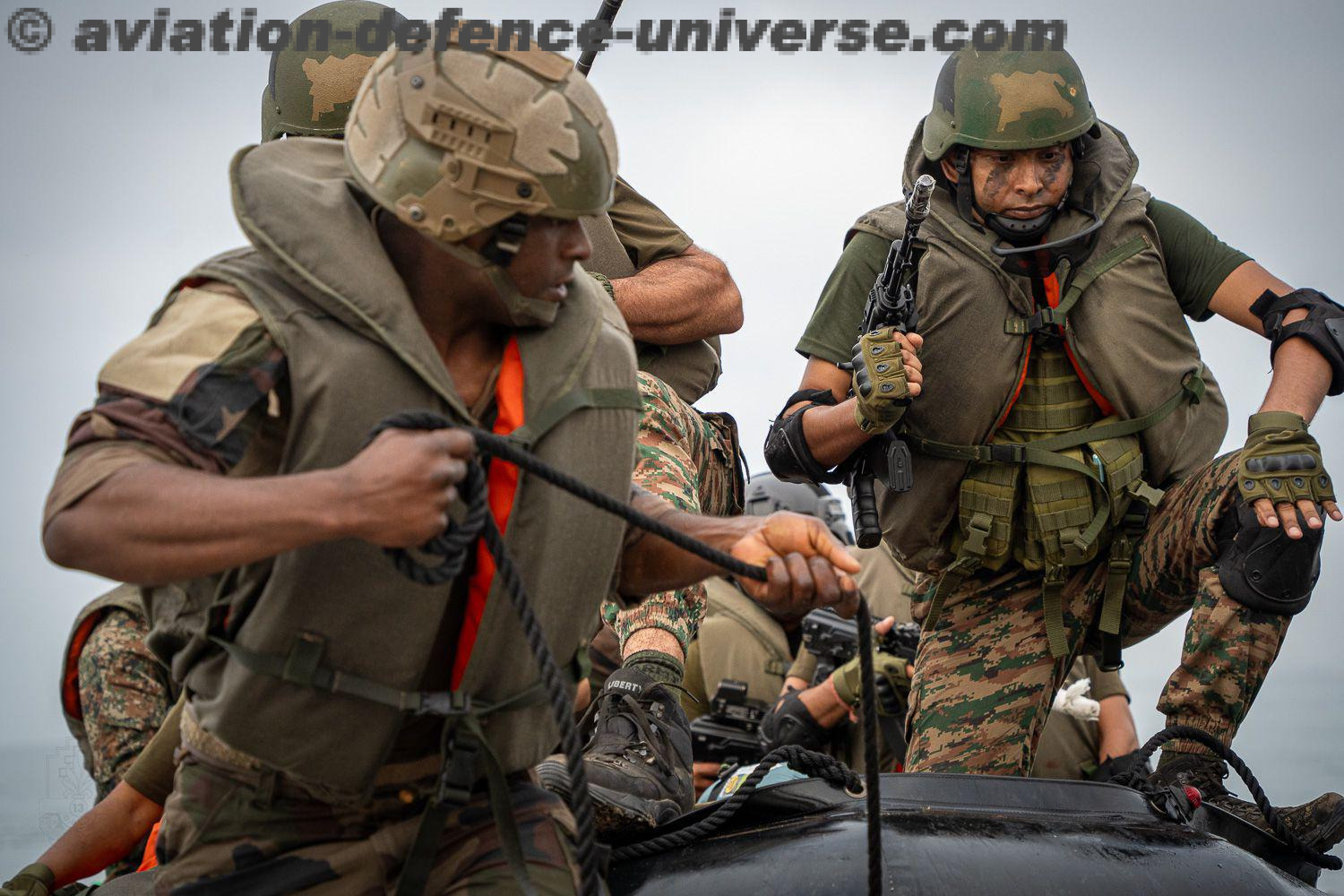
In modern warfare the traditional roles of sappers of mobility, counter-mobility, and survivability are evolving with drones, AI, robotics, and fast-paced multi-domain operations, especially in mountainous and high-alt areas. Thus, the Centre’s role becomes imperative to keep the past legacy as motivation and train the next-generation Sappers in combat engg, leadership, and niche skills for the ever-evolving tech enabled modern battlefield so as to maintain initiative and resilience for all the future
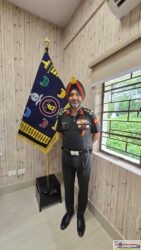 ADU. How do you balance tradition with modernisation in such a historic institution and what are the key competencies today’s combat engineers must possess compared to a decade ago?
Brig.PS Jyoti. Balancing Tradition & Modernisation is very essential for Bombay Sappers as tradition keeps us motivated and keeps the core Sapper spirit of initiative, resilience, and “Sarvatra”. Thus, tradition provides strength and foundation to us while adopting new technology and modernisation multiplies our capabilities. It is essential that deep-rooted traditions be balanced with modernisation to remain relevant in a rapidly evolving security environment. On one hand, customs and regimental ethos preserve cohesion, spirit de corps, and a sense of continuity across generation of sappers and on the other hand, modernisation in equipment, doctrine, and training is essential to keep pace with emerging threats, new technologies, and multi-domain operations.
Key Competencies Today vs a Decade Ago are many. Earlier, physical fitness, manual bridging, mines, demolitions and other basic trade tasks were most important. In addition to the aspects mentioned above, drone ops, counter-drone ops, AI, geospatial tools, manned-unmanned teaming, and survivability against precision threats have gain prominence. Today’s Sapper has to be a techno-warrior, armed and skilled with both shovel and drone, ready for multi-domain ops while core trade skill, ingenuity, improvisation and “HO JAIGA “ attitude being the strength.
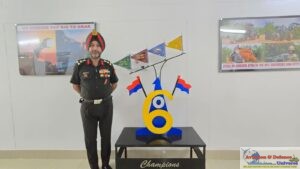 ADU. How do you integrate emerging technologies – such as AI, robotics, and advanced materials – into training modules and what role does simulation and hands-on field trainingg plays in preparing soldiers for real-world challenges?
Brig.PS Jyoti. Presently, integration of emerging technology at Bombay Engr Group & Centre, Khadki, Pune is limited to very basic on AI, robotics and advanced materials, however, the Centre has included drone training in the curriculum through updated modules on drone ops and practical classes on drone flying. Endeavour is being made to include drone training on top of core Sapper skills to enhance combat engineering capability.
With respect to Simulation & Hands-on Training, Virtual Reality simulators and weapon, vehicle and earth moving plant simulators have been procured to build core skills and to provide Hands-on training and muscle memory. At the Centre, endeavour is that simulation complements the field training. Simulators have been introduced for various trade training, driver and operator plane and machinery. The psychometric tools are also used to identify the right trade for the right individual, so that best results are obtained on ground.
The present day generation is having higher technical threshold and requisite mindset to adapt to these technologies and trg on AI, robotics and smart materials. The same is in sync with the modern developed armies across the world. The present day sapper is well versed with modern ways of equipping himself to fight the future battlefield.
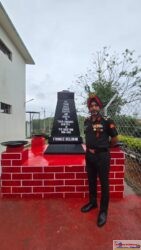 ADU. Could you elaborate on the importance of engineering support in areas like mobility, counter-mobility, and survivability?
Brig.PS Jyoti. Importance of engineering support is critical because it directly shapes the battlefield and multiplies the combat power of the entire Indian Army. Mobility in offensive operations ensures rapid movement of troops and armoured columns by constructing bridges, creating routes, clearing mines and obstacles from the battlefield.
Counter-mobility operations deny freedom of movement to the adversary through minefields, obstacles, demolitions and other terrain shaping measures, thereby shaping the tactical environment in defender’s favour. Survivability, in the form of bunkers, hardened shelters, field defences, and protective infrastructure, duly camouflaged and concealed from enemy fire, drones and precision strikes ensuring force preservation and logistic sustenance.
Sufficed to say that without strong comb engg support, even well-equipped infantry, armour, and artillery cannot move effectively, defend key areas, or survive modern threats. In high-tempo conflicts, timely and efficient combat engg support will decide the difference between success and failure.
ADU. How is Centre contributing to innovation within the Corps of Engineers and what role do indigenisation and self-reliance (Atmanirbhar Bharat) play in military engineering?
Brig. PS Jyoti. Centre is focussing on innovations and Atmanirbhar Bharat. In recent months an innovation cell has been opened in CIFE and all ranks are being encouraged to think and innovate and share their ideas. Also, compendium of innovations has been created which includes recent innovations carried out by all Bombay Sapper Units.
In all courses including promotion, upgrading and other cadres, adequate emphasis on improvisation and innovation is given to instil a sense of all out approach to apply existing resources and out of box ideas to achieve terminal operational aim and objectives.
The Centre is sensitive to the fact that conventional learning has to be supported by the ‘Improvisation, Innovation and Atmanirbhar Bharat’ philosophy. In any case ‘Improvisation and Innovation’ is hallmark of Corps of Engineers.
Indigenisation and self-reliance is must as per the latest directives. All out efforts are being made at highest level that future long term plans are based on the self-reliance by having indigenisation inbuilt into overall scheme of things.
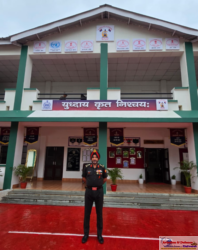 ADU. The Corps of Engineers plays a crucial role in Disaster Relief and Infrastructure Development. How does the Centre prepare personnel for these responsibilities and what initiatives are in place to support the mental and physical well-being of personnel?
Brig.PS Jyoti. The Sapper by virtue of his trade specialisation and combat engineering training is apt and adequately skilled to carry out HADR tasks. Other than the combat engineering training at Centre, the sappers are trained for HADR duties. Hands-on training in bridging, track construction, debris clearance, and repair of engineer equipment. Case studies and sharing of experiences & lessons learnt by individuals attending courses at the Centre on HADR tasks taken by the Engineer Regiment as part of the field formations. Civil military fusion exercise conducted at the Centre for better coordination and integration with all the stakeholders and understanding capability and limitations. Simulated exercise and drills are being covered during various courses to raise the level of awareness and role of sappers in HADR missions.
Mental and Physical Conditioning. Hard Training being the best administration for troops is followed at the centre. In addition many initiatives for Mental and Physical Well-being have been instituted. Rigorous physical training, route marches, sports (basketball, volleyball, triathlon, X country), fitness infrastructure (stadiums, swimming pool, and sports fields), and regular endurance drills to build strength and stamina. Mental Well-being. Stress management through regimental traditions, unit cohesion activities, yoga and meditation sessions, and a strong support system including the Bombay Sappers Association for welfare. Access to professional counselling and psychological support is also provided. The Centre promotes overall resilience by balancing training with sports, recreation, and a sense of family and pride in the Bombay Sappers spirit. The recent surge in funds for BSA and the enhanced scope and the welfare of NOK of PC/ BC cases is a testimony to these initiatives.
ADU. How important is jointness and inter-service collaboration in engineering operations?
Brig.PS Jyoti. Jointness and inter-service collaboration are very important in modern combat engineering operations. Engineer operations have to be conceived, planned and executed within a tri-service and multi-domain framework. The Corps of Engineers has a unique role because its capability directly enables operational reach, survivability and sustainment for all services. It enables seamless integration with infantry, armour, artillery, and air assets as part of Integrated Battle Groups (IBGs) by ensuring faster mobility, obstacle creation, and protection through coordinated planning and execution.
Combat engineering operations allows effective sp to Army, AF and Navy in multi-domain scenarios involving drones and precision threats. Thus, joint training builds the ability to operate as a true force multiplier, improving speed and success on the battlefield.
Most importantly, jointness is not only structural; it is cultural. It requires mutual trust, professional respect and willingness to operate as one team. The success in future will depend not on the structure of individual Services alone, but on seamless orchestration of collective capability. Therefore, inter-service integration in engineering operations is indispensable.
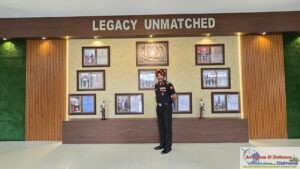 ADU. How has your operational experience shaped your leadership approach in training and institution – building?
Brig.PS Jyoti. I have tried to put in my personal experience of more than three decades of service in Sappers in contribution towards the training and overall growth in the Bombay Engineer Group and Centre. My Colonel Commandant directions also paves the way for me to ensure a balanced and professional approach towards this direction. The training curriculum has been made operationally oriented especially due to the ongoing emphasis and focus on modern warfare. Project Management Courses have been started to enhance standards and management in operational works. Short cadres on modern training to include 3D printing, Drone Warfare, IT and cyber security training have been started in Centre in view of the changing op dynamics.
Realistic Driver and Plant Training is being imparted wherein actual life size replica of mountainous terrain for driver trg have been evolved. Practical project oriented training is imparted to operator plant and machinery to identify and construct reservoirs with an aim of Rain Water Harvesting and Water Table Recharging in the training areas. It further augments the watermanship training.
Modern tools namely simulators have been installed to impart basic military and combat training. Present day psychometric tools are used to identify correct trade to be allotted to an individual. Drones training is introduced at the basic level to enhance the mental approach and threshold of troops to adapt to the latest trends.
ADU. Is Bombay Sappers a gender – neutral organisation and how have women fit into the role of combat engineers?
Brig.PS Jyoti. Bombay Sappers has always been a gender-neutral organisation as women officers has been part of the Regiments for quite a while now. Elevating them to Command Role has been a positive acceptance in the organisation and the environment. The women officers of The Bombay Sappers are now commanding ‘Counter Explosive Device Units’, Inland Water Transport Units, Engr Regt (TA) and Training Battalions at the Regimental Centres in challenging times during OP Sindoor and CT environment. In addition, women officers are also being given the responsibility of CWEs in MES and Cdr BRTF in Border Roads based on their service experience and exposure. Bombay Sappers are in perfectly aligned to decisions of the Indian Army.
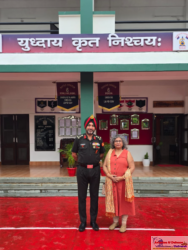 ADU. What message would you like to share with young aspirants looking to joint the Corps of Engineers?
Brig.PS Jyoti. I would like to give the following message to the aspirants of Corps of Engineers – If you crave real challenges, want to serve the nation with courage and skill, and ready to grow into a tough, decisive leader, and someone who can do it all, Corps of Engineers is your calling. Welcome to the world of sports and adventure, since this is the forte of Sappers. You are not only a soldier but an engineer too. Master your engineering skills, build discipline, physical fitness and mental robustness. Lead from the front as sappers are the first one to enter the battlefield and the last one to come out. During peacetime we contribute to nation building (Atal Tunnel, Sela Tunnel are the recent examples) be part of MES / Border Roads and hone your technical skills and apply your engineering knowledge and experience and make the difference by assuring quality and speed of work. Rise up and become the Sapper the nation needs. Come join the Corps of Engineers and be Lucky to get The Bombay Sappers…
ADU. Finally, what vision do you have for the future of the Bombay Engineer Group & Centre?
Brig.PS Jyoti. My vision is to see BEG & Centre as a premier training establishment and should become a benchmark Trg institution by offering modern, integrated curricula that cover both combat engineering and trade specific training further complemented by simulations, VR, latest trg methodology, coupled with innovations and improvisations. Structured training, fair assessments and ongoing education enhancement through certifications especially for Agniveers. Training is to remain central and that which assists in operational readiness focussing on core combat engineering tasks of mobility, counter-mobility and survivability, good practices while executive operational works and HADR ops.
Modern tools available are being procured to enhance the overall standards of trade skills. Further, to keep abreast of being practices being followed by the civil agencies, coordination has been carried out with industries and these are being conducted for various courses to gain insight on the same.
Training culture coupled with effective administration for well-being of our men and families thereby, promoting camaraderie, integrity, sincerity, hard work, strong Bombay Sappers association and inclusive leadership with robust welfare and mental health support to troops, their families as well as Physical Casualty / Battle Casualty families. Also to maintain a direct connect with the Next of Kin of our veterans with an aim to look after their meaningful welfare and well being.
Innovation and knowledge sharing could be fostered through the innovation Cell, active collaborations with universities and industry may be considered. Though external support and assistance for the same shall be required. A motivated team of officers coupled with efficient and top-class instructors for training, mentoring, and attaining the above goals.
The insights shared by Brig. PS Jyoti reflect the evolving character of military engineering in an era defined by rapid technological change and multi-domain warfare. While preserving the proud legacy and ethos of the Bombay Sappers, the Bombay Engineer Group & Centre is simultaneously embracing modern training methodologies, emerging technologies, innovation, and joint operational concepts to prepare soldiers for the challenges of future battlefields. From combat engineering and disaster relief to infrastructure development and technological adaptation, the institution continues to reinforce its role as a critical force multiplier for the Indian Army. As the demands of warfare continue to evolve, the Bombay Sappers remain committed to producing techno-warriors capable of combining leadership, engineering excellence, resilience, and operational adaptability in service of the nation.
As told to Sangeeta Saxena







































































-A4-Size-(2)_page-0001.jpg)