


 18th BRICS Summit

















- From NATO to China: Military Leader Maps Global MDO Evolution for India
- We Don’t Have a Choice : Call for Accelerated Multi-Domain Capability Building
- Global Doctrines, Local Imperatives: India’s MDO Strategy Takes Shape
- From Information Superiority to Decision Dominance: The MDO Blueprint
By Sangeeta Saxena
New Delhi. 13 April 2026. Multi-Domain Operations (MDO) have become central to the evolution of air forces worldwide, transforming them from platforms focused primarily on air superiority into integrated, networked combat enablers across all domains. Modern air forces now play a pivotal role in connecting space-based assets, cyber capabilities, intelligence networks, and ground and maritime forces to deliver real-time, synchronised effects. With advanced ISR, precision strike, and rapid mobility, air power enables decision superiority by compressing the sensor-to-shooter cycle and providing commanders with a unified operational picture. In an era of contested airspace and sophisticated adversaries, the ability of air forces to operate seamlessly across domains—while integrating AI, autonomous systems, and electronic warfare—has become critical not just for dominance in the air, but for shaping outcomes across the entire battlespace.
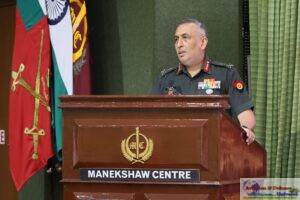
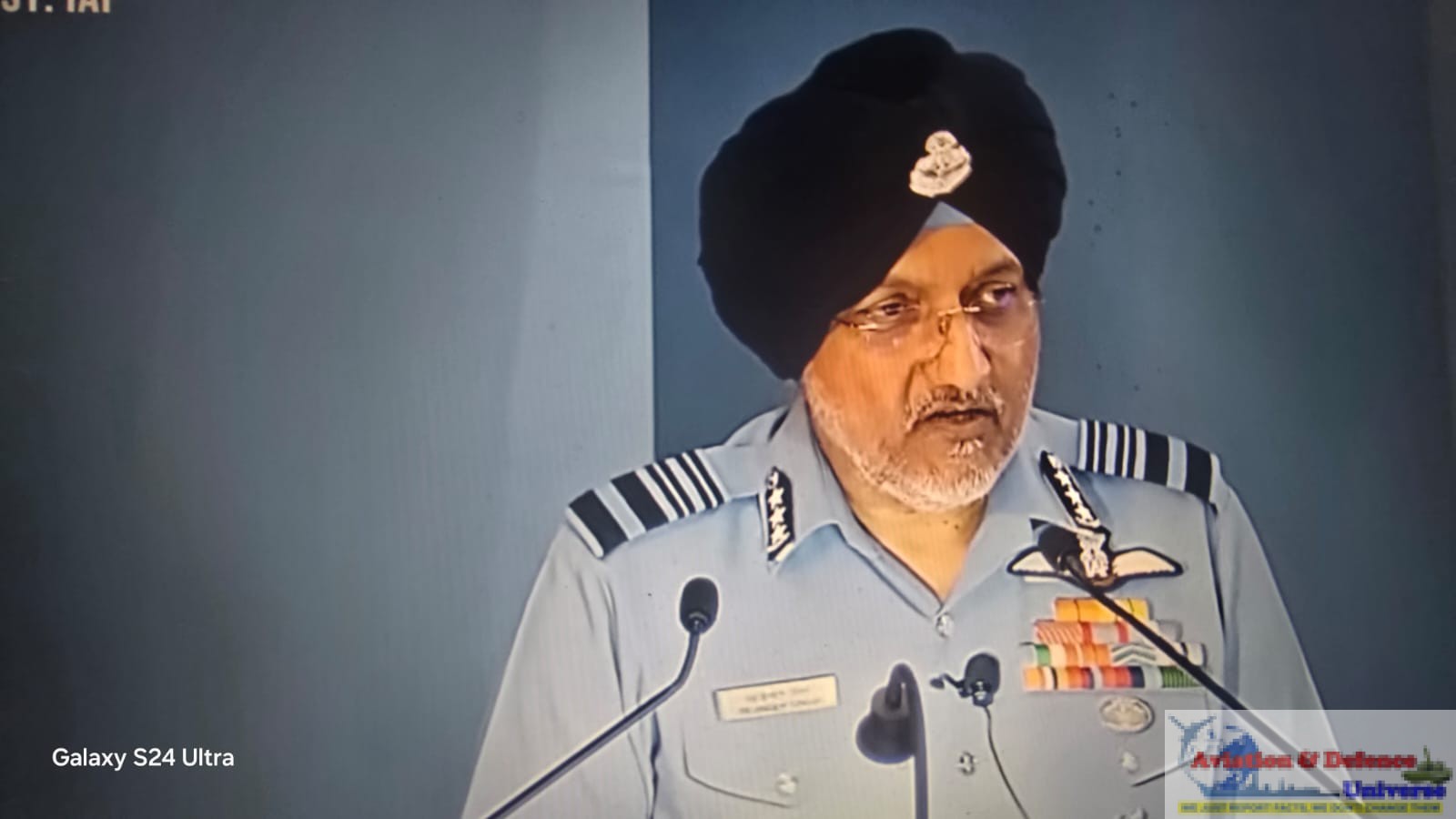
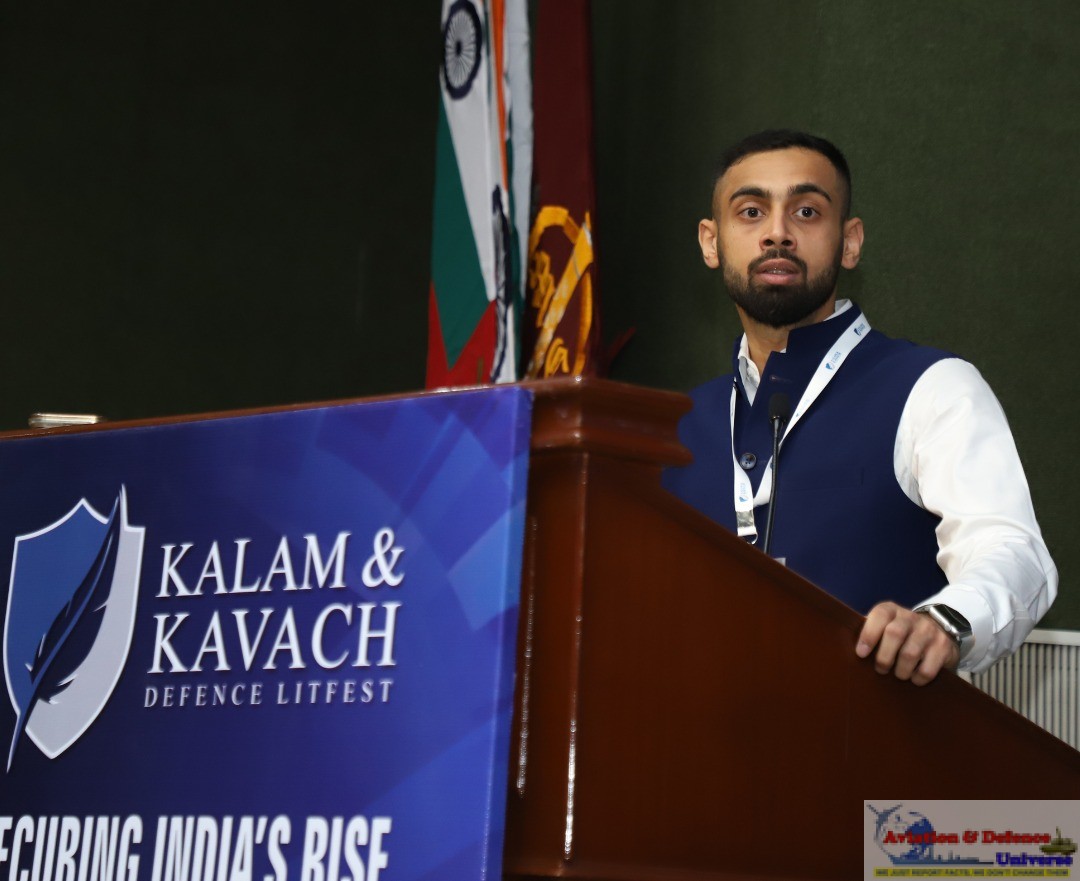
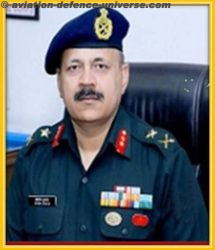
At Ran Samvaad 2026, Air Marshal Tejinder Singh, AOC-in-C, Southwestern Air Command delivered a comprehensive analysis of the evolution of Multi-Domain Operations (MDO), drawing from global doctrines and recent conflicts to outline India’s path forward. The address examined how leading military powers—including NATO, the United States, Russia, and China—have adapted to the changing nature of warfare, while also identifying the challenges and opportunities for India in operationalising MDO.
Setting the global context, he referenced NATO’s framework, stating, “The NATO defines MDO as orchestration of military activities across all domains and environments synchronised with non-military activity… to create converging effects… at the speed of relevance.”
Highlighting the United States’ strategic priorities, he noted that “the American defence strategy focuses on the growing multi-domain threat posed by the People’s Republic of China.” The speaker emphasised that such assessments are equally relevant for India, observing, “This sentence could well be a part of India’s strategy as well.”
A key operational principle was articulated around competitive parity, with the remark, “you can’t just bank on cyber and space and not have the kinetic wherewithal to be able to contest.” Instead, the focus must be on creating operational dilemmas, as highlighted: “the requirement is to create multiple complementary threats that compel the adversary… and create for him multiple dilemmas.”
Discussing Russian doctrine, the Air Marshal noted its emphasis on hybrid warfare, stating, “war is not when the bugle goes… actually speaking, we are in a state of war all the time.” This concept of continuous contestation reflects the blurred boundaries between peace and conflict, particularly in the information domain, where “non-kinetic will precede” kinetic operations.
China’s transformation was presented as a case study in aligning doctrine with capability, with the observation that “doctrinal evolution of concepts has to be backed with capability development.” The rapid development of Chinese capabilities in space, cyber, and information warfare was highlighted as a benchmark for future readiness. On technological transformation, the speaker stressed the role of advanced systems, noting “data fusion AI to compress the sensor shooter loops” as a critical enabler of operational efficiency.
The importance of integrated command and control was underscored through the U.S. example, with emphasis on “a joint all domain command and control system as a backbone.”
A major theme of his address was the need for simulation-driven training. It was highlighted that “AI based virtual or computer simulation is absolutely essential” given the complexity of modern operations. Global best practices were cited, including China’s approach, where “all exercises are joint exercises there is no single service exercise.”
Turning to operational lessons, the speaker cited examples from Ukraine and Venezuela to illustrate multi-domain effects. Cyber attacks preceding kinetic strikes, drone-based deep operations, and AI-enabled targeting demonstrated how modern warfare integrates multiple domains simultaneously.
Reflecting on India’s preparedness, the speaker acknowledged progress, stating, “we have capabilities in all domains and a joint MDO doctrine.”
However, challenges remain significant. The lack of integration was highlighted, with the observation that “generating a common all-domain picture and a joint all-domain command and control is still work in progress.”
The need for a whole-of-government approach was emphasised, alongside the integration of cyber and space capabilities into joint operations.
Training and mindset transformation were identified as critical enablers, with emphasis on “three-dimensional thinking and technical orientation” and making network-centric operations a standard even in peacetime.
Concluding with a strong message, the speaker stated, “MDO is the new normal. It is mandatory to imbibe. We don’t have a choice.”
He further emphasised capability development, noting, “we need to enhance our capability in all domains upgrade our equipment profiles and force structures.”
The ultimate objective was clearly defined as achieving “information superiority and decision dominance so that we can create effects as well as multiple dilemmas for the adversaries.”
This address by Air Marshal Tejinder Singh at Ran Samvaad 2026 provided a comprehensive overview of the evolution of Multi-Domain Operations, drawing critical lessons from global military powers and recent conflicts. While India has made significant progress in developing capabilities and doctrine, the need for deeper integration, advanced training systems, and a whole-of-nation approach remains urgent. The emphasis on information superiority and decision dominance reflects the changing character of warfare, where speed, coordination, and technological advantage determine outcomes. As adversaries continue to evolve their capabilities, the message from the session was unequivocal: India must accelerate its transition to multi-domain warfighting to remain operationally effective and strategically prepared.




































































-A4-Size-(2)_page-0001.jpg)