












- From Rule-Taker to Rule-Shaper
- From Global South Voice to Global Agenda Setter
- From Evian to Global Influence: India Redefines Its Role at the G7
By Theertha Panachoor
Hyderabad. 25 June 2026. When Prime Minister Narendra Modi arrived in Evian-les-Bains on 16 June for the 52nd G7 Summit, India’s repeated presence as a partner nation had already become familiar. What changed this time was the degree of importance India brought into the room. It came with a defined agenda across three summit sessions, six bilateral meetings compressed into 48 hours and a position on artificial intelligence that had been built across multiple international forums before Evian gave it a larger stage. How India used that position is what this summit will ultimately be judged on.
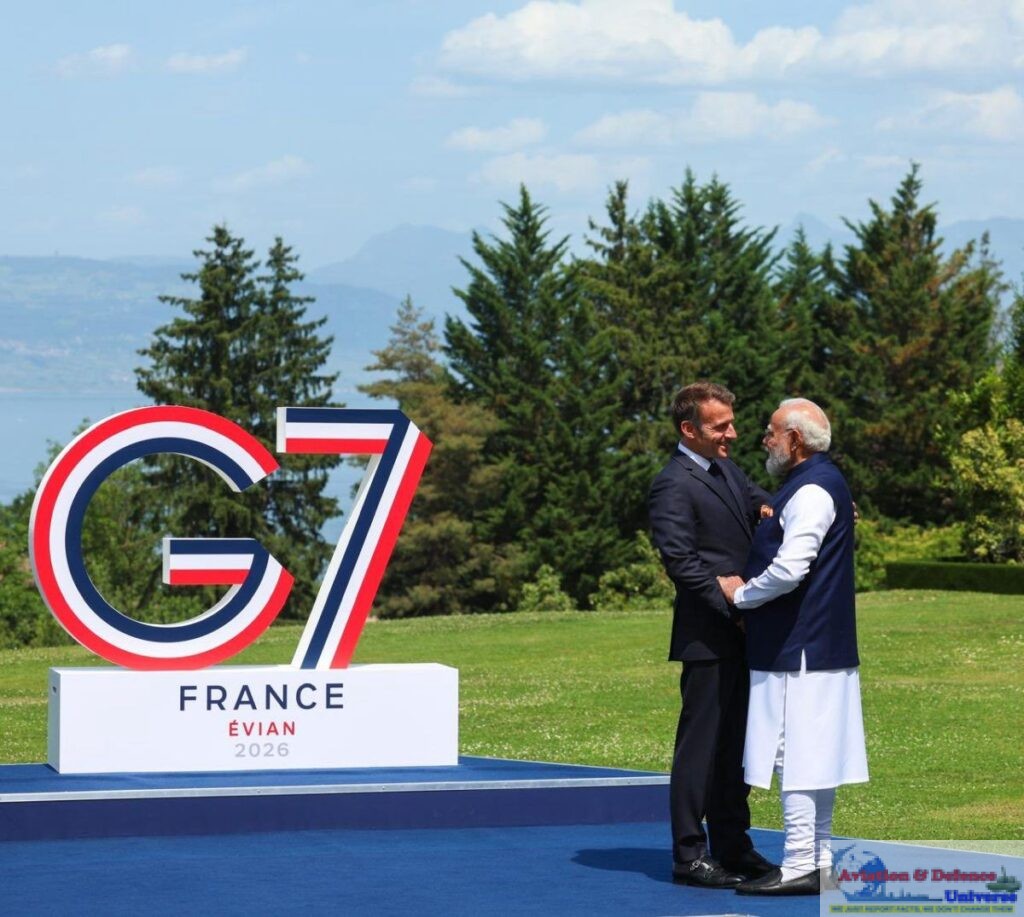
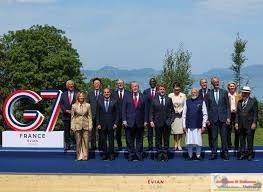
The three sessions France’s presidency set for India’s outreach were, forging new partnerships and rebuilding international solidarity, reviving balanced and sustainable economic growth for all and ensuring a safe, rapid and efficient rollout of artificial intelligence. Each theme aligns with a broader Indian effort at the level of global governance: to reframe development cooperation, assert a stronger voice in economic multilateralism and move from rule-taker to rule-shaper on AI. France did not design those sessions specifically for India, but India arrived prepared to use them.
The Trust Argument
In the session on forging new partnerships, Modi’s intervention centred on a simple idea: the world’s real deficit is not resources, but trust. The MEA readout said he described mutual trust as today’s most important strategic asset and argued that future partnerships depend on rebuilding it. He pointed to the International Solar Alliance, the Coalition for Disaster Resilient Infrastructure, the Global Biofuel Alliance, Mission LiFE, and the Ek Ped Maa Ke Naam campaign as examples of India building multilateral initiatives rather than only joining existing ones. He also argued that international partnerships must move beyond the donor-recipient model toward solidarity and equal ownership, while stressing that disregard for international law remains the biggest obstacle. The point was aimed in two directions at once. For the Global South, it framed India at the G7 as a voice that does not simply accept the existing hierarchy. For the G7, it signaled that India is willing to help shape the architecture of global cooperation but on terms that better reflect the weight of emerging economies.
Growth for Whom
In the session on economic growth, Modi challenged the convention that GDP constitutes development. He argued that growth must be evaluated by who benefits from it, with whom it is generated and in what direction it moves. He drew on India’s domestic record with financial inclusion, health security, digital identity infrastructure, and women-led development as evidence of what growth looks like when connected to the aspirations of people. His formulation, ‘Sarv Jan Hitaye, Sarv Jan Sukhaye’, meaning Benefit for all and Happiness for all, was presented as a governing principle.
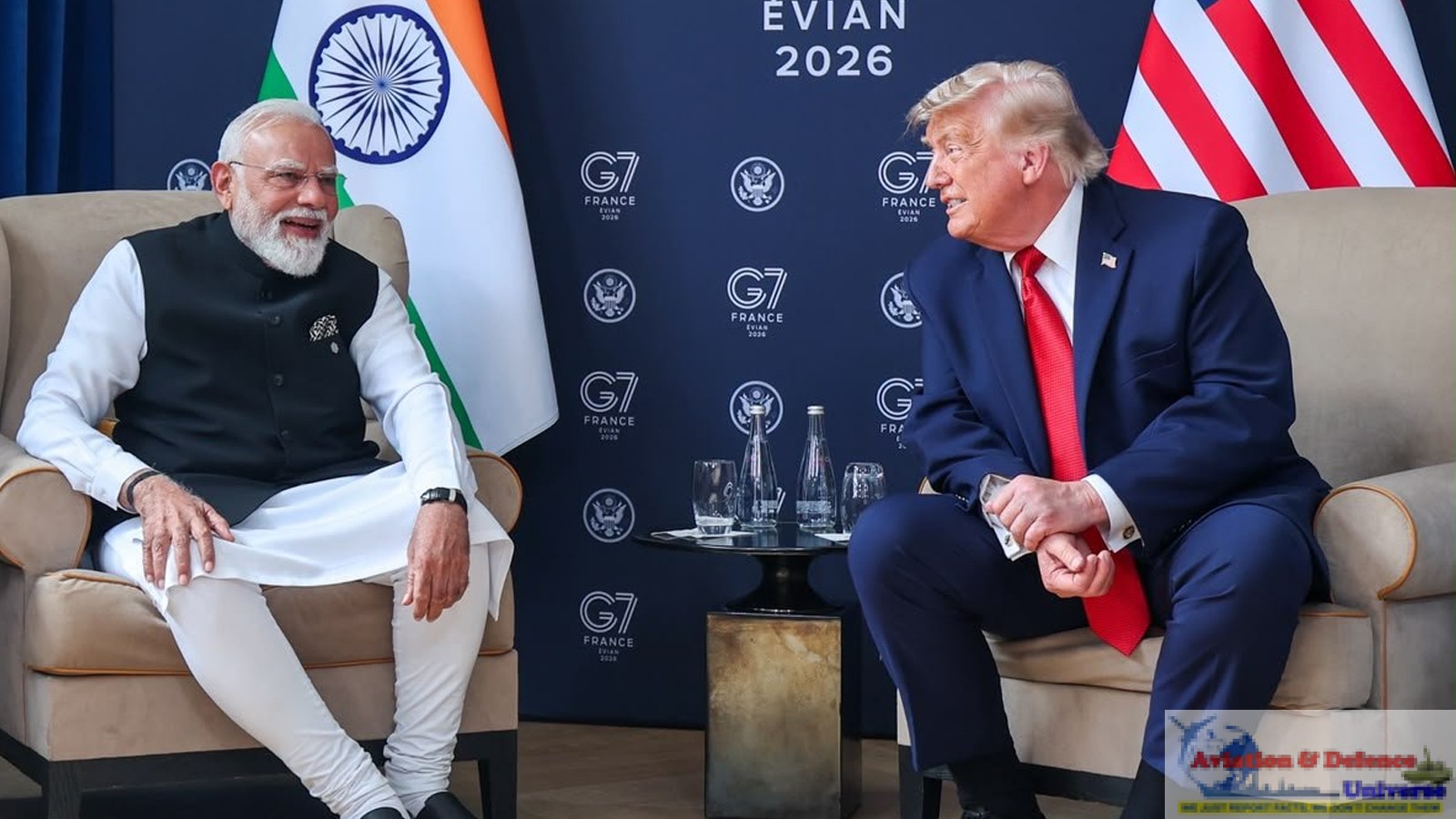
The timing sharpens what that argument was doing. India is negotiating an interim Bilateral Trade Agreement with the United States at a moment when the global trade order is under visible strain. Modi’s bilateral with President Trump on the margins produced a direct outcome. US Trade Representative, Jamieson Greer, arrived in India the following week to advance the negotiations, with both sides instructed to work towards a balanced and mutually beneficial agreement at the earliest. For India to argue for a more inclusive conception of global growth in the plenary session while simultaneously closing in on a trade agreement with the world’s largest economy is a description of how India manages its interests across multiple levels of global economic diplomacy simultaneously. The two positions aren’t really in tension; rather, they describe how India manages its interests across levels of economic diplomacy simultaneously.
AI: From Taker to Shaper
The AI session took the forefront. India had arrived in Evian directly from Bharat Innovates in Nice, where it had showcased 120 deep-tech innovators across 13 frontier technology sectors, and was two days away from VivaTech in Paris, where it was to hold the designation of AI Country Partner and Modi was expected to present India’s MANAV AI governance framework. The G7 session on AI rollout sat between those two engagements. India walked in with a governance position it had been constructing across the AI Impact Summit in New Delhi in February, the India-France AI Working Group announced in Nice and the MANAV framework itself.
India’s position on AI governance is that AI must be trusted and inclusive and that the frameworks governing it must reflect the concerns of developing economies, not only the regulatory preferences of the countries that first built the technology. Making that argument from inside a G7 session rather than from outside it is a materially different position. It is the difference between commenting on a framework and helping to write one. Whether the G7’s eventual AI governance outputs reflect India’s inputs is a separate question. That India was in the room with a prepared position is the change we should highlight.
Six Meetings, Six Agendas
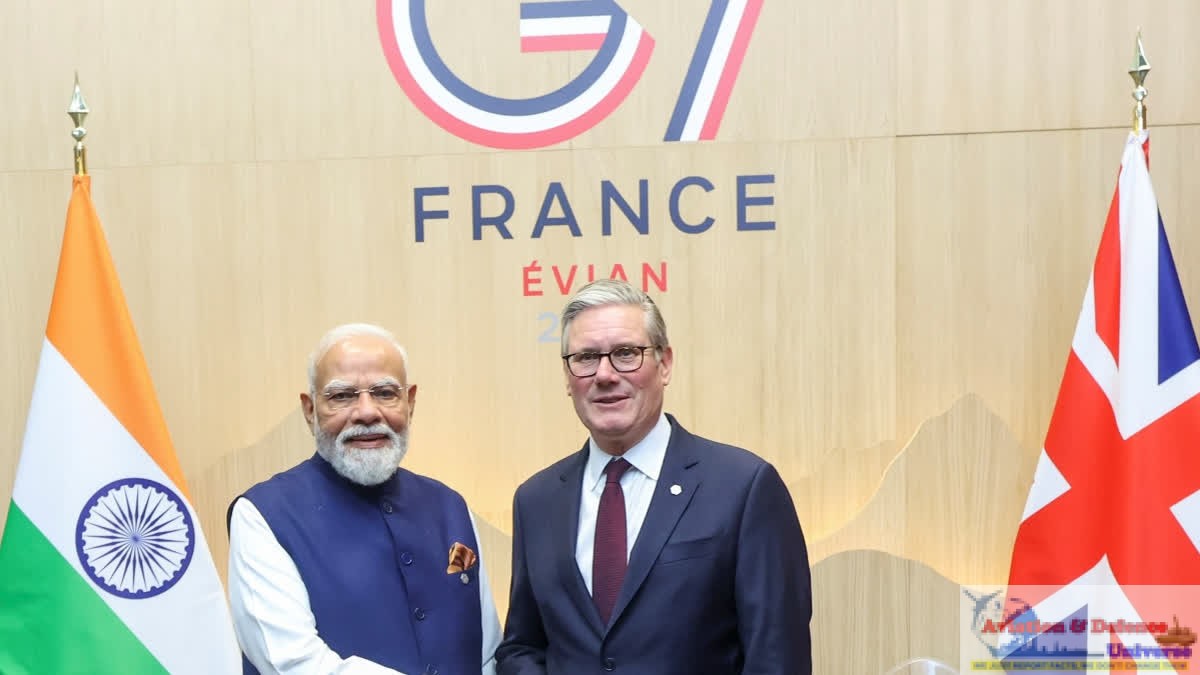
The margins of the Evian summit produced six bilateral meetings, each with distinct substance. With Trump, Modi reviewed progress under the India-US COMPACT framework across defence, strategic technologies, energy and trade, discussed West Asia and freedom of navigation through the Strait of Hormuz and advanced interim trade talks. With the UK Prime Minister Keir Starmer (who has since then resigned), the two leaders took stock of the India-UK trade agreement signed in July 2025 and discussed cooperation in AI, skill development and defence.
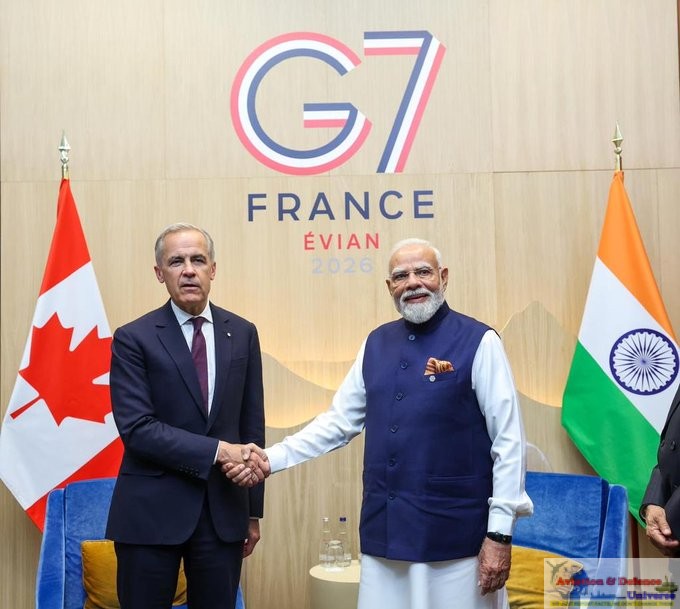
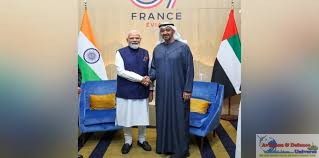
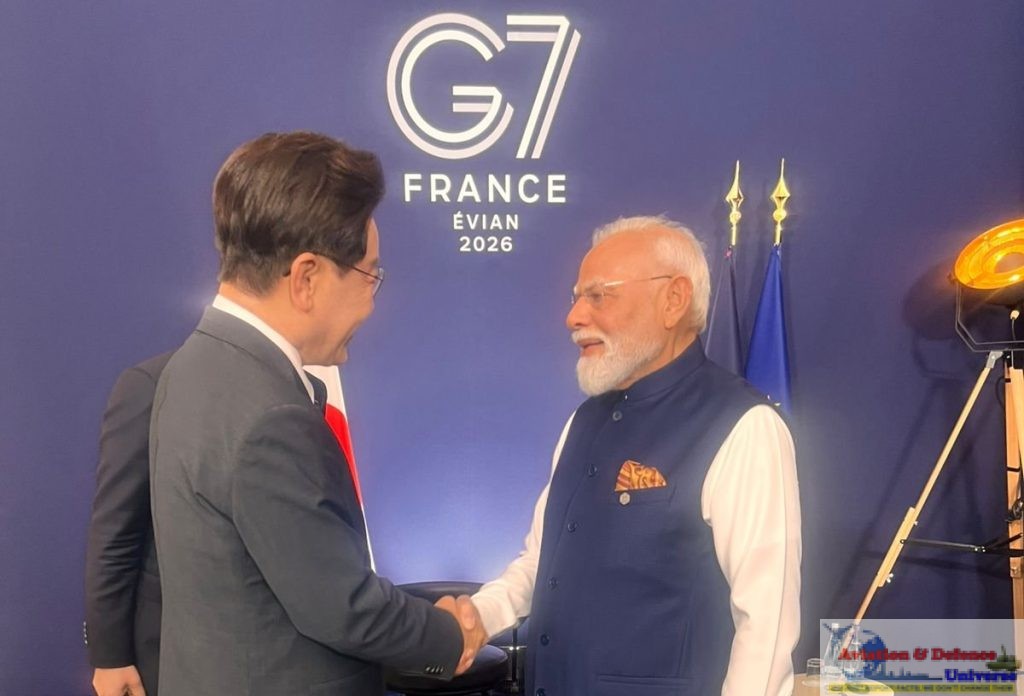
With Canadian Prime Minister Mark Carney, Modi reviewed energy and mineral trade, including LNG, LPG and metallurgical coal, alongside the broader push to strengthen the economic partnership. With UAE President Sheikh Mohamed bin Zayed Al Nahyan, the conversation centred on West Asia stability and maritime security through the Strait of Hormuz. With Japanese Prime Minister Sanae Takaichi, the emphasis was on trade and investment in futuristic sectors. With South Korean President Lee Jae-myung, it was trade, commerce and emerging technology.
Six meetings in 48 hours, across the US, UK, Canada, UAE, Japan and South Korea. Each was at a different stage, but all were substantive. India arrived at each with a specific agenda and that is what distinguished these engagements from routine diplomacy.
What This Means for India’s Strategic Position
India’s G7 participation is often described as a voice for the Global South, but that framing understates what is now at stake. India is also the world’s fifth-largest economy, a nuclear weapons state, a central actor in shaping the G20’s 2023 outcomes on debt, development finance and digital public infrastructure, and the host of the AI Impact Summit in February 2026. When it speaks at the G7 on trust, equitable growth and inclusive AI governance, it is not making a symbolic appeal from the margins; it is advancing positions that increasingly reflect system-level weight.
The deeper point is that India is now using the G7 less as a destination and more as one arena within a broader diplomatic architecture. The strategic implications are visible across the bilateral record at Evian. The India-US COMPACT framework advanced on defence and strategic technologies. The India-UK trade agreement carries implications for defence-industrial cooperation. The India-Japan meeting touched sectors that overlap with advanced defence technology. The India-France engagement in Nice, two days earlier, added explicit language on co-design, co-development and co-production. Taken together, the Evian meetings show India is no longer using G7 as a forum to simply reinforce its presence. It is using it to convert diplomatic access into concrete outcomes. That shift, linking political presence to technology, trade and defence capabilities, is what now matters far beyond the summit room.
The Question Evian Leaves Open
India’s G7 engagement has widened with each successive summit, but Evian marked its most substantive showing yet. Three plenary sessions, six bilaterals, a clearer position on AI governance and active trade conversations gave the visit a depth that earlier appearances did not have. Even so, the basic constraints hold: the G7 is an outreach format for India. India can shape debate at the G7, but it cannot yet set the agenda.
That is why the real significance of Evian lies beyond the summit itself. The AI governance agenda India is building, the trade negotiations underway with the US and Canada, and the defence-industrial partnerships it is deepening with France, the UK and Japan all depend on channels that run outside the G7. Evian showed how those tracks can be aligned, but also why they cannot be replaced by one forum, however important.
What changed at Evian was not just the scale of India’s participation, but the nature of its presence. India is no longer there simply to be included; it is there to influence the terms of the next phase of global economic, technological and strategic rule-making. The open question is not whether India has arrived at that level fir the answer is yes it has. The question is what it can convert that standing into.












































-A4-Size-(2)_page-0001.jpg)