 18th BRICS Summit



















- From Strategic Asset to Strategic Liability: How Pakistan Lost the Taliban
- Pakistan’s Afghan Strategy in Crisis: Why the Taliban Chose Sovereignty Over Subservience
- Pakistan and the Taliban: From Closest Partners to Uneasy Adversaries
By Jai Kumar Verma
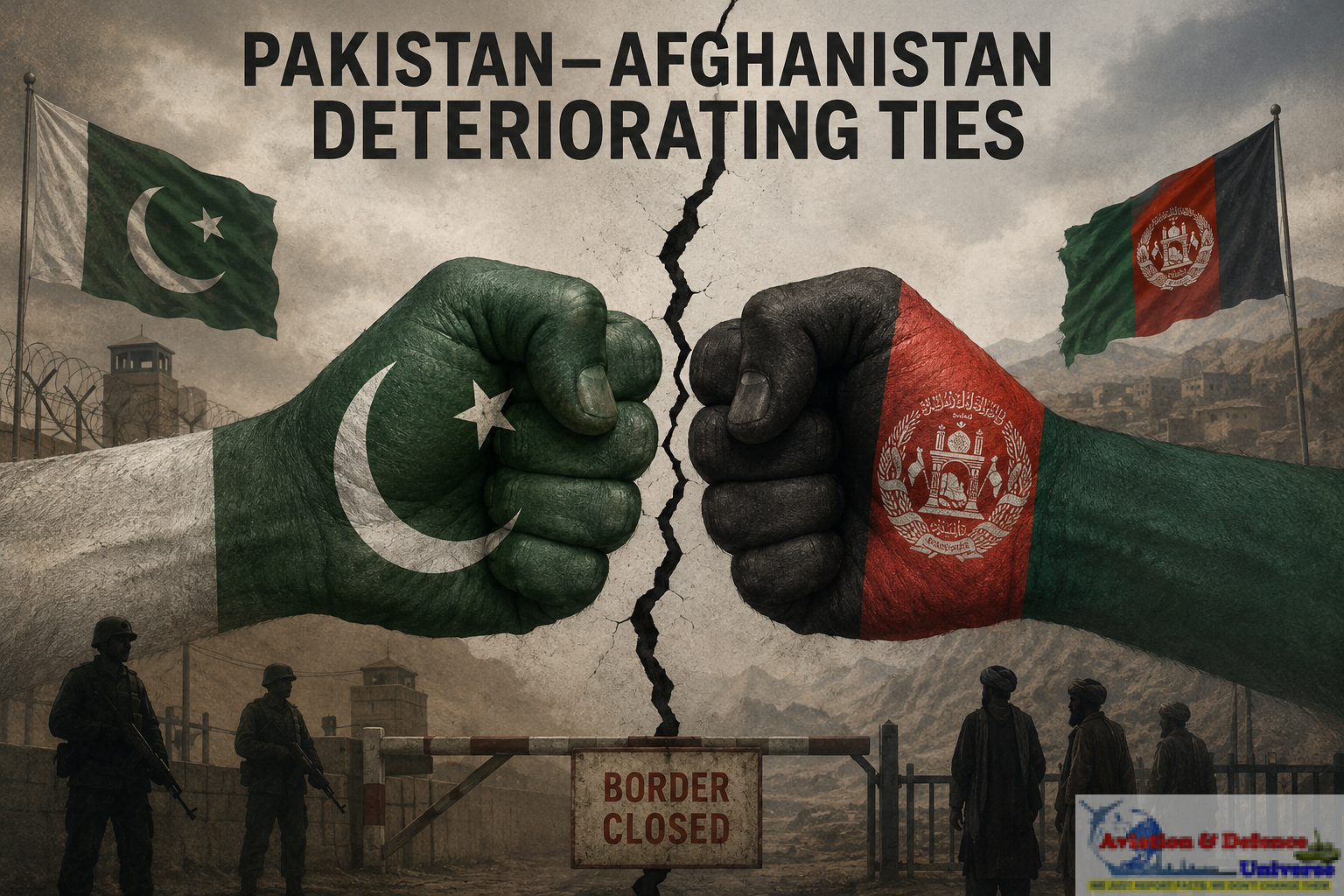
New Delhi. 31 July 2026. Few geopolitical relationships have undergone as dramatic a transformation in recent years as that between Pakistan and the Afghan Taliban. For decades, Islamabad viewed the Taliban as a reliable strategic partner capable of securing its western frontier, limiting India’s influence in Afghanistan and reinforcing its long-standing doctrine of “strategic depth.” The Taliban’s return to power in August 2021 appeared to validate that strategy, with Pakistan celebrating what many regarded as a major geopolitical victory. Yet, within just a few years, those expectations have unravelled. Rising cross-border terrorism, the resurgence of the Tehrik-e-Taliban Pakistan (TTP), disputes over the Durand Line, military confrontations and deepening diplomatic mistrust have transformed a once-close partnership into one of South Asia’s most volatile fault lines.
For nearly three decades, Pakistan viewed the Afghan Taliban as an instrument for securing “strategic depth” against India. Through sustained diplomatic engagement, intelligence support and military patronage, Islamabad believed that a Taliban-led government in Kabul would remain strategically dependent upon Pakistan and would help secure its western frontier while limiting Indian influence in Afghanistan. When the Taliban returned to power in August 2021 following the withdrawal of United States and NATO forces, Pakistan regarded the development as a major geopolitical triumph. The optimism was reflected in Pakistan’s public posture. Soon after Kabul fell, the then Director-General of Pakistan’s Inter-Services Intelligence (ISI), Lieutenant General Faiz Hameed, travelled to Kabul, where photographs of him having tea at the Serena Hotel became a powerful symbol of Islamabad’s perceived influence over Afghanistan’s new rulers. Many observers interpreted the visit as evidence of Pakistan’s confidence that the Taliban government would remain closely aligned with its strategic interests. Pakistan’s then Prime Minister Imran Khan publicly declared that the Afghan people had “broken the shackles of slavery,” a statement that attracted widespread international attention and underscored Islamabad’s belief that the Taliban’s return represented a favourable strategic outcome.
Pakistan’s Role in the Taliban’s Return to Power
Pakistan played a central role in facilitating the Taliban’s return to power by extending political, diplomatic and logistical support over nearly three decades. After the US intervention in 2001, many Taliban leaders relocated to Pakistan, particularly to Quetta, Peshawar and parts of Balochistan and Khyber Pakhtunkhwa. These safe havens reportedly enabled the movement to reorganise its leadership, recruit fighters, plan operations and sustain a prolonged insurgency against the Afghan government and coalition forces.
The United States, the United Nations and several independent studies have long alleged that Pakistan maintained extensive links with sections of the Taliban leadership. Afghan and American officials accused the Inter-Services Intelligence (ISI) of facilitating cross-border movement and maintaining communication with senior Taliban commanders. Several US military commanders described Pakistan’s approach as a “double game”—publicly supporting the global war on terrorism while allegedly tolerating or covertly assisting Taliban elements. Islamabad has consistently rejected these allegations.
Pakistan was also accused of providing the Taliban with logistical assistance, financial networks, medical treatment, specialised training, weapons and operational support, allegations it has consistently denied. At the diplomatic level, however, Islamabad played a significant role in facilitating the US-Taliban negotiations that culminated in the 2020 Doha Agreement, paving the way for the withdrawal of American forces.
Pakistan’s Strategic Expectations from the Taliban Regime
Pakistan viewed the Taliban’s return to power in August 2021 as the fulfilment of a long-standing strategic objective. Islamabad expected a friendly government in Kabul that would remain politically aligned with its regional interests, curtail India’s influence in Afghanistan and revive its doctrine of “strategic depth”. It also anticipated close security cooperation against the TTP, recognition of the Durand Line as the international border and continued Afghan economic dependence on Pakistan, which it believed would provide Islamabad with considerable political leverage over the new Taliban regime.
These expectations proved largely misplaced. The Taliban pursued an independent Afghan nationalist agenda, refusing to recognise the Durand Line and resisting Pakistan’s demands for military action against the TTP. Instead, cross-border militant attacks increased, deepening tensions between the two neighbours. Simultaneously, the Taliban expanded diplomatic and economic engagement with China, Russia, Iran, the Central Asian republics and Gulf countries, reducing Afghanistan’s reliance on Pakistan. Rather than becoming a strategic proxy, the Taliban asserted its sovereignty, leaving Pakistan’s assumptions on strategic depth, counter terrorism cooperation and political influence largely unfulfilled.
Why Relations between Pakistan & Afghanistan Deteriorated
Relations between Pakistan and the Taliban regime have deteriorated rapidly since 2021, primarily due to the growing threat posed by the TTP. Islamabad accuses the Taliban of allowing TTP leaders and fighters to operate from Afghan territory and failing to curb cross-border attacks. Although the Taliban deny providing official support, Pakistan has witnessed a sharp increase in terrorist violence, particularly in Khyber Pakhtunkhwa and Balochistan. According to an important think tank, 2024 was Pakistan’s deadliest year in nearly a decade, with frequent attacks on security personnel, military installations and civilians.
The long-standing Durand Line dispute has further strained bilateral ties. Pakistan’s border fencing and security measures have triggered repeated clashes at Torkham and Spin Boldak, resulting in casualties and disruptions to trade and cross-border movement. Islamabad’s airstrikes inside Afghanistan in April 2022, March 2024, December 2024, October 2025 and February 2026 aimed at alleged TTP hideouts, drew strong protests from Kabul and intensified anti-Pakistan sentiment. The deportation of undocumented Afghan nationals from Pakistan since late 2023 further aggravated tensions. Repeated closures of the Torkham and Chaman border crossings have disrupted trade, transit and regional connectivity. Consequently, relations have shifted from strategic cooperation to deep mistrust, marked by recurring military confrontation, diplomatic friction and growing instability along the Pakistan–Afghanistan border.
Pakistan’s Allegations Against India
Pakistan has consistently alleged that India uses Afghan territory to undermine its internal security by supporting separatist and militant organisations, including the Baloch Liberation Army (BLA) and the Baloch Liberation Front (BLF). These allegations have featured prominently in Islamabad’s security narrative and have been repeatedly raised at international forums. However, despite making such claims since the Taliban’s return to power in August 2021, Pakistan has failed to produce credible evidence that has gained international acceptance establishing official Indian involvement in supporting terrorist or separatist groups operating against Pakistan.
India has categorically rejected these allegations as baseless and politically motivated. New Delhi maintains that its engagement with Afghanistan has been confined to development assistance, humanitarian relief, infrastructure, education and capacity building, in line with its long-standing policy of non-interference in the internal affairs of other states. Notably, while Pakistan has a well-documented history of supporting cross-border terrorism against India, it has been unable to substantiate comparable allegations against India. Consequently, Islamabad’s accusations are widely viewed as an attempt to deflect attention from its own internal security challenges, particularly the growing threat posed by the TTP.
Taliban’s Position
The Taliban have consistently demonstrated that they are not a proxy of Pakistan but an independent political and military actor guided by Afghan nationalism, Pashtun identity, historical distrust of Pakistani interference and a strong desire for strategic autonomy. Seeking domestic legitimacy and international recognition, the Taliban have pursued a diversified foreign policy by strengthening engagement with different foreign powers. This broader diplomatic outreach reflects Kabul’s determination to avoid excessive dependence on Islamabad and to pursue an independent foreign policy based on its own national interests.
Implications for Pakistan
Pakistan’s deteriorating relations with the Taliban, represent a significant strategic setback with far-reaching security, economic and geopolitical consequences. The sharp increase in terrorist attacks by the TTP has imposed heavy human and financial costs, while persistent instability along the Afghan border has necessitated sustained military deployments and heightened security expenditure. Frequent border closures have disrupted trade, transit and regional connectivity, aggravating Pakistan’s already fragile economy. The crisis has also exposed the failure of Pakistan’s long-standing “strategic depth” doctrine, which envisaged a friendly regime in Kabul. Simultaneously, Islamabad faces mounting domestic political pressure, growing diplomatic challenges and a gradual erosion of its regional influence as the Taliban pursue an increasingly independent foreign policy.
Implications for Afghanistan
The deterioration in relations with Pakistan has also imposed significant costs on Afghanistan, exacerbating an already fragile political and economic situation. Repeated border closures, particularly at the Torkham and Chaman crossings, have disrupted trade, transit and the movement of essential goods, increasing inflation and economic hardship. Persistent border clashes and cross-border military operations have undermined security in eastern Afghanistan, while the continued absence of formal international recognition has constrained investment, development assistance and access to global financial institutions. The resulting humanitarian crisis, marked by widespread poverty, unemployment and food insecurity, has deepened Afghanistan’s dependence on regional powers such as China, Iran, the Gulf states and Central Asian countries for trade, humanitarian assistance and diplomatic engagement.
Implications for India & India’s Policy towards Afghanistan
The deterioration in Pakistan–Taliban relations has created both strategic opportunities and continuing security challenges for India. Pakistan’s growing security concerns along its western frontier have compelled it to divert military attention and resources, reducing pressure on its eastern border. Contrary to Pakistan’s expectations, the Taliban have adopted a pragmatic approach towards India, enabling New Delhi to gradually restore diplomatic engagement, maintain a technical-level presence in Kabul and expand humanitarian and developmental cooperation. India has supplied wheat, medicines, vaccines and other relief materials while continuing selected capacity-building initiatives. This calibrated engagement also preserves the possibility of strengthening regional connectivity with Afghanistan and Central Asia over the longer term without formally recognising the Taliban regime.
At the same time, Afghanistan’s fragile security environment continues to pose serious risks. The presence of terrorist groups such as ISIS-K, along with other extremist networks, narcotics trafficking and illicit arms flows, has significant implications for India’s security. Accordingly, India has pursued a balanced policy of pragmatic engagement while consistently emphasising that any expansion of bilateral relations must be accompanied by credible action against terrorism, protection of women’s rights and minorities, and the establishment of an inclusive political order. By combining humanitarian outreach with strategic vigilance, intelligence cooperation and robust counter-terrorism preparedness, India seeks to safeguard its national security while preserving its long-term interests in Afghanistan and the wider region.
Wider Regional Implications
The deterioration in Pakistan–Taliban relations has reshaped the regional strategic landscape. China remains concerned about the potential activities of the East Turkestan Islamic Movement (ETIM) and the security of its Belt and Road investments. Iran faces mounting challenges arising from refugee flows, cross-border insecurity and disputes over the Helmand River’s water resources. The Central Asian republics continue to fear the spread of extremism, terrorism and narcotics trafficking, prompting closer security coordination with regional partners. Russia has expanded its engagement with the Taliban to safeguard its strategic interests and promote regional stability. Meanwhile, Pakistan’s exclusive influence over Afghanistan has diminished as Kabul diversifies its diplomatic partnerships with different countries including Russia, China and India. The result is the emergence of a more competitive and multipolar regional order in which several powers seek to shape Afghanistan’s future.
Pakistan’s Afghanistan policy was built on the assumption that ideological affinity would translate into strategic obedience. Instead, the Taliban’s return to power has reaffirmed the enduring strength of Afghan nationalism and the limits of external influence. Kabul’s refusal to accommodate Islamabad’s demands on the Durand Line and the Tehrik-e-Taliban Pakistan has transformed a perceived strategic asset into a significant security liability. For India, this evolving environment presents opportunities for cautious engagement alongside persistent security risks. New Delhi must therefore pursue a balanced strategy combining humanitarian assistance, calibrated diplomatic engagement, sustained counter-terrorism vigilance and regional cooperation. Ultimately, the future stability of South Asia will depend not only on Pakistan–Afghanistan relations but also on Afghanistan’s ability to function as a sovereign and stable state rather than an arena for geopolitical competition.
Pakistan’s experience with the Taliban reiterates one of the enduring realities of international relations: states may cultivate proxies, but they cannot permanently subordinate another nation’s strategic interests to their own. The Taliban’s refusal to accept Pakistan’s security priorities, recognise the Durand Line or decisively confront the TTP reflects the primacy of Afghan nationalism over ideological affinity. As Pakistan grapples with mounting security pressures and diminishing regional influence, Afghanistan is pursuing a more independent foreign policy while navigating its own economic and humanitarian challenges. For India, this evolving landscape offers opportunities for pragmatic engagement, but also demands continued vigilance against terrorism and regional instability. Ultimately, the future of South Asia will depend not on outdated notions of strategic depth, but on the emergence of a stable, sovereign Afghanistan that contributes to regional security rather than serving as an arena for geopolitical rivalry.
(Jai Kumar Verma is a Delhi-based strategic analyst and Life Member of United Services Institute of India and member of The Manohar Parrikar Institute for Defence Studies and Analyses. The views in the article are solely the author’s. He can be contacted at editor.adu@gmail.com)








































































-A4-Size-(2)_page-0001.jpg)