




















- From Indian Ideas to Naval Strength: Swavlamban Opens with a Call to Collaborate
- Build, Scale, Sustain: Swavlamban Sets Sights on India’s Maritime Capability
- Closing Capability Gaps: Swavlamban 2026 Calls for Deeper Defence Indigenisatio
By Sangeeta Saxena
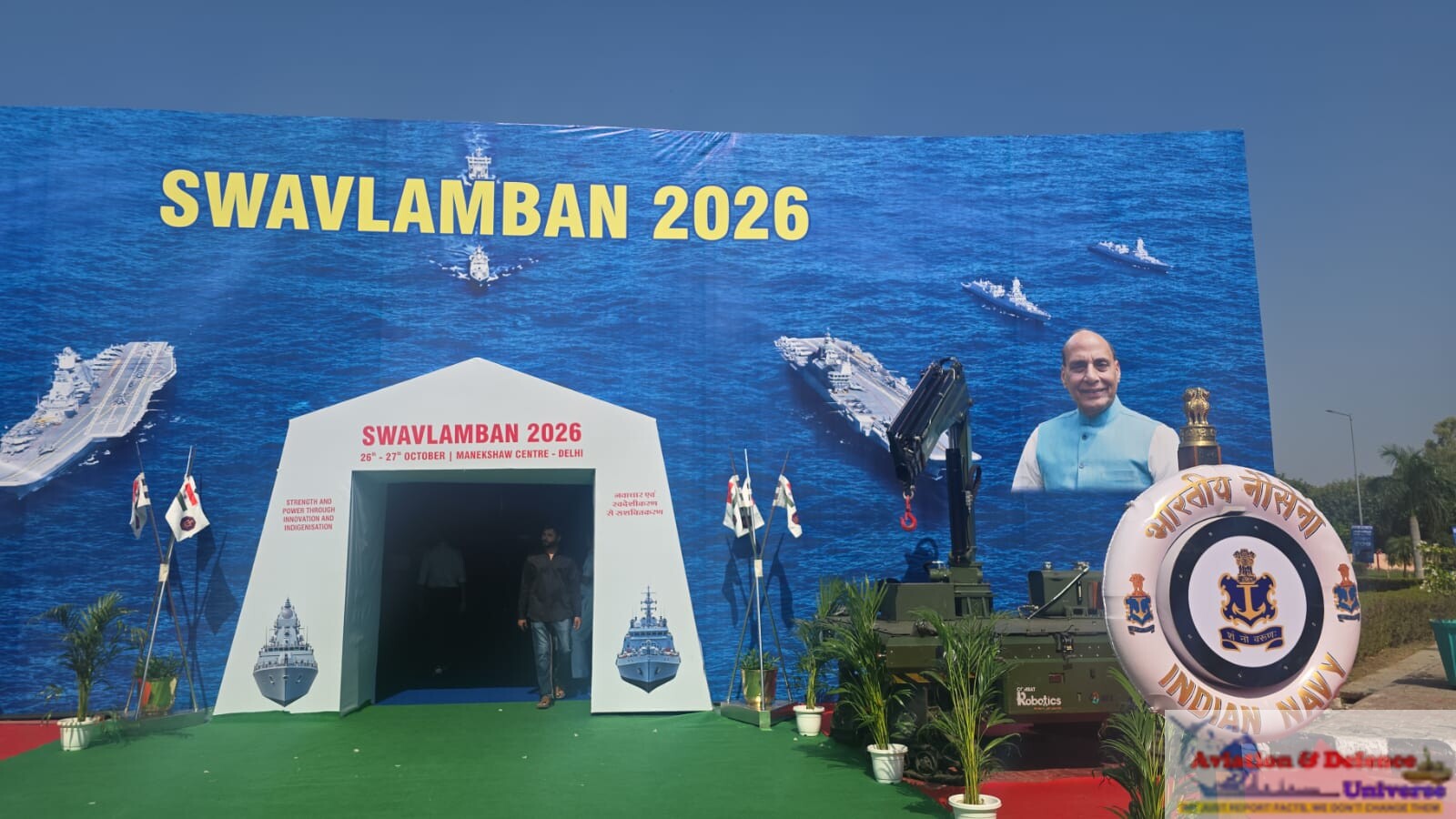
New Delhi. 27 October 2026. An idea born in an Indian laboratory must travel a long way before it becomes equipment a sailor can trust at sea. At the inaugural session of Swavlamban 2026, the Indian Navy, the government and the defence industry set out to shorten that journey—calling for faster testing and procurement, deeper indigenous supply chains and the capacity to produce and sustain critical systems when the nation needs them most.
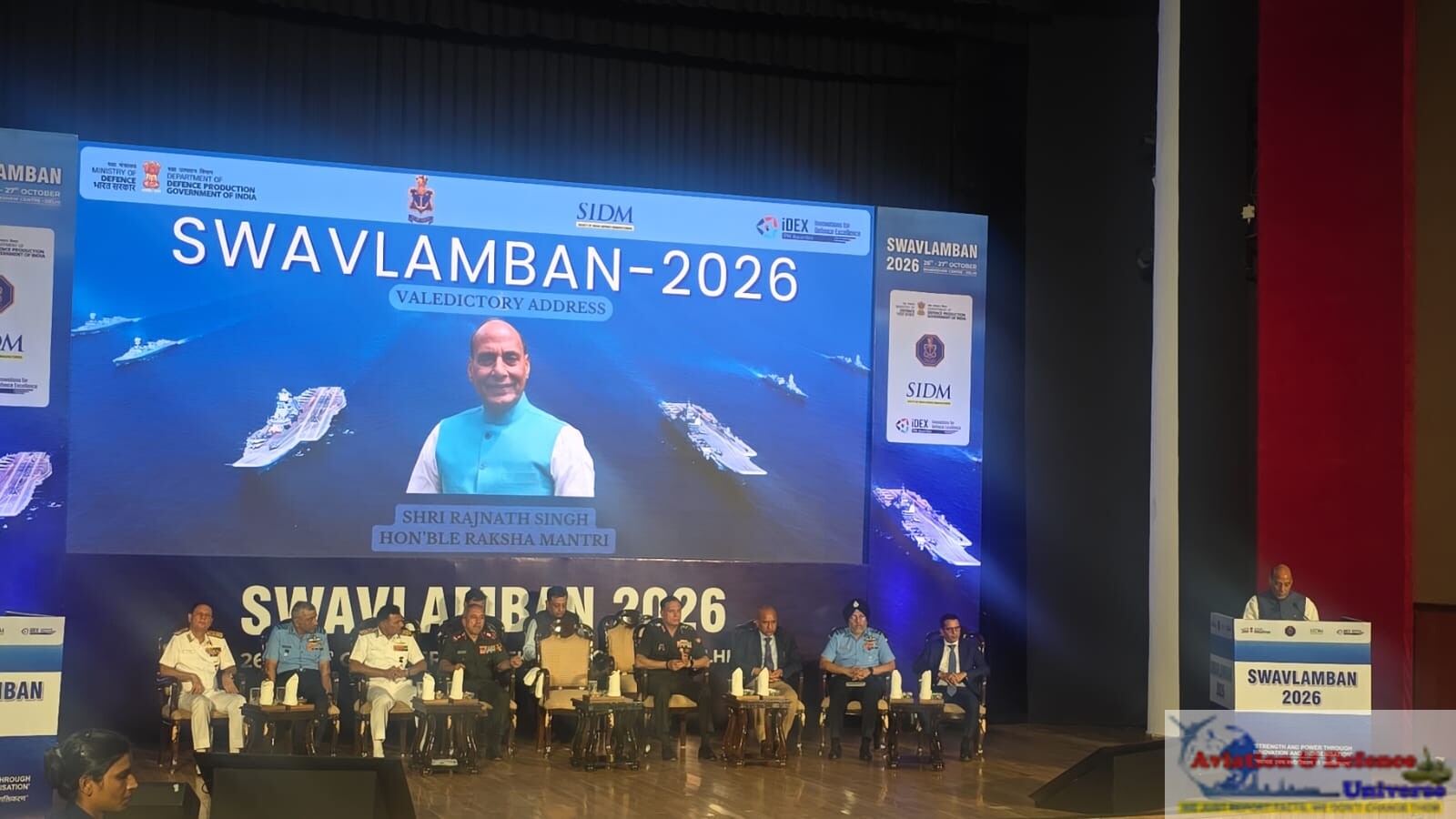
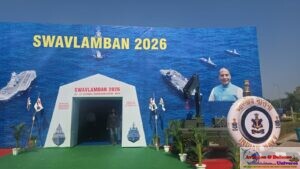
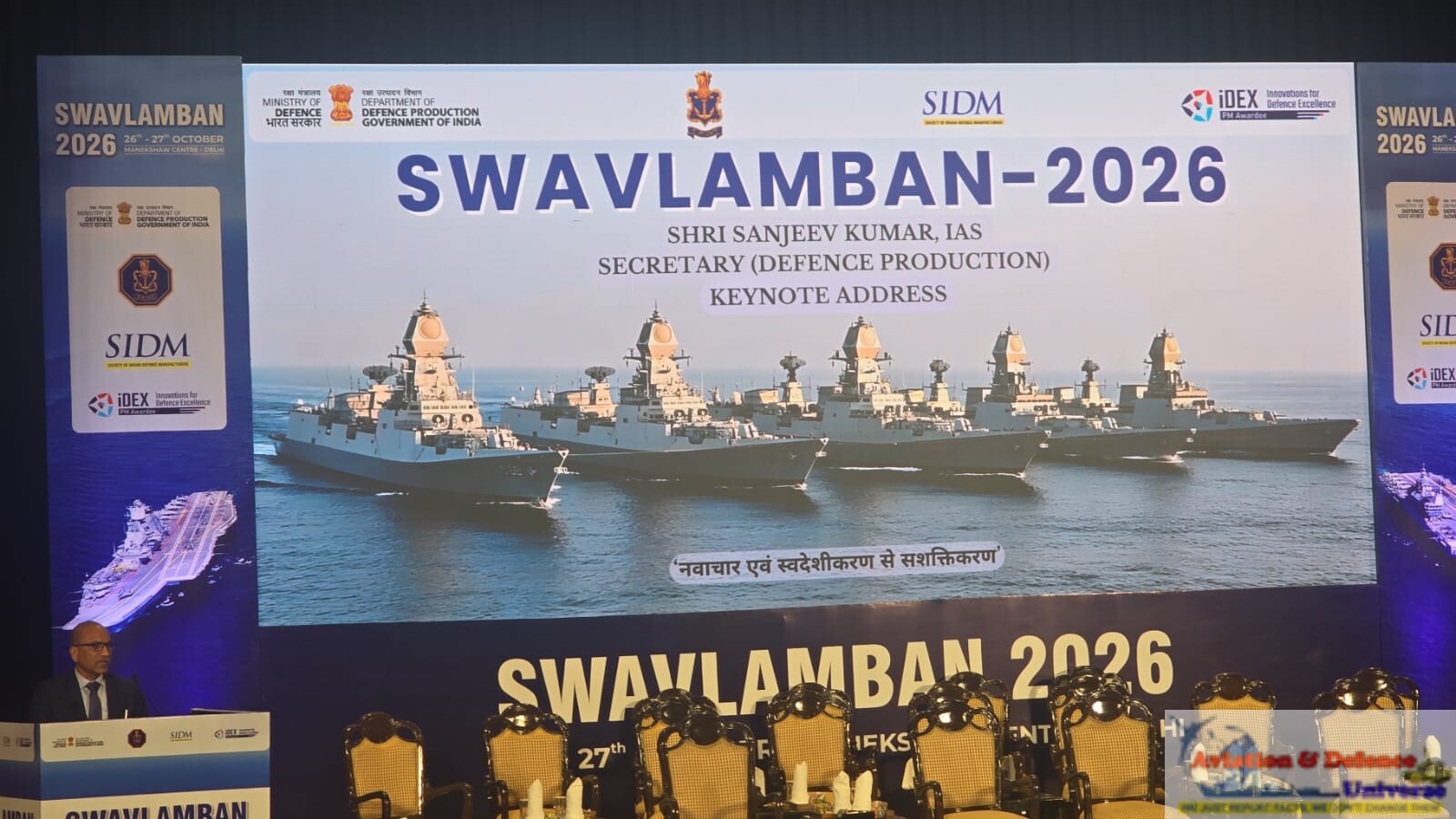
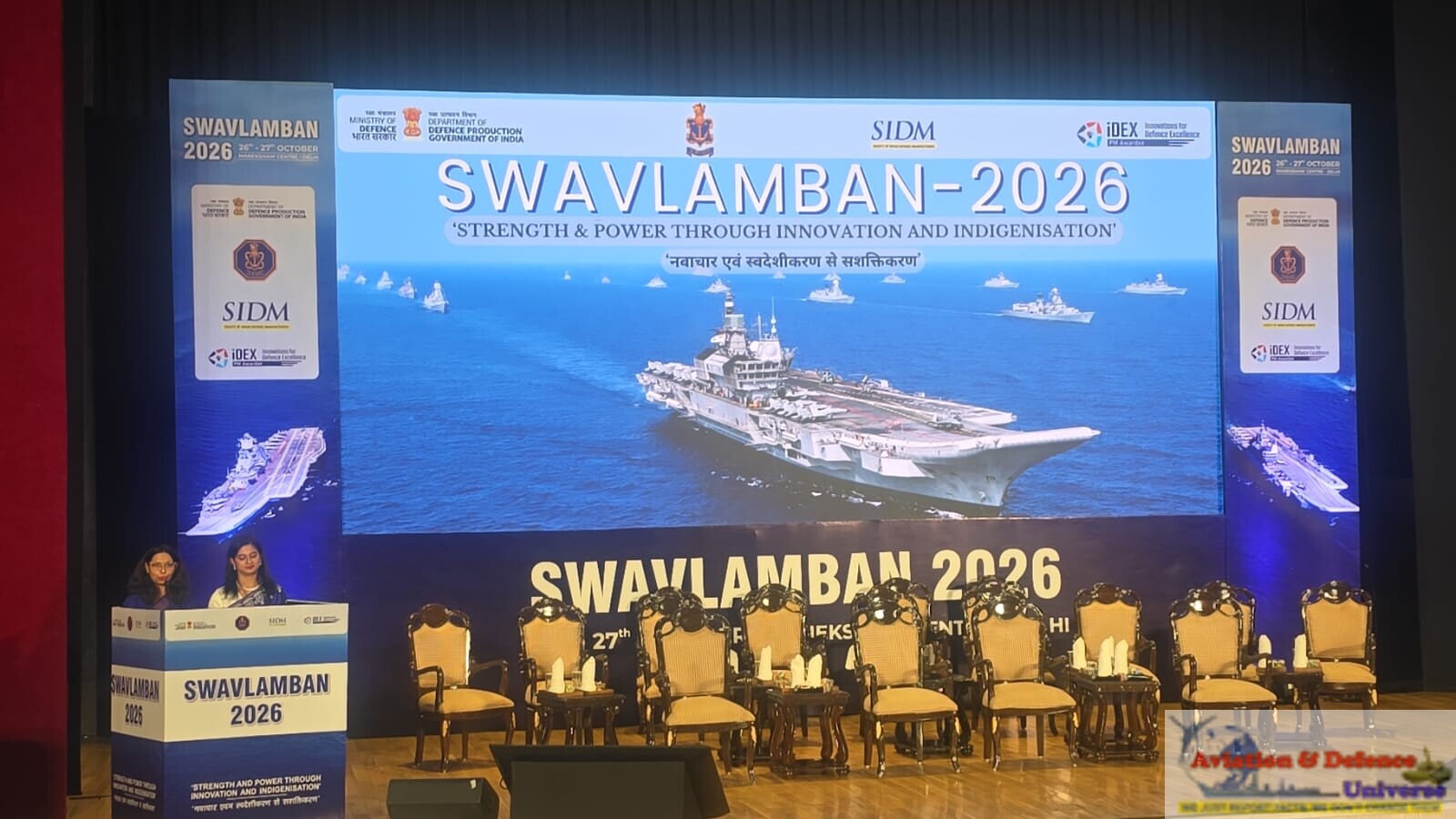
 Organised by the Indian Navy in association with the Department of Defence Production, the Defence Innovation Organisation and the Society of Indian Defence Manufacturers (SIDM), the fifth edition of the Navy’s flagship Naval Innovation and Indigenisation Seminar brought together operational users, manufacturers, start-ups, MSMEs, researchers and investors at the Manekshaw Centre in New Delhi.
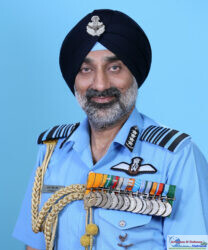
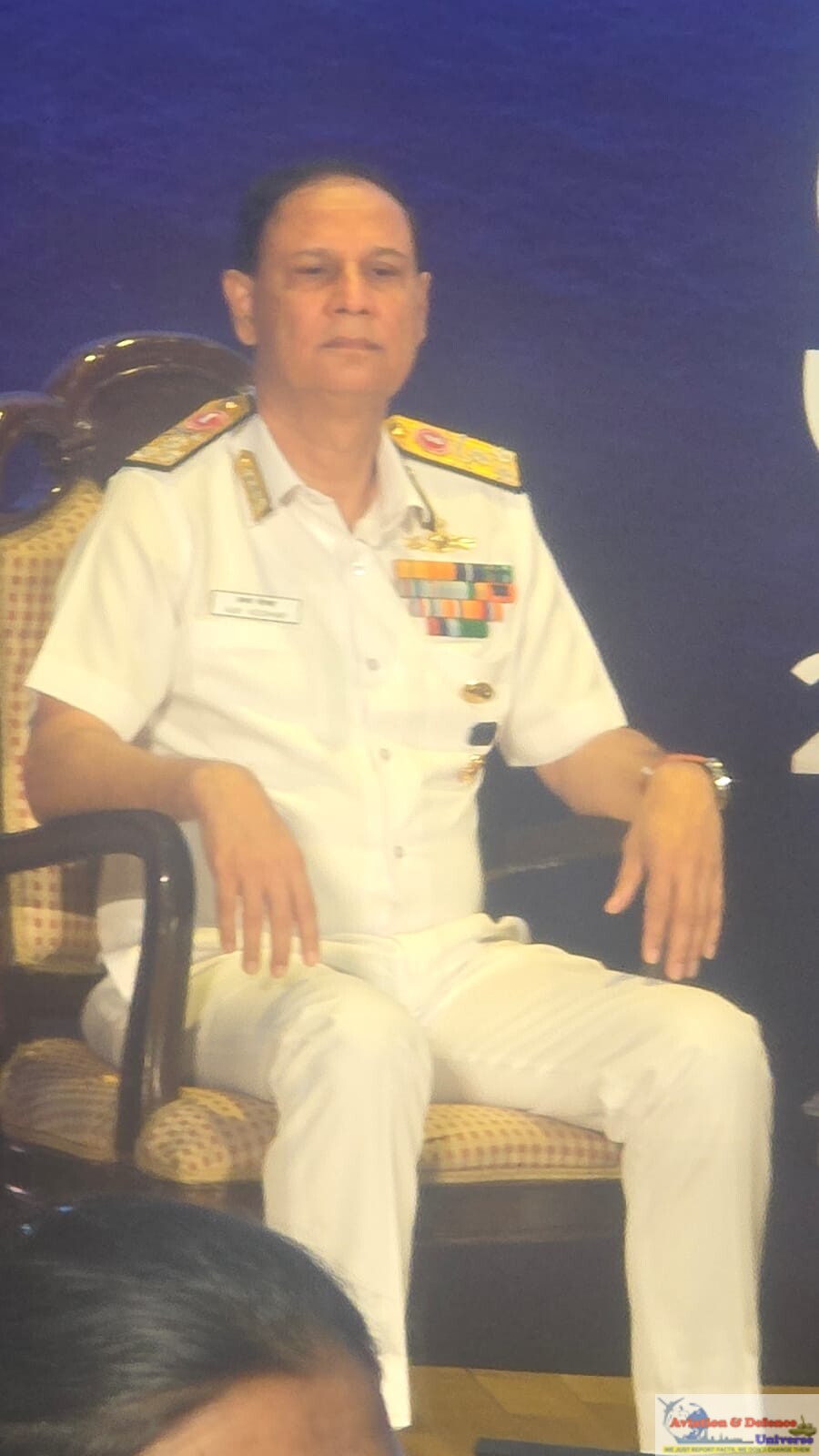
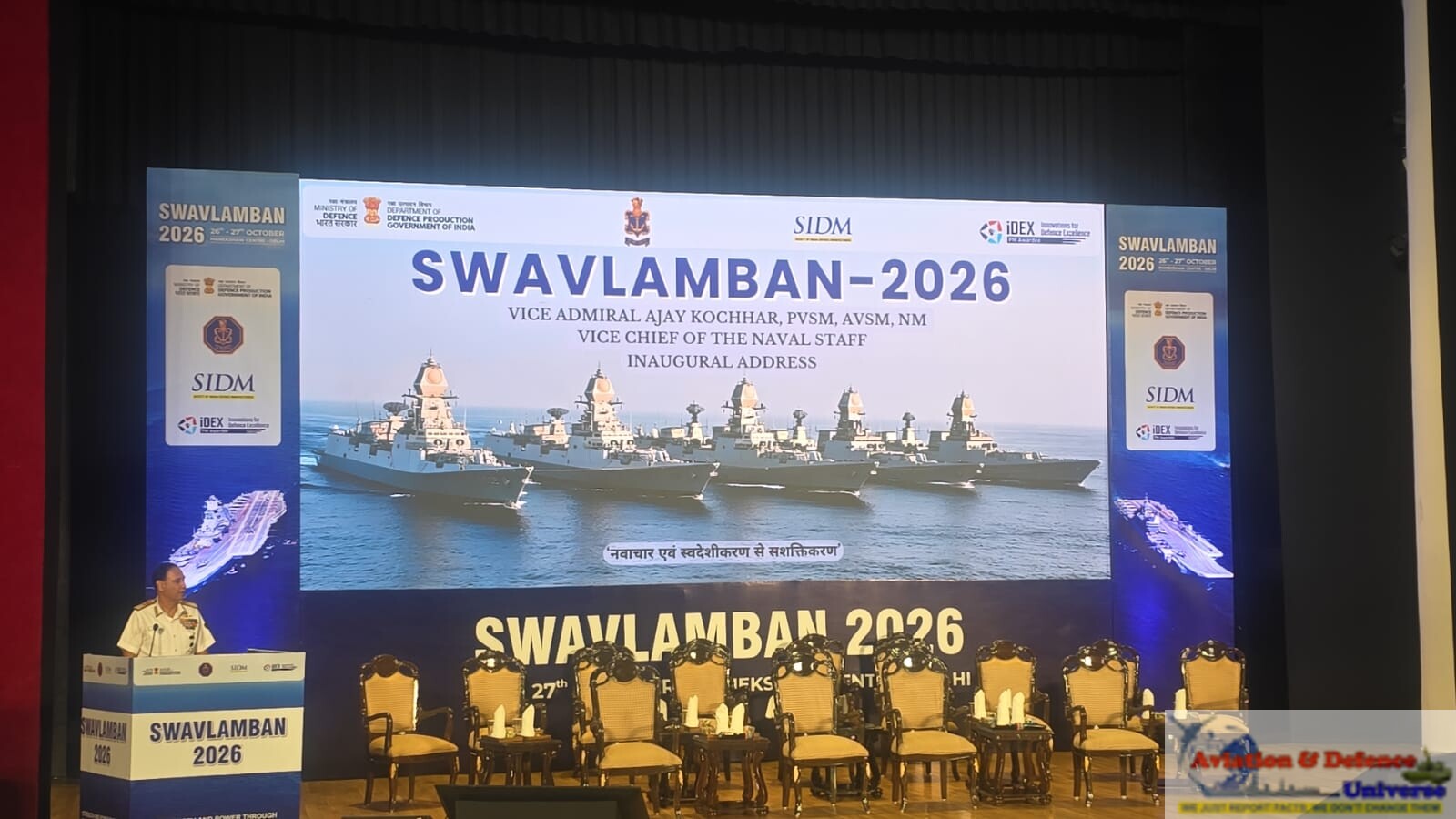
The inaugural session opened with a welcome address by Vice Chief of the Naval Staff Vice Admiral Ajay Kochhar. Secretary, Defence Production, Sanjeev Kumar delivered the inaugural address, followed by a special address from Neeraj Gupta, Vice President, SIDM. Together, the speakers identified a common challenge: ensuring that promising Indian technologies become reliable, affordable and sustainable capabilities for the armed forces.
A growing partnership with innovators
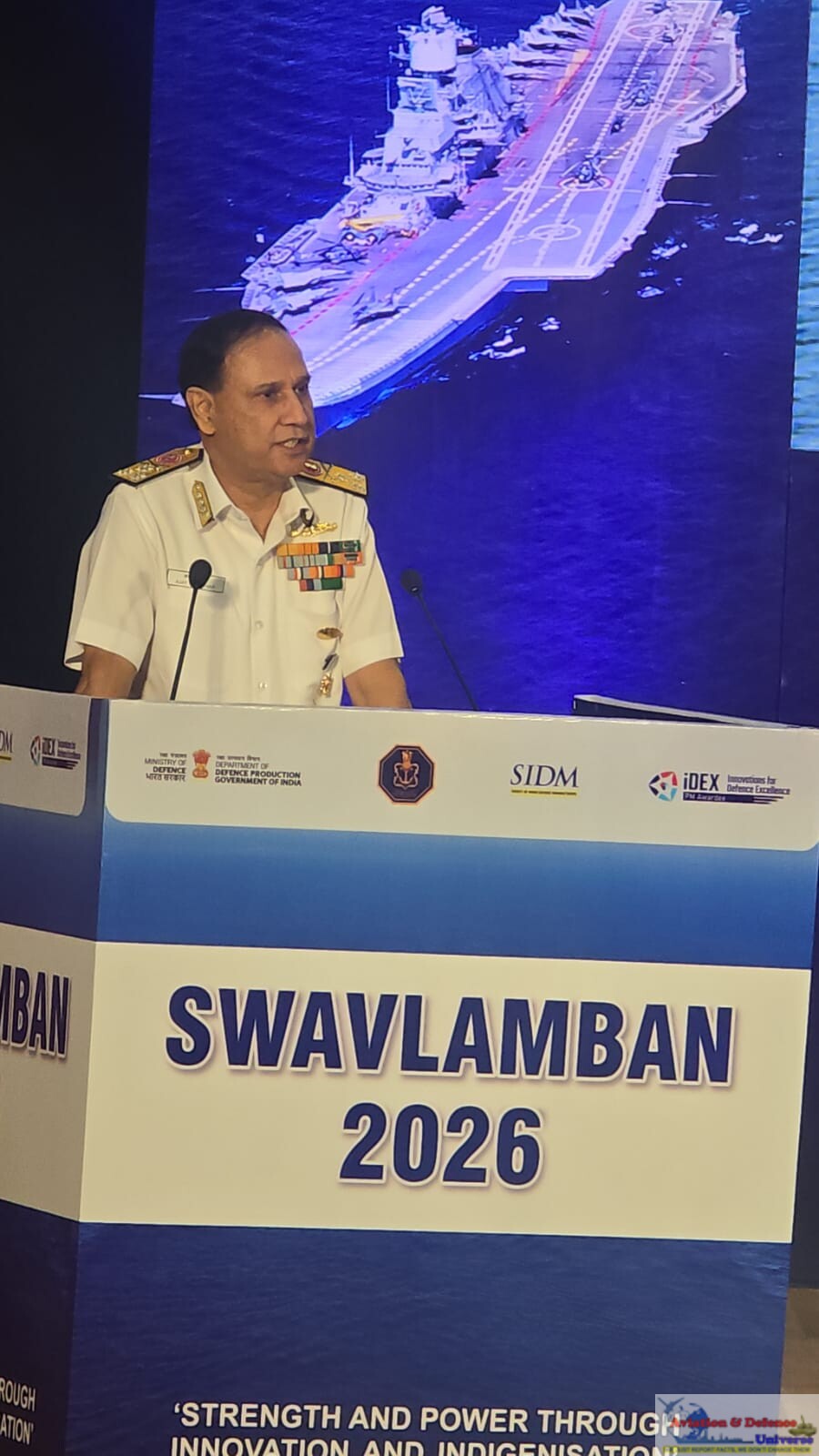
Welcoming participants, Vice Admiral Kochhar described Swavlamban as a platform where the Navy and the wider defence innovation ecosystem could exchange ideas, share feedback and find solutions to emerging operational requirements.
For a maritime nation such as India, he said, security depended on more than the capabilities already available. It also depended on the ability to sustain and adapt those capabilities and develop new ones as operational circumstances changed.
 Tracing the progress made since the seminar’s inaugural edition in 2022, he said the Navy had continued to engage with Indian innovators through the Innovations for Defence Excellence (iDEX) scheme. Of the 682 iDEX challenges launched across the defence sector, 229 related to the maritime domain, he said.
These challenges had attracted more than 4,000 proposals from Indian industry, with over 150 start-ups and MSMEs joining the defence innovation ecosystem. The Vice Chief said Acceptance of Necessity approvals worth ₹3,575 crore had been recorded and contracts worth ₹1,936 crore concluded.
Beyond the figures, he stressed the value of the experience gained by the Navy and industry: a better understanding of operational needs and the commercial challenges involved in carrying a solution from concept to capability.
Closing critical gaps
Vice Admiral Kochhar identified three priorities for the next phase of the effort: addressing critical capability gaps, shortening the time between innovation and integration, and building the capacity to scale and sustain production.
The first priority, he said, required attention to gaps that had remained unresolved and might need specialised approaches. Some vulnerabilities lay deep within components and sub-components, creating both supply-chain and cyber risks.
 He called for sustained innovation in areas including advanced propulsion systems, weapons, sensors, drones and counter-drone systems. These fields could be technically demanding, he acknowledged, but that made a focused and sustained effort all the more necessary.
The second priority was speed. Artificial intelligence, autonomous systems and cyber capabilities were changing the operational environment rapidly, he said, and a technological advantage could be short-lived if a solution could not be fielded, adapted and refined in time.
Closer engagement between users and developers from the outset, iterative testing and timely decisions were essential to accelerating integration. At the same time, he cautioned, speed could not come at the expense of the reliability and safety required of equipment operating in a demanding maritime environment.
The Vice Chief’s third priority was the ability to scale and surge. Recent conflicts, he observed, had demonstrated the importance of producing and replenishing critical systems, including unmanned platforms and interceptors, at the pace operational circumstances demanded.
Production capacity alone, however, was not enough. Spares, repair facilities, technical support and the time required to restore equipment to operational readiness also had to be part of the planning.
“Our approach to innovation and indigenisation must therefore factor in not just what we can develop, but also how quickly we can produce it at a scale, sustain it and replenish it when the operational demands arise,” he said.
A showcase of Indian capability
Vice Admiral Kochhar said the Swavlamban exhibition, featuring 100 stalls, would present indigenous products with potential applications for the Navy, the other services and national security agencies.
 The exhibition would allow users and industry representatives to meet developers directly, understand the journey behind their innovations and assess their practical applications. Interactive sessions would bring operational, technological and industrial perspectives together, covering innovation and indigenisation, emerging technologies, and the growth of the iDEX ecosystem.
He said the participation of naval and defence attachés also provided an opportunity to explore international cooperation and extend the reach of Indian defence enterprises.
Thanking the Defence Innovation Organisation, SIDM, academia, industry and the organising team, he urged participants to carry the collective effort forward by “converting India’s ingenuity into meaningful capability at sea”.
Collaboration for faster capability
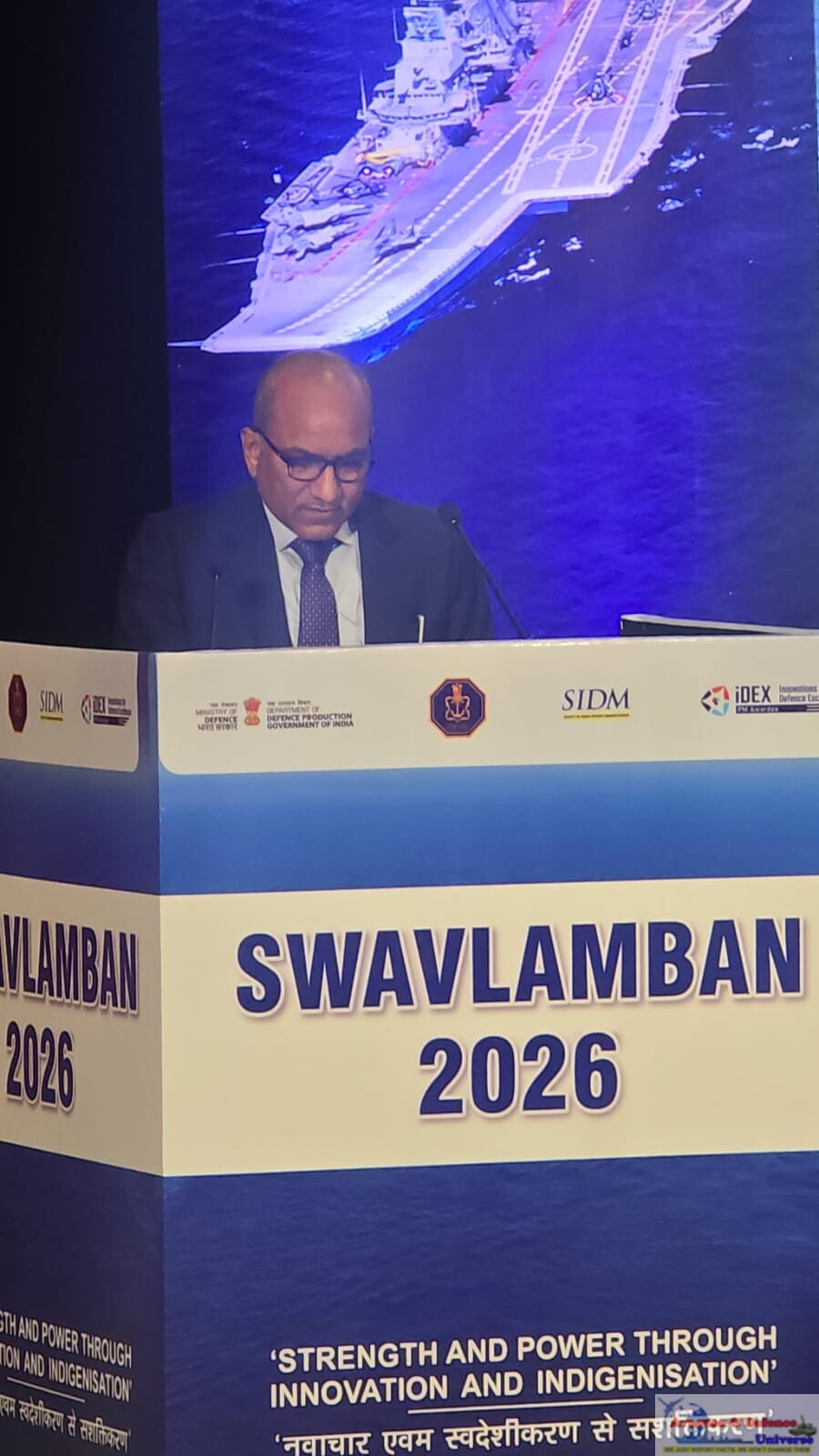
In his inaugural address, Defence Production Secretary Sanjeev Kumar described the fifth edition as another milestone in the development of India’s defence innovation ecosystem. The seminar’s theme, “Strength and Power through Innovation and Indigenisation,” reflected the importance of technological progress and cooperation in building self-reliance, he said.
Kumar recalled the launch of 75 iDEX Defence India Start-up Challenges associated with the Navy during the inaugural edition in 2022, followed by the showcase of prototypes at the second edition in 2023. Swavlamban, he said, had since developed into a platform connecting the armed forces with domestic innovators and helping move indigenous ideas towards operational use.
He highlighted the Navy’s contribution to iDEX, saying more than 240 contracts had been signed for Navy projects, representing nearly 42 per cent of contracts under the programme. He also referred to 42 Acceptance of Necessity approvals, representing approximately 56 per cent of the total approvals under iDEX, and active procurement value exceeding ₹1,800 crore for Navy projects.
Kumar urged stakeholders to move from a predominantly competitive approach towards greater collaboration when developing complex systems. Often, he said, different companies had already developed different parts of a solution. Bringing those firms together could help deliver a complete capability more quickly.
 He acknowledged that winning procurement orders was essential to an enterprise’s survival and future investment. The challenge was to find ways for companies to collaborate while retaining viable commercial opportunities.
The Secretary outlined an intended effort to identify technologies and sub-technologies developed within the iDEX ecosystem that could be applied elsewhere. He also discussed a concept for cataloguing expertise available across industry, the Defence Research and Development Organisation, defence public sector undertakings and other laboratories, so innovators could be connected with the right sources of knowledge and support.
He made clear that this work remained at the planning stage: a concept paper had been prepared, with implementation envisaged first within the Ministry of Defence and potentially beyond it.
The long road from prototype to order
Kumar returned repeatedly to an issue that resonated with the start-ups and MSMEs in the room: the time taken to turn a successful prototype into a procurement order.
Many first-generation entrepreneurs, he observed, did not have deep financial reserves. They had to meet salaries and business expenses, and often borrow funds, while waiting years without certainty of an order.
“We need to find out a mechanism to culminate development of prototype into assured procurement order much faster than what we are able to do till now,” he said.
He also encouraged discussion on how the procurement system could respond when a first-time innovator developed a useful product that fell short of every prescribed specification. Rejecting such work outright, he suggested, could mean losing a substantial capability and the opportunity to improve it for future requirements.
His remarks placed the financial realities of innovation alongside operational requirements: early-stage enterprises need a viable path to orders, while the services need equipment that meets their operational standards and can be trusted in use.
Indigenisation must reach deeper
 Responding to the Vice Chief’s emphasis on surge capacity, Kumar said indigenisation had to go beyond the design and assembly of a platform. A product developed in India could still depend on foreign suppliers for engines, propulsion, materials or other critical components. Such dependencies could limit the ability to expand production when it was most needed.
He called for an end-to-end assessment of platform requirements, including where domestic capabilities could be built and where dependable partnerships with friendly countries might be necessary. He also encouraged designers to consider readily available components and dual-use technologies, so that civilian production capacity could potentially support defence needs in times of increased demand.
Testing and validation formed another major part of his address. Kumar described them as potential bottlenecks arising from infrastructure limitations, procedures and the requirements of development itself.
He proposed examining how India could create additional testing and validation facilities, including through government support. Greater domestic capacity could reduce delays associated with waiting for access to facilities abroad and lessen the need to share sensitive technical information outside the country.
Kumar also referred to discussions on whether testing requirements at different stages could be better coordinated. Strengthening user–industry cooperation, supporting the growth of start-ups and MSMEs, and investing in critical technologies, research and testing infrastructure would, he said, help accelerate development and reduce external dependence.
Industry’s responsibility: reliability at sea
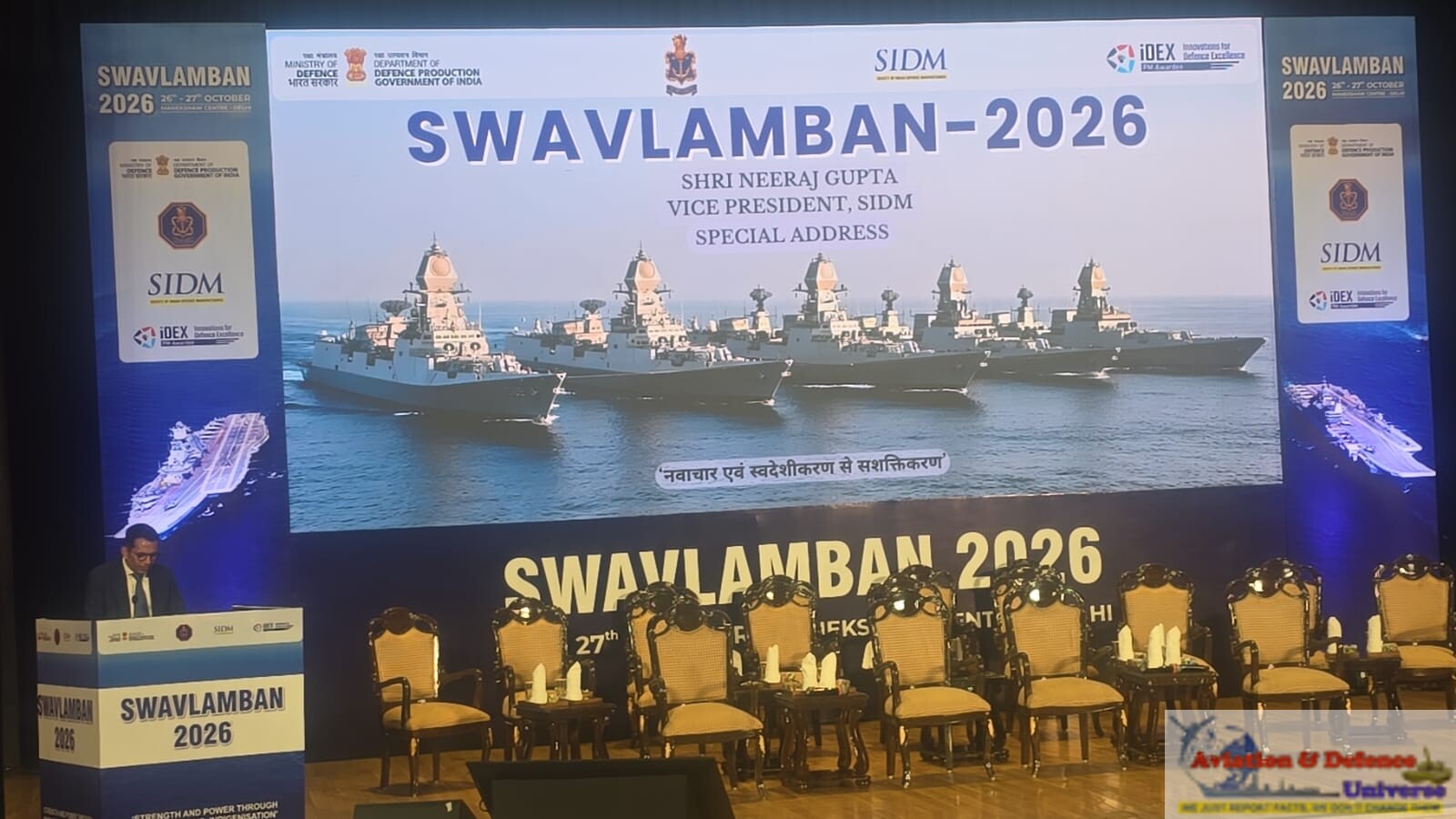
Delivering the special address, SIDM Vice President Neeraj Gupta placed the operational user at the centre of the discussion. For industry, he said, the value of Swavlamban lay in connecting a sailor’s operational challenge with an Indian innovator’s ability to solve it.
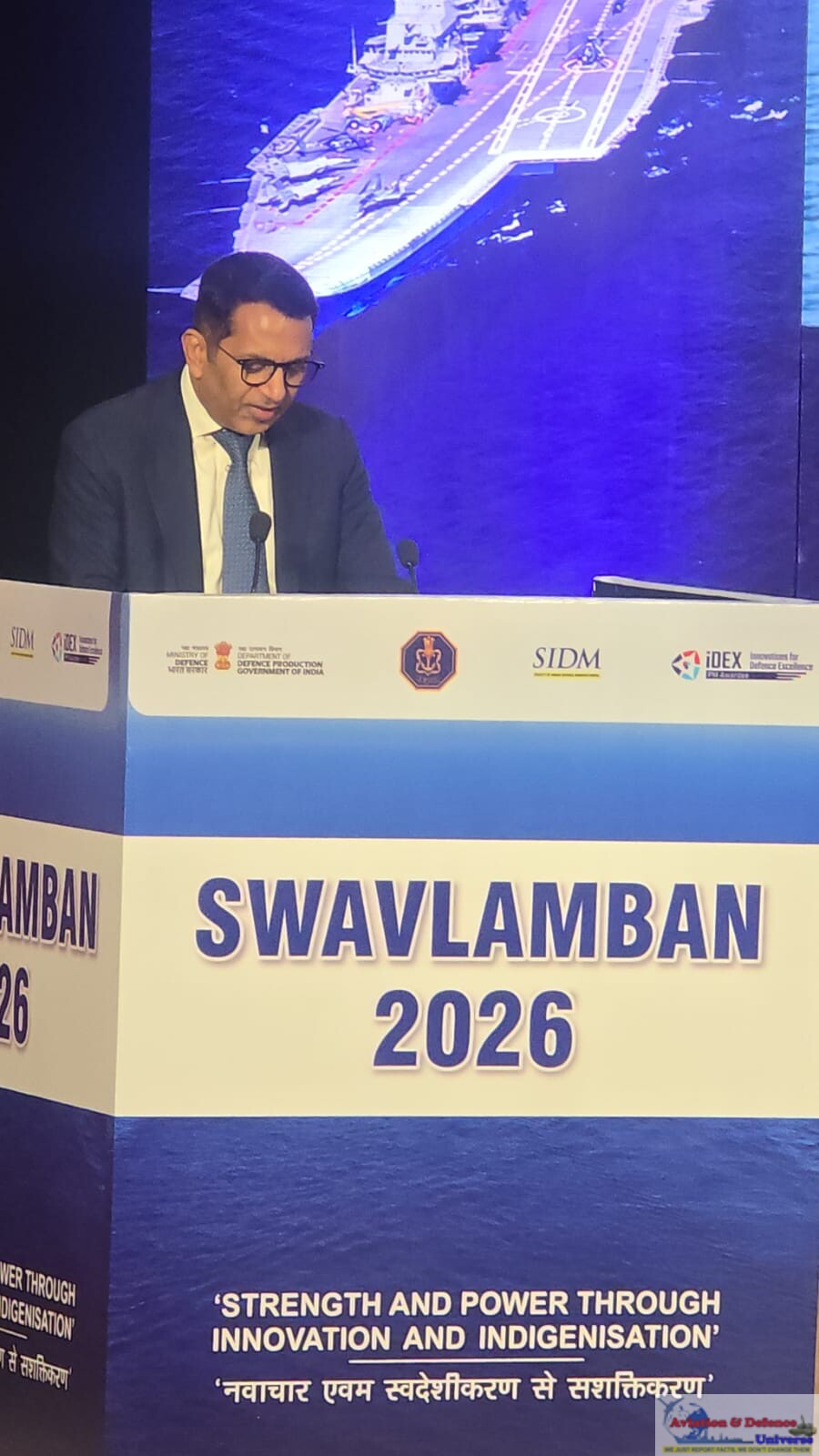 That connection, he argued, had to continue through development, trials, production and sustained service. Indigenous equipment must be something the Navy could deploy, maintain and upgrade with confidence.
“The true test of Atmanirbharta is the confidence with which our sailors can rely on Indian equipment at sea,” Gupta said.
He identified opportunities for Indian companies in unmanned systems, underwater surveillance, secure communications, electronic warfare and counter-drone capabilities. Artificial intelligence, advanced sensors and improved energy systems could also contribute to operational effectiveness and sustainment.
Gupta set out three practical priorities for industry and its partners. The first was a clearer route from successful prototype to operational induction. Companies needed clarity on evaluation criteria, access to trials, certification requirements and the steps following a successful assessment.
Where feasible, he suggested, an initial order could bring a product into service, with subsequent improvements informed by user feedback. That would give industry a basis for production planning and support while allowing the capability to mature through operational experience.
He also acknowledged industry’s obligations: consistent quality, realistic delivery schedules, documentation, training, spares and dependable after-sales service. A successful trial, he said, had to be followed by reliable performance throughout the equipment’s service life.
 The second priority was helping promising companies scale beyond development grants. Moving from a prototype to repeatable production required working capital, facilities, quality systems and skilled personnel. Banks, investors and larger manufacturers could all play a role, he said, provided partnerships respected innovators’ intellectual property and offered fair commercial opportunities.
The third was the creation of time-bound plans to reduce critical dependencies in areas such as propulsion, power systems, sensors, electronics, specialised materials and maintenance software. Gupta suggested that SIDM could work with the Navy and industry to identify priorities and develop roadmaps with responsible leads, measurable milestones and review mechanisms.
He also urged Indian companies to prepare for export opportunities through product design, documentation, training and credible long-term support. Gupta said SIDM had more than 1,000 members and that its members accounted for 76 per cent of India’s defence production.
Turning intent into capability
The inaugural session brought a shared sense of purpose to the opening of Swavlamban 2026. The Navy called for urgency, operational relevance and the capacity to surge; the government urged collaboration and faster pathways to procurement; and industry called for clarity, investment and dependable support throughout a product’s life.
The challenge now is to carry those commitments beyond the seminar hall. When an Indian idea can be tested, manufactured, inducted and sustained with confidence at sea, Swavlamban’s promise will take its most powerful form: innovation strengthening the sailor, the fleet and the nation.