















- Old Bonds, New Capabilities: India–Africa Defence Cooperation
- From Solidarity to Strategy: India and Africa Build Defence Partnerships
- Training Together, Securing Together: The India–Africa Defence Story
By Sangeeta Saxena
New Delhi. 25 October 2026. Long before India began promoting its defence platforms in African markets, Indian instructors were training African military personnel, Indian soldiers were serving under the United Nations flag on African soil, and New Delhi was supporting the continent’s struggles against colonialism and apartheid. That history remains the foundation of a relationship now expanding through military exercises, maritime cooperation and aerospace engagement. Its next test, however, will be practical: converting political goodwill into capabilities that African partners can operate, maintain and develop on their own terms.
India’s defence relationship with Africa is best understood as a collection of partnerships rather than a single continental strategy implemented uniformly. Egypt’s requirements differ from those of Seychelles; South Africa’s industrial capabilities differ from those of smaller coastal states; and Nigeria’s security priorities cannot be treated as interchangeable with Tanzania’s.
The opportunity for India lies in recognising these differences while connecting diplomacy, training, operational cooperation and industrial engagement.
History provided the foundation
India’s political engagement with Africa grew from opposition to colonial rule and racial discrimination. Its support for South Africa’s liberation struggle was particularly consequential. India severed trade relations with the apartheid government in 1946, supported international pressure against racial segregation and subsequently established full diplomatic relations with South Africa in November 1993. The relationship became a strategic partnership in 1997.
Military cooperation developed alongside this political solidarity. India helped establish institutions including the Nigerian Defence Academy at Kaduna and the Naval College at Port Harcourt. Nigeria’s own air-force history records that six cadets were sent to the Indian Air Force for training in 1963, placing aviation training among the early connections between the two countries.
Egypt offered another early example. Indian Air Force pilots trained Egyptian counterparts from the 1960s until 1984, while the period also witnessed cooperation connected with fighter development. In Zambia, Indian Army and Air Force training teams served during the 1970s and 1980s, followed by an Indian military advisory team at its Defence Services Command and Staff College between 1994 and 2010.
These relationships mattered because they helped build institutions and professional skills. Their value extended beyond individual courses: generations of officers acquired familiarity with Indian military education, procedures and professional culture.
Peacekeeping added an operational dimension. India contributed two infantry brigades to the United Nations operation in the Congo during 1960–64. That deployment established an enduring strand of engagement in which Indian forces worked in support of African stability through an international mandate. Such operations must be distinguished from bilateral military cooperation, but they remain part of the historical experience shaping India’s security relationship with the continent.
Diplomacy created a broader framework
The India–Africa Forum Summit process gave the relationship a continent-wide institutional platform. Summits in New Delhi in 2008, Addis Ababa in 2011 and New Delhi in 2015 established frameworks covering development, skills, economic cooperation, peace and security.
A more explicit statement of India’s approach followed in Prime Minister Narendra Modi’s address to Uganda’s Parliament in 2018. The principles outlined there emphasised African priorities, demand-driven cooperation and an inclusive maritime order. In August 2026, External Affairs Minister S. Jaishankar reiterated that framework and stated that India’s resident diplomatic presence had expanded to 46 African countries. The African Union’s admission as a permanent G20 member during India’s 2023 presidency added a significant multilateral dimension.
Bilateral arrangements provide the mechanisms through which these broad commitments become actionable. India and Egypt formalised their strategic partnership in 2023; India and Tanzania elevated their relationship that October. Defence committees, staff talks and cooperation roadmaps have subsequently provided channels for identifying specific priorities.
Tanzania illustrates this progression. Its defence cooperation with India includes training, an Indian Military Training Team at the Command and Staff College in Arusha, and a five-year roadmap agreed in 2023. Their February 2026 defence coordination meeting covered maritime security, industry, peacekeeping, electronic warfare, cyber and artificial-intelligence training.
The analytical significance is clear: diplomatic partnerships become more durable when they generate recurring professional engagement and measurable programmes.
Armies: From training relationships to operational familiarity
Land-force cooperation reflects both bilateral requirements and shared experience in peacekeeping.
With Egypt, Exercise Cyclone has established a recurring special-forces engagement. Its fourth edition took place in Egypt in April 2026. Training included special-operations procedures, handling improvised explosive devices and a concluding scenario involving a raid, hostage rescue and casualty evacuation. The exercise linked tactical proficiency with the ability to plan and operate together.
With Seychelles, Exercise Lamitiye, initiated in 2001, developed from a longstanding bilateral military training activity into a tri-service engagement in March 2026. Indian Army personnel participated alongside the Indian Navy and Air Force, widening the exercise’s scope beyond its traditional land-force foundation.
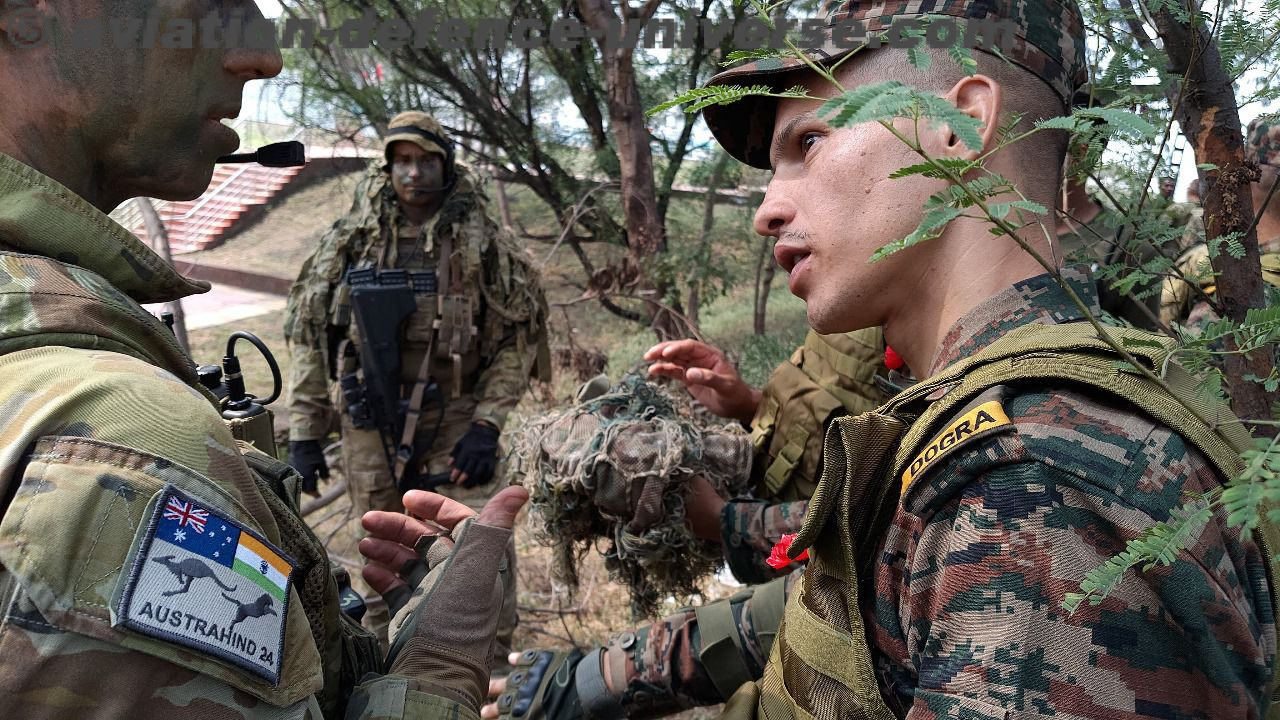
The larger continental platform is AFINDEX—the Africa–India Field Training Exercise. Its second edition concluded in Pune in March 2023 with 124 participants from 25 African countries, alongside Indian troops. Humanitarian mine action and United Nations peacekeeping operations formed its core focus.
AFINDEX is a multinational exercise, whereas Cyclone and Lamitiye are bilateral engagements. The distinction matters. Bilateral drills allow partners to pursue specific requirements; multinational exercises build wider professional networks and familiarity with common procedures.
For India, army cooperation offers a credible area of engagement because it can combine training institutions, field experience and technical instruction. For African partners, its value depends on how closely that assistance addresses their own terrain, operational responsibilities and force structures.
Navies: The broadest operational connection
The maritime domain provides one of the strongest practical foundations for India–Africa security cooperation. Protecting shipping, responding to piracy and trafficking, conducting search and rescue, and improving awareness at sea create overlapping interests without requiring identical strategic outlooks.
The inaugural Africa–India Key Maritime Engagement—AIKEYME was launched in Dar es Salaam in April 2025. Co-hosted by India and Tanzania, it involved Comoros, Djibouti, Kenya, Madagascar, Mauritius, Mozambique, Seychelles and South Africa alongside the hosts. Its multinational character demonstrated the scope for African and Indian maritime forces to develop cooperation around shared challenges.
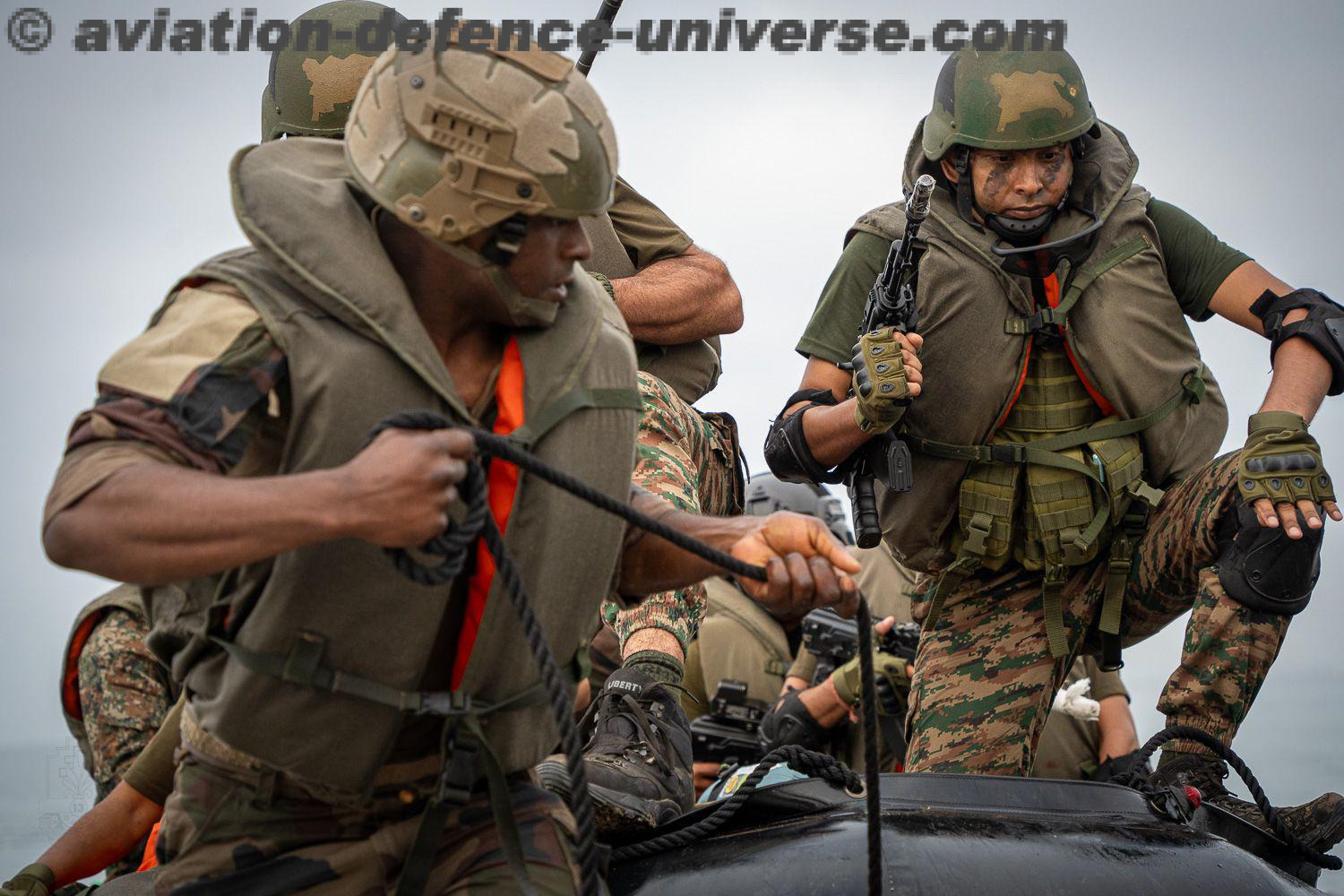
A smaller framework, India–Mozambique–Tanzania Trilateral Exercise, provided more focused engagement. Its second edition, held in March 2024, involved INS Tir and INS Sujata and combined harbour training with activities designed to strengthen maritime interoperability.
South Africa’s naval relationship with India also operates through IBSAMAR, the India–Brazil–South Africa maritime exercise initiated in 2008. An October 2026 Indian announcement identified INS Tarkash for the ninth edition, with a programme encompassing surface, air and underwater warfare, maritime interdiction and other naval tasks. IBSAMAR is trilateral, although the India–South Africa bilateral relationship underpins participation.
Bilateral cooperation complements these larger exercises. During Lamitiye 2026, INS Trikand conducted activities with Seychelles forces, including boarding-related training. Egypt’s maritime engagement with India includes participation in multinational forums and, in April 2026, the first bilateral navy-to-navy staff talks.
Kenya provides another example of cooperation extending beyond ships and drills. Defence discussions in September 2024 covered specialised training, maritime information sharing, military medicine and defence industry.
This breadth is important. Maritime partnerships gain depth when exercises are supported by information exchange, maintenance, hydrography, medical cooperation and regular institutional contact.
Air forces: Egypt anchors a more selective engagement
Air-force cooperation is less geographically extensive than India’s naval outreach, but Egypt provides a substantive example of how historical ties can support contemporary operational engagement.
The bilateral Desert Warrior tactical air exercise took place in Egypt in October 2021. Indian participation in the Egyptian Air Force’s Tactical Leadership Programme followed in 2022, including Su-30MKI fighters and C-17 transports. A further bilateral air exercise involving Indian Rafales took place in June 2024, followed by participation in another Tactical Leadership Programme later that year.
Egypt also hosted India’s participation in Bright Star, including the 2025 edition involving the Indian Army, Navy and Air Force. Bright Star is a multinational exercise hosted by Egypt with the United States, rather than an exclusively India–Egypt drill. Its significance lies in exposing participating forces to a broader operational environment while reinforcing the bilateral relationship.
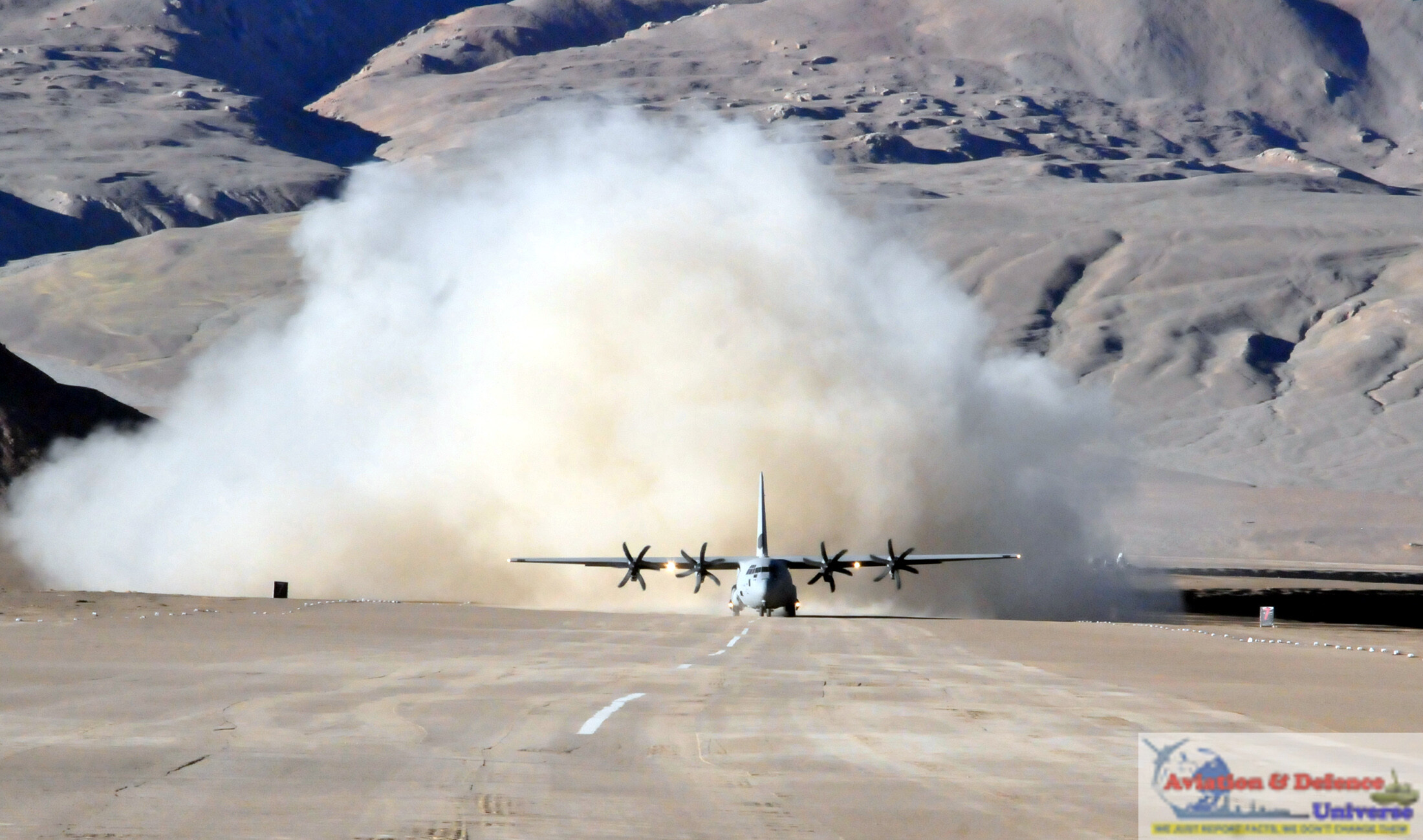
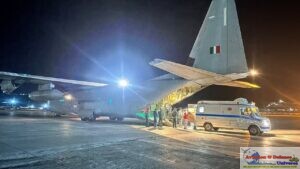
Elsewhere, aviation cooperation often takes the form of training, technical assistance or participation in joint-service activities. The involvement of an Indian C-130 aircraft in Lamitiye 2026 illustrated how air mobility could support a broader bilateral exercise.
These different forms of engagement should not be treated as equivalent. An airshow appearance, a training attachment, a tactical exercise and an aircraft sale each serve a distinct purpose.
Aerospace: Proven utility will matter more than promotion
India’s aerospace opportunity in Africa is strongest when it connects an aircraft to a clearly defined mission and a dependable support system.
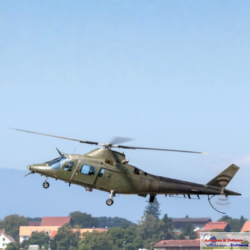
Existing examples include HAL-manufactured Dornier 228 aircraft operating in Mauritius and Seychelles. HAL also contracted to supply Mauritius with an Advanced Light Helicopter Mk III in January 2022 and completed delivery ahead of the contractual schedule, according to a parliamentary reply in March 2023.
These examples point towards a practical market: maritime surveillance, transport, search and rescue, and other utility missions. They do not establish that every African requirement is suitable for an Indian platform.
The larger opportunity could lie in packages combining equipment with pilot and technician training, spares, maintenance and local skills development. For aircraft operators, acquisition cost is only one consideration. Availability, repair turnaround, mission equipment and long-term support determine whether a platform delivers operational value.
There is also a distinction between displaying an aircraft, discussing cooperation and securing an export contract. Credible analysis must preserve that distinction, particularly when examining prospective fighter or helicopter sales.
The next phase must be built around African priorities
The strongest interpretation of India–Africa defence ties is that their historical strengths remain relevant to their future. Training and institution-building created trust; exercises have added operational familiarity; industrial cooperation could provide a further layer.
But progress will require country-specific choices. A small island state may prioritise surveillance and maritime response. A larger military may require specialist training, maintenance capacity or manufacturing partnerships. Countries with established defence industries may seek collaboration between companies rather than straightforward imports.
For India, that calls for greater continuity between diplomacy, military engagement and commercial support. For African partners, the most valuable outcomes will be those that improve readiness, strengthen technical skills and preserve freedom of choice.
History opened the door to India–Africa defence cooperation. Professional relationships kept it open. The next chapter will be judged by what the partnership enables African forces and industries to do for themselves—from maintaining an aircraft to securing a coastline and sustaining a capability long after its delivery.