











- AI, Hybrid-Electric Engines and Indigenous Fighters: India’s Aerospace Future Takes Shape
- Beyond the Assembly Line: HAL, GE Aerospace and Air India Envision India’s Technology Leap
- From Fighter Jets to Future Engines: India Builds Its Aerospace Innovation Ecosystem
By Sangeeta Saxena
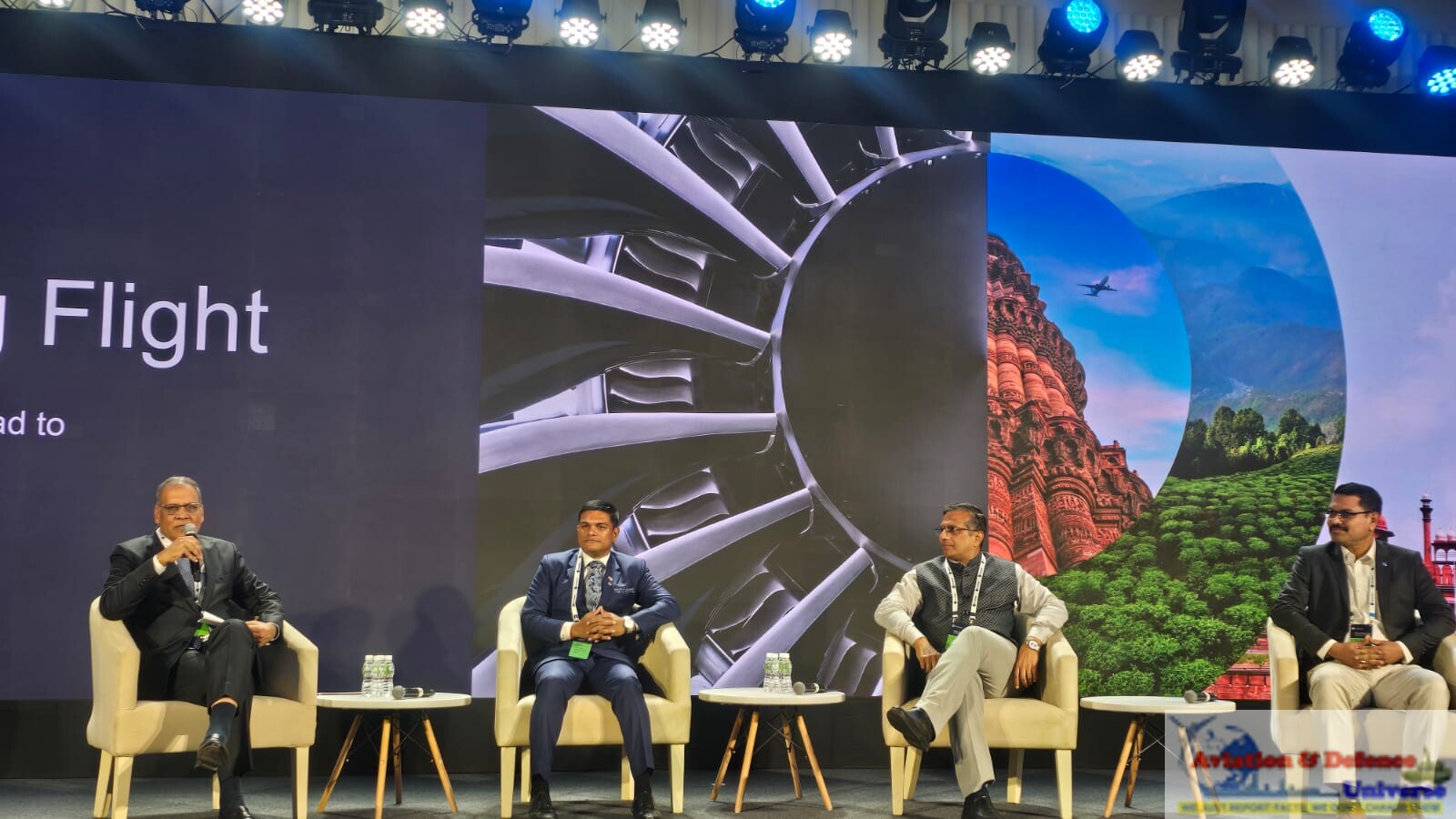
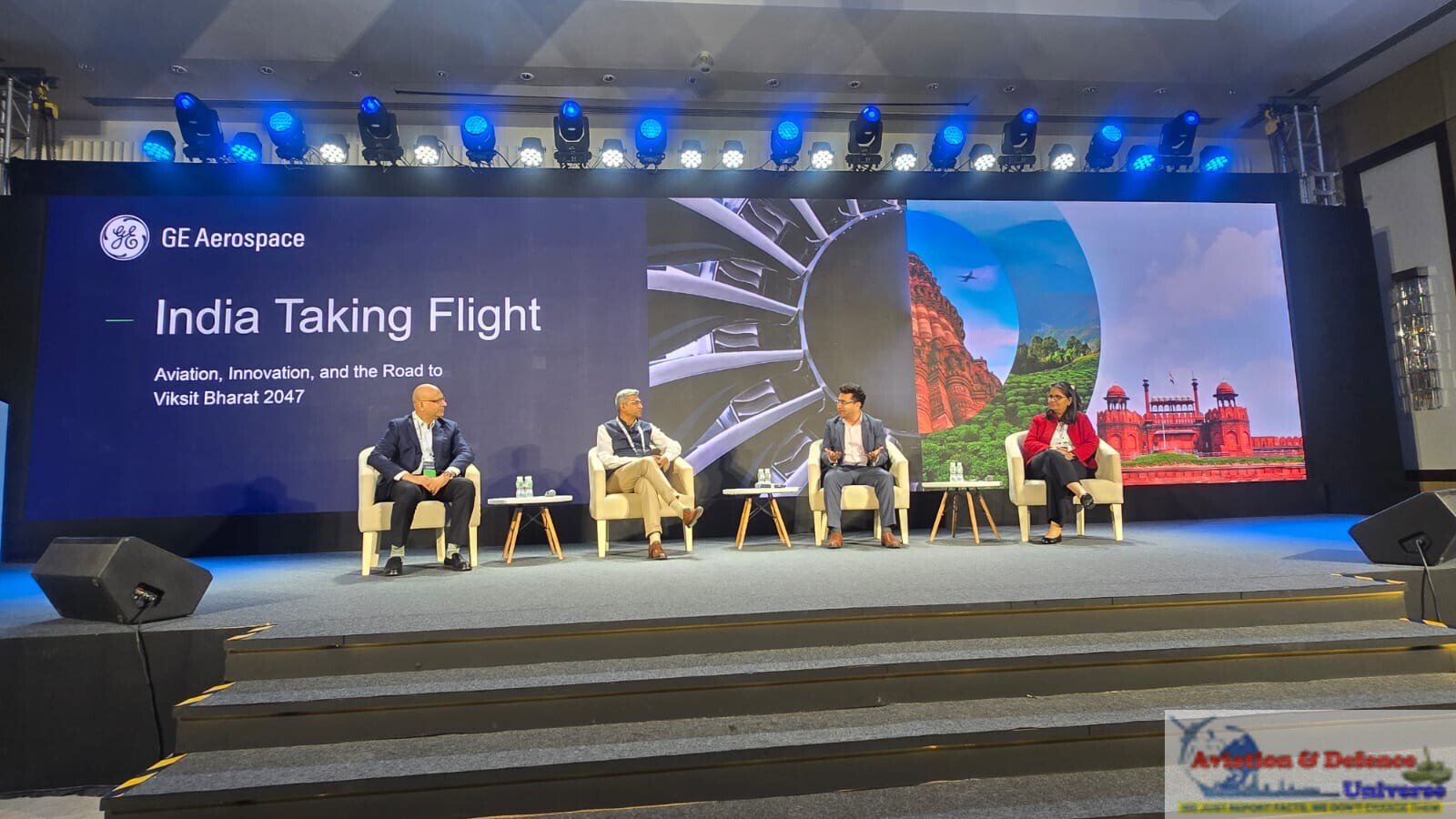
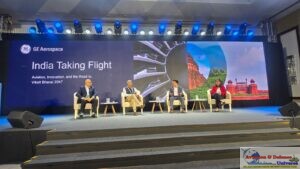
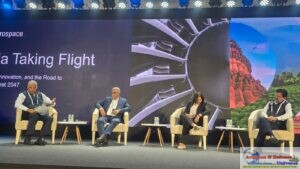
New Delhi. 12 October 2026. The future of aviation will not be decided by aircraft orders and manufacturing capacity alone. It will be shaped in research laboratories, design centres, engineering workshops and testing facilities where artificial intelligence, hybrid-electric propulsion, advanced materials and next-generation aerospace technologies are transforming the science of flight. For India, the challenge is equally compelling: can the country move beyond being a manufacturing partner and engineering services destination to become a creator of globally competitive aerospace technologies? Can its engineers design, develop, certify and manufacture the aircraft and engines of tomorrow? These questions formed the central theme of Panel 2, “Engineering the Future: India’s Role in Global Aerospace Innovation,” at GE Aerospace’s India Taking Flight: Aviation, Innovation, and the Road to Viksit Bharat 2047 event.
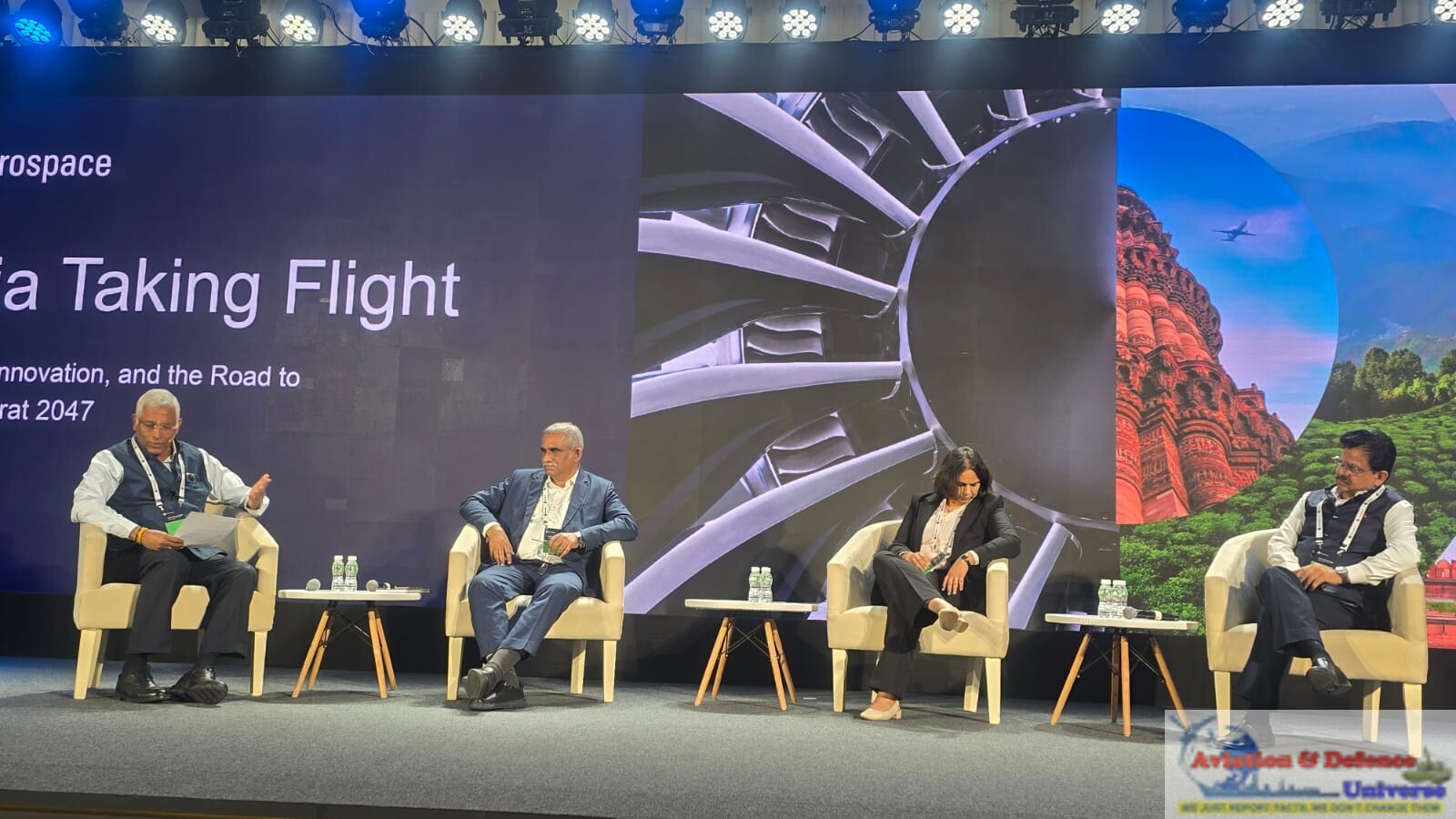
 Moderated by Ganesh Raj, Partner, Tax and Regulatory Services, EY India, the panel brought together Jayakrishnan S, CEO, Bangalore Complex, Hindustan Aeronautics Limited (HAL); Shilpa Gupta, CTO, India, GE Aerospace; and Sisira Dash, Group Chief Strategy Officer, Engineering, Air India.
The discussion examined India’s transition from component manufacturing to systems engineering, the development of indigenous aerospace technologies, artificial intelligence in aircraft engine maintenance, future propulsion systems, specialised workforce development and the importance of collaboration between government, industry and academia.
A recurring theme was that India’s aerospace ambitions could no longer be fulfilled through manufacturing scale alone. The next phase would require ownership of advanced engineering capabilities, deeper technological expertise and the ability to convert innovative designs into certified aerospace products.
HAL: India’s Aerospace Industry Must Progress from Manufacturing to Systems Integration and Design
The panel’s discussion on India’s aerospace capabilities placed particular emphasis on the transformation required within the country’s defence aerospace industry. The HAL perspective, articulated by Jayakrishnan S, focused on the different stages through which an aerospace manufacturing ecosystem must progress before it can become technologically self-reliant.
India, he explained, had made considerable progress in component manufacturing and the production of major structural assemblies. However, these achievements represented only part of the journey. The next stages involved developing capabilities in systems engineering, systems integration, advanced design and ultimately the development of complete aerospace products.
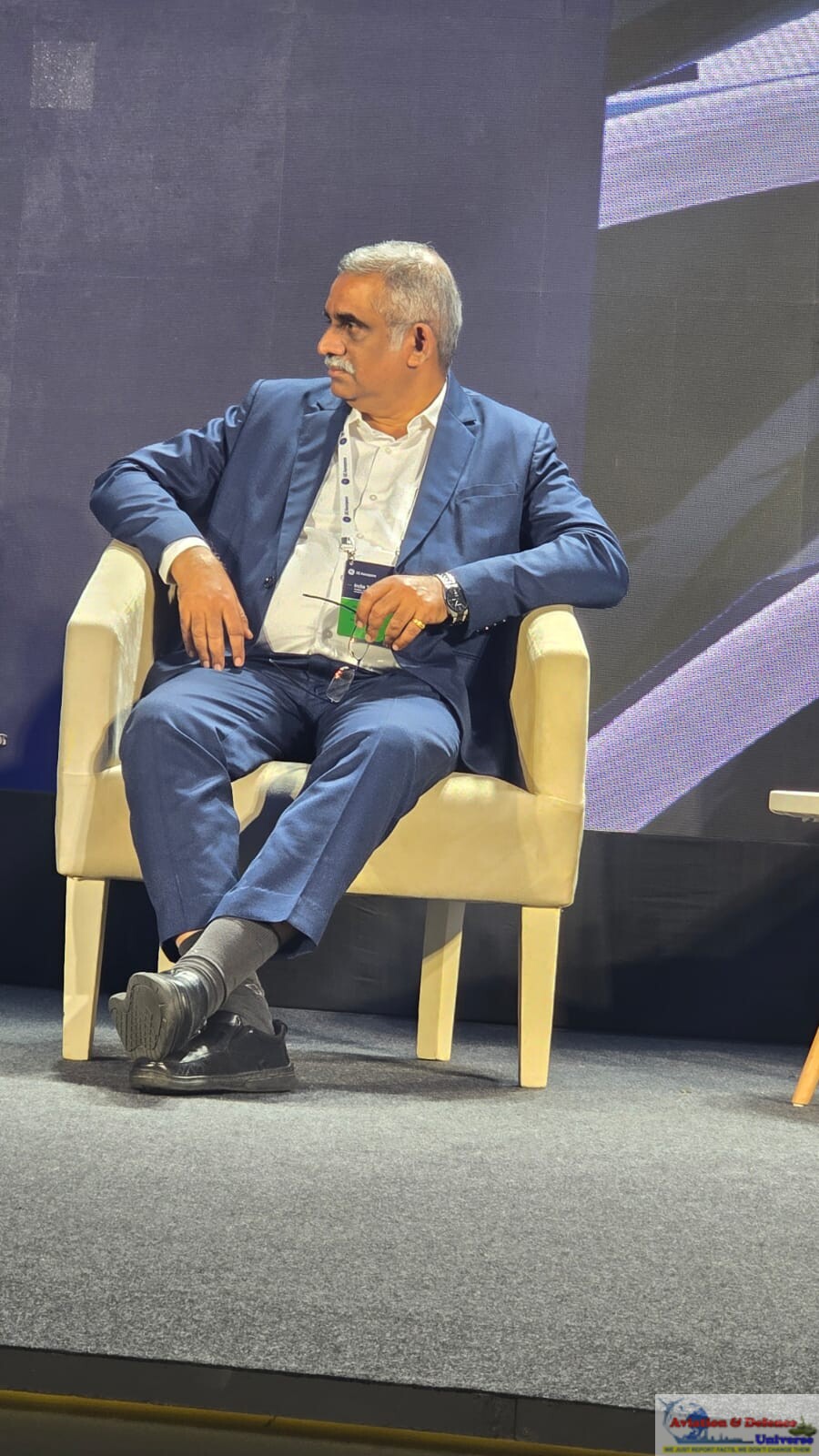 For a country seeking to become a global aerospace innovation centre, the ability to manufacture individual components was insufficient. It also needed the capability to integrate complex technologies into operational aircraft and other sophisticated aerospace platforms. The challenge was particularly significant in defence aerospace, where product development involved enormous technological complexity, substantial investment and stringent certification requirements.
Jayakrishnan stressed the importance of government investment and partnerships involving public sector organisations, private industry, research institutions and design agencies. Such collaboration was essential for building the technological capabilities required to progress from component manufacturing towards indigenous product development.
He also highlighted the need for a change in industrial mindset. Indian aerospace organisations, he suggested, had to think beyond individual projects and develop collaborative ecosystems capable of delivering sophisticated aerospace technologies. The larger objective was to ensure that India did not remain dependent on external design and technology capabilities even as its domestic manufacturing capacity expanded.
Innovation Cannot Wait Decades: HAL Calls for Faster Development Cycles
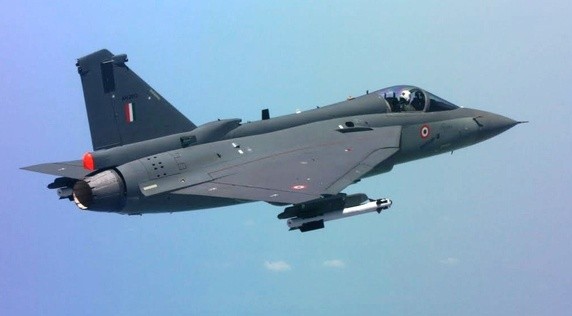
One of the most important issues raised during the discussion was the lengthy development cycle associated with aerospace products. Jayakrishnan observed that transforming an aerospace concept into an operational aircraft could take ten to fifteen years or longer. He referred to the extended development histories of advanced fighter aircraft, including the Rafale and India’s Light Combat Aircraft, to illustrate the scale of the challenge. Such timelines, he argued, were increasingly difficult to sustain in an environment where technologies were evolving rapidly. By the time a complex aerospace product completed its development cycle, some of its underlying technologies could already be approaching obsolescence.
 Artificial intelligence, advanced digital engineering and emerging manufacturing technologies could help reduce these development timelines. The challenge was to incorporate these capabilities throughout the product development process, from initial design and engineering to testing, manufacturing and eventual induction into operational service.
Jayakrishnan emphasised that collaboration was indispensable to achieving this transformation. No single aerospace organisation, university or manufacturer could independently develop every technology required for a modern aircraft, particularly a sophisticated combat platform.
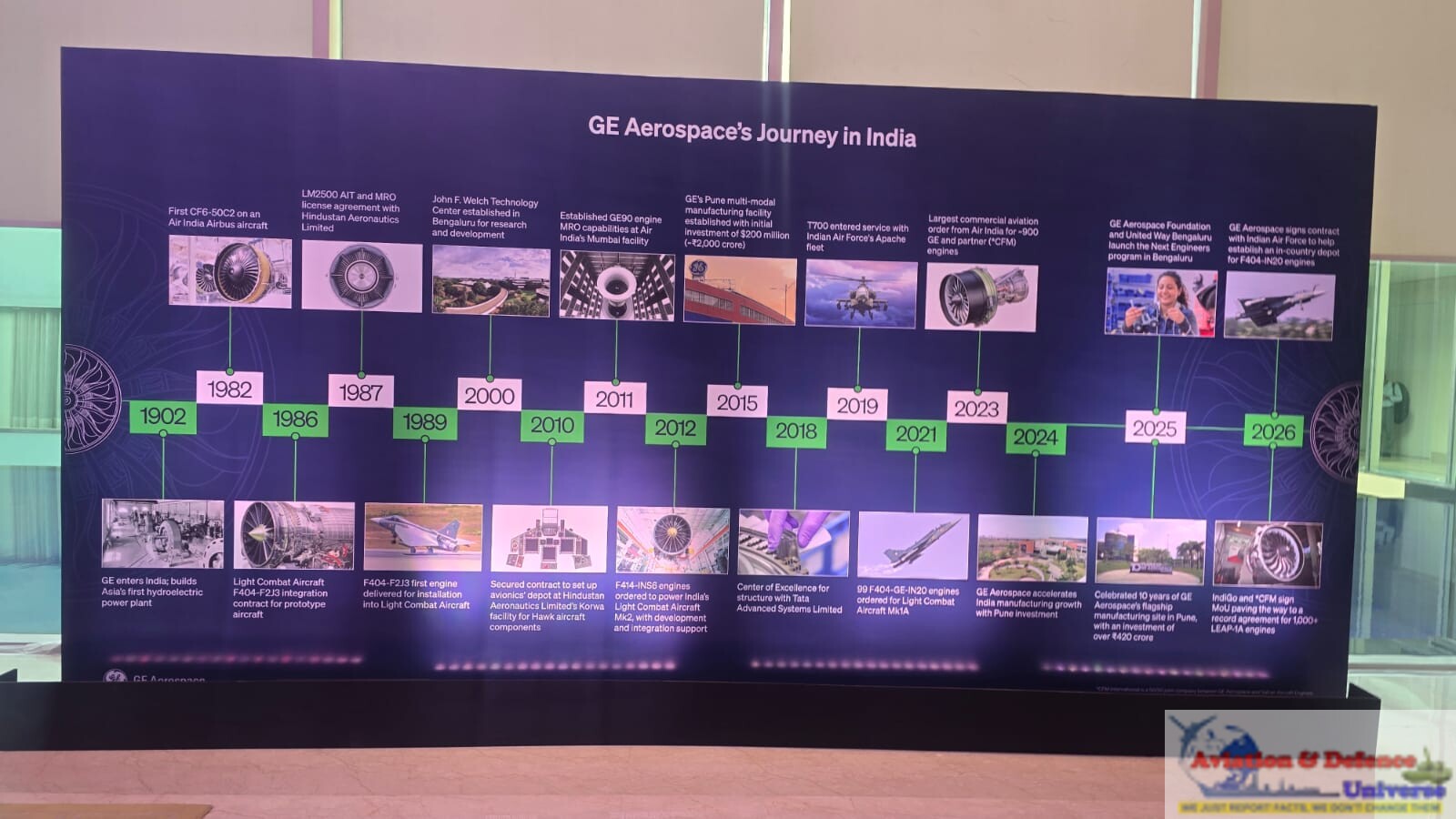
He referred to HAL’s longstanding association with GE Aerospace in the development of India’s Light Combat Aircraft programme and the importance of strengthening such partnerships in future aerospace projects. The next phase, he suggested, needed to involve deeper technological cooperation, expanded indigenous manufacturing capabilities and greater participation by India’s private aerospace industry.
GE Aerospace: Bengaluru’s Engineering Centre Contributes to the Future of Flight
Shilpa Gupta, CTO, India, GE Aerospace, highlighted the contribution of the company’s Bengaluru engineering and research ecosystem to advanced aerospace innovation. She explained that one of the centre’s strengths was the integration of research, engineering and technological expertise within a collaborative environment. This integration was becoming increasingly important as aerospace manufacturers pursued next-generation propulsion technologies, digital engineering and artificial intelligence.
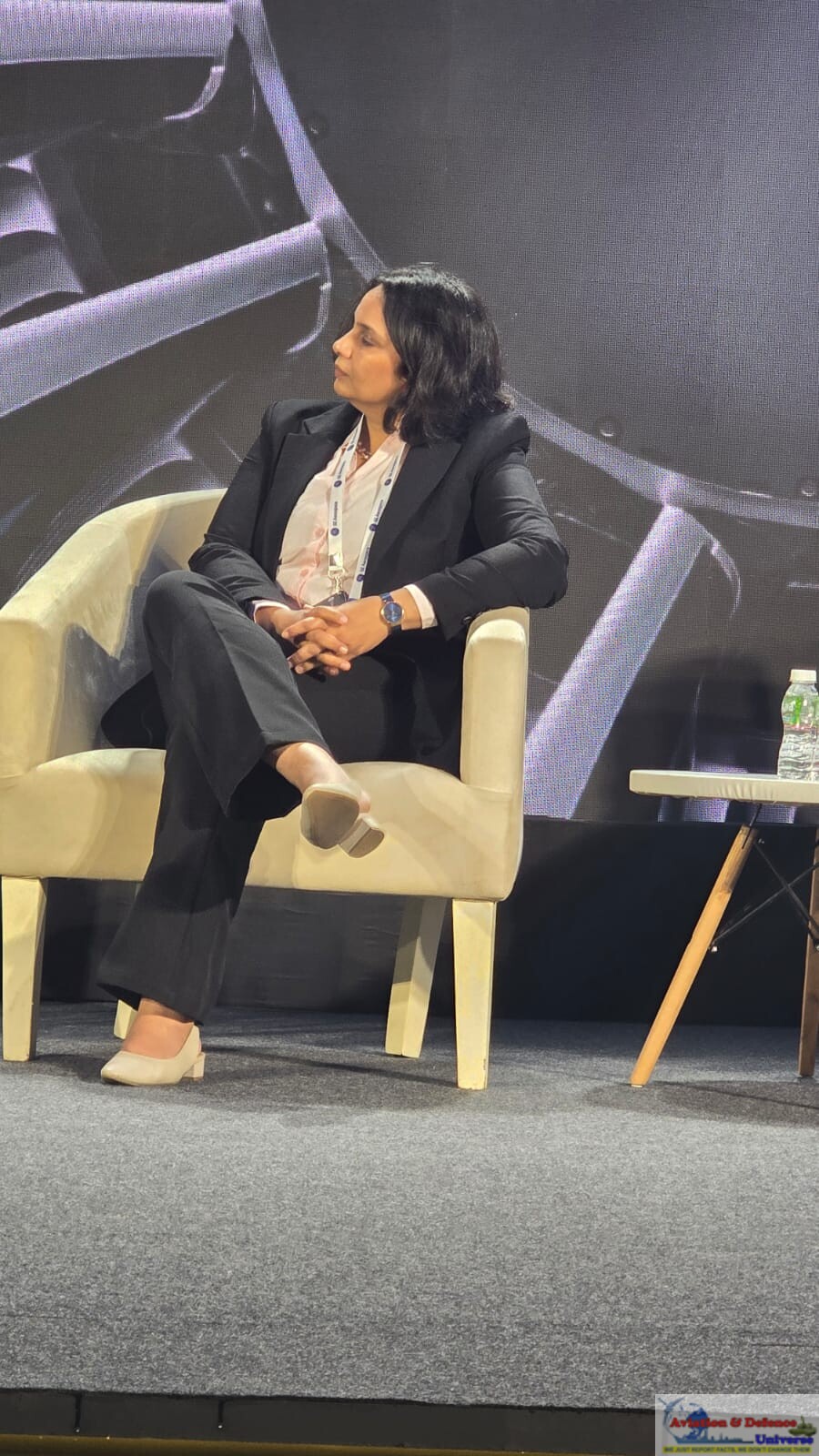 Gupta drew attention to GE Aerospace’s participation in advanced engine development programmes, particularly the CFM RISE programme — Revolutionary Innovation for Sustainable Engines.The programme is exploring technologies intended to improve propulsion efficiency and reduce the environmental impact of aviation.
She emphasised that aerospace innovation required long-term planning because new engine technologies could take many years to develop, test and mature. Work on future propulsion systems therefore had to begin well before their anticipated introduction into commercial aviation. The significance of India’s engineering contribution lay in its participation in these long-term technological programmes rather than merely supporting existing engine platforms.
Hybrid-Electric Propulsion: Engineering the Aircraft Engines of Tomorrow
Gupta discussed the growing importance of hybrid-electric propulsion as part of the industry’s efforts to develop more efficient aviation technologies. She referred to a recent demonstration involving hybrid-electric technology operating at commercial aviation altitudes of approximately 30,000 feet and above. The demonstration was important because electrical and electronic systems behave differently under the environmental conditions experienced at high altitude.
Validating such technologies under realistic flight conditions was therefore an essential step towards their potential future application. Hybrid-electric propulsion, she explained, represented one of several technological pathways being investigated for future aviation. Another major area of research was open-fan engine technology. Unlike conventional ducted turbofan engines, open-fan configurations offer opportunities to improve propulsive efficiency.
Gupta explained that the development of future propulsion systems involved improvements in both thermal efficiency and propulsive efficiency. The RISE programme was targeting approximately 20% better fuel efficiency, illustrating the potential benefits of combining advanced engine technologies with innovative propulsion architectures. For India’s aerospace engineering ecosystem, participation in such programmes offered opportunities to contribute to technologies that could shape the global aviation industry for decades.
Artificial Intelligence: Transforming Aircraft Engine Maintenance
Moving from propulsion research to digital technologies, Gupta explained how artificial intelligence was increasingly becoming part of aerospace engineering operations. She highlighted two practical applications. The first concerned analytics-based maintenance. Modern aircraft engines generate substantial quantities of operational data, providing manufacturers and airlines with information about engine performance and condition. By analysing these data, engineers can identify maintenance requirements more accurately and support decisions intended to improve engine availability.
Gupta explained that such systems could help increase an engine’s time on wing, an important operational and economic consideration for airlines. The ability to predict maintenance requirements could reduce unnecessary interventions and improve the efficiency of aircraft operations. The second application involved image analytics for engine component inspection.
 Gupta referred to AI-enabled blade inspection technologies that analyse images of engine components and assist engineers in assessing their condition. Engine blades operate in demanding environments involving extremely high temperatures and mechanical stresses.
Their inspection is therefore a critical aspect of engine maintenance. Automated image analysis can support the identification of component conditions and assist in assessing remaining useful life. Such applications demonstrated how artificial intelligence could improve the speed and consistency of engineering processes.
However, Gupta cautioned against treating AI as a substitute for specialist engineering knowledge. “Expertise comes first,” she emphasised, explaining that artificial intelligence should serve as a tool that strengthens human capabilities.The accumulated experience of engineers remained essential, particularly in an industry where safety, reliability and certification were fundamental requirements. Her remarks reinforced the importance of combining digital innovation with deep domain expertise.
Air India: The Future of Engineering Requires Skills Across Every Level
The discussion also brought in the perspective of airline engineering and operational requirements. Sisira Dash, Group Chief Strategy Officer, Engineering, Air India, drew attention to the importance of developing practical technical capabilities across the aviation workforce.
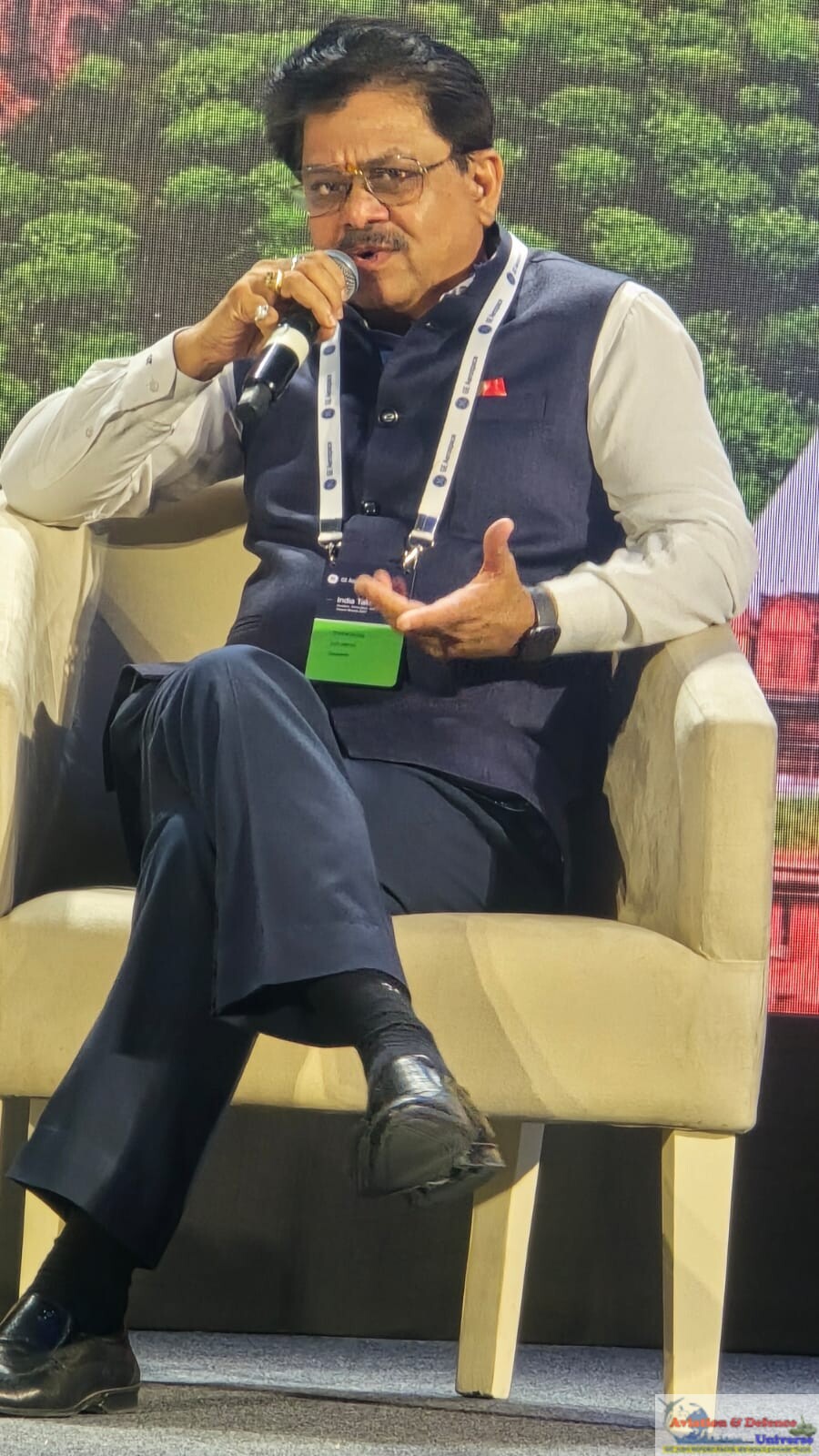 Aviation engineering, he indicated, could not depend solely on highly qualified design engineers and specialists. It also required technicians, mechanics and skilled personnel capable of maintaining aircraft, handling components and supporting complex operations. He stressed the need to develop these skills systematically and begin technical education at an early stage.
Students interested in engineering, mechanics, robotics, software and other technical disciplines needed opportunities to acquire practical knowledge and industry-relevant experience. This was particularly important because sophisticated aircraft and engine technologies could not be supported efficiently without an adequately trained workforce. Dash highlighted the importance of developing domestic technical capabilities so that airlines could address maintenance and engineering requirements without excessive dependence on overseas facilities.
The availability of skilled personnel and specialised services within India could help reduce maintenance costs and aircraft downtime. His intervention connected aerospace innovation with the operational realities of commercial aviation. Developing advanced aircraft technologies was important, but ensuring that airlines possessed the personnel and infrastructure required to operate and maintain those technologies was equally essential. Industry, Academia and Government: Building a Collaborative Innovation Ecosystem
The panel repeatedly returned to the importance of cooperation between aerospace manufacturers, research institutions, universities and government agencies. Jayakrishnan argued that India’s aerospace ambitions required substantial investment in advanced technologies and a stronger commitment to developing specialised capabilities.
 The country possessed considerable engineering talent, but aerospace technology development demanded long-term funding and sustained institutional support. He also highlighted the importance of supporting smaller companies and startups attempting to enter technologically demanding areas of aerospace engineering. Without adequate investment and opportunities, such enterprises could struggle to sustain the long development cycles associated with advanced aerospace products. The need was therefore to create an ecosystem in which innovation could progress from research and prototype development to testing, certification and commercial or operational deployment.
Gupta reinforced this argument by pointing out that India’s engineering workforce already possessed strengths in technical fundamentals, adaptability and cross-functional collaboration. However, she identified design, testing and certification as areas requiring further capability development. These disciplines could not be mastered immediately. They demanded years of experience, iterative learning and close integration between engineering design and practical testing. Building expertise in these areas would be essential if India wanted to assume greater responsibility for the development of advanced aerospace technologies.
GE Aerospace’s Talent Development Programmes: Preparing the Next Generation
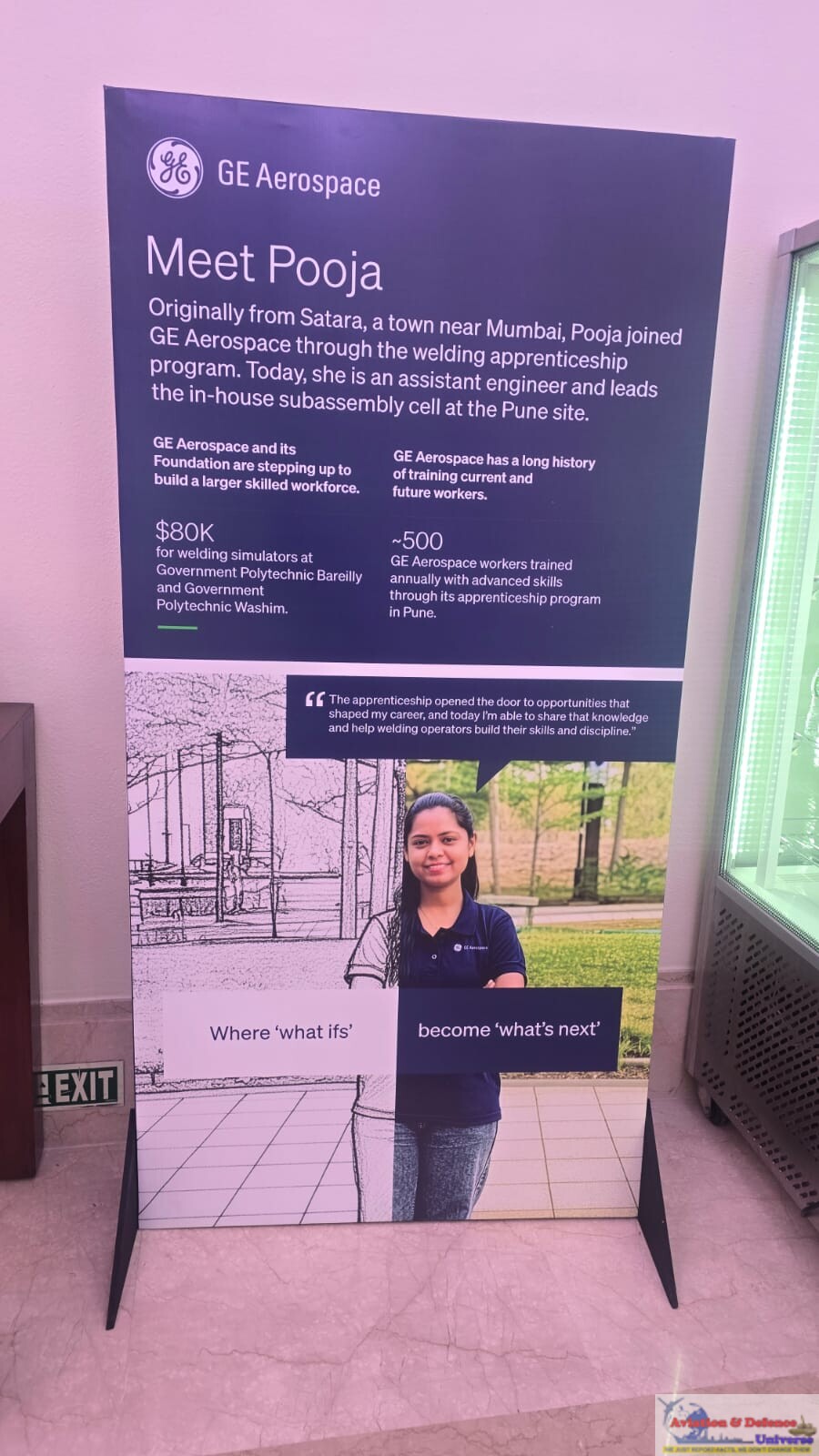
Gupta also outlined GE Aerospace’s efforts to develop future engineering talent. She referred to the company’s longstanding Edison Engineering Development Programme, which has supported the development of engineering professionals over approximately two decades. She also highlighted initiatives aimed at building digital engineering capabilities and preparing future technical leaders.
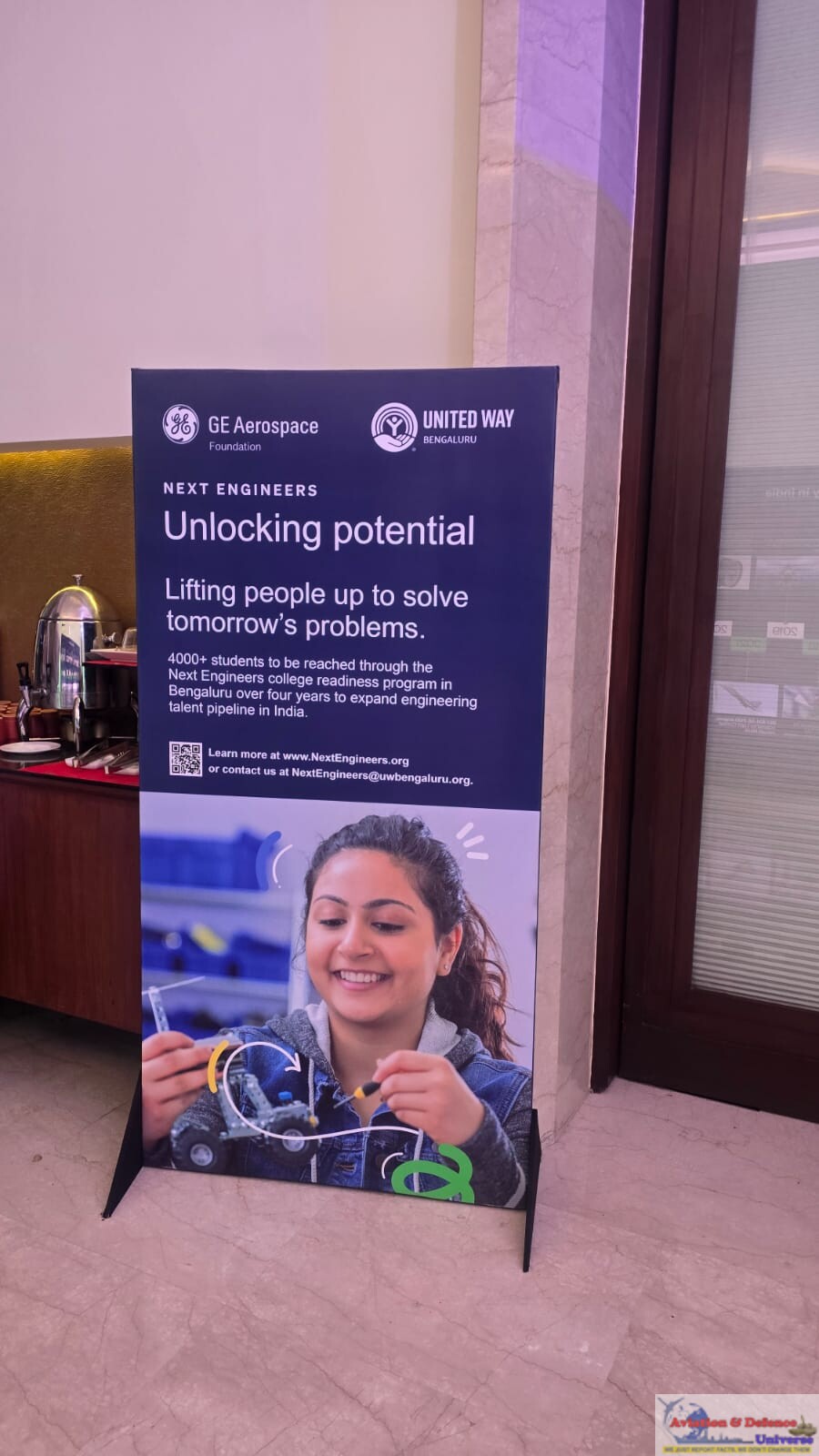
 These programmes reflected the company’s recognition that emerging technologies would require new combinations of engineering and digital expertise. Gupta referred to an external skills-development initiative intended to reach approximately 4,000 students in India over the next four years. The objective was to help prepare young professionals for the technological requirements of the aerospace industry. She explained that developing future engineering leadership required both internal training programmes and broader engagement with educational institutions.
For India, such initiatives could contribute to the creation of a specialised workforce capable of supporting advanced propulsion research, digital engineering, manufacturing and aerospace innovation. The panel recognised that workforce development had to be treated as a strategic investment rather than a secondary requirement.
The Next Frontier: Design, Testing, Certification and Indigenous Technology
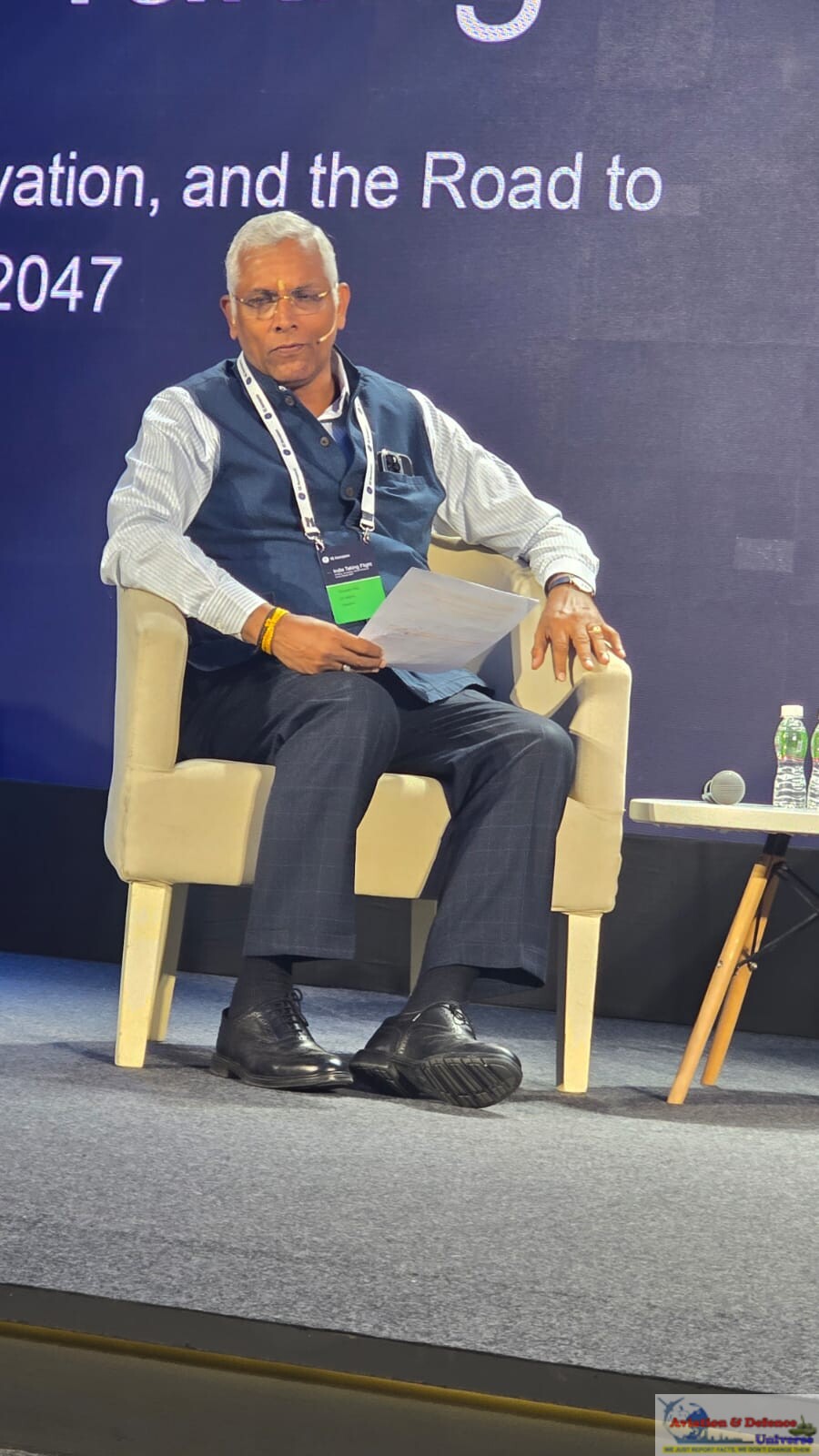 The final exchanges brought together the different perspectives expressed during the discussion. Jayakrishnan reiterated that India needed to develop deeper expertise in critical aerospace technologies, supported by investment and long-term industrial partnerships. Gupta emphasised the importance of strengthening capabilities in design, testing and certification while preparing engineers for future technological requirements.
Dash reinforced the need to develop practical engineering skills and domestic technical support capabilities. The discussion demonstrated that India’s aerospace future depended on an integrated approach. Advanced propulsion technologies required specialised engineering research. Indigenous aircraft development required systems integration and sophisticated design capabilities. Airline operations required reliable maintenance systems and trained technical personnel.
All these activities depended on a strong relationship between industry, academia and government. The challenge was to connect these capabilities into a coherent national aerospace innovation ecosystem.
India’s Role in Global Aerospace Innovation: From Engineering Support to Technology Leadership
India’s aerospace industry has historically built considerable capabilities in manufacturing, engineering services and the production of components and assemblies. However, the discussion highlighted the need to move towards greater participation in original design, advanced research and technological innovation. The 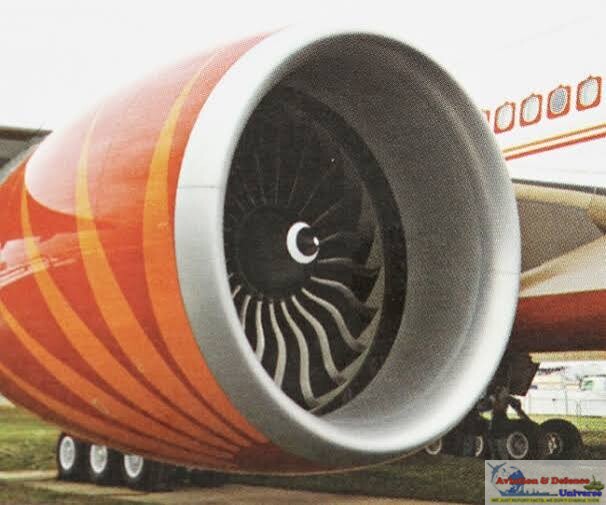 country’s expanding commercial aviation market, defence modernisation requirements and growing aerospace manufacturing base provide a foundation for this transition. GE Aerospace’s Bengaluru engineering ecosystem demonstrates the contribution Indian engineers can make to global propulsion development.
HAL’s indigenous aircraft programmes highlight the importance of developing complex systems engineering and integration capabilities. Air India’s engineering requirements underline the need for strong domestic maintenance, technical training and operational support. Together, these perspectives suggest that India has an opportunity to develop an aerospace ecosystem extending from basic research to the operation and maintenance of advanced aircraft. Realising that opportunity will require sustained investment, stronger collaboration, modern testing and certification infrastructure and the development of specialised engineering talent.
India Must Engineer the Future, Not Merely Manufacture It
 India’s aerospace journey has reached a defining moment. The country has demonstrated its ability to manufacture sophisticated components, support international aerospace programmes and develop indigenous aircraft. But the next frontier demands more. It requires India to become a creator of advanced technologies, a developer of next-generation propulsion systems and a global contributor to aerospace innovation. The discussions involving HAL, GE Aerospace and Air India made it clear that the future will belong to nations capable of combining engineering expertise with artificial intelligence, advanced research, manufacturing excellence and skilled human resources. As India advances towards Viksit Bharat 2047, its aerospace ambitions must extend beyond factory floors to research laboratories, design centres, testing facilities and certification institutions. The challenge is no longer simply to make aircraft and engines in India. It is to design the technologies, develop the systems and engineer the innovations that will define the future of flight. India’s next aerospace revolution must be powered not only by manufacturing strength, but by Indian minds, Indian ingenuity and Indian innovation
























































-A4-Size-(2)_page-0001.jpg)