








- A Farewell from the Cockpit of Command: A.P. Singh Defines IAF’s Next Mission
- Final Press Conference, Future-Ready Vision: Air Chief Unveils IAF Roadmap
- India Needs Up to 40 Fighters a Year: Air Chief Sounds Squadron Warning
By Sangeeta Saxena
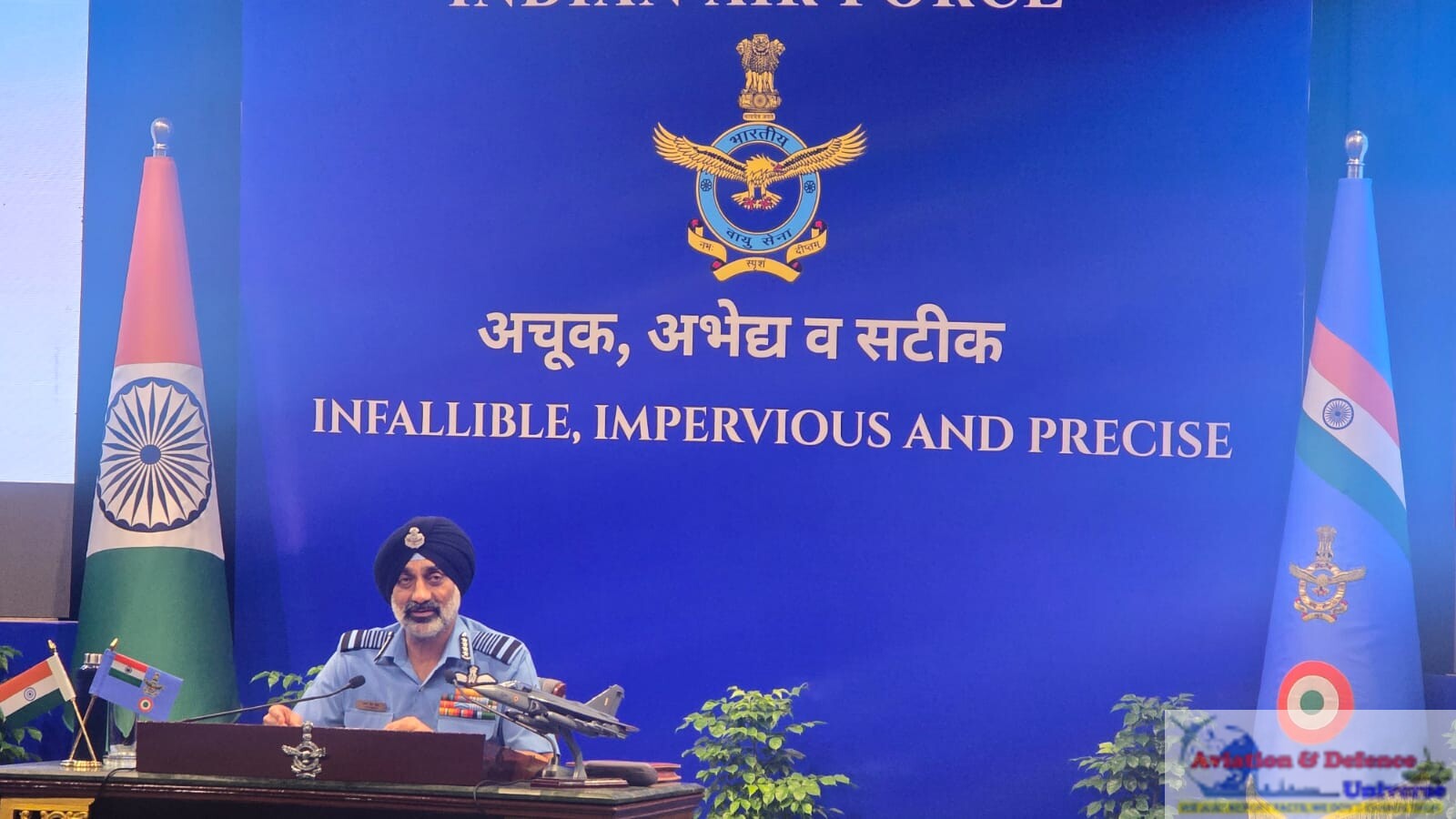
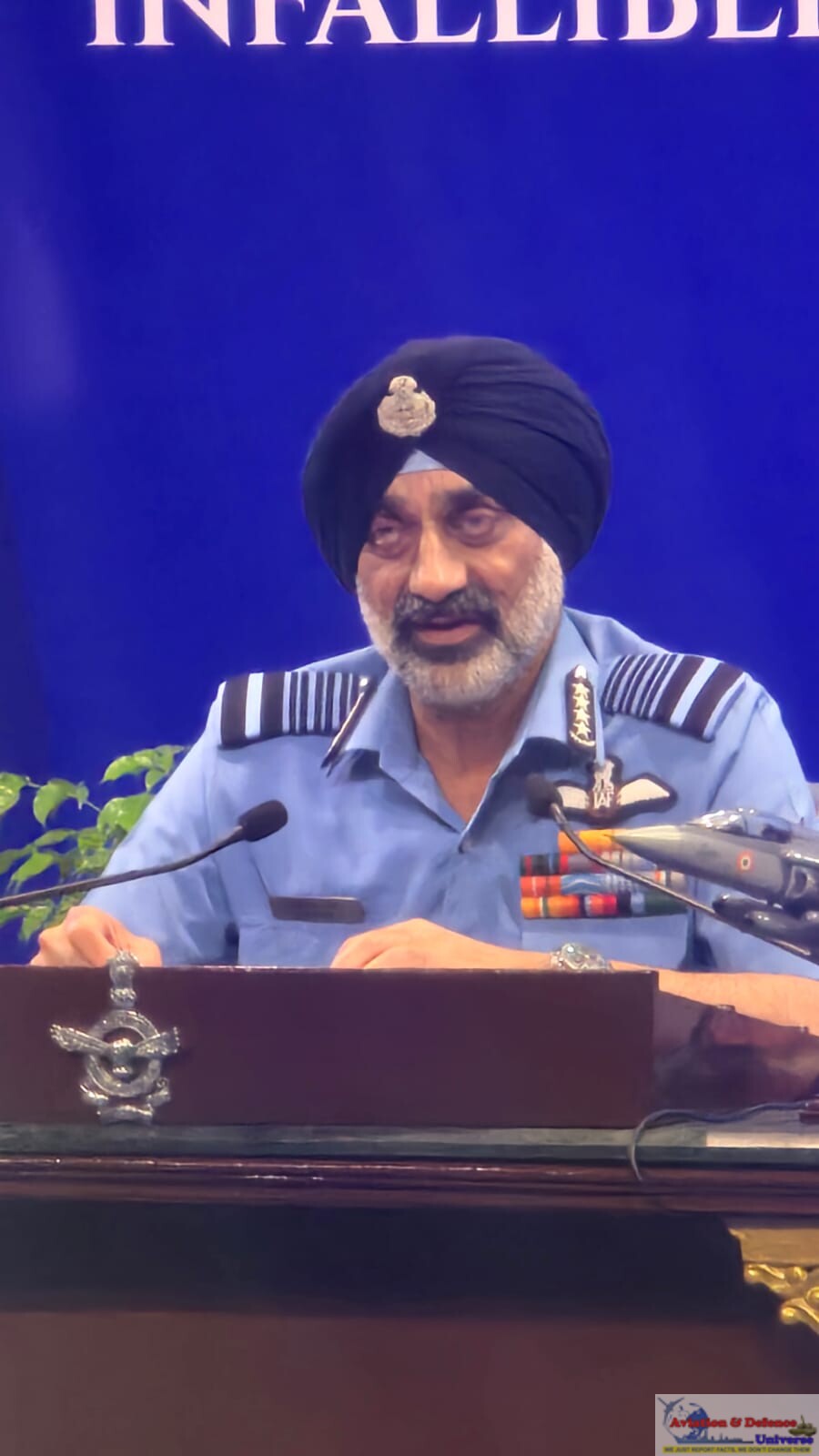
New Delhi. 03 October 2026. As Air Chief Marshal A.P. Singh prepares to leave the cockpit of command, his parting vision places the Indian Air Force firmly on a runway leading towards deeper integration, sharper precision and greater strategic reach. The machines will become smarter, drones more capable and battlespaces more connected, but victory will still depend upon how effectively technology, training and human judgement come together. From delivering a decisive punch during Operation Sindoor to carrying hope across disaster zones and building trust through Tarang Shakti, the IAF he describes is not merely keeping pace with the technology wave—it is learning to command it.
Manned and Unmanned Platforms Must Operate Together
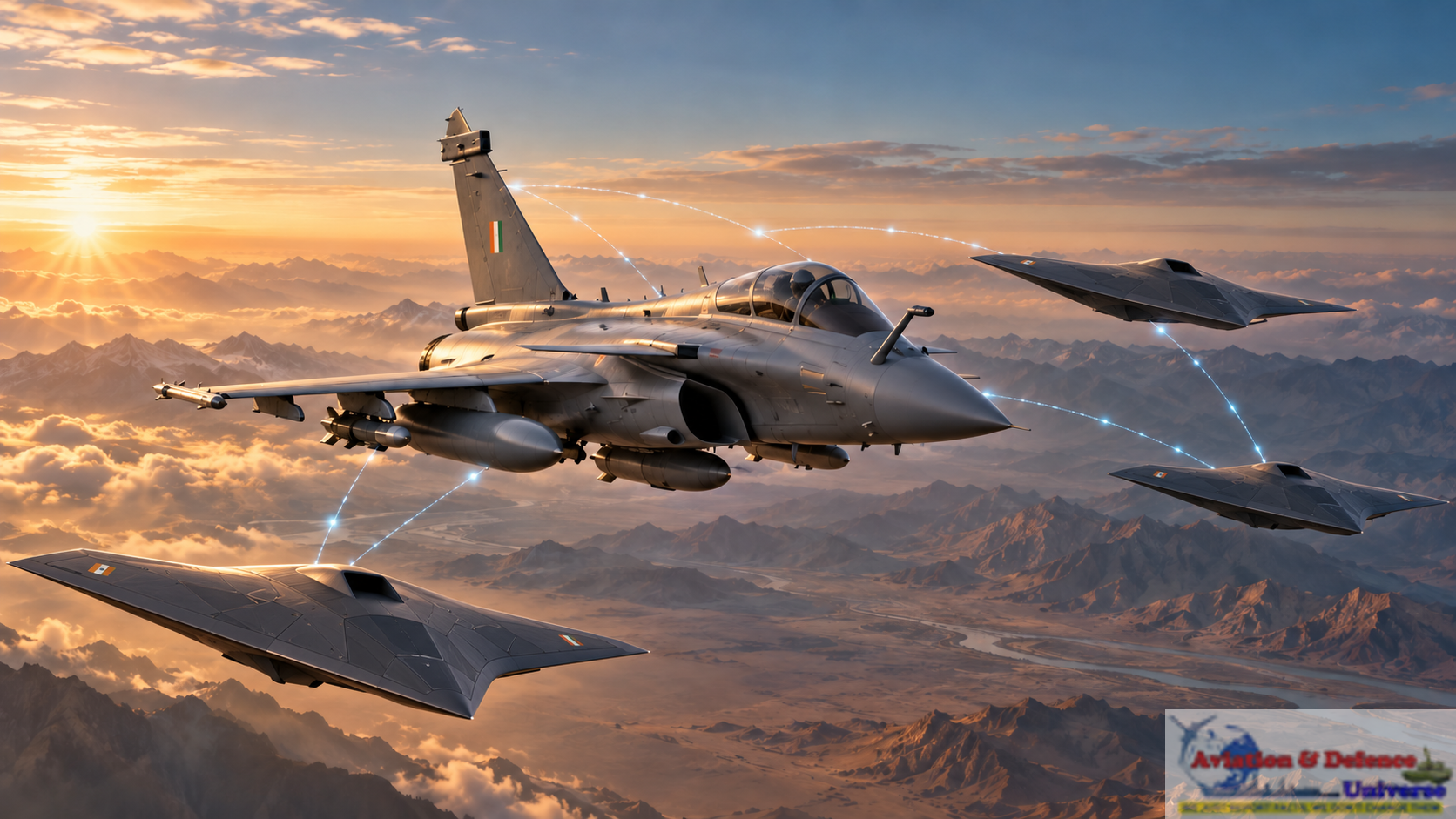
Rejecting an either-or debate between crewed combat aircraft and unmanned systems, Air Chief Marshal Singh said every component had a particular operational role. “We have always believed that from the modern manned fighter aircraft to unmanned systems or loitering munitions, every component of war has its own place in the scheme of things.” He stressed, “It is not an either manned or unmanned domain discussion. There is a requirement for each of them for the role they perform.” The requirement, he said, was for integrated planning and application. “It is a joint operation which is required, a joint acquisition which is required and a joint force which is required.”
Operation Sindoor Demonstrated Integrated Airpower
Drawing upon the experience of Operation Sindoor, the Air Chief said the operation had demonstrated how diverse capabilities could be employed together for a unified effect. “We showed this in Operation Sindoor very clearly, when our loitering munitions were causing chaos behind the enemy lines, taking on some of their radars and causing disruptions.”
 At the same time, he said, India’s integrated air-defence system had prevented hostile weapons and aircraft from penetrating defended airspace. “Our integrated air-defence system was robust, not letting any of their weapons or aircraft come in and also taking down their aircraft in the air, whichever were threatening us.”
Fighter aircraft armed with long-range precision weapons simultaneously struck military targets. “Our fighter aircraft, with precision-strike long-range weapons, carried out the destruction that was required against military installations of the enemy.” Detailing the target categories, he said, “Whether it was runways, command-and-control centres, hangars or any other assets on the ground, we saw the destruction that was available.” The lesson, he stressed, was that modern wars could not be fought through one platform or one category of weapon. “All these things are required. They are all essential elements of any force, and we are progressing parallelly on all these paths.”
An Air Force That Delivers Punch and Hope
The IAF, Air Chief Marshal Singh said, was not only an instrument of combat power. “Along with an Air Force that delivers the force punch which is required, we also deliver hope.” He cited the IAF’s involvement in humanitarian assistance and disaster relief during floods and forest fires, including ongoing relief operations in Bihar. “We have been taking part in HADR activities in the country, whether it was floods in various states or forest fires. Our role has been continuously on.” The IAF had also carried aid to countries including Uganda, Venezuela, the Philippines, Madagascar, Thailand, Cuba and Jamaica. “Living up to the spirit of Vasudhaiva Kutumbakam, we have been taking part in all that and raising our nation’s image.”
Air Diplomacy Expands India’s Strategic Reach
 The Air Chief placed humanitarian missions, training assistance, personnel exchanges and joint exercises within the larger framework of air diplomacy. “We have been taking part in various strategic partnerships. We have been sending our instructors to various countries and having exchange programmes with various countries.”
Bilateral and multilateral exercises had allowed the IAF to strengthen professional relationships with friendly air forces. The largest of these engagements was Exercise Tarang Shakti, underway at Jodhpur at the time of the press conference. “The biggest of all, of course, is Exercise Tarang Shakti, which is taking place at the moment in Jodhpur.”
Tarang Shakti Will Generate Lessons for All Participants
Responding to a question about the F-35’s participation in Tarang Shakti, Air Chief Marshal Singh said multinational exercises were intended to promote professional understanding and interoperability. “The whole idea of any multilateral exercise or international-level exercise is to generate bonhomie, to have interoperability and to learn from each other’s experiences and each other’s way of working.” The participation of new countries and platforms would expose the IAF to different operational practices.
 “Every time you operate with new assets, you see them operating in a different manner.” He noted, “F-35s are operating for the first time in a multilateral exercise in India. There are some new countries which have brought in their assets, and there are observer countries which are coming in for the first time.” The interactions would enable participating forces to compare planning and execution methods. “There will be discussions and observations from each other – you do it like this, we are doing it like this—which is better and how it is to be done.” Interoperability, he clarified, also required compatible communication procedures.
“We have to be able to have a joint kind of communication setup where we can talk to each other in a common language. I am not talking about just the English language; they should understand each other.” He expressed confidence that the second edition would yield meaningful operational lessons. “I am sure this second version of Tarang Shakti will bring in a lot of lessons for us on where we can improve ourselves, and I am sure they will also take lessons back.”
Drones Are Evolutionary Not Revolutionary for the IAF
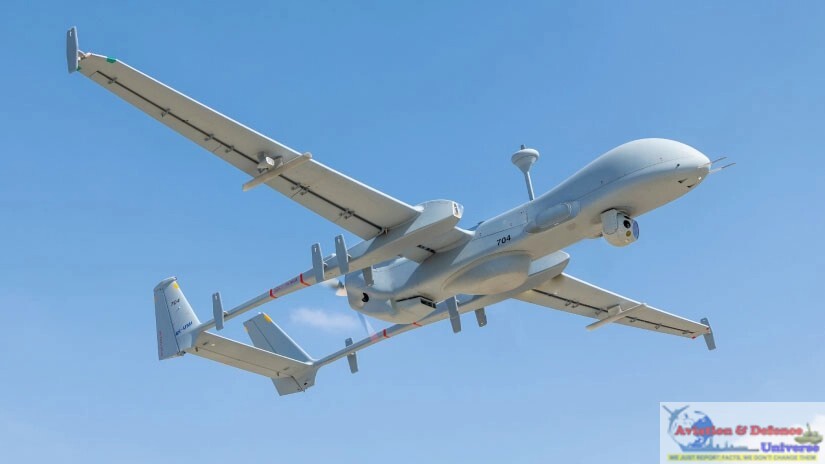
Asked whether the Air Force needed a separate drone force, the Chief said unmanned capabilities had existed within the IAF for decades. “Drones are not revolutionary for the Indian Air Force; they are evolutionary.” The Service was increasing the number and variety of drones and loitering munitions, but he rejected the need to separate them from the broader force structure. “Whether we need a separate drone force, I don’t think so. They should be a part of the same setup, and we have to operate together.”
He explained, “These have to be together with other weapons so that they bring in that effect. We cannot operate one type of weapon separately somewhere and another type of weapon separately.” His answer was unequivocal, “We have not thought of having a separate force—not at all.” Specialised formations, however, would continue to exist and expand where operationally necessary. “There will be some specialised units. We already have them, and if we need to increase the number of those units, we will.”
Fighter Numbers Remain a Serious Challenge
The depletion of the IAF’s fighter squadrons featured prominently during the interaction. Air Chief Marshal Singh said the Tejas Mk1A, Tejas Mk2, Multi-Role Fighter Aircraft programme and Advanced Medium Combat Aircraft would together form the future combat fleet. “We have MRFA. We are also looking hopefully towards Mark 2, and all these will be able to fill the gaps that exist and are likely in the near future.”
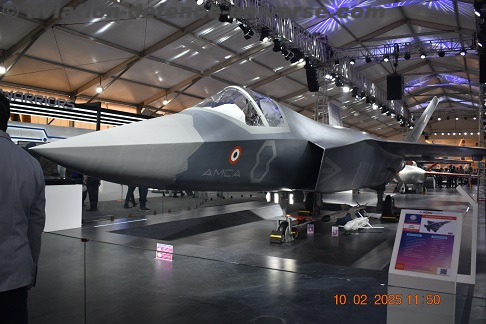 On the AMCA, he acknowledged that considerable time remained before the aircraft could enter operational service. “The new programme of AMCA has time before it reaches the skies and becomes operational. We will have to see how it progresses.” He called for sustained national attention to all these projects. “All these programmes need to be pushed with a whole-of-nation approach, and that is being done.”
The Air Force, as the end user, was extending complete support to the development agencies and HAL. “As a force, we are giving our full support. As the end user, we are giving our full support, and I am sure ADA and HAL are fully focused so that these things happen in time.” Asked whether he regretted not being able to fly the Tejas Mk1A before retirement, the veteran test pilot answered philosophically, “I will lose out on flying many new platforms that will come. There will always be that feeling. One has to do his or her job and then move on.”
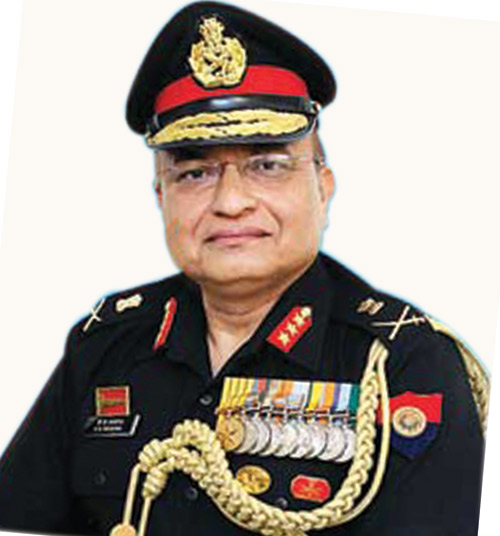
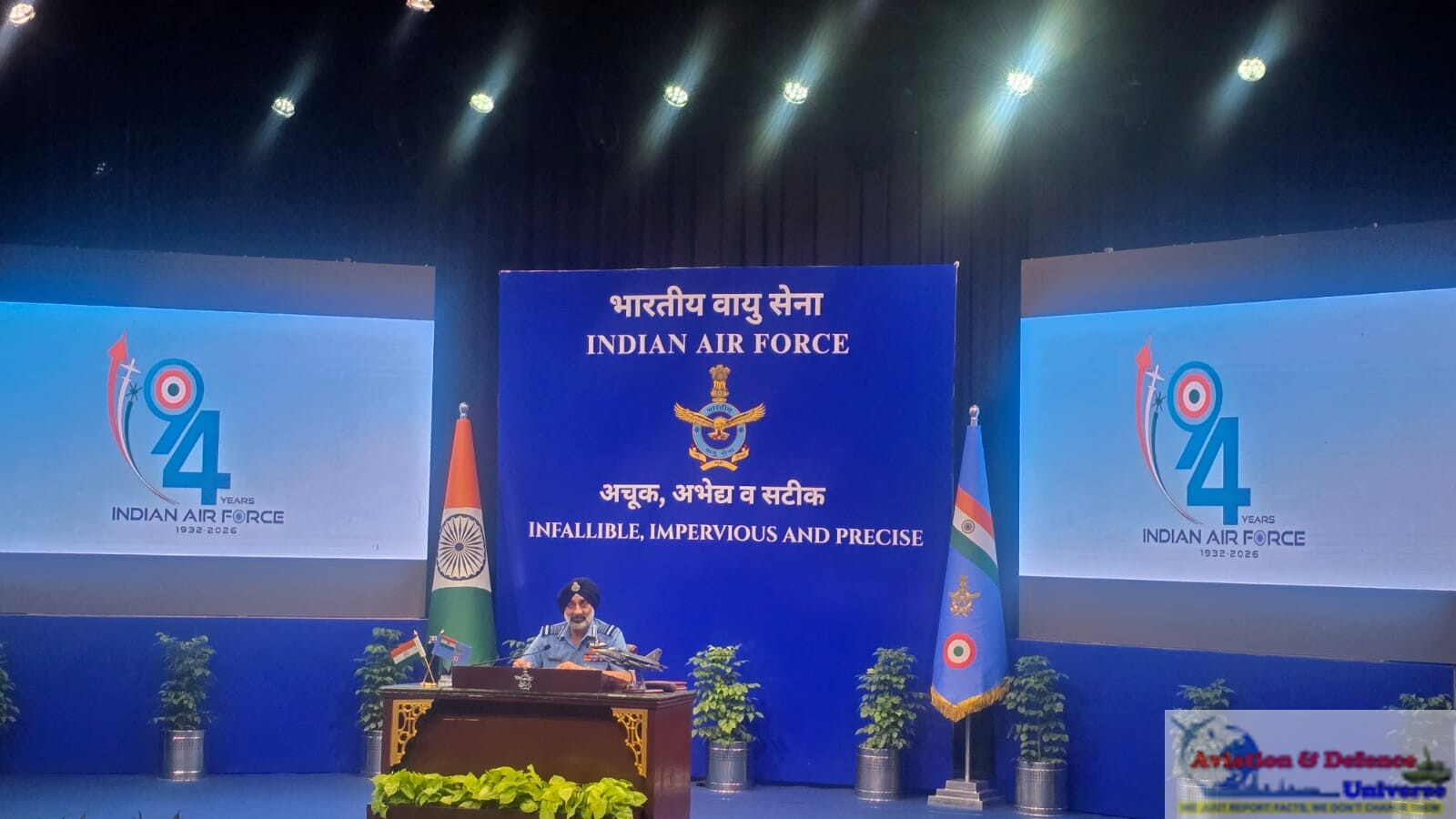
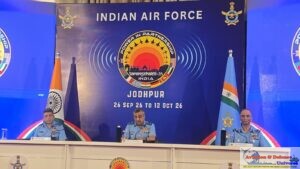
Addressing his final annual press conference before superannuating on 31 October 2026, Chief of the Air Staff Air Chief Marshal A.P. Singh fielded a wide range of questions from journalists with characteristic ease, candour and élan. From Operation Sindoor, diminishing fighter squadrons and fifth-generation threats to drones, theatre commands, indigenous programmes and space warfare, he responded with the confidence of an accomplished fighter pilot and the perspective of a Chief reflecting upon his command. As the countdown to the 94th Air Force Day officially began, the interaction became more than a customary media briefing—it emerged as a candid professional summation and a graceful farewell from the cockpit of command.




















































-A4-Size-(2)_page-0001.jpg)