
 Israel and Morocco Deepen Defense Cooperation: Israel MOD Director General Leads Delegation to Morocco to Strengthen Defense Ties















- SAF Revolution Gathers Speed as Minister Signals New Policy Within Weeks
- From Farm Waste to Flight Fuel: India Sets Its Sights on Becoming a Global SAF Powerhouse
- Airbus–Air India SAF Partnership Takes Centre Stage as India Prepares for CORSIA 2027
By Sangeeta Saxena
 New Delhi. 17 November 2026. Union Minister of Civil Aviation Kinjarapu Rammohan Naidu’s address at the India Sustainable Aviation Fuel Summit was nothing short of a masterclass on Sustainable Aviation Fuel (SAF), combining technical understanding, economic foresight, environmental responsibility and policy clarity with the confidence of a leader who had done his homework. Moving effortlessly from CORSIA mandates and international certification standards to feedstock availability, ethanol-to-jet technologies, agricultural residue, refinery capacities, production costs and the economics of commercial viability, he demonstrated a remarkable command of the entire SAF value chain. What made his address particularly compelling was his ability to connect complex technical issues with India’s larger national priorities of energy security, rural prosperity, employment generation, affordable air travel and global industrial leadership. Armed with statistics, international comparisons and a clear understanding of the challenges confronting producers and airlines, he explained not merely why India needed SAF, but how the country could produce it, finance it, certify it and eventually export it.
“I don’t see sustainable aviation fuel merely as a matter of compliance. SAF is beyond any obligation for India. I see SAF as India’s opportunity to emerge as a producer, innovator and a global supplier of sustainable aviation fuel.” With this declaration, Union Minister of Civil Aviation Kinjarapu Rammohan Naidu set the tone for the second India Sustainable Aviation Fuel Summit in New Delhi, transforming what could have been a discussion about emission mandates into a much larger conversation about India’s economic future, energy security, agricultural prosperity and global aviation leadership.
Could India’s agricultural residue power tomorrow’s aircraft? Could used cooking oil and ethanol reduce the country’s dependence on imported crude? Could Indian refineries become suppliers of cleaner aviation fuel to airlines across the world? And could a country experiencing one of the world’s fastest aviation expansions simultaneously become a leader in aviation decarbonisation?
These questions dominated the inaugural session of the second India Sustainable Aviation Fuel Summit, organised by the Federation of Indian Chambers of Commerce and Industry (FICCI), which brought together policymakers, aircraft manufacturers, airlines, oil marketing companies and industry leaders.
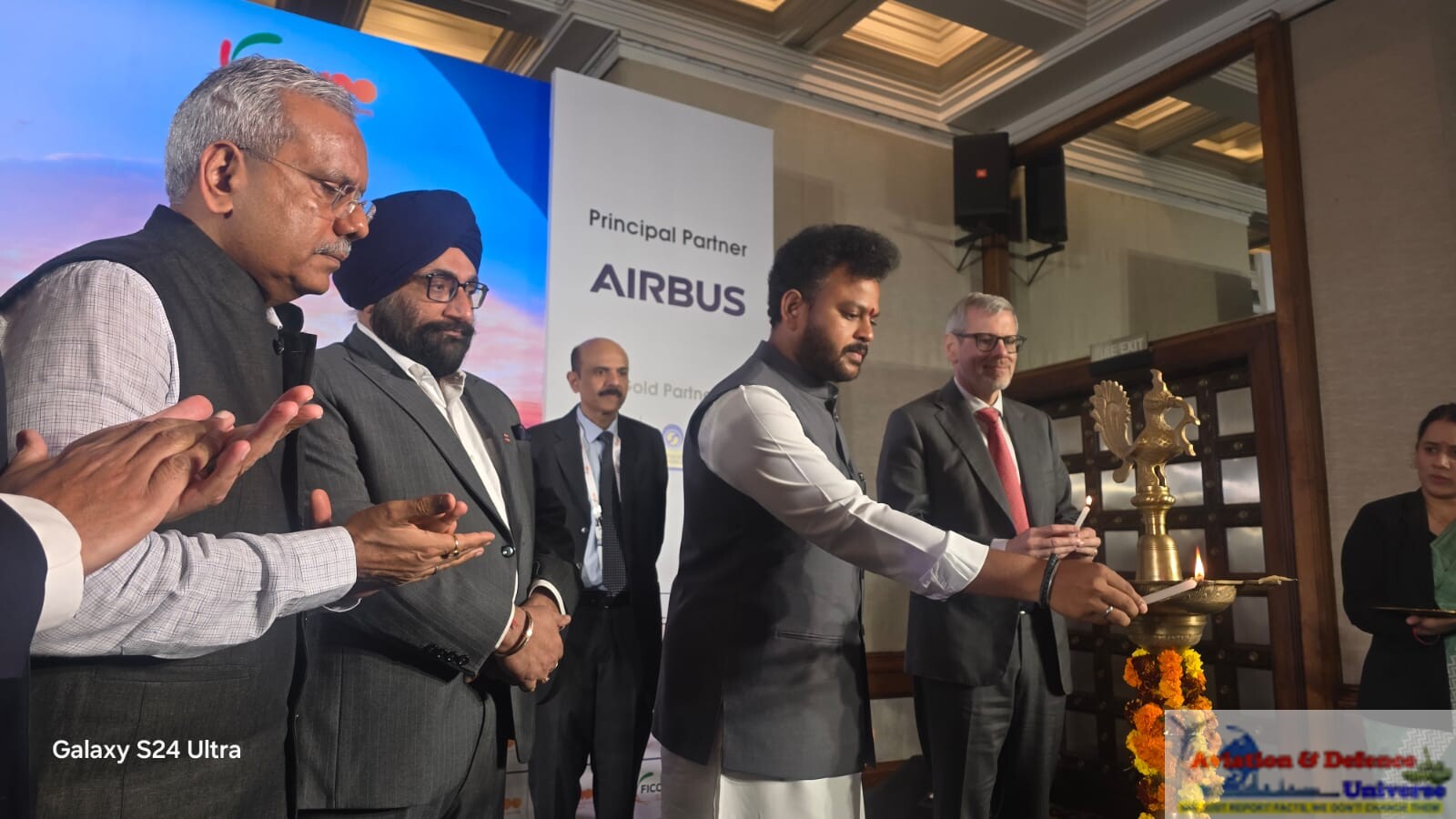
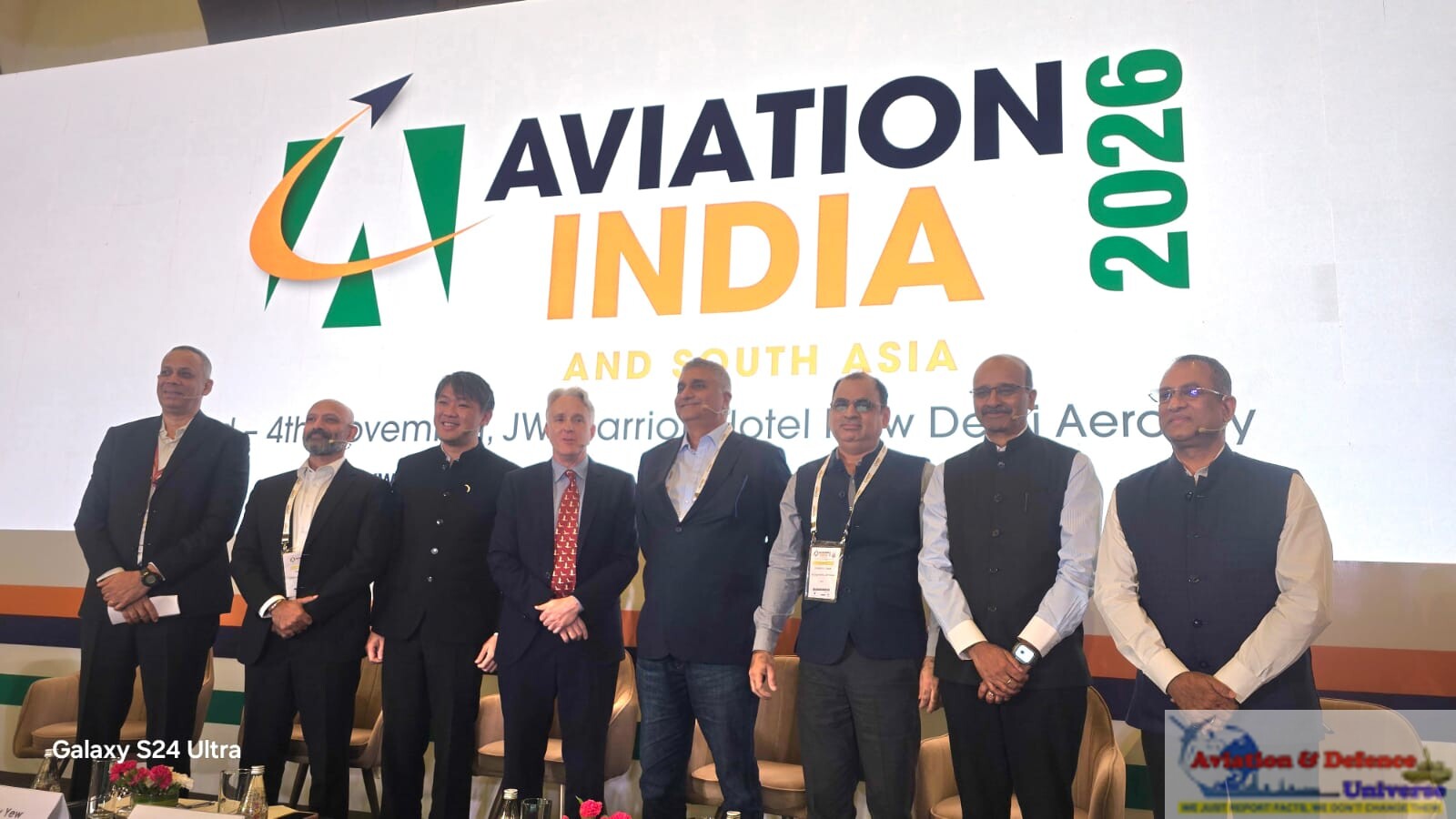
The dais included Jürgen Westermeier, President and Managing Director, Airbus India & South Asia; P. Balaji, Group Head – Governance, Risk, Compliance & Corporate Affairs, Air India; Puneet Kansal, Additional Secretary, Ministry of Civil Aviation; Vijay Sankar, President-Elect, FICCI and Chairman, The Sanmar Group; and A. S. Sahney, Chairman, Indian Oil Corporation Limited.
The inaugural session delivered several significant developments: the Minister announced that India’s draft SAF policy was expected to be released for public consultation within one or two weeks; Indian Oil reported a major approval milestone for SAF production at its Panipat refinery; and Airbus and Air India signed an agreement to study India’s first voluntary corporate SAF programme.
Together, these developments suggested that India’s SAF ambitions were beginning to move beyond policy discussions towards production, financing, certification and commercial adoption.
Rammohan Naidu: SAF Is an Economic Opportunity, Not Just an Environmental Obligation
The Minister placed India’s SAF ambitions within the broader transformation of the country’s aviation sector. He identified three priorities: SAF beyond compliance, SAF as an economic opportunity and SAF as an instrument of global leadership. India, he noted, was already the world’s third-largest domestic aviation market, with passenger traffic expected to cross 500 million by 2030 and one billion by 2040. Airlines were expanding their fleets, airports were increasing capacity and regional connectivity was opening aviation to new sections of the population. However, this expansion would also significantly increase aviation fuel consumption.
According to figures presented by the Minister, India’s annual aviation turbine fuel consumption stood at approximately nine million metric tonnes and was projected to reach 14.2 million metric tonnes by 2030.
International operations alone could account for approximately 7.7 million metric tonnes. He also highlighted the disproportionate environmental impact of longer flights, observing that services exceeding 2,600 kilometres accounted for approximately half of aviation-related carbon dioxide emissions despite representing less than 15% of flights. The challenge, therefore, was to decarbonise an expanding aviation industry without undermining affordability and accessibility.
Naidu argued that India should not view SAF merely as a response to international obligations under ICAO’s Carbon Offsetting and Reduction Scheme for International Aviation (CORSIA). Instead, it should use the transition to build domestic industrial capacity and reduce dependence on imported energy.
A $5–7 Billion Opportunity for India’s Energy Security
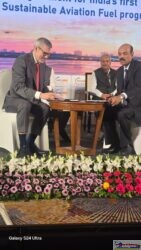 The Minister outlined the potential economic benefits of a well-developed domestic SAF industry. He cited estimates suggesting that a mature SAF ecosystem could reduce India’s annual crude oil import bill by approximately $5–7 billion.It could also generate additional income for farmers and create employment across agriculture, waste management, fuel processing, technology, logistics and aviation.
According to the estimates he presented, SAF development could help increase farmers’ incomes by 10–15% and create approximately one million green jobs across the value chain.He connected this opportunity with India’s wider experience of using sustainability initiatives to strengthen economic and energy security. Drawing a parallel with solar energy programmes, he argued that environmental objectives could create new sources of income and industrial opportunity. For India, SAF offered the possibility of connecting rural economic development with one of the country’s most technologically advanced industries.
Farmers Could Fuel India’s Aircraft
One of the most striking themes of the Minister’s address was the potential transformation of agricultural waste into valuable aviation fuel. India, he explained, possessed substantial feedstock resources. He cited an estimated 3.4 million metric tonnes of used cooking oil potential, annual ethanol production capacity exceeding 1,800 crore litres, and approximately 680 million metric tonnes of agricultural residue generated annually.
These resources could support different SAF production pathways, including technologies based on used cooking oil, ethanol and agricultural residues. Naidu described this as an opportunity to transform farmers from providers of food, into providers of energy.
Agricultural residue, which frequently creates environmental challenges when burned, could instead become a commercially valuable raw material.The Minister acknowledged that realising this opportunity would require organised feedstock collection networks. Farmer producer organisations, cooperatives, waste management agencies and state governments would need to participate in creating reliable supply chains.
He emphasised that feedstock availability alone would not guarantee success. India also needed commercially viable processing technologies, predictable demand, financing mechanisms and internationally recognised certification.
India’s SAF Policy to Enter Public Consultation Within Weeks
The Minister’s most consequential policy announcement concerned the forthcoming national SAF framework. He revealed that the draft policy had been shared with the Ministry of Petroleum and Natural Gas for comments and was expected to be released for public consultation within one or two weeks.
The proposed policy would rest on three major pillars. The first was institutional coordination, through a proposed National Council on Sustainable Aviation Fuel responsible for overall coordination and monitoring. The second was promoting domestic production through public-private partnerships, including stronger feedstock collection systems, localisation of SAF manufacturing and greater private-sector participation. The third was the creation of a National SAF Registry under the Directorate General of Civil Aviation (DGCA) to provide transparent tracking, reporting and verification of SAF transactions and their associated environmental benefits.
Naidu explained that the framework would require cooperation among the Ministries of Civil Aviation, Petroleum and Natural Gas, and Environment, alongside the DGCA, certification agencies, standards bodies, airlines, airports, manufacturers and oil marketing companies.
He recalled that when he assumed office, one of the earliest questions was which ministry should take responsibility for SAF. Discussions with Union Minister for Petroleum and Natural Gas Hardeep Singh Puri helped establish a coordinated approach, with the two ministries working towards a common roadmap.
The Minister described the progress made over the subsequent two years as the creation of essential building blocks for a domestic SAF industry. He stressed that affordability must remain central to policy decisions. India was working to make flying accessible to middle-class and lower-middle-class passengers, and sustainability measures could not ignore the commercial realities of that ambition.
CORSIA 2027: India Prepares for the Mandatory Phase
The Minister outlined India’s SAF blending trajectory for international aviation, citing targets of 1% in 2027, 2% in 2028 and 5% by 2030. He called on stakeholders to accelerate their preparations ahead of the mandatory phase of CORSIA beginning on 1 January 2027.
Naidu also referred to progress in certification and domestic production. He stated that Indian Oil’s Panipat refinery and BPCL’s Mumbai refinery had achieved CORSIA-related certification milestones, while additional domestic production facilities were being developed.
The Minister highlighted planned SAF projects associated with Indian Oil, Hindustan Petroleum and Bharat Petroleum, including alcohol-to-jet and hydroprocessed esters and fatty acids (HEFA) pathways.
He indicated that oil marketing companies were expected to develop production capacity exceeding seven crore litres annually over the next two to three years, with further projects planned towards 2030. He also placed India’s opportunity in the context of the global SAF supply gap.
Citing industry estimates, he noted that global aviation could require approximately 183 million tonnes of SAF by 2040, while production in 2026 was projected at only about 2.4 million tonnes. For India, he argued, the difference between projected demand and available supply represented a substantial industrial opportunity.
Airbus and Air India Announce a Corporate SAF Initiative
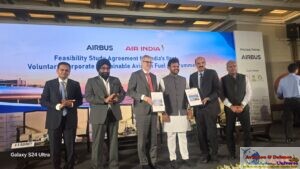 A major development during the inaugural session was the signing of an agreement between Airbus and Air India to jointly study the feasibility of India’s first voluntary corporate SAF programme. Jürgen Westermeier, President and Managing Director of Airbus India & South Asia, explained that the initiative was intended to create a mechanism through which corporations could contribute financially to aviation decarbonisation.
Under the proposed framework, Airbus would support the procurement of SAF by Air India for use in commercial operations. In return, Airbus would be able to account for verified lifecycle emission reductions associated with its business travel, subject to the programme’s certification and accounting arrangements.
Westermeier announced, “I am very proud to announce that Airbus and Air India will partner to establish India’s first ever voluntary corporate sustainable aviation fuel programme.” He emphasised that the proposed programme would not be restricted to Airbus. It was envisaged as an open, scalable framework through which other corporations could participate.
Companies with significant business travel requirements or aviation-dependent supply chains could help create demand for SAF and receive auditable, certified emission-reduction benefits.
“We are putting our money where our mouth is. We are walking the talk,” Westermeier declared. He argued that corporations should not wait for SAF production to reach large volumes before supporting adoption.
Instead, voluntary corporate participation could help create the demand necessary to encourage production investment. “We do not need to wait until SAF is available everywhere or until the industry has achieved scale. We can and shall be part of creating that scale,” he said.
The agreement was signed during the session by representatives of Airbus and Air India, including Westermeier and P. Balaji. The proposed programme remains at the feasibility-study stage, with implementation to follow subject to the outcome of that work.
Airbus Calls for Corporate Participation and Policy Support
Westermeier also emphasised that aviation decarbonisation could become a competitive advantage rather than simply a regulatory burden.He identified availability, affordability and scale as the three central challenges confronting SAF adoption. India, he argued, had a particularly strong opportunity because SAF production could connect agriculture, energy, waste management, manufacturing, technology and aviation.
The resulting ecosystem could create employment, attract investment and reduce dependence on imported fossil fuels. He encouraged companies across technology, manufacturing, finance, automotive, pharmaceuticals and other sectors to support voluntary SAF adoption.
He also suggested that recognising eligible corporate SAF contributions within India’s Corporate Social Responsibility framework could potentially unlock additional private capital.The proposal was presented as a policy recommendation rather than an existing provision. For Airbus, the initiative represented an effort to help stimulate the market rather than wait for supply to develop independently.
Indian Oil’s A. S. Sahney: India Can Become a Global SAF Exporter
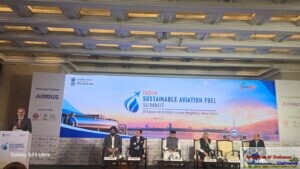 S. Sahney, Chairman of Indian Oil Corporation Limited, delivered the keynote address with a strong message about India’s potential to become a major producer and exporter of sustainable aviation fuel.
He observed that the aviation industry’s rapid growth would create substantial additional demand for fuel, making the development of alternative fuels increasingly important. Rather than treating SAF as a compliance requirement, he described it as an industrial opportunity.
“It is a great opportunity for India,” Sahney said.
He highlighted the potential of different production pathways, particularly alcohol-to-jet technology.
If ethanol-based SAF achieved the necessary technical acceptance and commercial viability across international aviation markets, India could leverage its existing ethanol ecosystem to develop substantial production capacity.
Sahney suggested that this could eventually allow India to move beyond meeting domestic blending requirements.
“Maybe we can be the hub for the whole world for producing sustainable aviation fuel,” he stated.
He stressed that Indian Oil and the wider petroleum industry were willing to invest in the sector.
“We are ready to invest capital. We are ready to take the bet,” he declared.
However, investment decisions required an enabling policy framework and predictable commercial conditions.
Panipat Refinery Marks a Major SAF Milestone
Sahney announced a significant development concerning Indian Oil’s Panipat refinery. He informed the gathering that the company had received DGCA approval and the necessary commercial clearances associated with SAF production from the refinery. He described the development as a positive milestone for India’s emerging SAF industry.
According to Sahney, the Panipat co-processing facility had an annual SAF production capacity of approximately 30,000 tonnes. He indicated that this would be broadly sufficient to meet India’s initial 1% SAF requirement for international aviation in 2027.
“You can be rest assured that India will meet the 1% requirement of 2027,” he told the gathering. The Minister subsequently congratulated Indian Oil on the Panipat development, describing it as an important achievement resulting from sustained cooperation between government and industry.
Sahney also highlighted Indian Oil’s work on green hydrogen, including the development of a major green hydrogen facility at Panipat. Looking further ahead, he identified synthetic or e-SAF produced using captured carbon dioxide and green hydrogen as another promising pathway for aviation decarbonisation.
Three Conditions for SAF Investment: Feedstock, Demand and Affordability
Sahney outlined three essential conditions for establishing a commercially sustainable SAF industry. First, India needed dependable feedstock supplies, including used cooking oil, agricultural residue and other suitable raw materials.
Second, producers required bankable demand. Investors, he explained, needed confidence that the fuel they produced would find buyers. Long-term purchase commitments, contracts and agreements with airlines would therefore be essential to support project financing. Third, the initial cost difference between SAF and conventional aviation turbine fuel needed to be addressed.
Sahney suggested that government support, potentially including production-linked incentives or other mechanisms, could help bridge the gap. Without such measures, producers might be able to establish facilities but could struggle to offer SAF at prices acceptable to airlines.
He emphasised that government, producers and airlines would all need to contribute towards making the fuel commercially viable. His message was clear: India’s SAF ambition required not merely production capacity, but an economically sustainable market.
Puneet Kansal: India’s Ethanol Success Offers a Model for SAF
Puneet Kansal, Additional Secretary, Ministry of Civil Aviation, focused on the practical requirements of building a commercially viable SAF ecosystem .He pointed to India’s experience with ethanol blending in conventional petroleum fuels as an example of how coordinated government policy, agricultural participation and industry investment could establish a successful biofuel market.
The lessons from ethanol, he suggested, could help shape India’s SAF development strategy. Agricultural residues, used cooking oil and other waste materials offered promising feedstock options, but their availability needed to be supported by reliable collection systems, quality controls and efficient supply chains.
Kansal stressed that feedstock alone would not be sufficient. India also needed commercially ready technologies, investment in production facilities and stronger cooperation between research institutions and industry.
He referred to the role of institutions such as the Indian Institute of Petroleum, Dehradun, in developing indigenous technological capabilities. Certification would be equally important. Indian-produced SAF needed to meet internationally accepted technical and sustainability standards, particularly those associated with ICAO’s environmental framework and CORSIA.
Kansal identified cost as one of the industry’s biggest challenges.“SAF is currently considerably more expensive than conventional aviation turbine fuel,” he observed. Reducing this differential would require technological innovation, economies of scale, efficient logistics and appropriate financing.
He also emphasised that the proposed 5% SAF blending target for international flights by 2030 would require coordinated action across civil aviation, petroleum, agriculture, industry, technology and finance. Kansal urged the summit’s participants to move beyond broad policy discussions and focus on practical issues.
These included feedstock availability, commercially ready technologies, production costs, certification and investment requirements. “The discussion should lead to actionable recommendations,” he said. He expressed confidence that India possessed the agricultural resources, industrial capabilities and technological expertise required to develop a sustainable domestic SAF industry. The challenge was to translate these strengths into commercially viable production and reliable supply.
Vijay Sankar: The Question Is No Longer Whether SAF Will Happen, But How
Delivering the welcome address, Vijay Sankar, President-Elect of FICCI and Chairman of The Sanmar Group, reflected on the progress made since the first edition of the summit. He observed that the discussion surrounding sustainable aviation had evolved considerably. “The question is no longer whether SAF will be a part of our aviation ecosystem in the future, but how do we build it in a manner that it becomes sustainable and commercially viable,” he said.
Sankar emphasised the importance of bringing senior policymakers and industry leaders together to address this challenge. He referred to discussions among the dignitaries before the inaugural session, particularly on the technical and commercial pathways required to make SAF viable. He expressed appreciation for the Minister’s understanding of the subject and the government’s engagement with the industry.
For Sankar, the participation of airlines, aircraft manufacturers, fuel producers and policymakers demonstrated that SAF was becoming an increasingly important component of India’s aviation future. He also highlighted the country’s strengths, including its industrial capabilities and the potential to develop domestic production.
Sankar expressed optimism that the summit would generate meaningful discussions and actionable recommendations. His remarks established the central theme that subsequently ran through the session: India’s SAF transition must be commercially sustainable if it is to achieve meaningful scale.
Balaji: SAF Requires an Ecosystem Beyond Aviation
Balaji, Group Head – Governance, Risk, Compliance & Corporate Affairs, Air India, delivered the concluding remarks and vote of thanks. He reflected on the breadth of industries involved in creating a viable SAF market. The opportunity, he explained, extended beyond airlines and fuel producers to agriculture, energy, chemicals, manufacturing, technology and finance.This made collaboration across sectors essential.
Balaji highlighted the recurring themes of the inaugural session: strengthening domestic feedstock supply chains, developing commercially viable production capacity, encouraging investment and creating predictable demand. He stressed that India’s SAF ecosystem needed to be affordable, available and scalable enough to support the aviation industry’s growth ambitions.
Importantly, he underlined the need to translate policy discussions into practical implementation. “Clearly the measure of progress that we make will come from the discussions that move from these policies to practical action,” he said.
Balaji acknowledged the role of the government, FICCI, industry partners and participating organisations in advancing the SAF conversation.
He also thanked the stakeholders involved in organising the summit and supporting its knowledge initiatives. His closing remarks reinforced the importance of sustained cooperation beyond the event itself.
From Policy to Production: The Challenge Ahead
The inaugural session demonstrated that India’s SAF ecosystem was moving into a more consequential phase.
The government was preparing to place its draft policy before the public. Indian Oil had reported a significant production and approval milestone at Panipat. Airbus and Air India had initiated work on a voluntary corporate SAF financing mechanism. Airlines, manufacturers, fuel producers and training and technology organisations were beginning to identify the commercial structures necessary to support future demand. Yet the challenges remained substantial.
SAF continued to be considerably more expensive than conventional aviation turbine fuel. Feedstock collection systems needed strengthening. Production technologies required investment and scaling. International certification had to be secured, and airlines needed predictable supplies at commercially acceptable prices. The discussion also established that no single ministry, company or industry segment could deliver the transition independently.
India’s SAF ambitions would require coordinated action across the entire value chain, from farmers and waste collectors to refineries, fuel distributors, airlines, aircraft manufacturers, regulators and financial institutions.
The approaching CORSIA compliance timeline added urgency, but the summit’s speakers repeatedly argued that India should look beyond its immediate obligations. The larger opportunity was to build a globally competitive industry capable of producing SAF for domestic use and international markets.
The Fuel of India’s Aviation Future May Come from Its Fields
The second India Sustainable Aviation Fuel Summit opened with an unmistakable message: India’s green aviation future cannot remain confined to declarations, targets and international commitments. It must be built through investment, innovation, production, certification and commercially viable demand.
Rammohan Naidu’s vision of India becoming a producer, innovator and global SAF supplier gave the industry a destination. Indian Oil’s Panipat milestone demonstrated that domestic production was progressing. Airbus and Air India’s proposed corporate SAF programme offered a mechanism for stimulating demand. FICCI’s leadership brought the stakeholders together, while the Ministry of Civil Aviation outlined the regulatory and policy framework needed to move forward.
The opportunity is enormous, but so is the responsibility. India’s aviation industry is preparing to carry hundreds of millions of additional passengers. Its airlines are ordering aircraft, its airports are expanding and its connectivity ambitions are reaching the country’s smallest cities. The next challenge is to ensure that the fuel powering this expansion is increasingly produced at home, commercially viable and environmentally sustainable.
The journey from agricultural residue to aviation fuel is no longer merely an environmental aspiration. It is becoming an industrial possibility. The question is whether India can convert that possibility into production capacity, affordable supply and global leadership.
The aircraft of tomorrow may still be manufactured in factories across the world, but the fuel that powers them could increasingly come from India’s own farms and refineries. And that could be the most consequential take-off in the country’s sustainable aviation journey.