














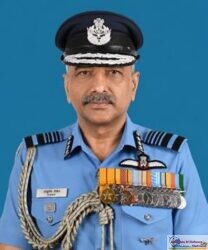
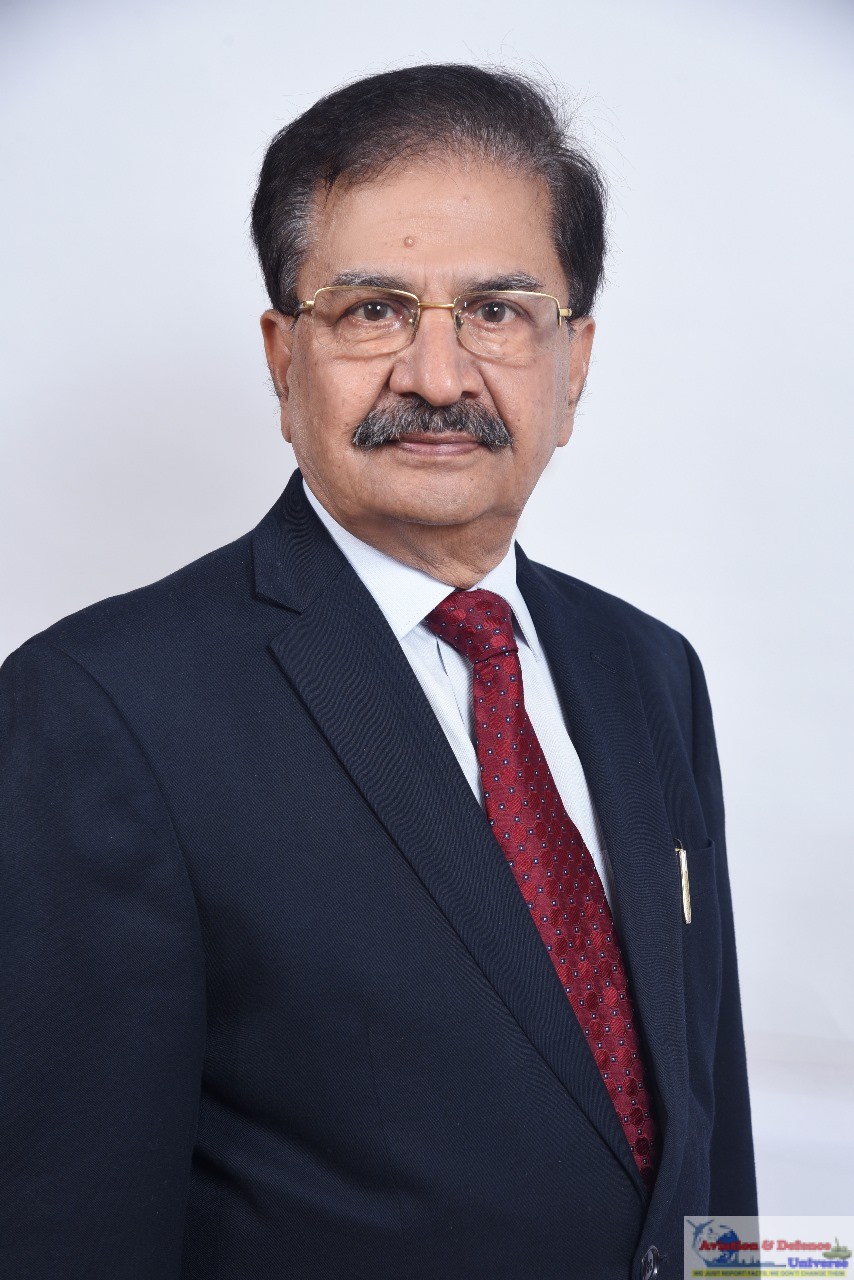
By Air Marshal Anil Chopra PVSM AVSM VM VSM
New Delhi. 08 October 2026. Lessons from Ukraine and West Asia indicate that future wars would be multi-domain, and could be long. These would be technology intensive, will need huge industrial backing, and need for self-reliance (Atmanirbharta), and will be won more by defence factories than armies. It will be a whole of nation approach with private industry gradually sitting in the driver’s seat. There will be need for stockpiling fuel and ammunition. There will be need for surge production. Cyber, and electronic warfare, and influence operations will play a great role. There will be need to protect logistic chains and sea-lanes for continued commerce and supplies. Hard conventional power is a great deterrent and combat asset. Strong air power matters and will have to produce strategic effects and also help shape the battlefield.
Closer home, the Op Sindoor indicated reality of two-nation collusive war against India. There has to be continued congruence between clear political and military goals. Escalation has to be graded and end-states evolved on the move. Conflict termination has to be strategized. Intelligence Surveillance Reconnaissance (ISR) capabilities will be crucial. Space will be increasingly exploited for ISR, communications, navigation, and targeting. Targeting will increasingly be AI driven to improve accuracy and reduce sensor-shooter time. The highly guarded defence technologies will be difficult to get, and there will be need to create own intellectual property by increasing R&D spend, and defence budgets. Drones alone cannot win wars. There will have to be mix of inhabited and unscrewed aerial platforms.
India is among the most threatened nations in the world. It has two nuclear neighbours with both of whom India has serious territorial disputes and has had full-scale wars. Both are colluding against India. Air power and future of all warfare are intertwined. A level of air superiority, will still be a pre-requisite for all operations on the surface and sub-surface to succeed. Since application of air power will be dominant means of prosecuting war, there is a need to analyse the state of Indian Air Force (IAF) by numbers and modernisation. IAF has an authorized strength of 42.5 fighter squadrons. From the current acquisition trend-lines, the IAF could reach 42 squadrons earliest by around 2040.
Current State of IAF
The IAF is the fourth largest air force of the world. The primary mission is to secure Indian airspace and to conduct aerial warfare during armed conflict. Defence minister’s operational directive of February 2009: “We should be prepared to fight on both fronts simultaneously a war at 30 days (intense) and 60 days (normal) rates.” The IAF is down to 29 fighter squadrons. These include Rafale, Su 30MKI, upgraded MiG 29 and Mirage 2000, Jaguar, and LCA Mk1. IAF has three large AWACS (Il-76 based) aircraft and three indigenous DRDO developed “Netra” AEW&C aircraft. Similarly IAF has only six IL-78 Flight Refueling Aircraft (FRA). Both these fleets are highly inadequate for a continental size country like India which has also to cover the Indian Ocean Region.
Effects from the Air
Air power is inherently strategic in nature and simultaneously provides conventional deterrence. Air campaigns can be executed simultaneously against different spread out target systems. It can provide both kinetic and non-kinetic options with pin point accuracy. It can influence outcomes and actions of the surface forces. It can simultaneously produce physical as well as psychological effects. Strategic airlift allows strategic reach and strategic effects. IAF has repeatedly demonstrated it. IAF is technology intensive service and aerial systems have early obsolescence, and require greater investment in R&D and also funding. IAF is looking at dominance from the Persian Gulf to the Straits of Malacca, using long range aircraft supported by FRA and AWACS. IAF transformation is being driven from just being platform-based to being capability-based. Effects based, network-centric, multi domain operations (MDO) are the new normal. Advantage of air power is ability to exploit swing-role capabilities. When you say Rafale is an Omni Role fighter, means it can do many roles in a single mission. The future is in Manned-Unmanned Teaming (MUM-T).
Rapidly Growing PLAAF and PAF
China’s People’s Liberation Army Air Force’s (PLAAF) mammoth fleet of fighter aircraft and advanced air defence systems poses an intimidating challenge to the IAF’s relatively smaller fleet size. PLAAF currently has nearly 2,000 fighter/bomber aircraft, with over 1,400 of 4th generation plus. These include 450 fifth-generation J-20 aircraft. J-20 numbers will hit 1,500 by 2035. China’s second 5th-generation aircraft J-35 is ready for induction or export. Pakistan is likely to be the first customer with deliveries beginning 2027. PLAAF has clear edge in having nearly 120 H-6 strategic bombers, with some variants able to carry up to six cruise missiles with 1500 km range. China also has much larger number of indigenous transport aircraft, AEW&C and FRA. China has dedicated electronic warfare (EW) aircraft. China also has an edge with a huge surface-to-surface missile force. China’s biggest strength is its indigenous aircraft industry that produces all types of aircraft and advanced helicopters. China has a huge Unmanned Aerial Vehicle (UAV) fleet of indigenous design. China also has significant Maritime air power, with PLA Navy (PLAN) having three operational aircraft carriers and nearly 600 aircraft. More, larger ones, are evolving. It can be seen that China has significant air power.
PAF has 19 squadrons with around 350 fighter aircraft. In the long term, PAF will have around 200-plus JF-17s, 75 F-16s, 50 J-10C, and 40 J-35A. They have acquired significant number of Chinese UAVs and have set up production of Wing Loong UAVs in Pakistan. The PAF in itself does not pose any significant threat to India, it has been exercising closely with PLAAF and has advantage of equipment interoperability, and has satellite-based ISR and communication support. IAF has to thus factor in a two front confrontation.
Su-30 MKI Upgrade
The end state could be 14 squadrons of Su-30 MKI upgraded to 4.5 generation. The upgrade will include next-generation indigenous Gallium Nitride (GaN)-based Virupaksha AESA radar; advanced weaponry including long-range indigenous missiles like the Astra Mk-2 and Astra Mk-3, as well as the BrahMos-A supersonic cruise missiles; upgraded AI-enabled cockpits, digital touchscreen multi-sensor fusion displays, and indigenous, anti-jamming navigation systems that can operate in GPS-denied environments; cutting-edge EW suites and radar-absorbent material coatings will be applied to reduce the aircraft’s radar signature and enhance survivability in contested airspace; and significantly extend the combat life. In late 2024, a ₹13,500 crore deal was cleared to acquire 12 brand-new Su-30MKI aircraft featuring over 62% indigenous content to replace jets lost in crashes. Deliveries for these newly built jets are set to begin in late 2026. India is also in talks with Russia to conduct a parallel upgrade program for part of the Su-30MKI fleet to avoid operational capability gaps.
Rafale Fleet
The IAF already operates 36 Rafale. The plans are to rapidly scale up its Rafale fleet, centered on the multi-role fighter aircraft (MRFA) program. India has received the response for a formal Letter of Request (LoR) issued to France for the procurement of 114 Rafale jets in a deal estimated at ₹3.25 lakh crore ($39 billion). Under this program, 90 to 94 jets will be jointly manufactured in India by Dassault Aviation and a local partner, making India the first country outside France to produce the Rafale. The remaining jets will be delivered in fly-away condition. The new jets will address critical capability gaps, and help the IAF meet its target of rebuilding its fighter squadron strength. Separately, the Indian Navy is procuring 26 Rafale Marine (Rafale-M) aircraft for carrier operations, which will bring significant cross-branch interoperability to the Indian military with 95% commonality between the two versions. French manufacturer Dassault Aviation partnered with Tata Advanced Systems Limited (TASL) has already begun manufacture complete Rafale fuselages in India. Dassault Aviation operates an established Maintenance, Repair, and Overhaul (MRO) facility in Noida, Uttar Pradesh, near the Jewar International Airport for Mirage-2000 and Rafale. Safran is developing the first MRO facility for the M88 engine (which powers the Rafale fighter jet) outside of France. Located in Hyderabad, India, the facility will process over 600 engine modules per year.
LCA Mk1A Program Status
All 40 LCA Mk1 have been delivered to IAF. The ₹48,000 crore contract for 83 Mk1A fighters and trainers was signed in February 2021. Deliveries were originally scheduled to begin in February 2024, and conclude by February 2028. The program faces delivery bottlenecks due to delayed F404-IN20 engine shipments from GE Aerospace, and some avionics integration issues. Official induction has been pushed to March 2027. A follow-on contract for an additional 97 Mk1A fighters was signed in September 2025, costing over ₹62,370 crore. Deliveries for this tranche are scheduled to commence in 2027 and run over a six-year period.
The Mk1A represents a major 4.5-generation upgrade over earlier baseline LCA variants, featuring advanced avionics, upgraded digital glass cockpit and smart displays, state-of-the-art Electronic Warfare self-protection systems. The aircraft was to get the indigenous Uttam AESA radar, developed by the DRDO. However, its integration is still incomplete and it will equip the second batch of 97 LCA Mk1A. Till then the aircraft will have Israeli Elta EL/M-2052 AESA radar. The aircraft will have the Astra Mk-1 and ASRAAM missiles, among other weapons.
LCA Mk2 Status
The HAL Tejas Mark 2 Medium Weight Fighter (MWF) is a 4.5 generation, single-engine, canard delta wing, multirole combat aircraft designed by the Aeronautical Development Agency (ADA) in collaboration with HAL. The aircraft is currently in its final stages of development. The airframe and structural assembly are complete, and the aircraft is actively undergoing pre-flight clearance processes by CEMILAC (Centre for Military Airworthiness and Certification) that include ground-based tests, engine runs, and system validations. The maiden flight of the prototype is anticipated late 2026. The IAF expects (optimistically) the first batch to be inducted around 2029. The aircraft is meant to replace the Mirage 2000, Jaguar, and MiG-29 fleets. The IAF is seeking 120 to 130 LCA Mk2, which will make up approximately six squadrons.
The aircraft will powered by the General Electric (GE) F414-GE-INS6 turbofan engine. HAL and GE Aerospace are executing a landmark technical agreement to co-produce 99 GE F414-GE-INS6 turbofan engines domestically. The $1 billion pact includes 80% technology transfer, securing IP rights for critical localized components like crystal blades and specialized hot-end coatings. The engine will also power the first two squadrons of India’s advanced medium combat aircraft (AMCA). Therefore, many more engines will eventually be built.
AMCA Status
The AMCA is currently in its prototype development phase. The design phase is complete, and the government has allocated over Rs 15,000 crore to build five flying prototypes and one structural test specimen. The first prototype rollout is expected in 2028, with its maiden flight planned for 2029 and formal induction targeted for 2034–2035. The timelines seem very ambitious. In a historic shift in Indian military aviation, ADA opened the prototype manufacturing phase to private industry. The Ministry of Defence (MoD) shortlisted three private conglomerates to develop the prototypes. These are Tata Advanced Systems Limited, a consortium led by Larsen & Toubro (with BEL and Dynamatic Technologies), and a consortium led by Bharat Forge (with BML and Data Patterns). State-owned HAL was kept out of the prototype development stage to build competitive parallel manufacturing capacity, though HAL plans to bid for the eventual mass-production phases. The first prototypes and initial two operational squadrons will be powered by GE F414 engines. India is seeking to co-develop a more powerful 120 kN engine with foreign Original Equipment Manufacturers (OEMs) like Safran/Rolls-Royce for future AMCA variants.
FRA and AEW&C Status
India is trying to expand its airborne surveillance and refueling capabilities to bridge gaps with regional adversaries. The DRDO is managing multiple development tracks. Three Netra Mk 1 feature a radar mounted on a Brazilian Embraer ERJ-145 executive jet. The Defence Acquisition Council (DAC) approved six additional upgraded Mk 1A aircraft with gallium nitride-based transmitters. Netra Mk 2 will be a ₹20,000 crore program to develop six next-generation AEW&C systems. These will utilize converted Airbus A321 passenger jets, equipped with advanced 4D AESA radars offering 300 to 360-degree coverage.
The IAF’s FRA capability primarily relies on a fleet of six Russian-origin Ilyushin Il-78 tankers, which use a probe-and-drogue refueling system. India now plans to convert six larger wide-body passenger/cargo aircraft (Airbus A330/Boeing 767) for FRA. These are central to extending regional combat reach. For India’s continental size and Indian Ocean reach, IAF should in the long-term have around 15 FRA.
Uninhabited Air Systems and Drones
IAF requires large Uninhabited Air Systems (UAS) surveillance platforms. IAF already operates Israeli IAI Heron and Searcher UAS. 31 MQ-9 on order will start inducting in 2027. 8 will come to IAF. Meanwhile, India is rapidly scaling up the indigenous manufacturing of large UAS and medium-altitude long-endurance (MALE) military drones under the Make in India initiative. Adani Drishti 10 Starliner is a prominent MALE UAS featuring a 30,000-foot ceiling, a 450 kg payload capacity, and up to 36 hours of endurance. DRDO Rustom-H / TAPAS-BH-201, a twin-engine MALE UAV developed by DRDO’s Aeronautical Development Establishment (ADE) for intelligence, surveillance, and reconnaissance (ISR) missions, boasts an operational ceiling of 28,000 to 35,000 feet.
DRDO Ghatak is an upcoming autonomous, jet-powered stealth combat air vehicle (UCAV) with a flying-wing design engineered for heavy strike roles. Archer-NG is a single-engine, twin-boom MALE platform with a 30,000-foot ceiling and a 300 kg payload capacity, which completed its maiden flight recently. Adani Defence & Aerospace operates advanced manufacturing lines producing tactical and large-scale MALE systems. HAL and Tata Advanced Systems Limited (TASL) are competing in domestic mega-procurement bids, such as the IAF’s projected acquisition of 87 MALE drones estimated at ₹30,000 crore. Flying Wedge Defence & Aerospace (FWDA) is expanding indigenous heavy autonomous UAV tech globally, including production partnerships in Europe for systems like the Kaal Bhairava.
The MoD has initiated dedicated procurement pipelines for specialized Micro UAV systems tailored for the IAF’s elite Garud Special Forces. These technical parameters outline requirements for the entire man-portable system must not exceed 25 kg, distributed across two backpacks. Built to military standards with advanced Electro-Optical/Infrared (EO/IR) gimbals optimized for extreme high-altitude operations and hostile weather conditions.
IAF requires long-range Kamikaze drones and loitering munitions covering ranges up to 1,500 km, and loiter time of 8 hours. IAF already operates the Israeli IAI Harop and Harpy. Indian defence startups have developed Shahed-136 class long-range kamikaze drones, notably the Sheshnaag-150 and Project KAL, to boost India’s deep-penetration and autonomous strike capabilities. Sheshnaag-150, built by Bengaluru-based NewSpace Research and Technologies, AI-enabled swarm attack drone features a 1,000 km range, a 40 kg payload capacity, and an endurance of 5 hours. Developed by Noida-headquartered IG Defence, this long-range one-way attack drone has an operational range of up to 1,000 km, carries a 50 kg payload, and offers an endurance of 7 to 8 hours. IAF will require around 5,000 drone inventory initially, and India must have surge production capability.
MUM-T
The manned fighter aircraft are still here to stay for at least five decades or more. Manned Unmanned Teaming (MUM-T) is the future. The IAF is aggressively scaling up its inventory of unmanned aerial platforms, transitioning toward a highly integrated ecosystem where small drones, swarm systems, and loitering munitions operate alongside conventional fighter aircraft. Rather than creating a standalone drone branch, the IAF is actively embedding tactical unmanned capabilities within its existing organizational and operational matrix.
In September 2026, the IAF concluded its inaugural Dronathon at Pokhran. The live exercises served as a critical evaluation environment for small indigenous First Person View (FPV) strike drones, autonomous swarms, and electronic counter-drone systems under rugged, simulated combat conditions.
The wider Indian defense sector is leaning heavily on domestic innovators to avoid foreign supply-chain reliance, as India shifts towards mass domestic procurement. Indigenous kamikaze FPV platforms built to withstand harsh GPS-denied and extreme temperature environments (-35°C to 50°C). Concurrently, the IAF issued formal requirements for larger multi-layered defence solutions, including 800 medium-range swarm drone systems capable of cross-border operations up to 350+ kilometers.
Ultimate End State
If all goes as per plan, by 2040, IAF should have 12 Squadrons of Su-30 MKI, 10 squadrons of LCA Mk1A, 8 of LCA Mk2, 8 of Rafale, and 4 of the AMCA. This would make it 42. These figures are highly achievable as long as timely funds are allotted and there are no serious development delays in AMCA. If there are delays, IAF may have to stretch the Mirage-2000 and MiG 29 fleets. In case of delays in AMCA, IAF may have to buy 2-3 squadrons of Su-57 fifth-generation aircraft. IAF must also target to have 8 large and 10 smaller AEW&C, and at least 12 FRA aircraft. IAF must have by then a significant fleet of Unmanned Combat Aerial Vehicles (UCAV) systems, including the indigenously developed DRDO’s “Ghatak”. IAF should also have a large inventory of loitering munitions, aerial missiles with longer ranges including the later variants of BrahMos and Astra missiles. Indigenous long range ground-based AD weapons (project Kusha, Aksah SAM) are evolving well.
Meanwhile, the IAF is well placed in terms of transport and helicopter fleets. The make-in-India projects on both these counts are successful (C-295, ALH variants). Soon an MTA will be selected, and 60 procured.
The Atmanirbharta, in defence has to be aggressively pushed. Private sector has come of age. India needs to master AI, stealth, aero-engine, hypersonic, directed-energy, electronic warfare technologies among others. India must work to build intellectual property rights (IPR), for which the R&D funding has to increase.
The focus has to remain primarily China-centric rather than Pakistan-centric. Asset building will have to be a whole of nation approach. Strong air power is a huge deterrent. It is time to take quick decisions, and to put the money on the table.
(Air Marshal Anil Chopra (Retd.), is a former Mirage 2000 Pioneer and a Test Pilot, of Indian Air Force. He is former Director General, Centre for Air Power Studies. Currently he is Strategic Advisor, Society of Indian Defence Manufacturers. The views in the article are solely the author’s. He can be contacted at editor.adu@gmail.com)


































































-A4-Size-(2)_page-0001.jpg)