




















- Can Delhi Turn Diversity into Diplomatic Strength?
- Hosts a Bloc That Can No Longer Be Ignored
- India Takes the Chair at a Changing Global Table

By Theertha Panachoor
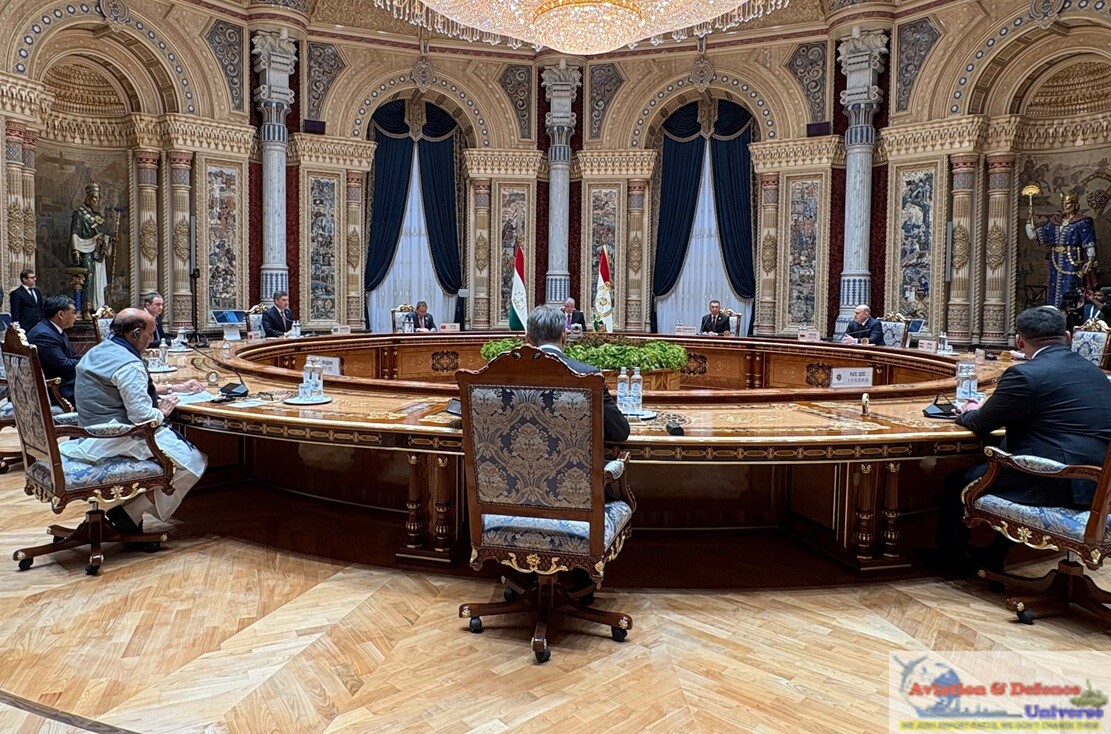
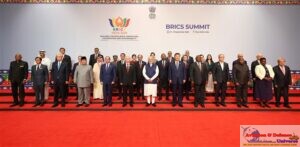
New Delhi, India. 12 September 2026. The countdown has begun. Eleven nations. Competing ambitions. Nearly half the world’s population. And one table in New Delhi. As the 18th BRICS Summit opens on 12 September, India prepares to host a grouping that has travelled a remarkable distance from an acronym searching for relevance to a fixture of the global diplomatic calendar. Xi Jinping, Vladimir Putin and Masoud Pezeshkian are among the leaders on the guest list as India closes a chairship that has taken BRICS through more than 350 meetings across 25 cities. But beneath the scale lies the real story: BRICS does not speak with one voice on defence, geopolitics, technology or the future world order. Its strength may lie precisely in its ability to keep countries with sharply different interests talking. As Delhi gets ready, the question is no longer whether BRICS matters—it is what eleven very different powers can agree to do together.
Nineteen years after five foreign ministers first sat down together on the margins of a UN General Assembly session, BRICS opens its 18th leaders’ summit in New Delhi on September 12th with eleven full members, a functioning development bank, a genuine liquidity backstop and a guest list that includes Xi Jinping, Vladimir Putin and Iran’s Masoud Pezeshkian. That is a remarkable run for a grouping that was, for much of its first decade, dismissed as an acronym in search of a purpose. India’s chairship year, closing out with this weekend’s summit, produced more than 350 ministerial and official-level meetings across 25 cities, under the theme “Building for Resilience, Innovation, Cooperation and Sustainability.” Whatever else BRICS is or isn’t, it has become a fixture of the international calendar that every major and middle power now has to plan around..
What the bloc actually is
BRICS is not an alliance and was never meant to be one. There is no mutual-defence clause or central authority and no mechanism for forcing a reluctant member into line. Its members have repeatedly resisted building one.
The New Development Bank, based in Shanghai since 2015, has approved $42.9 billion for 139 projects, with 115 still active at the end of last year. Its money goes into the mundane infrastructure that economies depend on: transit systems, water treatment and renewable-energy grids across member states and partner countries. The Contingent Reserve Arrangement is similarly practical with its $100 billion currency-swap facility that gives members a source of liquidity outside the IMF, with smaller contributors such as South Africa able to draw more than they put in. It has rarely been used but that’s not necessarily viewed as a weakness. Insurance is most useful when it is available, rather than when it is needed.
 BRICS also has working groups on agriculture, digital payments, public health and other areas of economic cooperation. Their importance is easy to overstate, but so is their irrelevance. They give countries with very different interests a place to work out specific problems without requiring them to agree on the larger geopolitical questions.
The scale also gives BRICS considerable economic weight. Its members account for more than one third of global GDP at purchasing power parity, with some IMF based estimates putting the share above 40% and close to half the world’s population. But that weight is heavily concentrated as China accounts for roughly one fifth of global output on this measure and India for close to a tenth. The smaller members still have something to gain from the grouping. Ethiopia, Indonesia and the UAE, for instance, have used BRICS platforms to pursue infrastructure financing and diversify trade on terms they have helped negotiate. The point is less that BRICS speaks with one voice than that its smaller members can use the group to pursue interests they might have less leverage to advance alone.
The diversity is the story
The differences between BRICS members are substantial. Russia has pushed hardest for payment systems that can operate outside western financial networks, a priority shaped by its isolation since 2022. China has pursued internationalisation of the yuan largely on its own terms. India has been more cautious on both fronts, preserving deep financial and technology ties with the United States even as those ties came under serious strain this year. Washington raised tariffs on Indian goods to 50% over New Delhi’s continued purchases of Russian oil, among the steepest duties imposed on an American trading partner. India is now negotiating its way out of that dispute while chairing a grouping that includes Russia, the country at the centre of the disagreement.
The India-China relationship is a legitimate test of what BRICS can accommodate. The two countries still maintain troop positions a few kilometres apart in the Himalayas. India also continues to invest in the Quad, a separate grouping designed in large part to balance Chinese influence in the Indo-Pacific. Yet Modi and Xi have met twice since 2024, first in Kazan and then at the SCO summit in Tianjin last year. Xi is now in India for his first visit in seven years, with a delegation reportedly more than twice the size of his 2019 delegation. The significance of the border dispute has not disappeared but both governments have decided that the relationship cannot be managed through confrontation alone, a pattern that repeats across the grouping: cooperation without convergence.
The fight over who gets in
Behind BRICS’s talk of unity is a simpler fight: who gets in and on whose terms. China pushed for rapid enlargement before the 2023 Johannesburg summit, seeing a larger bloc as a way to increase its global weight. India and Brazil wanted agreed criteria and a slower process. Pakistan exposed the divide, with China supporting its inclusion and India wary of an expansion that could strengthen Beijing’s hand.
China already dominates BRICS economically, accounting for roughly 59% of its combined nominal GDP against about 13% for India. There is no weighted voting system, but BRICS works by consensus, making the membership itself a source of power. Every new entrant changes the coalition India has to negotiate with.
 That helps explain Delhi’s preference for countries such as Indonesia, which joined in 2025 and brings economic weight and an independent foreign policy, over candidates more closely aligned with Beijing and Moscow. India does not need BRICS members to agree with it rather it needs enough of them to disagree with each other.
The partner-country category offers another compromise, expanding BRICS’s reach without giving every newcomer the same status as a full member. More than 30 countries have expressed interest in joining as members or partners, but admission still depends on consensus among existing members.
China wants a bigger BRICS and so does India, only with different conditions. The guest list this year will show which version has more influence.
BRICS built no shared rulebook for the technology that will decide the next decade
India made innovation one of the four pillars of its BRICS chairship. Communications ministers met in Pune in August under an “Innovate, Cooperate and Transform” banner, working through artificial intelligence, digital public infrastructure and cybersecurity. India’s position was that AI cooperation should remain secure, sustainable and people-centred, language broad enough for all eleven members to sign on without committing much.
What came out of the August meeting was a proposal, not a rule: India put forward a BRICS Digital Public Infrastructure Repository, intended to let members share systems modelled on Aadhaar and UPI. It is a sharing mechanism, not a standard, and nothing bound members to build DPI the same way or to the same rules.
When India put weight behind a global AI governance framework this year, it did so outside BRICS. The New Delhi Declaration on AI Impact, adopted at a separate summit in February and endorsed by 88 countries, carried India’s substantive position on how AI should be governed. The BRICS ICT track produced coordination on digital infrastructure and cybersecurity, useful but modest, while the harder discussion on AI governance happened elsewhere, with a different set of countries.
There is a practical reason for that. AI governance touches data, national security, industrial policy and state power, precisely the areas where BRICS members have the least incentive to give up room for manoeuvre. BRICS can agree to cooperate on technology but agreeing on the rules that govern it is considerably harder.
The innovation pillar produced meetings and coordination but India’s strongest position on AI was made elsewhere.
When consensus gets hard
There is a limit to how far BRICS is willing to take security cooperation. India’s chairship has put terrorism, cybercrime, port security and critical infrastructure on the agenda.
On Ukraine and Gaza, where its members are most divided, it has had much less to say. BRICS has been remarkably selective about how specific it wants to be. The 2024 Kazan Declaration named Israel, called for an immediate and permanent ceasefire in Gaza and backed a Palestinian state. That was relatively easy for the eleven to agree on. Ukraine was harder. With Russia sitting at the table, the declaration avoided naming the aggressor, referred instead to mediation proposals and called for a peaceful settlement.
 The same restraint appears in defence. A recent joint naval exercise hosted by South Africa focused on maritime economic security rather than collective defence. It allowed members to train together without requiring them to become military partners.
The arms trade makes the point more clearly. SIPRI’s figures for 2021–25 show India sourcing 40% of its major arms imports from Russia, 29% from France and 15% from Israel. Two of its three biggest suppliers are outside BRICS. China barely registers as a source for India, while India does not appear among China’s major arms recipients. For two of the group’s most important members, defence cooperation remains largely something they do with other countries or with each other bilaterally.
Russia’s own position as an arms supplier has weakened as its share of global arms exports fell from about a fifth a decade ago to under 7% in 2021–25, as sanctions and the war in Ukraine strained its production. Its remaining defence business with BRICS members is still conducted bilaterally. India’s talks this week on Su-57 fighters and additional S-400 systems are a case in point. They run through the two countries’ existing defence relationship, not explicitly through BRICS.
That is the line the bloc has so far kept. It can cooperate where interests overlap but can’t turn those interests into a common security policy. On defence, BRICS remains a forum for selective cooperation, not an alliance.
What to watch this weekend
None of this makes BRICS a failed project, but it does make the usual question of whether it will “replace the West” rather beside the point. It’s interesting to think of why countries that disagree on so much continue to find the group useful.
Andrey Kovsh of the National University of Singapore’s East Asian Institute explains: Russia sees BRICS largely as a way to reduce the pressure of Western sanctions and develop alternative trade and financial channels. China has a longer-term interest in changing how global institutions work, without taking on the obligations of a formal alliance. India, Brazil and South Africa are more protective of their strategic autonomy, which limits how far they are willing to let the group become a geopolitical instrument. Kovsh’s conclusion is less dramatic than either side of the usual BRICS debate: the group is more likely to complement the existing order than replace it.
 India has its own reason to prefer that arrangement. Harsh V Pant of the Observer Research Foundation argues that Delhi is using its chair ship to establish itself as an independent power within BRICS, rather than joining the China-Russia effort to reshape global governance. That helps explain India’s balancing act. It can work with Washington through the Quad, with Moscow on defence and with Beijing inside BRICS without treating any of those relationships as mutually exclusive. The difficulty is that the room for manoeuvre gets smaller when China’s ambitions for the group and Russia’s search for sanctions relief become more pronounced.
That makes the summit worth watching for what happens around the declaration as much as in it. The question is whether India allows security cooperation to move beyond the limited exercises it has supported so far and whether other members push for a larger role for BRICS in defence. The bilateral meetings may provide better clues. Xi Jinping’s visit to India is one already: the relationship between two of BRICS’s most important members is being managed through direct diplomacy, not through the organisation they both belong to.
That may be the most useful way to judge BRICS: Its strength lies in giving countries a place to cooperate without first agreeing on everything; its weakness is the same. When the stakes become strategic enough, its members still tend to take the conversation elsewhere. The summit will show how much ground they are prepared to leave inside the room.
































































-A4-Size-(2)_page-0001.jpg)