


 Raksha Mantri Rajnath Singh to represent India at SCO Council of Heads of Government Meeting in Tajikistan








- Training the Hands That Keep India Flying: From Skill India to Skilled Aviation India
- From Classroom to Cockpit’s Backbone: GMR School of Aviation Builds India’s MRO Talent
- Learn, Train, Maintain: GMR School of Aviation’s Formula for India’s Aviation Future
By Sangeeta Saxena
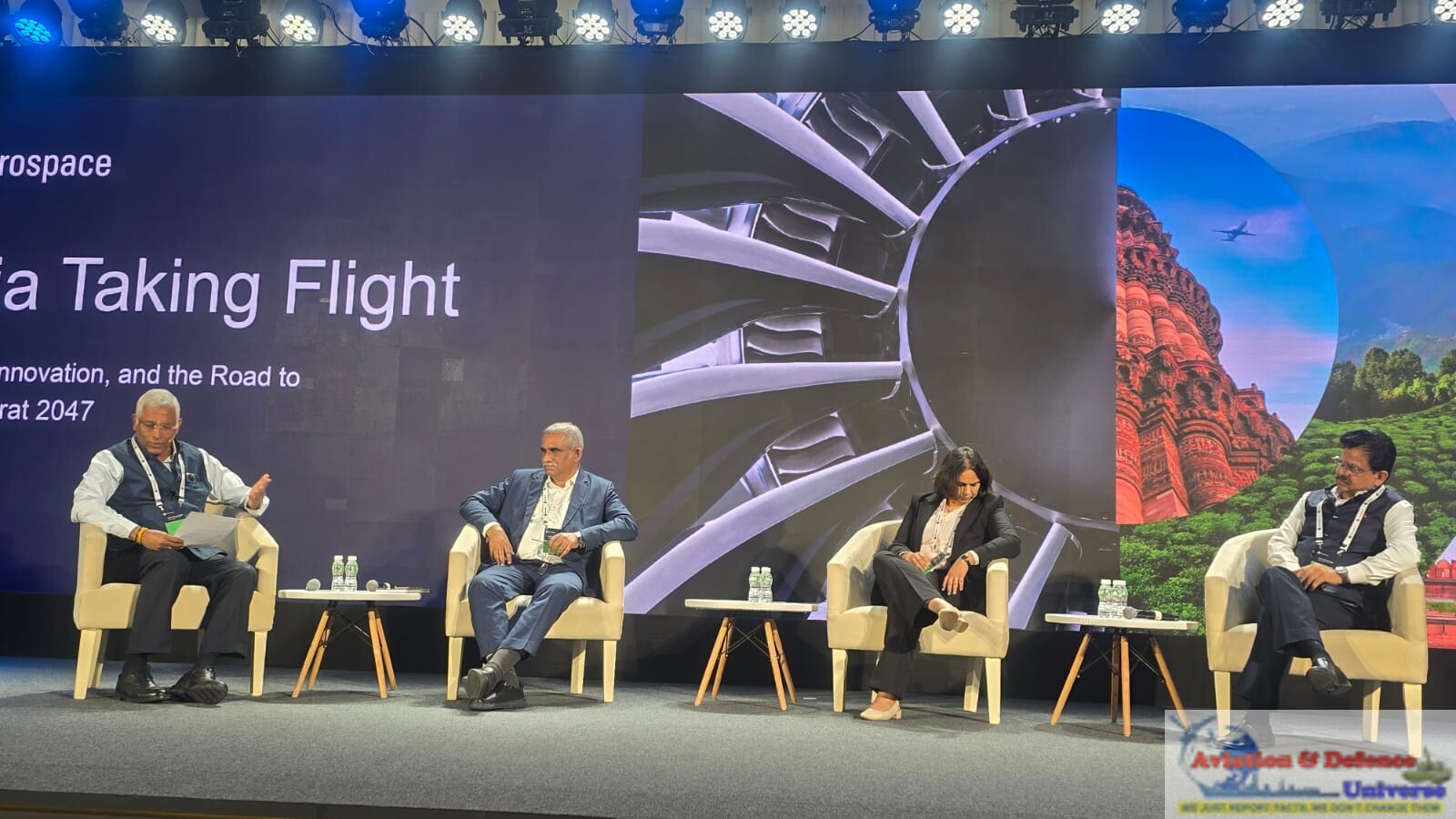
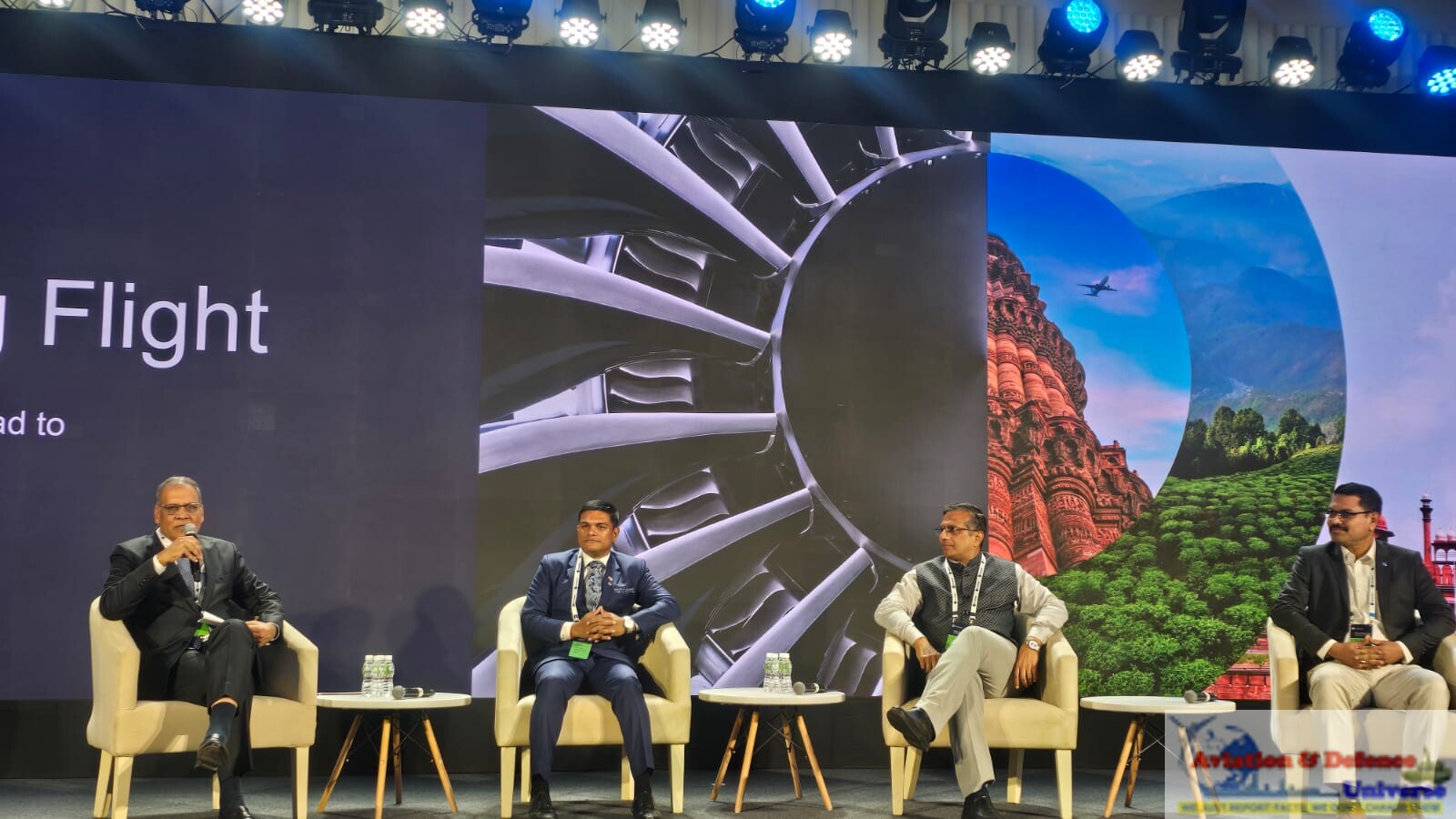
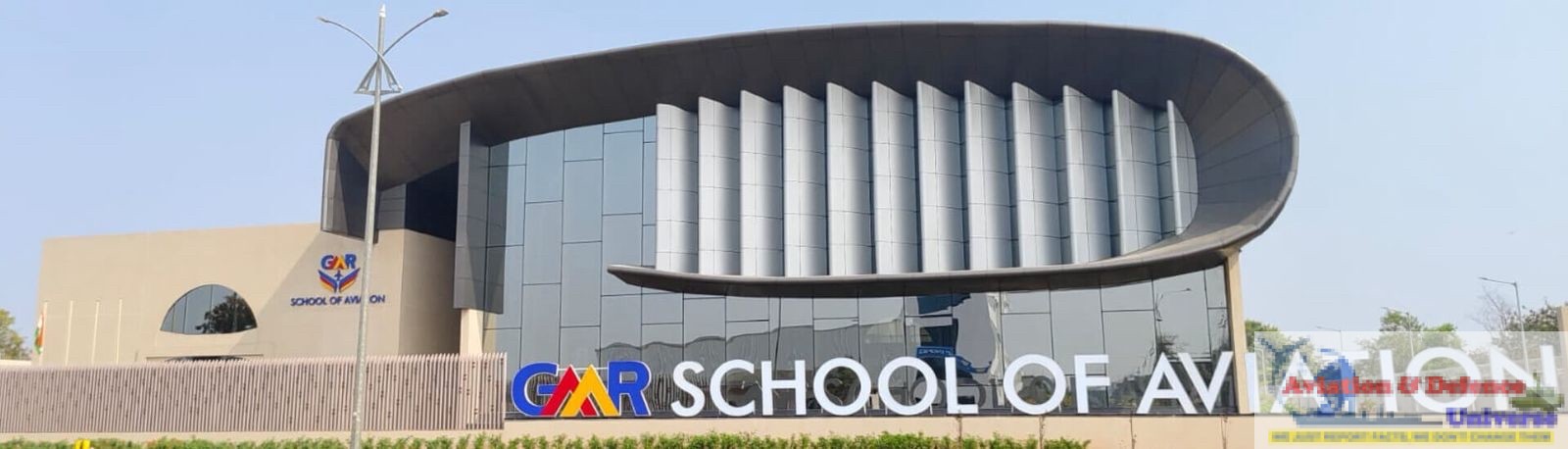
Hyderabad. 04 September 2026. It was a beautiful Hyderabad afternoon when I left the hustle and bustle of HICC and began the drive towards the GMR School of Aviation, located within the GMR Aerospace & Industrial Park near Rajiv Gandhi International Airport. As the dense cityscape gradually gave way to the broad, fast-moving airport corridor, the journey itself seemed to mirror the story I was going to discover—from conversations about India’s aviation ambitions, to the place where some of the people needed to realise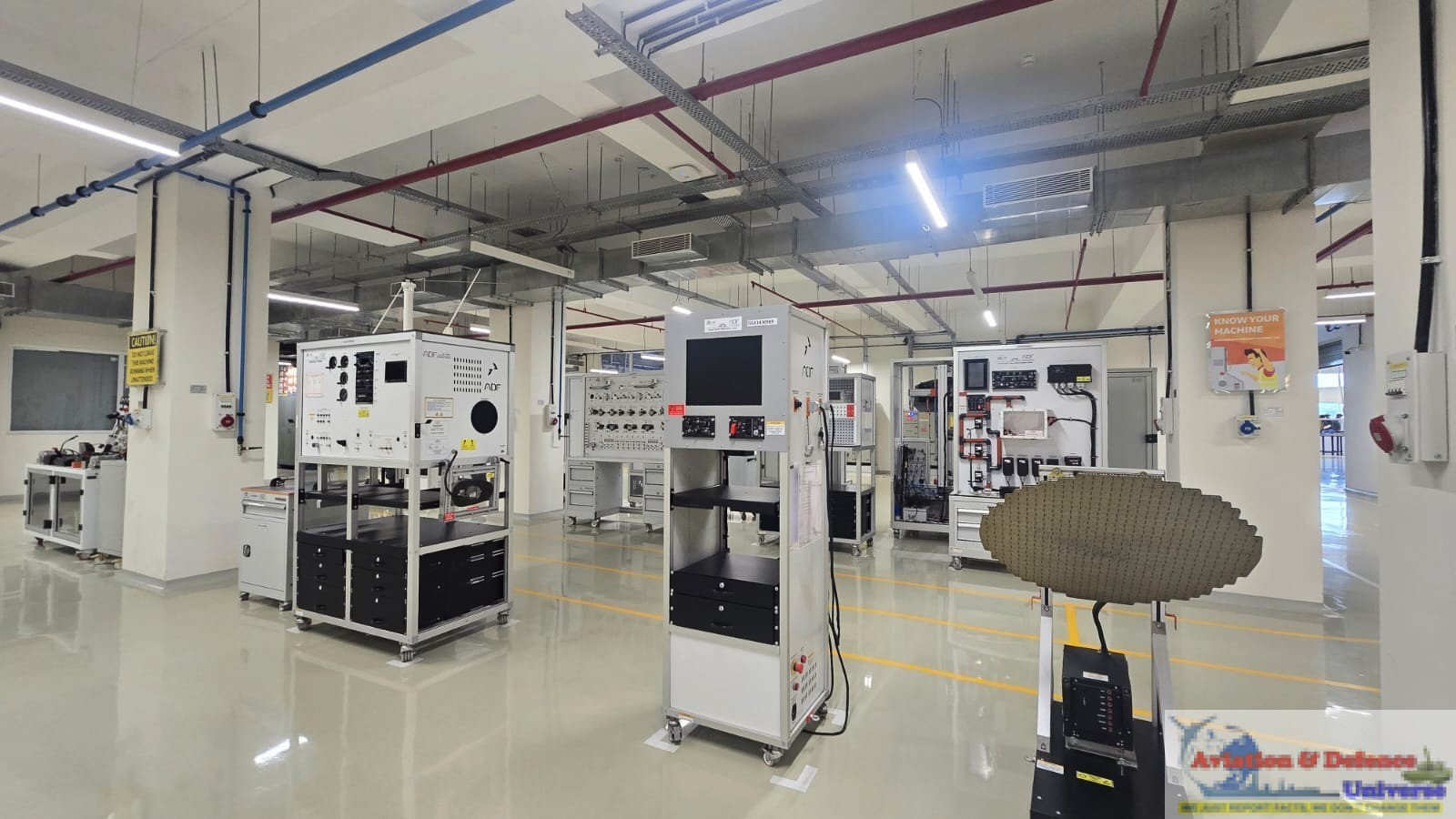 those ambitions are actually being trained. The airport-side landscape soon began revealing another Hyderabad: one of aerospace facilities, hangars, logistics infrastructure and aviation businesses clustered around an international airport. The GMR Aerospace & Industrial Park is part of this airport-anchored ecosystem, with road connectivity and direct proximity to RGIA forming an important part of its appeal. By the time we entered the Park and approached the School, the afternoon drive had become more than a journey across Hyderabad—it felt like a passage from India’s aviation conversation to India’s aviation classroom, from aspiration to skill, and from the conference hall to the hangar.
GMR School of Aviation: Where the Classroom Meets the Hangar
India can buy aircraft, build airports and expand airline networks at unprecedented speed, but the aviation 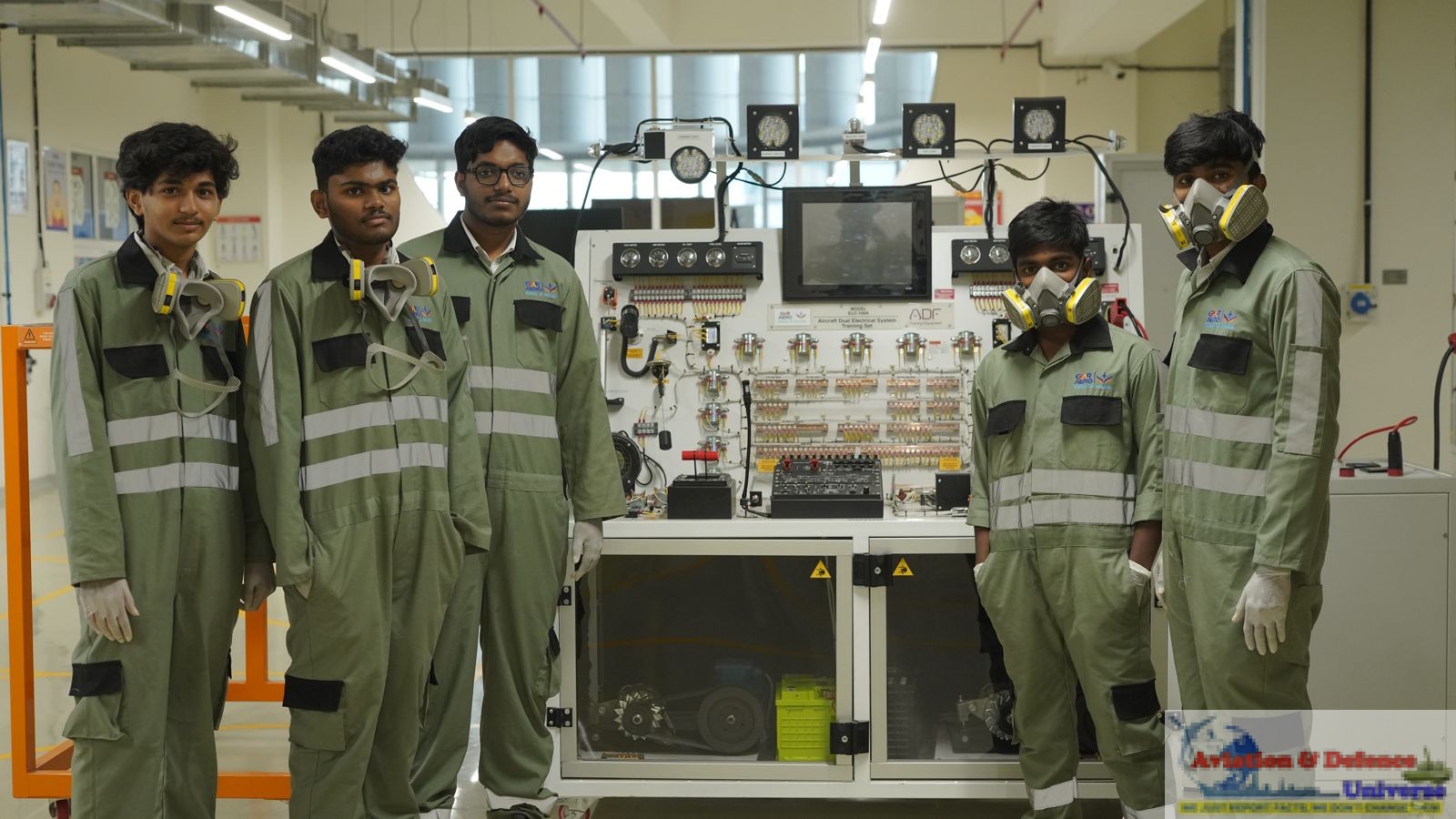 growth story cannot take off without the skilled hands and minds that keep those aircraft safely flying. As fleets expand and India’s Maintenance, Repair and Overhaul (MRO) ambitions gather momentum, the requirement for trained Aircraft Maintenance Engineers (AMEs) and aviation technicians is becoming as critical as the aircraft themselves. It is into this rapidly changing landscape that the GMR School of Aviation (GMR SOA), Hyderabad, is positioning itself—not simply as another aviation training institute, but as a bridge between the classroom, the hangar and the real world of aircraft maintenance.
Learning Where Aviation Actually Happens
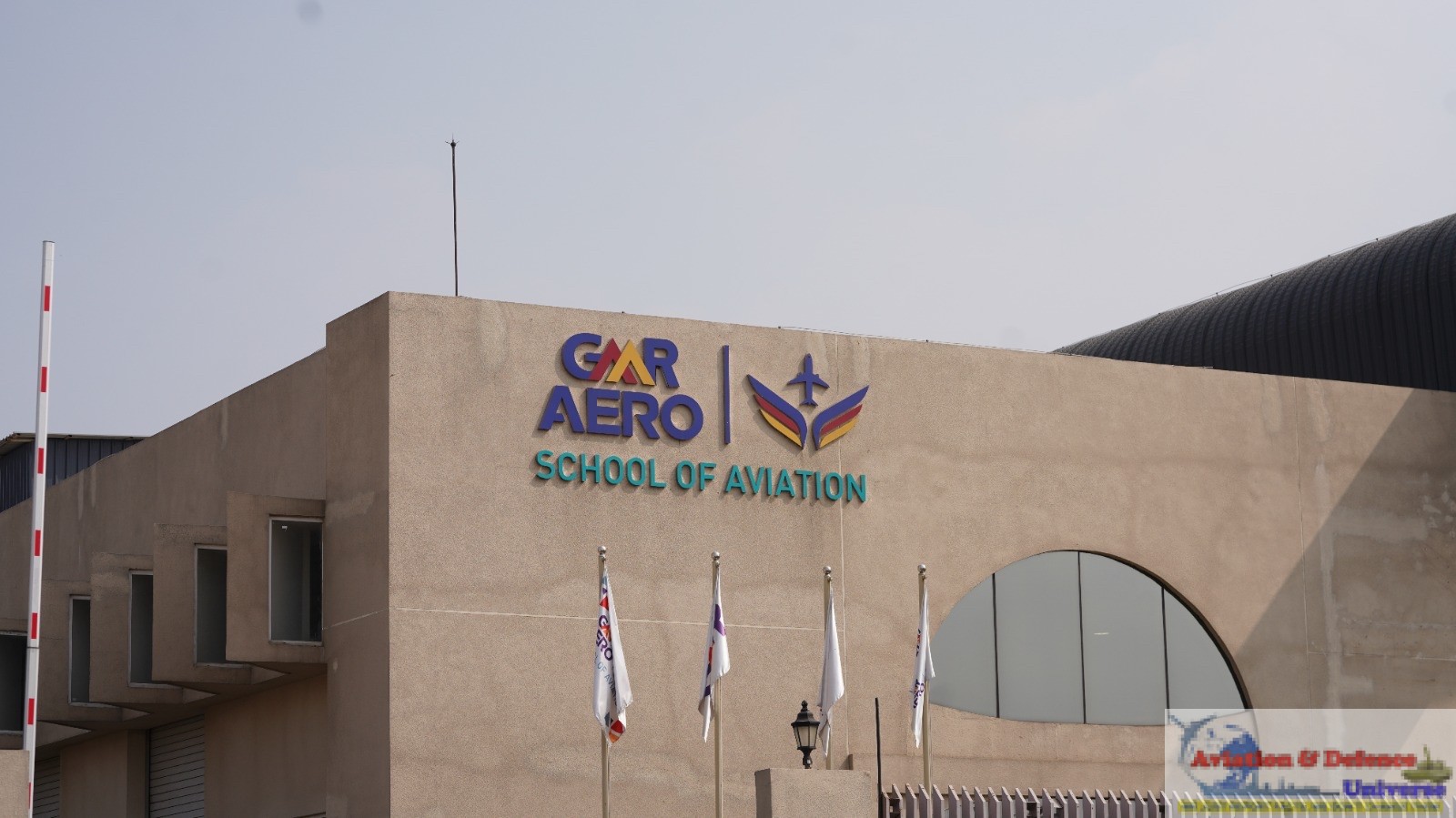
Location is perhaps one of the School’s strongest differentiators. Spread across approximately 75,000 sq. ft. within the GMR Aerospace & Industrial Park at Rajiv Gandhi International Airport, Hyderabad, the institution sits inside a functioning aviation and aerospace ecosystem. Its foundation stone was laid in 2021 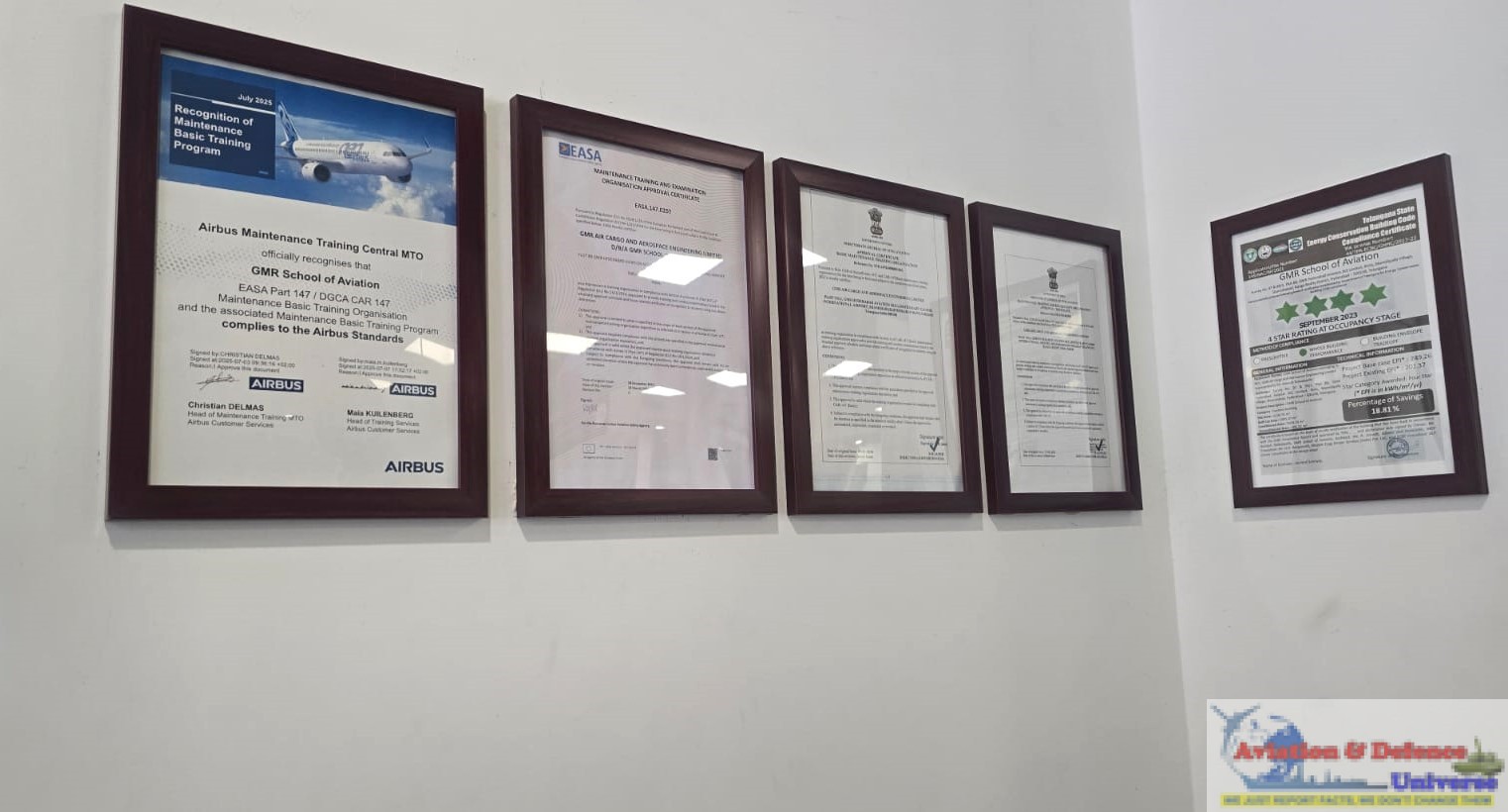 and the campus was inaugurated in January 2024. The School is approved under DGCA CAR-147 in India and EASA Part-147 in Europe, bringing Indian and international aviation training standards within the same ecosystem. But the real story is not merely where the School is located—it is what that location allows students to experience. Unlike a conventional model where aviation maintenance is taught predominantly through textbooks and classrooms, GMR SOA integrates academic instruction with workshops, simulation, structured On-Job Training, aircraft type training and, crucially, access to GMR Aero Technic’s live MRO environment. The stated objective is ambitious but simple: students should emerge as “Day One Industry-Ready” professionals rather than graduates who must begin learning the realities of an aircraft maintenance operation only after entering employment.
Two Years to Learn, Two Years to Live the Learning
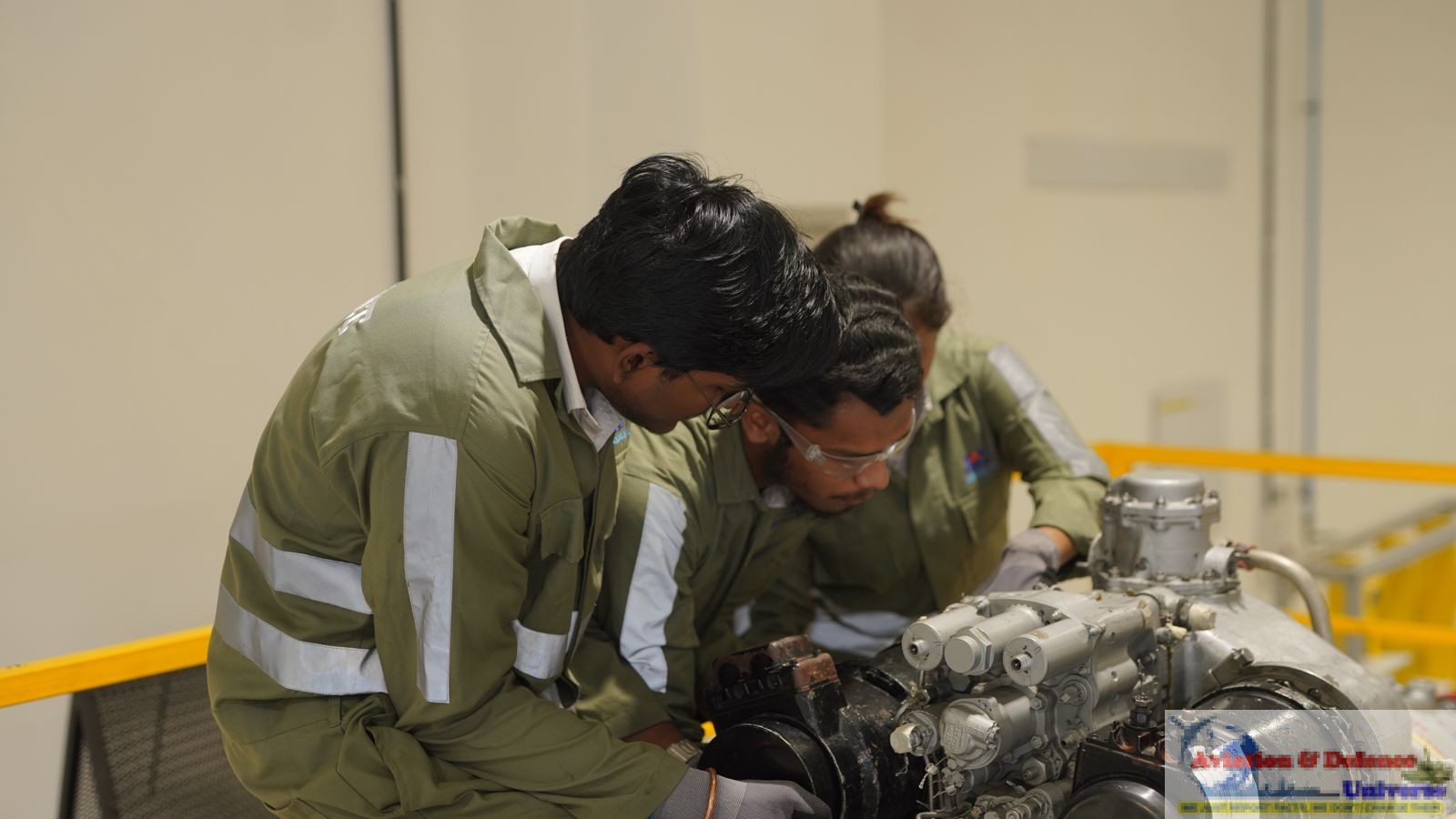
The School’s structured model gives this philosophy practical shape. The first two years concentrate on aircraft systems, engineering fundamentals, aviation regulations and maintenance practices. The following 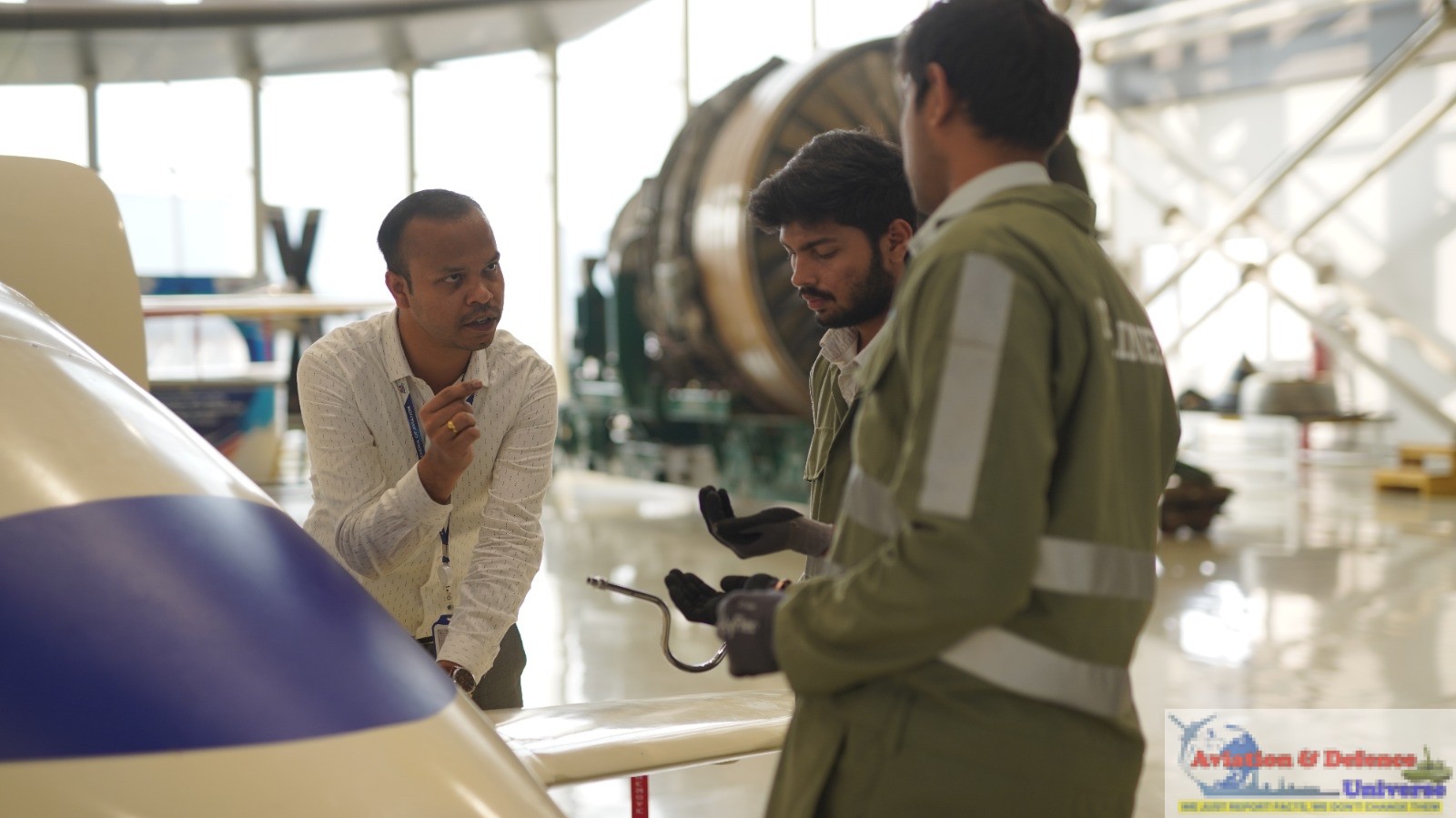 two years move students deeper into structured practical training and OJT within GMR Aero Technic’s live MRO environment, exposing them to aircraft inspection, maintenance, troubleshooting and actual operational workflows. That progression—from understanding how an aircraft system works to experiencing how that system is inspected, maintained and troubleshot in an operational environment—addresses one of aviation education’s persistent challenges: the distance between qualification and employability.
Training the Engineers Behind the Aircraft
GMR SOA offers DGCA-approved B1.1 Aeroplane Turbine, B2 Avionics and integrated B1.1+B2 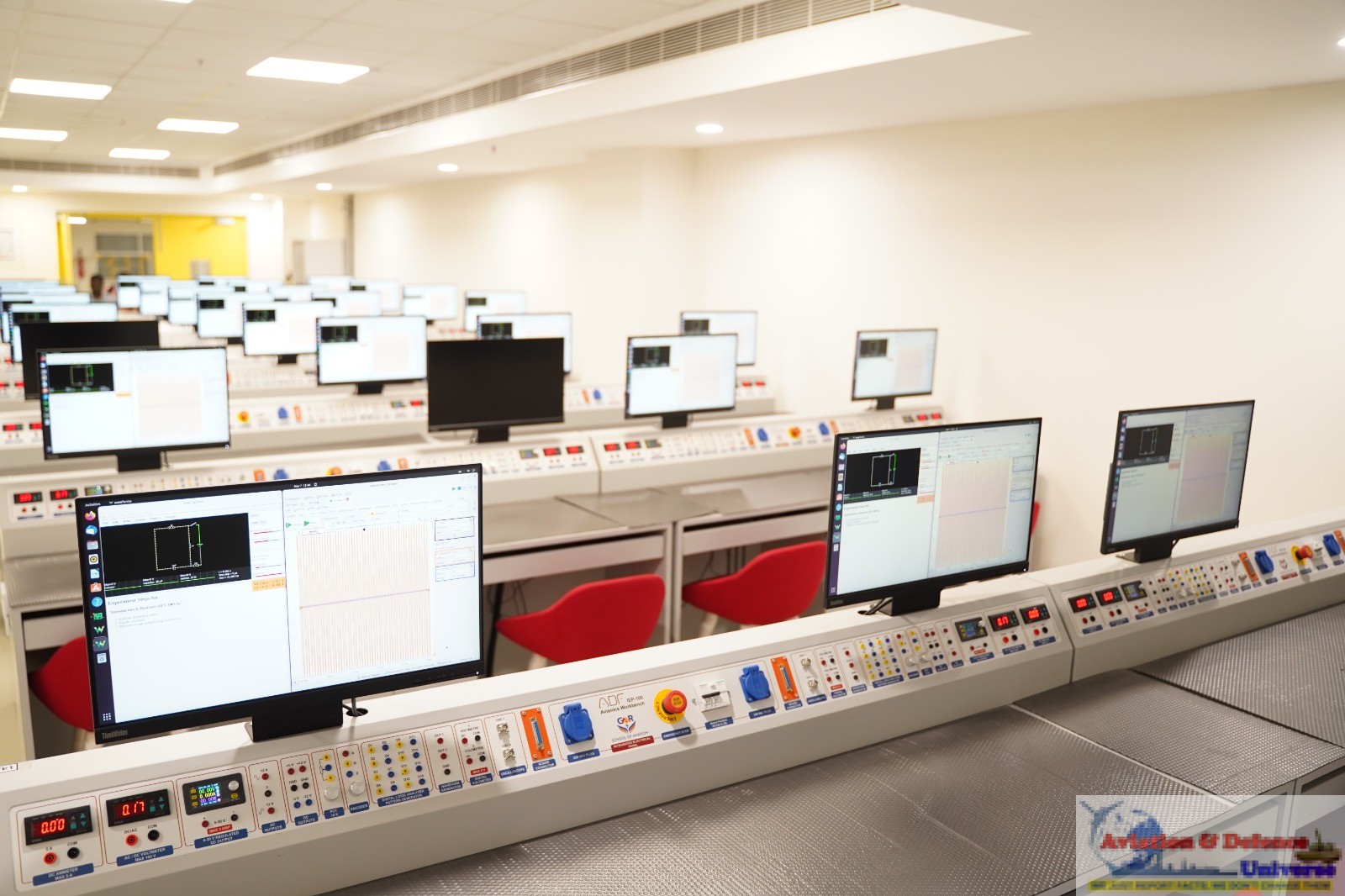 programmes, alongside an EASA integrated B1.1+B2 Aircraft Maintenance Engineering programme. Its aircraft type-training portfolio includes the Airbus A320 family and Boeing 737 NG/MAX, together with general familiarisation and difference courses. The training canvas extends further into aircraft structure and composite repair, Electrical Wiring Interconnection Systems (EWIS), Fuel Tank Safety, Safety Management Systems, Human Factors, aviation regulations and compliance, and Non-Destructive Testing.
This breadth matters because the aircraft maintenance engineer of tomorrow will work in an environment where mechanical knowledge alone is insufficient. Modern aircraft increasingly demand competence across digital systems, avionics, composites, sophisticated troubleshooting processes, regulatory compliance and technology-enabled maintenance.
Airbus and Boeing Enter the Classroom
Technology is another important pillar of the School’s training philosophy. The Airbus Competency Trainer (ACT) enables students to gain familiarity with aircraft systems through operational testing, component identification, troubleshooting, removal and installation procedures and functional testing before entering a live maintenance environment.
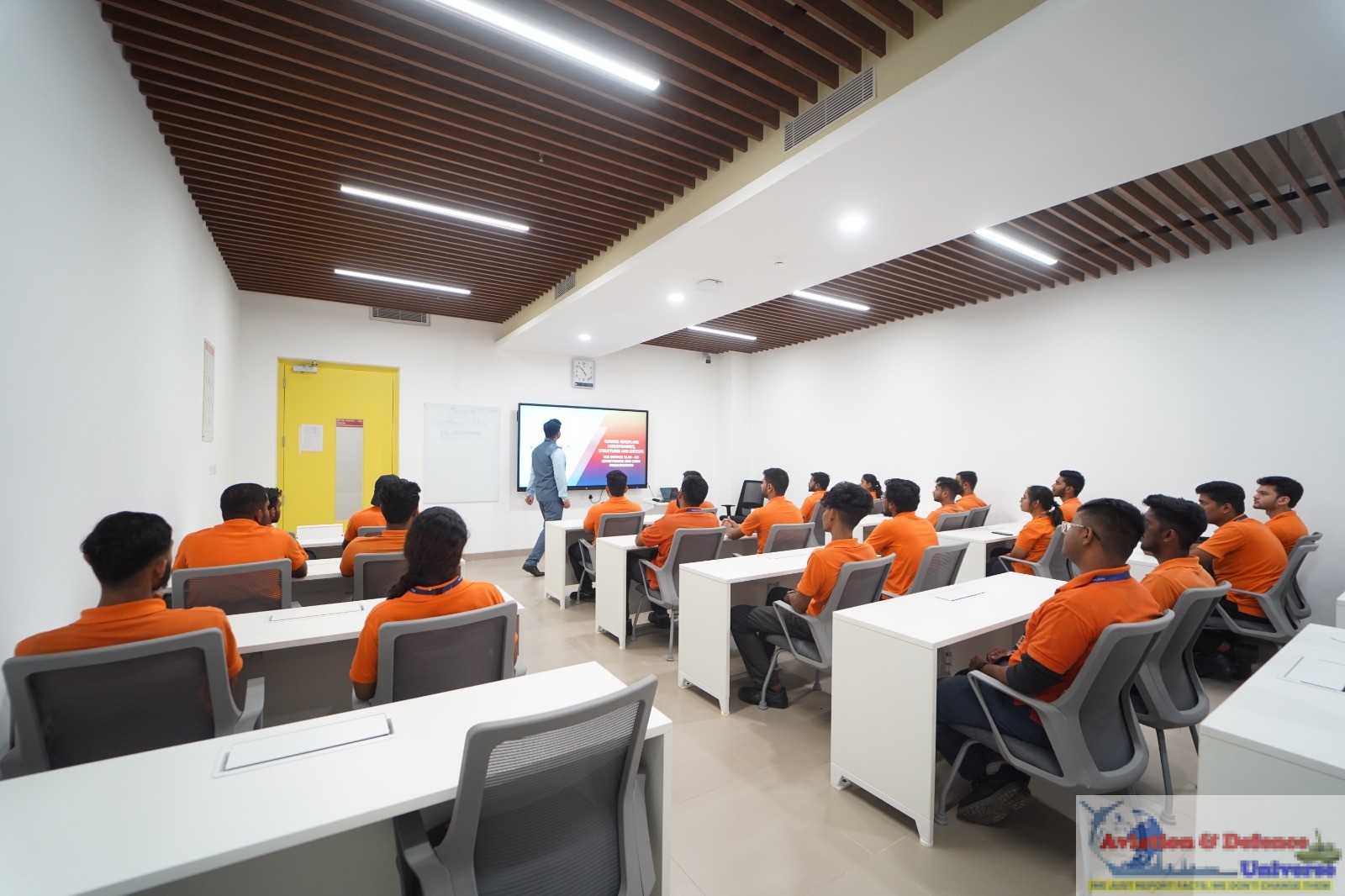 The School is also collaborating with Boeing on Competency-Based Training & Assessment (CBTA) methodologies, focusing on practical performance, decision-making, troubleshooting and competency development. Its infrastructure complements this with smart classrooms, digital learning platforms, aircraft-system mock-ups, mechanical and avionics workshops, EWIS laboratories, engine and NDT facilities and dedicated aircraft-training hangars.
The result is an interesting convergence: Airbus and Boeing may compete fiercely in the marketplace, but at GMR SOA their technologies and training philosophies contribute to preparing the same next generation of Indian aviation professionals.
An International Classroom with an Indian Mission
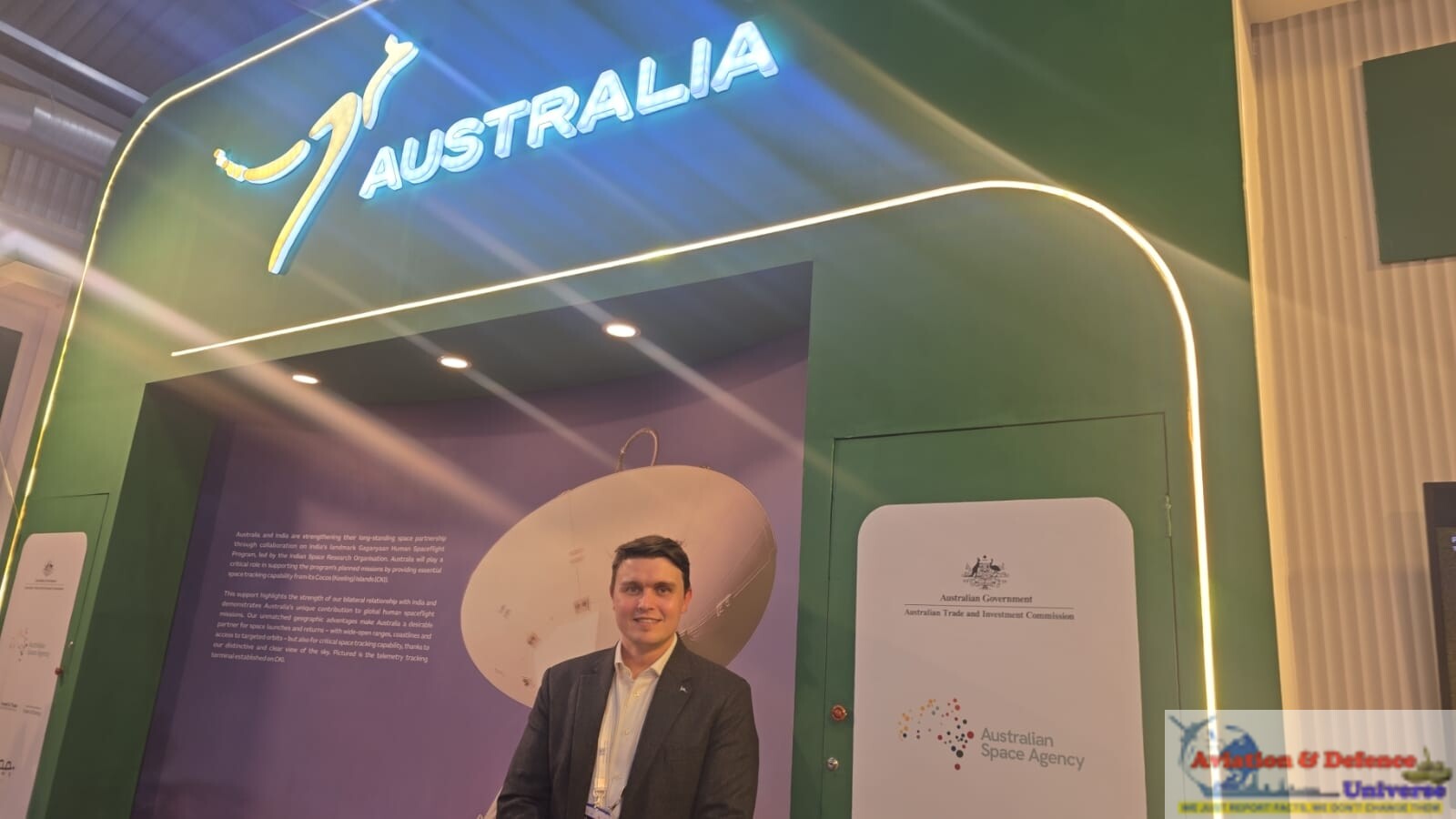
The global dimension goes beyond the two aircraft giants. The School has partnered with GMI Aero of France to establish a Centre of Excellence for Composite Training, strengthening skills in advanced aircraft composite repair and maintenance. An MoU with RMIT University, Australia, envisages cooperation in curriculum development, degree pathways, research, student exchanges and industry-linked learning.
Yet the objective of these international partnerships is distinctly connected to India’s aviation ambitions: absorbing global practices while creating capability at home.
The MRO Opportunity—and the Skills Challenge
That mission assumes greater significance when viewed against the scale of India’s aviation expansion. The 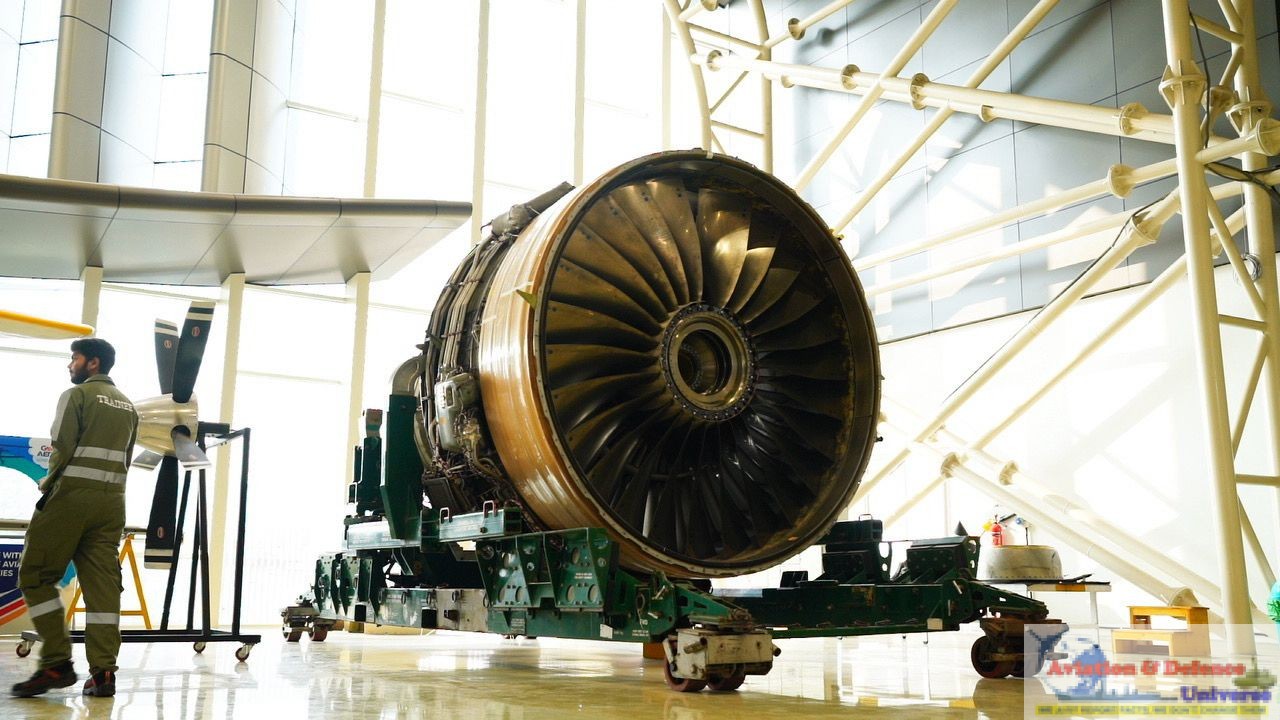 profile projects India’s MRO industry growing from approximately USD 1.7 billion in FY22 to nearly USD 4 billion by FY31. By 2030, the wider aviation ecosystem—including airlines, MRO organisations, defence operators, Flying Training Organisations and Approved Maintenance Organisations—is expected to require around 3,300 Aircraft Maintenance Engineers and 8,700 aviation technicians. This is where aviation education becomes part of a larger strategic conversation.
 For years, India has sought to retain more aircraft maintenance work within the country. Hangars, infrastructure, favourable policies and investment are essential, but an indigenous MRO ecosystem ultimately requires something that cannot simply be imported overnight: a deep and continuously replenished pool of skilled human capital. GMR SOA’s role therefore potentially extends beyond producing employable graduates. Developing engineers and technicians capable of working to Indian and international standards can contribute to strengthening domestic MRO capability, reducing dependence on overseas maintenance ecosystems and supporting the continuing expansion of India’s airlines and airports.
From Skill India to Skilled Aviation India
There is an important Atmanirbhar Bharat dimension here too. Aviation self-reliance is frequently discussed through the prism of aircraft manufacturing, components, engines, airports and MRO facilities. But Atmanirbharta in aviation must also mean Atmanirbharta in aviation skills. An aircraft can be acquired in months; creating an experienced engineer takes years. That makes institutions capable of combining 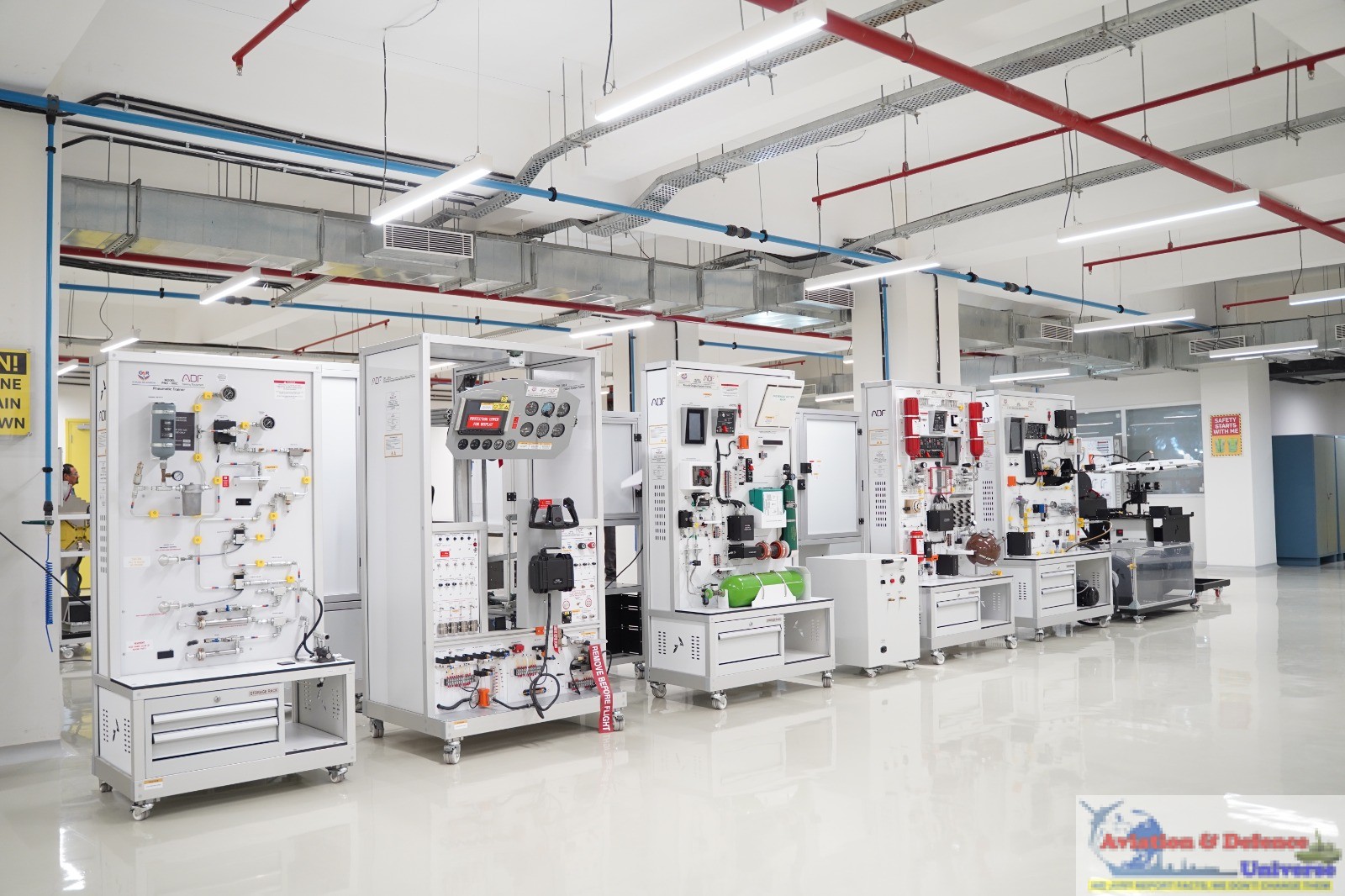 certification, technology, practical exposure and an operating aviation ecosystem increasingly important to India’s ambitions of becoming a global aviation and MRO hub. For GMR School of Aviation, Hyderabad offers the classroom, the airport provides the ecosystem and GMR Aero Technic brings the live maintenance environment together. The opportunity is to turn those advantages into something India’s aviation industry will increasingly need: professionals who do not merely know aircraft maintenance, but have experienced the environment in which aircraft are actually maintained. As India’s aircraft fleet grows, its airports multiply and its MRO ambitions become larger, the people behind the machines will determine how much of that aviation value chain ultimately remains in India.
As the ADU concluded its visit to the GMR School of Aviation and drove away from the GMR Aerospace & 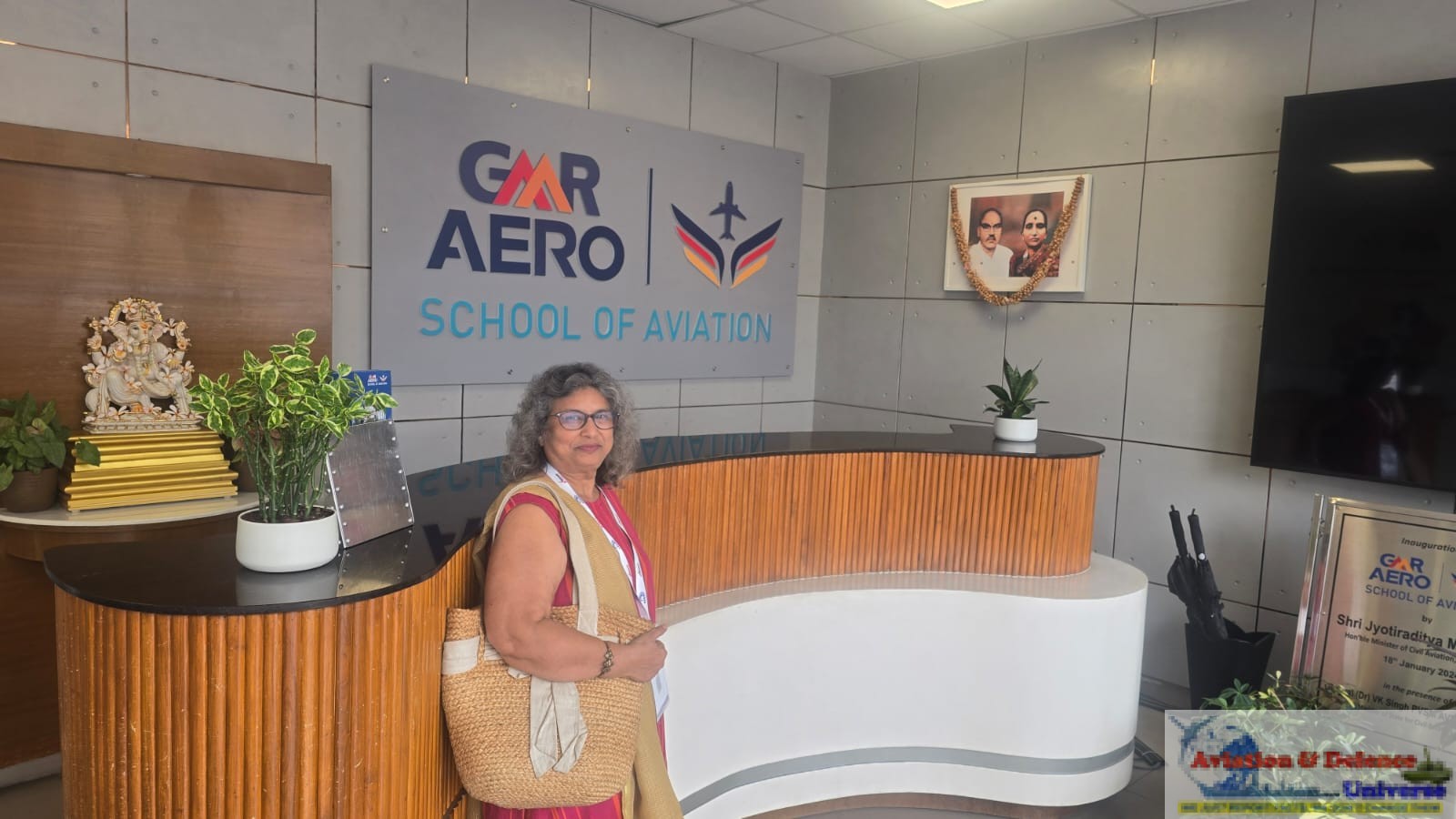 Industrial Park, the takeaway was much larger than the impressive classrooms, laboratories, workshops, simulators and training facilities seen. The visit brought home a simple reality: India’s aviation ambitions will ultimately be only as strong as the people trained to sustain them. With airline fleets expanding, airports multiplying and the country seeking to retain a greater share of MRO activity within India, aircraft maintenance engineers and technicians are becoming an increasingly important part of the aviation growth story. GMR School Of Aviation has attempted to address precisely this requirement by placing education within an actual aviation ecosystem, combining DGCA and EASA-approved programmes with simulation, workshops, aircraft type training, structured OJT and direct exposure to GMR Aero Technic’s live MRO environment.
The future of Indian aviation will not be built only in cockpits and factories. A significant part of it will be built in classrooms, workshops and hangars—and GMR School of Aviation wants its students to be ready for that future from Day One.




















































-A4-Size-(2)_page-0001.jpg)