















- Heli-Ambulances, Seaplanes and Flying Taxis: Pawan Hans at 42 Eyes the Future
- From Char Dham to Island Skies: Pawan Hans Prepares for a New Aviation Era
- From Helicopters to eVTOLs, India’s Rotorcraft Revolution Takes Flight
By Sangeeta Saxena
New Delhi. 15 October 2026. India’s next aviation revolution may not require a runway. It could take off from a heliport in the Himalayas, a water aerodrome in the Andamans, a hospital rooftop or an electric vertical take-off and landing facility in a rapidly expanding city. As Pawan Hans Limited celebrated its 42nd Foundation Day at the Airports Authority of India Club in Delhi, Union Minister of Civil Aviation Kinjarapu Ram Mohan Naidu outlined an ambitious future for India’s helicopter and emerging vertical aviation sector. From 200 proposed heliports and indigenous helicopter induction to air ambulances, religious tourism, seaplanes and electric aircraft, the Minister made it clear that India’s journey towards Viksit Bharat 2047 must extend well beyond conventional airports and aeroplanes.
Addressing the gathering and interacting with journalists on the sidelines of the celebrations, the Minister praised Pawan Hans for its four decades of service while outlining the government’s expectations for the organisation’s next phase of growth.
The interaction also extended to some of the most pressing issues confronting Indian civil aviation, including aircraft security, airspace restrictions, power-bank safety, aircraft leasing, aviation turbine fuel prices and passenger airfares during the festive season.
Pawan Hans Limited: Four Decades of Connecting India’s Difficult Destinations
Pawan Hans Limited is one of India’s longstanding helicopter operators and an important institution in the country’s civil aviation ecosystem. Established in 1985 as a government enterprise, the company was created to provide helicopter services for offshore oil exploration and production, particularly to support India’s expanding petroleum sector. Over the decades, its operations diversified to include passenger transportation, connectivity to remote and inaccessible regions, pilgrimage services, charter operations, support for government agencies and specialised aviation requirements.
Its helicopters have played an important role in connecting mountainous terrain, island territories and areas where conventional fixed-wing aviation is impractical. The company has also supported offshore operations and contributed to the development of India’s helicopter infrastructure and technical expertise. As regional connectivity, emergency medical services, tourism and advanced air mobility assume greater importance, Pawan Hans occupies a potentially significant position in India’s efforts to develop a more inclusive and geographically accessible aviation network.
Ram Mohan Naidu: Pawan Hans Must Lead India’s Helicopter Expansion
Congratulating the organisation on its 42nd Foundation Day, Minister Ram Mohan Naidu described Pawan Hans as one of the country’s most important helicopter operators. He recalled the organisation’s contribution 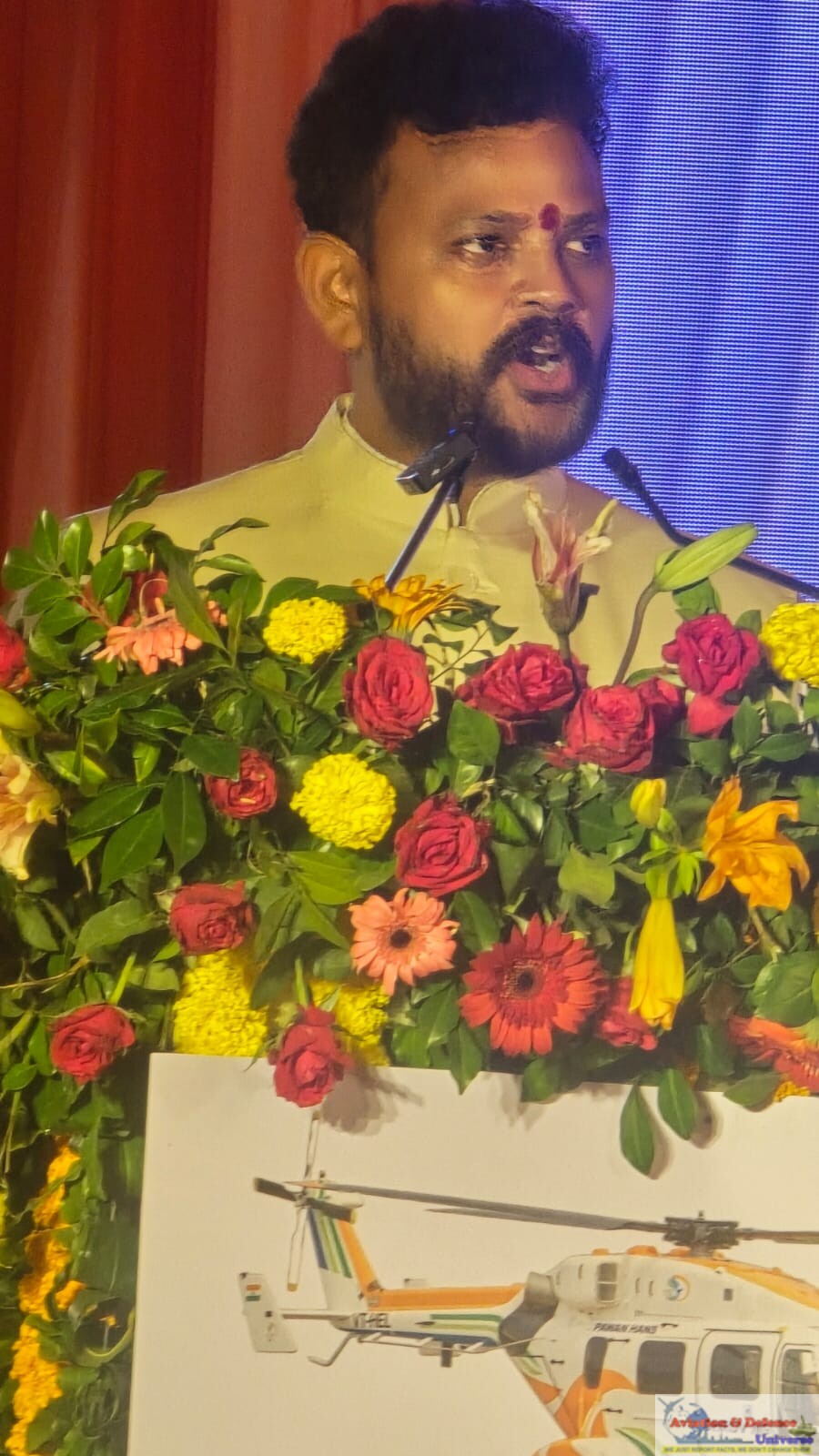 across sectors ranging from religious tourism and offshore exploration to oil and gas operations and specialised transportation. “For the last four decades, they have been one of the most important players in this industry,” he said. The Minister linked the organisation’s future to the broader transformation of India’s aviation sector under Prime Minister Narendra Modi’s leadership.
He pointed to the increase in airports, passenger traffic and aircraft fleets over the past decade as evidence of the sector’s expansion. However, he emphasised that India’s aviation ambitions could not remain confined to conventional infrastructure. “We just don’t want to focus on the aircraft or the airports. We want to have more heliports in the country and we want to expand our helicopter fleet also,” he stated.
The Minister said the government expected Pawan Hans to take the lead in capturing the opportunities emerging in India’s helicopter market. For an organisation with an established operating history and technical workforce, the expanding market presented an opportunity to reposition itself as a major contributor to future aviation connectivity.
200 New Heliports Under UDAN: Connecting Aspirational Districts, Hills and Islands
One of the most significant announcements concerned the proposed expansion of heliport infrastructure. The Minister said 200 modern heliports were envisaged under the new UDAN framework. These facilities would focus particularly on aspirational districts, hilly regions and island destinations, where conventional airport infrastructure may be difficult or expensive to establish.
Helicopter connectivity could provide an important alternative for communities separated by difficult terrain, inadequate road networks or long travel distances. The Minister also indicated that two additional civilian helicopters would be purchased under the scheme.
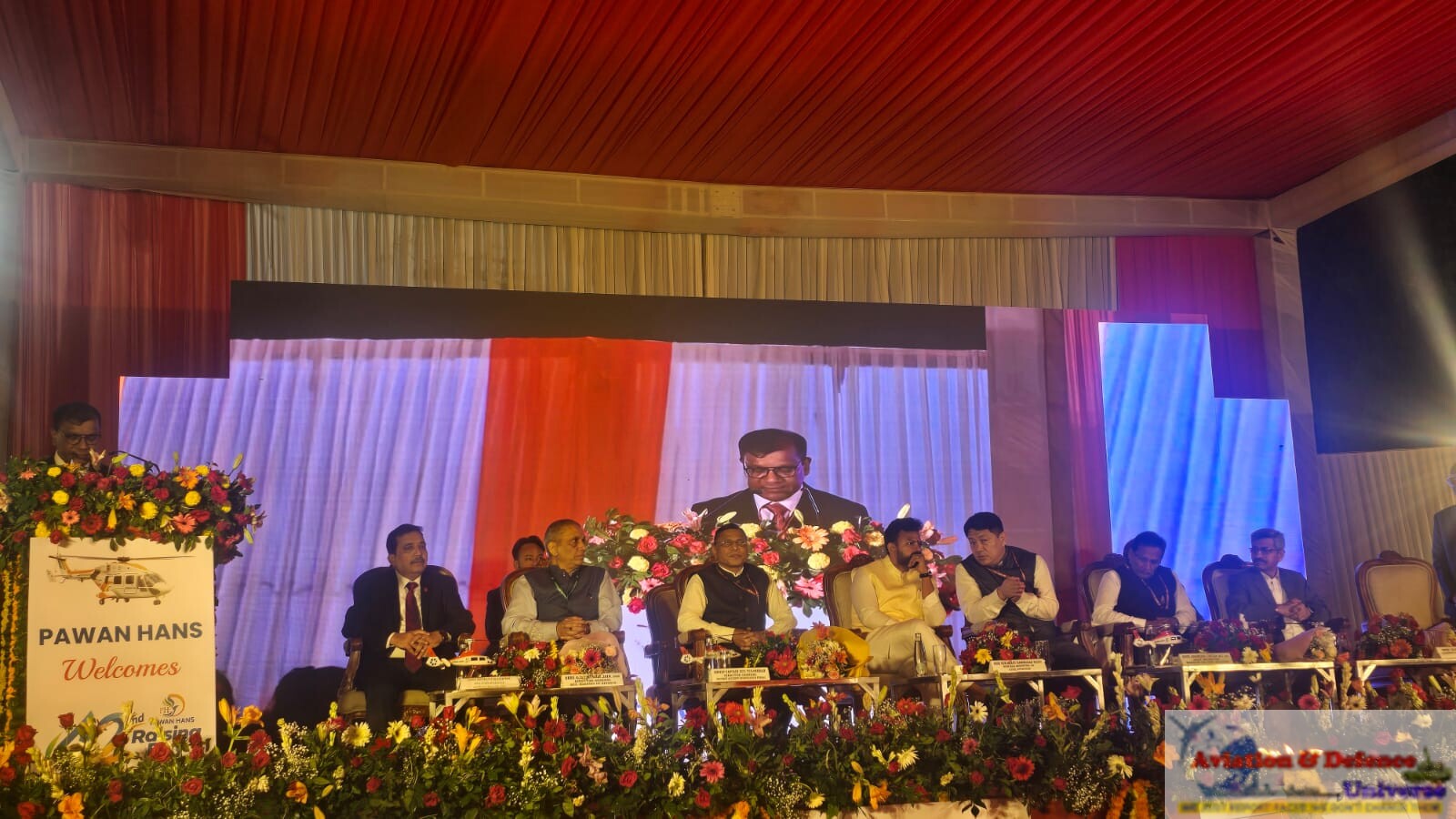 The proposed heliport expansion reflected the government’s intention to make regional aviation more inclusive by extending air connectivity to places that remain outside conventional airline networksFor Pawan Hans, the initiative could create new operational opportunities in scheduled helicopter services, tourism, medical transportation and regional passenger movement. It could also help stimulate demand for helicopter pilots, engineers, technicians, ground-handling personnel and specialised maintenance facilities.
Fleet Modernisation: Four Indigenous HAL Helicopters Delivered, Six More Expected
The Minister highlighted the role of indigenous helicopter manufacturing in renewing Pawan Hans’ fleet. He said that four made-in-India civilian helicopters manufactured by Hindustan Aeronautics Limited (HAL) had already been provided to Pawan Hans. Another six helicopters were expected to follow.
The induction programme was presented as part of the organisation’s fleet renewal efforts. The Minister’s remarks underscored the importance of connecting domestic helicopter manufacturing with the operational requirements of India’s civil aviation sector. For HAL, the expansion of civilian helicopter operations could create opportunities to strengthen the domestic market for indigenous rotorcraft. For Pawan Hans, modernising its fleet could support operational expansion and improve its ability to serve emerging routes and specialised missions. The programme also reflected the broader objective of encouraging Indian aerospace manufacturing while expanding aviation services.
Heli-Ambulances: Taking Emergency Medical Services Beyond the Roads
The Minister identified helicopter-based emergency medical services as an important growth opportunity. He said India required heli-ambulance services, particularly as the country sought to improve access to healthcare across difficult geographical regions. Helicopter ambulances can provide critical transportation where road journeys are lengthy, terrain is challenging or emergency patients require rapid evacuation.
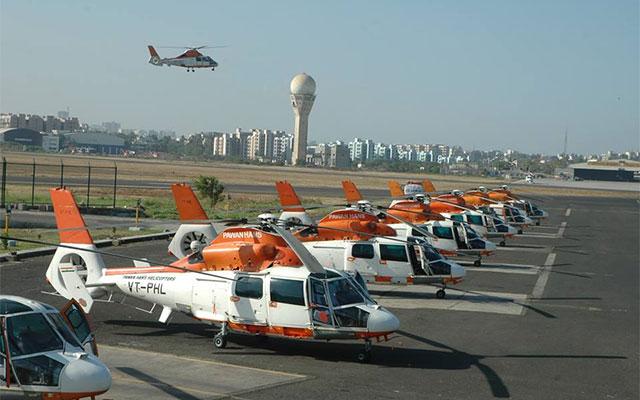 They are especially relevant to mountainous districts, remote communities and locations where specialised medical facilities are far away. The expansion of heli-ambulance operations would require coordination between aviation operators, hospitals, emergency response agencies and state governments.
It would also require suitable landing facilities, trained medical teams and operational arrangements capable of responding to emergencies. The Minister’s emphasis on the sector suggested that helicopter services could increasingly be viewed as an essential public service rather than primarily a charter or tourism activity.
Char Dham and Religious Tourism: Expanding Pilgrimage Connectivity
Religious tourism featured prominently in the Minister’s remarks. He highlighted the contribution of Pawan Hans to helicopter services serving pilgrimage destinations, particularly the Char Dham circuit. The Minister said that more religious tourism destinations could be opened through helicopter operations. India’s pilgrimage geography presents distinctive transportation challenges, with several important shrines located in mountainous or otherwise difficult-to-access regions. Helicopter services can reduce travel times and improve accessibility, particularly for elderly pilgrims and passengers who may find demanding road journeys difficult.
The Minister urged the public to support Pawan Hans services wherever possible, especially its Char Dham operations. He also indicated that the government was exploring opportunities to extend such services to additional regions. The expansion of pilgrimage connectivity could become an important component of the company’s future operational strategy, subject to infrastructure, weather, safety and regulatory requirements.
Seaplanes: Pawan Hans Asked to Return to an Emerging Aviation Market
The Minister also identified seaplane operations as an area of considerable potential. Recalling Pawan Hans’ earlier involvement in seaplane activities around 2010, he said the government wanted the company to re-enter the sector. India’s coastline, island territories, rivers, lakes and reservoirs provide a range of possible locations for water-based aviation. Seaplanes could support tourism and regional transportation where suitable water bodies are available but conventional airport infrastructure is limited. The Minister said the government was examining potential locations not only in Lakshadweep and the Andaman and Nicobar Islands but also in inland regions. He emphasised that state governments would need to participate actively in identifying destinations and facilitating operations. “We are actively discussing with the states,” he said.
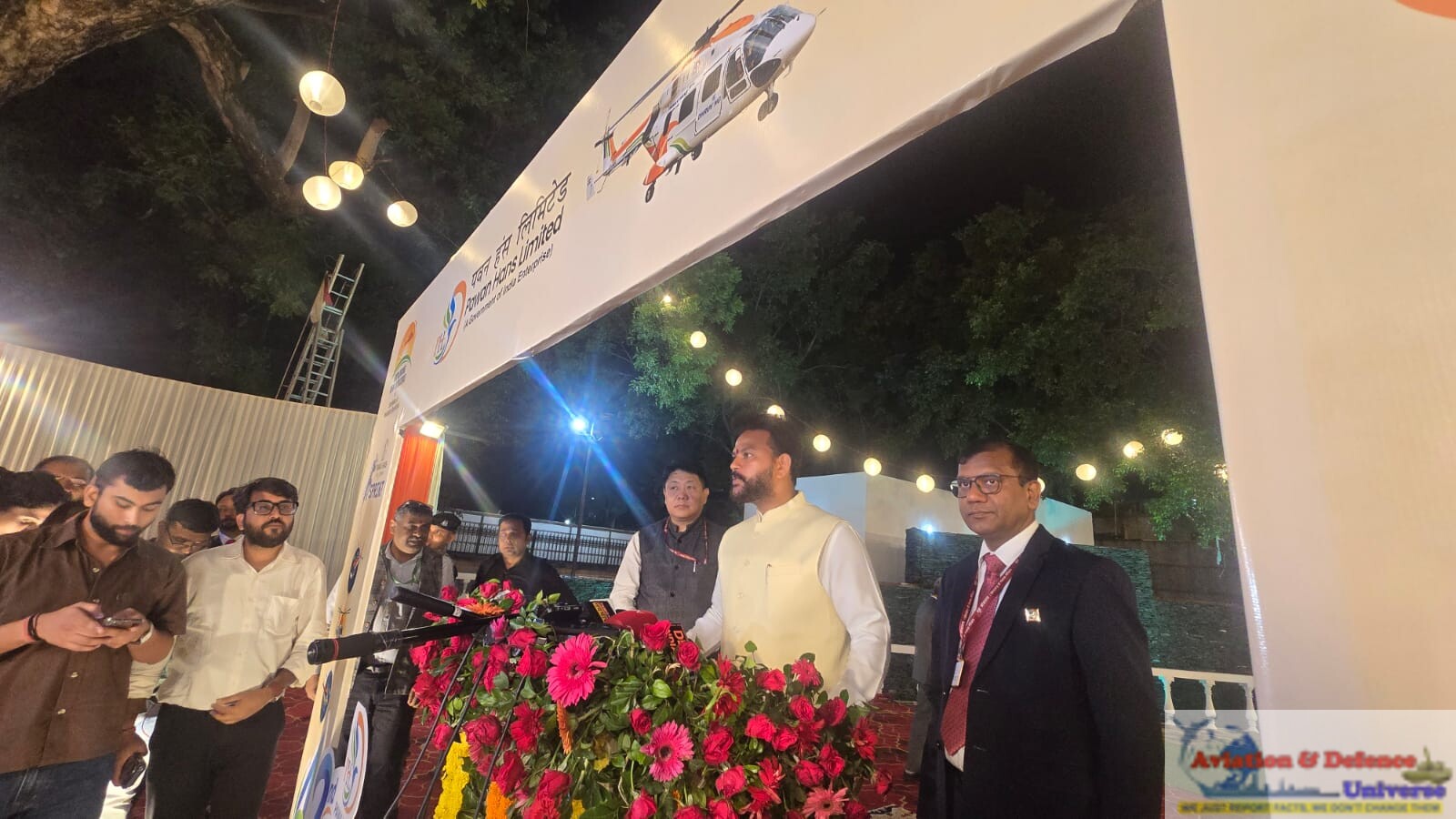 Responding to a question concerning a seaplane operator and reported difficulties in the Andaman region, the Minister said the government wanted additional operators, including Pawan Hans, to participate in the sector. He indicated that commercial agreements with states and the identification of viable destinations would be important steps towards making such operations a reality. The Ministry, he said, was working towards introducing services as soon as practicable.
eVTOLs: Pawan Hans Encouraged to Enter the Future of Advanced Air Mobility
Looking beyond conventional helicopters, Ram Mohan Naidu identified electric vertical take-off and landing aircraft, commonly known as eVTOLs, as an emerging technological opportunity. He said these aircraft could begin becoming a reality over the next two years and expressed the desire for Pawan Hans to participate in the sector.
eVTOL aircraft are being developed internationally for potential applications in urban air mobility, regional transportation and specialised passenger services. Their development could eventually create new operating models involving short-distance air transportation and purpose-built landing infrastructure. However, commercial deployment will depend on aircraft certification, safety standards, infrastructure, operating economics and regulatory approvals. The Minister’s remarks indicated that the government wanted Pawan Hans to prepare for technological changes that could reshape vertical aviation. The organisation’s experience in helicopter operations, maintenance and aviation safety could provide a foundation for evaluating opportunities in advanced air mobility.
A Renewed Pawan Hans: Minister Praises Employees and Leadership
The Minister spoke positively about the organisation’s workforce and its renewed sense of purpose. He said he had interacted with pilots, technicians and other employees during the Foundation Day celebrations. According to him, the personnel demonstrated fresh energy and enthusiasm for the company’s future. He also praised the organisation’s new leadership, referring to Sunil and commending the work undertaken during his first 100 days.
The Minister said the leadership had brought renewed energy to Pawan Hans. He assured the organisation of continued support from the Ministry of Civil Aviation. “From the Ministry of Civil Aviation, we are strongly supporting them, we are strongly betting on them,” he said. Looking towards 2047, he expressed confidence that Pawan Hans could play a significant role in India’s long-term aviation development. His remarks conveyed both encouragement and an expectation that the organisation would respond proactively to emerging market opportunities.
Following his remarks on Pawan Hans, the Minister responded to questions from journalists on several contemporary issues affecting India’s aviation industry. The interaction offered insights into the Ministry’s approach to aviation security, infrastructure development, emerging business models, seaplane operations and airline operating costs.
Recent Hijack Alert: Investigation Must Establish the Facts Before Policy Changes
Asked about a recent hijack alert involving an Air India flight that was subsequently determined to be a false 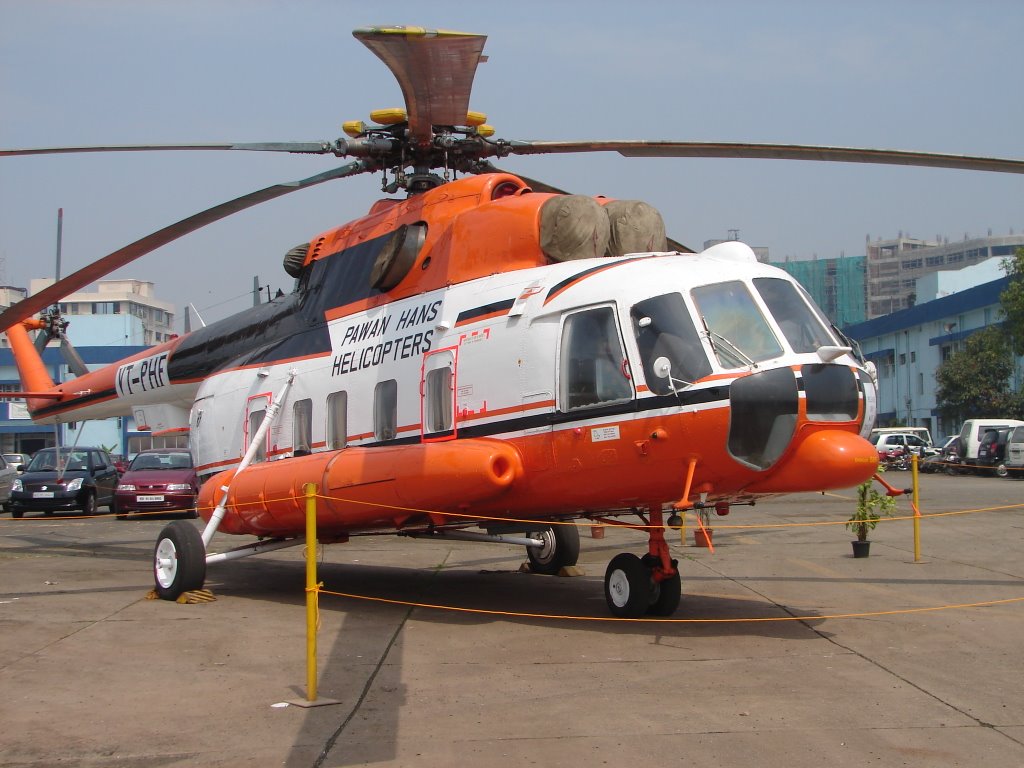 alarm, the Minister said the incident remained under investigation. He emphasised that the government would first need to establish exactly what had happened before considering changes to aviation security procedures.
“Not yet, it is still under investigation,” he responded when asked whether the circumstances behind the false alarm had been established. On the possibility of introducing additional security guidelines, he said the Ministry would wait for the investigating authority’s final report. “First is to find out what exactly happened. So once we know what exactly happened, then only we can see what changes are required,” he explained. His response indicated that any further regulatory intervention would depend on the findings of the investigation rather than an immediate announcement of new restrictions.
Rohini Heliport: Delhi’s Helicopter Operations to Expand
Responding to a question about the future of the Rohini heliport in Delhi, the Minister confirmed that the facility remained important to the government’s helicopter connectivity plans. He noted that Pawan Hans also maintained a maintenance facility at Rohini. The heliport’s location in the National Capital Region made it a potentially important operational base. “We are going to increase our operations from there,” he stated. However, the Minister emphasised that the government’s strategy was not limited to a single heliport. The objective was to expand helicopter infrastructure across multiple locations in the country. His remarks suggested that Rohini would form part of a wider network intended to support the growth of helicopter operations.
Seaplane Operations: States Must Partner with the Centre
In response to a question concerning difficulties reportedly faced by a seaplane operator in the Andaman region, the Minister reiterated the government’s commitment to developing the sector. He said the Ministry was assessing destinations in island territories and inland locations with suitable water bodies. However, he stressed that the participation of state governments was necessary for operations to become commercially and operationally viable. The identification of routes, agreements with states and involvement of operators would determine the pace of implementation. The Minister expressed the hope that Pawan Hans would join other operators in developing this emerging segment of Indian aviation.
Airspace Restrictions: No Update on China-Related Discussions
A journalist asked whether there had been any progress on discussions involving the Ministry of Civil Aviation and the Ministry of External Affairs regarding access to Chinese airspace. The question was raised in the context of difficulties being experienced by Indian airlines because of airspace restrictions. The Minister’s response was brief. “Nothing yet,” he said. He did not provide a timeline for further developments. The response indicated that there was no new announcement on the issue at the time of the interaction.
Fractional Ownership and Leasing: Government Open to New Aviation Financing Models
Asked by the Editor ADU whether fractional aircraft ownership could help expand India’s helicopter and aviation operations, the Minister expressed support for exploring new financing and ownership structures. He said the government wanted India to develop a stronger ecosystem for aircraft leasing and fractional
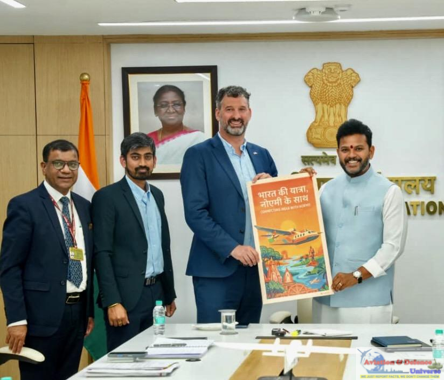 ownership. Discussions were underway with stakeholders, with the Ministry of Finance also involved. The Minister stressed that India’s rapidly expanding aviation market required more aircraft to meet demand. “If fractional ownership helps us to bring more planes, if leasing operations helps us to get more planes, then definitely we will support those ideas,” he said.
His response reflected the Ministry’s willingness to consider alternative commercial models that could reduce the financial barriers associated with acquiring aircraft. For helicopter operators, fractional ownership could potentially offer a mechanism for expanding fleets while distributing acquisition costs among multiple stakeholders. However, the Minister did not announce a specific new policy or implementation timeline.
Power-Bank Fire Incidents: DGCA’s Technical Assessment Will Guide Action
The Minister was also questioned about incidents involving power banks catching fire aboard aircraft. A journalist referred to a recent incident and asked whether additional restrictions were being considered. The Minister noted that the Directorate General of Civil Aviation had already taken regulatory action on September 29. He described the matter as technical and indicated that the aviation regulator was responsible for determining the appropriate safety measures. The exchange did not include an announcement of fresh restrictions. The issue remains significant because lithium-ion batteries used in portable electronic devices can present fire risks if damaged, defective or improperly handled.
The Minister’s response placed responsibility for technical assessment and regulatory decisions with the DGCA. ATF Prices and Airfares: Government Seeks Reasonable Fares During Festive Season. One of the most passenger-focused exchanges concerned the impact of aviation turbine fuel prices on airline operating costs and ticket fares. Asked about the possibility of revisiting arrangements intended to address fuel price instability, the Minister acknowledged the challenges faced by airlines. He said the Ministry was in discussions with carriers and other stakeholders. “We want to keep the airfares very reasonable,” he stated. However, he acknowledged that fluctuating aviation turbine fuel prices made the task difficult. The Minister said support from oil marketing companies would be important and that airlines would also need to develop workable plans. The Ministry’s role, he explained, was to facilitate discussions among the relevant stakeholders. The issue was particularly important because of the festive travel season extending into January, when passenger demand typically increases.
Referring to the interests of travellers, he said, “I care for our people. So definitely we want it to be reasonable.” He added that the Ministry would seek consensus before moving forward with any arrangement. While no immediate fuel price stabilisation mechanism or fare-control measure was announced, his remarks indicated that the government was engaging with the industry to address affordability concerns.
Pawan Hans and Viksit Bharat 2047: A Larger Role for Helicopter Aviation
The Minister’s remarks at the Foundation Day celebrations reflected a wider policy ambition to diversify India’s civil aviation growth. Over the past decade, much of the national aviation narrative has centred on airport expansion, increasing passenger numbers, new airline routes and aircraft fleet additions. The emerging emphasis on helicopter infrastructure, seaplane operations and advanced air mobility could extend aviation access to locations that conventional airline networks cannot easily serve.
 Pawan Hans could play a significant role in this transformation because of its operational experience, technical capabilities and familiarity with challenging geographical environments. However, translating this opportunity into sustainable growth will require investment in modern aircraft, appropriate infrastructure, trained personnel, maintenance capabilities and economically viable routes.
The proposed expansion of heliports, fleet renewal through HAL helicopters and potential entry into seaplanes and eVTOL operations represent opportunities for the organisation to diversify its activities. Equally important will be the development of operating models that balance commercial sustainability with the public-service requirements of remote connectivity and emergency transportation.
At 42, Pawan Hans Must Prepare for Its Next Flight
Forty-two years after its establishment, Pawan Hans stands at a crossroads between its pioneering legacy and an increasingly technology-driven aviation future. The organisation that helped connect offshore installations, remote regions and pilgrimage destinations is now being encouraged to embrace new responsibilities — from air ambulances and modern heliport networks to seaplanes and electric vertical flight.
Civil Aviation Minister Ram Mohan Naidu’s message was one of confidence, but also of expectation: Pawan Hans must seize the opportunities created by India’s expanding aviation economy and prepare itself for the requirements of Viksit Bharat 2047. His interaction with the media also demonstrated that the aviation sector’s future will depend on resolving immediate challenges involving safety, financing, airspace access, fuel costs and passenger affordability. As Pawan Hans celebrates more than four decades in Indian skies, its next chapter may prove its most transformative. The future of Indian aviation will not be confined to airport runways; it will also rise from heliports, waterways and the emerging world of electric flight. For Pawan Hans, the mission is clear — honour the legacy, modernise the fleet, expand the network and take India’s aviation ambitions to places where conventional wings cannot reach.









































































-A4-Size-(2)_page-0001.jpg)