
















- Made in India, Trusted Worldwide: GE Aerospace and Indian Industry Chart a New Course
- India’s Aerospace Ambition: Scale the Factories, Skill the Workforce, Own the Innovation
- Trust, Technology and Talent: The Three Engines of India’s Aerospace Revolution
By Sangeeta Saxena
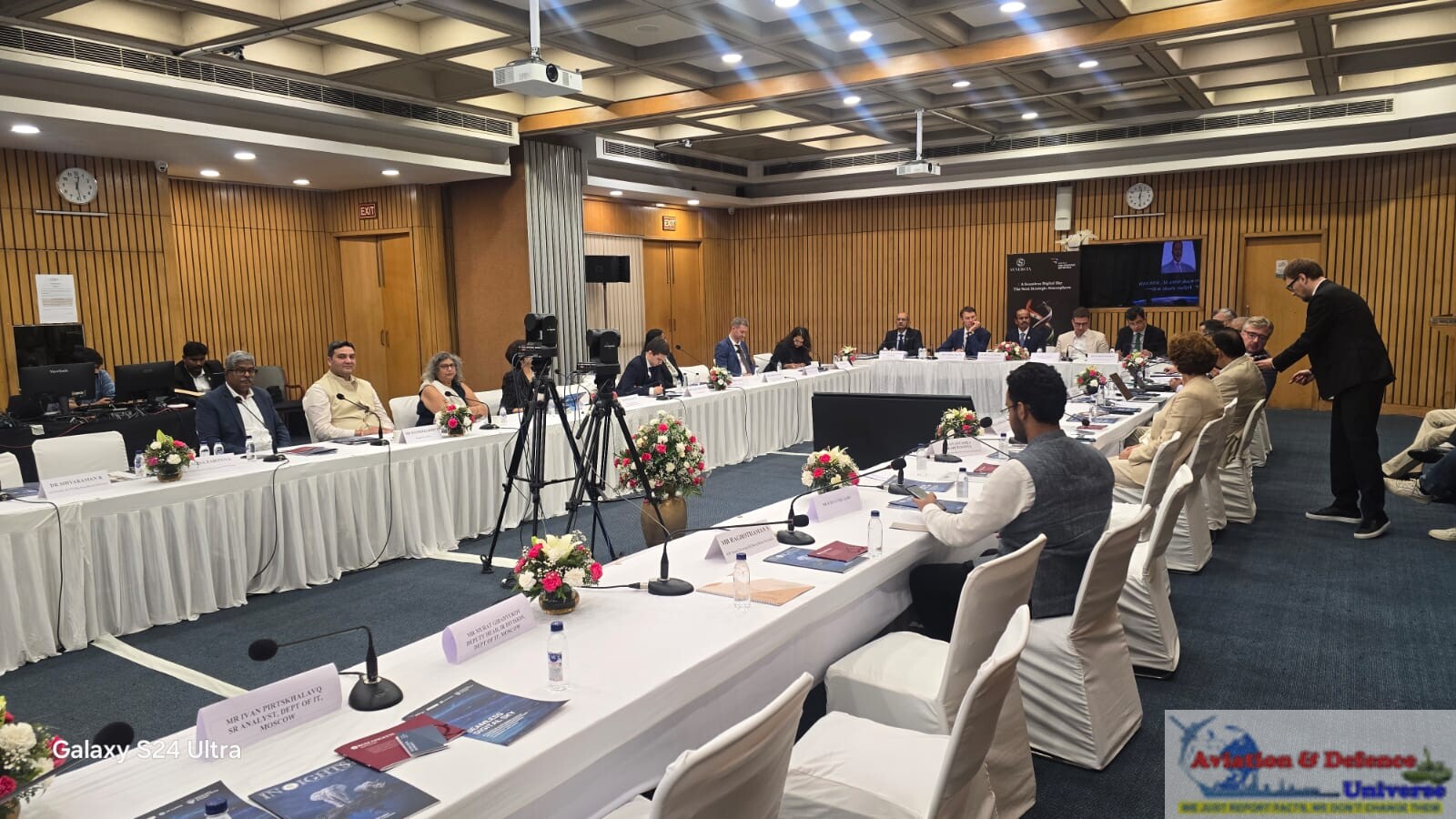
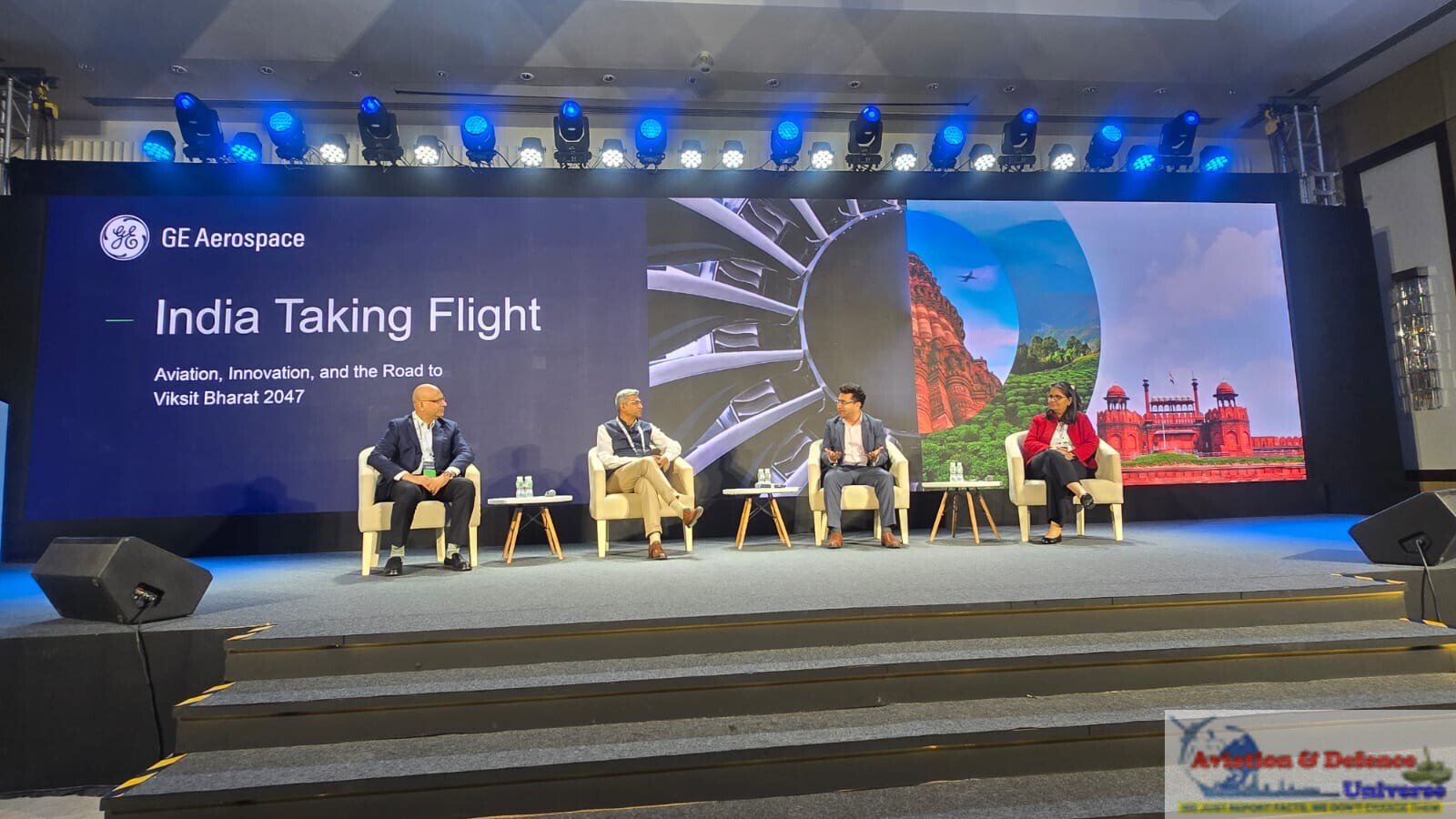
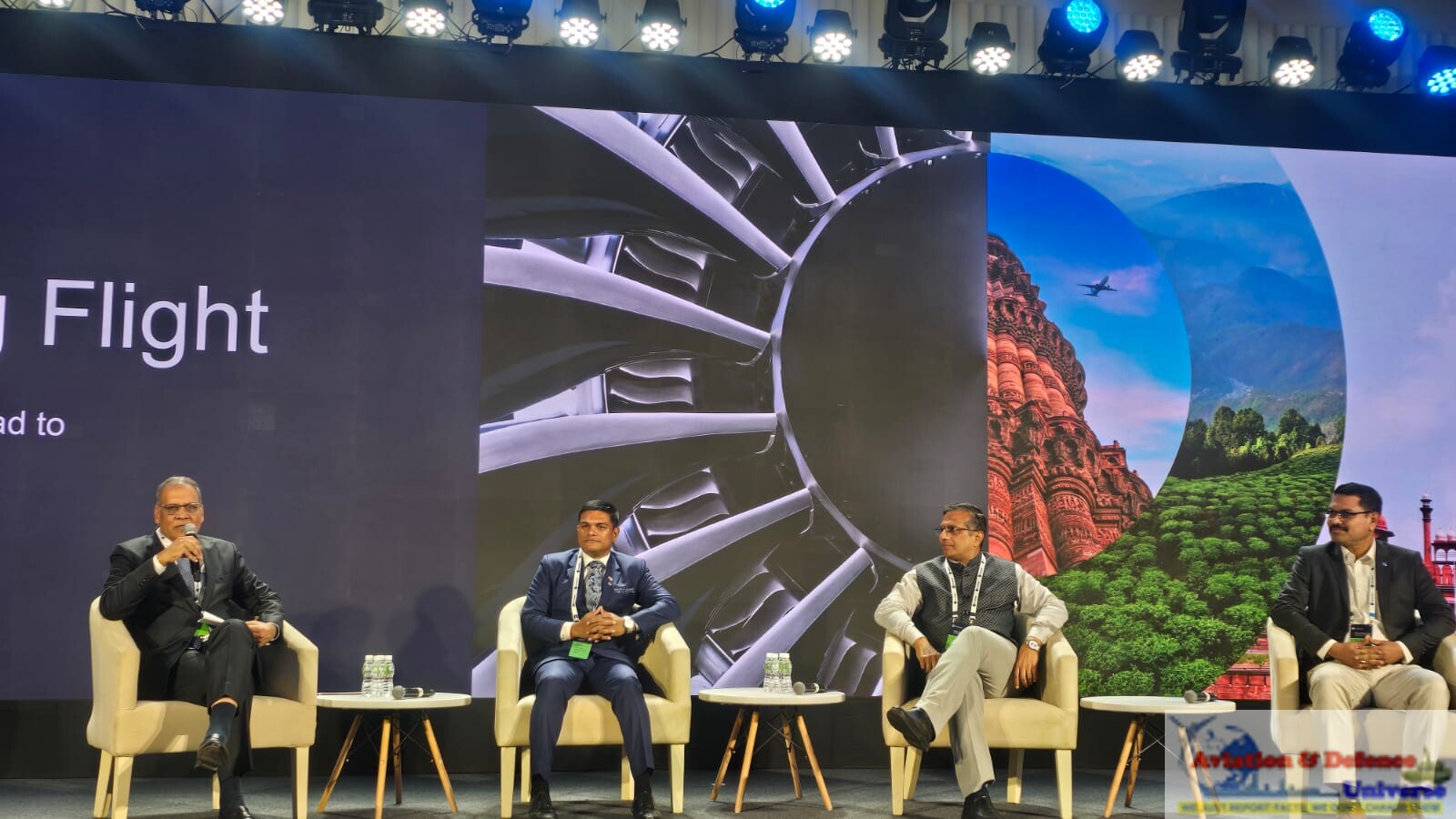
New Delhi, 12 October 2026. An aircraft engine may be assembled thousands of kilometres away, but a critical component inside it could well have been manufactured in India. That is the transformation taking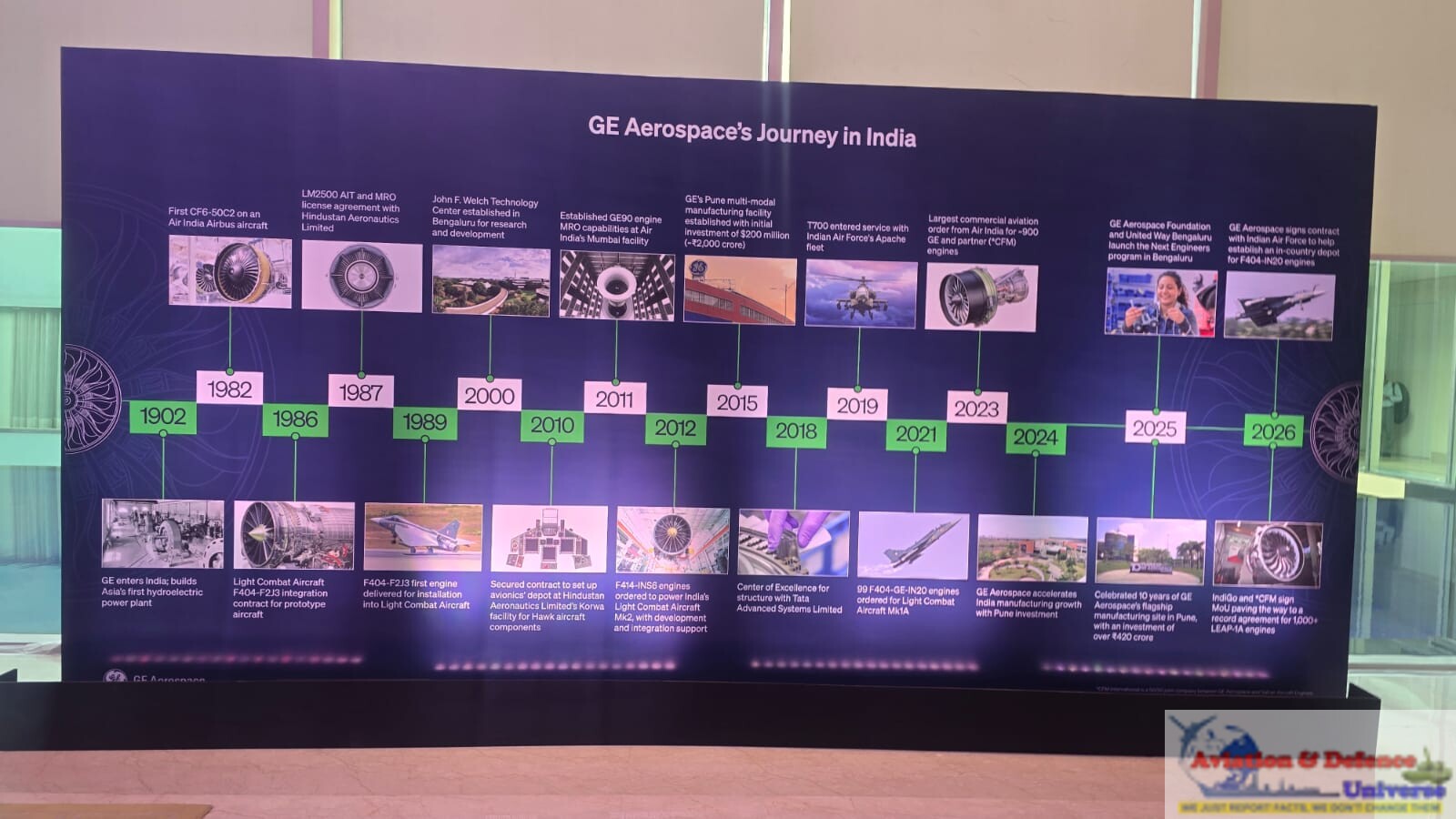 place in the country’s aerospace manufacturing landscape. From small machine shops supplying precision parts to globally integrated companies developing complex assemblies and systems, India is steadily climbing the aerospace value chain. But becoming a global manufacturing hub requires much more than competitive costs and expanding factory floors. It demands uncompromising quality, sustained investment, advanced technology, skilled manpower and, above all, trust. These imperatives dominated Panel 4, “Powering Precision: India as a Global Aerospace Manufacturing Hub,” at GE Aerospace’s India Taking Flight: Aviation, Innovation, and the Road to Viksit Bharat 2047 event, where industry leaders, policymakers and manufacturing specialists examined what India must do to become a globally competitive aerospace powerhouse.
The discussion was moderated by Rajnish Gupta, Partner, Tax and Economic Policy Group, EY India, and featured Vamsi Vikas Ganesula, Managing Director, Raghu Vamsi Aerospace Group; Vinod Subramanian, Vice President, Technology Sectors, Invest India; Vishwajit Singh, Managing Director, Pune Facility, GE Aerospace; and Priyanka Das, Joint Secretary, Ministry of Civil Aviation.
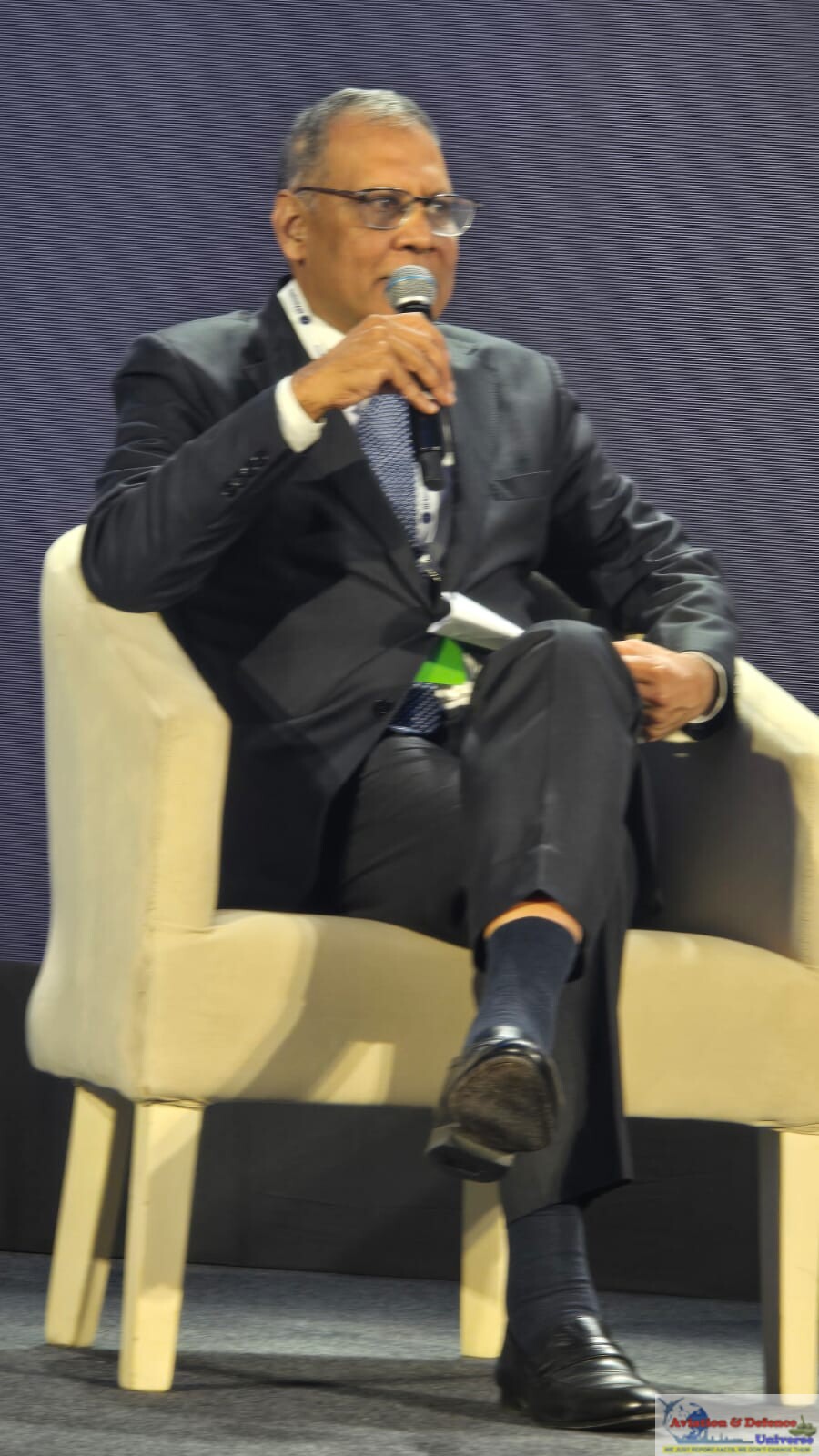 The panel brought together perspectives from Indian aerospace entrepreneurship, international investment promotion, advanced manufacturing and government policymaking. It examined how India could move beyond component manufacturing towards sophisticated systems, indigenous product development and a stronger position in global aerospace supply chains.
Raghu Vamsi Aerospace: Trust Is the Most Valuable Material in Aviation
Opening the discussion, Rajnish Gupta invited Vamsi Vikas Ganesula to share the journey of Raghu Vamsi Aerospace Group from a small Indian enterprise to an internationally connected aerospace manufacturer. Ganesula began by drawing attention to something passengers rarely consider when boarding an aircraft: the enormous responsibility carried by every manufacturer whose components become part of an aircraft engine.
Passengers may be travelling with their families, children may be sleeping peacefully in their seats, and the aircraft may be flying thousands of feet above the ground. Yet the safety of that flight depends on the integrity of thousands of individual components, including those manufactured by Indian suppliers.
For Ganesula, this responsibility defined the aerospace manufacturing business. “When someone asks what’s the most expensive part in aerospace, a lot of people say it’s titanium,” he observed. “But I would say the most important or the costliest thing is actually trust.” Trust, he explained, could neither be purchased nor imported. It had to be earned through consistent quality, reliability and disciplined manufacturing practices. “You can’t buy it, you can’t import it. So, you will have to build it day to day,” he emphasised.
His remarks established a central theme of the discussion: aerospace manufacturing is fundamentally different from conventional industrial production because even a small failure can have consequences far beyond the factory floor.
From Ten Employees to a Global Aerospace Enterprise
Ganesula’s account of Raghu Vamsi Aerospace’s evolution provided a compelling example of India’s growing industrial capabilities. The company was founded in 2004 by his father, a first-generation entrepreneur from an agricultural family. Following his father’s untimely death, Ganesula took charge of the business at the age of 22 while pursuing his MBA. At the time, the enterprise had just ten employees. The company initially manufactured relatively simple components, but its entry into GE Aerospace’s supply chain in 2013 marked an important turning point.
Ganesula recalled that GE Aerospace became one of the company’s earliest international aerospace customers, helping it understand the stringent requirements of global manufacturing. The relationship exposed Raghu Vamsi Aerospace to advanced quality systems, compliance requirements, factory planning 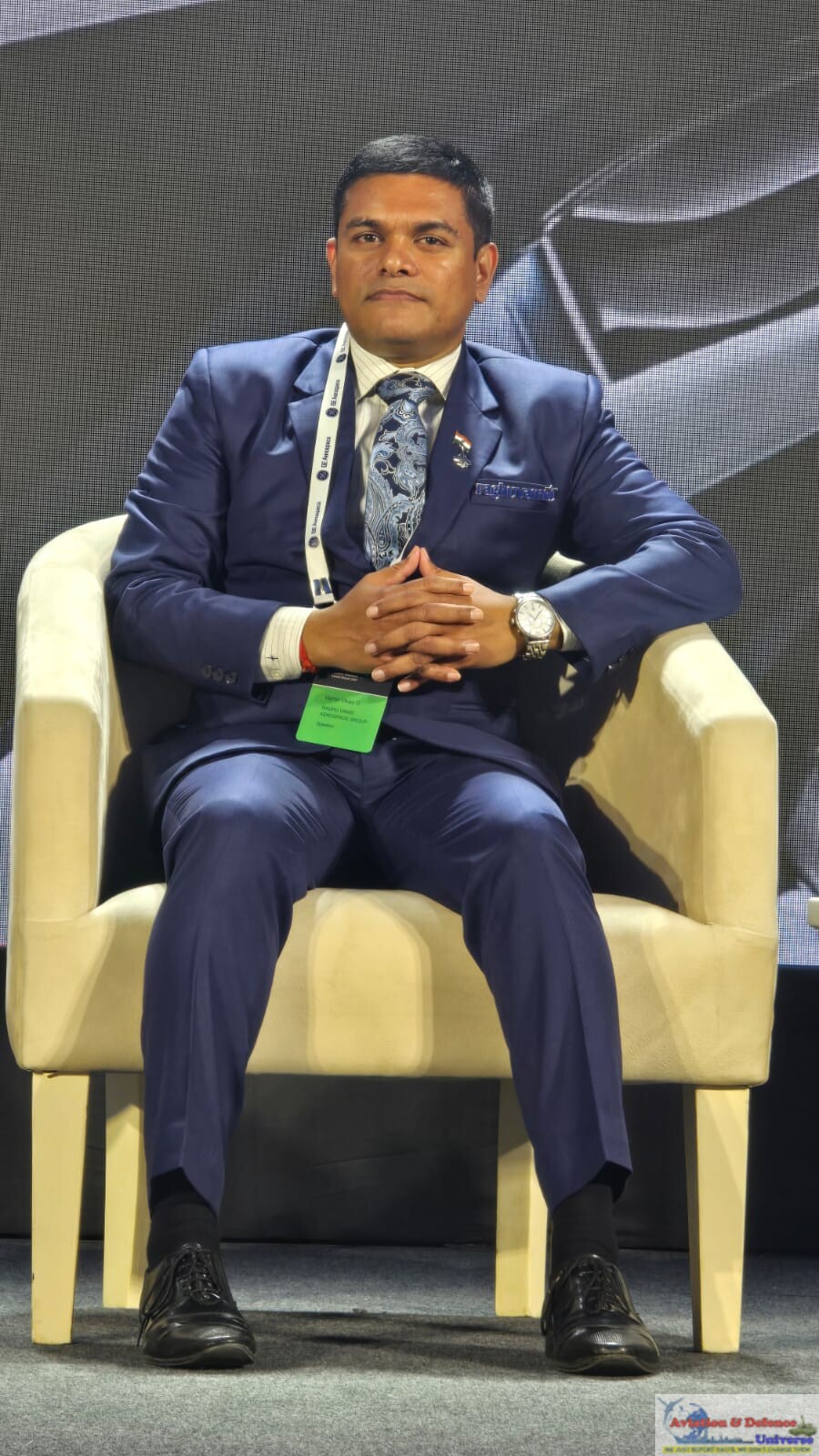 and the discipline necessary to operate within an international aerospace supply chain.
The company’s growth was reflected in its manufacturing capabilities. “We started with around ten CNC machines. Today, we have more than 200,” he said. The enterprise had also expanded from manufacturing a small number of parts to producing more than 400 components. More importantly, it had progressed from basic machining towards subassemblies, systems and increasingly complex aerospace products.
Ganesula explained that the company was now pursuing opportunities to develop products for India’s aerospace industry, contributing to the country’s technological and industrial self-reliance. The transformation illustrated how sustained relationships between global original equipment manufacturers and Indian suppliers could create capabilities extending far beyond the original supply contract.
Three Pillars of Aerospace Success: People, Technology and Collaboration
Reflecting on the company’s journey, Ganesula identified three factors that had been essential to its growth. The first was workforce development. He distinguished between building manufacturing capacity and developing genuine manufacturing capability. Factories and machines could be acquired through investment, but creating a workforce capable of consistently producing flight-critical components required a much 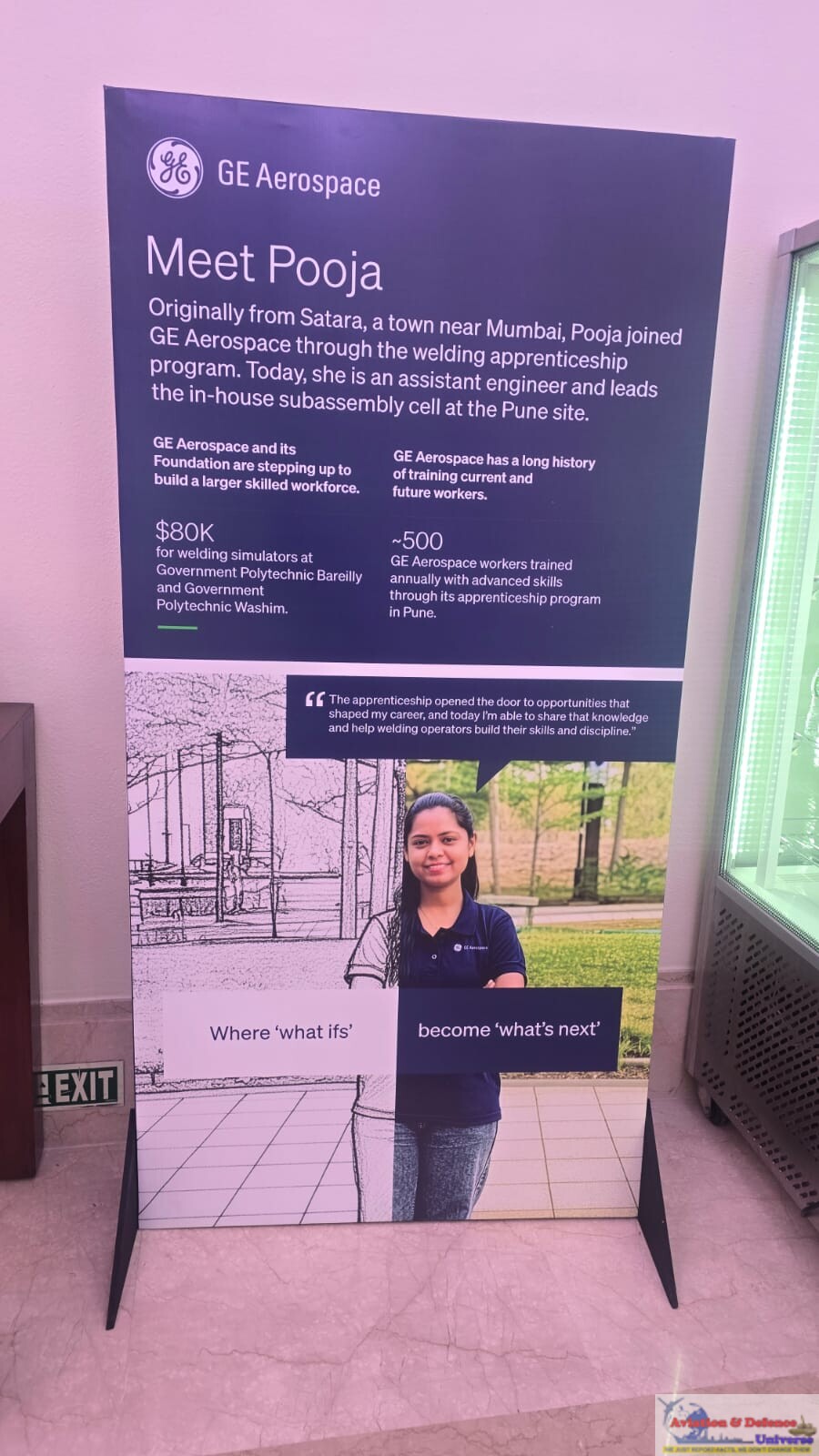 deeper commitment. Employees had to understand that the parts they manufactured would eventually become part of aircraft engines carrying passengers around the world. This awareness had to be embedded in the company’s culture. Training, discipline, responsibility and quality consciousness were therefore central to aerospace manufacturing.
The second factor was technology. Automation, advanced manufacturing processes and continuous technological upgrades were necessary to sustain growth and meet increasingly demanding customer requirements. The third was collaboration with established aerospace companies.
Ganesula credited GE Aerospace with helping Raghu Vamsi understand international manufacturing practices and develop the capabilities required to participate in global supply chains. He described the relationship in unusually personal terms. “GE is like a mother to us,” he remarked, recalling how the company had supported Raghu Vamsi Aerospace during its formative years.
The statement reflected the importance of mentoring and long-term supplier development in an industry where technical knowledge and manufacturing credibility take years to establish. Ganesula also referred to the company’s engagement with advanced manufacturing initiatives at GE Aerospace’s Pune facility, including learning from digital and factory-management systems. His message was that India’s aerospace industry needed partnerships that transferred not only orders but also knowledge, operating discipline and technological capabilities.
Invest India: Aerospace Can Learn from India’s Electronics Manufacturing Success
Taking the discussion forward, Vinod Subramanian, Vice President, Technology Sectors, Invest India, examined how lessons from other industrial sectors could help India build a stronger aerospace manufacturing ecosystem. He explained that India’s attractiveness to global companies had evolved considerably. Foreign enterprises were no longer looking at India solely as a market for selling products or a destination for back-office services.
They were increasingly engaging with the country through research and development, component sourcing, manufacturing, technology development, investments in domestic enterprises and emerging digital capabilities.
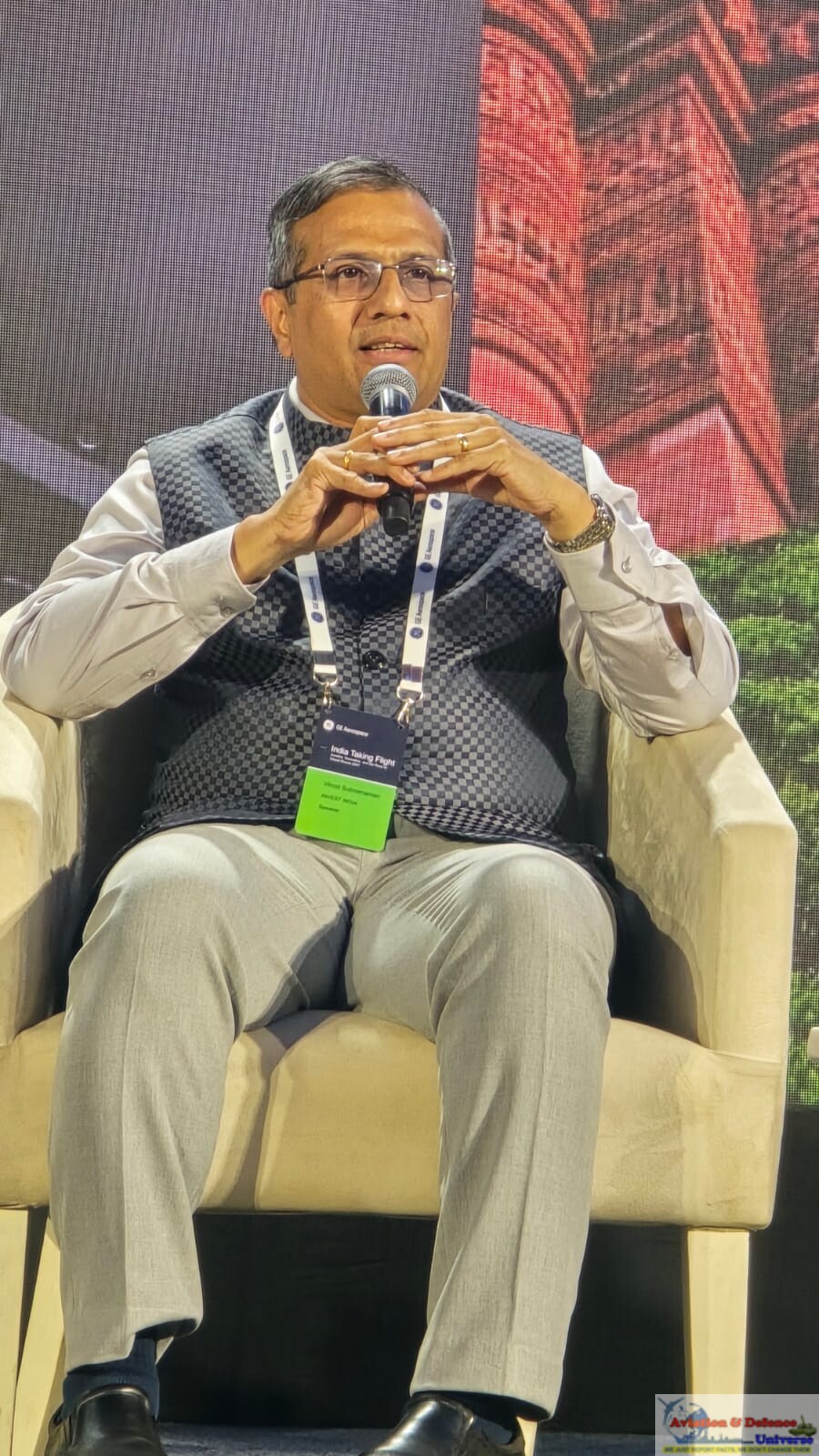 Subramanian argued that the most successful industrial sectors were those in which major companies made long-term commitments and the government supported the creation of a complete manufacturing ecosystem. He cited electronics manufacturing as an important example. India’s progress in mobile phone production demonstrated how targeted policy interventions, investment attraction and supplier development could transform the scale of domestic manufacturing.
According to figures he cited during the discussion, the country’s mobile phone manufacturing sector had reached approximately US$71 billion in output. The larger lesson, he suggested, was that industrial development required coordinated action across multiple layers of the value chain. Government initiatives had to support not only final product manufacturing but also components, equipment, supporting technologies and the wider supplier ecosystem.
For aerospace, the implications were significant. India could not become a major global manufacturing centre merely by attracting a few large assembly facilities. It needed an extensive network of qualified suppliers, specialised manufacturers, engineering companies, technology providers and skilled professionals.
Bringing Global Aerospace Companies to India
Subramanian also discussed Invest India’s approach to attracting major international companies and encouraging them to expand their Indian operations. He explained that successful investment promotion required understanding the global strategies of individual companies and demonstrating how India could contribute to their future growth.
This meant engaging directly with senior corporate leadership and identifying opportunities that aligned with their international manufacturing and sourcing requirements. He cited the medical devices sector as another example of proactive engagement with global industry. Invest India had worked with leading international companies to present India’s industrial opportunities and encourage greater manufacturing commitments.
 Subramanian suggested that similar approaches could be adopted for aerospace. The country had a growing domestic aviation market, expanding industrial infrastructure and increasing requirements for aircraft, engines and supporting components.
These developments could strengthen the case for international aerospace manufacturers to establish or expand operations in India. He indicated Invest India’s willingness to support initiatives that could accelerate the development of India’s aviation and engine manufacturing ecosystem over the next five to ten years.
The message was clear: attracting aerospace investment required more than promoting India’s market size. It demanded a credible industrial proposition supported by infrastructure, policies, suppliers, technology and talent.
GE Aerospace Pune: Building India’s Precision Manufacturing Capabilities
Vishwajit Singh, Managing Director, Pune Facility, GE Aerospace, brought the discussion to the realities of advanced manufacturing. Responding to a question on workforce development, he described how GE Aerospace’s Pune facility had invested in technology, manufacturing capabilities and specialised skills while developing relationships with Indian suppliers. He emphasised that the facility’s contribution extended beyond its own production activities. It also supported the development of suppliers capable of participating in GE Aerospace’s international supply chain.
Singh referred to investments of approximately US$200 million associated with the company’s manufacturing operations, supporting technology, capacity and business development. He explained that advanced manufacturing required structured training, technical exposure and consistent investment in human resources. The company had developed training and apprenticeship initiatives to build skills across different manufacturing functions.
These included machining, specialised manufacturing processes and quality-related disciplines. Singh stressed that aerospace manufacturing could not be sustained through machinery and technology alone. The people operating those systems needed to understand the standards, processes and responsibilities associated with producing highly specialised components.
Seventeen Indian Suppliers Enter GE Aerospace’s Global Value Chain
One of the important disclosures concerned the development of India’s supplier ecosystem. Singh stated that GE Aerospace worked with a broad supplier network, including approximately 300 suppliers, and that 17 suppliers had developed capabilities enabling them to participate in its global aerospace supply chain. He explained that bringing a supplier into the aerospace industry involved far more than placing purchase orders.
Companies needed support in understanding technical requirements, developing manufacturing processes, meeting certification standards and establishing reliable quality systems. The process required sustained engagement. For Indian suppliers, this support could become the foundation for long-term international competitiveness. Singh described the relationship as one involving the transfer of know-how, technical guidance and the development of a manufacturing culture capable of meeting global expectations.
This approach as particularly relevant for Indian MSMEs seeking entry into aerospace manufacturing. While many Indian enterprises possessed engineering talent and manufacturing experience, aerospace certification and quality requirements could create substantial barriers to entry. Long-term supplier development programmes could help bridge this gap.
Manufacturing Culture: Quality Begins on the Shop Floor
An important theme in Singh’s remarks was the role of organisational culture in advanced manufacturing. He explained that GE Aerospace’s manufacturing approach placed considerable emphasis on employee participation, accountability, customer requirements and continuous improvement.
Workers, he suggested, needed to feel empowered to identify problems, question processes and contribute ideas. The objective was to create a workplace in which quality was not merely imposed through inspection but became an integral part of everyday operations.
Such a culture also encouraged innovation from employees directly involved in manufacturing. Singh highlighted the importance of giving workers the confidence to raise concerns and suggest improvements. This approach could help companies identify problems early, improve efficiency and maintain consistent manufacturing standards.
For the aerospace sector, these practices were particularly important because precision, traceability and reliability were fundamental requirements. The discussion also revealed a strong convergence between Singh’s perspective and Ganesula’s experience. Both emphasised that technology and manufacturing capacity could deliver sustainable results only when supported by skilled employees and a culture of responsibility.
From Manufacturing Components to Designing Aerospace Products
As the discussion turned towards the future, Rajnish Gupta asked how India’s aerospace supply base might evolve over the next five to ten years. Ganesula argued that the country had already made considerable progress in developing its manufacturing capabilities.
 The next challenge was to move further up the value chain. Indian companies needed to progress from producing individual parts and components towards developing systems and complete products. He stressed that manufacturing growth and innovation had to advance together.
Increasing production volumes would strengthen industrial capacity, but innovation would determine whether India could become a global technology leader.He also highlighted the importance of collaboration between government, original equipment manufacturers, academia and industry.
Such cooperation was needed not only for manufacturing and technical training but also for testing, product development and the creation of a comprehensive aerospace ecosystem. The objective, he suggested, should be to develop an environment in which Indian companies could undertake more sophisticated engineering and product development activities.
This represented a fundamental shift in ambition. Instead of remaining primarily a supplier of components designed elsewhere, India could increasingly contribute to the design, development and production of advanced aerospace systems.
India’s Aerospace Ecosystem Needs More Successful Companies, Not Just Bigger Companies
The concluding exchanges focused on what would constitute genuine success for India’s aerospace manufacturing ambitions. The discussion suggested that success should not be measured only by the presence of a handful of large aerospace manufacturers.
A mature ecosystem would require a much broader base of successful and profitable Indian enterprises. These companies would need the ability to invest in technology, develop specialised products, participate in international supply chains and sustain their operations over the long term. Large aerospace manufacturers would have an important role in supporting this development through sourcing, mentoring, technical partnerships and investment.
The underlying objective was to create an industrial structure in which growth opportunities extended across companies of different sizes. Such an ecosystem would strengthen India’s competitiveness while reducing dependence on a limited number of suppliers. It would also support innovation, entrepreneurship and the development of indigenous aerospace capabilities.
Aerospace Manufacturing and Viksit Bharat 2047
The discussion at GE Aerospace’s event reinforced the connection between industrial capability and India’s broader development aspirations. Aviation growth creates demand for aircraft and engines, but the economic benefits can extend much further when manufacturing, engineering and maintenance activities are undertaken domestically.
For India, this creates an opportunity to convert its expanding aviation market into a foundation for advanced industrial development. The country already possesses significant engineering talent, an established manufacturing base and a growing number of enterprises participating in international aerospace supply chains.
However, the sector must address several challenges. These include the need for sustained investment, internationally recognised quality standards, specialised workforce development, supplier qualification, technological innovation and stronger collaboration between industry and government.
 The experience of companies such as Raghu Vamsi Aerospace demonstrates that Indian enterprises can progress from relatively small manufacturing operations to internationally integrated aerospace suppliers.
GE Aerospace’s Pune operations illustrate how long-term industrial investment and supplier development can support this transformation. Invest India’s perspective adds the policy and investment dimension necessary to scale these achievements across the wider industry. Together, these experiences suggest that India’s aerospace ambitions are achievable, provided industrial growth is supported by consistent policy, technological investment and sustained collaboration.
The Future of Aerospace Will Be Built on Trust, Not Just Titanium
India’s journey towards becoming a global aerospace manufacturing hub is no longer a distant aspiration; it is taking shape on factory floors, in engineering centres and across an expanding network of Indian suppliers. The story of Raghu Vamsi Aerospace, the manufacturing capabilities developed by GE Aerospace in Pune and Invest India’s efforts to attract global investment demonstrate how the country’s aerospace ecosystem is evolving. Yet the discussion delivered a message that went far beyond manufacturing statistics. Precision cannot be compromised, quality cannot be negotiated and trust cannot be purchased. These must be earned through years of consistent performance, technological investment and skilled workmanship. As India looks towards Viksit Bharat 2047, its aerospace ambition must progress from manufacturing components to developing systems, designing products and creating globally competitive technologies. The next great leap will not be measured simply by how many aerospace parts India manufactures, but by how many aircraft and engines around the world depend on Indian engineering. The ambition is no longer merely to Make in India, but to design in India, innovate in India and manufacture for the world.









































































-A4-Size-(2)_page-0001.jpg)