


 18th BRICS Summit

















- From Innovation to Orbit : UK Space Companies Look to India for Their Next Partnerships
- From Trade to Space – From Payloads to Partnerships : UK Makes Its India Space Pitch at BSX 2026
- ‘The Buzz Is Palpable’ as Innovation Meets Ambition
By Sangeeta Saxena
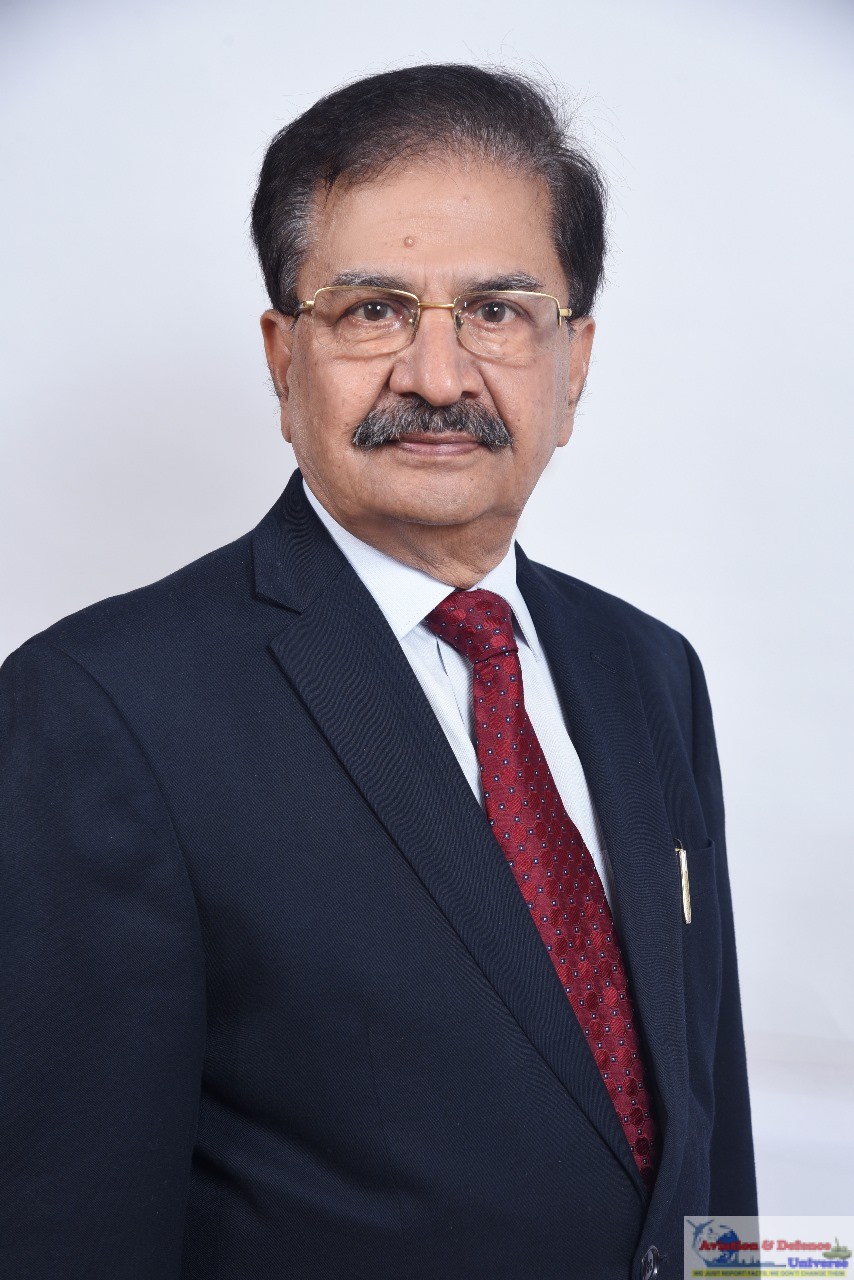
Bengaluru. 09 September 2026. The UK came to BSX 2026 with a clear proposition: it has technology, innovation and commercial expertise—and it is looking for Indian partners to take them further. From instrumentation and payload testing to small-satellite manufacturing, design and space services, the UK pavilion offered a window into an ecosystem increasingly looking towards India not simply as a market, but as a partner. The timing, believes Dr Nicholas Gribit, First Secretary – Trade India, British Deputy High Commission, Bengaluru, could hardly be better. India’s rapidly expanding space ecosystem, growing private-sector participation and ambition to build end-to-end capabilities are converging with a new phase in the wider UK–India relationship.
At BSX 2026, Aviation & Defence Universe (ADU) caught up with Dr Gribit for a wide-ranging conversation on why British space companies are looking towards India, how the evolving trade relationship can facilitate deeper supply-chain integration, why industry and academia need to work together, and what makes the UK–India relationship particularly suited to collaboration. And Gribit summed up the moment with an appropriately celestial metaphor: “The moonlight… is shining firmly on UK and India at the moment.”
ADU. We are meeting at BSX 2026, where the UK has a significant presence. What exactly is the UK showcasing here?
Dr Nicholas Gribit. What the UK is showcasing and illustrating is the breadth and depth of capabilities and expertise of a whole range of space companies across the sectors we focus on—things like instrumentation, payload testing, small-satellite manufacturing and design, and space services. Across the sector, you have UK companies driven by innovation. Some are already familiar with India, some are entering for the first time and others are expanding. These companies know how to innovate and how to do it well, but they can also translate that innovation into global products and services. They are looking for international partners. They are experts in their fields, and now they want collaboration and partnership opportunities. They are looking globally, but they are looking at India in particular. That is why they are here.
ADU. Why is this the right time for UK space companies to look towards India?
Dr Nicholas Gribit. There are a number of things happening. At the bigger-picture level, we have the strategic roadmap between the UK and India through Vision 2035, which sets out the areas in which both countries want to collaborate and deepen that collaboration with a modern strategic partnership in mind. Alongside that, we have the UK–India trade deal. What that does is make it easier for businesses to trade and invest between the two countries. It is not just about tariffs and trade. Things such as modern and flexible rules of origin allow companies to deepen and integrate their supply chains. That is particularly important for the space sector. More broadly, there are improvements happening in India’s business environment as well. The agreement addresses areas such as intellectual property, customs, trade facilitation and innovation. It also includes provisions concerning gender and small and medium enterprises. So, it is much more than just a trade deal. It is a deep, comprehensive agreement.
ADU. What does this wider economic relationship mean for businesses on both sides?
Dr Nicholas Gribit. Businesses are already trading and exchanging ideas. There are people exchanges, travel, education, thoughts and ideas. There are already very strong people-to-people links between the two countries, and the framework we now have can deepen these exchanges further. On the UK side, space is one of our priorities. At the same time, look at the journey India has been on and the progress and advancements it has made over the last five years plus. It is quite remarkable. We want to celebrate that together.
ADU. India is seeking to build an end-to-end space ecosystem. Where can the UK fit into that ambition?
Dr Nicholas Gribit. India wants to build this end-to-end ecosystem. You heard some of the themes coming out of the speeches from the Chairman of ISRO and the Chairman of IN-SPACe. ISRO has a lot on its plate, and there is more than enough to do. India is on this exponential growth journey, but to achieve that ambition it wants to collaborate and partner. That is where we want the UK to come in—to support and collaborate in the right way and at the right time. And that time is now.We are showcasing expertise here, but we are also looking at the ambition between both countries and the framework provided by the trade relationship.
ADU. ISRO is naturally central to India’s space programme, but India’s private space industry is growing very rapidly. Is the UK actively engaging with this private ecosystem as well?
Dr Nicholas Gribit. Yes, for sure. We have already been doing that for a number of years. There are partnerships between UK and Indian companies, and commercial activity is already happening. But we want to elevate that. We want to propel it and accelerate it as fast as possible. That is what many of the discussions are about—at the government level, but also at the business level. It is already happening and has been happening for a while, but now is the time when I think it is going to accelerate pretty quickly as both countries go on this journey together.
ADU. How many UK companies are participating at BSX 2026?
Dr Nicholas Gribit. We have around 10 UK companies here. This is our fourth edition of being at the event, so we are returning participants. This year we are a technology partner, and on the next iteration we may become an even bigger partner. It is exciting to see what is happening. We have had our country-hour session, we participated in the inauguration, and you can see how busy the pavilion has been. The Chairman of ISRO also spent considerable time at the pavilion. I think that reflects the willingness and appetite to engage.
ADU. What needs to happen for that willingness to engage to translate into actual business partnerships?
Dr Nicholas Gribit. We need to make sure that commercial entities understand each other’s offerings on both sides—not just what the UK can offer, but also what India needs. That takes time. It evolves. We know the general direction in which ISRO wants to go and how it wants to partner more than ever before. We need to approach that in a logical and sensible way, and that is what we are working on.
ADU. It is Day Two of BSX. What sort of feedback have you received from the UK companies participating here?
Dr Nicholas Gribit. They are all excited. You can see the number of conversations already taking place. From the beginning to the end of the day, these companies have been flat out because of the number of engagements and discussions they have had. There have been many structured B2B meetings, and they have also had pitching sessions during the country hour. But there have also been many ad hoc engagements. People are curious and inquisitive. They see the companies here and want to know more—who they are working with, what their capabilities are, what their global footprint is and what their USP is. There has been engagement with a whole range of companies, stakeholders and academia.
ADU. You mention academia. How important is it to building a sustainable UK–India space partnership?
Dr Nicholas Gribit. This is not just about commercial activity. If we want to undertake this journey together in the quickest—and, importantly, the right and sensible—way, we need to bring academia into it alongside industry. R&D is absolutely essential. But there is another point. It is one thing to do R&D and innovation well; you also have to translate that innovation into commercial opportunities, products and services. That is something the UK does well, and that is what these companies do well. I think that is also what Indian businesses are getting excited about because they understand what the UK can offer.
ADU. India has traditionally been open to international collaboration. Does that provide an additional advantage to this relationship?
Dr Nicholas Gribit. India has always looked towards international collaboration. It is part of its history. The UK and India share a long and complex history, but today we are on a modern strategic footing. That is why we have the trade deal and why we have the Vision 2035 roadmap. I think there is a uniqueness to the relationship between the UK and India.
ADU. Beyond government and business, how important are the people-to-people connections between India and the UK?
Dr Nicholas Gribit. They are very important. Let me give you an anecdote. I am from Liverpool, although before moving to Bengaluru my wife and I lived in Wimbledon. We went back for my birthday during the summer and attended the Wimbledon tennis finals. I was sitting on the back row. To my left was a lady from Delhi, and to my right was a young couple from Bengaluru. Afterwards, walking through the village, we met an Indian businessman. For me, that really captured and illustrated the people-to-people connection. It happened to be over sport, but it could have been anything. There is a closeness that I have experienced since living and working here, and that is another reason why there is so much opportunity.
ADU. What are UK companies coming to India for the first time experiencing?
Dr Nicholas Gribit. They are sensing the opportunity. It is palpable. The buzz and excitement are there, and they are growing. Companies will not fully understand what India is like until they come here. Even if they come for a show for a week, that can be enough for them to get excited and want to come back. The conversations they have had here have been right across the board. Sometimes they have been light, sometimes deep, but there is a great deal of follow-up and pipeline building. It is an exciting time.
ADU. You have stressed the role of academia and R&D. Is greater engagement with Indian universities part of the next stage?
Dr Nicholas Gribit. We are growing that at the moment on the space side. For now, we are trying to keep the engagement commercially focused, but the next step is mapping R&D programmes and the academic research landscape. We want to look at academic programmes and see where we can create greater join-up. The bigger picture is about bringing academia, R&D and commercial activity together. But we want to do it in a logical and sensible way.
ADU. Finally, is there one thought you would like to leave us with about where UK–India space cooperation stands today?
Dr Nicholas Gribit. I think the only thing to add is that it feels like the moonlight, to use a contextual phrase, is shining firmly on the UK and India at the moment. It is up to us to take this journey together and see where we go. But it is exciting, and we are basically going to reach for the stars.
Moonlight, Momentum and a Market Ready for Take-Off
Dr Nicholas Gribit’s conversation at BSX 2026 captured a UK–India space relationship that is moving beyond expressions of intent towards the harder business of connecting companies, technologies, researchers and markets. The British proposition is centred not simply on innovation, but on turning innovation into commercially viable products and services. India’s proposition is equally compelling. an expanding space programme, a growing private ecosystem and an appetite for international collaboration. BSX provided the meeting ground for those two trajectories. Perhaps the most telling observation came not from statistics or policy documents but from Gribit’s description of first-time British participants discovering India for themselves. “The buzz and the excitement is there. It’s growing. It’s palpable.”
That excitement now has to become partnerships, supply chains, R&D collaboration and business. And Gribit chose an apt metaphor to describe the moment. the moonlight is shining firmly on India and the UK. If industry, government and academia can turn today’s conversations into tomorrow’s collaborations, the two countries may indeed be ready to reach for the stars—together.
As Told To Sangeeta Saxena




















































































-A4-Size-(2)_page-0001.jpg)