
















- From Hangars to High Technology: Indian MRO Industry Comes of Age
- India’s Aircraft, Foreign Hangars: The Strategic Cost of Sending MRO Business to Adversary-Friendly Nations
- Aircraft Orders Are Only One Half the Story: India’s MRO Capability is the Other Half
By Sangeeta Saxena
New Delhi. 15 August 2026. India’s civil aviation story is increasingly being told through aircraft orders, new airports and rapidly expanding passenger numbers. But behind every aircraft that takes to the skies lies another industry without which aviation cannot function — Maintenance, Repair and Overhaul (MRO). For decades, a substantial part of the maintenance expenditure generated by Indian aircraft flowed to overseas facilities. That equation has begun to change, with Indian MROs expanding hangar capacity, winning increasingly sophisticated work and acquiring international certifications. The government has set an ambition of building a $4-billion MRO industry by 2030, while India’s growing airline fleets are creating a captive market large enough to support an entire aviation engineering ecosystem.
The opportunity is enormous. India has become one of the world’s fastest-growing aviation markets, and its airlines have placed orders for hundreds of aircraft that will enter service over the coming decade. Every additional aircraft generates recurring expenditure throughout its operational life — line maintenance, heavy checks, engines, landing gear, avionics, components, cabin modifications and structural repairs. The strategic question is therefore no longer simply how many aircraft India will operate, but how much of the lifetime value of those aircraft will remain within India.
Policy begins correcting an old disadvantage
For years, Indian MRO companies argued that the tax structure actually made it economically easier for an Indian airline to send an aircraft abroad for maintenance than to have the same work undertaken at home. The government has progressively addressed this anomaly. GST on domestic MRO services was reduced from 18 per cent to 5 per cent, while 100 per cent FDI has been permitted in the MRO sector.
A further important intervention came in July 2024 when the government introduced a uniform 5 per cent IGST on imports of aircraft and aircraft-engine parts, irrespective of their HS classification, subject to prescribed conditions. The Ministry of Civil Aviation explicitly linked the measure with its ambition to develop India into a global aviation hub and grow the domestic MRO industry to $4 billion by 2030.
These measures addressed an important part of the competitiveness gap. But taxation was only one obstacle. Building a globally competitive MRO sector requires hangars, tooling, component shops, engine capability, spare-parts inventories, internationally recognised approvals and, above everything else, experienced licensed engineers and technicians.
AIESL remains India’s MRO heavyweight

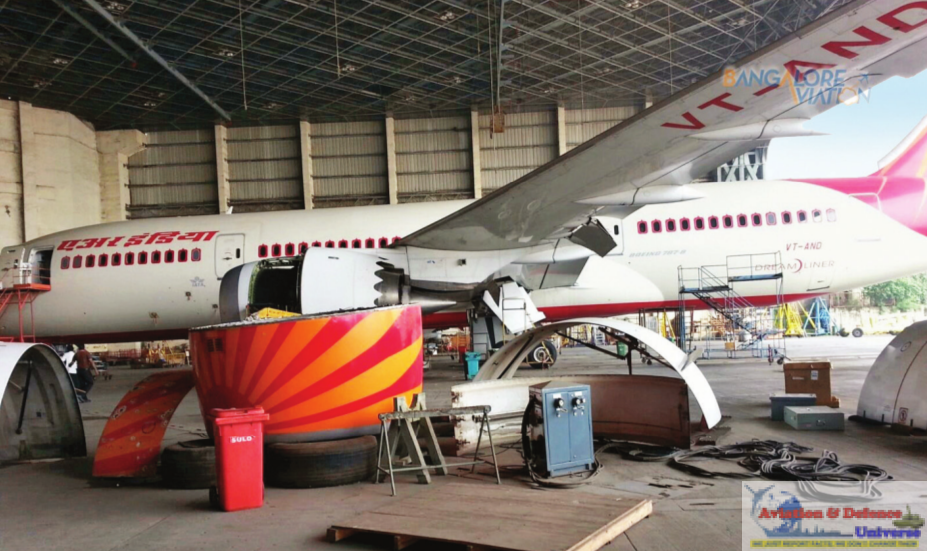
At the centre of the Indian MRO landscape is AI Engineering Services Limited (AIESL), India’s largest aircraft MRO organisation, run by the Government of India. Its network extends across major bases including Delhi, Mumbai, Kolkata, Hyderabad, Nagpur and Thiruvananthapuram, supplemented by line-maintenance capabilities around the country.The breadth of work being undertaken by AIESL demonstrates how Indian capabilities are moving beyond conventional airline maintenance. Its Hyderabad operation, for instance, successfully completed the first Air India Express Boeing 737 MAX cabin retrofit there, while its Delhi base achieved significant base-maintenance milestones during 2026.
The strategic importance of this capability became even clearer in 2026 when DRDO entered into contracts involving AIESL and Adani Defence Systems and Technologies for the AEW&C Mk II programme, under which six Airbus A321 aircraft are to be transformed into the Netra Mk II airborne early warning and control platform. The programme illustrates the potential crossover between India’s civil MRO expertise and sophisticated defence aerospace programmes.
AIESL’s Thiruvananthapuram facility has also strengthened its international credentials. The facility received EASA Part-145 approval in 2025, enabling it to undertake maintenance on European-registered and leased aircraft. Plans have also emerged for a larger hangar capable of accommodating a wide-body aircraft or two narrow-body aircraft simultaneously.
GMR Aero Technic expands the private-sector footprint
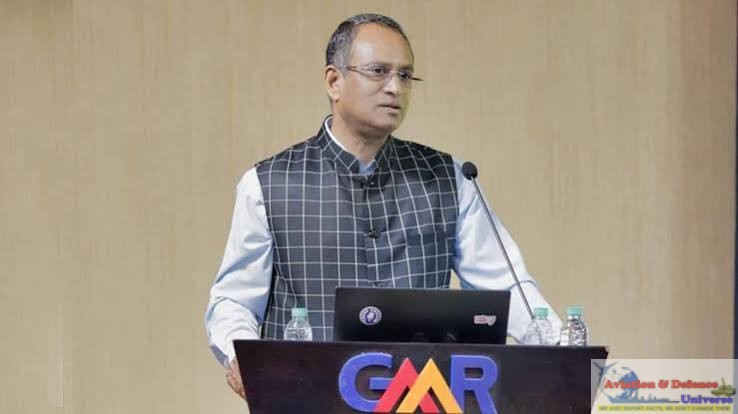
Another major player is GMR Aero Technic in Hyderabad, which has developed substantial airframe base and line-maintenance capabilities for commercial aircraft. Its growth illustrates how private Indian MROs are becoming important partners for India’s expanding airline sector. GMR Aero Technic has signed a three-year base-maintenance agreement with Akasa Air, strengthening its role in supporting India’s new-generation carriers. The company has also developed specialist component capabilities and has an agreement with Liebherr-Aerospace to provide repair services for heat exchangers.
This is particularly significant because the next stage of India’s MRO evolution cannot be restricted to airframe checks. Higher-value maintenance lies increasingly in engines, APUs, landing gear, avionics, components and specialised repairs. Building these capabilities determines how much MRO value India actually retains.
Air Works Adds MRO Muscle

Air Works now Adani Air Works represents another important part of India’s MRO landscape. With a history stretching back seven decades, it has been one of the country’s prominent independent aviation maintenance organisations and has built capabilities across commercial aviation, business aviation and associated engineering services. Independent MROs have particular importance to the ecosystem because they create a competitive third-party maintenance market rather than tying engineering capacity exclusively to a single airline or aircraft manufacturer. Such organisations can serve multiple operators and aircraft types, creating the utilisation levels necessary to develop specialised engineering skills and commercially sustainable maintenance capability. Started in 1951, Air Works is the oldest Indian independent Aircraft maintenance company which provides services for Maintenance, Repair & Overhaul. Currently the company is responsible for heavy maintenance of Indian Navy’s Boeing P-8I maritime surveillance aircraft.
Max Aerospace and India’s independent MRO tradition

Max Aerospace and Max MRO Services have been among the early private-sector contributors to India’s effort to develop an indigenous aviation Maintenance, Repair and Overhaul ecosystem. Established in the 1990s, Max Aerospace built its presence across civil and military aviation and developed relationships with international OEMs while supporting fixed and rotary-wing platforms. Its subsidiary, Max MRO Services, a joint venture with Air France Industries KLM Engineering & Maintenance, has developed specialised capabilities across avionics, electrical and mechanical systems, cabin equipment and aircraft components, providing services to Indian as well as overseas operators. The group’s contribution assumes particular importance in the context of Aatmanirbhar Bharat and Make in India, as it has sought to replace maintenance requirements historically undertaken overseas with capability available within the country, thereby helping retain technical expertise, skilled employment and MRO expenditure in India. Together, Max Aerospace and Max MRO Services demonstrate the importance of nurturing Indian-owned MRO capability alongside international technological partnerships, so that India’s rapidly expanding aircraft fleets translate into domestic engineering competence, employment, reduced dependence on overseas maintenance and, ultimately, the ability to export Indian MRO services to the global aviation market.
Kochi builds another aviation maintenance cluster
The MRO map is also spreading beyond India’s traditional aviation centres. Cochin International Airport has been expanding its maintenance infrastructure through Cochin International Aviation Services Limited (CIASL). A new narrow-body hangar under development provides approximately 4,280 square metres of covered aircraft parking space and has been designed to accommodate two Airbus A320 or Boeing 737 NG/MAX aircraft simultaneously, along with component-repair and non-destructive-testing facilities.
 The first phase of CIAL’s Aero Park was inaugurated in February 2026 as part of a broader aviation ecosystem encompassing maintenance, technical support and training. Infrastructure worth ₹101 crore included aircraft maintenance and parking bays, engine-storage facilities, training halls and classrooms, while further hangar development remained under way.
Such regional centres matter because India’s MRO future cannot depend upon two or three saturated metropolitan airports. Maintenance requires land, hangar space, relatively uncongested aircraft movement, logistics connectivity and a readily available technical workforce. Developing specialised MRO clusters around airports such as Hyderabad, Nagpur, Kochi and Thiruvananthapuram can therefore create both capacity and regional employment.
From airframes to engines — the next frontier
Engines represent one of the largest and technologically most demanding portions of aircraft maintenance expenditure. India historically lacked sufficient domestic capacity for deep engine overhaul, meaning substantial high-value work continued to travel abroad.
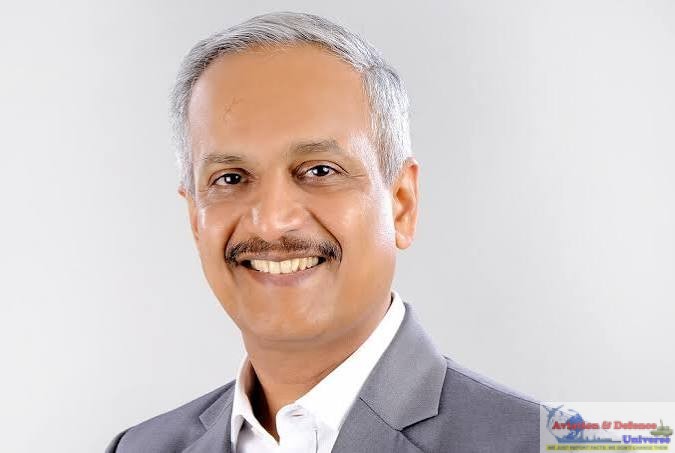
That situation has begun changing dramatically. In November 2025, Safran inaugurated its aircraft-engine services facility in Hyderabad for LEAP engines powering Airbus A320neo-family and Boeing 737 MAX aircraft. It represented the first MRO operation established in India by a global engine manufacturer and added a major new capability to the country’s aviation maintenance landscape.
There is another potentially transformational development. At Farnborough in July 2026, IndiGo signed a preliminary agreement with CFM International covering more than 1,000 LEAP-1A engines. The arrangement also envisaged the establishment of an IndiGo engine MRO centre in India and a spare-parts agreement. Industry sources described such airline-owned repair capability as a means of protecting access to scarce engine-maintenance capacity at a time of global repair bottlenecks.
For India, this underlines both the opportunity and the challenge: MRO is moving rapidly from conventional airframe maintenance towards an ecosystem encompassing engine shops, components, avionics, digital diagnostics, predictive maintenance and repair technology.
Indian MROs need more Indian work
Aircraft maintenance is fundamentally a scale business. Hangars, tooling, test benches and trained manpower require large upfront investments. An Indian MRO cannot invest in sophisticated capability unless it has reasonable visibility of future workloads.
This makes allocation of work by Indian airlines particularly important. Indian carriers are themselves among the largest purchasers of aircraft in the world. Their maintenance requirements can provide the anchor workload around which domestic MRO capability develops. Once an Indian company gains sufficient volume, certification and experience from domestic fleets, it can compete for foreign aircraft arriving from the Middle East, Africa, Southeast Asia and beyond. The same principle applies to defence aviation. India’s civil MRO industry possesses engineering, structural, component and maintenance expertise that can increasingly complement the military aviation ecosystem where security and certification requirements permit. The Netra Mk II programme provides an important example of how civil aircraft engineering capability can participate in a strategically significant defence programme.
The OEM MRO question: investment or displacement?
The arrival of aircraft and engine OEMs in India’s MRO sector has undeniable advantages. It can bring advanced technology, proprietary repair processes, international certification, capital investment, specialised tooling and high-end employment. Safran’s Hyderabad engine facility, for example, fills a major capability gap that previously existed in India. The issue, therefore, is not whether OEMs should invest in Indian MRO, but how those investments are structured.
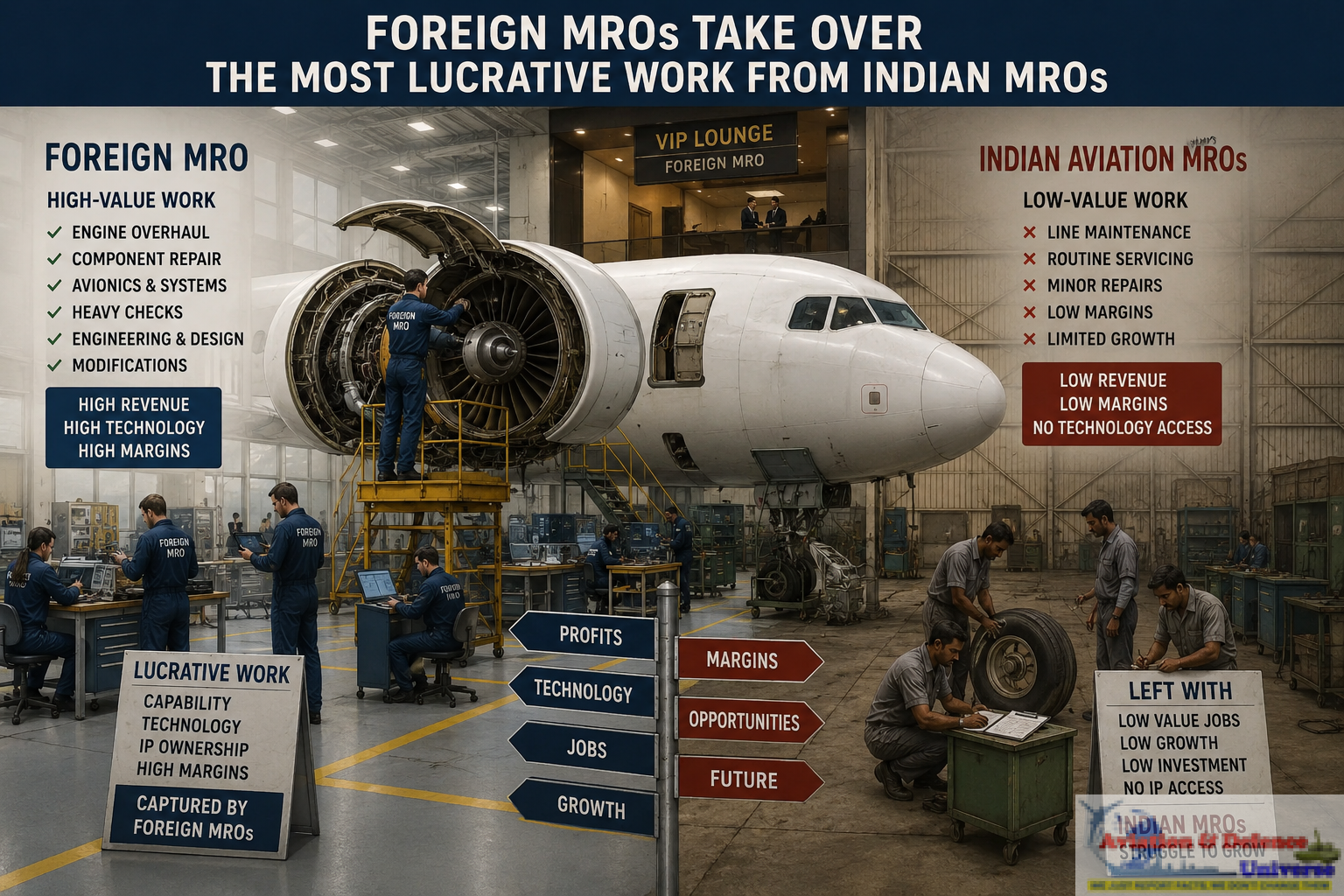 There is a potential downside if OEM-owned MRO facilities simply capture the most lucrative maintenance work generated by India’s enormous aircraft fleet while independent Indian MROs are left with lower-value line and airframe maintenance. Modern aircraft maintenance is increasingly controlled through OEM intellectual property, repair licences, proprietary tooling, manuals, software and access to parts. If OEMs establish wholly controlled facilities without meaningful Indian industrial participation, technology transfer or integration of domestic companies into their repair networks, India could replace one form of overseas dependence with another — the work would physically be performed in India, but the technology, intellectual property and a substantial share of economic value would remain externally controlled.
That could also make it harder for indigenous MRO companies to achieve the volumes required to invest in engine, component and avionics capability. OEMs possess the advantages of direct access to technical data, global fleets, proprietary repairs and spare-parts networks. An independent Indian MRO competing against an OEM-owned facility may therefore not be competing on equal terms. Over time, excessive concentration of high-value work within OEM-controlled facilities could restrict the growth of India’s own design, repair-development and engineering capabilities.
The answer need not be to discourage OEM investment. India instead needs a model in which OEM participation strengthens indigenous MROs rather than substitutes for them. Joint ventures, licensed repair centres, authorised Indian partners, local vendor development, training, technology transfer and integration of Indian MROs into global OEM networks can ensure that foreign investment multiplies domestic capability. The objective should ultimately be MRO in India, by India and for the world.
Indian MROs Must Raise the Bar to Keep Indian Aircraft at Home
While Indian airlines have a responsibility to support the domestic MRO ecosystem wherever commercially and operationally feasible, Indian MRO companies must equally ensure that they offer airlines a compelling reason to stay at home. Self-reliance cannot be built through preference alone; it must be backed by 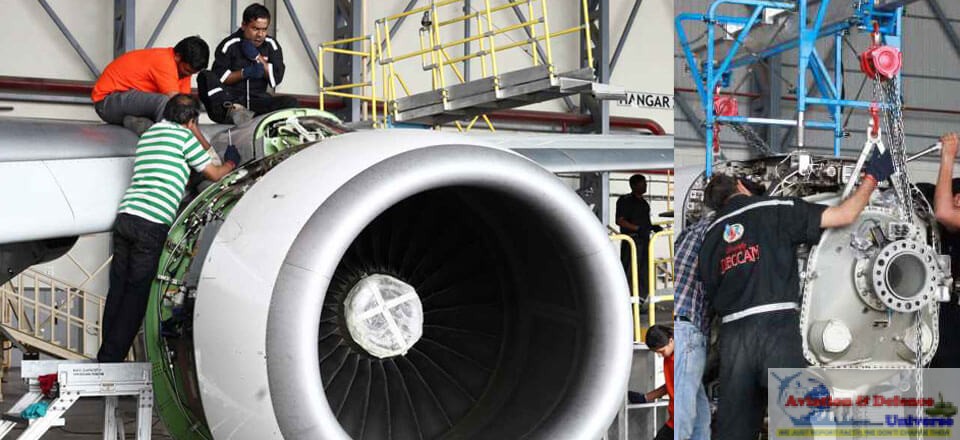 capability, quality, safety, competitive pricing and dependable turnaround times. Indian MROs need to continuously invest in state-of-the-art hangars, tooling, test equipment, digital maintenance systems, engine and component overhaul capabilities, advanced avionics, predictive maintenance and a highly skilled and appropriately certified workforce. They must obtain internationally recognised approvals and develop capabilities for the increasingly sophisticated aircraft and engines entering Indian fleets, while building inventories and supply chains that minimise aircraft-on-ground time. Partnerships with OEMs can be valuable when they bring genuine technology transfer, training, intellectual property access and capability creation rather than reducing Indian companies to low-value maintenance providers. Airlines cannot afford prolonged groundings simply to fulfil a localisation objective; reliability, safety and aircraft availability remain fundamental to their business. The challenge, therefore, runs both ways: Indian airlines should give capable domestic MROs a fair opportunity, while Indian MROs must become world-class enough
MRO Beyond Economics: Should Indian Airlines Rethink Maintenance in Adversary-Aligned Countries?
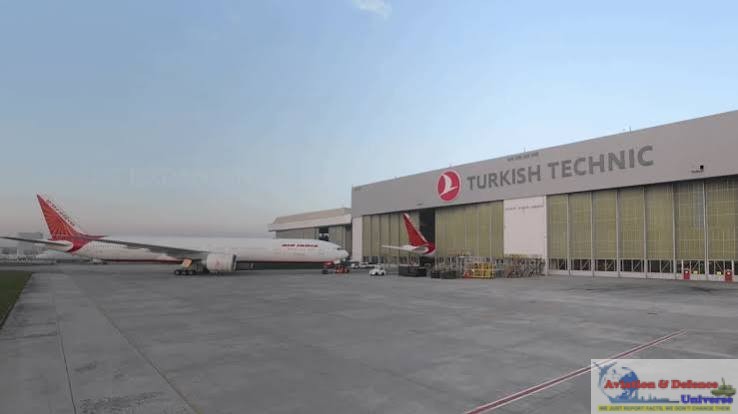
India’s rapidly expanding aviation sector faces an important strategic question: why are Indian airlines continuing to send valuable MRO business to countries that maintain close political, economic or strategic relationships with India’s adversaries? Aircraft maintenance decisions cannot, of course, be divorced from commercial realities such as certification, capability, cost, capacity and turnaround time, but neither should they be viewed purely through the prism of economics. Every overseas MRO contract represents expenditure, employment, technical expertise and business that could potentially strengthen India’s own aviation ecosystem; and when such work must necessarily be undertaken abroad, there is a strong case for choosing MRO facilities in friendly and dependable partner countries. In an era when geopolitics increasingly shapes technology access, supply chains and national security, sending substantial aviation business to jurisdictions closely aligned with states that openly challenge India’s interests deserves greater scrutiny. Who maintains India’s aircraft matters and Indian carriers could adopt a clear hierarchy: Indian MROs wherever the required capability exists, trusted friendly-country MROs where overseas maintenance is operationally necessary and greater strategic due diligence before placing work in countries whose geopolitical relationships could create vulnerabilities for India. Ultimately, MRO is no longer just about where an aircraft can be serviced fastest or cheapest; it is also about economic sovereignty, supply-chain resilience and national interest. Airlines will naturally make decisions based on safety, certification, turnaround time, capability and commercial viability, and there will remain specialised work  for which overseas facilities are necessary. But where comparable capability exists in India, Indian work should logically go to Indian MROs first. And where an overseas MRO remains operationally necessary, airlines could consider geopolitical and supply-chain resilience alongside price and turnaround time, favouring reliable facilities in countries with stable and trusted relations with India where commercially practicable. Describing every maintenance contract placed in a country that has political differences with India as “helping the enemy” would be too sweeping; nevertheless, in today’s geopolitical environment, aviation maintenance is no longer purely a procurement decision. It involves aircraft availability, sensitive technical information, supply-chain dependence and strategic resilience. Building a strong indigenous MRO industry therefore makes commercial as well as strategic sense: Indian aircraft maintained in India, by Indian engineers, through increasingly Indian supply chains, should ultimately become an integral part of Aatmanirbhar Bharat in aviation, to keep national interest first.
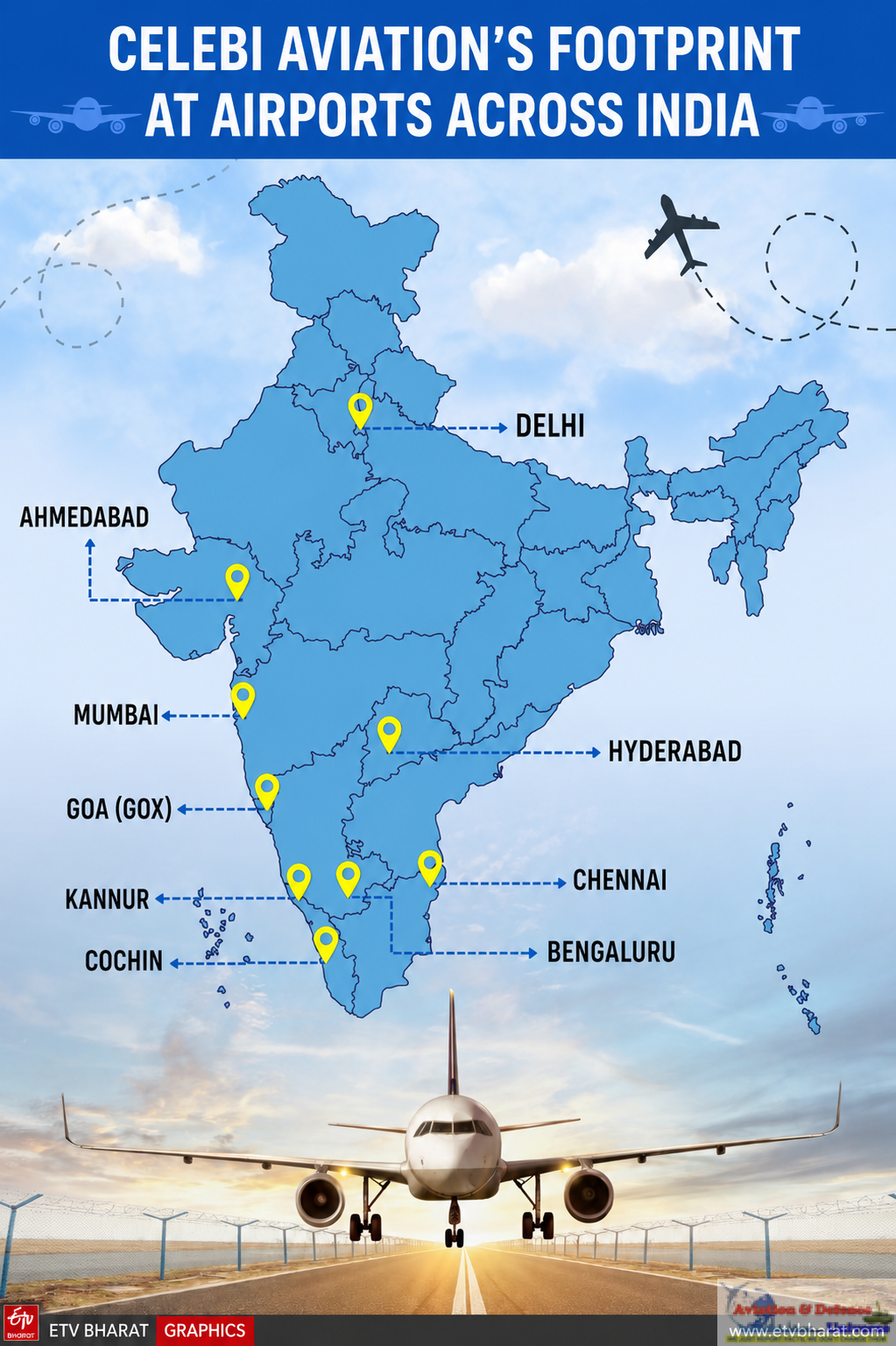
The case of Turkish aviation services company Celebi in India demonstrated how national security and geopolitical considerations can directly influence the aviation services ecosystem. In the aftermath of Operation Sindoor and amid heightened tensions following Turkey’s support for Pakistan, the Bureau of Civil Aviation Security (BCAS) on May 15, 2025 revoked the security clearances of Celebi Airport Services India and associated entities “in the interest of national security.” The decision effectively ended Celebi’s ability to continue its ground-handling and cargo-handling operations at the affected Indian airports; the government simultaneously moved to ensure continuity of passenger and cargo services and sought retention of affected employees. Celebi challenged the action, but on July 7, 2025, the Delhi High Court dismissed the petitions and upheld the government’s authority to revoke the clearances on the basis of national-security considerations and intelligence inputs. The episode is particularly relevant to the wider debate over foreign participation in strategically sensitive aviation activities: it demonstrated that commercial considerations and foreign investment cannot be viewed entirely separately from security, access to critical airport infrastructure and India’s larger strategic interests. It is important, however, to distinguish Celebi’s actual activities from MRO—the proceedings before the Delhi High Court concerned ground handling and cargo handling, not aircraft MRO operations. Nevertheless, the case provides a useful lesson for the MRO debate: as India builds domestic capability in aviation maintenance and other critical aviation services, decisions about who receives access to strategically important infrastructure, aircraft and technical ecosystems will increasingly need to balance economics with national security, supply-chain resilience and strategic trust.
Jobs, skills and the MRO multiplier
MRO also offers something that aircraft purchases alone cannot provide at comparable scale — recurring skilled employment throughout the operating life of an aircraft. Engineers, technicians, mechanics, NDT specialists, avionics engineers, planners, supply-chain professionals, quality inspectors and licensed aircraft maintenance engineers remain involved for decades after an aircraft has been delivered. India’s demographic 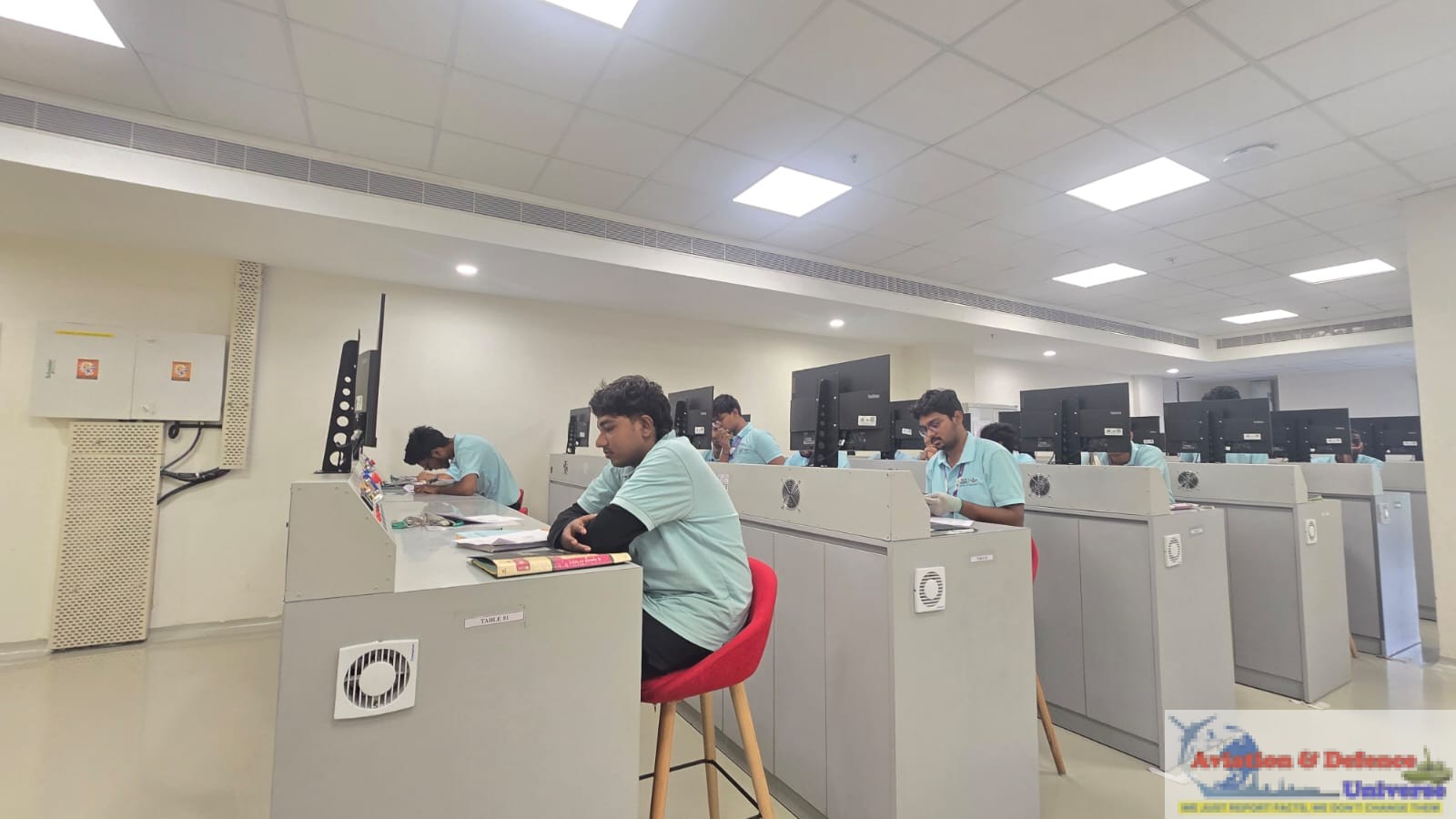 advantage, engineering talent and comparatively competitive cost structure provide the foundations for becoming an international MRO destination. But skilled aviation maintenance manpower cannot be produced overnight. Training capacity, licensing pathways and industry-academia partnerships therefore have to grow alongside hangar capacity.
India’s geographical position provides another advantage. Sitting between the mature aviation markets of Europe and the rapidly expanding fleets of Asia-Pacific, and close to the Middle East, India is well positioned to attract third-party maintenance work — provided turnaround times, taxation, customs procedures, certification and repair quality remain internationally competitive.
MRO Association of India: Giving the Industry a Collective Voice
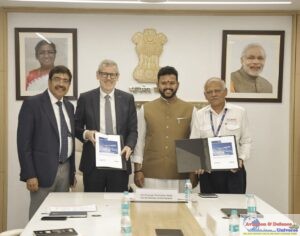
The MRO Association of India has played an important role as the collective voice of India’s Maintenance, Repair and Overhaul industry, representing the sector’s interests before the Ministry of Civil Aviation, DGCA, Ministry of Finance, Ministry of Defence, NITI Aayog and other government and regulatory bodies.  Among the milestones it highlights are sustained engagement on customs duties and airport royalties, harmonisation of DGCA CAR-145 with EASA Part-145, and advocacy that contributed to the reduction of GST on domestic MRO services from 18 per cent to 5 per cent. Equally important has been its role in bringing airlines, MRO companies, OEMs, regulators and policymakers onto common platforms, promoting industry best practices and addressing the skills gap by encouraging training relevant to aerospace maintenance. As India’s aircraft fleet expands, the Association’s larger responsibility is to ensure that this growth translates into maintenance work, investment, technology, jobs and technical capabilities within India, rather than allowing a disproportionate share of the opportunity to migrate overseas. Its advocacy for “Maintain in India” therefore complements Make in India and Aatmanirbhar Bharat: creating an ecosystem in which Indian MROs can compete globally, airlines have compelling reasons to maintain their fleets at home, and India can evolve from being a major buyer of overseas MRO services into an international maintenance hub in its own right
The runway ahead
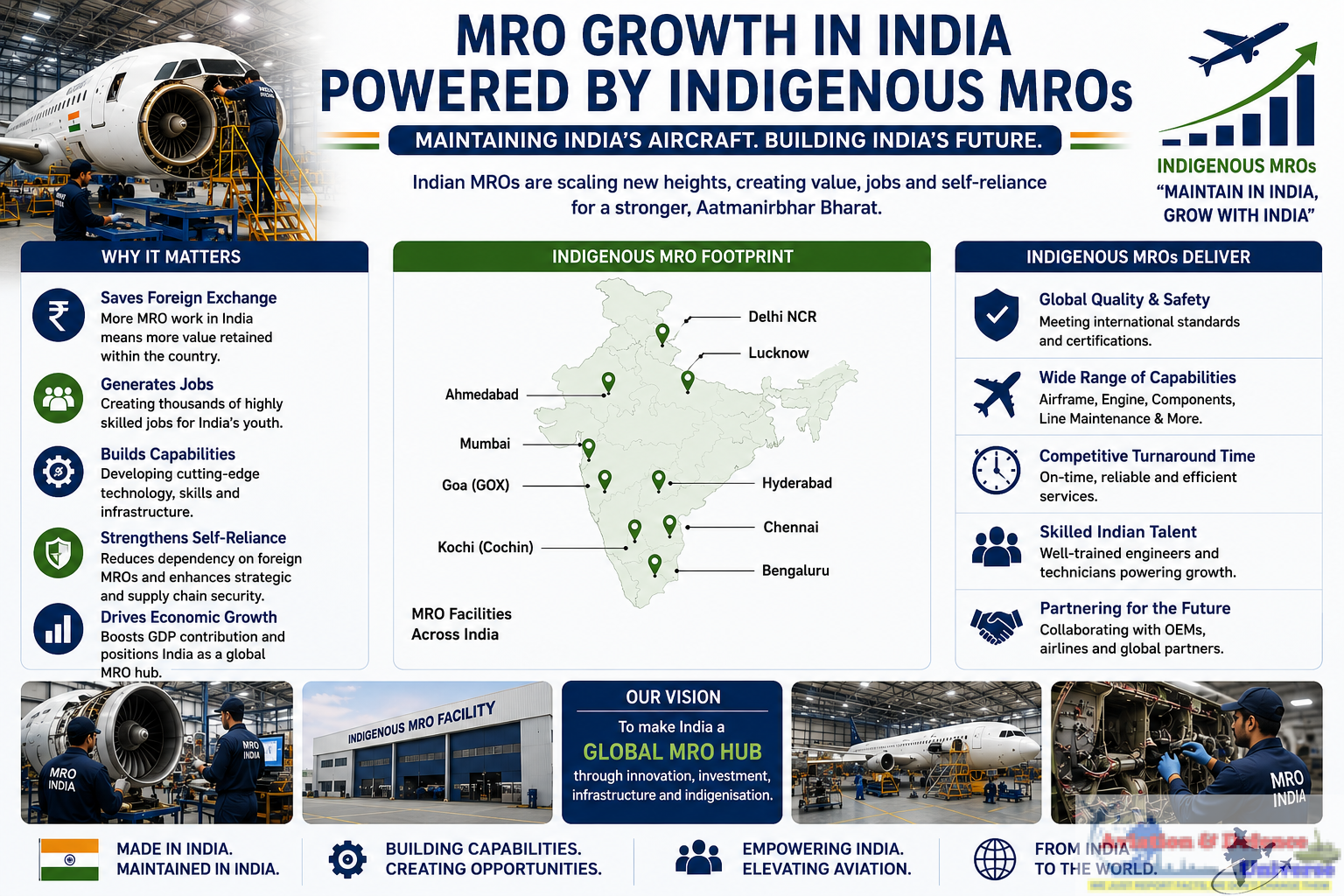
India’s aviation MRO industry has moved beyond the stage where its potential merely needed to be recognised. The next battle will be over value addition. India can either become a location where foreign-designed aircraft are simply maintained, or it can build an indigenous ecosystem capable of developing repairs, manufacturing components, overhauling engines, managing fleets, training technicians and eventually exporting complete MRO solutions. For a country whose airlines are set to operate one of the world’s largest aircraft fleets, sending billions of dollars of lifetime maintenance value abroad is neither economically desirable nor strategically sustainable. The aircraft may be manufactured elsewhere, but there is increasingly little reason why their maintenance should be. India has the fleet. It has the engineers. It has the geographical advantage and increasingly the infrastructure. What its indigenous MRO industry now needs is scale, assured work, access to technology and a level playing field. If those pieces come together, India’s next great aviation growth story may not only be about aircraft taking off from Indian airports — it may be about aircraft from across the world landing in India to be maintained.





















































































-A4-Size-(2)_page-0001.jpg)