


 18th BRICS Summit











- IAF Leads Multinational Combat Drill in the Skies Over Jodhpur
- F-35s, Rafales and Sukhois to Converge Above Desert Skies
- Asia’s Largest Air Exercise Set for Take-Off
By Sangeeta Saxena
New Delhi. 22 September 2026. The Indian Air Force is preparing to turn the skies over Jodhpur into a multinational laboratory of contemporary air warfare as Exercise Tarang Shakti 2026 brings together advanced fighters, strategic airlifters, aerial refuellers, surveillance platforms and specialist capabilities from friendly foreign air forces. Designed around the philosophy of “integrate, execute and learn,” the exercise will go beyond flying together to test how effectively diverse forces can plan, communicate and operate together in a realistic battlespace.
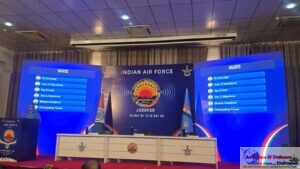
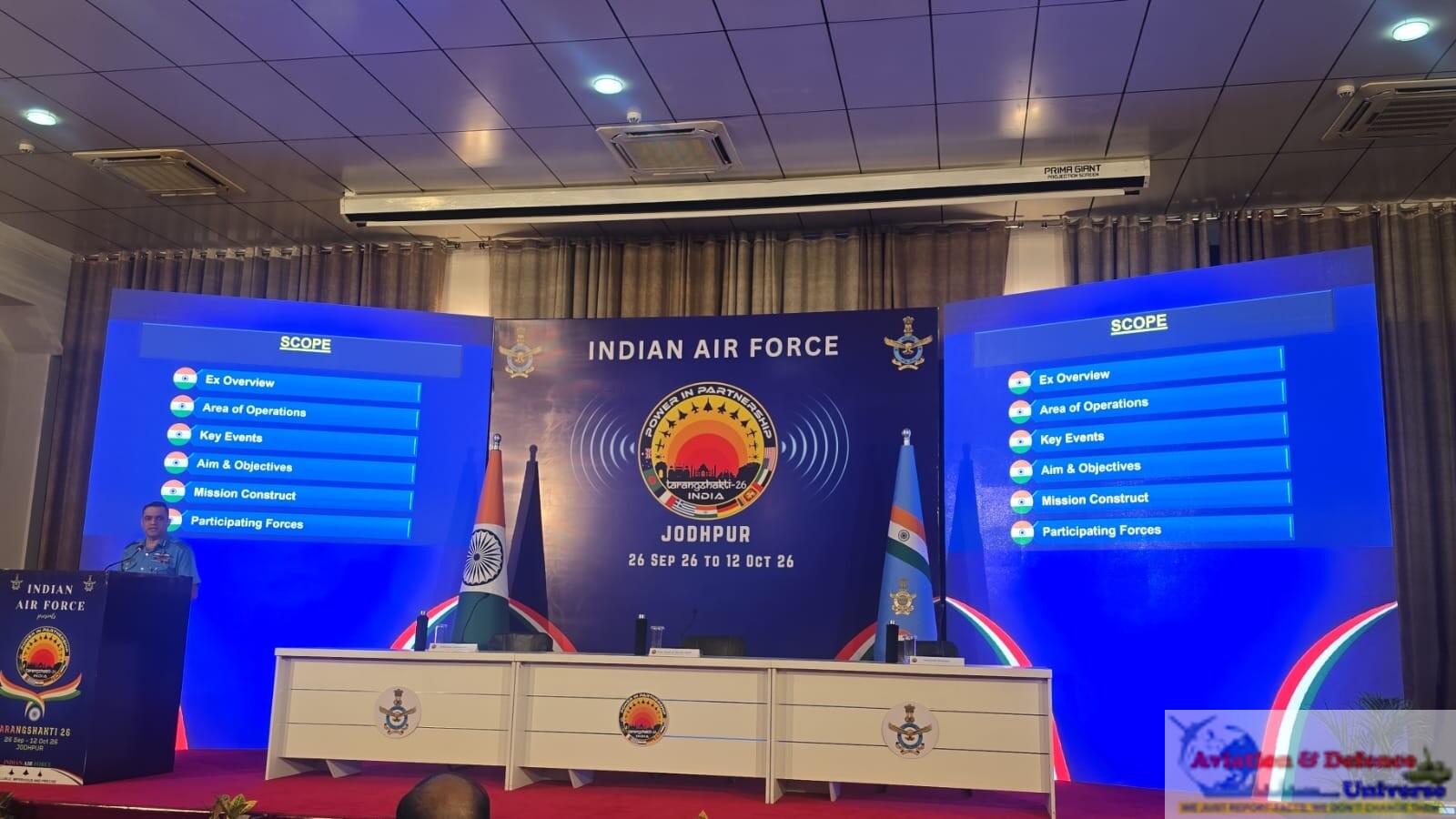
The complete plan for the Indian Air Force’s flagship multinational air exercise was presented to the media by Group Captain Arun Deswal during a curtain-raiser briefing at the Jumbo Majumdar Centre, Palam, New Delhi. Describing Tarang Shakti 2026 as Asia’s largest air exercise, Group Captain Deswal said its significance rested on five pillars: scale, integration, realism, interoperability and partnership. The exercise will combine the capabilities of multiple air forces and train participating contingents in contemporary combat scenarios by day and night. “The emphasis is not only on flying together, but on learning to operate together,” he underlined.
Exercise Tarang Shakti 2026 will be conducted at Air Force Station Jodhpur, with its operational phase scheduled from 28 September to 11 October 2026. The desert airbase will provide a demanding operational environment in which participating forces can train together across a wide spectrum of missions. The opening ceremony will be held on 26 September, followed by the operational phase. Other major engagements include a marathon on 4 October, an Open Day on 8 October, an Air Power Seminar in New Delhi on 9 October, and the Distinguished Visitors and Media Day on 10 October. The closing ceremony is scheduled for 12 October. These activities have been planned to balance intensive operational training with professional engagement, military interaction and public outreach.
The exercise aims to expose participating contingents to the planning and execution of multinational combat operations in a realistic contemporary battlespace and enable them to jointly develop technically viable operational solutions. Its core philosophy revolves around three actions – Integrate diverse air forces, platforms and capabilities. Execute realistic combat operations in a multinational environment and Learn from the experience, procedures and best practices of participating forces.
Tarang Shakti 2026 will familiarise participants with the air operations planning processes, targeting cycles and operational timelines followed by different air forces. It will also enable them to study varying approaches to mission planning, weapons employment and operational execution. A major focus will be placed on enhancing interoperability, establishing common procedures and understanding the technical employment philosophies governing air-to-air and surface-to-air weapons.
The mission construct covers an extensive range of air operations, including within-visual-range and beyond-visual-range combat, large-force engagements involving high-value aerial assets, air mobility operations, dynamic targeting, air-to-air missions and combat search and rescue. The diverse mission profile will bring fighter, transport, surveillance, refuelling and other specialist capabilities into an integrated operational framework.
The Indian Air Force will field a formidable mix of platforms, including the Rafale, Su-30MKI, Tejas, Jaguar, Mirage 2000 and MiG-29, supported by helicopters, transport aircraft, airborne warning and control platforms and IL-78 mid-air refuelling aircraft. The French Air and Space Force will participate with Rafale fighters, an MRTT tanker and A400M transport aircraft. The United States Air Force will bring the fifth-generation F-35A fighter and KC-135 aerial refuelling aircraft, while the United Arab Emirates Air Force and Air Defence will participate with F-16 fighters and a Global 6000 aircraft. The Royal Australian Air Force will field the C-130J, and the German Air Force will participate with the A400M, strengthening the exercise’s air-mobility component.
Regional participation will include surveillance and transport capabilities from the Sri Lanka Air Force and the Bangladesh Air Force, adding an important neighbourhood dimension to the multinational exercise. Observers and representatives from other countries will also witness its conduct, expanding the scope for professional military engagement and promoting a wider understanding of multinational air operations.
The 2026 edition builds on the experience of the inaugural Tarang Shakti exercise hosted by the Indian Air Force in 2024. That exercise was conducted in two phases at Air Force Stations Sulur and Jodhpur and involved participation from 30 friendly foreign countries.
Lessons from the first edition have shaped a broader operational focus and more diverse representation of air capabilities in Tarang Shakti 2026. Tarang Shakti 2026 will be more than a display of cutting-edge aircraft and aerial prowess. It will test whether different air forces, operating varied platforms and following distinct procedures, can function as one cohesive combat team. As fighters roar over Jodhpur and multinational crews plan missions together, the exercise will send a clear message: in tomorrow’s contested skies, airpower will be strengthened not only by technology, but also by trust, interoperability and the ability to fight together.




















































-A4-Size-(2)_page-0001.jpg)