










- Mumbai Briefing, Global Stakes: Rubio on India, Ukraine and Nuclear Dialogue
By Sangeeta Saxena
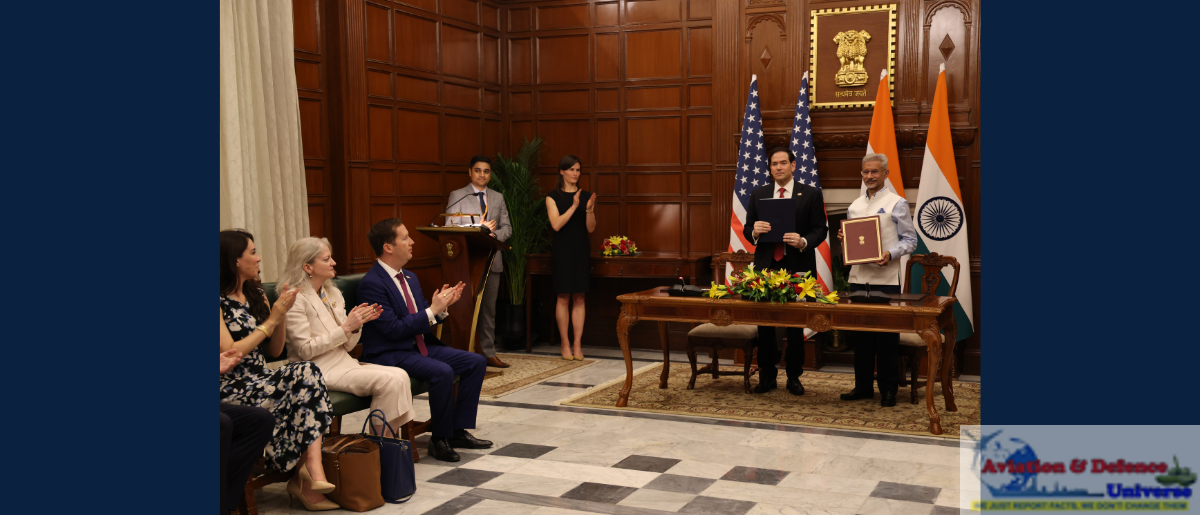
Mumbai/New Delhi. 20 October 2026. US Secretary of State Marco Rubio placed India’s refining capacity, bilateral trade negotiations and strategic importance at the centre of his interaction with journalists at the Taj Mahal Palace Hotel in Mumbai. Addressing questions during his second visit to India that year, he also discussed global demand for air-defence interceptors, tensions with Ukraine, energy-market disruption and the prospects for nuclear dialogue involving Washington, Moscow and Beijing.
His message connected diplomacy with practical national interests: energy availability, military preparedness and economic cooperation were increasingly inseparable. Explaining his return to India within months of his earlier visit, Rubio described the country as a major commercial partner, a key member of the Quad and an important defence and strategic partner. He pointed to repeated high-level exchanges, including visits by senior American officials and External Affairs Minister Dr S. Jaishankar’s engagements in the United States. “I actually don’t think we come enough,” Rubio said, arguing for more frequent interaction.
On the proposed India–US trade agreement, he expressed optimism that negotiations were approaching completion. While clarifying that the State Department did not negotiate trade agreements, he said the issue was important to his responsibilities, including as National Security Advisor. “There’s a small number of items to wrap up,” he said. “We feel very optimistic that we will have something in place here very soon.” His remarks indicated expectations of progress, rather than the conclusion or signing of an agreement.
India’s energy capabilities featured prominently ahead of his planned visit to Reliance Industries in Jamnagar. Rubio said discussions would examine opportunities for Indian companies to process additional Venezuelan crude and potentially expand production activity. “India’s a refining superpower,” he said, emphasising that producing crude oil was only one part of supplying usable energy. Refining capacity, particularly the ability to process heavy crude, was equally consequential. He said Indian companies possessed the necessary expertise and suggested that additional Venezuelan supplies could offer some relief to strained markets. However, he acknowledged that existing sanctions and other impediments would need to be addressed.
Asked why a US Secretary of State would visit a refinery and meet its leadership, Rubio directly linked the engagement to national security. “Energy is related to national security,” he said. “Countries fight wars over energy … economies collapse over lack of energy.” He argued that meeting a company with substantial refining capability was relevant to diplomacy when the discussions involved energy from other countries. Engagement, he added, was necessary to understand both commercial obstacles and potential opportunities.
On India’s purchases of Russian oil, Rubio adopted a broader diversification argument. He said India had repeatedly expressed its intention to widen its energy portfolio and acknowledged that changing supply arrangements could not happen overnight. “I think they’ve made substantial progress in that regard, and we’re happy to see that,” he said.
He added that the issue extended beyond Russian oil to India’s overall supply security, with the United States and other producers potentially contributing to a more diversified portfolio.
Much of the press interaction addressed Ukraine and the availability of air-defence interceptors. Rubio said he had spoken with Ukrainian President Volodymyr Zelenskyy for approximately 45 minutes earlier that day and rejected reports that Washington had ordered changes to its intelligence-sharing arrangements. “The President made it very clear he’s ordered no such changes,” he said.
Rubio also maintained that existing US defence engagement with Ukraine had not been politically curtailed. Responding to questions about the PURL programme, through which European purchases support supplies to Ukraine, he said availability and competing requirements remained important considerations. He described interceptors as among the most sought-after defence products globally, citing demand from Ukraine, Saudi Arabia, Israel and the United States itself.
“It’s probably the most in-demand product right now in the defence field,” he said. However, Washington could not meet every request immediately. Rubio explained that interceptors were expensive, technically sophisticated and time-consuming to manufacture. Although production was increasing, supplies had to be balanced against American stockpile requirements, the protection of US installations and commitments to other partners. “There’s nothing being deliberately denied to Ukraine,” he said, describing allocation decisions as a balance between competing obligations.
Asked about reports that a purchased batch of interceptors was awaiting final approval, Rubio did not rule out an individual delay. He said such transfers were continually assessed against requirements elsewhere, including the defence of facilities in Europe and the Middle East. He distinguished these reviews from an alleged political instruction to harm Ukraine.
Rubio also rejected suggestions that failures to detect certain strikes in Ukraine resulted from an American decision to withhold warnings. He said the preliminary understanding was that any relevant failure could have involved a technical problem in processing or responding to information, and that the matter was being examined.
“We are providing the same warnings to them now that we always have,” he said. Acknowledging strains in US–Ukraine relations, Rubio attributed President Donald Trump’s frustration partly to allegations that Washington had deliberately undermined Ukraine, which he denied, and partly to the lack of progress towards ending the war. He reiterated the administration’s preference for a negotiated settlement and warned that continued fighting would bring further deaths, infrastructure destruction and the risk of wider escalation.
Rubio also confirmed American concerns about attacks affecting energy infrastructure and commercial shipping. He said American companies had reported cargo being struck and described this as an irritant in relations. He placed these concerns within a wider energy squeeze involving disruption around the Strait of Hormuz, attacks on Saudi pipelines and damage to refining capacity in the Russia–Ukraine war. Affordable diesel availability, he argued, had become a serious concern for economies well beyond the immediate conflict zones.
Turning to nuclear diplomacy, Rubio defended the possibility of direct discussions between the leaders of the United States, Russia and China. Asked whether Beijing was willing to discuss arms control, he said its position could only be established through engagement. “The only way you’re going to find out is to try,” he said.
Rubio rejected the argument that speaking to an adversary necessarily amounted to a concession. Although a summit would not resolve every disagreement, he maintained that communication between major nuclear powers could contribute to global security. “The world is a safer place when the leaders of the most powerful nuclear arsenals in the world are at least communicating with one another,” he said.
Rubio’s Mumbai interaction brought the pressures on contemporary diplomacy into sharp focus: growing demand for military equipment, strained energy supplies and negotiations carrying economic and strategic consequences. For India, his remarks highlighted recognition of its industrial capacity and international importance. The next test will be whether that recognition translates into workable energy arrangements, a concluded trade agreement and sustained strategic cooperation.