


 Raksha Mantri Rajnath Singh to represent India at SCO Council of Heads of Government Meeting in Tajikistan
























By Sangeeta Saxena
New Delhi . 20 October 2026. As the CBI investigates allegations linked to a defence procurement contract, the case raises important questions about accountability, institutional fairness and the future of India’s indigenous defence manufacturing ecosystem. The ongoing Central Bureau of Investigation (CBI) probe involving SMPP Limited CEO Ashish Kansal and officials of Munitions India Limited has brought one of India’s established private defence manufacturers under intense public scrutiny.
The investigation concerns allegations of bribery and the unauthorised disclosure of sensitive information relating to defence procurement, reportedly connected to an ammunition supply contract valued at approximately ₹500 crore. Investigators have also reported significant cash recoveries in connection with the case.
The allegations are serious. They merit an impartial and comprehensive investigation, particularly given the importance of integrity and confidentiality in defence procurement. Yet, even as investigative agencies carry out their responsibilities, an equally important principle must guide public discourse: allegations, however serious, cannot be treated as established guilt.
Accountability Must Be Guided by Evidence
In matters involving defence procurement, the stakes extend beyond individual commercial transactions. Public funds, military preparedness, national security and institutional credibility are all involved. It is therefore essential that allegations of wrongdoing receive rigorous scrutiny. At the same time, the legitimacy of an investigation rests not only on its ability to identify wrongdoing but also on its adherence to due process and the presumption of innocence. An arrest marks a significant development in a criminal investigation. It does not constitute a judicial determination of guilt. The distinction is neither technical nor trivial. It is central to the credibility of the justice system. For Ashish Kansal and the other individuals under investigation, responsibility must ultimately be determined through evidence and judicial proceedings, rather than speculation or public perception.
Separating Individual Allegations from Institutional Capability
The investigation also raises a question concerning the treatment of defence manufacturing enterprises when senior executives face allegations of wrongdoing. SMPP Limited operates in specialised areas of defence manufacturing, including ammunition, ballistic protection and related military technologies. Its participation in India’s defence industrial ecosystem reflects capabilities developed through investment in manufacturing infrastructure, technology and skilled manpower. These capabilities do not disappear because an investigation has commenced. Equally, a company’s industrial achievements cannot provide immunity from scrutiny. Both propositions must be considered together. Where allegations concern individuals or specific transactions, investigators must establish the facts and determine whether wrongdoing extends to the organisation itself. Institutional accountability should follow the evidence and applicable law. The distinction is particularly significant in defence manufacturing, where production facilities, skilled workforces, supply chains and contractual commitments often take years to develop.
The Question of Industrial Continuity
Recent reports have also raised the possibility of restrictions on SMPP’s future government business, while ongoing contracts have come under scrutiny. Such decisions must necessarily be governed by applicable procurement rules, national security considerations and the findings of competent authorities. However, the implications of any administrative action deserve careful examination.
Defence manufacturers are not merely commercial entities. Their operations may form part of wider supply chains that support the operational requirements of the Armed Forces. Where an investigation creates uncertainty surrounding an established manufacturer, policymakers must consider how to safeguard military requirements, preserve lawful contractual obligations and protect the public interest without compromising accountability. This is not an argument against appropriate restrictions where the law permits or requires them. It is an argument for ensuring that decisions are evidence-based, proportionate and attentive to their consequences.
A Test of Institutional Confidence
India’s pursuit of Atmanirbhar Bharat in defence has encouraged growing participation by private industry in areas historically dominated by public sector manufacturers and foreign suppliers. The success of this transition depends upon more than manufacturing capacity. It also requires confidence in the fairness of procurement processes, the independence of investigative institutions and the predictability of regulatory decisions. The SMPP–MIL investigation therefore presents a test of institutional confidence.
If wrongdoing is established, accountability must follow without exception. If allegations are not sustained, the individuals and organisations concerned must have a fair opportunity to move forward without an unwarranted presumption of guilt. The credibility of the system depends upon its ability to deliver both outcomes.
Let the Investigation Establish the Facts
The present case should neither be minimised because of the professional standing of those involved nor amplified into a verdict before the evidence has been judicially examined. The CBI must be allowed to investigate independently. The accused must have the opportunity to exercise their legal rights. Relevant authorities must protect the integrity of defence procurement and national security. Equally, public discussion must distinguish between reported allegations, investigative findings and judicially established facts.
For India’s defence manufacturing ecosystem, the lesson is not that established enterprises should be beyond questioning. It is that accountability and fairness must operate together. The strength of a defence industrial ecosystem is measured not only by its ability to investigate alleged wrongdoing, but also by its ability to uphold due process, preserve legitimate industrial capabilities and ensure that reputations are ultimately judged on established facts. Until the investigation and subsequent legal proceedings establish responsibility, restraint, fairness and respect for the rule of law remain essential.
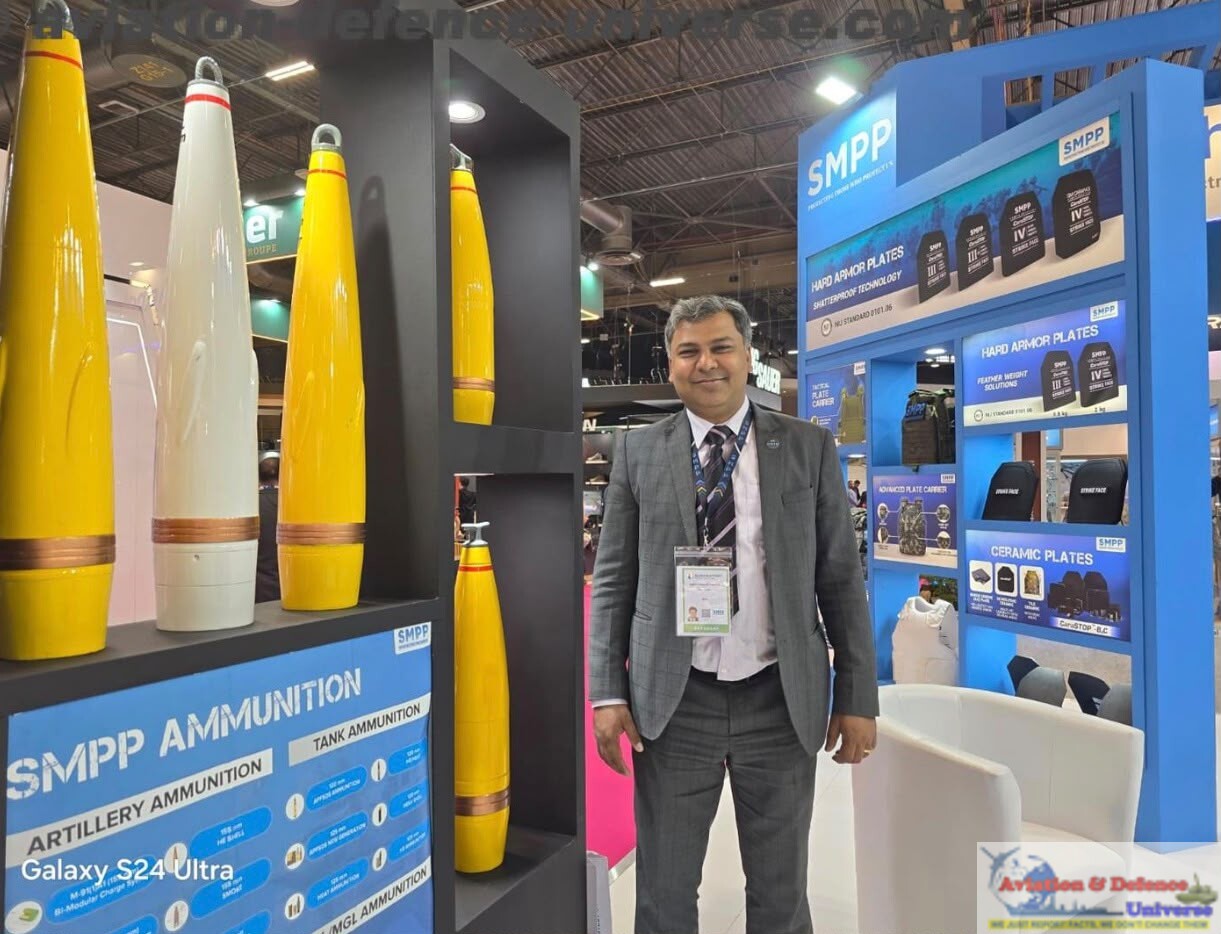 Ashish Kansal, CEO of SMPP Limited, which is under scrutiny in connection with the ongoing CBI investigation involving Munitions India Limited. The allegations remain subject to investigation and judicial proceedings.