










By Sangeeta Saxena
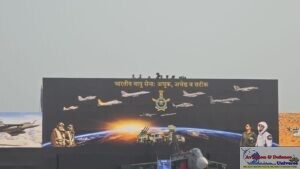
New Delhi. 08 October 2026. An air force’s strength begins long before its fighters take off. It lies in detecting an approaching threat, identifying it correctly, connecting commanders with aircrews and delivering a precise response. Thales’ air defence and aerospace portfolio spans this entire chain—from ground-based surveillance radars and missile defence networks to fighter sensors, electronic warfare, targeting pods and airborne communications. Together, these technologies support the protection of national airspace and the conduct of operations in increasingly contested environments.
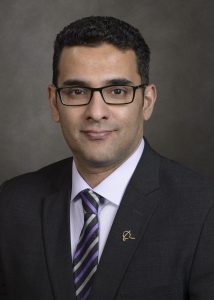
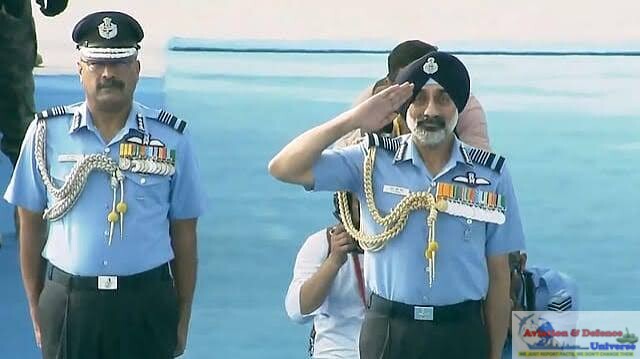
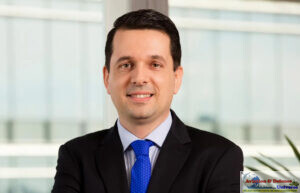
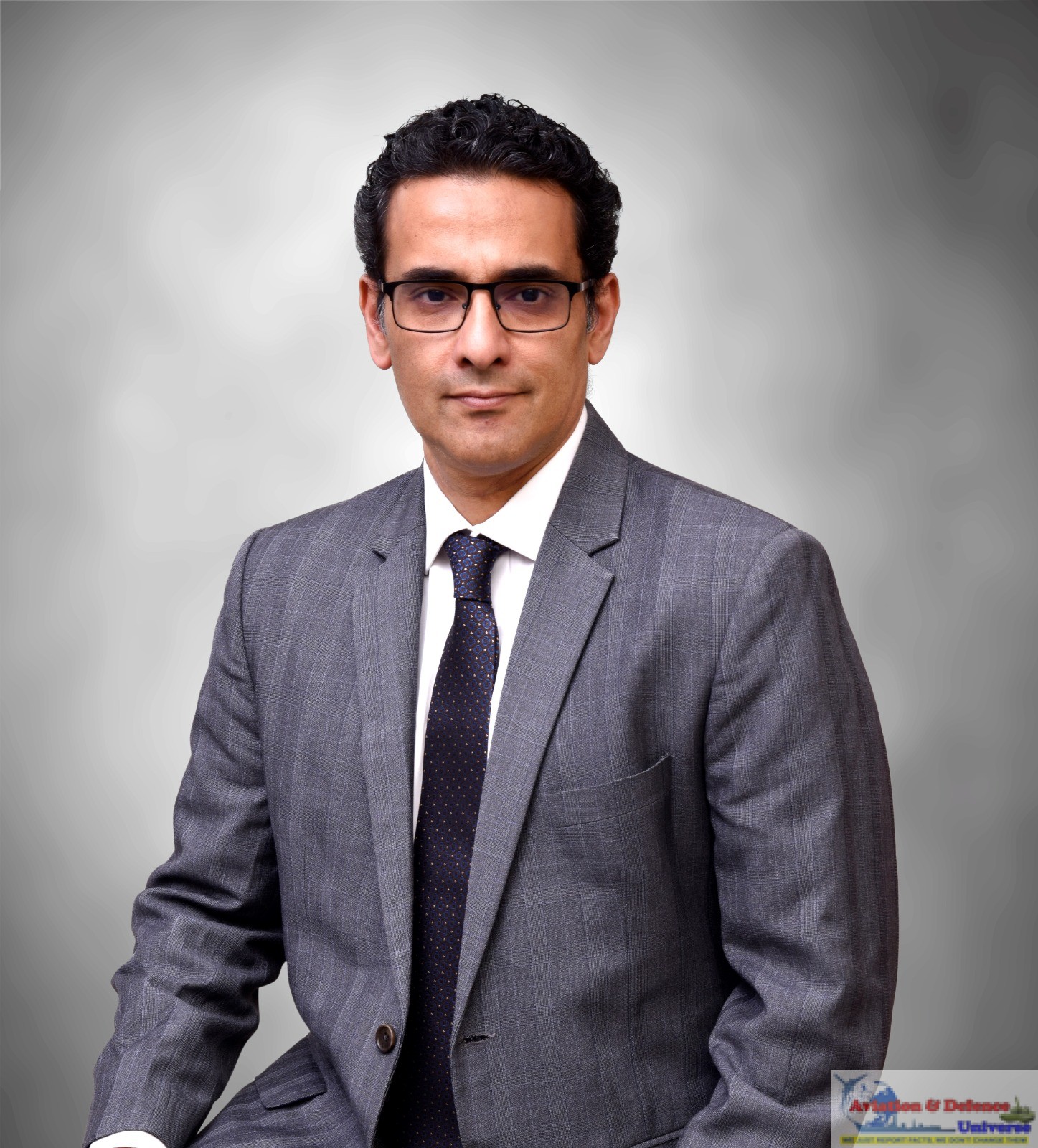
Ankur Kanaglekar, Vice President – India, “The Indian Air Force’s 94-year journey reflects an unwavering commitment to safeguarding India’s skies while continuously evolving to meet the demands of an increasingly complex security environment. For over seven decades, Thales has been proud to support this journey, bringing advanced technologies and expertise to mission-critical areas. From radars and optronics to guided ammunitions, electronic warfare, avionics, and more, we have been actively contributing to the Indian Air Force’s operational effectiveness and modernisation. As air power evolves, connectivity, intelligence and speed of decision-making will be increasingly critical. Thales remains committed to supporting the Indian Air Force’s future needs by combining cutting-edge technologies with local capabilities and indigenous development aligned with the Aatmanirbhar Bharat vision. We salute the men and women of the Indian Air Force for their service to the nation and look forward to continuing our partnership in the years ahead.”
Building an integrated shield
At the centre of Thales’ ground-based offering is integrated air and missile defence: bringing sensors, command systems and weapons into a coordinated architecture. Its ForceShield solution addresses very short-range and short-range air defence, protecting troops, infrastructure and other important assets.
The wider SkyDefender offering extends this approach across multiple defensive layers. Thales describes it as an integrated air and missile defence architecture combining short-range protection, longer-range missile defence and strategic early warning, with artificial intelligence supporting the overall system. Its significance is the connection between capabilities: individual sensors and weapons contribute to a shared defensive picture and coordinated response.
For higher-level protection, SAMP/T NG is offered through Eurosam, the industrial partnership involving Thales and MBDA. It protects populations, troops and high-value assets against a broad spectrum of air and missile threats. Thales’ Ground Fire radar is a central contribution to the system, supporting surveillance and Aster missile engagements. SAMP/T NG should therefore be understood as a collaborative European system, with Thales providing essential capabilities within
Ground Master: eyes on the airspace
The Ground Master radar family provides surveillance at different operational scales. The Ground Master 400 Alpha, or GM400α, is the long-range member, with a published instrumented range of up to 515 kilometres. Thales highlights its digital architecture, mobility and ability to track targets ranging from fast aircraft to low-flying unmanned systems. The instrumented range describes the radar’s coverage capability; detection distance for a particular target depends on its characteristics and operating conditions. The system’s relevance to air forces is demonstrated by Malaysia’s selection of two additional GM400α radars announced in July 2025.
The Ground Master 200 serves the medium-range surveillance requirement. Thales publishes coverage of up to 250 kilometres and describes a containerised configuration combining the radar, mast, power generation and two command-and-control positions. Its role includes supplying timely target information to ground-based air defence systems.
The GM200 Multi-Mission family adds the MM/A, or All-in-one, and MM/C, or Compact, configurations. These extend the portfolio into air surveillance, air defence and, particularly for the compact configuration, weapon-location missions. The family also includes the Ground Master 60, a short-range tactical radar addressing land-force requirements. These systems illustrate how airspace protection overlaps with the defence of deployed formations.
Ground Fire and strategic early warning
While surveillance radars establish the air picture, Ground Fire combines surveillance with fire-control support for integrated air and ballistic missile defence. Thales’ current catalogue describes an S-band active electronically scanned array radar with up to 400-kilometre range, 360-degree azimuth coverage and 90-degree elevation coverage. Its rotating antenna is designed to support detection around the system, including ballistic missile threats, while providing information for Aster engagements.
At the strategic end, SMART-L Multi Mission and the DeepFinder UHF radar family provide long-range warning. Thales lists a 2,000-kilometre range for SMART-L MM and positions DeepFinder for detection of ballistic, hypersonic, stealth and space threats. These are early-warning capabilities: their contribution is to give commanders more time to assess threats and coordinate a response.
Turning detection into decisions
The connection between radar tracks and operational action is command and control. SkyView provides air command, control, communications, computers and intelligence functions, including data fusion, air mission management and tactical data-link processing. It supports the consolidation of information into an operational picture that commanders can use to manage air missions.
At the deployed air defence level, ControlView manages the air situation and forms the command-and-control core of ForceShield. In the Portuguese configuration, it evaluates threats and allocates firing units through weapon terminals. This connects the surveillance radar with the units responsible for engagement.
Close-range weapons and counter-drone protection
Thales’ STARStreak missile provides close air defence against threats such as fixed-wing aircraft and helicopters. The Lightweight Multirole Missile, or LMM, broadens the weapon offering with a precision missile designed for multiple roles and platforms. Both feature in the company’s short-range defensive portfolio.
The RapidRanger launcher provides a lightweight, vehicle-mounted engagement capability accommodating STARStreak and LMM. Thales’ RapidFire adds a 40 mm gun-based option for naval or land defence, including counter-unmanned-aircraft applications. Together, missile and gun systems offer different engagement options within a layered defensive arrangement.
Drone protection also appears through EagleShield, PARADE and Gamekeeper. Thales’ Aero India material identifies these respectively as an integrated drone-countermeasures solution, a system providing all-round protection against small unmanned aircraft, and a holographic radar for detecting, tracking and classifying targets including micro and mini drones. Such capabilities are relevant to the protection of military sites, alongside conventional air defence.
Inside the fighter: radar and electronic warfare
Thales’ airborne contribution is particularly visible aboard the Dassault Rafale. The RBE2 AESA radar supports multirole operations, providing capabilities for air, ground and maritime missions. Dassault describes functions including target tracking, terrain-following information and ground mapping, alongside compatibility with the Meteor missile’s long-range engagement requirements.
Aircraft survivability is supported by SPECTRA, the Rafale’s integrated electronic warfare suite. Developed jointly by Thales and MBDA, it provides warning against radar, missile and laser threats and supports responses involving jamming, decoys and evasive manoeuvres. Passive front-sector optronics complement the radar by supporting detection, identification and tracking in the visible and infrared spectrum.
Targeting, reconnaissance and airborne surveillance
The TALIOS targeting pod provides the Rafale with day-and-night surveillance, identification and laser designation capabilities. It connects observation with precision engagement, while Thales’ continuing work on artificial intelligence seeks to help crews extract useful information from sensor imagery.
Beyond fighters, the AirMaster family supports airborne surveillance. AirMaster C is intended for small and medium-sized manned or unmanned platforms undertaking maritime, land or air missions. AirMaster S is a multirole AESA radar that combines broad coverage with a compact configuration. Thales identifies it as the latest generation of SEARCHMASTER, with AI functions intended to assist radar operators.
The I-Master radar adds all-weather surveillance, wide-area coverage, change detection and the detection and location of targets. At mission-system level, AMASCOS integrates surveillance capabilities: Thales has described its combination with SEARCHMASTER aboard PAL Aerospace’s Force Multiplier aircraft. This expands the company’s contribution from individual sensors to complete surveillance mission arrangements.
Connecting and sustaining the force
An aircraft’s sensors become more useful when their information can be shared. SYNAPS-A, the airborne member of Thales’ software-defined radio family, provides adaptable communications for networked operations across aircraft types. The broader portfolio includes airborne radio communications, ground-to-air networks, tactical data links and BlueGate identification friend-or-foe equipment for air, ground and naval platforms.
Thales also supplies navigation and cockpit technologies, including TopAxyz, TopStar M, TopShield and the FlytX helicopter avionics suite. Its catalogue further encompasses air force readiness, fleet management and predictive maintenance, reflecting the importance of keeping aircraft and equipment available throughout their service lives.
The breadth of this portfolio points to a clear operational proposition: air power depends on the connection between surveillance, decision-making, protection and engagement. From Ground Master radars watching national airspace to RBE2 and TALIOS supporting aircraft missions, Thales contributes technologies across that chain. For air forces and joint commands, their value ultimately rests on how effectively those capabilities are integrated, supported and employed together.
Thales gives the India–France strategic partnership a practical technological foundation, translating diplomatic trust into defence capability and industrial cooperation. Its contribution to the Indian Air Force’s Mirage 2000 upgrade programme, alongside Dassault Aviation and HAL, and its provision of radar, electronic warfare, communications and avionics for the Rafale demonstrate sustained cooperation in critical military technologies.These programmes connect French technological expertise with India’s operational requirements and industrial participation, creating opportunities for collaboration between engineers, manufacturers and support teams. Through this association, Thales helps reinforce the continuity of Indo-French defence ties, making the bilateral relationship tangible in the aircraft, systems and capabilities that support India’s air power.





































































-A4-Size-(2)_page-0001.jpg)