
 Israel and Morocco Deepen Defense Cooperation: Israel MOD Director General Leads Delegation to Morocco to Strengthen Defense Ties










- From Vikram Sarabhai’s Vision to a $44 Billion Ambition: India Looks Beyond Orbit
- Space Is No Longer Just Science: India Targets Industry, Investment and Global Leadership
- Make in India, Launch for the World: Space Conclave Calls for a New Industrial Era
By Sangeeta Saxena
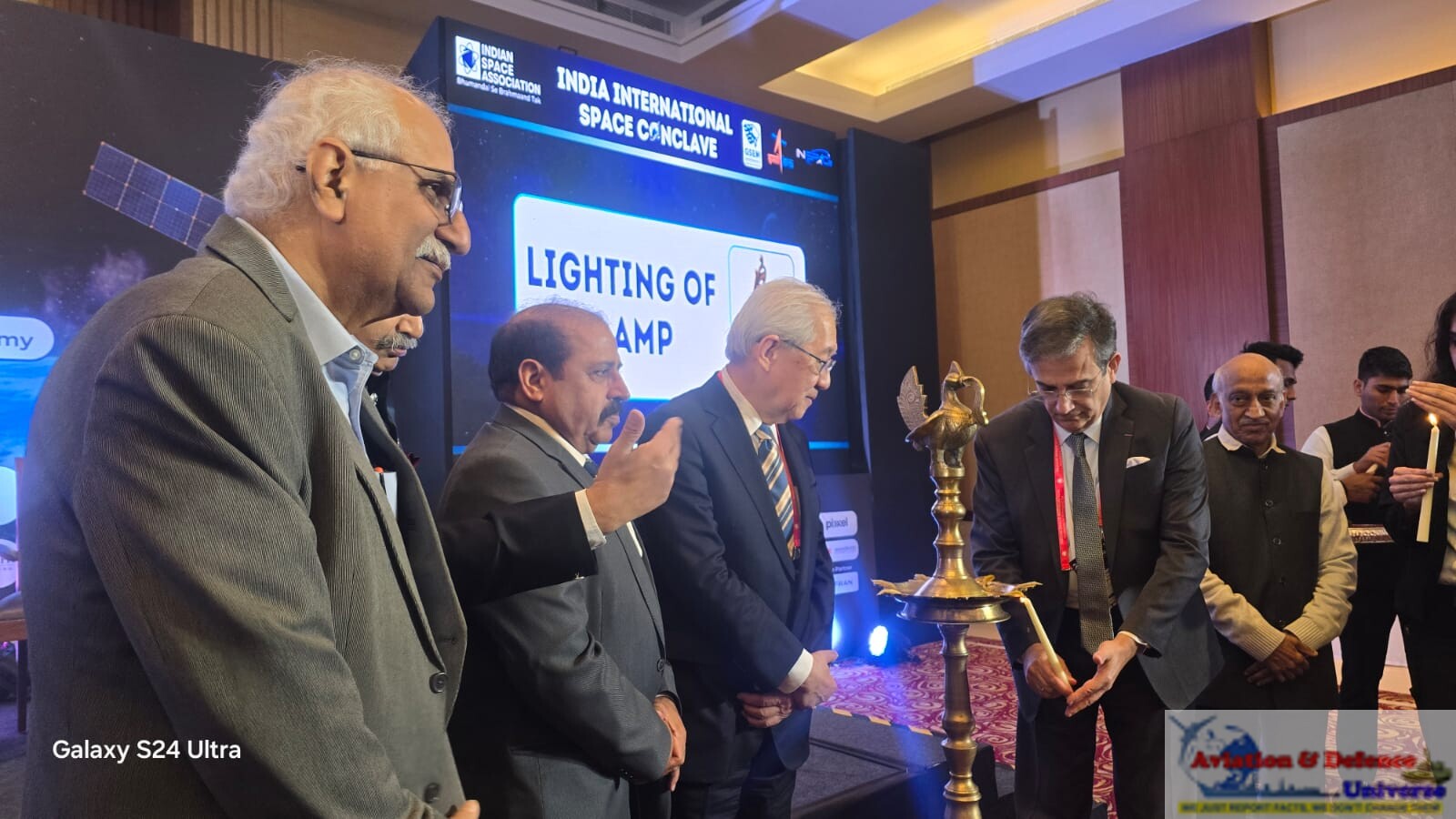
New Delhi. 23 November 2026. India has demonstrated that it can reach the Moon, explore Mars, launch satellites, develop sophisticated space technologies and open the doors of its space programme to private enterprise. But the question confronting the country today is no longer whether it can reach space. It is whether India can build a space industry capable of launching repeatedly, manufacturing competitively, attracting global investment, securing national interests and delivering services to customers across the world. The transition from spectacular scientific achievements to sustained industrial capability has become the next great challenge for India’s space ambitions. And at the inaugural session of the fifth India International Space Conclave 2026, the message was unmistakable: the era of celebrating individual milestones must give way to the era of building a globally competitive space economy.
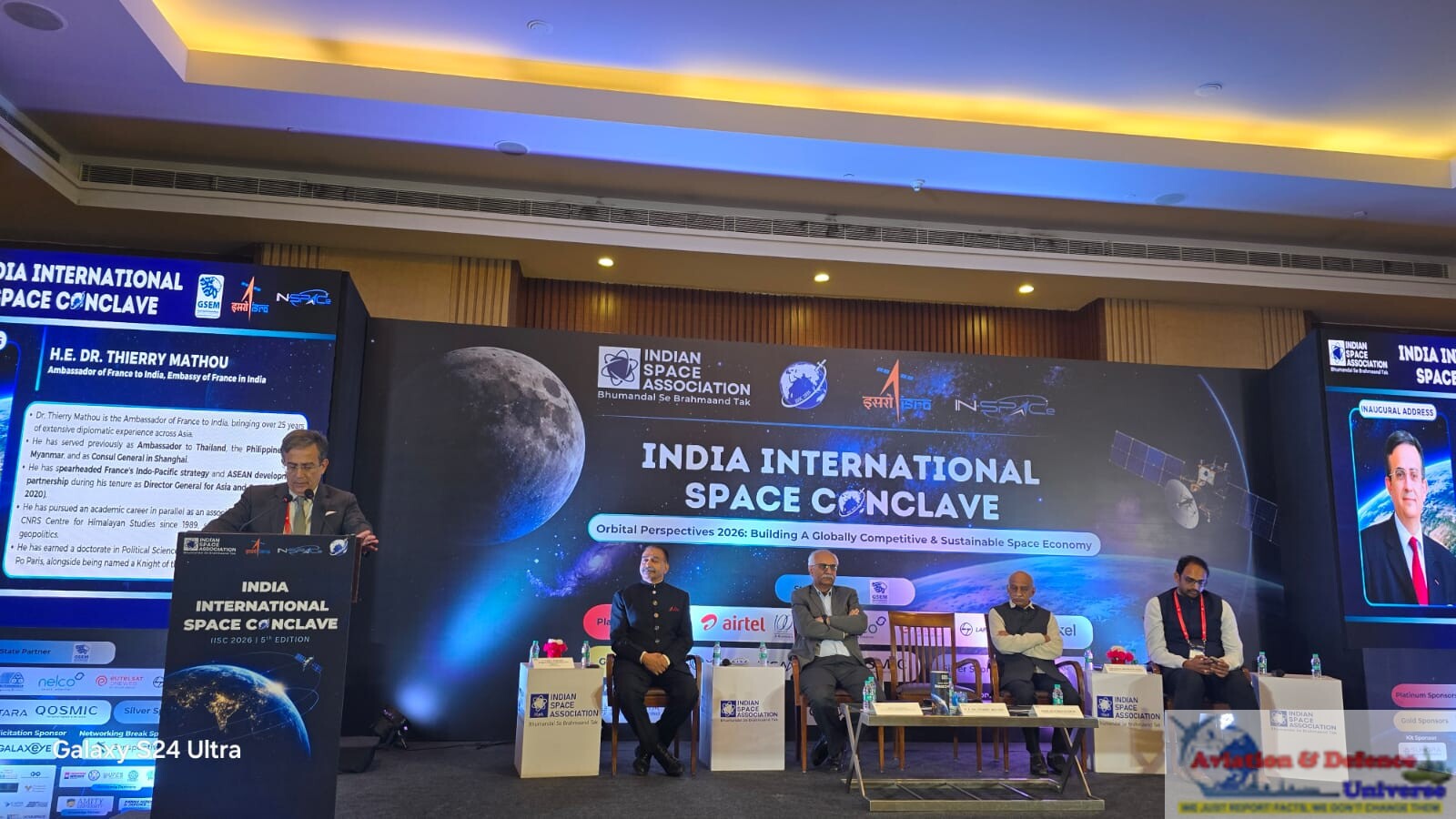
Organised by the Indian Space Association (ISpA) in collaboration with ISRO and IN-SPACe, the two-day conclave opened with discussions that brought together India’s space establishment, private industry, international partners, policymakers, investors and technology developers. The inaugural session placed the country’s rapidly evolving space ecosystem within a larger strategic framework encompassing industrial capacity, sovereign technological capability, defence requirements, international cooperation, commercial investment and the responsibility to ensure that space remains accessible and beneficial to humanity.
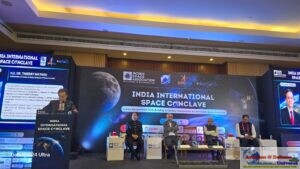
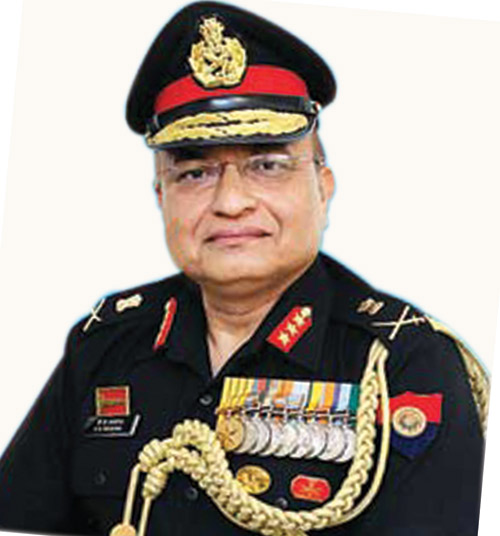
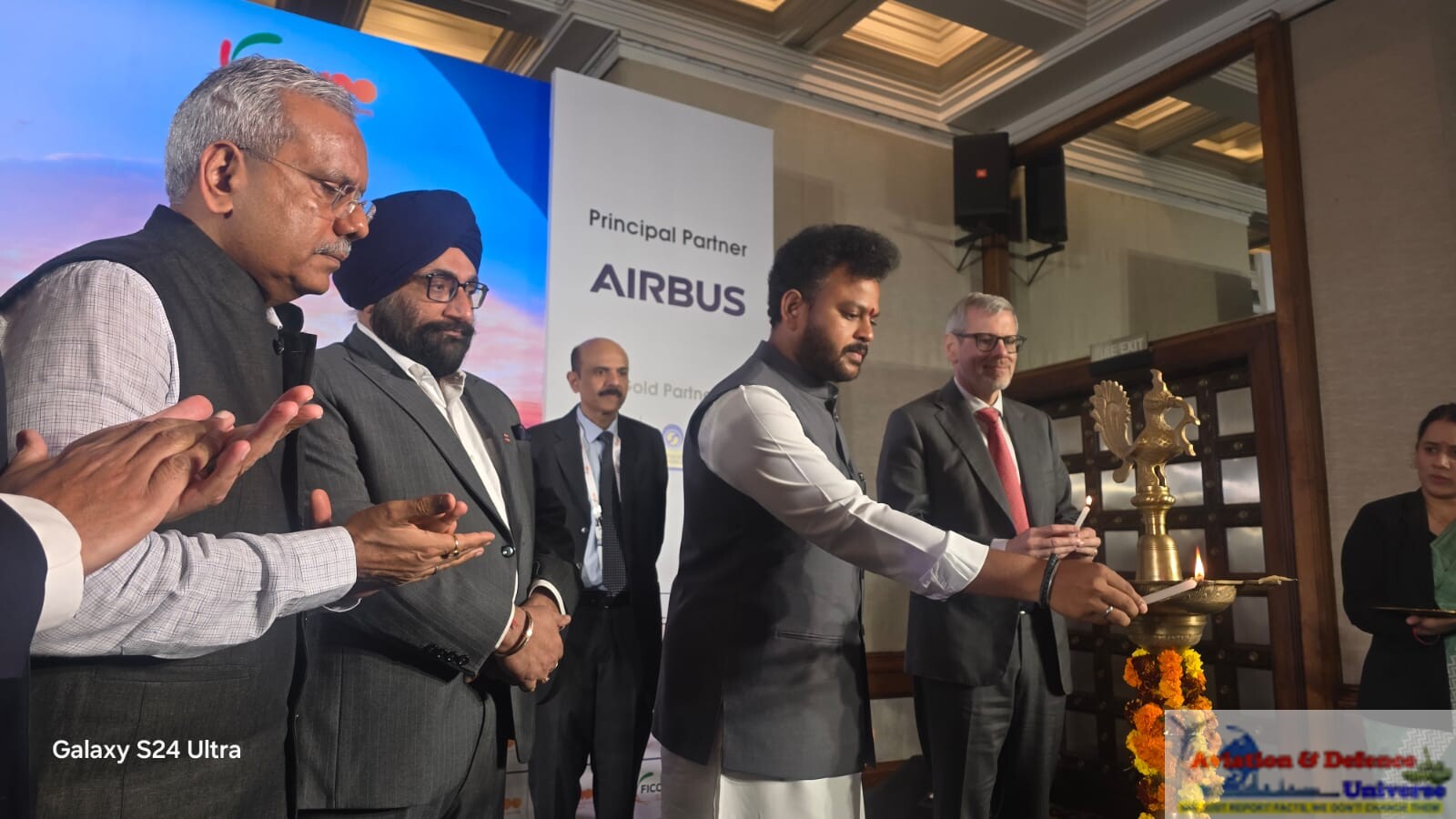
The inaugural session featured H.E. Dr Thierry Mathou, Ambassador of France to India; A.S. Kiran Kumar, former Chairman of ISRO and Member of the Space Commission; A.T. Ramchandani, Senior Vice President and Head, L&T Precision Engineering & Systems, and Chairman of ISpA; and Lt Gen A.K. Bhatt (Retd.), Director General, ISpA and the glamour quotient came from Air Cmde Prasanth Balakrishnan Nair, ISRO astronaut.
French Ambassador Dr Thierry Mathou: India-France Space Cooperation Must Enter a New Industrial Era
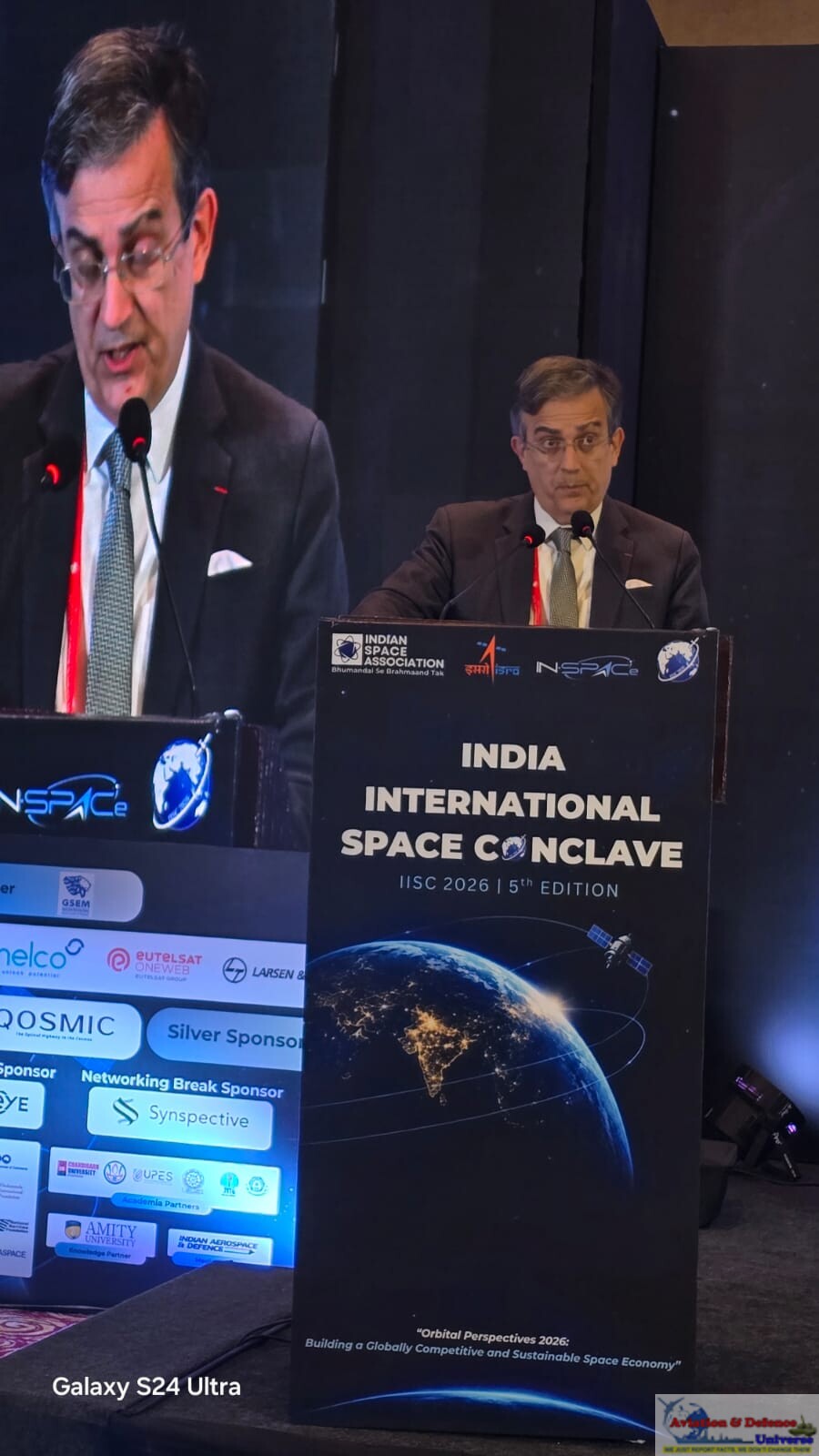 Delivering the inaugural address, H.E. Dr Thierry Mathou, Ambassador of France to India, placed the two countries’ space partnership within the larger framework of their strategic relationship. He described India as a valued and reliable partner and expressed France’s commitment to expanding cooperation across the space sector. Mathou emphasised that the relationship was built upon decades of technological collaboration, institutional trust and shared scientific ambitions. However, he argued that the next stage needed to bring private companies, start-ups, investors, researchers and industrial organisations more directly into the partnership. The future of India-France space cooperation, he suggested, would depend on transforming longstanding institutional relationships into operational industrial programmes.
The two nations share a six decades long space history. Mathou traced the origins of India-France space cooperation to the early years of India’s space programme. He recalled French participation in sounding rocket activities at Thumba in Kerala during the 1960s. The relationship subsequently expanded into launch-vehicle propulsion, with French technology contributing to the development of India’s Vikas engine. The two countries also collaborated on Earth observation missions, including Megha-Tropiques and SARAL. These missions demonstrated how scientific cooperation could support meteorology, oceanography and environmental monitoring.
Mathou highlighted the forthcoming TRISHNA satellite mission as another important example of joint technological development. The mission, involving ISRO and the French space agency CNES, would use thermal infrared observations to improve understanding of Earth’s surface temperatures and natural resources. He explained that France was responsible for the thermal infrared instrument, while India was providing the satellite platform and associated optical capabilities. Such projects illustrated the complementary strengths of the two national space programmes.
French and European launch providers had carried Indian satellites into orbit, while Indian launch vehicles had supported French and European payloads. Human spaceflight was another important area. As India prepared for its Gaganyaan programme, France had provided expertise, training and technical support. Mathou also referred to cooperation in defence-related space activities. A letter of intent signed between the two defence ministries in 2024 had supported expert-level discussions on space surveillance and associated capabilities. These developments reflected the growing strategic significance of space within the broader bilateral relationship.
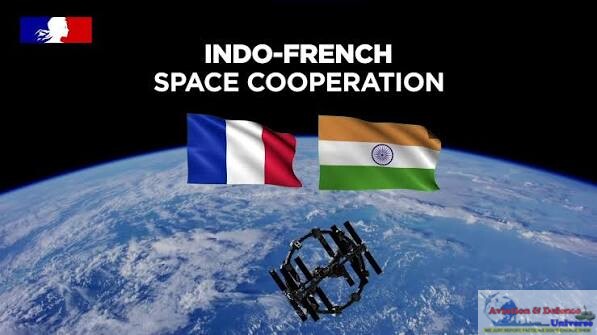 France wants to build with India, not simply sell to India. One of the strongest themes of Mathou’s address was France’s commitment to industrial collaboration and manufacturing in India. He emphasised that French industry had a longstanding record of local production and technological cooperation with Indian partners. The same approach, he argued, should guide the future of the space partnership. France was interested in working with India’s expanding private space ecosystem, including satellite manufacturers, launch companies, technology developers and data businesses.
“The next chapter of our space partnership must bring together the full strengths of our respective ecosystems, our space agencies of course, but also our companies, startups, investors, researchers and academic institutions,” he said. He argued that French technological expertise and India’s growing industrial and entrepreneurial capabilities could create solutions not only for the two domestic markets but also for customers around the world. He assured Indian companies that the French Embassy and Team France would support further industrial, technological and commercial cooperation.France, he emphasised, remained open to Indian ideas, investment proposals and joint innovation projects.
From institutional cooperation to operational industrial collaboration
Mathou identified the transformation of the bilateral relationship into a more commercially active partnership as the immediate priority. For decades, cooperation had been led largely by the two national 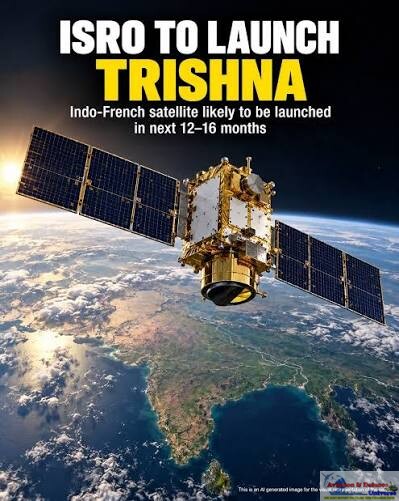 space agencies. While that institutional foundation remained valuable, the future required greater industrial participation.
“Our challenge, as a matter of fact, is to transform this cooperation which has been so far mainly an institutional cooperation … into an operational industrial cooperation,” he stated. Using the language of spaceflight, Mathou suggested that the foundations for the next phase were already in place. “The launch pad is ready, even the rocket is ready, I mean the boosters are there. So we just need maybe to enter the payload,” he remarked. The analogy captured his confidence that the political, technological and institutional conditions for deeper cooperation had already been established. What remained was to translate that readiness into concrete programmes.
Naga Bharath Daka Co-Founder and Chief Operating Officer, Skyroot Aerospace : India’s Private Space Industry Moves from Promise to Commercial Reality
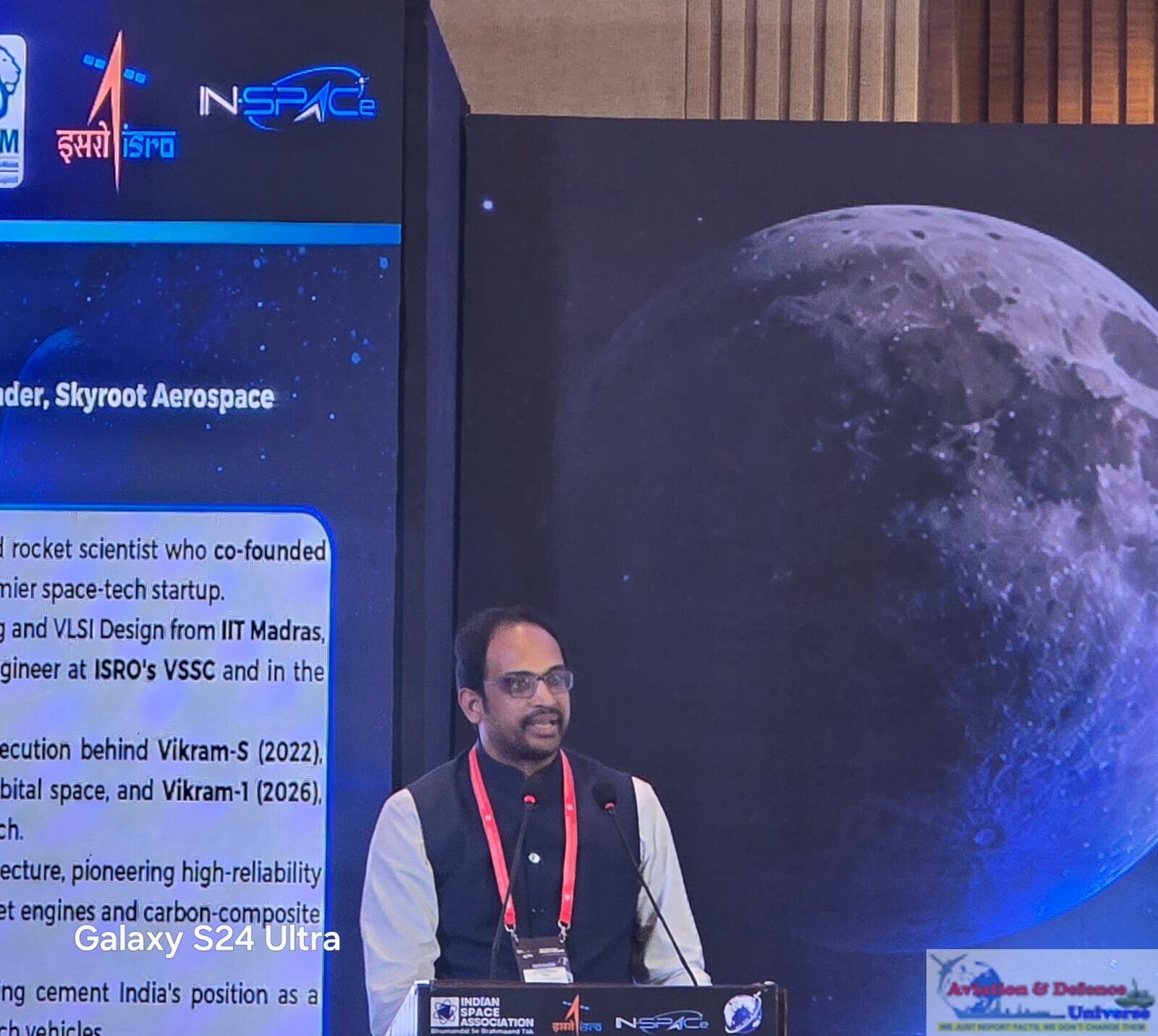
The inaugural stage of India International Space Conclave 2026 could hardly have been complete without Skyroot Aerospace, the company that has become a symbol of India’s private space revolution, transforming entrepreneurial ambition into indigenous launch capabilities and inspiring a new generation of space innovators. With Co-Founder and COO Naga Bharath Daka representing the company, Skyroot’s presence reinforced the conclave’s central message that India’s space future will be shaped not just by scientific breakthroughs, but by bold entrepreneurs turning technological achievements into a globally competitive industry.
Bharath Daka brought the perspective of a space entrepreneur who had witnessed India’s transformation from a predominantly government-led space programme into an expanding commercial ecosystem. Speaking at the inaugural session of the fifth India International Space Conclave 2026, he described the progress made by Indian private companies, the importance of government reforms and the challenges of building a globally competitive industry.
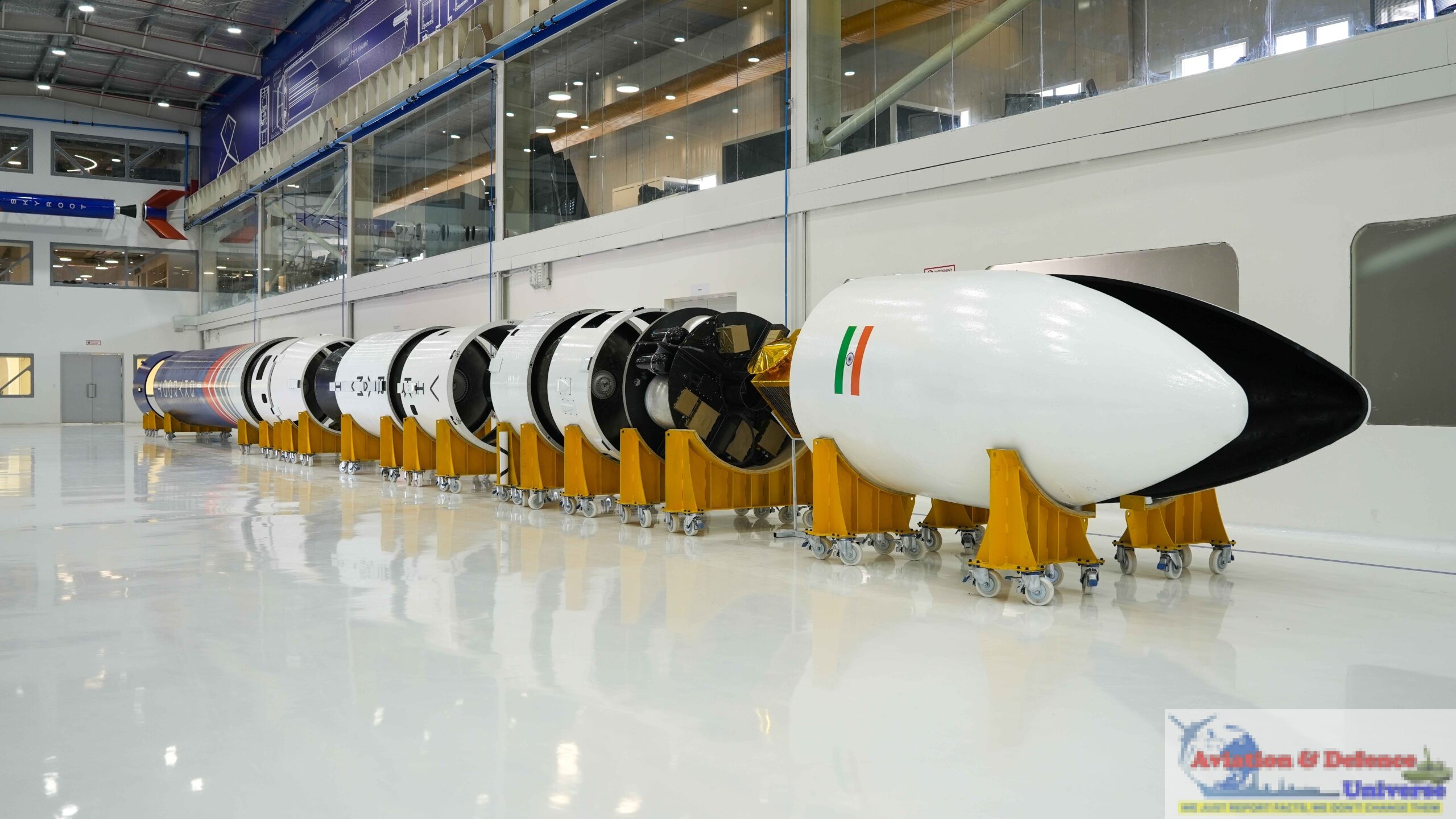
Daka observed that India’s private space sector had moved beyond demonstrating technological potential and was increasingly establishing itself as a commercial industry. The emergence of privately developed launch vehicles, the growth of space start-ups and the increasing availability of investment reflected a fundamental change in India’s space economy. Skyroot Aerospace’s achievements, including the Vikram-1 orbital launch, illustrated how Indian entrepreneurs were translating technological ambition into operational capability.
 He highlighted the importance of government reforms in creating opportunities for private enterprise and deep-technology innovation. The government, he explained, was no longer functioning merely as a regulator. It was becoming a partner, investor, customer and facilitator of international market access. The Earth Observation Public-Private Partnership initiative was among the examples he cited of government working alongside industry to create new commercial opportunities.
Daka also referred to financial and technology-support mechanisms designed to help emerging companies progress from research and development to commercially deployable systems. These initiatives were particularly important in a capital-intensive sector where technological development involved long timelines, significant financial risks and specialised infrastructure.
However, he emphasised that the growth of India’s private space industry was not attributable to policy reforms alone. It also reflected the determination of entrepreneurs who had entered the sector before the current regulatory environment emerged. Their willingness to undertake substantial risks had helped establish the foundations of India’s commercial space ecosystem.
Looking ahead, Daka stressed that India’s ambition to build a much larger space economy would require industrial capacity far beyond individual technological achievements. The country needed to manufacture satellites at scale, develop dependable production lines and establish the ability to launch spacecraft according to commercially competitive schedules.
 He referred to the ambition of achieving a substantially higher annual launch cadence, arguing that such targets represented much more than an increase in rocket launches. They required the development of an entire industrial ecosystem capable of supporting repeatable production, reliable operations and sustained customer demand.
For Daka, the ultimate objective was not simply to increase India’s participation in the international space market. It was to establish the capabilities necessary for India to influence the direction of that market.
His address reinforced one of the conclave’s central messages: India’s private space revolution had begun, but its long-term success would depend on transforming technological achievement into reliable, scalable and globally competitive commercial operations.
Lt Gen A.K. Bhatt: India’s Space Future Must Be Built on Capital, Collaboration and Capability
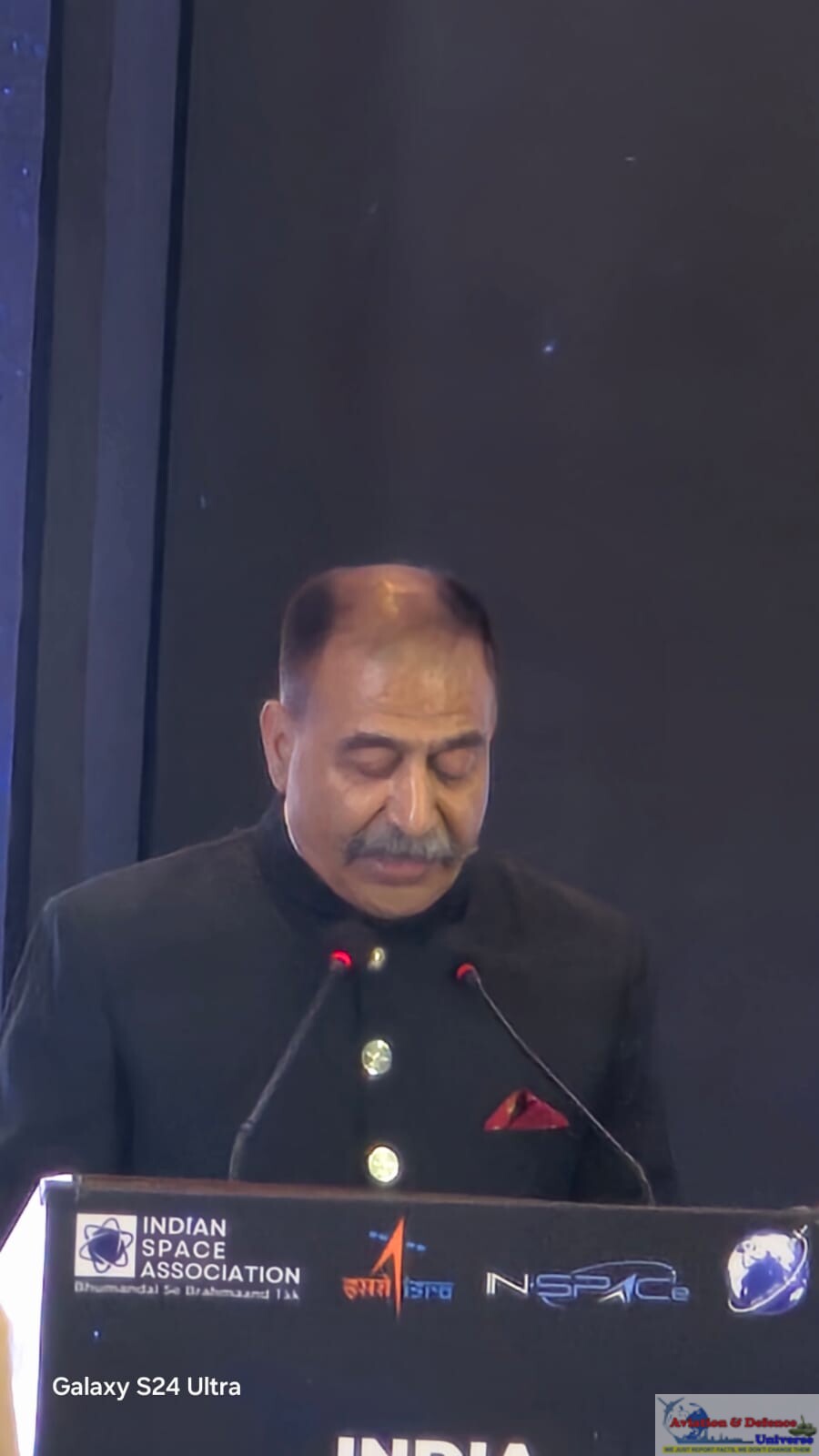
Welcoming delegates to the fifth edition of the conclave, Lt Gen A.K. Bhatt (Retd.), Director General of the Indian Space Association, outlined the breadth of India’s evolving space ambitions and the challenges that would determine the industry’s future. He described the conclave as a platform designed to connect policymakers, scientists, entrepreneurs, industry leaders, armed forces representatives, investors and international partners.
The event’s agenda reflected the increasingly multidisciplinary character of the space sector, covering satellite constellations, financing, advanced sensors, regulatory frameworks, space sustainability, in-orbit servicing, manufacturing, geospatial intelligence, satellite communications and human spaceflight. Bhatt highlighted the participation of international representatives from countries including France, Japan, the United States, Luxembourg, South Korea, Indonesia, Oman, Australia and Russia.
 The conclave, he explained, would examine both the opportunities available to India’s space industry and the practical obstacles preventing emerging companies from becoming globally competitive enterprises. Bhatt identified access to finance as one of the most important requirements for India’s next stage of space-sector development.
The national ambition of developing a $44 billion space economy could not be realised through government grants alone. Private investment, venture capital, foreign investment, long-term institutional financing and commercially sustainable business models would all be essential. Bhatt drew attention to the conclave’s dedicated discussions on financing the emerging space economy, as well as publications examining venture capital, investment and the development of India’s space industry. He also identified insurance as an insufficiently addressed component of India’s commercial space ecosystem.
A single launch failure or satellite malfunction could destroy years of research and investment for a young company. For start-ups operating with limited financial reserves, such losses could threaten their survival. He highlighted the publication The Uninsured Orbit, which examined the importance of developing a stronger domestic understanding of space insurance and risk. India, he argued, needed the institutional and financial capability to assess, price and manage the risks associated with commercial space operations.
A.T. Ramchandani: India Must Move from Firsts to Flow
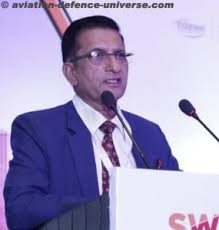
A.T. Ramchandani, Senior Vice President and Head of L&T Precision Engineering & Systems and Chairman of ISpA, delivered a detailed assessment of India’s commercial space industry, its recent achievements and the structural reforms required to transform technological success into sustained industrial production.
He also referred to advances in satellite communications, including direct-to-device connectivity, optical inter-satellite links and the development of indigenous satellite capacity. Manufacturing infrastructure was expanding as well. L&T’s satellite assembly and integration facility at Coimbatore was among the industrial investments he highlighted, alongside developments in satellite buses, payload systems and specialised components.
The significance of these developments, he argued, lay in their collective contribution to a more complete domestic space ecosystem. India was no longer dependent solely on a government-led model of space technology development. Private companies were increasingly designing, manufacturing, integrating and offering space systems and services. Ramchandani pointed to the sharp expansion of India’s registered space start-ups, which he placed at approximately 440, compared with a negligible number in 2014.
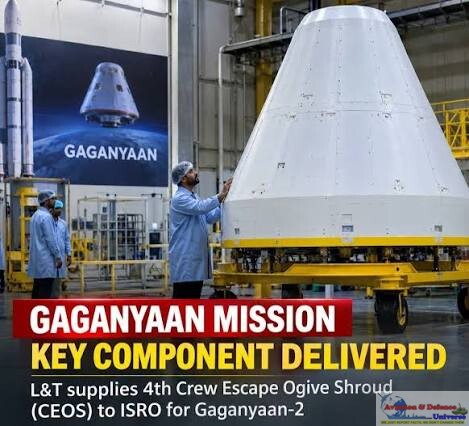 He cited more than 100 authorisations granted through the country’s space-sector regulatory framework and cumulative private investment exceeding $600 million. These developments demonstrated the impact of the reforms that opened the sector to private enterprise. However, he cautioned against confusing rapid domestic growth with global competitiveness. He estimated India’s space economy at approximately $9 billion against a global market of $686 billion. India’s share, he observed, remained below two per cent.
The national ambition of developing a $44 billion space economy, including substantial exports, would require growth significantly faster than that of the global industry. “Because celebration is easy, scale is hard,” he remarked. The challenge was not simply to increase the number of space companies. It was to create businesses capable of winning repeat orders, manufacturing at scale, delivering on schedule and competing internationally on price and reliability.
Ramchandani made a distinction between technological demonstration and industrialisation. A country might successfully develop a launch vehicle or satellite, but sustained production required a much larger ecosystem. Suppliers needed to deliver qualified components consistently. Manufacturers required dependable production schedules. Launch operators needed predictable access to launch infrastructure.
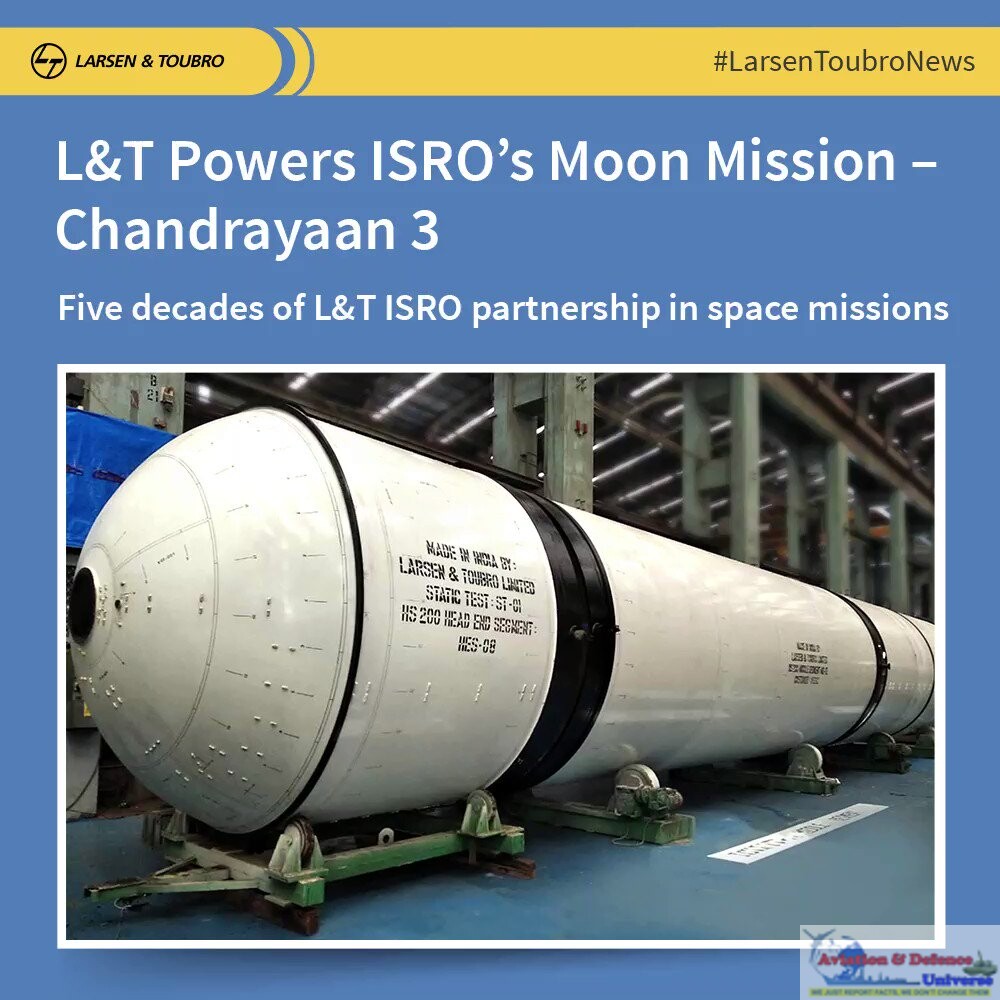
Customers required assurance that missions would be completed within agreed timelines. Insurance, liability arrangements, testing facilities, payload readiness and regulatory approvals all formed part of the industrial process. He referred to L&T’s experience with industry-led launch-vehicle production to illustrate how completing the hardware was only one part of achieving operational readiness. “Building the rocket, it turns out, is only part of the job,” he observed.
He summed up the next phase in a particularly memorable formulation, “Our task now is to move from first to flow.” For India, this meant progressing from individual technological milestones to a sustained industrial rhythm in which launch vehicles, satellites and components could be produced repeatedly and reliably.
Ramchandani argued that government demand would be essential to creating the commercial certainty required for large-scale investment. Space companies needed predictable orders before committing substantial capital to factories, testing infrastructure and supply chains. He called upon government agencies, the armed forces and public-sector enterprises to act as anchor customers. Importantly, he suggested that procurement should increasingly focus on space-enabled services and data rather than hardware alone.
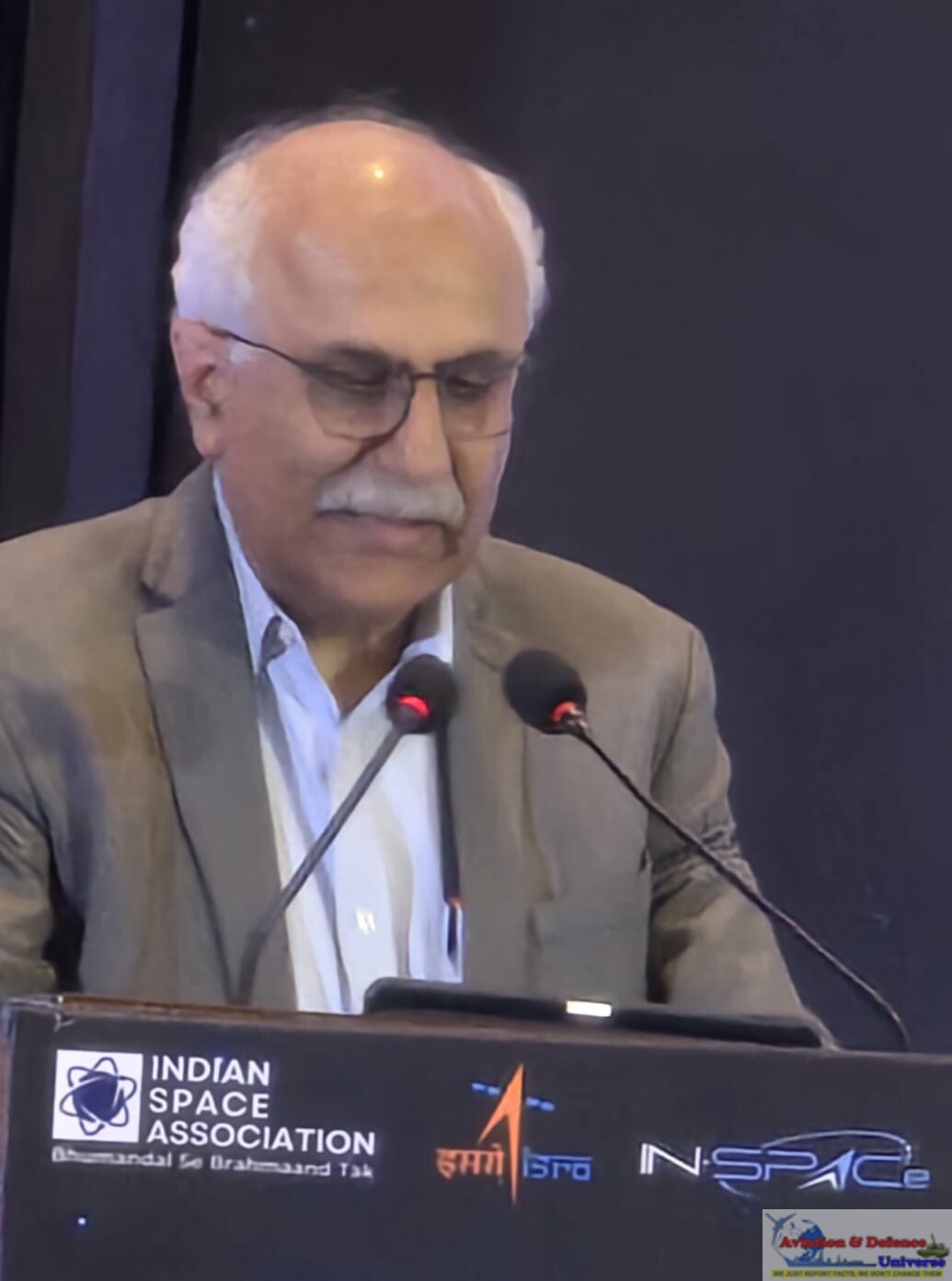 Multi-year, outcome-based contracts could provide companies with the financial visibility necessary to expand production and attract investment. He also advocated a long-term national roadmap for satellite and launch requirements. Such a roadmap would allow companies to plan production capacity rather than repeatedly develop one-off prototypes.
He argued that early government support for indigenous private launch providers could help create the operational experience required to compete internationally. In return, industry would need to demonstrate accountability through competitive pricing, reliable delivery and measurable performance.
Turning to national security, Ramchandani argued that modern military operations had made space infrastructure indispensable. Satellite communications, navigation, surveillance, intelligence and other space-enabled capabilities were increasingly central to defence operations. He referred to lessons from contemporary conflicts, including Ukraine and West Asia, as well as India’s own recent operational experience. Major powers were strengthening sovereign space capabilities through government-backed programmes, proliferated satellite constellations and industrial investment.
For India, this created an urgent requirement to strengthen domestic manufacturing and assured access to critical technologies. Ramchandani cautioned that assembling satellites or launch vehicles within India did not automatically guarantee technological independence. Critical components such as radiation-hardened electronics, specialised sensors, advanced materials and propulsion systems could remain vulnerable to external supply restrictions. “A launcher or a satellite is only as sovereign as the components inside it,” he warned.
He proposed a dedicated mission to develop critical space-grade components, supported by aggregated demand across government and defence organisations. He also called for better access to national testing and qualification facilities, including commercially available, time-bound testing arrangements. The objective was to create a domestic supply chain capable of supporting both civilian and defence requirements without remaining excessively dependent on foreign sources.
 Ramchandani identified the absence of a comprehensive statutory framework as another issue requiring attention. While India’s space reforms had enabled private-sector participation, he argued that the next stage of growth required greater legal certainty. Questions involving third-party liability, intellectual property, insurance, appeals and commercial authorisation needed a more durable legislative foundation. He called for early parliamentary consideration of space activities legislation and stronger institutional arrangements for IN-SPACe. He also advocated a national space insurance pool and a liability framework that would protect emerging companies from risks beyond their financial capacity.
Such measures, he suggested, would improve investor confidence and make Indian space businesses more competitive. Ramchandani argued that the next stage of private space development would require a different scale and type of financing. Early-stage grants and seed funding had helped companies develop technologies and demonstrate capabilities. However, industrial expansion required growth capital, long-term institutional financing and contracts that could support borrowing. He called for greater participation by development finance institutions, larger investment funds and mechanisms that could support companies as they moved from prototypes to commercial production.
He also stressed the importance of integrating micro, small and medium enterprises into the space supply chain. The development of a competitive industry depended not only on prominent launch companies and satellite manufacturers but also on the hundreds of specialised suppliers producing components, materials and subsystems.
Ramchandani devoted a significant portion of his address to India’s longstanding space partnership with France. He recalled the French technological contribution to India’s launch-vehicle development, particularly the lineage connecting India’s Vikas engine with the French Viking engine. He proposed three practical directions for collaboration. The first was the joint development and production of critical components, particularly where both countries faced dependence on limited international suppliers. The second was to make Indian launch capabilities part of Europe’s broader strategy for resilient access to space.
 The third was to explore joint commercial opportunities in third-country markets, including Africa, the Indo-Pacific and the Gulf. Such cooperation, he argued, would strengthen both countries’ industrial capabilities while opening new international markets. His concluding message returned to the central theme of industrial scale. India had demonstrated that it could build rockets, reach the Moon, explore Mars and enable private participation in space.
The questions now concerned speed, commercialisation, market share and delivery. He urged the conclave’s participants to turn discussions into measurable commitments. “Who will build what, by when, with what capital and in which partnership,” he asked. Progress, he suggested, should be judged by concrete indicators such as launches from Indian soil, industrial participation, private investment, exports and the enactment of space legislation.
A.S. Kiran Kumar: Space Must Remain Accessible to Humanity
A.S. Kiran Kumar, former Chairman of ISRO and Member of the Space Commission, shifted the discussion from industrial expansion to the broader responsibilities accompanying the growth of space technology. Acknowledging the remarkable progress made by India’s private space industry, he drew attention to the rapid technological changes taking place across the world. Artificial intelligence, emerging forms of superintelligence and quantum technologies were transforming the way different sectors operated.
Space technology, he argued, could not remain unaffected by these developments. Advances in one technological domain could fundamentally alter the capabilities, applications and risks associated with another. Kiran Kumar urged the space community to look beyond immediate industrial opportunities and consider the longer-term consequences of technological convergence.
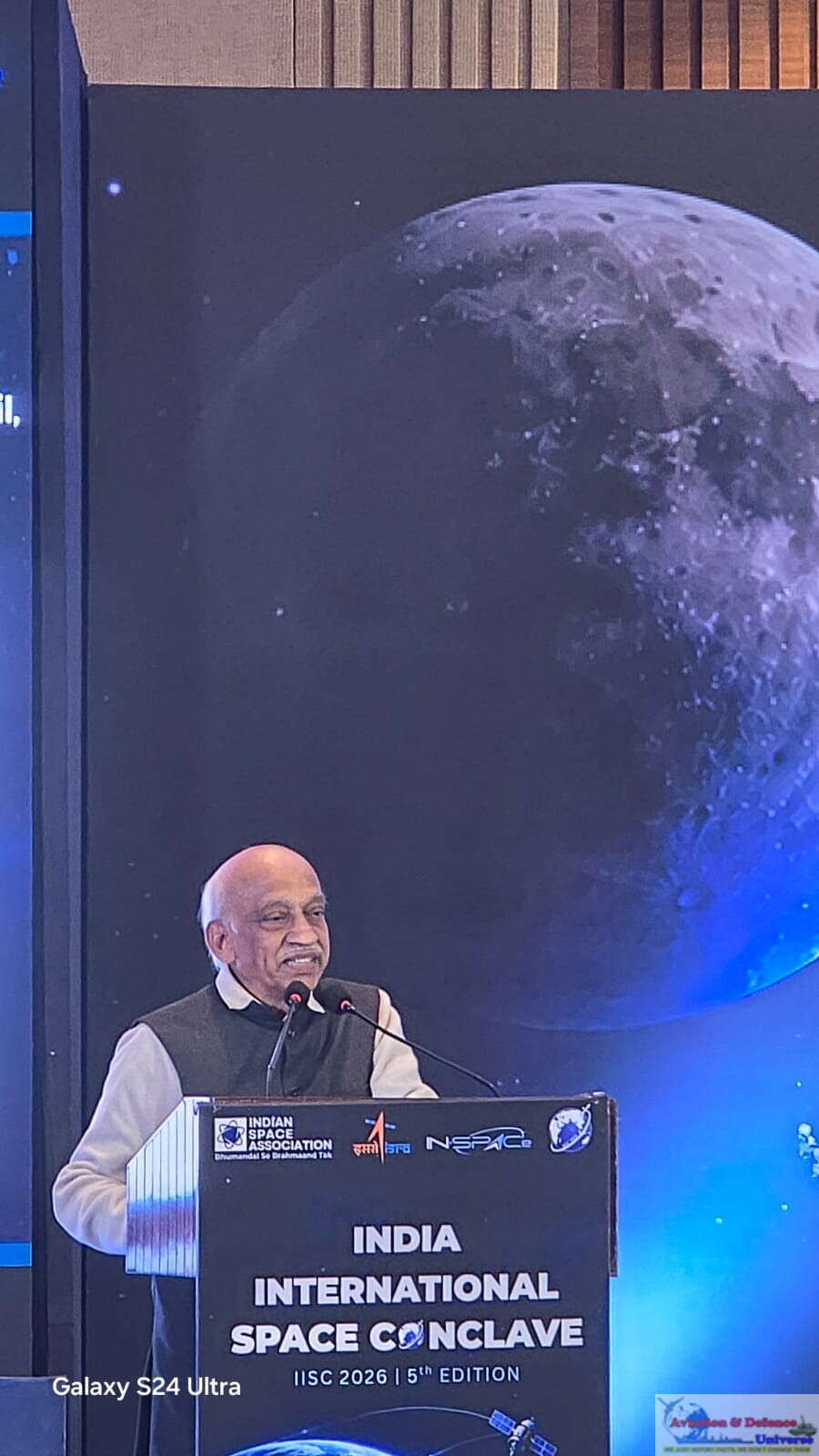 Technology must serve people, not merely power. He stressed that space needed to remain accessible to humanity, particularly in an increasingly complex geopolitical environment. The ability to develop advanced space systems was concentrated among a relatively small number of countries and organisations. However, the benefits of those systems were required by people across the world.
Space technology could contribute to economic development, environmental monitoring, communications, disaster management and the protection of human life. The challenge was to ensure that technological advances reached societies that needed them most. Kiran Kumar argued that India’s approach to international cooperation offered a valuable model.
Rather than viewing space technology exclusively as an instrument of dominance, India had demonstrated a willingness to work with partners and help other countries develop and use technological capabilities. He observed that India’s approach was oriented towards enabling partners to benefit from technology rather than merely exercising control over it. This philosophy, he suggested, was particularly important as space became more commercially competitive and strategically contested.
Kiran Kumar identified artificial intelligence and superintelligence as developments that could profoundly change space activities. Advanced computational systems could improve satellite operations, data analysis, mission planning and the management of complex infrastructure. However, the same technologies could introduce new vulnerabilities. The increasing autonomy of technological systems raised questions about oversight, control and the consequences of their misuse.
He cautioned that the space sector needed to anticipate such developments rather than respond only after they had occurred. Emerging possibilities such as space-based data centres, new energy systems and expanded human activity beyond Earth would create opportunities but also demand new regulatory and governance arrangements.
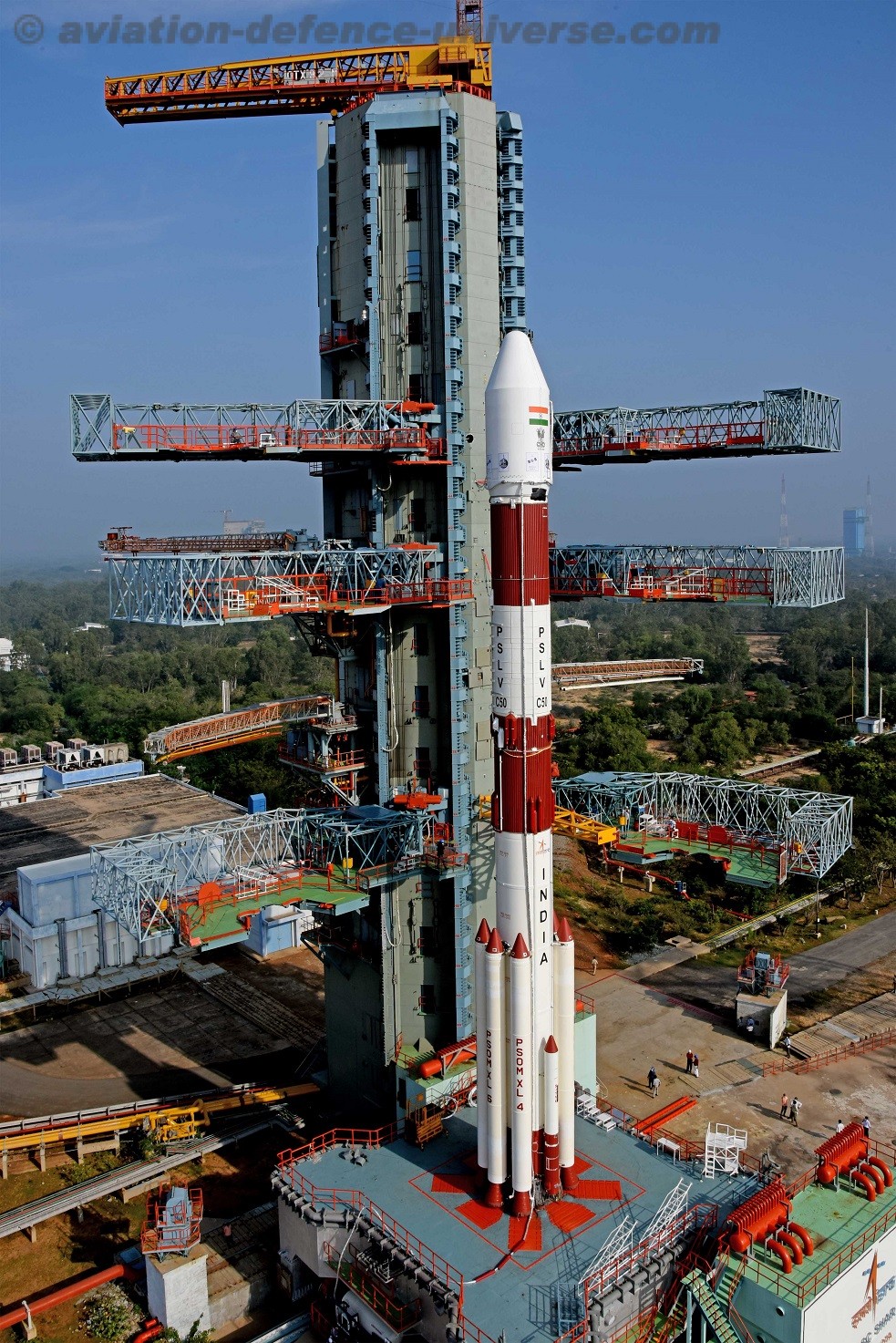 Kiran Kumar also referred to the future of space tourism and other forms of commercial human activity in space. These developments, he argued, reinforced the importance of international dialogue. The global community needed to consider not only technological feasibility and commercial opportunity but also how emerging capabilities would be governed and used responsibly. He congratulated ISpA and India’s entrepreneurs for helping build a more dynamic space ecosystem and encouraging international engagement. His central message was that technological progress should ultimately be measured by its contribution to human welfare. Space, in his assessment, had to remain a domain in which technological advancement enabled people across the world to live safer, more productive and better lives.
India Has Reached Space. Now It Must Conquer Scale.
India’s space journey has already produced achievements that once appeared beyond reach. From its earliest sounding rockets to lunar exploration, Mars missions, satellite constellations and the emergence of private space enterprises, the country has repeatedly demonstrated its scientific ingenuity and engineering determination. But the next chapter will be judged by different standards. It will not be written by a single successful launch, an extraordinary mission or a celebrated technological first. It will be written by the ability to manufacture at scale, launch on demand, attract investment, protect critical technologies, deliver dependable services and compete in a global industry where reliability and economics matter as much as innovation.
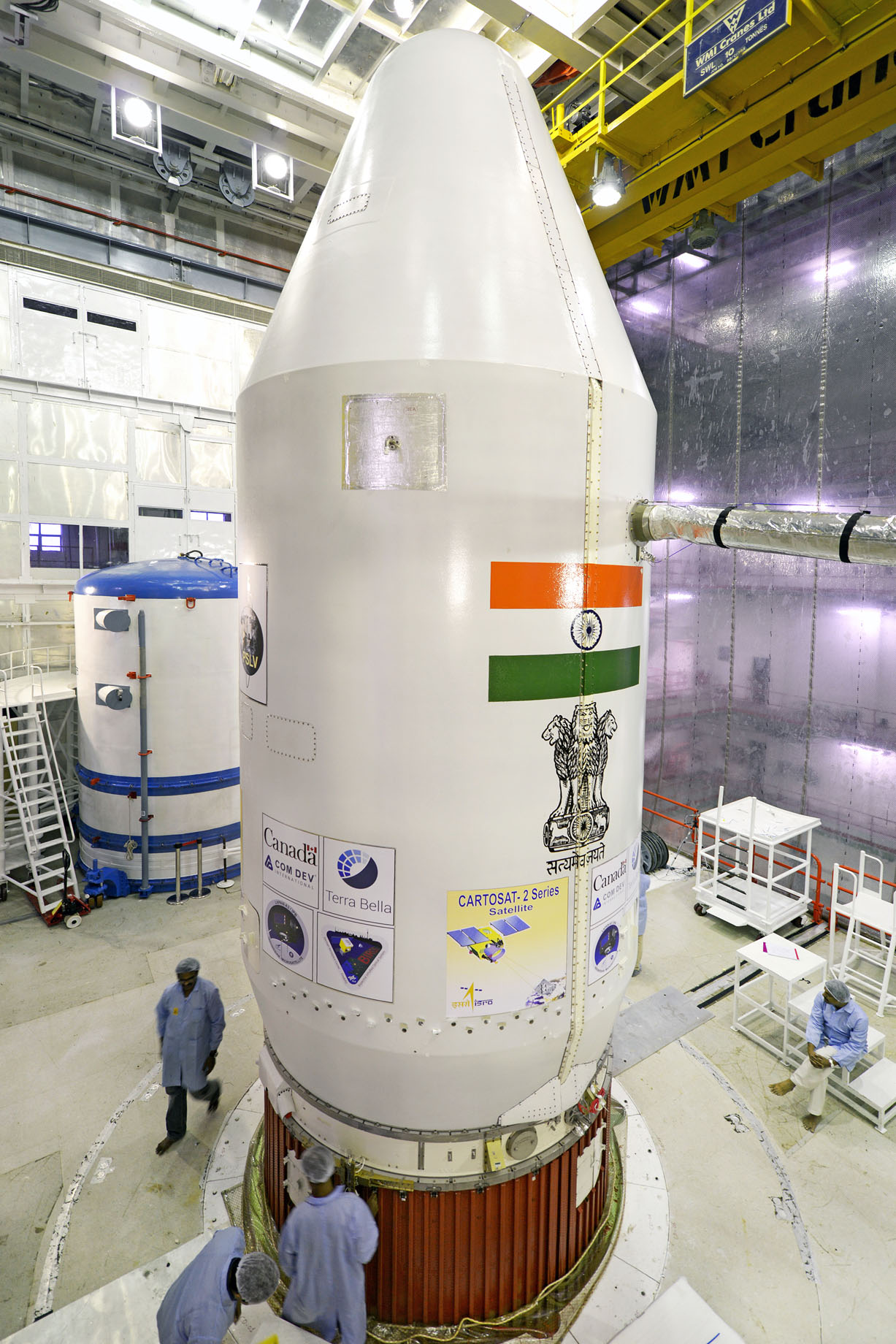 The fifth India International Space Conclave opened with an important reminder that India’s greatest space opportunities lie not merely in reaching farther into the universe but in creating an industrial ecosystem strong enough to sustain that journey. Its start-ups need capital. Its manufacturers need orders. Its suppliers need scale. Its regulators need durable frameworks. Its armed forces need assured space capabilities. Its international partners need programmes that move beyond declarations of intent. And its citizens need space technologies that improve lives on Earth.
The rockets have demonstrated India’s capability. The next generation of factories, entrepreneurs, investors and partnerships must demonstrate its capacity. India has already proved that it can reach the Moon and Mars. The challenge now is to prove that it can build a space economy the world cannot afford to ignore. Because the next great Indian space achievement may not be a spectacular launch seen around the world. It may be the day when launching, manufacturing and delivering world-class space capabilities from India becomes routine. And that will be the moment when India’s space success truly becomes India’s space power.