













- India Footprint Grows from Aircraft Orders to Aerospace Capability
- From 737 Structures to Apache Fuselages: India Builds for Boeing’s Global Fleet
- From Buyer to Builder: How India is Moving Deeper into Boeing’s Global Supply Chain
By SangeetaSaxena
New Delhi. 15 August 2026. For more than eight decades, Boeing has been woven into India’s aviation story. Its aircraft have carried generations of Indian passengers, strengthened the country’s strategic airlift capability, watched over its vast maritime frontiers and equipped its armed forces with attack helicopters and heavy-lift platforms. But Boeing’s contemporary India story extends far beyond aircraft sales. India today is home to Boeing’s largest engineering and technology workforce outside the United States, a growing network of hundreds of suppliers, globally integrated manufacturing, defence sustainment and MRO capabilities, innovation programmes and an increasingly important aviation-skilling ecosystem. In many ways, the relationship is evolving from Boeing flying in India to India helping Boeing build, engineer and sustain aerospace platforms for the world.
Boeing describes its association with India’s aerospace sector as stretching back more than 80 years. Today, around 280 Boeing commercial and military aircraft operate in India, while the company’s activities encompass commercial aviation, defence, engineering, technology, manufacturing, sourcing, services, MRO, training and innovation. That longevity gives Boeing a distinctive position in Indian aviation. For decades, its commercial aircraft have been associated with India’s international connectivity, while its defence platforms have become important components of the country’s military aviation capability. But the nature of the partnership has changed. India is no longer simply a destination for Boeing products. It is increasingly becoming a location where Boeing aircraft are engineered, digitally supported and partly manufactured, while Indian suppliers produce components entering the company’s worldwide aircraft programmes.
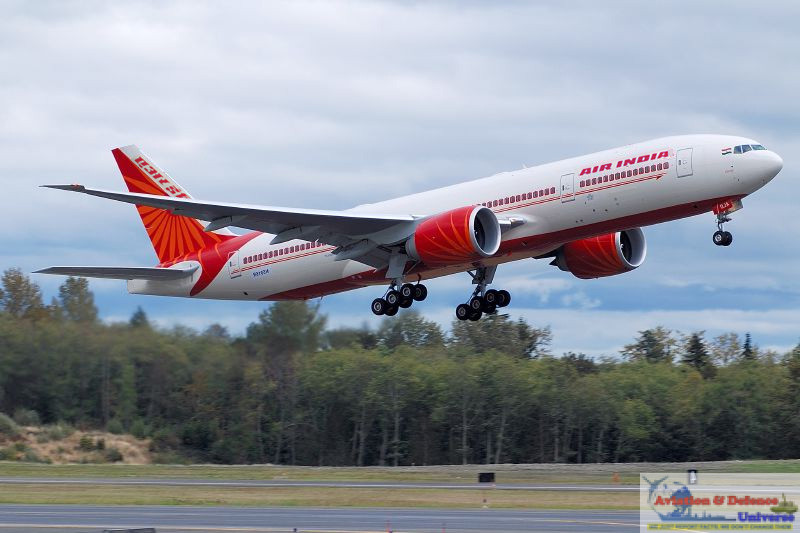 Air India and Boeing have a relationship almost as old as Indian civil aviation. Few relationships illustrate Boeing’s place in Indian aviation better than its association with Air India. Boeing describes its partnership with the airline as extending for roughly nine decades. The relationship has encompassed generations of Boeing aircraft and is now entering another major phase as the Tata-owned airline rebuilds its fleet and global network.
In 2023, Air India finalised what Boeing called its largest order in South Asia: 190 737 MAX aircraft, 20 787 Dreamliners and 10 777X aircraft, together with options for another 50 737 MAXs and 20 Dreamliners. The relationship deepened again in January 2026 when Air India ordered another 30 737 MAX aircraft—20 737-8s and 10 737-10s—taking its Boeing order book to nearly 200 aircraft across Boeing’s single-aisle and widebody families. The aircraft reflect the two sides of Air India’s ambitions. The 737 MAX supports domestic and regional expansion, while the 787 and 777X are intended to strengthen long-haul international operations. For Boeing, Air India’s transformation represents much more than a major aircraft order. It gives the manufacturer a central position in the rebuilding of an Indian airline seeking to reclaim its place among the world’s leading global carriers.
India’s growth makes it a market Boeing cannot ignore. India and South Asia are among the most important growth markets in global commercial aviation. Boeing’s current market outlook forecasts that the Indian and South Asian region will require nearly 3,300 new aircraft over the next two decades, with around 90 per cent expected to be single-aisle jets. The reasons are visible across India’s aviation landscape: rising incomes, an expanding middle class, rapid airport development, growing Tier-II and Tier-III connectivity and the increasing international ambitions of Indian carriers. But the opportunity is not confined to selling aircraft. Thousands of additional aircraft entering the region will require pilots, maintenance engineers, spare parts, repair capabilities, digital support and sophisticated supply chains. That makes India’s aviation expansion as much a services, skills and industrial opportunity as an aircraft market.
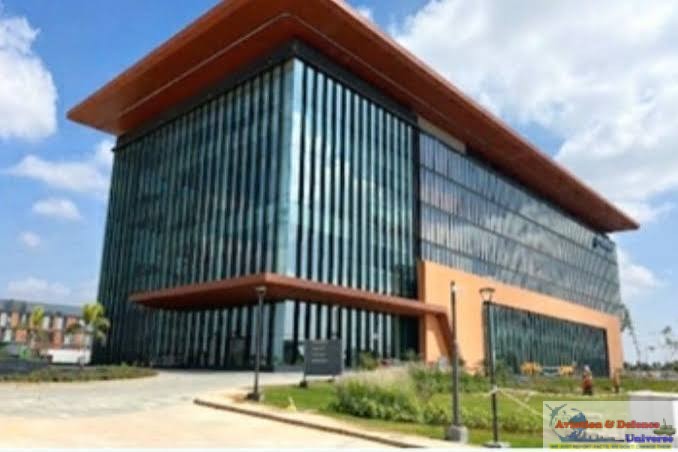 Bengaluru puts Indian engineers at the heart of Boeing. Perhaps the strongest evidence of Boeing’s changing relationship with India can be found not at an airport but in Bengaluru. The Boeing India Engineering & Technology Center (BIETC) represents one of the company’s most important investments in the country. In January 2024, Prime Minister Narendra Modi inaugurated Boeing’s 43-acre campus at Devanahalli, Bengaluru. Built with an investment of ₹1,600 crore, Boeing described it as its largest such investment outside the United States. Boeing has had an engineering presence in India since 2009, with BIETC formally established in 2016. By August 2024, Boeing said more than 5,500 engineers and innovators across Bengaluru and Chennai were working through the engineering centre.
Their activities reach across Boeing’s commercial, defence and space businesses. Indian teams work on engineering design for structures and systems, manufacturing support, aircraft test systems and digital solutions for airline customers. Research extends into areas such as next-generation aircraft health management, advanced networks, secure communications and environmentally friendly coatings. Technologies including Artificial Intelligence, Machine Learning, Internet of Things, cloud computing, model-based engineering and additive manufacturing are part of this work. That makes India far more than a low-cost engineering support location. Indian engineers are increasingly participating in advanced work influencing Boeing programmes globally. Boeing’s Indian workforce has expanded considerably alongside this technological footprint. Its current India overview puts the company’s workforce at approximately 7,000 employees, making India one of Boeing’s most significant talent locations outside its home market. But Boeing’s direct employment tells only part of the story. The company has built an extensive supplier ecosystem across the country, meaning thousands more jobs are connected indirectly with its global programmes. That supplier base is arguably where Boeing’s Indian industrial footprint becomes most strategically significant.
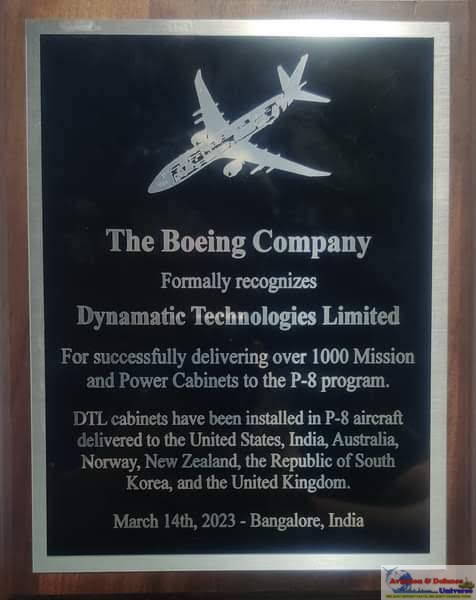 More than 375 Indian suppliers entered Boeing’s global supply chain. Boeing currently says it works with more than 375 suppliers in India, which manufacture advanced components and systems for both commercial and military aircraft. More than a quarter of this supplier ecosystem comprises MSMEs. The scale of sourcing is substantial. Boeing puts its annual sourcing from India at more than US$1.25 billion, describing itself as the largest foreign aerospace OEM in terms of sourcing from the country. More important than the number itself is the growing complexity of what Indian companies produce. Boeing says Indian suppliers are moving from simpler assemblies into sophisticated manufacturing involving composites, advanced materials and Full-Size Determinant Assembly using technologies such as robotics. Indian-manufactured components support programmes including the 737, 777 and 787 Dreamliner, as well as the F/A-18 Super Hornet, F-15, P-8, AH-64 Apache and CH-47 Chinook. This is the essence of “Make in India for the World.” An Indian aerospace component does not necessarily end up on an aircraft operated in India. It can enter Boeing’s international production system and fly on aircraft delivered anywhere in the world.
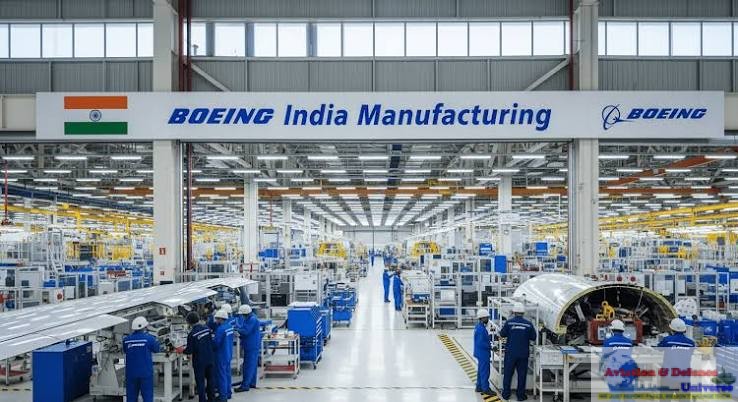
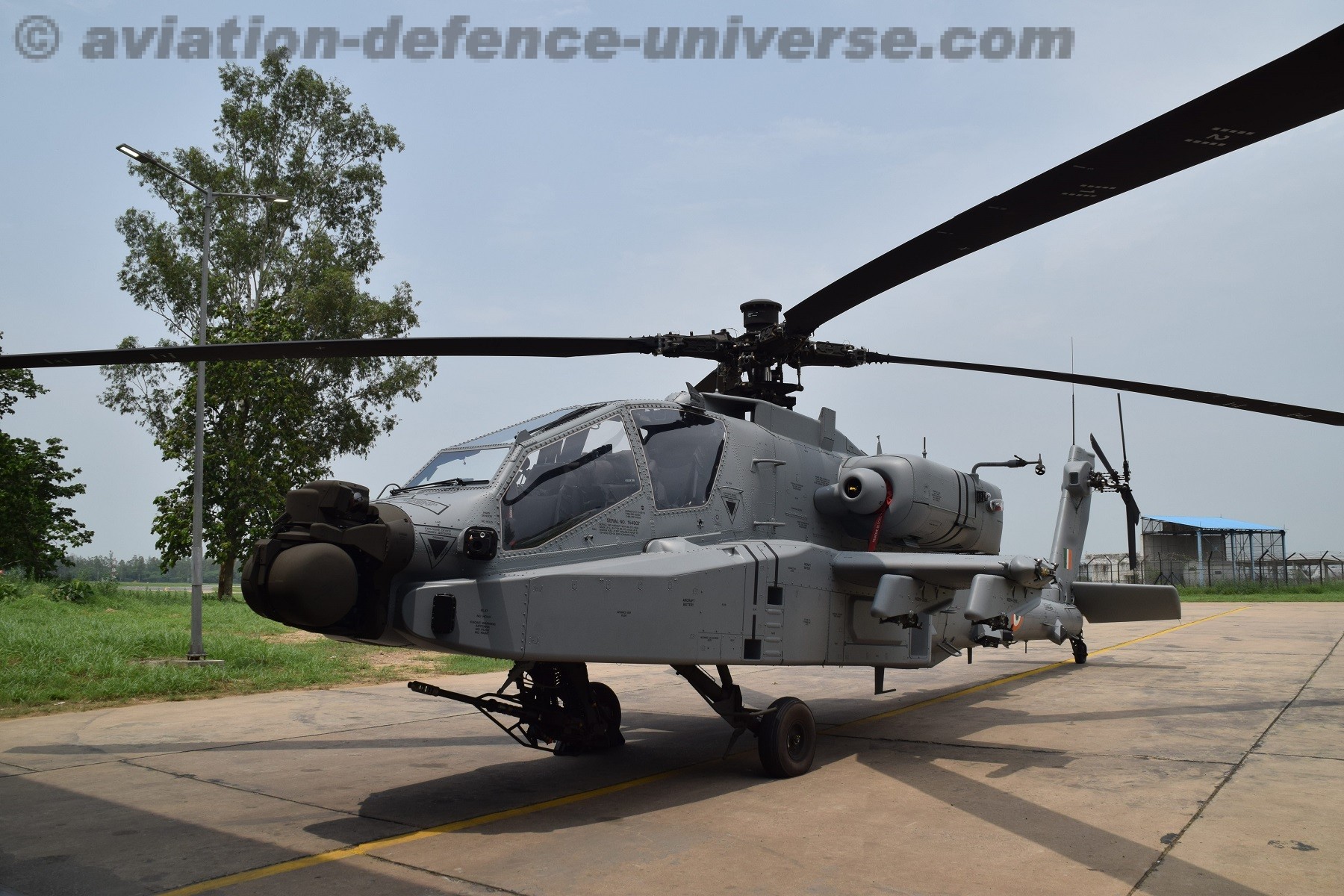
Hyderabad is the city where India builds every Apache fuselage. If there is one facility that symbolises Boeing’s manufacturing story in India, it is the Tata Boeing Aerospace Limited (TBAL) joint venture in Hyderabad. The 14,000-square-metre facility has become the global sole-source supplier of fuselages for the AH-64 Apache attack helicopter. In February 2025, TBAL announced delivery of its 300th Apache fuselage. The facility employs more than 900 engineers and technicians and uses advanced robotics, automation and aerospace manufacturing technologies. More than 90 per cent of the parts incorporated into its Apache aerostructure assemblies are manufactured in India through a network of over 100 MSME suppliers.
The importance of this achievement deserves emphasis. Apache fuselages built in Hyderabad are not merely intended for Indian helicopters. They are manufactured for Boeing’s global customers, including the U.S. Army. India has therefore become an indispensable part of the production chain for one of the world’s most recognisable attack helicopters.
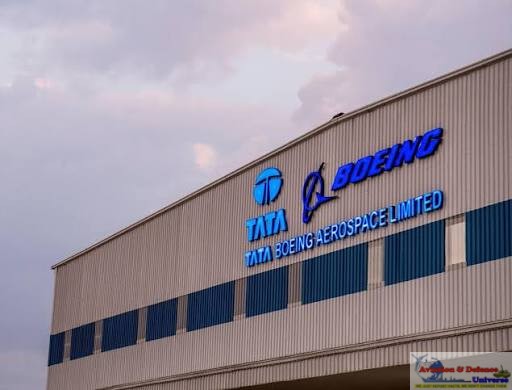 The Tata-Boeing partnership has also expanded from defence into commercial aerospace. In 2021, TBAL established a production line to manufacture complex vertical fin structures for the Boeing 737 family. The first structure was shipped from Hyderabad in 2023 to Boeing’s manufacturing facility in Renton in the United States for integration into an aircraft. The development illustrates how aerospace capability can migrate across sectors. A facility initially associated strongly with a military helicopter programme is now contributing structures to one of the world’s largest commercial aircraft families. That cross-pollination between defence and commercial aerospace is essential if India is to develop an industrial ecosystem with the scale and technological depth required to compete globally.
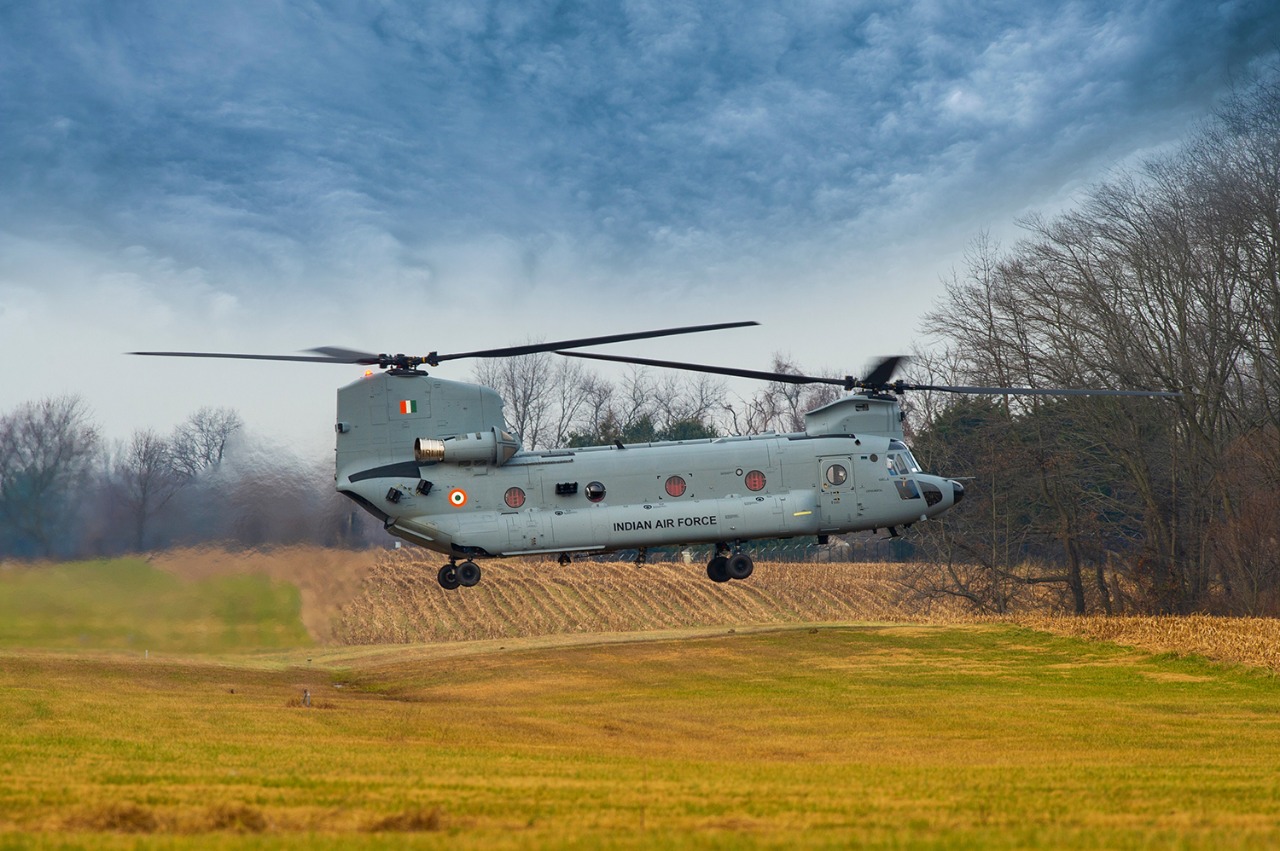
Boeing is also deeply embedded in India’s defence aviation. Boeing’s relationship with India has a substantial strategic dimension. The Indian military operates a diverse fleet of Boeing platforms. Recent company figures list 11 C-17 Globemaster III strategic airlifters, 22 AH-64 Apache helicopters with six additional aircraft for the Indian Army, 15 CH-47 Chinook heavy-lift helicopters and 12 P-8I maritime patrol aircraft, along with Boeing-based VVIP and Head of State aircraft. Each performs a very different mission. The C-17 gives the Indian Air Force strategic and tactical heavy-airlift capability. The Chinook brings heavy-lift helicopter capability particularly valuable in difficult terrain and high-altitude operations. The Apache provides a sophisticated attack-helicopter capability.
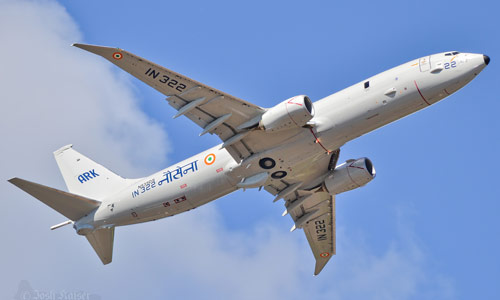 And the P-8I has become a particularly important element of the Indian Navy’s long-range maritime reconnaissance and anti-submarine warfare architecture. India was Boeing’s first international P-8 customer. By the time Boeing delivered the 12th P-8I in February 2022, the aircraft had already accumulated more than 35,000 flight hours with the Indian Navy. In an era when the Indian Ocean has acquired growing strategic importance, the P-8I gives the Boeing-India relationship a geopolitical dimension extending far beyond commercial aviation. Military aircraft can remain operational for decades, which means the long-term relationship between an OEM and an armed force depends as much upon sustainment as the initial aircraft purchase. Boeing Defence India was established in 2017 to provide lifecycle solutions and strengthen in-country support capabilities. Today, Boeing provides integrated logistics and performance-based logistics support for platforms including the P-8I, Apache, Chinook and C-17.
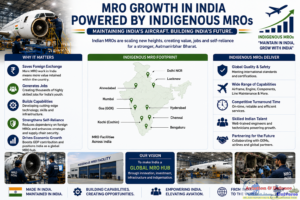
The strategy reflects a larger change taking place in India’s defence acquisition philosophy. India increasingly wants maintenance, repair, overhaul, spares and lifecycle support to be available domestically rather than requiring platforms or components to be repeatedly sent overseas. Boeing’s answer has been the 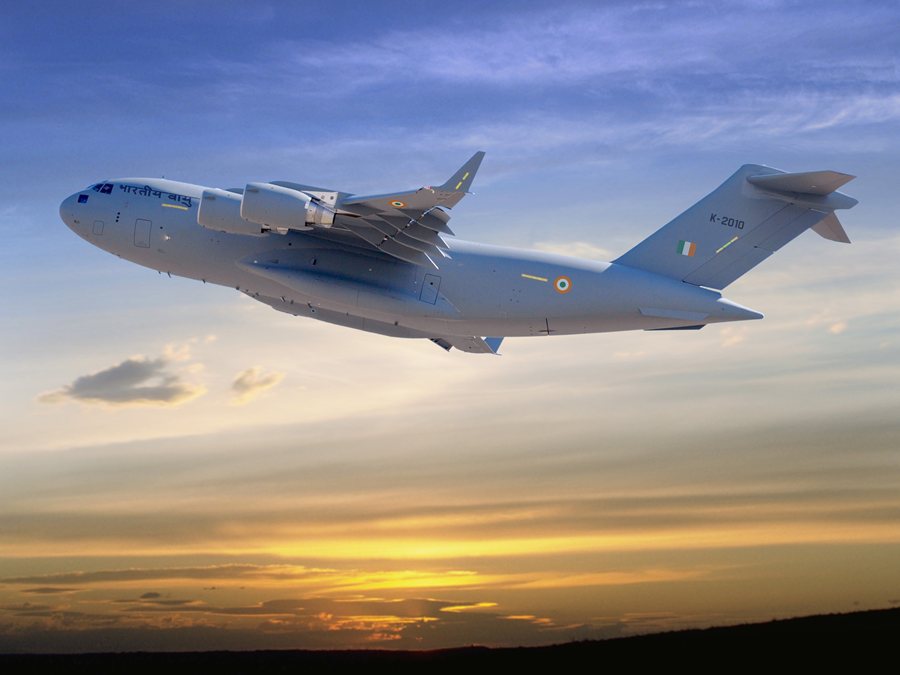 Boeing India Repair Development and Sustainment (BIRDS) programme, launched in 2021. Rather than treating MRO as an isolated Boeing activity, BIRDS seeks to create an in-country network of suppliers capable of engineering, maintenance, repair, skilling and sustainment work across commercial and defence aviation. Boeing has worked with Indian organisations including Air Works and AI Engineering Services Limited to localise maintenance activities. One important milestone came when Boeing and AIESL announced the successful overhaul in India of landing gear for an Indian Navy P-8I—a first in the country.
Earlier, Boeing and Air Works had simultaneously undertaken heavy maintenance checks on three Indian Navy P-8Is at Hosur. These may appear less dramatic than an aircraft order, but they are central to genuine aerospace self-reliance. Building an aircraft is only one part of aerospace capability. Keeping it flying for decades is another. India wants to become an MRO hub—and Boeing has a stake in it. India’s enormous commercial and military fleet gives the country a natural opportunity to develop into a regional MRO centre. Historically, substantial maintenance work on Indian aircraft has moved overseas. Developing domestic capabilities can reduce turnaround times, conserve foreign exchange, create high-skilled employment and improve strategic autonomy. For Boeing, supporting an Indian MRO ecosystem also makes commercial sense. A growing fleet of Boeing aircraft throughout India and the wider region will require a dependable support infrastructure close to operators. The company has therefore complemented BIRDS with an India Distribution Center and other customer-support investments.
Training must keep pace with aircraft orders. India’s aviation expansion faces another challenge that cannot be solved simply by ordering aircraft: people. Thousands of additional pilots, aircraft maintenance engineers, technicians and aerospace specialists will be required as the country’s fleet grows. Boeing has committed US$100 million towards infrastructure and pilot-training programmes to support India’s anticipated demand for pilots over the coming decades. It has also worked with AIESL on maintenance training intended to develop skilled manpower and strengthen safety standards within India’s MRO industry.
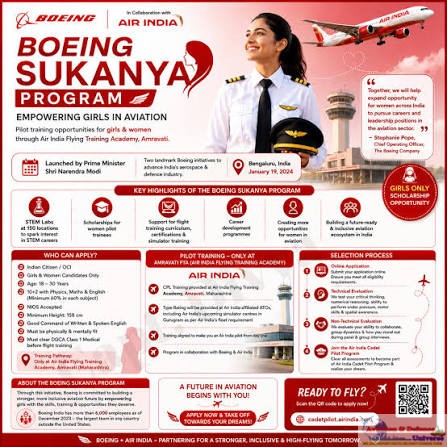 The investment acknowledges a fundamental aviation equation: aircraft growth without workforce growth eventually becomes a capacity constraint. Boeing’s approach to talent development also reaches much earlier in the education pipeline. In 2024, Prime Minister Modi launched the Boeing Sukanya Program, designed to encourage more girls and women to pursue careers in Indian aviation. The programme includes plans for STEM laboratories at 150 locations and scholarships for women undertaking pilot training, including support for simulator training, certification and career development. The initiative addresses a long-term industry requirement. If India’s aviation sector grows at the pace forecast, it cannot afford to leave large sections of its potential talent pool outside the aerospace workforce.
Innovation must be made in India too. Manufacturing and engineering alone will not determine India’s future place in the global aerospace hierarchy. Innovation and intellectual capability will. Boeing has therefore developed partnerships with universities, students and start-ups through initiatives such as the Boeing University Innovation Leadership Development (BUILD) programme, the HorizonX India Innovation Challenge and the National Aeromodelling Competition. The 2023 edition of BUILD attracted more than 1,200 ideas from over 2,200 students and start-up participants, according to Boeing. Such initiatives matter because India’s long-term aerospace ambition cannot stop at being an efficient manufacturing location.
 The country ultimately needs to create more technologies, designs and intellectual property of its own. The sustainability chapter begins to grow. Boeing’s India strategy is also beginning to engage more visibly with aviation’s decarbonisation challenge. In February 2025, Boeing and Hindustan Petroleum Corporation Limited announced a partnership aimed at advancing Sustainable Aviation Fuel (SAF) in India. For a country expected to experience enormous aviation growth over the coming decades, the question is no longer whether passenger numbers will increase, but how that growth can be accommodated while limiting its environmental impact. India has feedstock potential, refining capabilities and a substantial domesticviation market, giving it an opportunity not simply to consume SAF but potentially to become an important producer.
India is becoming more than a market for Boeing. Taken individually, Boeing’s Indian activities can appear to be separate stories—Air India’s aircraft orders, Apache fuselages in Hyderabad, engineers in Bengaluru, P-8I sustainment, MRO partnerships or pilot training. Seen together, they reveal something larger. India occupies several positions simultaneously within Boeing’s global strategy. It is a customer, purchasing commercial and military aircraft. It is a manufacturing base, producing Apache fuselages and 737 structures. It is a global supplier ecosystem, with more than 375 companies contributing to Boeing programmes. It is an engineering and technology centre, with thousands of engineers working on sophisticated global aerospace challenges. It is a services and sustainment market, where Boeing is building MRO and lifecycle-support capabilities. And it is a talent and innovation base, supplying engineers, researchers, technicians and future aviation professionals.
 For India, however, the next stage of the Boeing relationship should be more ambitious. Producing world-class aerostructures and components is a major achievement. Becoming a global sole-source supplier for an Apache fuselage demonstrates that Indian manufacturing can meet some of aerospace’s most demanding standards. But the ultimate measure of India’s aerospace maturity will be how far the country moves from manufacturing drawings created elsewhere towards design authority, indigenous intellectual property, advanced systems development and ownership of technologies. India needs to climb steadily from build-to-print manufacturing into build-to-specification, design, certification, systems integration and original product development. Boeing’s extensive engineering presence and supplier network provide an ecosystem through which some of that capability can grow. The opportunity for Indian industry is to absorb knowledge, invest in R&D, develop proprietary technologies and eventually become not merely a supplier to global aerospace programmes but a creator of them.
 The relationship is ready for its next chapter. The Boeing-India relationship has travelled an extraordinary distance. Boeing aircraft helped connect India with the world. Today, Air India’s huge fleet expansion is once again placing Boeing at the centre of the country’s ambition to build a globally competitive airline. At the same time, Indian engineers are contributing to advanced aerospace programmes, Indian factories are manufacturing structures for aircraft delivered worldwide, Indian companies are entering Boeing’s global supply chain and Indian MRO organisations are increasingly learning to sustain sophisticated military platforms at home. The relationship has therefore moved far beyond the traditional buyer-seller equation.
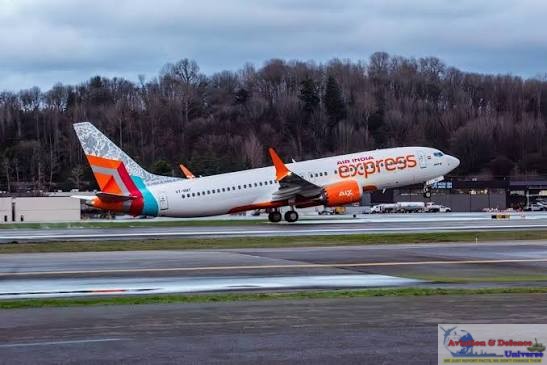 India’s emergence as one of the world’s most important aviation markets gives Boeing an enormous commercial opportunity. But the deeper significance of the relationship lies beyond the number of aircraft the country buys. The Apache fuselage leaving Hyderabad for a customer overseas, the 737 vertical fin manufactured in Telangana, the engineer developing advanced aerospace technology in Bengaluru, the Indian company supplying components for a Dreamliner and the technician overhauling a P-8I component in India all tell a different story.
They demonstrate that India is gradually moving from the edge of the global aerospace production system towards its centre. For Boeing, the country is increasingly a place to sell, source, engineer, manufacture, sustain and innovate. For India, the opportunity is to use that relationship to climb further up the aerospace value chain. After more than eight decades together, perhaps the most important chapter of the Boeing-India story is only beginning: not simply Boeing in India, but India in Boeing’s global aerospace ecosystem.





























































-A4-Size-(2)_page-0001.jpg)