













- From Selling Aircraft to Building an Aerospace Ecosystem
- Airbus Bets Big on India: Aircraft, Engineering, Manufacturing and a Global Supply Chain
By Sangeeta Saxena
New Delhi. 15 August 2026. For decades, the story of Airbus in India could have been told largely through the aircraft flying in Indian skies. Today, that description is no longer enough. Airbus is increasingly embedded in the country’s aerospace ecosystem—engineering aircraft from Bengaluru, sourcing billions of dollars’ worth of components and services from Indian suppliers, assembling military transport aircraft and helicopters with Tata, training pilots and maintenance professionals, supporting airlines and helping Indian carriers prepare for an era of long-haul global expansion. India, in turn, is evolving for Airbus from one of the world’s most promising aviation markets into an important engineering, manufacturing, digital, sourcing and talent base for its global operations.
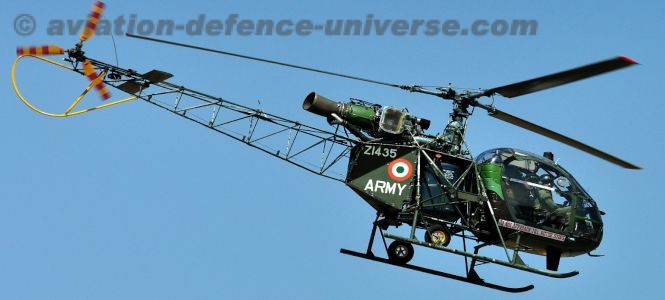
This is a relationship going back more than six decades, Airbus’ association with India stretches back to the early 1960s, when the Alouette III and Lama helicopters were industrialised in India as the Chetak and Cheetah through Hindustan Aeronautics Limited. The relationship has subsequently expanded across commercial aviation, helicopters, defence, space, engineering, digital technologies, customer support and training.
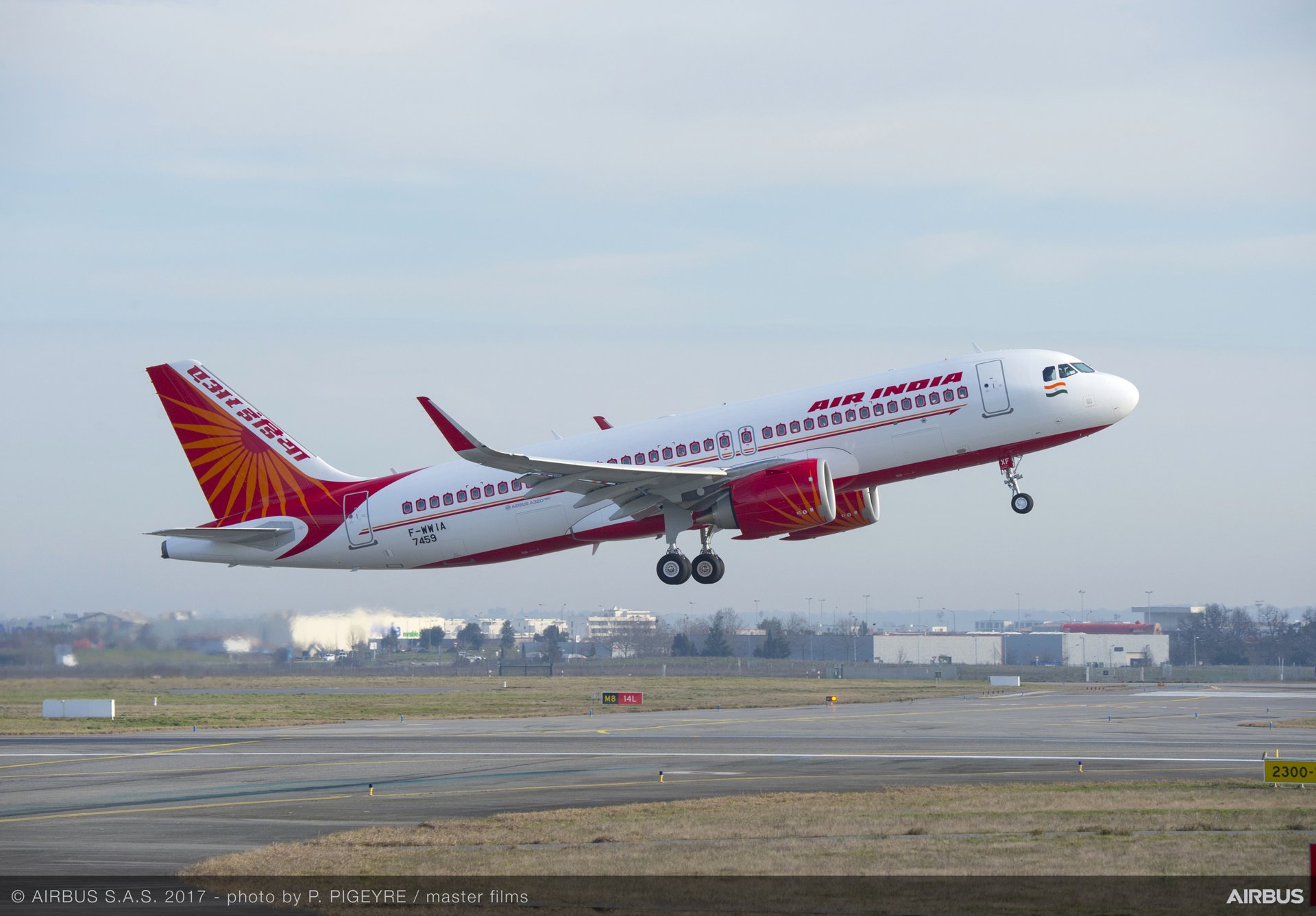 The transformation has been particularly visible in commercial aviation. The Airbus A320 Family has become central to India’s extraordinary expansion in air travel, especially as low-cost carriers connected metros with an ever-growing network of Tier-II and Tier-III cities. Today, Airbus aircraft form a substantial part of the fleets of India’s major airlines, while the arrival of the A350 is opening another chapter as Indian carriers increasingly look beyond domestic and regional growth towards becoming major long-haul international operators. India’s airlines have put Airbus at the heart of their expansion. India’s aviation ambitions and Airbus’ commercial interests have become increasingly intertwined. IndiGo and Air India have placed enormous aircraft orders as they prepare for decades of passenger growth. Airbus says the two airlines have together ordered more than 1,000 aircraft from the company, reflecting both the scale of India’s market and the confidence airlines have placed in future demand.
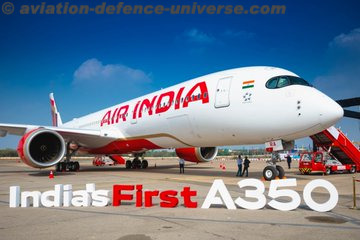
The A320 Family continues to underpin short- and medium-haul expansion, but perhaps the most significant change is occurring at the long-haul end of the market. The A350 has emerged as an important aircraft in India’s global aviation ambitions. IndiGo’s decision in October 2025 to firm up an additional 30 A350-900s brought its total A350 order to 60 aircraft, signalling a fundamental evolution for an airline historically identified with single-aisle operations. India is therefore no longer merely adding aircraft to accommodate domestic growth. Its largest carriers are preparing to compete more aggressively for international traffic that has traditionally flowed through overseas hubs. For Airbus, that creates a market spanning everything from high-density domestic routes and regional international operations to ultra-long-haul connectivity.
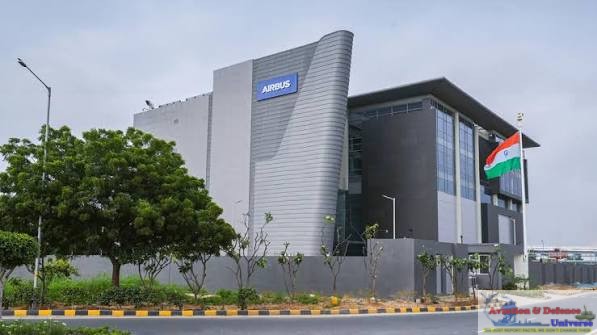
 But Airbus’ India story is no longer just about selling aircraft. The more consequential transformation is taking place away from the runway. Airbus has steadily moved significant engineering, digital, procurement and customer-support capabilities into India. In March 2026, it inaugurated the new Airbus India Technology Centre in Bengaluru, an 880,000-square-foot facility designed to accommodate around 5,000 employees. The centre brings engineering and innovation, digital capabilities, customer services, procurement and enabling functions together under one roof. Airbus describes its Bengaluru engineering and digital operations as its largest such centres outside Europe. This represents an important change in India’s relationship with global aerospace OEMs. Indian engineers are no longer simply supporting peripheral activities; they are increasingly integrated into the lifecycle of global aircraft programmes. Airbus’ Indian engineering teams contribute to the A220, A320, A330, A350 and Beluga, as well as newer programmes including the A321XLR and A350F. Their work encompasses flight physics, airframes, systems, flight testing and propulsion, alongside research, technology and innovation activities connected with future aerospace programmes.
The digital dimension of Airbus’ Indian footprint is equally significant. Its Bengaluru Digital Centre supports the company’s global transformation in areas including Big Data, Internet of Things, Artificial Intelligence, cloud computing, airline sciences and cybersecurity, as well as Digital Design, Manufacturing & Services and Skywise. Airbus says the centre has more than 1,500 skilled IT professionals and is its second-largest digital centre after Toulouse. That makes India part of the digital nervous system of a global aerospace company. Aircraft manufacturing today is as much about data, software, digital twins, predictive maintenance, cybersecurity and connected production systems as it is about aluminium, composites and engines. India’s enormous technology talent pool consequently gives the country an advantage that extends beyond lower manufacturing costs.
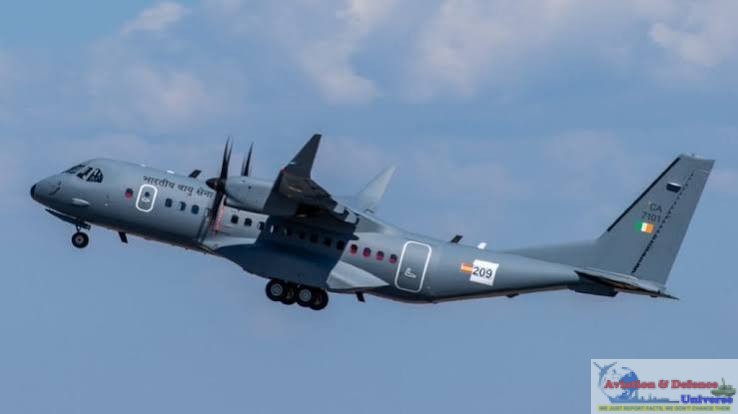 For Airbus, India’s attraction increasingly lies in the convergence of aerospace engineering and digital expertise. From Make in India to Make for the World, manufacturing represents perhaps the most visible change in the Airbus-India relationship. The landmark C295 programme has created India’s first private-sector military aircraft Final Assembly Line, developed by Airbus and Tata Advanced Systems Limited in Vadodara. Under India’s acquisition of 56 C295 aircraft for the Indian Air Force, the first 16 are being supplied in fly-away condition from Airbus’ Seville facility, while the remaining 40 aircraft are to be manufactured and assembled in India by Tata Advanced Systems.
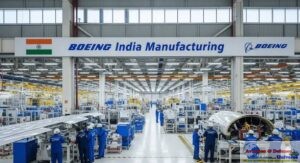
The significance goes well beyond assembling 40 aircraft. The programme encompasses detail-part manufacturing, tooling, subassemblies, major component assemblies, testing and final assembly. Airbus says more than 85 per cent of the structural and final assembly work for the 40 aircraft will be undertaken in India, alongside the manufacture of 13,000 detail parts. Thirty-seven India-based suppliers from the private and public sectors have been onboarded. The first Made-in-India C295 is scheduled to roll out from Vadodara in September 2026, with the programme planned to deliver the 40 Indian-built aircraft to the IAF by August 2031. It is a significant milestone for a country seeking to move from licensed production and component manufacturing towards ownership of increasingly complex aerospace manufacturing capabilities.
Airbus and Tata have now extended this industrial partnership into helicopters. In February 2026, Tata Advanced Systems inaugurated India’s first private-sector helicopter Final Assembly Line at Vemagal, Karnataka, for the Airbus H125. The facility will undertake manufacturing, integration, testing and maintenance of the helicopter in India.
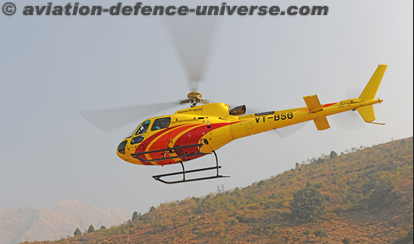 The implications could be considerable. India’s civil helicopter market remains relatively small for a country of its geography, population and economic size. Helicopters have potential applications ranging from tourism and corporate transport to emergency medical services, disaster response, law enforcement, aerial work and connectivity to remote regions. A locally assembled H125 could help Airbus and its partners develop these markets while also creating an export opportunity for neighbouring countries. Airbus expects the first Made-in-India H125 to be delivered in early 2027.
There is also a defence dimension. Airbus plans to offer the military H125M from the Indian production line, with increased levels of locally sourced components and technologies, targeting requirements including operations in India’s demanding Himalayan environment.
The H125 programme therefore takes the India strategy another step forward—from importing helicopters to assembling them domestically and potentially exporting Indian-built rotorcraft. Perhaps less visible than the final assembly lines, but potentially even more important for India’s long-term aerospace ambitions, is Airbus’ rapidly expanding sourcing from Indian industry. Airbus says its annual sourcing of components and services from India has risen from around US$500 million in 2019 to more than US$1.5 billion, and the company expects that figure to exceed US$2 billion well before the end of the decade. More than 100 Indian companies are already supplying the Airbus ecosystem. Their output includes sophisticated aerostructures and components such as aircraft doors, flap-track beams and helicopter fuselages, in addition to work supporting the C295 and H125 final assembly lines. This is where the real multiplier effect of aerospace manufacturing emerges. A final assembly line may provide the visible symbol of localisation, but a sustainable aerospace industry requires hundreds of companies capable of consistently meeting exacting standards of precision, quality, certification, traceability and delivery.
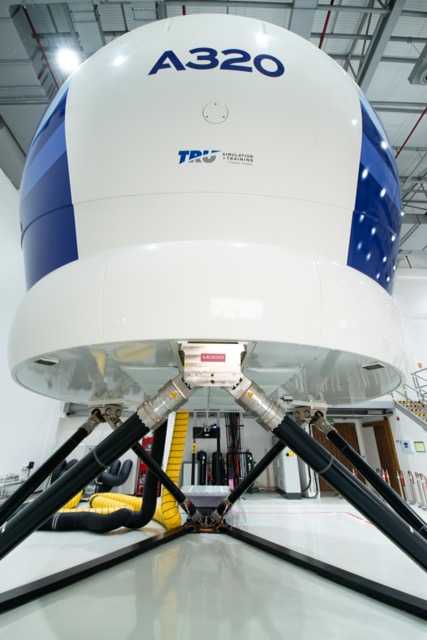
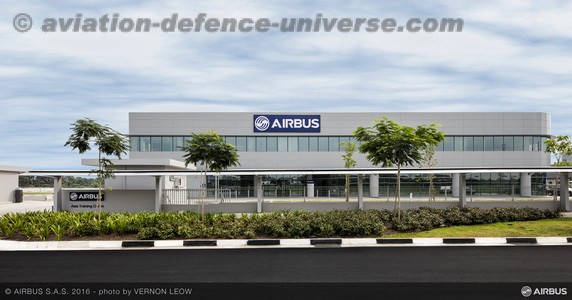 Every Indian supplier that successfully enters an Airbus global programme gains not simply an order but exposure to one of the world’s most demanding manufacturing ecosystems. Aircraft orders alone cannot sustain India’s aviation expansion. Hundreds of new aircraft require thousands of additional pilots, maintenance engineers, technicians and other aviation professionals. Airbus has therefore been expanding its training footprint. The Airbus India Training Centre at its India and South Asia headquarters in New Delhi provides pilot and maintenance training using Full Flight Simulators, virtual-reality trainers and other training devices. In September 2025, Airbus and Air India also inaugurated a 12,000-square-metre pilot training centre in Gurugram through a 50:50 joint venture. Planned with ten Full Flight Simulators, the facility is designed to train more than 5,000 new pilots over the next decade for A320 and A350 aircraft. The expansion recognises a fundamental reality: India’s aircraft acquisition ambitions can succeed only if human-capital development keeps pace.
What makes Airbus’ contemporary India strategy particularly noteworthy is the breadth of the relationship. India is simultaneously a major customer market, a manufacturing location, a supplier base, an engineering centre, a digital hub, a training ecosystem and an increasingly important source of aerospace talent. The C295 and H125 programmes provide the industrial visibility. Bengaluru provides the engineering and digital depth. Indian suppliers connect the country to Airbus’ global manufacturing system, while the training infrastructure helps prepare the workforce required to operate a rapidly expanding fleet.
These pieces reinforce one another. More aircraft create demand for training and services. Local manufacturing develops suppliers. Suppliers build skills and certifications that enable them to compete for global work. Engineering centres create intellectual capability, while digital centres push Indian talent further into the technological heart of future aviation.
 The next phase will determine the true significance of Airbus’ Indian presence. For India, the objective cannot simply be to manufacture more components or assemble more foreign-designed aircraft. The larger opportunity lies in moving progressively higher up the aerospace value chain—from build-to-print manufacturing towards greater indigenous design capability, complex systems engineering, advanced materials, avionics, propulsion technologies, research and development, certification expertise and eventually intellectual-property creation.
Airbus’ expanding footprint can become an important catalyst for that journey. But Indian industry will also have to continuously raise its game. Aerospace manufacturing tolerates neither inconsistent quality nor unreliable delivery. Indian companies seeking larger roles in global programmes must invest in world-class machinery, processes, skills, certification, automation and R&D. The opportunity is enormous, but so are the standards required to capture it.
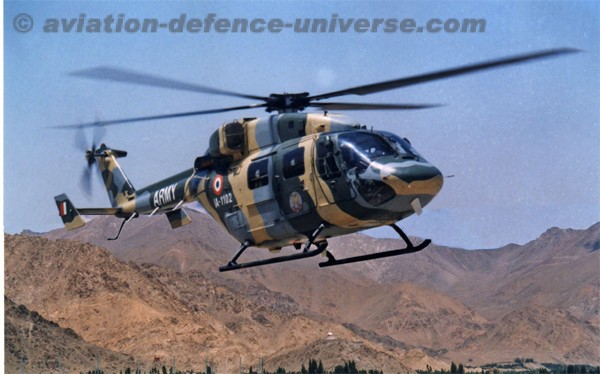 Airbus’ journey in India has travelled a considerable distance from the early days of the Chetak and Cheetah. The A320 helped underpin India’s mass aviation revolution; the A350 is poised to become part of the country’s long-haul ambitions; the C295 is creating a new private-sector military aircraft manufacturing ecosystem; and the H125 is opening another frontier in indigenous helicopter assembly. Meanwhile, Bengaluru is quietly becoming one of the most important centres in Airbus’ global engineering and digital network, and billions of dollars in sourcing are pulling Indian companies deeper into international aerospace supply chains.
The relationship has consequently evolved from Airbus selling to India towards Airbus building with India. India’s aviation story is entering a period in which scale alone will no longer define success. The real test will be whether the country can convert one of the world’s fastest-growing aviation markets into a globally competitive aerospace ecosystem encompassing design, engineering, manufacturing, digital technologies, maintenance, training and exports.
 Airbus has positioned itself deeply within that transition. Its aircraft will carry millions of Indian passengers, but increasingly, Indian engineers will help design and support those aircraft, Indian digital specialists will contribute to the systems behind them, Indian factories will assemble military transports and helicopters, and Indian suppliers will manufacture parts destined for aircraft flying across the world. That may ultimately be the most important transformation in the six-decade Airbus-India relationship. India is no longer merely a destination for Airbus aircraft; it is becoming part of the global ecosystem that creates, builds, supports and sustains them.






























































-A4-Size-(2)_page-0001.jpg)