


 Raksha Mantri Rajnath Singh to represent India at SCO Council of Heads of Government Meeting in Tajikistan

















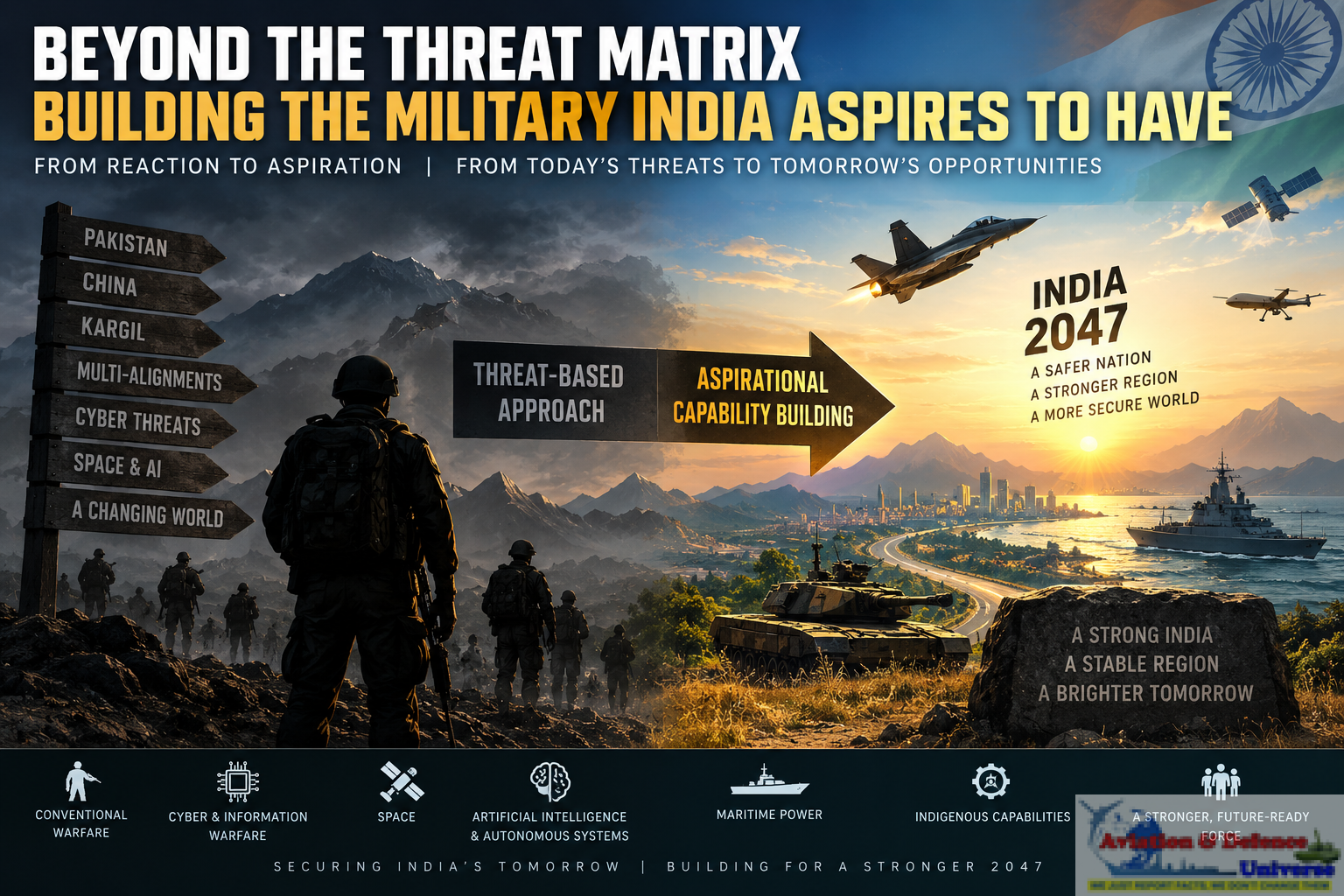
- Beyond China and Pakistan: Is It Time to Rethink India’s Defence Planning?
- Don’t Just Match the Threat—Build the Military India Wants to Become
- Shifting from a threat-based approach to aspirational capability building
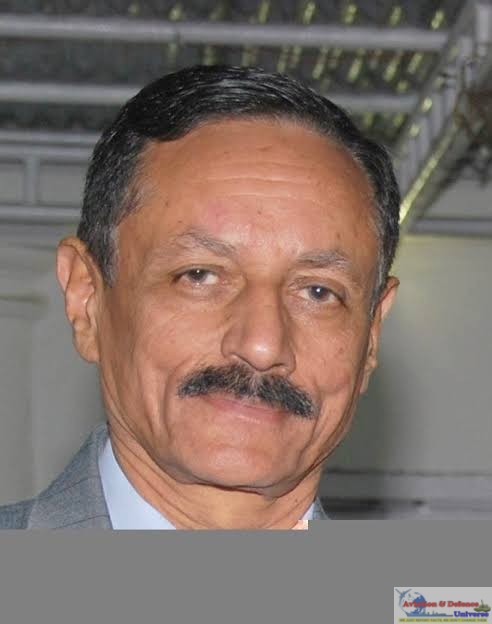
By Maj Gen (Dr.) Ashok Kumar, VSM (Retired)
New Delhi. 04 September 2026. Should India build its military primarily around the adversaries it faces— or around the power it aspires to become? For decades, India’s defence capability development has understandably been shaped by the threats confronting it: Pakistan after Independence, the strategic shock of the 1962 war with China, Kargil, and more recently an increasingly complex security environment involving multiple actors and evolving alignments. But as India enters its 80th year of Independence and looks towards the national vision of 2047, reacting to the capabilities of today’s adversaries may no longer be enough. The argument now is for a fundamental change in perspective—from threat-driven preparedness to aspirational capability building, where threats remain an essential input but no longer determine the outer limits of India’s military power.
This is not about abandoning threat assessment. It is about thinking bigger than the threat matrix. If India aspires to become a leading global power, its Armed Forces must be equipped not simply to counter what an adversary possesses today, but to protect India’s interests across conventional warfare, cyber, space, artificial intelligence, autonomous and unmanned systems, information and electronic warfare, and other emerging domains. The shift, therefore, is from asking “What capability do we need to counter them?” to the much larger strategic question: “What military capability does the India of 2047 need?”
It has been our conventional approach to develop the capabilities of the Armed Forces primarily in response to perceived threats. This threat-based model has, over the decades, shaped the manner in which India has assessed its security environment, prioritised military capabilities and allocated resources for defence preparedness. While such an approach remains necessary for addressing immediate and identifiable threats, the rapidly evolving strategic environment demands that India look beyond a purely adversary-centric model of capability development.
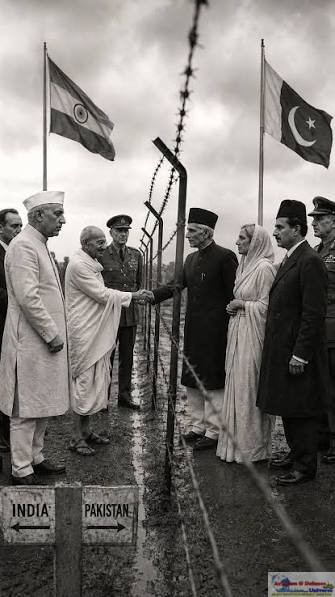
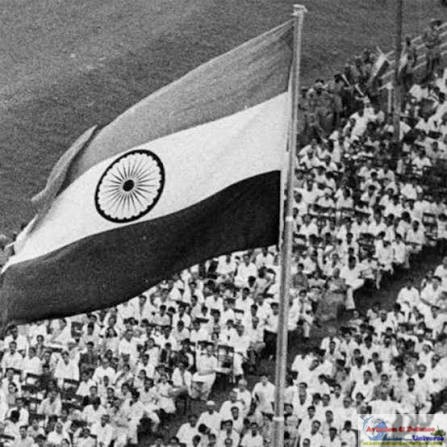 When India became independent on 15 August 1947, the immediate security challenge emerged from Pakistan, culminating in the India-Pakistan War of 1947- 48. Consequently, the initial focus of military capability development was understandably directed towards Pakistan as the principal adversary. The 1962 India-China War, however, delivered a major strategic shock to the nation and exposed significant deficiencies in India’s military preparedness. This resulted in a renewed emphasis on capability enhancement across the Armed Forces.
Military capability development, however, is inherently a time-consuming process. While India was undertaking the necessary post-1962 capability enhancement, Pakistan initiated another conflict in 1965. Despite the relative inferiority of India’s equipment inventory vis-à-vis the US-supported inventory available to Pakistan, the Indian Armed Forces demonstrated exceptional courage, resilience and fighting spirit and thwarted Pakistan’s misadventure. The experience once again reinforced the conventional approach of responding to an adversary’s capabilities through corresponding enhancements in one’s own military capabilities.
The decisive events of 1971 should, arguably, have prompted a fundamental reorientation of this approach. India decisively defeated Pakistan and played a historic role in the liberation of East Pakistan, leading to the creation of Bangladesh. At that stage, even within the prevailing threat-based framework, there was a compelling case for shifting the principal focus towards China. However, the shift remained marginal, and Pakistan continued to occupy considerable space in India’s security calculus, for reasons that may be debated separately.
The Kargil conflict of 1999 provided another strategic wake-up call. Pakistan was able to occupy positions in the Kargil Heights without being detected during the initial stages, despite having suffered a decisive defeat in 1971. Although the Kargil misadventure failed to achieve its objectives and was eventually defeated by the Indian Armed Forces, it once again drew considerable attention towards Pakistan. Thus, even when the long-term strategic challenge posed by China was becoming increasingly evident, India’s immediate capability development continued to be influenced substantially by developments along the western front.
In recent years, there has been an increasing focus on China, which is certainly a positive development within the conventional capability matrix. However, the strategic environment has acquired additional complexities. The collusivity demonstrated by China and Pakistan during the run-up to and subsequent developments associated with Operation Sindoor has highlighted the possibility of a more closely coordinated challenge. The emergence of additional alignments and strategic partnerships, including those involving Bangladesh and Türkiye, as well as the Mecca trilateral accord, further indicates that India’s security environment can no longer be viewed exclusively through the prism of individual adversaries.
In effect, the conventional threat spectrum is expanding. Pakistan, despite its setbacks during Operation Sindoor, continues to seek strategic relevance and is attempting to retain centre stage in India’s security calculus. Simultaneously, developments in the wider international environment, including aspects of the US approach towards India and Pakistan, have the potential to further complicate India’s strategic choices. The cumulative effect is a security environment characterised by greater uncertainty, multiple actors, evolving alignments and increasingly fluid partnerships.
 This brings us to a fundamental question: Should India’s military capability creation continue to remain primarily linked to a dynamically changing threat spectrum? In August 2026, as India enters its 80th year of independence, there is a compelling case to examine this question afresh. Rather than remaining hostage to changing threat perceptions, India should consider transitioning towards an aspirational model of capability development, one that looks beyond the threats of today and tomorrow and is instead anchored in the nation’s larger regional and global aspirations.
An aspirational capability model would link India’s military capabilities to its national aspirations in the regional and international environment. Unlike the conventional threat-based model, which principally seeks to match or overmatch the capabilities of identified adversaries, an aspirational model would seek to create a comprehensive military capability commensurate with the role India aspires to play in the world.
The distinction is important. Under the conventional model, capability development is often driven by the capabilities being acquired or developed by an adversary. If an adversary builds a particular capability, India seeks to develop a counter-capability. If the adversary strengthens its air power, maritime forces, missiles, cyber capabilities or space assets, corresponding Indian capabilities are prioritised. This approach is essential for deterrence and operational preparedness, but it can also result in capability development becoming reactive and fragmented.
More importantly, it may lead to domains in which an adversary is relatively weak receiving comparatively less attention, even when those domains could be critical to India’s own future strategic requirements. The aspirational model seeks to overcome this limitation. It is not a replacement for threat-based planning but a superset of it. Threat assessment would remain an important input, but it would no longer be the sole determinant of capability creation. Instead, comprehensive capability development would be driven by India’s desired position in the regional and international order.
 If India aspires to emerge as a leading global power, its Armed Forces must possess capabilities that support that ambition across the full spectrum of conflict and competition. This would include conventional military capabilities, but also emerging domains such as cyber, space, artificial intelligence, autonomous systems, information warfare, electronic warfare, unmanned systems, long-range precision capabilities and other technologies that will shape future warfare.
Such an approach would also provide greater resilience against strategic uncertainty. India’s capability development would not have to be redesigned every time the threat landscape changes. Instead, the country would possess a broad-based capability architecture capable of responding to multiple contingencies, including those arising from adversaries, coalitions, strategic partnerships and unforeseen alignments.
The framework would therefore address not only the challenges posed by China and Pakistan, including the possibility of their increasing strategic collusion, but also potential contingencies arising from wider coalitions and emerging strategic groupings. The possibility of countries such as Bangladesh aligning more closely with such groupings, for instance, reinforces the need for India to prepare for a broader range of strategic possibilities rather than focusing narrowly on individual adversaries.
India has already articulated an ambitious national objective of becoming a developed nation by 2047. Various organs of the government, including the Defence Forces, have initiated plans and initiatives that seek to contribute towards this larger national mission. The next logical step should be to examine whether India’s defence capability development framework is fully aligned with the country’s 2047 aspirations.
A fresh validation of the existing capability development framework is therefore recommended. The unclassified national position that has already been articulated should be examined through the prism of the aspirational model, while the classified strategic assessment should incorporate the same underlying pragmatism. The objective should be to ensure that defence capability development is not merely adequate to counter identified threats but is sufficiently comprehensive to support India’s desired strategic role.
The term “aspirational” may initially appear subjective. It therefore needs to be translated into measurable and objective capability goals in the Indian context. If India aspires to become a developed nation by 2047 and seeks to play a leading role in shaping the regional and international order, then becoming one of the top three countries in terms of comprehensive military capability should be regarded as the minimum aspiration. This should not be viewed merely as a ranking exercise. It should represent an objective assessment of India’s ability to deter threats, defend national interests, protect its economic and strategic assets, undertake operations across domains, secure its neighbourhood, contribute to international security and exercise strategic autonomy.
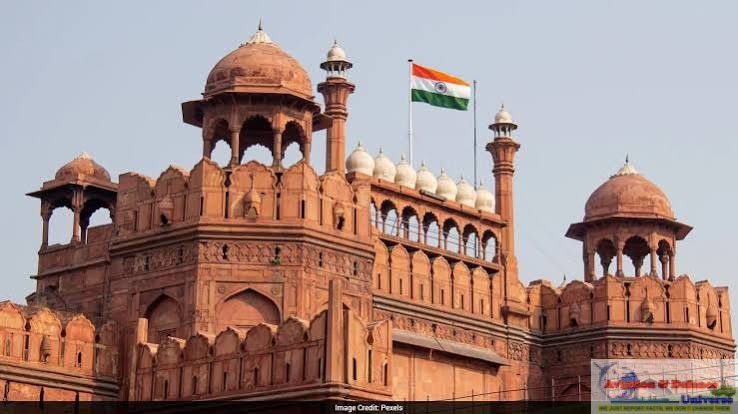 India has entered the 80th year of its independence, leaving just over two decades to realise the 2047 vision. Twenty-one years may appear substantial, but in the context of military capability creation, it is a remarkably compressed timeframe. Major platforms, force structures, infrastructure, technologies, doctrines and human-resource capabilities take years, sometimes decades, to conceptualise, develop, induct and mature. Consequently, India cannot afford a capability development process that continually reacts to the threat of the moment. The way forward must be mission-made progression, a deliberate, long-term and measurable pathway towards a clearly defined military capability commensurate with India’s national aspirations. The threat matrix must continue to inform this process, but it should no longer define its limits.
The strategic objective, therefore, should be to build not merely a military capable of responding to today’s adversaries, but a military capable of securing India’s interests across the spectrum of tomorrow’s uncertainties. India’s military capability must be designed not only for the threats it faces, but for the nation it aspires to become.
India has a little over two decades before 2047—a seemingly long period in political terms, but an extraordinarily short one in military capability development, where platforms, technologies, infrastructure, doctrines and human resources can take decades to conceptualise, develop, induct and mature. The challenge, therefore, is not merely to remain ahead of today’s threat but to anticipate the strategic responsibilities of tomorrow. An aspirational approach would not discard the threat-based model; it would subsume it within a larger national vision, creating comprehensive capabilities capable of dealing with adversaries, coalitions, technological disruption and contingencies that cannot yet be predicted.
The transition must ultimately be from reaction to anticipation, from adversary-led benchmarks to India-defined objectives, and from preparing for the next conflict to preparing for India’s future strategic role. The threat matrix must continue to inform military planning, but it should not define its limits. As the article succinctly argues, India’s military capability must be designed not only for the threats it faces, but for the nation it aspires to become.
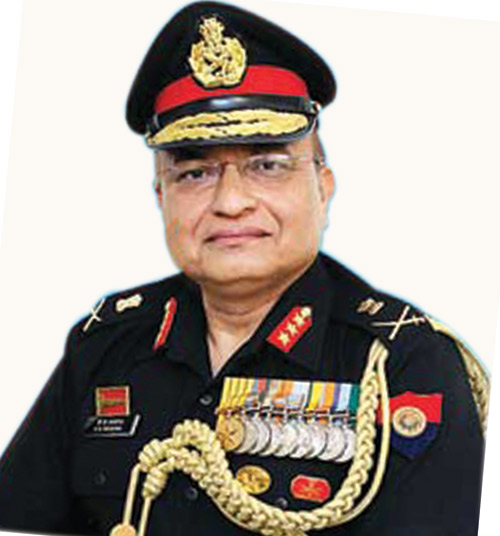
(Maj Gen Ashok Kumar, VSM (Retd) is Director General Centre for Joint Warfare Studies (CENJOWS), a Kargil war veteran and a defence analyst. He specialises on neighbouring countries with special focus on China. The views in the article are solely the author’s. He can be contacted at editor.adu@gmail.com).










































































-A4-Size-(2)_page-0001.jpg)