


 18th BRICS Summit










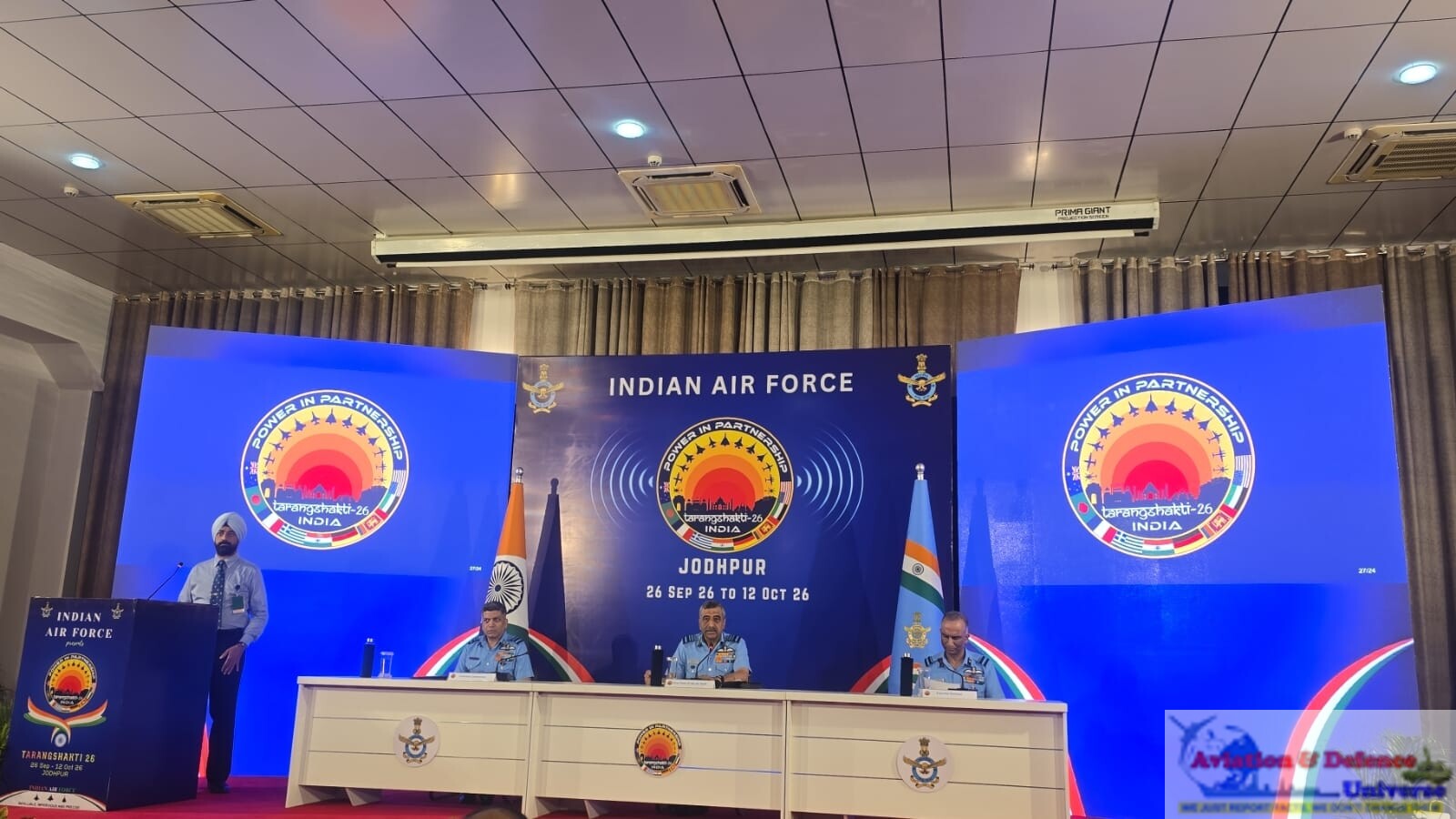
- The Exercise Will Test Technology, Teamwork and Trust in the Skies
- Jodhpur Skies Ready for India’s Biggest Multinational Air Exercise
- It Will be About What We Still Need to Learn says Vice Chief of Air staff
By Sangeeta Saxena
New Delhi. 22 September 2026. From fifth-generation fighters and precision warfare to the air warriors and technicians working behind the machines, Exercise Tarang Shakti 2026 is set to test far more than flying skills. India’s largest multinational air exercise will bring diverse platforms, operational philosophies and combat experience into one battlespace—transforming the skies over Jodhpur into a laboratory for the future of collaborative airpower.
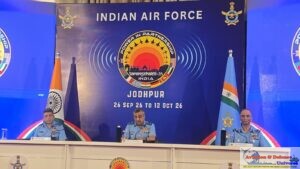
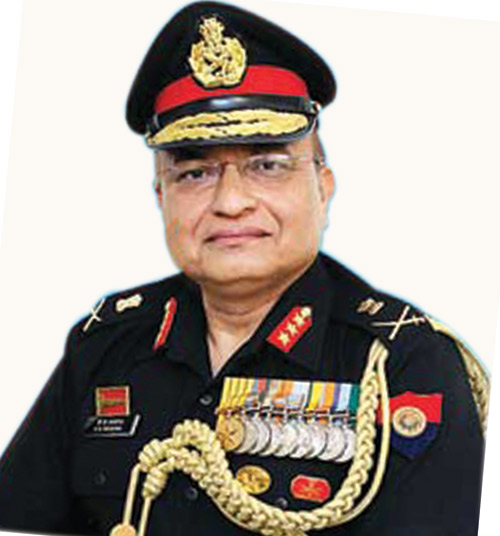
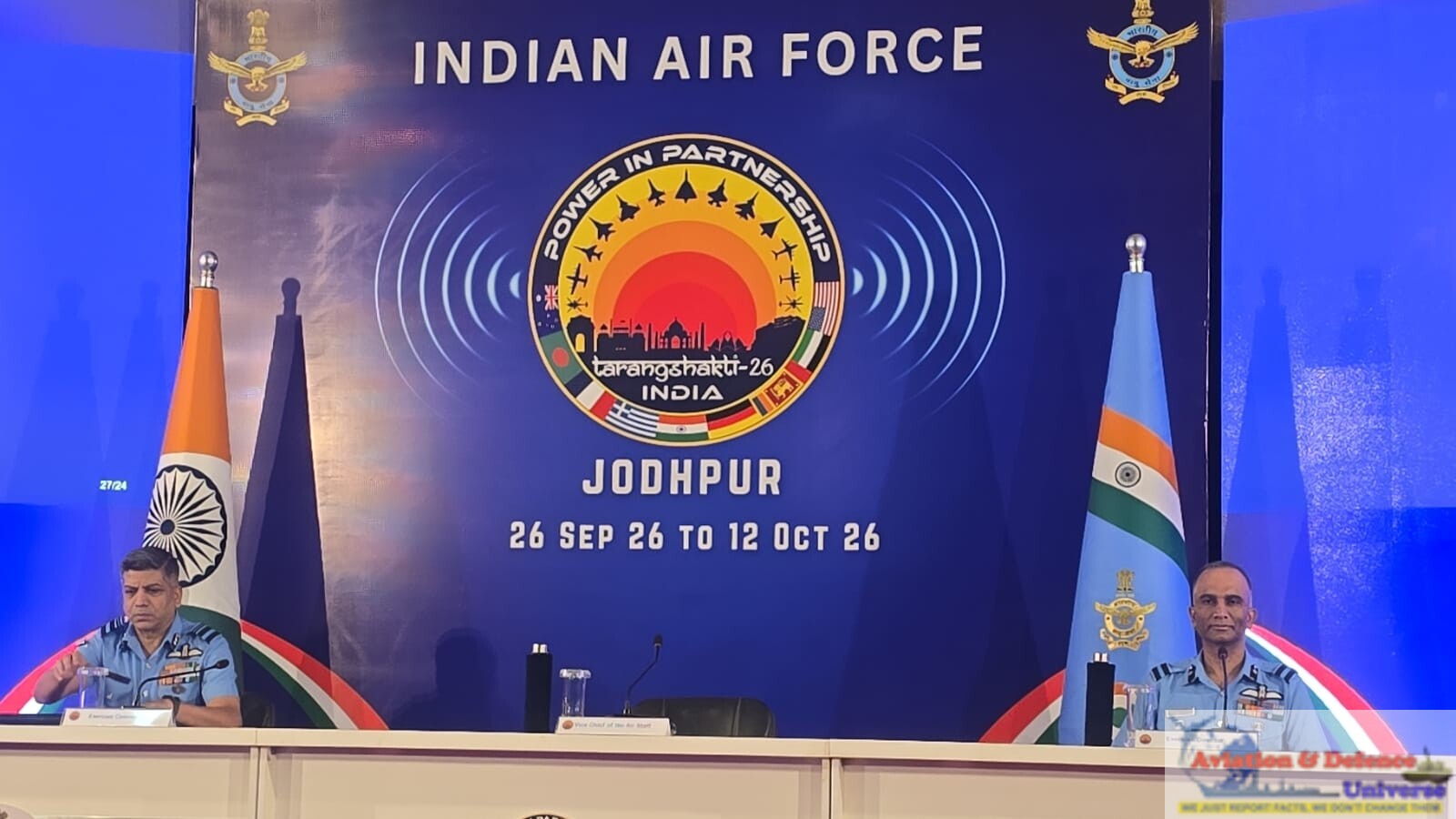
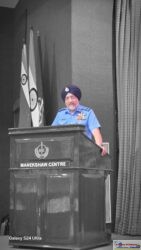
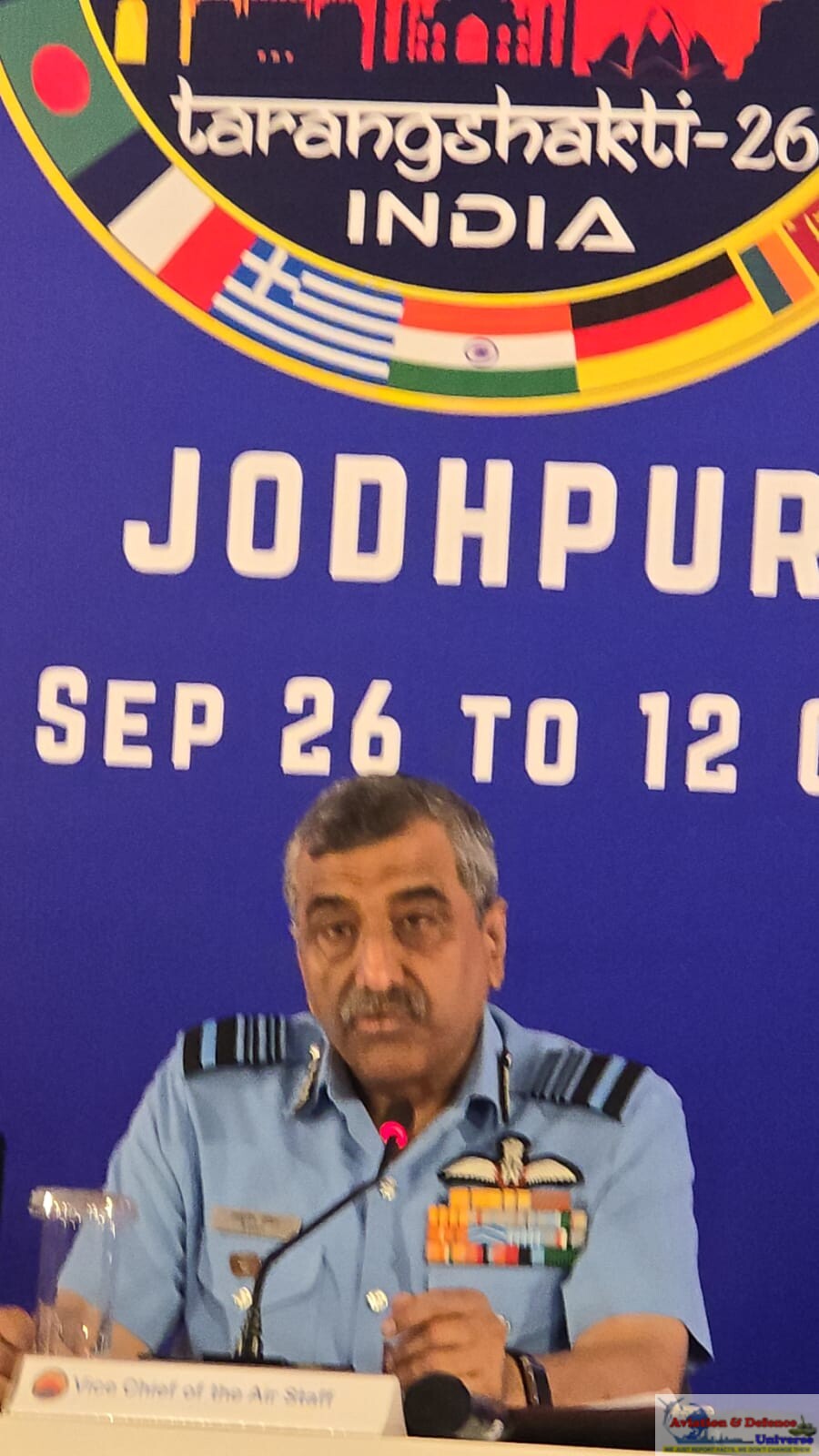 Unveiling the strategic vision for the exercise Vice Chief of the Air Staff Air Marshal Ashutosh Dixit, PVSM, AVSM, VM, VSM, said Tarang Shakti 2026 would pursue three clear objectives: operational learning, greater interoperability and stronger military partnerships. Explaining the evolution of Tarang Shakti, Air Marshal Dixit said the Indian Air Force’s operational engagements with foreign air forces had, for many years, been conducted primarily through bilateral exercises. “We learnt to operate with one partner at a time. Tarang Shakti changed that approach,” he said. The inaugural edition in 2024 marked the IAF’s transition from exercising separately with individual partners to simultaneously planning, operating and integrating with several foreign air forces. Eleven countries participated with air assets during its two phases. Forty-five aircraft undertook 76 missions, generated 867 sorties and accumulated more than 1,180 flying hours. The exercise covered counter-air operations, air defence, close combat, airlift, air-to-air refuelling and several complex mission sets. According to the Vice Chief, Tarang Shakti 2026 represents the next logical step in this progression.
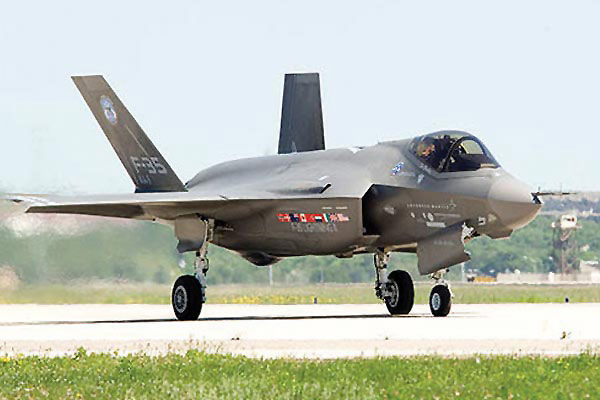
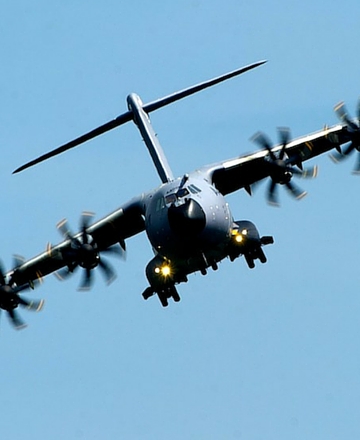
Invitations for the 2026 edition were extended to 65 friendly foreign countries. Eight countries have confirmed participation with air assets, while 32 countries are expected to attend as observers. Canada and Mexico will be represented in the distinguished-visitors category. The exercise will witness the participation of an advanced mix of combat and support platforms, including F-35s, F-16s, Rafales, A400Ms, MRTTs, KC-135s and C-130s, operating alongside Indian Air Force aircraft.
The United States Air Force’s F-35A will participate in an exercise in India for the first time. Air Marshal Dixit, however, cautioned that Tarang Shakti should not be viewed merely as an exhibition of sophisticated aircraft. “Tarang Shakti is not about the aircraft display alone. It is about what happens when these aircraft operate together, along with those who are behind these machines,” he said.
The Vice Chief observed that the character of warfare was changing rapidly. Recent conflicts had underlined the growing importance of precision, speed, integrated air and missile defence, unmanned systems, information dominance, space-enabled capabilities and multi-domain operations. He said the IAF was carefully studying conflicts around the world and progressively embedding the lessons drawn from them into its training, force development and capability-building processes.
 Referring to the operational experience of Operation Sindoor, Air Marshal Dixit said its lessons would be reflected in the IAF’s tactics, planning processes and conduct during the exercise, although operationally sensitive details could not be disclosed. “We do not conduct Tarang Shakti to demonstrate what we already know. We conduct it to discover what we still need to learn,” he emphasised. India’s operational experience and the experiences brought by participating partners would allow the forces to test assumptions, challenge established procedures, study different methods of employing airpower and improve interoperability in a realistic training environment. Tarang Shakti 2026 will feature red and blue teams whose roles will change during the exercise. The participants will be given a broad operational canvas within which they can plan and execute various combat scenarios. The missions will include air-to-air and air-to-ground simulations, as well as live air-to-air refuelling. Drone threats, loitering munitions and missile-related scenarios will also be factored into the training construct, principally through simulation.
Air Marshal Dixit said multi-domain operations involved much more than aircraft taking off for a mission. The process begins with obtaining and analysing satellite imagery, feeding intelligence into mission systems, planning operations, protecting objectives, conducting missions and carrying out detailed debriefings. Cyber capabilities, airpower, space-based assets, ground networks and maintenance support would all form part of this integrated framework.
Much of the interaction with the media was centred on the F-35’s first participation in an exercise in India. Air Marshal Dixit said the Indian Air Force had previously exercised alongside the fifth-generation aircraft abroad, but this would be the first such engagement on Indian soil. Addressing the debate over fifth-generation and older combat aircraft, he said technology provided an advantage, but the generation of the aircraft alone did not determine the outcome of an engagement. “The human behind it, the training, the way the whole system is networked and the kind of weapons carried finally matter,” he said.
 Tarang Shakti would provide opportunities to test such assumptions in different operational settings. Some observations arising from the missions, however, might remain restricted for operational-security reasons. The Vice Chief also highlighted the two-pronged approach being followed by India: developing an indigenous fifth-generation fighter while simultaneously strengthening the capability to detect and counter advanced low-observable aircraft.
Air Marshal Dixit said India was no longer looking only at what it could acquire from the world but was increasingly focused on what it could design, manufacture and offer internationally. Tarang Shakti 2026 would provide participating countries an opportunity to witness the expanding capabilities of the Indian aerospace and defence industry. Indigenous aircraft, sensors, weapons, unmanned platforms and other technologies would be showcased during the exercise. “For us, Atmanirbharta and international cooperation are not contradictory; they complement each other,” he said.
Responding to a question on the LCA Mk1A, the Vice Chief said the initial delay had resulted from the availability of engines. The engines had now been received and installed, and comprehensive testing was underway. A few technical and integration-related issues remained to be demonstrated, but he expressed confidence that these could be resolved within one or two months, clearing the way for the aircraft’s induction.
 Addressing questions about the number of participating air forces compared with the 2024 edition, Air Marshal Dixit clarified that international scheduling—not geopolitical developments—had shaped the final line-up. The previous exercise was conducted in two phases and its timing enabled some foreign contingents to participate while travelling for other international engagements. The 2026 edition had to be coordinated with the heavily committed training calendars of numerous air forces. Planning for the next edition, Tarang Shakti 2028, had already begun, he added.
The list of 65 invited countries was prepared after detailed deliberation, keeping the exercise’s operational construct and interoperability requirements in mind. Countries outside this particular framework continued to exercise separately with India. With Air Force Day falling during the exercise on 8 October, the IAF plans to transform the occasion into an International Day at Jodhpur.
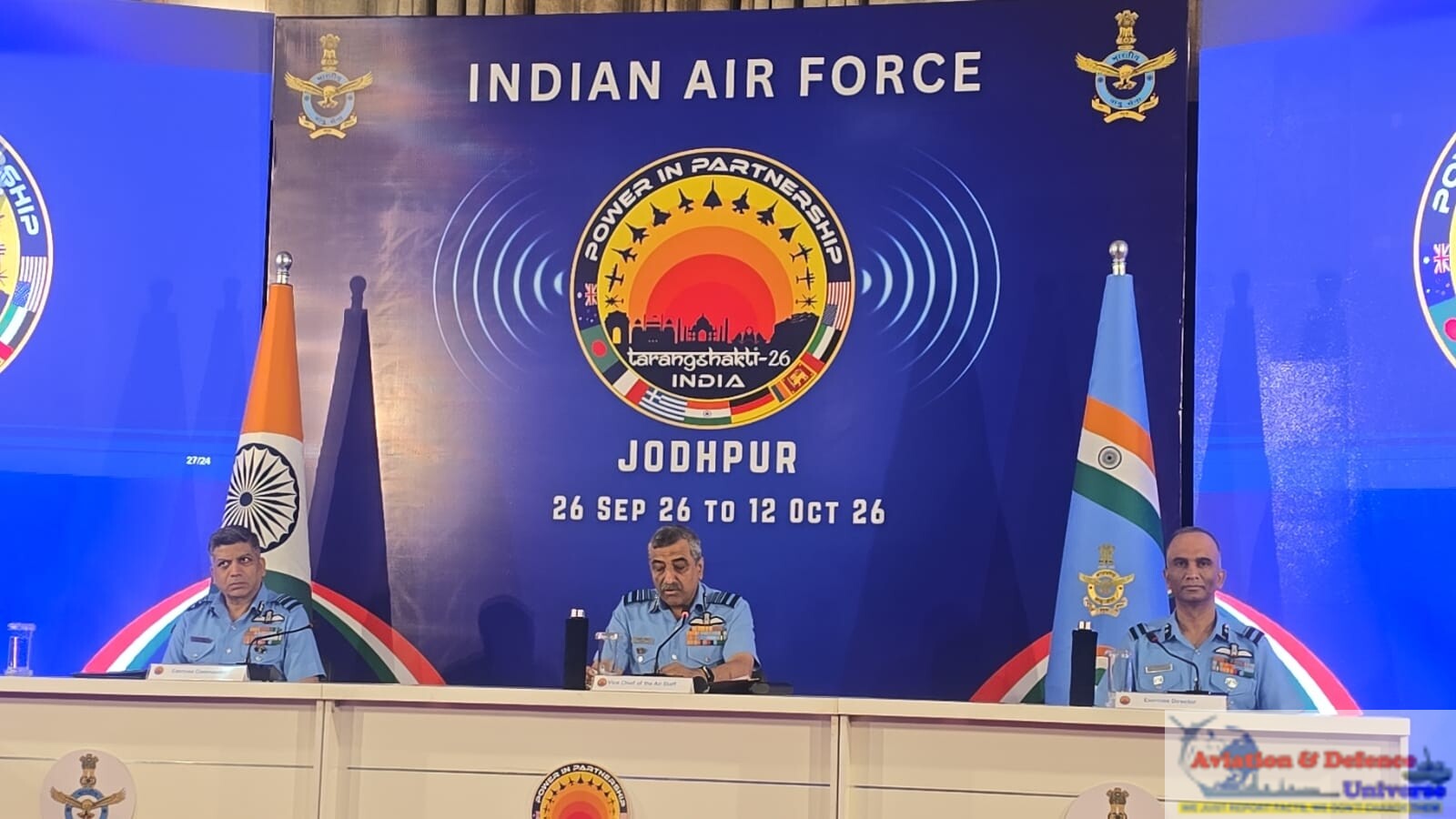
 The participating contingents will begin the day with yoga, followed by cultural interactions and static aircraft displays that will allow personnel to view the participating platforms at close quarters. A cultural programme will be organised in the evening, giving the foreign contingents an opportunity to showcase their respective traditions. An Air Power Seminar will be held in New Delhi on 9 October, followed by the Distinguished Visitors’ Day at Jodhpur on 10 October. Around 10 air chiefs or their equivalents, along with approximately 31 senior representatives, are expected to attend, subject to final confirmations. The entire exercise will be conducted under the leadership of Air Vice Marshal Raj Thakur, the Exercise Commander, while Air Commodore Sriram, Air Officer Commanding of Air Force Station Jodhpur, will oversee its execution at the host base.
 Air Marshal Dixit urged the media to look beyond the number of countries, participating aircraft and missions while reporting on the exercise. “The central story is people—the air warriors, airmen, airwomen and countless technicians from different countries,” he said. They would work, plan and fly together; exchange operational experiences; understand one another’s strengths and limitations; and develop the confidence required to operate collectively when it mattered most. Military partnerships, he explained, matured through these professional relationships, cultural connections and enduring friendships.
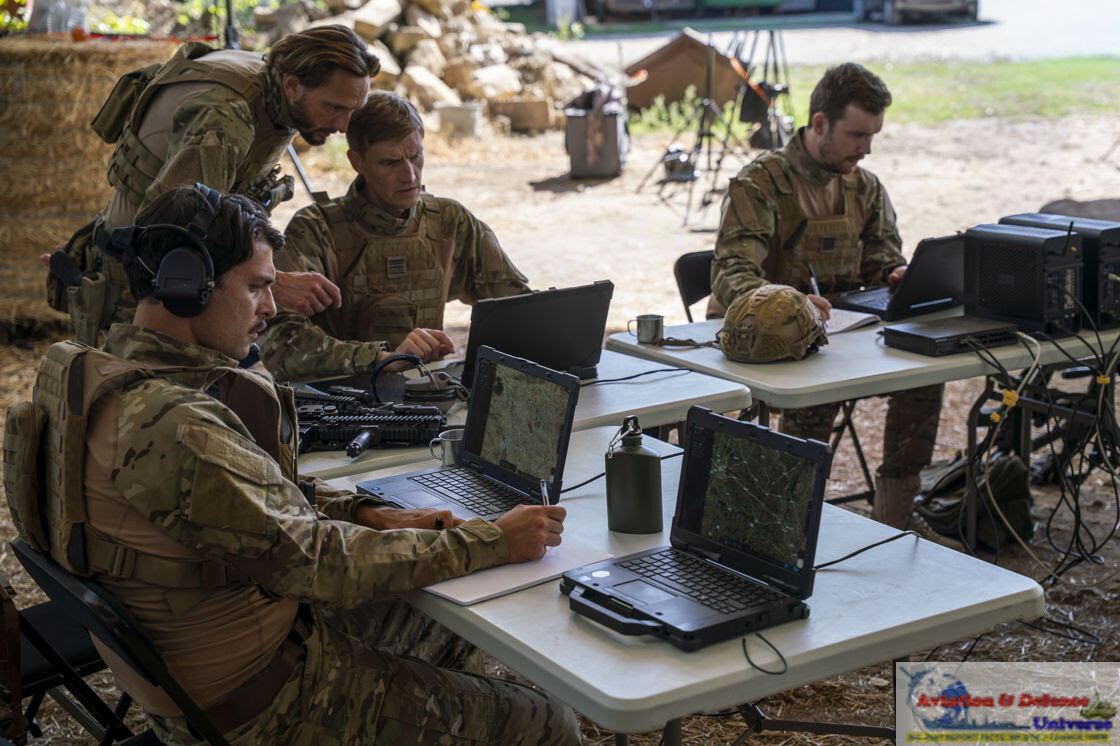
Tarang Shakti 2026 may command attention for the thunder of the F-35, Rafale, F-16 and Indian fighters over Jodhpur, but its real power will lie beyond the flight line. It will reside in shared mission rooms, joint debriefs and the trust built between air warriors from different nations. India will enter the exercise confident in its capabilities, open to learning and ready to cooperate—because the future of airpower will not be determined by machines alone, but by how effectively people, platforms and partnerships operate as one.
 Exercise Tarang Shakti 2026 will elevate India’s position as a leading regional and global airpower by demonstrating its ability to host, integrate and lead advanced multinational air operations. The participation of frontline fighters, strategic airlifters, aerial refuellers and surveillance platforms from friendly countries will highlight the Indian Air Force’s operational credibility and growing interoperability with major global partners. Regionally, the exercise will reinforce India’s role as a capable security provider and a stabilising force in the Indo-Pacific; globally, it will strengthen defence diplomacy and project India as a confident military power capable of shaping conversations on contemporary air warfare. By showcasing indigenous platforms, weapons, sensors and unmanned systems alongside advanced foreign assets, Tarang Shakti will also underline how Atmanirbharta and international cooperation can together expand India’s strategic influence in the skies.



















































-A4-Size-(2)_page-0001.jpg)