








- She Has Seen Earth from Space, He Is Training to Get There: Experience Meets Aspiration
- From ISS to Gaganyaan to VAST: Human Spaceflight’s Past, Present & Future Meet in Bengaluru
- Beyond Gaganyaan: Angad Pratap Maps India’s Human Spaceflight Future
By Sangeeta Saxena
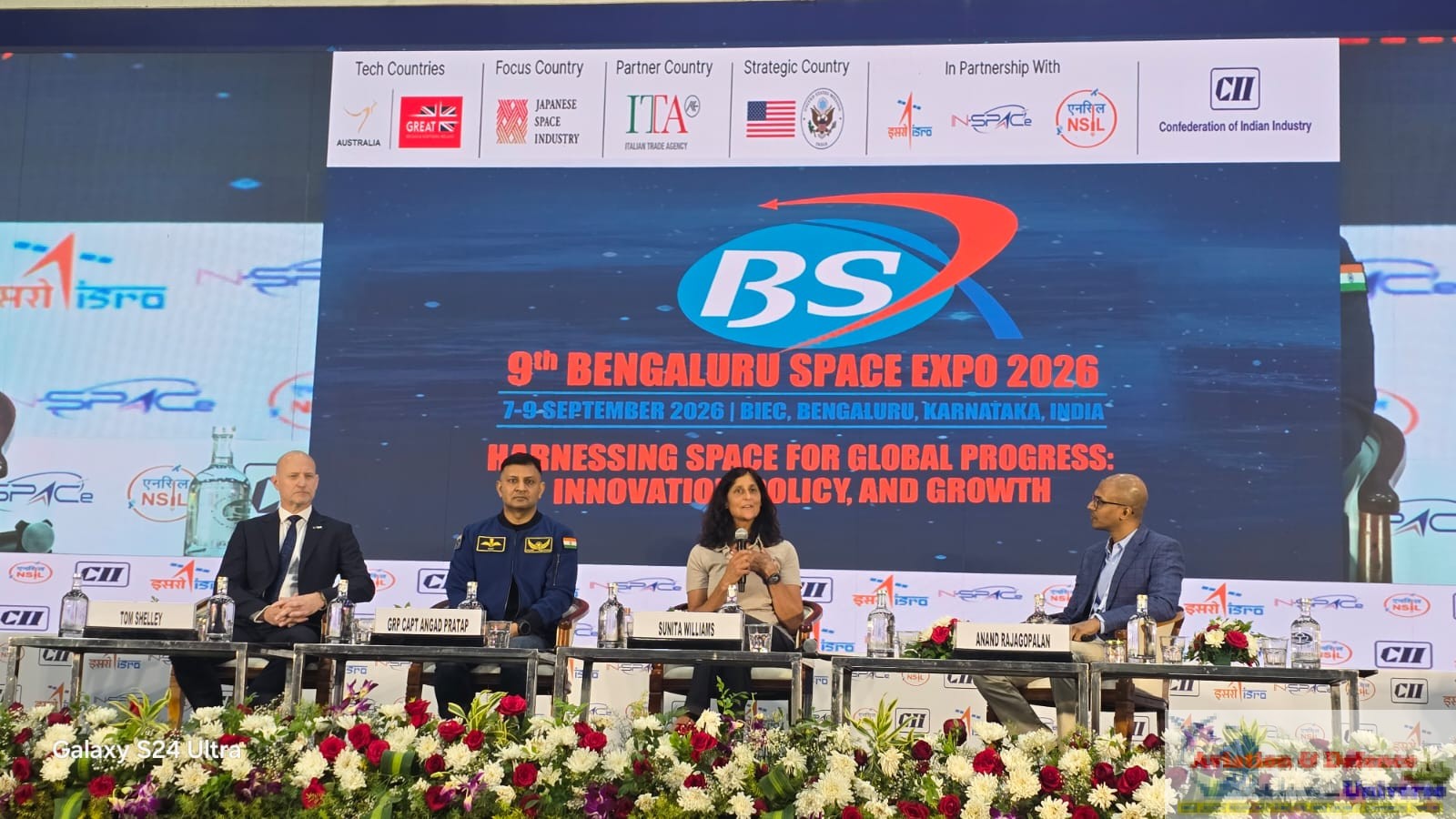
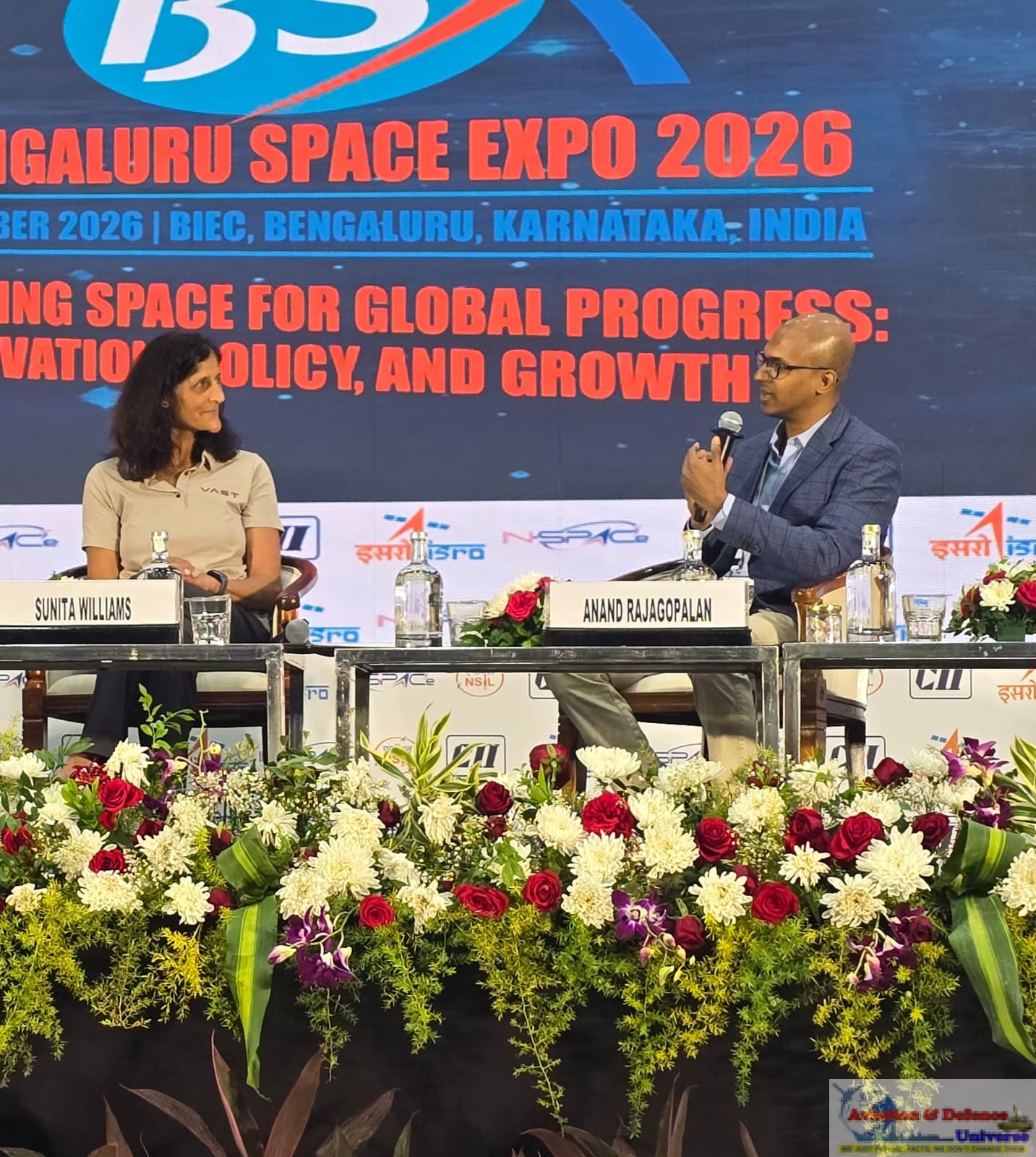
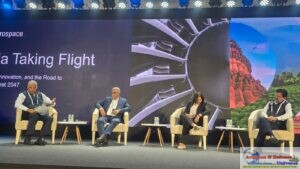
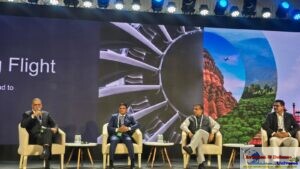
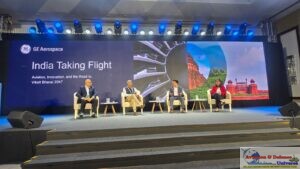
Bengaluru. 09 September 2026. If Bengaluru Space Expo 2026 wanted to end on a high, it could scarcely have scripted a better finale. It was the last session of the last day, but there was no sign of end-of-event fatigue inside the conference hall at BIEC. The hall was packed to capacity, seats filled and eyes trained expectantly towards the stage as the audience waited with bated breath for Sunita Williams. And then she arrived. The atmosphere changed almost instantly. Here was the astronaut whose extraordinary journeys had taken her far beyond Earth, now walking into a Bengaluru hall filled with space scientists, engineers, entrepreneurs, students and dreamers eager to hear what space looked and felt like through her eyes. The excitement was palpable, the applause spontaneous and the anticipation almost childlike. Williams herself immediately picked up on the energy, saying it was “an honour to be here” and speaking of how encouraging it was to see so many young engineers and aspiring astronauts at the Expo. With Group Captain Angad Pratap, India’s astronaut-designate and Tom Shelley of VAST joining her on stage, BSX 2026 had saved one of its most memorable conversations for the very end.
There are conversations about space that revolve around rockets, propulsion systems, spacecraft and technology. And then there are conversations that make one look beyond the machines and ask a far more profound question: what happens to humanity when humans leave Earth? At Bengaluru Space Expo (BSX) 2026, a remarkable panel brought together experience that has already travelled hundreds of days beyond the planet, an Indian astronaut-designate preparing for the country’s human-spaceflight future and the private sector working to make commercial space stations the next destination in low-Earth orbit.
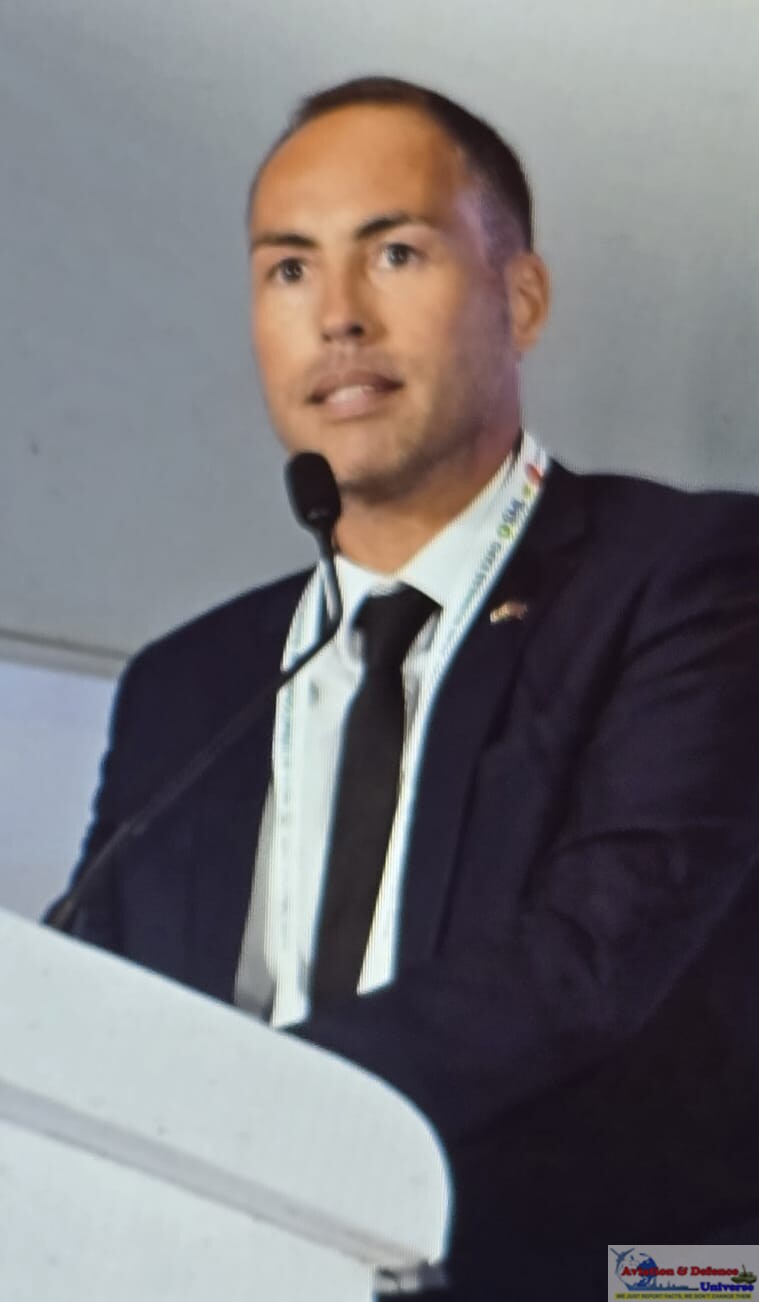
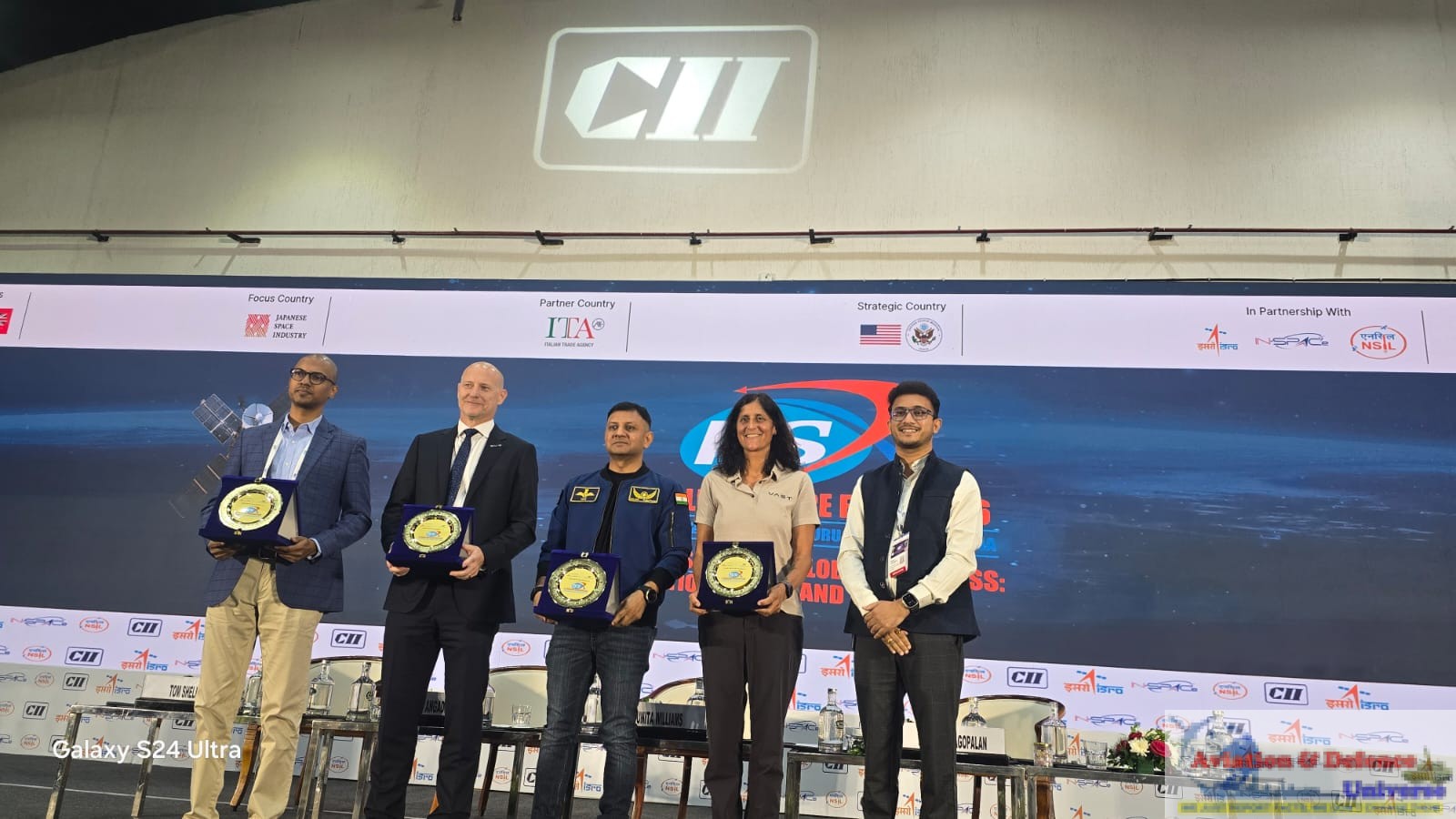
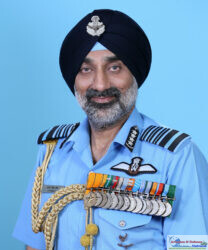
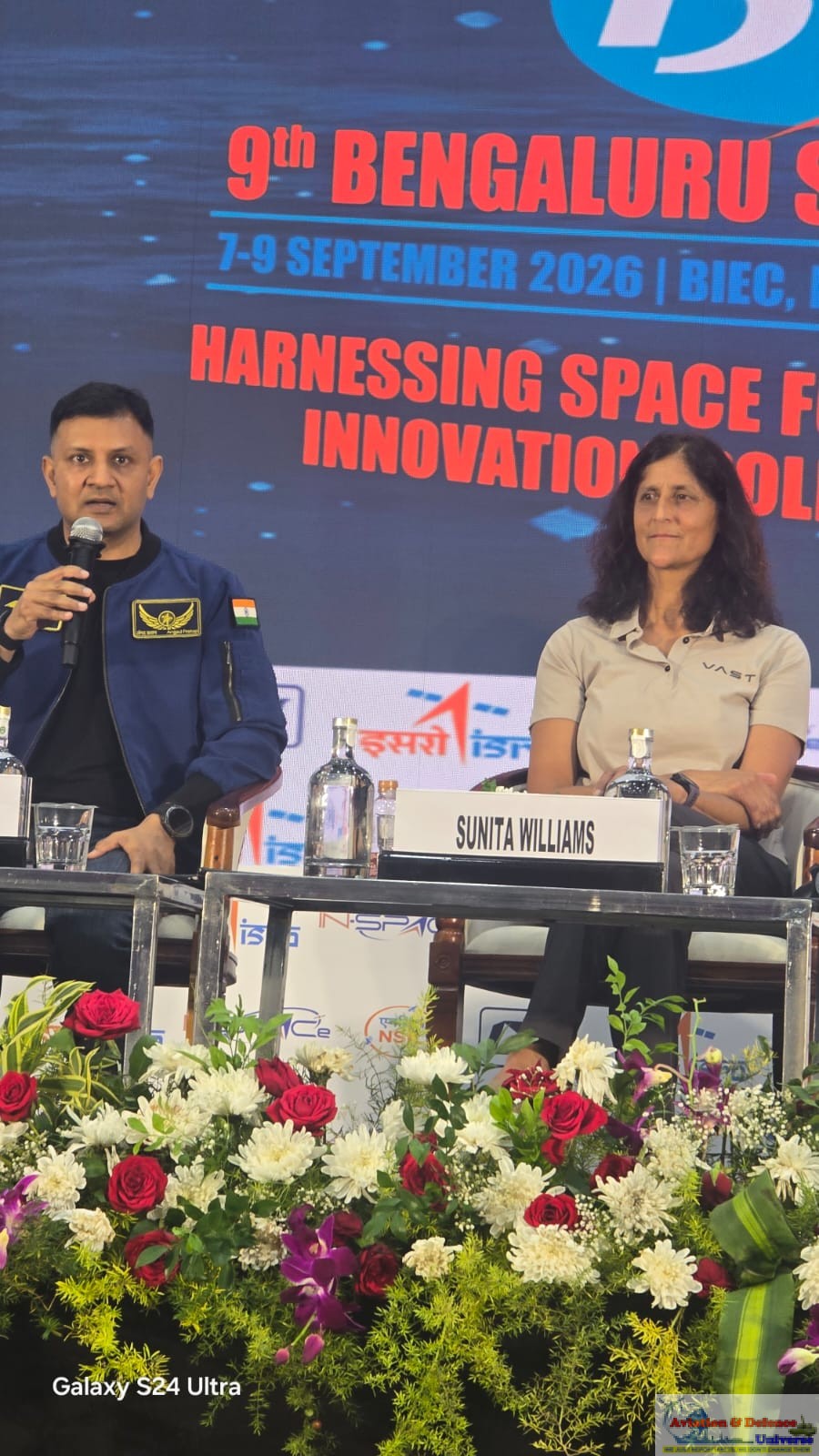 On stage were retired NASA astronaut and U.S. Navy Captain Sunita Williams, who has accumulated 608 days in space and 62 hours and six minutes of spacewalk time, is now Astronaut Advisor at American commercial space-station company VAST, Group Captain Angad Pratap, Indian Air Force test pilot and one of India’s four astronaut-designates for the Gaganyaan programme and Tom Shelley, Vice President, Private Crew Recruitment at VAST. The discussion was moderated by Anand Rajgopalan, Executive Vice President, TakeMe2Space. It became a conversation spanning the International Space Station, Gaganyaan, India’s future space station ambitions, commercial stations, astronaut training, science, AI, robotics, international cooperation—and ultimately the extraordinary change in perspective that comes from looking back at Earth from space.
Sunita Williams: From Building a Space Station to Building the Future
Williams began by looking out at the young engineers gathered at BSX and speaking almost as much to them as about herself. She said it was encouraging to see young engineers and aspiring astronauts who might one day follow in her footsteps. Astronauts, she explained, are part of the larger team of engineers and scientists who put spacecraft and space stations together and then conduct the science aboard them.
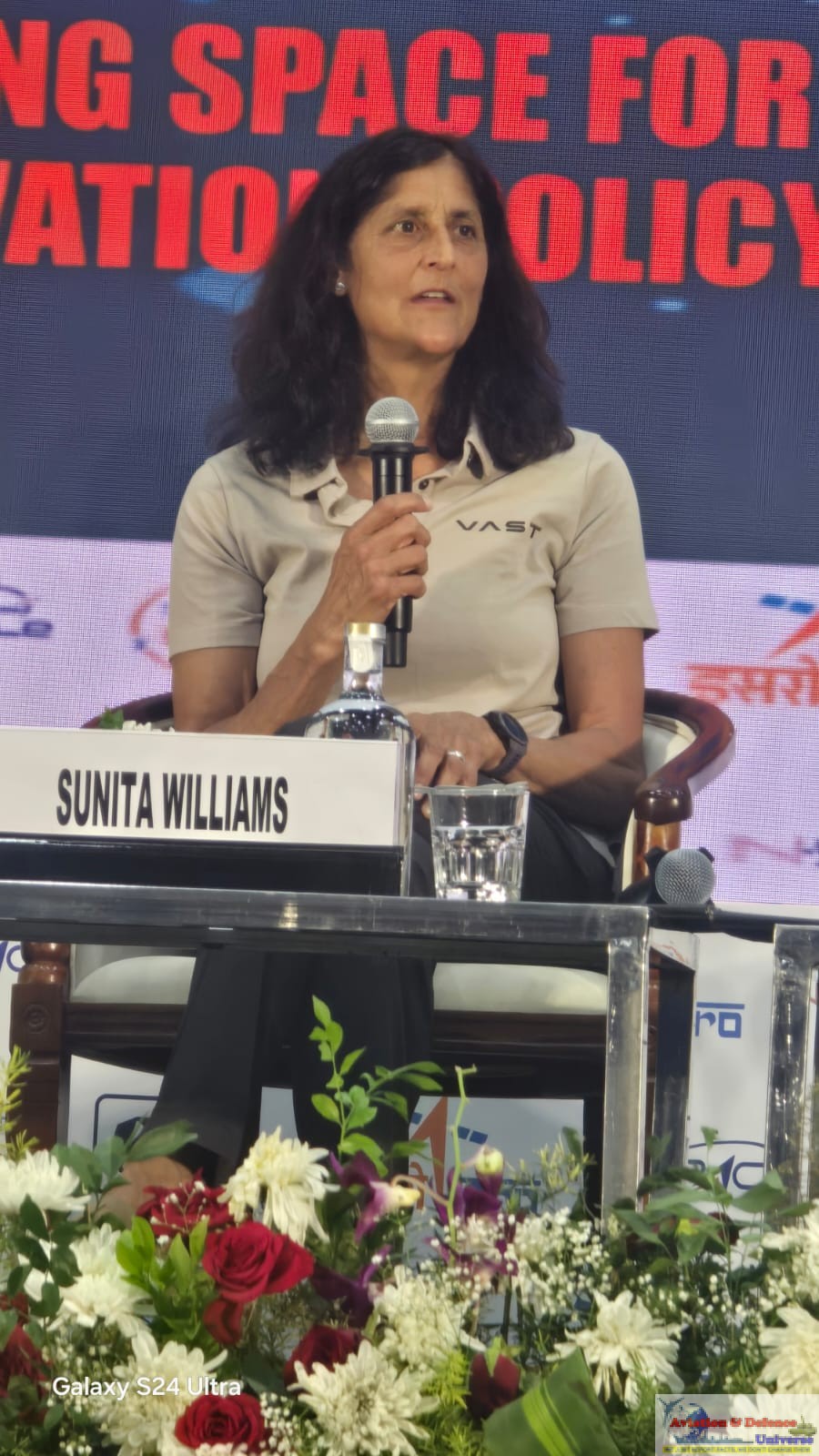 Her own career traced the evolution of human spaceflight. Her first mission involved construction of the International Space Station; on her second she flew with Russian partners and conducted experiments aboard the ISS; her latest mission involved flying a brand-new spacecraft. The scientific work stretched across years—from capillary-flow experiments that could influence future fluid-transfer systems to hydroponic plant nutrition, stem-cell research, DNA sequencing, material science and biological studies designed to understand what long-duration spaceflight does to humans.
For Williams, today’s generation now has an extraordinary springboard created by decades of work aboard Mir and the ISS. The next chapter, she suggested, belongs to modern space stations and new transportation systems—with governments and commercial companies participating together. And India, she felt, was ready for that challenge.
Angad Pratap: An Astronaut Must Be Many Professionals in One
Sitting beside someone who has already spent hundreds of days in orbit was a man preparing for India’s own human-spaceflight journey. Group Captain Angad Pratap described himself with humour as the “astronaut in the making”, but his explanation of astronaut training revealed the seriousness behind that journey. He said he had already spent around seven years on the ground training in the shoes of an astronaut. His description of what an astronaut needs to become was striking.
Away from Earth, he explained, the astronaut needs to function as an engineer, operator and medical professional. “You don’t need to be extremely great in one thing, but you need to be very, very good in multiple things,” he said, stressing that human spaceflight cannot belong to a single profession. Pilots, engineers, doctors and specialists across disciplines all have roles in making it possible.
India, he added, is now at a stage where multiple human-spaceflight technologies must develop almost simultaneously. Life-support systems, EVA capability, space transportation, a future station and lunar ambitions cannot simply be approached one after another. “It’s a telescopic thing which is happening and we have to think all of them at once,” he said.
Gaganyaan Is the Beginning, Not the Destination
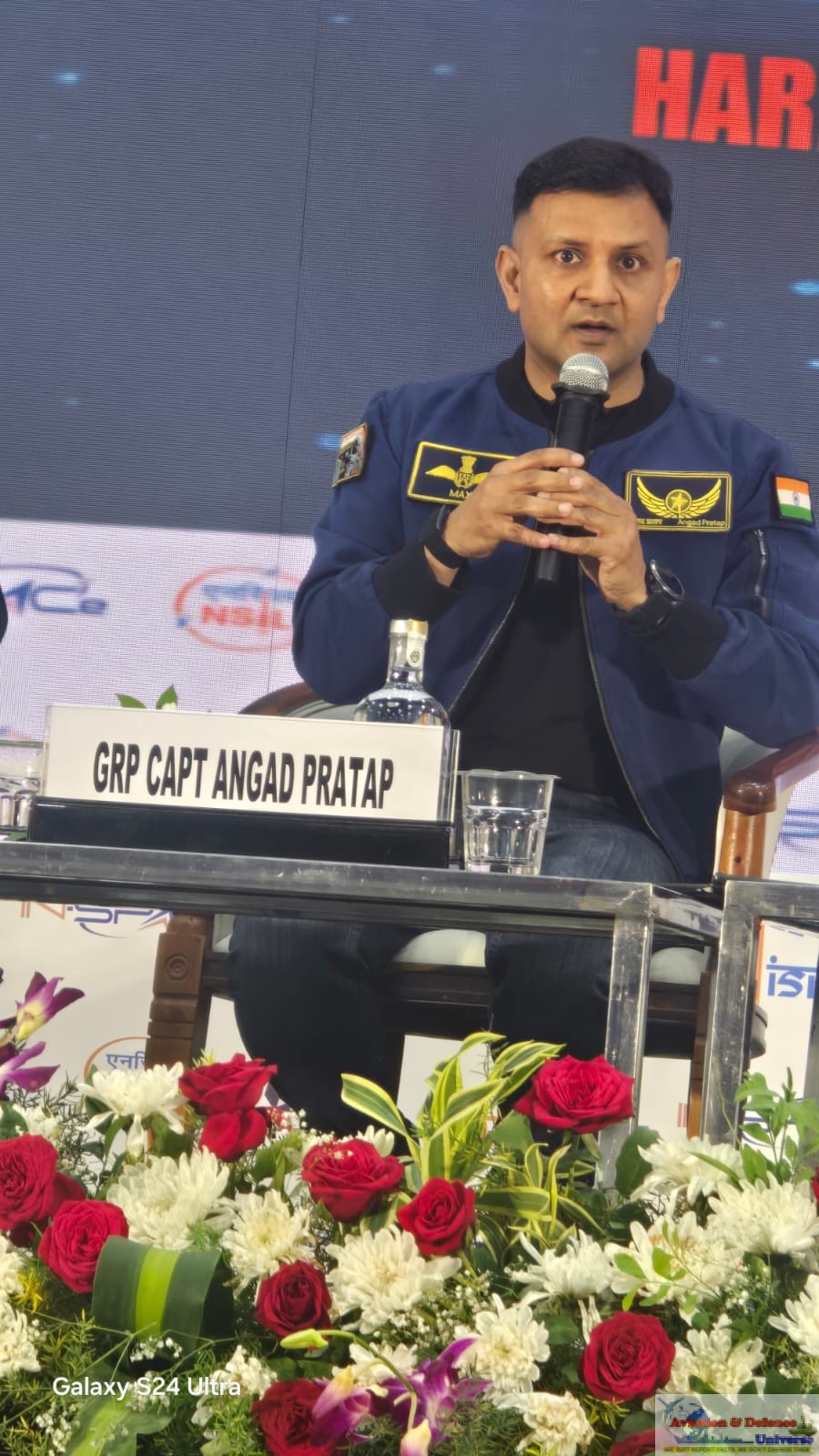 When asked to explain Gaganyaan and what lies beyond it, Pratap widened the canvas. He described indigenous human launch capability as an apex technology resting on numerous specialised technologies and a major national milestone. But he cautioned against treating Gaganyaan as the entirety of India’s human-spaceflight ambition.
For him, sending humans into space is about much more than demonstrating that India can launch an astronaut and bring that astronaut safely home. It is about creating access that eventually allows scientists and specialists from different disciplines to conduct research beyond Earth. “Gaganyaan may sound like one single capability, a technology demonstrator,” he said, but it would “lay the seed of foundation for much bigger things.” His larger vision was one in which space eventually becomes accessible to many more people, with government and private industry working symbiotically rather than in separate silos.
VAST: Taking the Space Station Commercial
That transition from government-led exploration to a mixed public-private space economy was where Tom 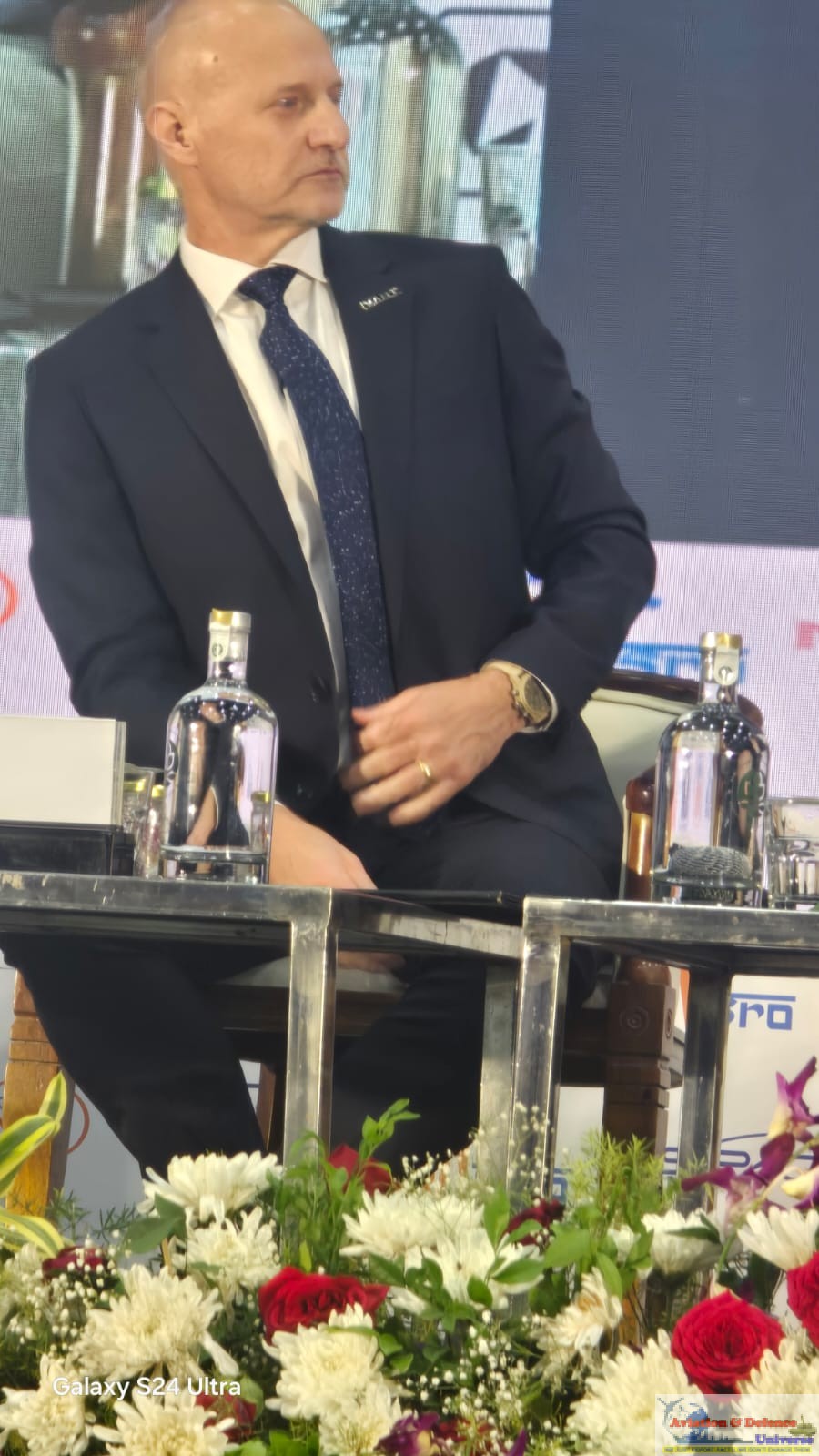 Shelley brought VAST into the discussion. He described VAST as a U.S. company with around 1,000 people at its Long Beach, California headquarters working on Haven-1, which the company plans as a commercial space station. The objective, he explained, is to build upon the enormous body of knowledge generated by the ISS, earlier space stations and more recent crewed-spacecraft development, while creating a system that can be developed more quickly, efficiently and at a cost sustainable over the longer term.
The commercial opportunity extends beyond space tourism or private astronauts. Shelley identified government astronaut missions and scientific research as important markets, particularly biotechnology. Research conducted in microgravity on areas such as stem cells and protein crystal growth can ultimately have applications back on Earth.
In other words, the commercial space station of the future could become not simply an orbital destination, but a laboratory, workplace and platform connecting governments, researchers, companies and eventually a much broader human presence in space.
What Earth Has That Space Still Needs
One of Williams’ most fascinating observations concerned something people on Earth barely think twice about: instant access to information. On Earth, she pointed out, when we have a question, we pull out a phone and search for the answer. On the ISS, that kind of database is not as readily available, making communication with teams on the ground essential.
That dependence becomes increasingly problematic as humans travel farther from Earth and communications delays increase. Future crews, Williams argued, will need far greater autonomy—databases they can access themselves, reliable 3D printing, onboard diagnostic and analytical capability and the ability to repair equipment without waiting for instructions from Earth. Even something as apparently simple as printing on paper becomes difficult in space because machines designed on Earth often depend upon gravity. The lesson was compelling: taking humanity deeper into space does not simply mean transporting Earth technology upwards. It means redesigning technology for a world where Earth’s assumptions no longer apply.
Humans, Robots and AI: Partners, Not Rivals
The discussion inevitably turned towards artificial intelligence and robotics. Williams offered a beautifully simple analogy. Robots sent to the Moon or Mars, she said, are effectively “looking for the landing spot for us.” They can probe environments and gather information, but they operate on what humans already know. “AI is going to help us,” she said, but humans still need to be present to make decisions when confronted with the unexpected. For her, the future lies in a symbiosis between technology, robotics and people.
Pratap strongly agreed, cautioning against viewing AI and robotics as replacements for humans. He revealed that he is involved with the human-machine interface and cockpit design for Gaganyaan as well as India’s future space-station effort and said he was personally interested in integrating AI into cockpit operations, subject to approvals.
It was a particularly telling exchange at a technology exposition: the future of human spaceflight may depend not on choosing between human and machine, but on learning how intelligently the two can work together.
The View That Changed Everything
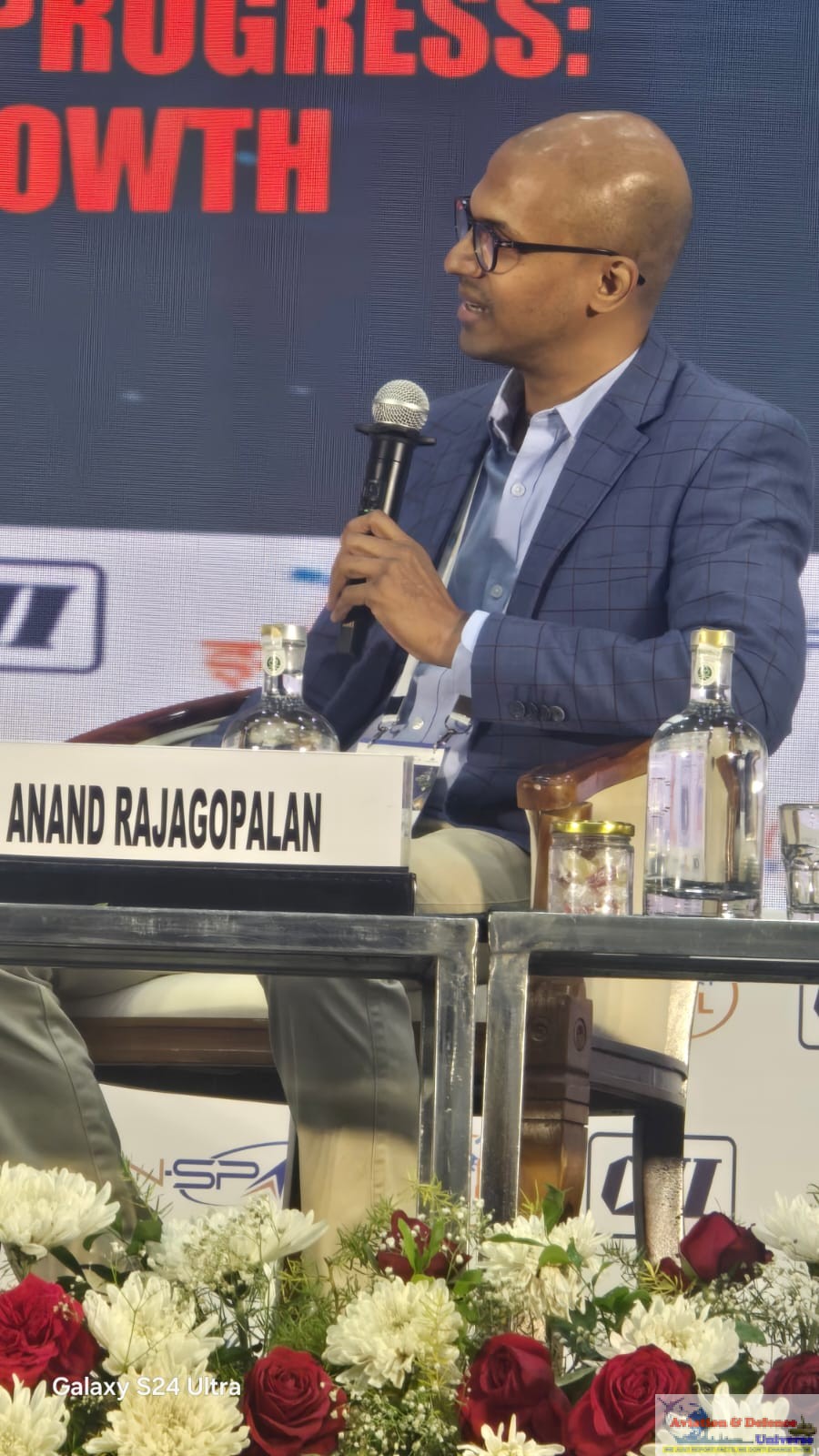 Then came perhaps the afternoon’s most emotive moment. Anand Rajgopalann the moderator asked Williams to recall her first journey into space—the moment she became weightless and first looked through the window at Earth. Her answer changed the mood from technology to humanity. “I’ll just say it never gets old,” she began. She remembered being called from the shuttle’s mid-deck to the flight deck, looking through the window and seeing Earth. “It’s round. The planet is round… and it’s beautiful.” But what followed was more profound. Looking down, she realised that everybody she knew, every plant and every animal she knew was there. “That is our home. That is it.” At that moment, she said, it did not occur to her that she was American, that her father was from India or her mother came from Slovenia. From orbit, those divisions seemed strangely insignificant. “We’re all on one little spaceship.” In a room filled with aerospace engineers, entrepreneurs and space professionals, it was perhaps the simplest and most powerful description of why human spaceflight matters.
International Cooperation: Space Beyond Geopolitics
Williams described international cooperation aboard the ISS as sometimes difficult, but fundamentally invaluable. Different cultures bring different ways of thinking and solving problems, and humanity will need precisely that diversity when confronting problems on the Moon and farther into space that have not yet even been imagined.
Pratap framed the choice as one between working constructively or destructively. Humanity could divide itself into competing groups or give those groups a common challenge requiring everyone’s expertise. The ISS, he argued, had already demonstrated what collaboration can achieve. “We need all hands on board,” he said while discussing the technologies required for deeper space exploration.
When Will Space Be for Everyone?
An audience question asked why India’s initial astronaut selections had centred on test pilots and when women and professionals from other fields would have similar opportunities. Pratap explained that India’s domestic human-spaceflight programme is still at an early stage, when test pilots provide an important operational-safety backbone because of their experience managing complex and fast-moving vehicles. But that is not the final model.
“The ultimate aim is to do science,” he stressed, explaining that human spaceflight eventually needs professionals from engineering, research and medicine as programmes mature. That answer linked neatly with a theme running throughout the discussion: the astronaut of tomorrow may not necessarily look like the astronaut of today.
Training the Mind for Space
 The emotional and psychological demands of spaceflight also entered the conversation. Pratap explained that confinement and solitude form a significant part of astronaut training. Extreme environments on Earth—from polar regions and mountains to the depths of the ocean—can help train the mind to deal with isolation, danger and silence. “I try and expose my mind to all of this,” he said, describing the objective as learning to cut through noise and remain calm despite knowing one is in a dangerous environment.
Williams added a deeply personal perspective when talking about her spacesuit. After a spacewalk, she said, she would hug it because it represented all the engineers and others who had invested their lives in creating the equipment that had kept her alive outside the station. For her, that hug was effectively a hug to everyone behind the engineering. It was another reminder that astronauts may be the people visible in space, but every astronaut carries thousands of engineers, scientists, technicians and mission specialists invisibly with them.
What Can Space Heal? Perhaps Perspective
Towards the end came an unusual question: what can actually be healed by going to space? Williams paused before giving an answer that transcended medicine and machinery. “One thing that is easy to fix is perspective.” Space, she said, allows people to step away from the traffic jams, queues, arguments and irritations of daily life and see the best in people and the beauty of the planet differently. And perhaps that became the unintended theme of the entire panel. Up There, We Are a Family
In her closing remarks, Williams returned to international cooperation. Space, she said, crosses boundaries. Countries that may have difficult relationships on Earth can still work productively together in orbit. “It doesn’t matter who the people are, if they’re Russian, if they’re Indian, if they’re Japanese, or if they’re from the UAE… We are a family.”
 Astronauts depend on one another, while thousands of people on Earth must cooperate to make their missions possible. Human spaceflight, she said, can bypass geopolitical boundaries and focus attention on successfully taking people to space, allowing them to conduct missions for humanity and bringing them home safely. Pratap carried that thought one step further. Astronauts, he suggested, are in a unique sense “ambassadors of humanity” because they have physically left the boundaries of the planet. He imagined a future where the badge they carried represented not merely an individual nation, but Earth itself. And with that, a panel that began with technology ended with humanity.
A veteran of 608 days in space sat beside an astronaut-in-the-making, bringing together two extraordinary chapters of human spaceflight on the BSX 2026 stage. Sunita Williams carried with her the experience of helping build and live aboard the International Space Station, while Group Captain Angad Pratap represented India’s aspirations to take its own human-spaceflight journey forward. From the ISS to Gaganyaan and beyond, experience met aspiration, and history seemed to shake hands with the future. It was an afternoon when building the ISS met building India’s space dream—and one that those present will remember for a long time. Tom Shelley represented a commercial future in which orbital stations could become more accessible, repeatable and economically sustainable.
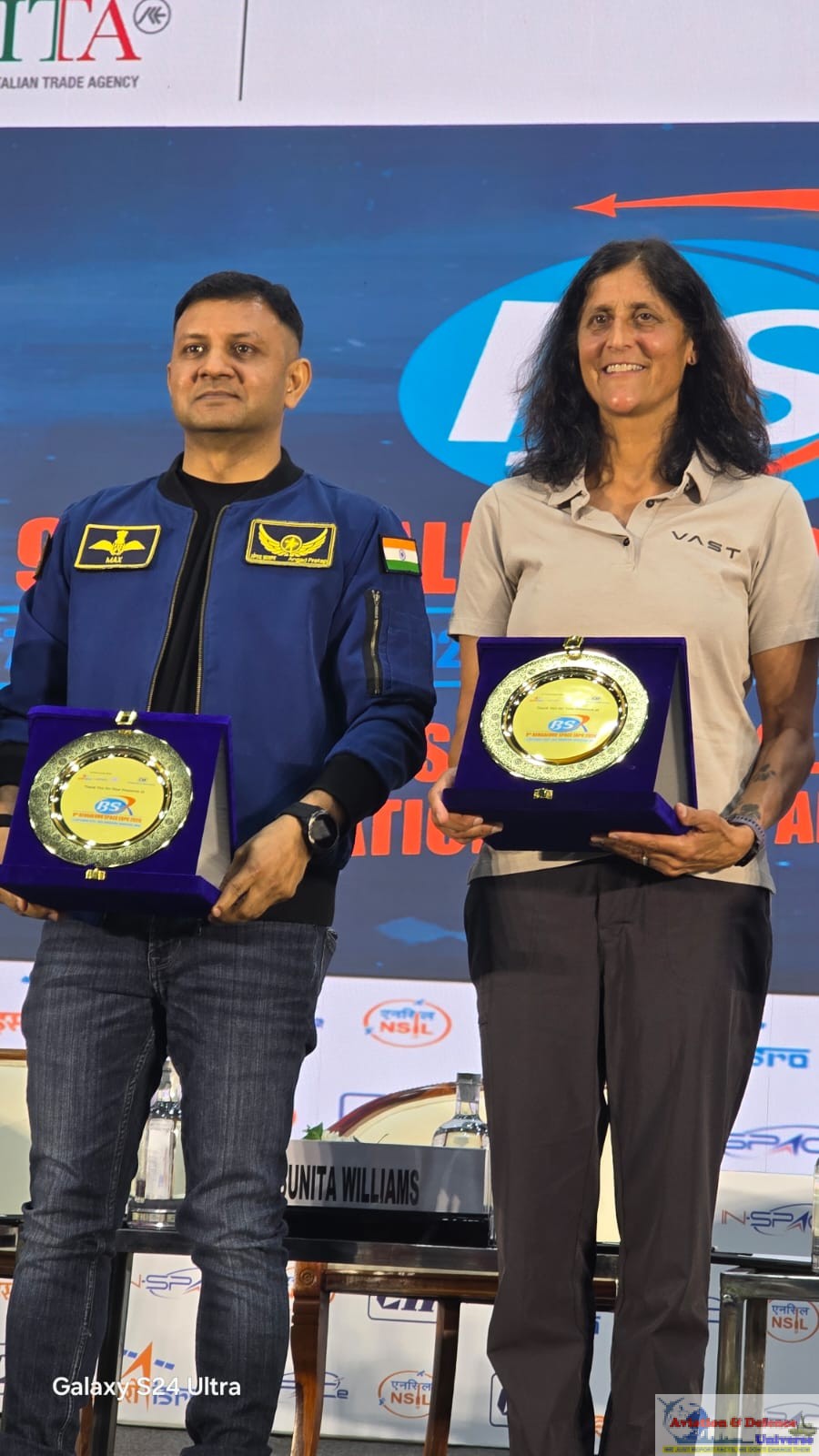 Three perspectives. Three different points on the human-spaceflight timeline. But one destination. Space may be the next frontier of technology, commerce and national ambition. Yet the most powerful message from the BSX 2026 stage was that when humans finally look back at Earth from beyond its boundaries, the lines that divide us become difficult to see. Perhaps Williams had already found the perfect description, “We are all travelling together on one little spaceship called Earth.”
As the applause filled the hall and the final session of BSX 2026 drew to a close, the journalist in me felt something I knew would remain a memory of a lifetime. I have listened to countless speakers, interviewed men and women who have flown extraordinary machines and reported stories of courage, technology and exploration, but listening to Sunita Williams was different. Sitting just a few metres away was someone who had actually left our planet, lived among the stars and looked back at Earth from a place most of us can only imagine.
Perhaps what made the moment even more poignant was remembering how, during her most recent mission, time had seemed to stand still for millions of people on Earth waiting for her return. Williams recalled that people across the world followed her extended stay and simply wanted her and her fellow astronaut to come home. Later, strangers she met at airports would tell her, “We’re so glad you’re home.” Their nationality, politics or background did not matter—and to her, that became a testament to humanity. For those months, space had transformed one astronaut’s journey into a shared human emotion: someone was far away from home, and the world was waiting for her to come back.
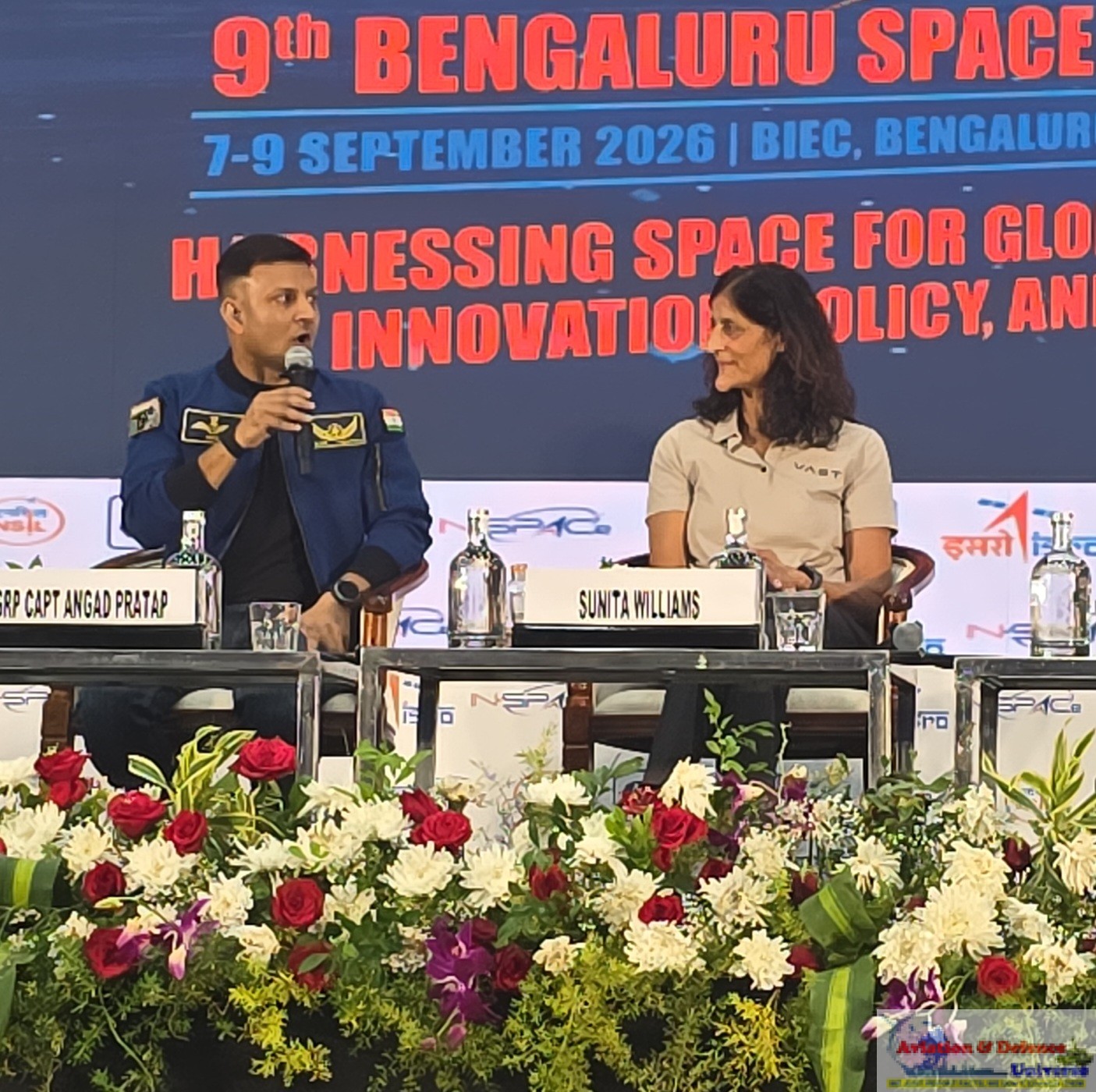
Some sessions inform. Some inspire. And then there are those rare conversations that stay with you long after the conference hall has emptied. As I walked out of the packed BIEC conference hall that evening, the reporter’s notebook was full, but it was the heart that carried the bigger story. For a few unforgettable minutes, journalism ceased to be about recording quotes and filing a report. It became about listening to someone who had travelled beyond Earth tell us what Earth looks like from there. BSX 2026 had ended, the lights would soon dim and the crowds would disperse, but Sunita Williams had left us with something far more enduring than stories of rockets and spacewalks—the reminder that however far humanity travels into the universe, home is still this tiny blue planet, and sometimes it takes travelling beyond it to understand just how precious it is. The curtains did not merely come down on the ninth edition of Bengaluru Space Expo—they came down with a bang, leaving a houseful audience looking not towards the exit, but upwards towards space.




























































-A4-Size-(2)_page-0001.jpg)