 18th BRICS Summit















- Big Missions, Small Components: From Launchpad to Orbit
- From NavIC to Spacecraft: ISRO Puts Innovation on Display
- A Closer Look at the Engineering Powering India’s Space Future
By Sangeeta Saxena
Bengaluru. 10 September 2026. A satellite launch lasts minutes. The engineering that makes the mission possible begins long before the countdown and continues well after the spacecraft reaches orbit. At BSX 2026, an ISRO representative walked Aviation & Defence Universe (ADU) through a display of components that revealed some of that less visible work.
The tour began with a GNSS receiver, the link between navigation satellites and the devices people use on the ground. India’s NavIC system transmits navigation signals from space, the representative explained, but a phone or other ground device needs a receiver to put those signals to use. The small unit on display offered a practical starting point for understanding how a satellite service reaches its users.
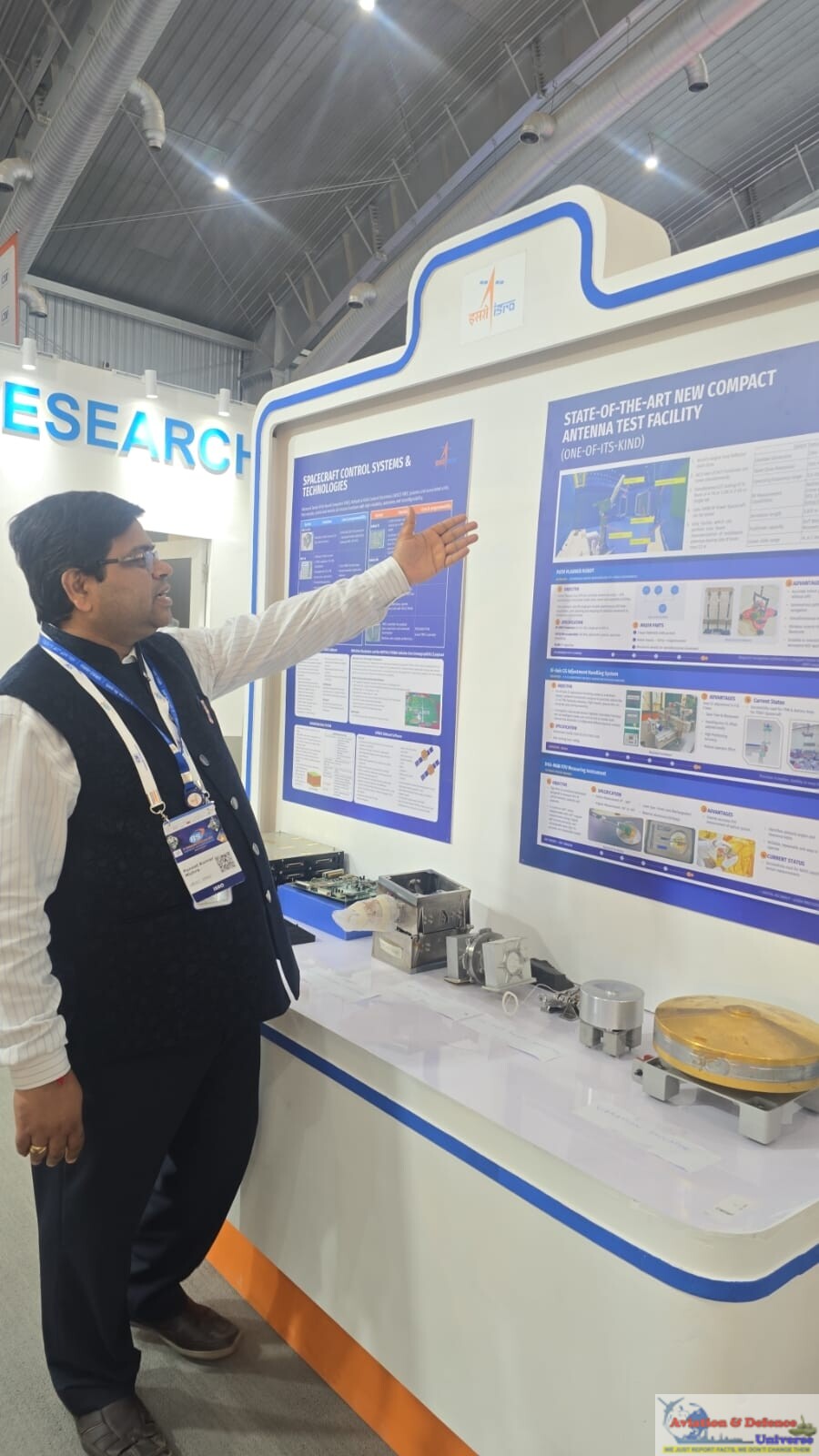 A few steps away, the challenge was temperature. According to the representative, a satellite panel facing the Sun can reach around plus 100°C, while one facing away can fall to around minus 100°C. The electronics inside must operate within a far narrower range. Heat pipes help move thermal energy through the spacecraft, while active and passive thermal control systems help manage its temperature. What looked like a collection of modest components was, in effect, part of the satellite’s survival system.
The display then opened onto ISRO’s wider record of spacecraft development. A poster represented more than 150 satellites built by the organisation across experimental, remote sensing and geostationary missions. GSAT-11 stood out in the discussion as one of ISRO’s largest and heaviest spacecraft, with a throughput capacity of about 8 Gbps.
The representative pointed next to an onboard computer, describing it as the satellite’s “mind.” It receives commands and directs activities aboard the spacecraft. Nearby was an electronics package used to deploy equipment after launch. Solar panels, antennas, booms and payloads must often travel folded within the limited space available inside a rocket; once in orbit, they need to open and function as intended.
That sequence depends on hardware such as the hold-down and release mechanism also displayed at the stand. It keeps equipment secured during launch, then releases it for deployment. Vibration isolators solve another problem from the journey into space. Placed between the satellite and launch vehicle, they help protect spacecraft components and their joints from the intense vibration of lift-off.
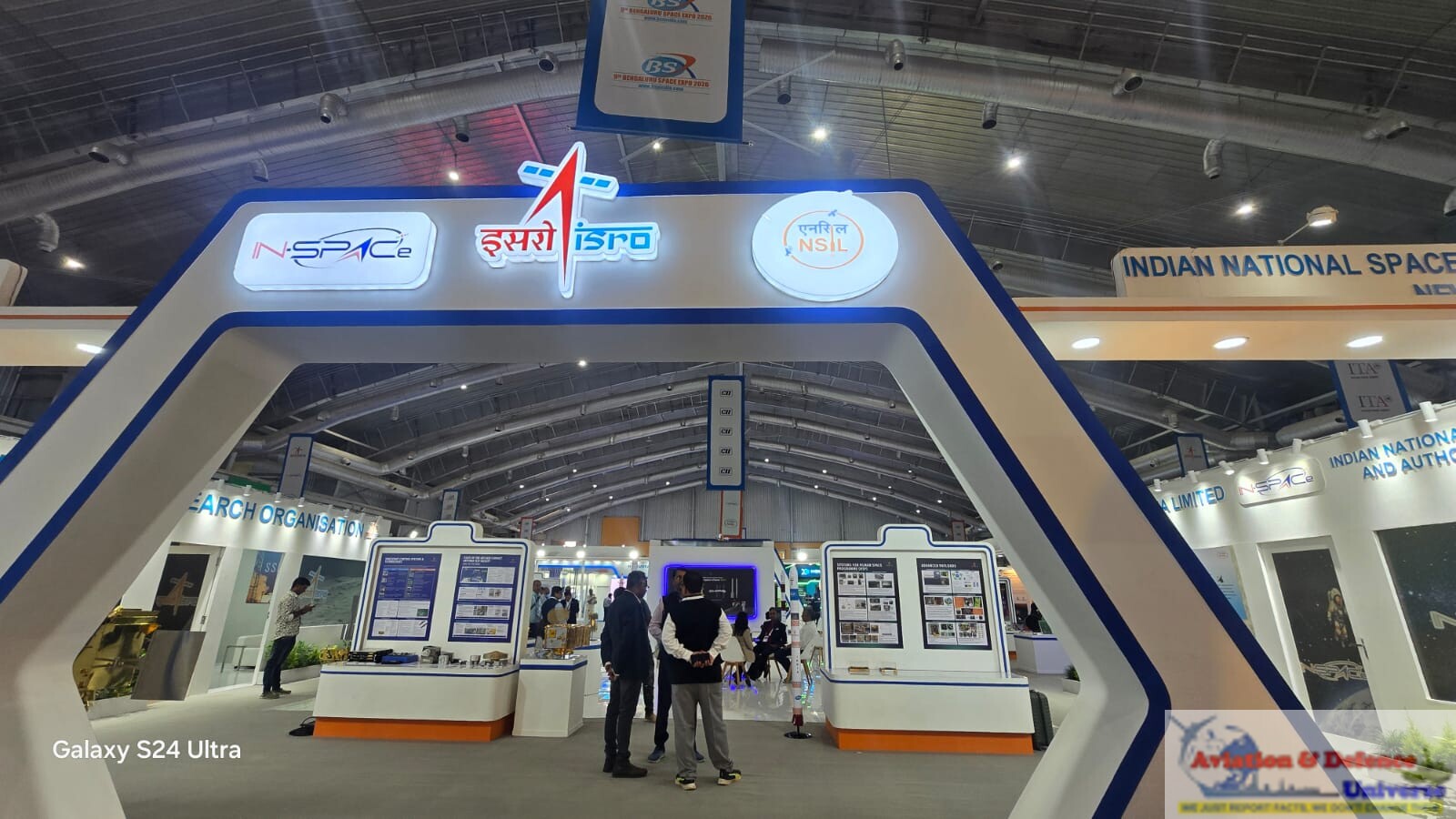 Spacecraft must also communicate while moving. Referring to ISRO’s SpaDeX mission, the representative showed a radio frequency unit used to support communication as two spacecraft approach and align. An RF rotary joint demonstrated a related capability: maintaining a communication link between parts even when they rotate relative to each other. He stressed that the technologies on display were indigenous ISRO developments.
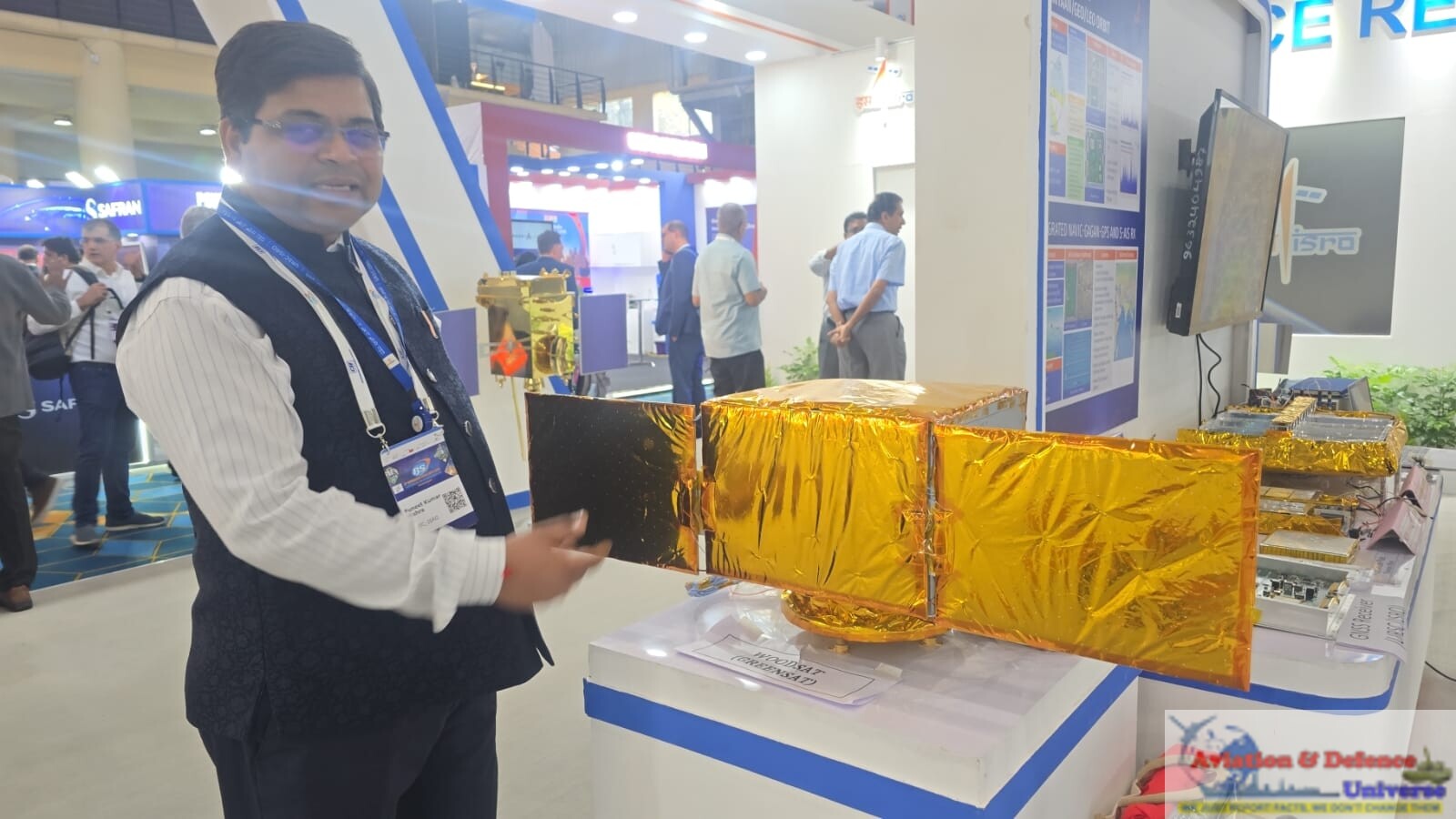
The conversation also turned towards work still in progress. ISRO is exploring a wooden satellite as a technology demonstration linked to sustainability, the representative said. But the material brings engineering challenges, particularly electromagnetic shielding, which a metal structure provides more readily. The concept remains an area of development rather than a finished solution.
Although it could not be brought to the exhibition floor, the representative also described ISRO’s Compact Antenna Test Facility in Bengaluru. He said it can accommodate testing of large satellites as well as multiple smaller spacecraft. Its inclusion in the tour drew attention to a stage of space missions that rarely attracts the spotlight: checking that a satellite and its systems will perform before they leave Earth.
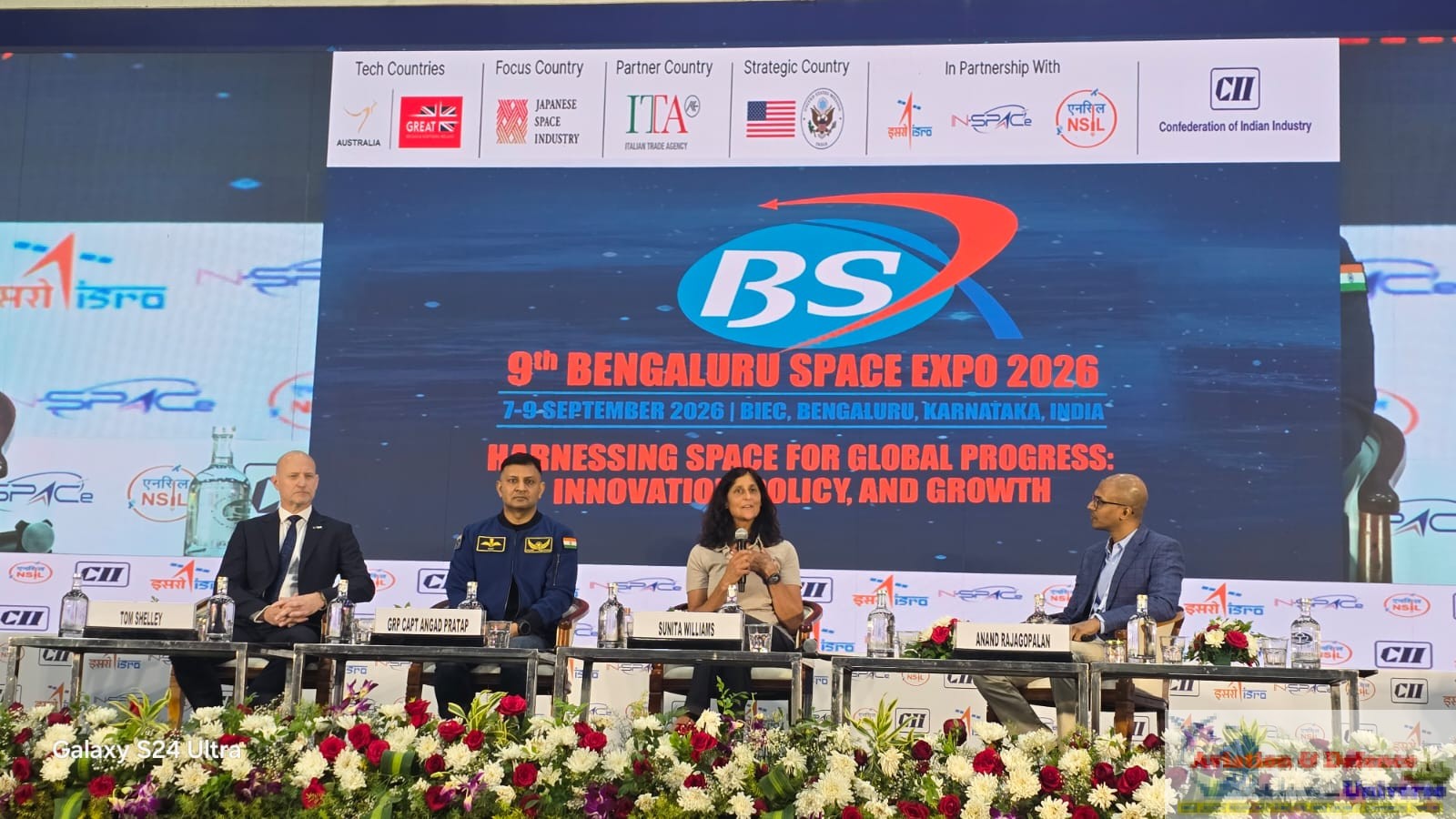
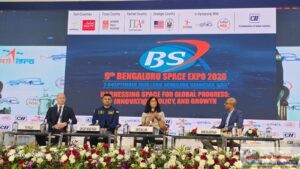
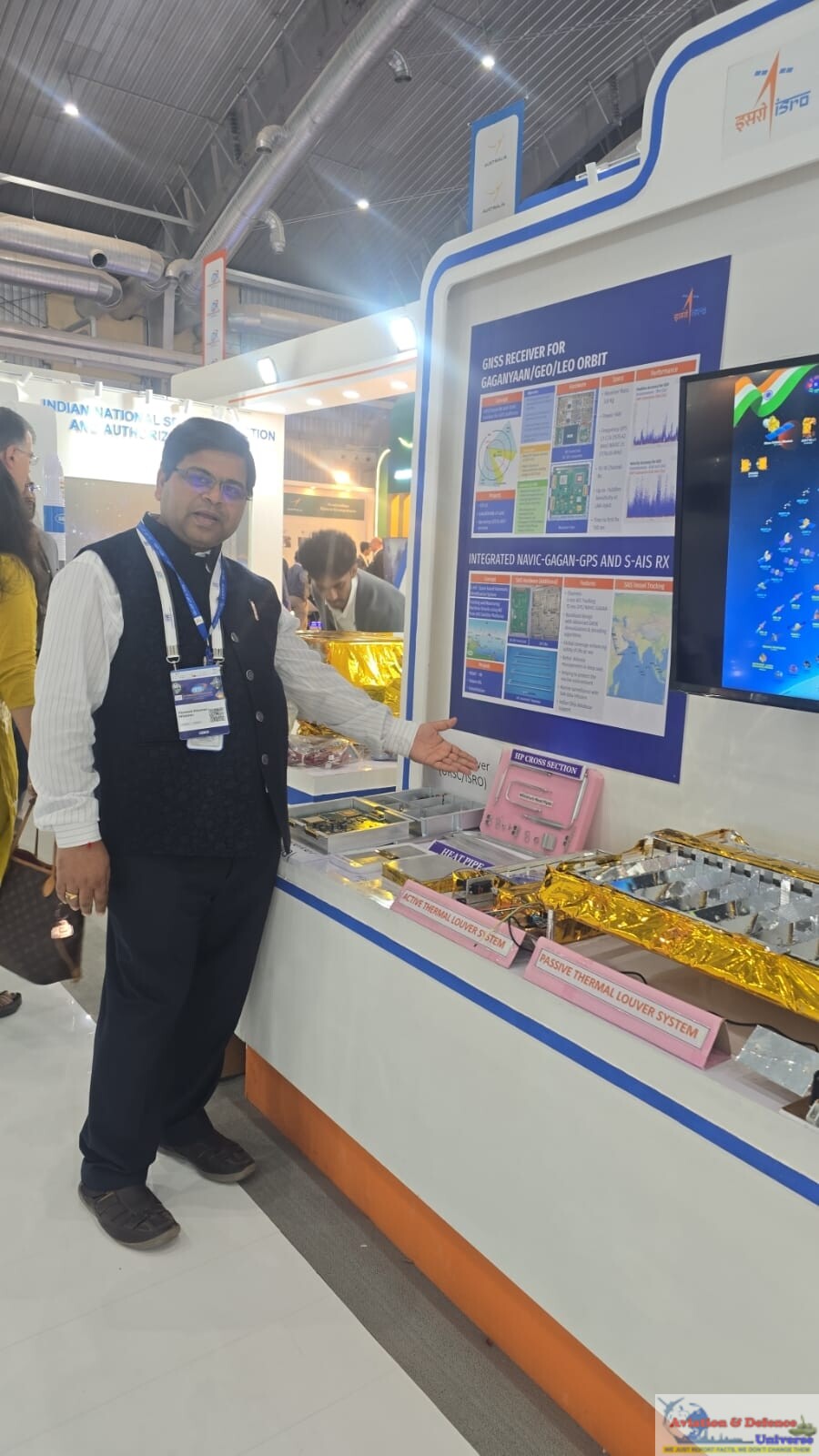 At the Bengaluru Space Expo (BSX) 2026, held from 7–9 September at BIEC, ISRO’s joint pavilion with IN-SPACe and NewSpace India Limited put India’s space ambitions on full display. Inaugurated by ISRO Chairman Dr V. Narayanan, it took visitors from launch vehicles and human spaceflight to satellites, navigation, communications and Earth observation. Scale models and technical exhibits offered a closer look at the systems behind the missions—and at the growing role of industry in building them.
The pavilion also looked beyond the next launch. Displays explored space sustainability and debris monitoring, while ISRO centres offered industry visitors a chance to discuss components, collaboration and technology transfer. The Indian Institute of Space Science and Technology brought academic research into the mix, and spacecraft models made India’s space story tangible for the wider public. Together, the exhibits showed a sector expanding its ambitions in orbit and its partnerships on the ground.
For visitors, the walk through the stand offered a change in perspective. The launch may be the most visible moment of a space mission, but its success rests on receivers, computers, thermal systems, release mechanisms and testing facilities working together. At BSX 2026, ISRO’s display brought those details into view—and showed how much has to happen before a satellite can do its job in space.









































































-A4-Size-(2)_page-0001.jpg)