


 18th BRICS Summit













- From Milan to Bengaluru : Leaf Space Plugs into India’s NewSpace Revolution
- Satellites in Orbit, Leaf Space on the Ground : The Network Behind the Mission
- Ground Stations as a Service : Makes Satellite Connectivity Simpler
By Sangeeta Saxena
Bengaluru. 10 September 2026. Satellites may capture the imagination in orbit, but every mission needs a dependable connection back to Earth. That is precisely where Italy-headquartered Leaf Space comes in. From its global network of ground stations, the company provides the vital communication bridge that allows satellite and launch-vehicle operators to send commands and receive data without having to build their own ground infrastructure.
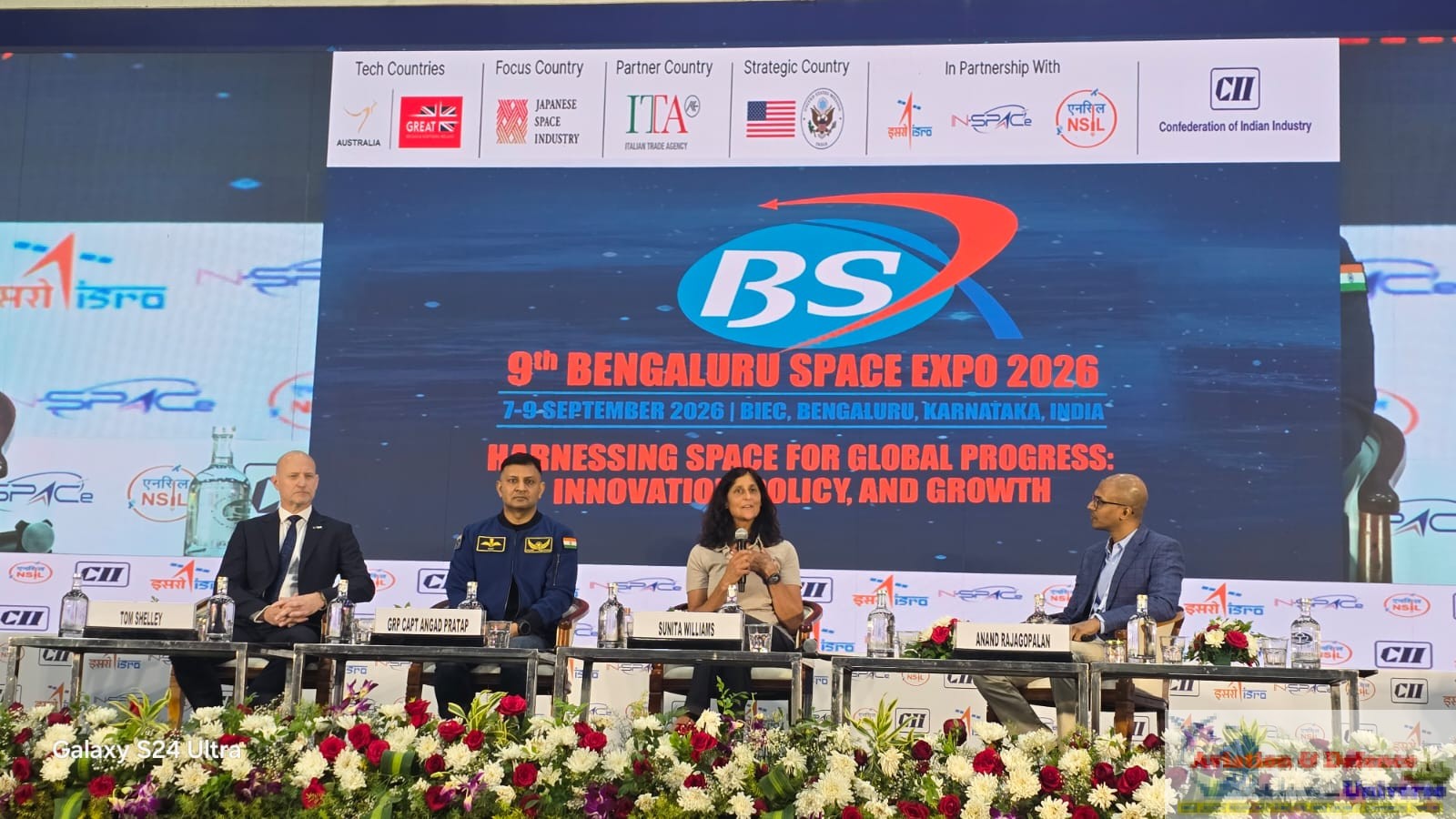
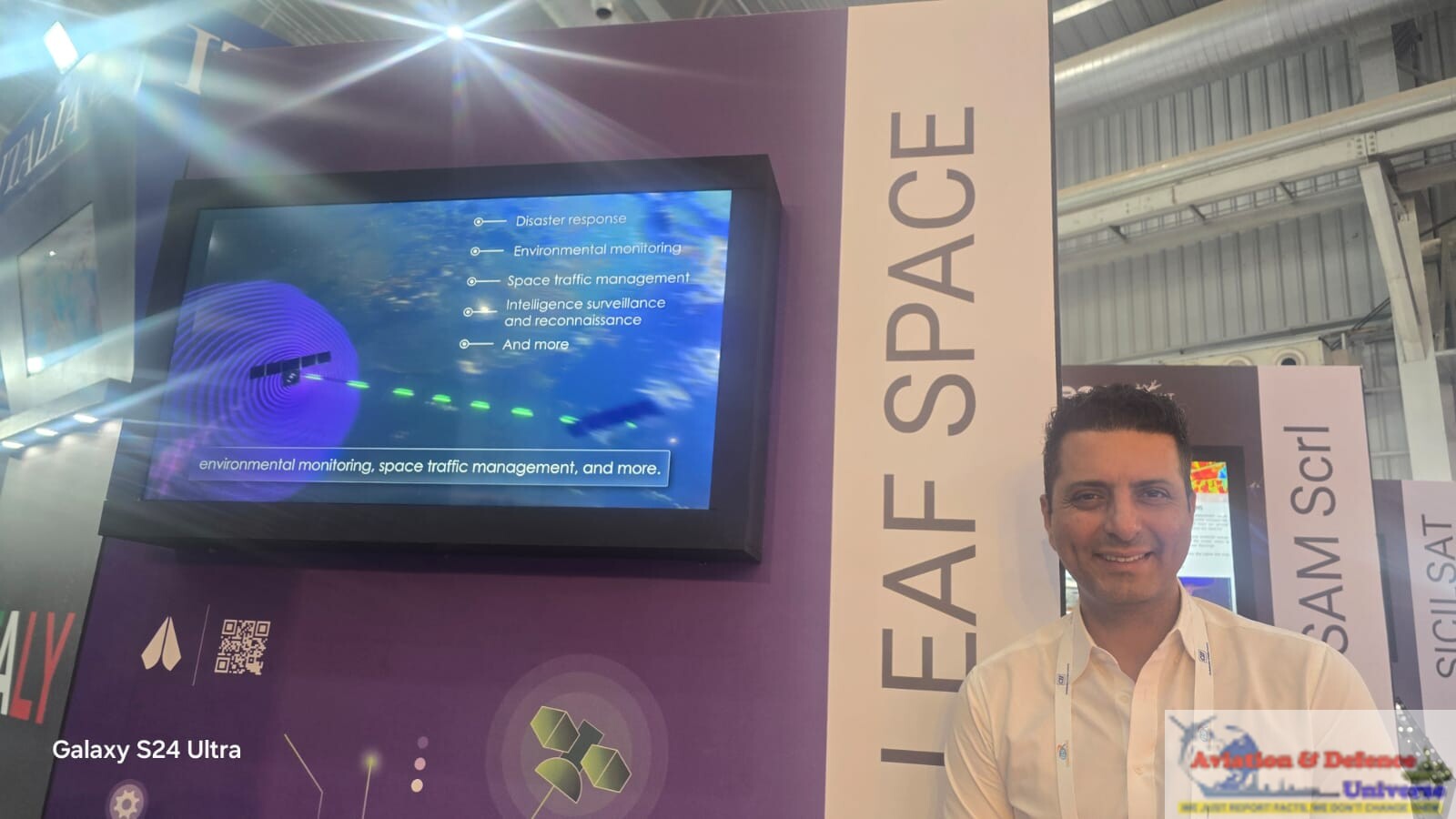
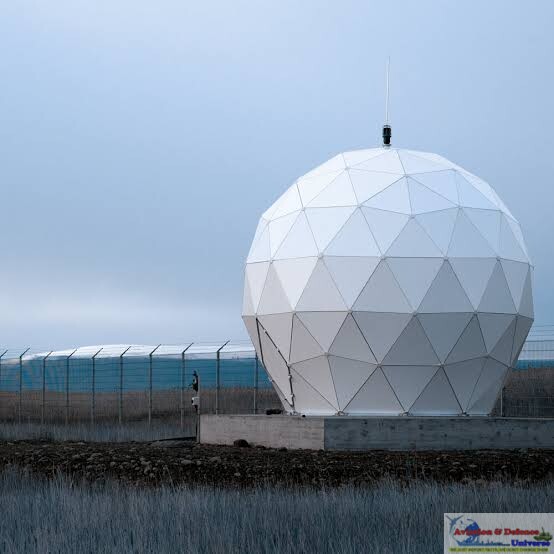 At Bengaluru Space Expo (BSX) 2026, Leaf Space was part of the Italian Pavilion, showcasing its Ground Station as a Service model to an Indian space ecosystem that US Managing Director Jai C. Dialani describes as having grown exponentially over the past five years. Leaf Space already works with Indian satellite operators and manufacturers, is engaging with the country’s NewSpace companies, and has supported ISRO missions, including tracking PSLV launch vehicles and providing coverage for the SpaDeX mission.
In an interaction with Aviation & Defence Universe (ADU) at BSX 2026, Dialani explains what Leaf Space actually does, why shared ground infrastructure is changing the economics of satellite operations, the company’s engagement with India, and why Bengaluru’s increasingly global space gathering impressed him.
ADU. We are meeting at BSX 2026, where Leaf Space is part of the Italian Pavilion. What are you showcasing here?
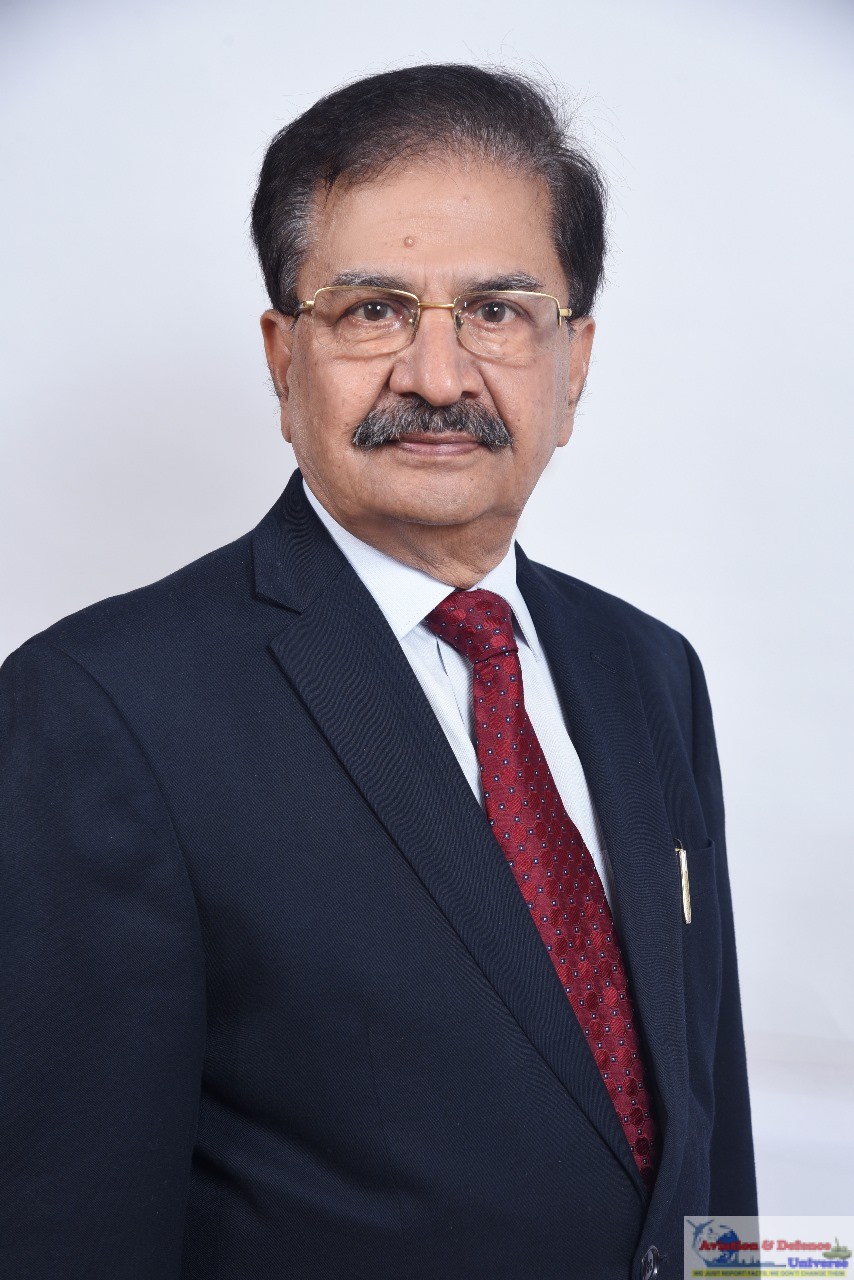
Jai C. Dialani. It is a pleasure to meet you, and I am excited to be here. At the Italian Pavilion, we are showcasing the depth and breadth of our offerings. I am representing Leaf Space, which is headquartered in Milan, Italy, but our business is international. We are present in markets where we have several customers and where the space economy is growing. What we are showcasing here is Ground Station as a Service. Any satellite or launch vehicle that is launched into space needs communication from space to ground and ground to space. We are the conduit that provides that communication.
ADU. Leaf Space is an international company, but since we are meeting in India at an Indian space show, how significant is India for you?
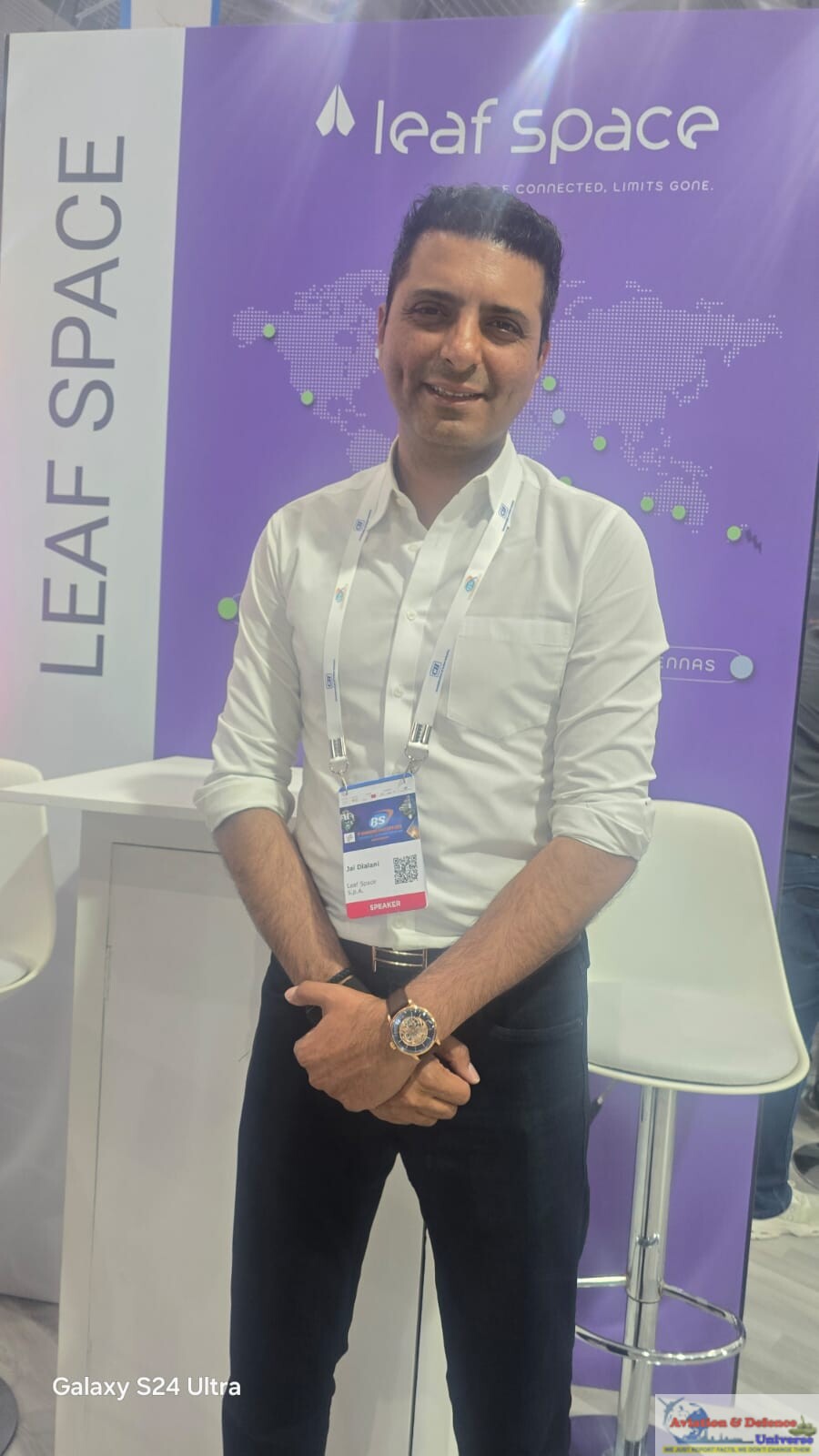 Jai C. Dialani. I have been coming to India for Leaf Space for about five years, ever since the first India Space Congress took place in Delhi. At that time, India’s private space economy was quite nascent, but now we see it increasing exponentially. We already have a number of Indian customers whom we are serving — satellite operators, satellite manufacturers and different types of missions. We are also heavily engaged with the NewSpace ecosystem, including companies that will be launching soon and have raised significant funding for their satellite technologies. We are also engaged with ISRO. We have supported launch vehicles and tracked launch vehicles for ISRO, such as PSLV, and we provided coverage for the SpaDeX mission, which was a breakthrough mission for ISRO. We are engaged with ISRO on several future missions as well.
ADU. What about India’s private space industry? Are you interacting with companies such as Skyroot and others in the NewSpace ecosystem?
Jai C. Dialani. Yes. In fact, that is our bread and butter. Many of the established companies are already our customers. Pixxel and most of the well-established companies utilise our network. We are also in active discussions with the new crop of NewSpace companies and are engaged with them to support their future missions.
ADU. For our readers, could you explain exactly what Leaf Space provides, in simple terms?
Jai C. Dialani. Think about a cell phone communicating with a cell-phone tower. Imagine if, in order to use your cell phone, you also had to own and invest in the tower yourself. Taking that analogy to the space industry, when companies such as Planet and Spire began launching satellites, there wasn’t an antenna network readily available on the ground for them to communicate through. They therefore had to invest heavily in their own ground infrastructure and establish antennas around the world. More recently, there has been an explosion in Ground Station as a Service. Companies such as Leaf Space, along with other European and American companies, invest in these antennas and provide airtime on them. Satellite operators can therefore concentrate on their core missions rather than building their own global ground infrastructure.
ADU. So instead of building their own ground stations, satellite operators essentially use your infrastructure when they need it?
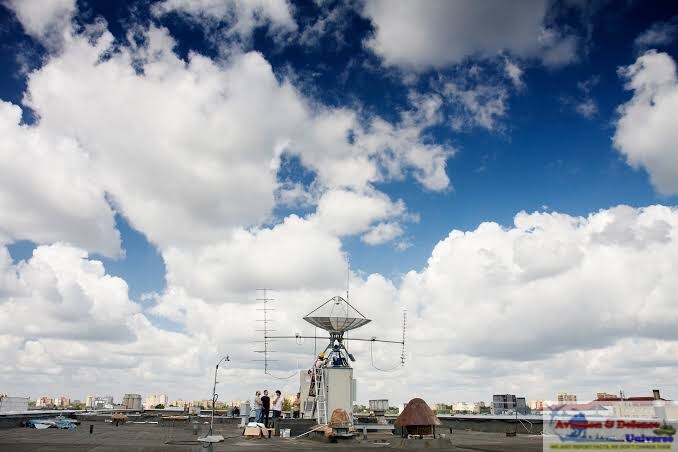
 Jai C. Dialani. Exactly. They rent capacity on our antennas. We charge on a per-minute or per-pass basis, so whenever their satellite is over an antenna, they pay only for the time they utilise. This changes the economics for these companies. They can focus more of their resources on satellites and invest more in satellite technology, which is their core mission. We have made the capital investment in the ground infrastructure ourselves. We have large antennas — including 3.7- and 3.9-metre diameter antennas — which we have purchased and deployed at several sites around the world. Our network extends across South America, North America, Europe, the UK, South Africa, Asia, Australia and New Zealand.
ADU. How does that global network work for a satellite operator during an actual mission?
Jai C. Dialani. We operate the antenna network remotely for our customers. Whenever a customer’s satellite passes over a particular region — say New Zealand — we give them visibility through the antenna there. They are then able to communicate with the satellite, whether that means sending commands to it or receiving data from it. That is what we are enabling.
ADU. We are on Day Three of BSX 2026. How has the show been for Leaf Space? What kind of enquiries and footfall have you seen?
Jai C. Dialani. We have seen the whole spectrum of attendees stopping by our booth, enquiring about our services and learning more about what we do. I have engaged not only with existing customers but also with new customers and prospects. We have also met other attendees with whom we could potentially form partnerships in India.
 From a learning perspective, we have seen many people from academia stopping by and trying to understand what we do and why we do it. It has been very interesting to speak with future engineers and future entrepreneurs who may eventually start companies of their own or work in these space companies. The benefit of educating them today is that they already begin to understand the infrastructure and how the space industry works — something that we did not have back in the day. I am really excited about that.
ADU. Is there anything about BSX 2026 or Leaf Space’s participation that particularly stands out for you?
Jai C. Dialani. This is my first Bengaluru Space Expo, and it is also the first time we are exhibiting with ITA, the Italian Trade Agency. When I came in on the first day of the conference, I was pleasantly surprised. I did not expect such a large conference or such a variety of attendees. We have the entire Indian ecosystem here. But it isn’t only India. There are delegations and participation from Australia, the UK, Japan and Europe, as well as a US presence. It has become really huge. I was also surprised by the quality of the attendees. I have met many people from our customer base whom I did not anticipate seeing here. Overall, it has been a very good experience.
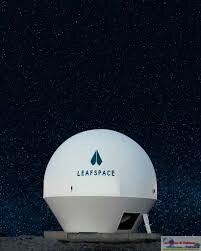 Space may be about reaching higher, but every successful mission still needs a connection firmly planted on Earth. That is the niche Leaf Space has turned into a global business. For India, the timing could hardly be more relevant. As ISRO’s missions become more ambitious and India’s private space ecosystem puts more satellites into orbit, ground infrastructure will increasingly become part of the equation. Leaf Space’s proposition is straightforward. space companies build the spacecraft; Leaf Space helps keep them connected.
And for Jai C. Dialani, BSX 2026 was more than another stop on an international exhibition calendar. It offered a ringside view of how rapidly India’s space ecosystem is expanding — bringing together established institutions, NewSpace entrepreneurs, academia, international partners and the engineers who could build its next generation of missions. The satellite may be the star in orbit, but without the ground segment, it has no voice. Leaf Space wants to make sure that voice is always heard.
As Told To Sangeeta Saxena










































































-A4-Size-(2)_page-0001.jpg)