




























 As high-intensity operations transform the needs of navies and challenge both the structure of fleets and the technological capabilities of ships, Naval Group continues to develop innovations to address the challenges of hybrid naval combat and envisions the rapid integration of these innovations into naval solutions. From drones to the concept ship of a surface combattant, Naval Group reveals how the group anticipate the future naval fleets.
Multi-domain strikes, saturation attacks, hypersonic ballistic missiles, swarms of drones, simultaneity of attacks implying quick decision and reaction: the future of naval fleets combine mass, persistence, and the ability to keep up with technological acceleration. To answer to these challenges, Naval Group is looking to the future by drawing lessons from the present.
Our proposal entails the strengthening of our existing capabilities – by improving a system’s resilience, developing new modes of operation powered by AI, complementing conventional systems with remote sensors or effectors to extend their range – and the integration of innovations on the simultaneous use of various technologies: AI and data analytics, information superiority provided by radar and sonar, cyber capabilities, and the principle of fleet hybridization.
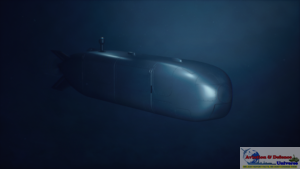
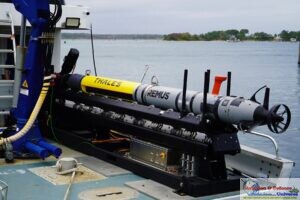
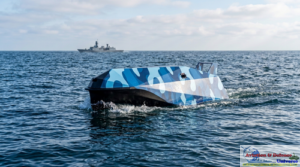
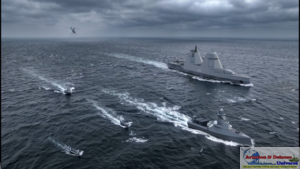
Drones have become essential to complete the conventional ships (surface ships and submarines) and address the new challenges of naval combat. As the battles of tomorrow will be drone-intensive, connected and collaborative, Naval Group designs and develops drone capabilities, including drone projection ships for mine warfare and anti-submarine warfare, as well as key technological capabilities. Through our complete range of drones, we aim at creating a fleet of interoperable drones, capable of sharing information in real time and natively ready for combat. To do this, we focus on integrating drones into complete naval combat systems (ships, submarines) with which they operate in synergy. Naval Group is accelerating its investments in this area, developing and testing new capabilities, turning innovation into capability.
Thinking further, Naval Group has designed a concept ship, named SCX26, thought to address the challenges of tomorrow’s naval warfare. This theoretical ship concept is a research project that brings together responses to new operational requirements, lessons learnt from recent conflicts and medium to long-term technological developments. The design of the SCX26 is based on tried-and-tested solutions, but also on technological breakthroughs that are likely to become available in a few years’ time. The SCX 26 is designed to be the operational hub of a hybrid fleet thanks to its ability to deploy quickly different types of drones to carry on several missions (ISR, electronic warfare, ASW, protection, etc). with a capability to adapt its configuration to mission requirements throughout its life cycle. Together with its own sensors and effectors, this capability contributes to a more distributed approach to combat, in which the ship acts as part of a force that brings together ships, aircraft, drones and future naval combat systems. This concept ship presents a vision of the combat vessel as an evolving system of systems, able of utilising both its own capabilities and those it deploys around it, always within a framework of collaborative combat.