















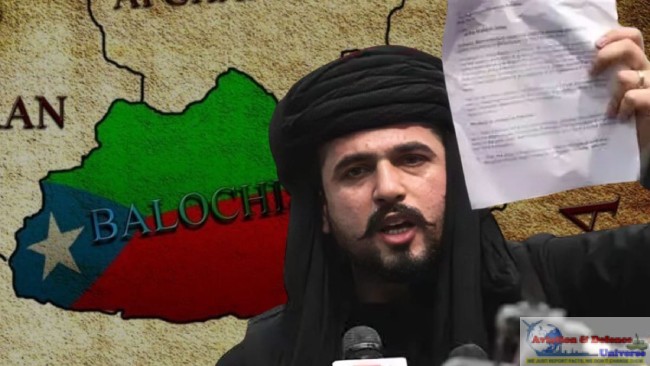
- 1947 to 2026: Why August 11 Still Resonates Across Balochistan
- Independence Claims and Pakistan’s Unfinished Crisis
- CPEC, Critical Minerals and Insurgency: Balochistan Becomes a Geopolitical Battleground
By Jai Kumar Verma
New Delhi. 19 August 2026. Every August, as Pakistan prepares to mark its own Independence Day on the 14th, a starkly different commemoration unfolds three days earlier in its largest and most restive province.  On August 11, Baloch nationalists, at home under curfew and in exile across Europe, observe what they call Balochistan’s true Independence Day, harking back to 1947. This year, the ritual arrives against the bloodiest backdrop in years, with coordinated BLA offensives, a hijacked train, a new naval wing, and mounting casualties on both sides. For India, watching a familiar pattern of state denial and ethnic insurgency play out next door, Balochistan offers more than a security story: it is a mirror to Pakistan’s unresolved internal fault lines.
This year’s observance is no mere symbolic ritual. It comes as the Balochistan Liberation Army and its allied groups have intensified a decades-old insurgency into one of the deadliest phases yet, targeting not just Pakistani security forces but Chinese interests tied to CPEC, and drawing in global powers with competing stakes in the region’s minerals. Understanding who is fighting whom and why is essential to reading Pakistan’s most volatile province, and its implications for the wider neighbourhood.
The historical premise Baloch nationalists invoke
The Khanate of Kalat’s brief independence, and the disputed accession that followed, sit at the heart of Baloch nationalist claims. Unlike most princely states absorbed into British India’s administrative fold, Kalat maintained a distinct treaty relationship with the Crown. When British paramountcy lapsed on August 15, 1947, Kalat’s ruler declared independence four days earlier, on August 11, a sequence Baloch nationalists cite as proof that Balochistan briefly existed as a sovereign state before Pakistan came into being at all.
That independence proved short-lived. By March 1948, the Khan of Kalat was forced to sign an instrument of accession to Pakistan. Baloch nationalists describe it as military coercion, while Islamabad insists that it was a lawful constitutional process akin to other princely-state accessions. This unresolved dispute over consent versus compulsion is why August 11 endures as a rallying date: for Baloch separatists, it marks not secession from Pakistan, but the reclaiming of a nationhood that predates it.
The Roots Beneath the Rifle
Balochistan’s paradox is stark: a province sitting on vast gas, copper and gold reserves ranks lowest among 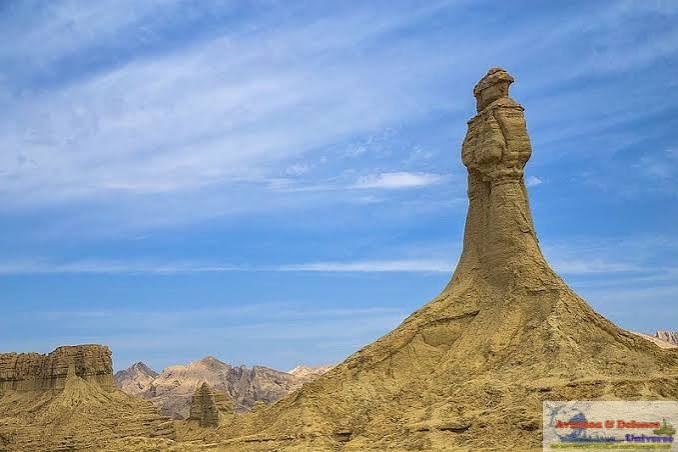 Pakistan’s provinces on literacy, healthcare access and poverty indicators. Political representation remains thin, and disputes over resource-revenue sharing under the National Finance Commission Award have long fuelled Baloch resentment that federal control extracts wealth while returning little. These unresolved grievances do not simply persist — they reproduce themselves, drawing in each new generation of young Baloch as older fighters are killed or disappear. Until Islamabad addresses this cycle at its root, security operations alone will keep managing the insurgency without ever ending it.
Insurgent violence
The scale of 2026’s violence marks a sharp escalation. On January 30-31, the BLA launched “Operation Herof II,” striking 12 districts simultaneously — hitting military installations, banks, prisons and police stations within hours. A suicide bombing and prison break in Mastung freed roughly 30 inmates, while coordinated assaults elsewhere killed dozens of security personnel. By July, a fresh wave of attacks in Ziarat and Lasbela districts killed 42 people, including 38 security personnel, in ambushes on convoys and checkpoints. Cumulatively, the Center for Research and Security Studies (CRSS) records 181 BLA-linked attacks through 2026, with 708 casualties — underscoring an insurgency operating with growing coordination, reach and lethality.
Allegations against security forces
Rights groups paint a parallel picture of state excess. The Human Rights Council of Balochistan recorded 107 enforced disappearances in January 2026 alone, including eleven teenagers, while the Baloch Voice Association told the UNHRC it documented 885 disappearances and 121 killings in just the first six months of the year. Pakistan’s own Commission of Inquiry on Enforced Disappearances has recorded 2,752 cases from Balochistan since 2011, though the HRCP says the true figure is likely far higher. Islamabad denies any policy of unlawful detention, insisting Pakistani commentators have separately questioned the credibility and funding sources of specific diaspora-linked rights bodies.
BLA’s structure, leadership and tactical evolution
 Bashir Zaib has led the BLA since 2018, when he succeeded his brother Aslam Baloch, and the group is designated a terrorist organisation by Pakistan, China, US and EU. Beneath him sits the elite Majeed Brigade — its suicide/fedayeen squad, with roughly 100-150 members including women, running logistics, intelligence and operations wings. The Fateh Squad and Special Tactical Operations Squad (STOS) round out its combat architecture, reflecting a shift from tribal leadership to organised militancy.
The BLA’s reach has expanded dramatically: its March 2025 hijacking of the Jaffar Express held over 350 passengers hostage for 30 hours, while April 2026 saw the launch of a new naval wing, the Hammal Maritime Defence Force, following its first maritime strike on a coast guard vessel near Gwadar. The formalised women’s wing within the Majeed Brigade, alongside deliberate social-media recruitment of educated youth, signals a deepening, more sophisticated insurgency.
Importance of August 11
Baloch nationalists mark August 11 because on this day in 1947, the Khanate of Kalat declared independence, just before Pakistan came into being. Leading activist Mir Yar Baloch calls it the Republic of Balochistan’s real Independence Day, celebrated every year since. In 2026, he went further, claiming his forces control 85 percent of Balochistan’s territory, including major gas fields, coal mines, and gold and copper reserves — a claim that, if true, would mark a dramatic shift in the decades-old conflict.
What Mir Yar Baloch declared
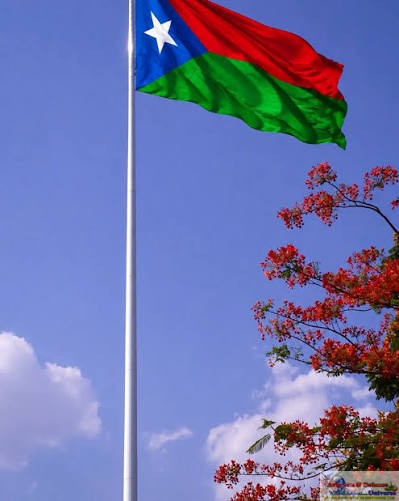
On August 11, 2026, Mir Yar Baloch issued a fresh statement declaring the Republic of Balochistan fully independent. He said Balochistan has adopted its own flag, national anthem and currency, called the “Balochi Falus.” He urged the world to stop calling Balochistan a province of Pakistan and asked for legal, political and diplomatic recognition. He also called on Baloch people everywhere to raise the new flag in homes, markets and schools to mark the day.
These claims remain unverified. No country, including India, has recognised the “Republic of Balochistan,” and no application has reached the United Nations. Pakistan’s government continues to run Balochistan’s administration, hold cabinet meetings and carry out military operations there, though the extent of real control is itself contested. In February 2026, Defence Minister Khawaja Asif told the National Assembly that troops were “physically handicapped by guarding and patrolling” the province’s vast, sparsely populated terrain, an unusually candid admission of the state’s operational limits even as it rejects claims of losing the province outright. Mir Yar Baloch has made similar independence declarations before, in May 2025 and July 2026, without independent confirmation — making this the latest, not the first, such claim.
Beyond the BLA: Mapping Balochistan’s Insurgent Landscape
 The BLA is not alone. The Balochistan Liberation Front (BLF), one of the oldest groups, formed in 1964 and linked to Allah Nazar Baloch, remains active in southern Balochistan. The Baloch Republican Army (BRA) and Baloch Republican Guards (BRG) operate with separate command structures. Many of these groups, including the BLA and BLF, are united under Baloch Raaji Aajoi Sangar (BRAS), a coalition formed in 2018 to coordinate separatist operations. BRAS also includes the Sindhudesh Revolutionary Army, a Sindhi separatist ally that targets Chinese interests alongside Baloch groups. Smaller splinter outfits — BNA, UBA, BLUF and Lashkar-e-Balochistan — add further complexity, often reflecting tribal rivalries and disagreements over strategy and leadership rather than ideological differences.
The China/CPEC Angle
China has promised $62 billion in investment through CPEC, launched in 2013 as the flagship of its Belt and Road Initiative, but actual direct investment so far stands at around $25.4 billion — a gap that reflects how much of the original portfolio consisted of loans and government-to-government agreements rather than committed capital, with several projects stalled or scaled back due to security concerns, Pakistan’s financial obligations, and shifting Chinese strategic priorities. Nearly 20,000 Chinese nationals live in Pakistan, and at least 20 have been killed since 2021 alone, with over 34 injured, in attacks tied to CPEC and mining projects. The 2022 Karachi University bombing, which killed three Chinese teachers, and the 2021 Dasu bus bombing that killed nine Chinese engineers, remain the starkest reminders of the threat Chinese nationals face in Pakistan. While no Chinese nationals were killed in 2025, the broader insurgency around CPEC has only intensified, with BLA attacks surging across Balochistan into 2026 — a reminder that the underlying threat to Chinese interests has not eased, even if fatal strikes on Chinese nationals specifically have paused for now.
Projects slowing, China’s reluctance:
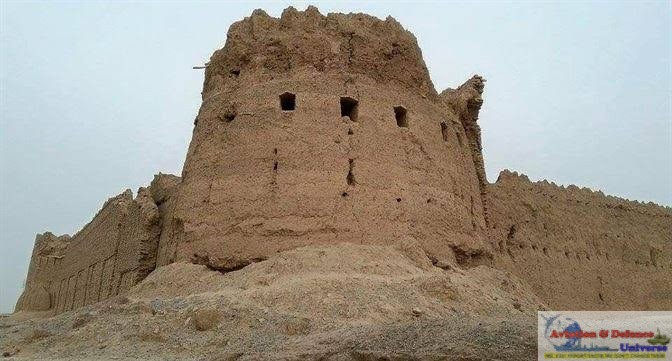 The violence has visibly slowed CPEC’s momentum. Investment in Gwadar port itself stands at just $890 million — a fraction of the wider corridor — largely because insecurity, land disputes and weak infrastructure have made it a hard sell even for Chinese investors. The flagship Reko Diq copper-gold project has already seen its start date pushed back to 2028 amid security funding disputes, and October 2024’s Karachi attack was the tenth such strike on Chinese interests since 2018, sustaining an unabated trend that has left Beijing publicly demanding better protection without pulling out entirely.
The Trump/rare earths angle:
Washington’s entry adds a new layer. In February 2026, the US approved $1.3 billion in financing for Reko Diq, following a US Strategic Metals-FWO agreement to explore Balochistan’s rare earth and critical mineral reserves — part of President Trump’s push to reduce American dependence on Chinese-processed minerals. With around 80 percent of Pakistan’s mineral wealth located in Balochistan, and China already holding major stakes in nearby mines like Saindak, analysts say Washington’s arrival signals Balochistan will no longer be China’s exclusive preserve — a competition for access that unfolds even as the security situation for foreign investors of any nationality keeps deteriorating.
Pakistan’s Counter-Insurgency Response and Its Costs
 Pakistan’s response has been correspondingly fierce. Media reports place at least 254 attacks and 1,026 casualties in Balochistan in 2025 alone, a 26 percent rise over 2024. Following a wave of attacks in early July 2026, the Pakistan Army, Frontier Corps and police launched “Operation Shaban,” a joint counter-terrorism campaign relying heavily on intelligence-based operations and air-ground strikes in Balochistan’s mountainous terrain. Security sources put the operation’s toll at 129 militants killed by mid-July 2026, with related operations continuing into August — figures that, like insurgent casualty claims, remain difficult to independently verify because of restrictions on press. Baloch rights groups and open-source reports allege the human cost falls heavily on civilians, citing enforced disappearances of women, including students and activists, some allegedly tortured in custody. Media reports have also cited allegations of torture and sexual assault of women during security raids in parts of Balochistan. Pakistani authorities have not directly addressed these specific allegations, while consistently denying any state policy of abuse and insisting operations follow due legal process.
“The ‘Foreign Hand’ Card: Pakistan’s Favourite Alibi”
Pakistan routinely alleges Indian involvement in the Baloch insurgency, a charge India consistently denies, insisting it does not interfere in the internal affairs of other countries. No independent body — UN, international media, or third-country intelligence assessment — has substantiated these claims with verifiable evidence; they rest largely on assertions made by Pakistani officials and state media, often timed to coincide with major BLA attacks or diplomatic setbacks for Islamabad.
This stands in sharp contrast to Pakistan’s own record. Groups like Lashkar-e-Taiba and Jaish-e-Mohammed, both blamed for attacks on Indian soil including the 2008 Mumbai attacks and the 2019 Pulwama bombing, are designated terrorist organisations by the UN Security Council itself — not merely by India. Their leaders, from Hafiz Saeed to Masood Azhar, carry UN and US terrorist designations. This is the crucial asymmetry: Pakistan’s allegations against India rely on assertion, while India’s position on Pakistan-based terrorism rests on findings accepted by the international community.
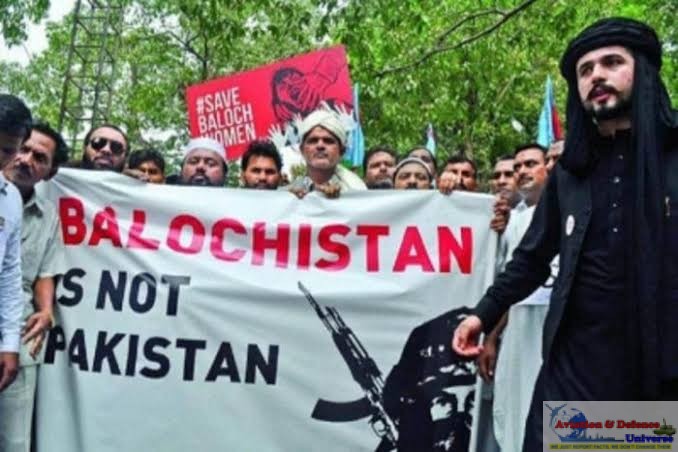 Baloch nationalists themselves largely reject Pakistan’s “foreign hand” framing, arguing it delegitimises what they describe as an indigenous movement rooted in decades of political and economic grievance, reducing it to a proxy conflict rather than confronting it as a domestic governance failure. Analysts note this externalisation of blame serves a dual purpose for Islamabad: deflecting international scrutiny of its own conduct in Balochistan, and manufacturing a unifying nationalist narrative at home that diverts public attention from inflation, unemployment and political instability.
Pakistan would do well to look inward rather than outward. Blaming India for troubles rooted in its own governance failures in Balochistan does nothing to address the grievances driving the insurgency, nor the human rights concerns raised by Baloch civil society itself. If Islamabad genuinely seeks better relations with New Delhi, the path is clear: end cross-border terrorism sponsored from its soil, halt the reported atrocities in Balochistan and Pakistan-occupied Jammu and Kashmir, and engage its own citizens through dialogue rather than force. India, for its part, remains a democracy that does not interfere in the internal affairs of other nations — a distinction Pakistan’s own conduct in the region makes increasingly hard to claim for itself.
(Jai Kumar Verma is a Delhi-based strategic analyst and Life Member of United Services Institute of India and The Manohar Parrikar Institute for Defence Studies and Analyses. The views in the article are solely the author’s. He can be contacted at editor.adu@gmail.com)








































































-A4-Size-(2)_page-0001.jpg)