



















- 500–600 km, Below ₹5 Crore: CDS Sets Benchmark for Affordable Precision Missiles
- Own the Technology, Sustain the Fight: CDS Urges Industry to Build for War
- “Volume, Scale and Speed”: CDS Sets Defence Industry’s Next Mission
By Sangeeta Saxena
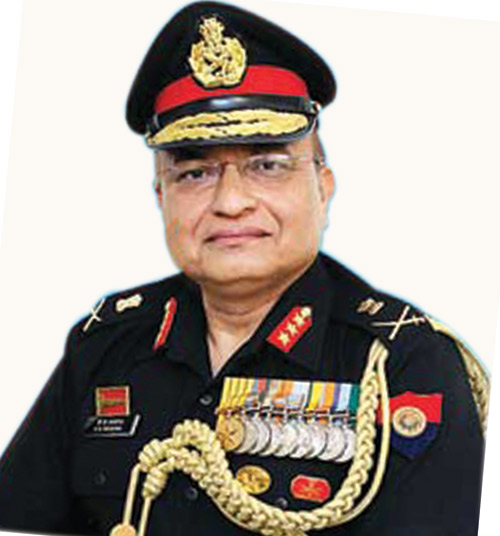
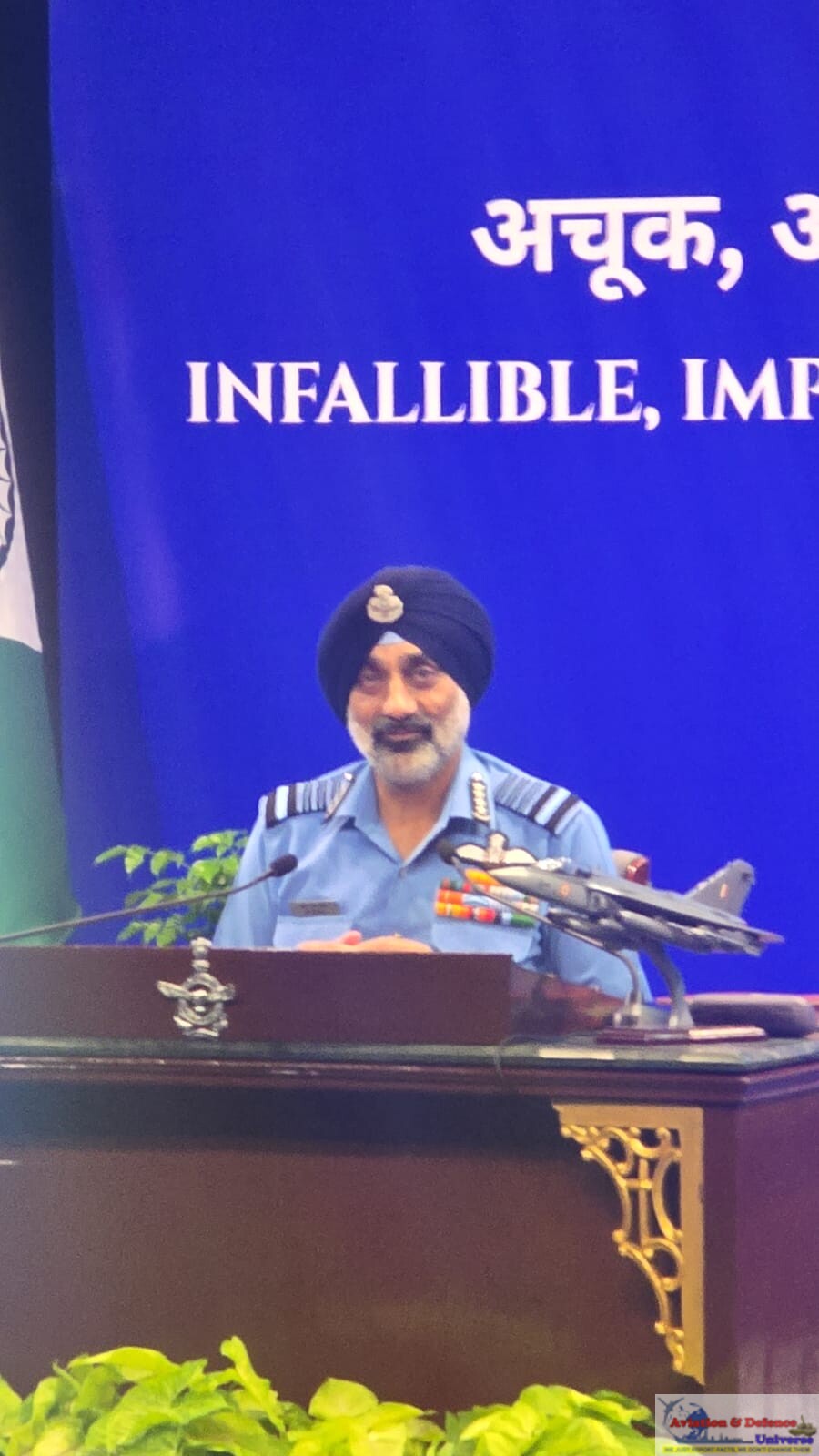
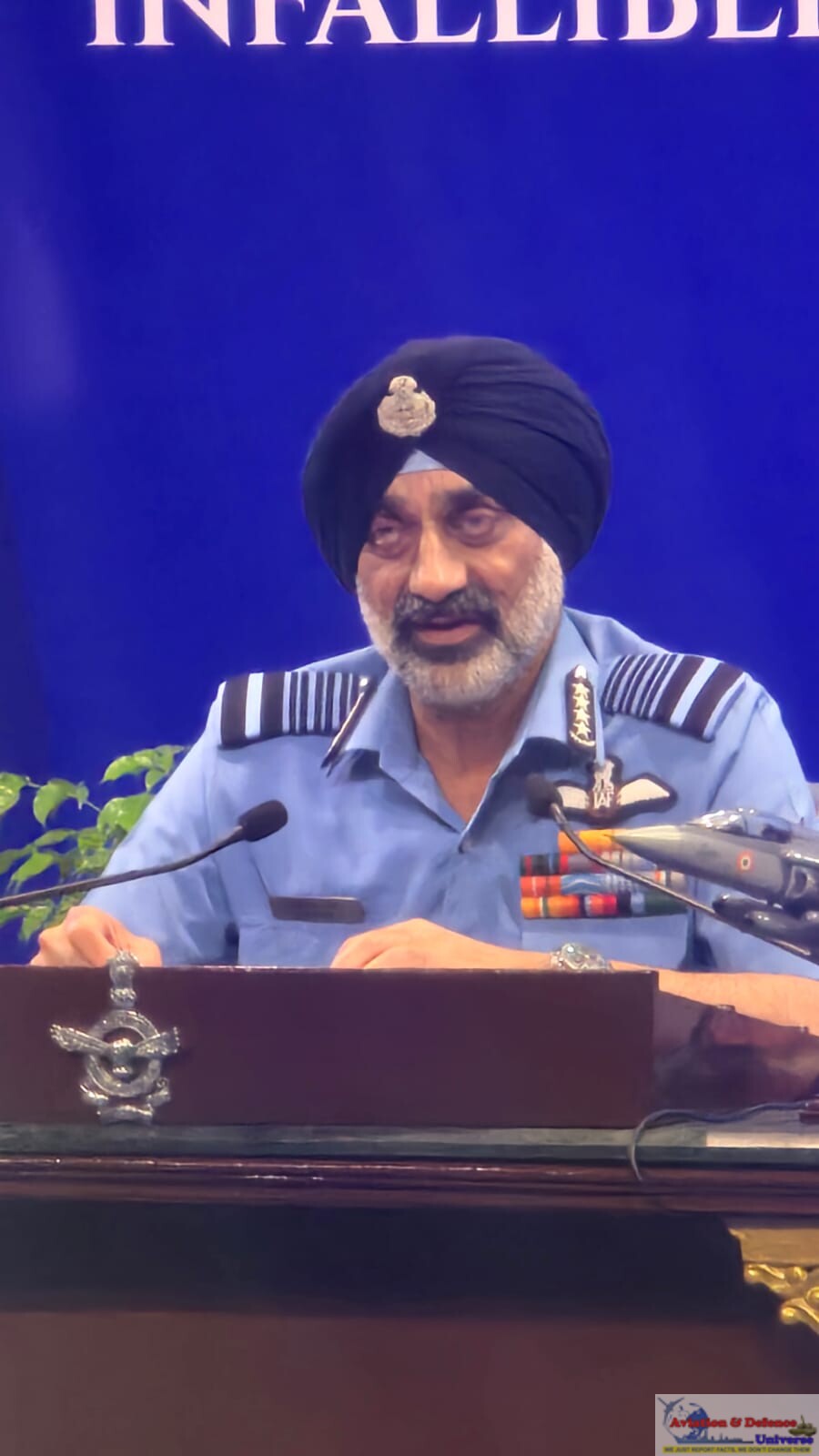
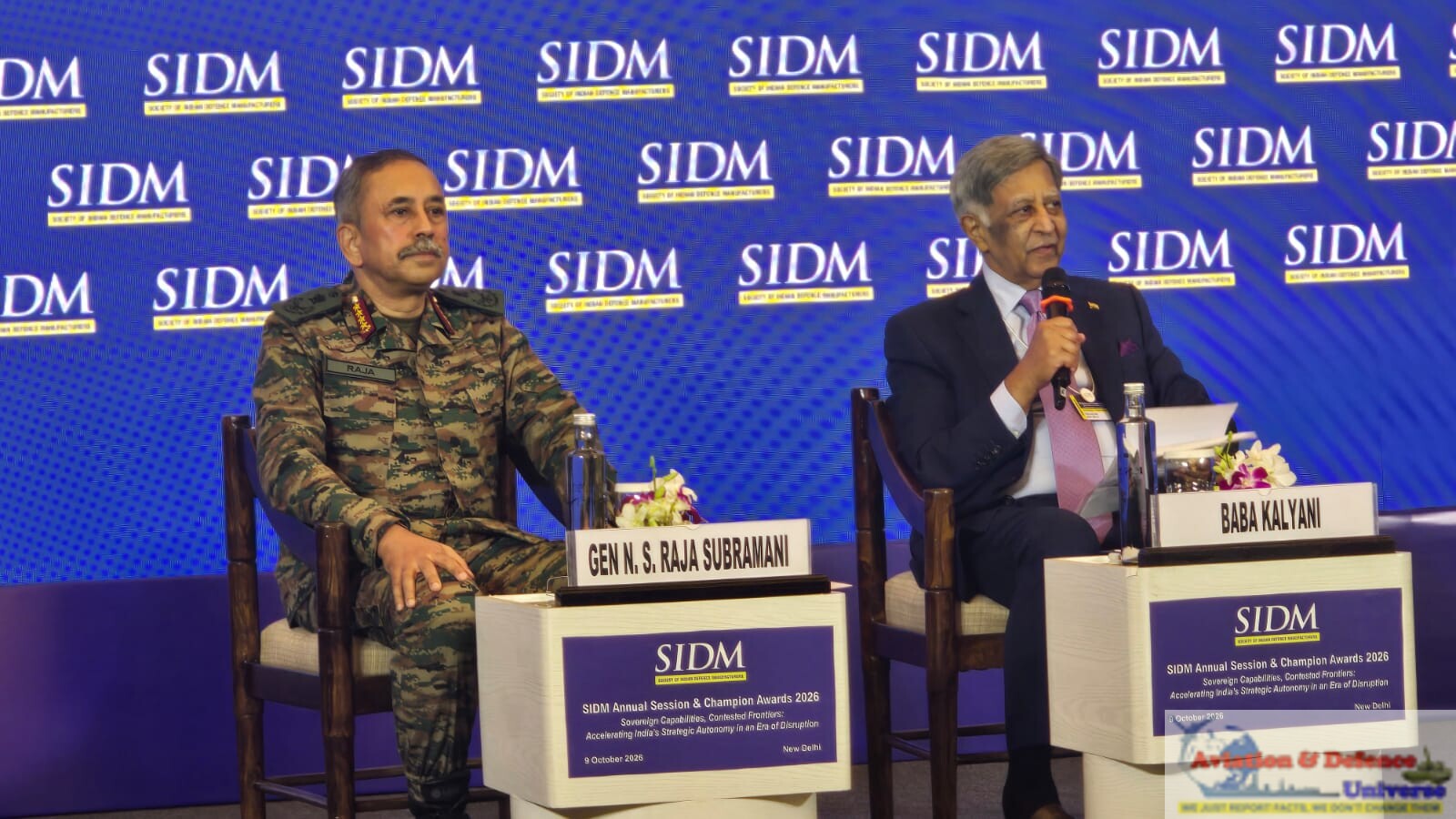
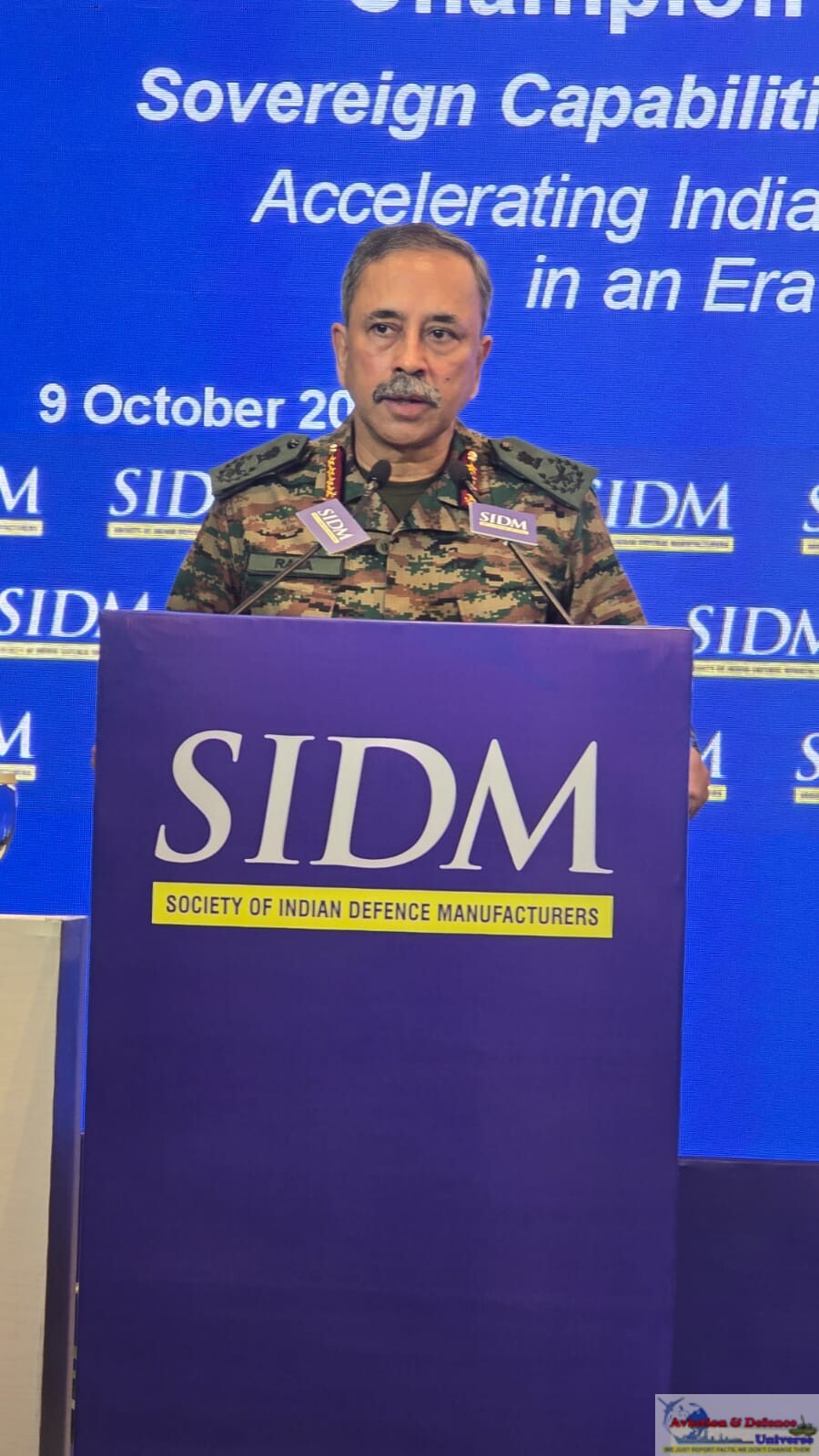
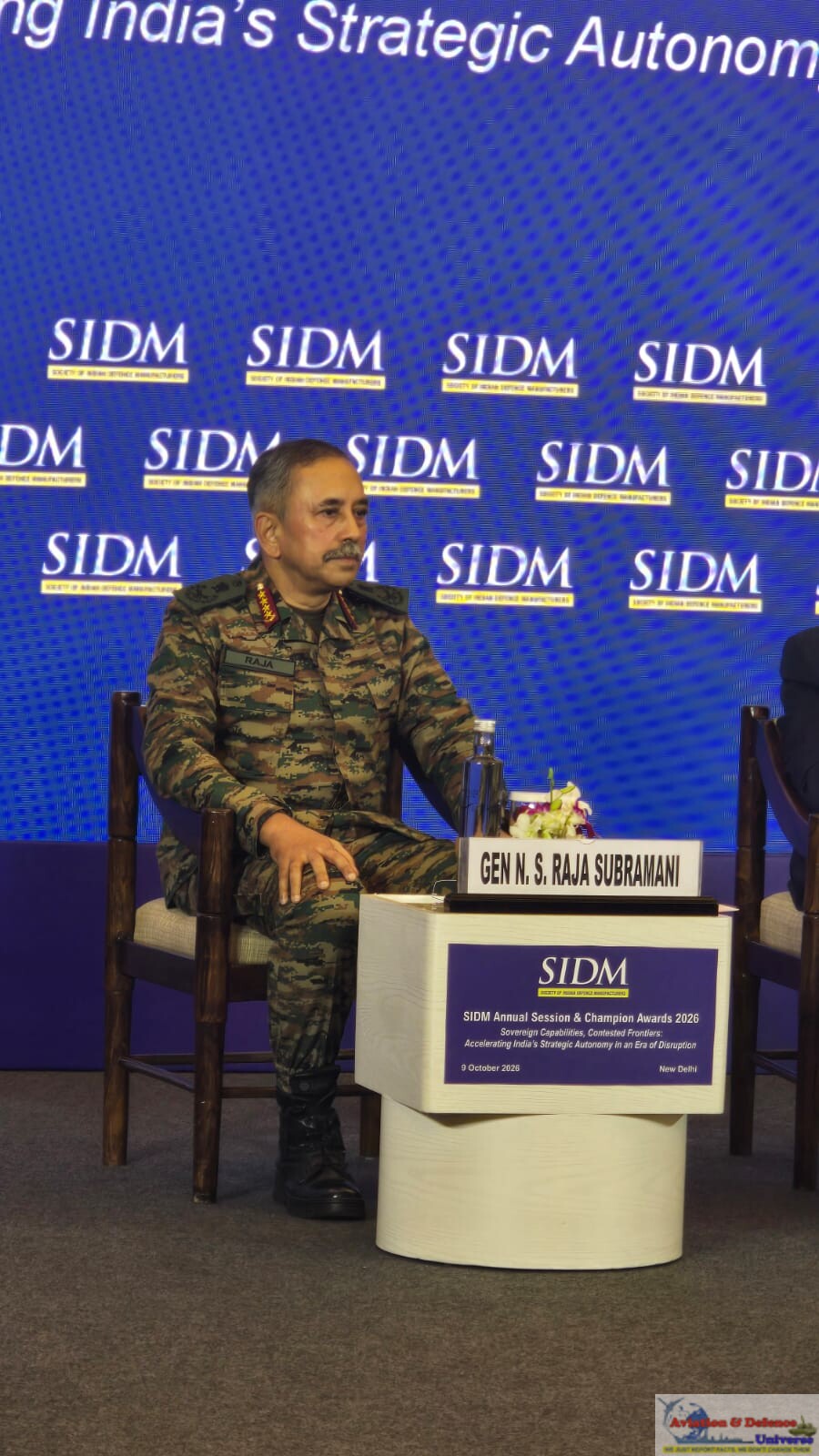
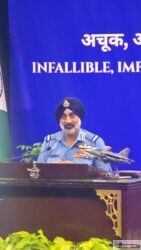
New Delhi. 09 October 2026. Build at scale, deliver at speed and own the technology that matters—Chief of Defence Staff (CDS) General N.S, Raja Subramani delivered a direct challenge to India’s defence industry. Moving beyond the language of procurement and localisation, he called for an industrial ecosystem capable of supporting joint warfare, producing affordable long-range weapons, developing sovereign artificial intelligence and sustaining military operations through prolonged conflict. His message was clear: India’s strategic autonomy must rest on capabilities it can control, adapt and replenish.
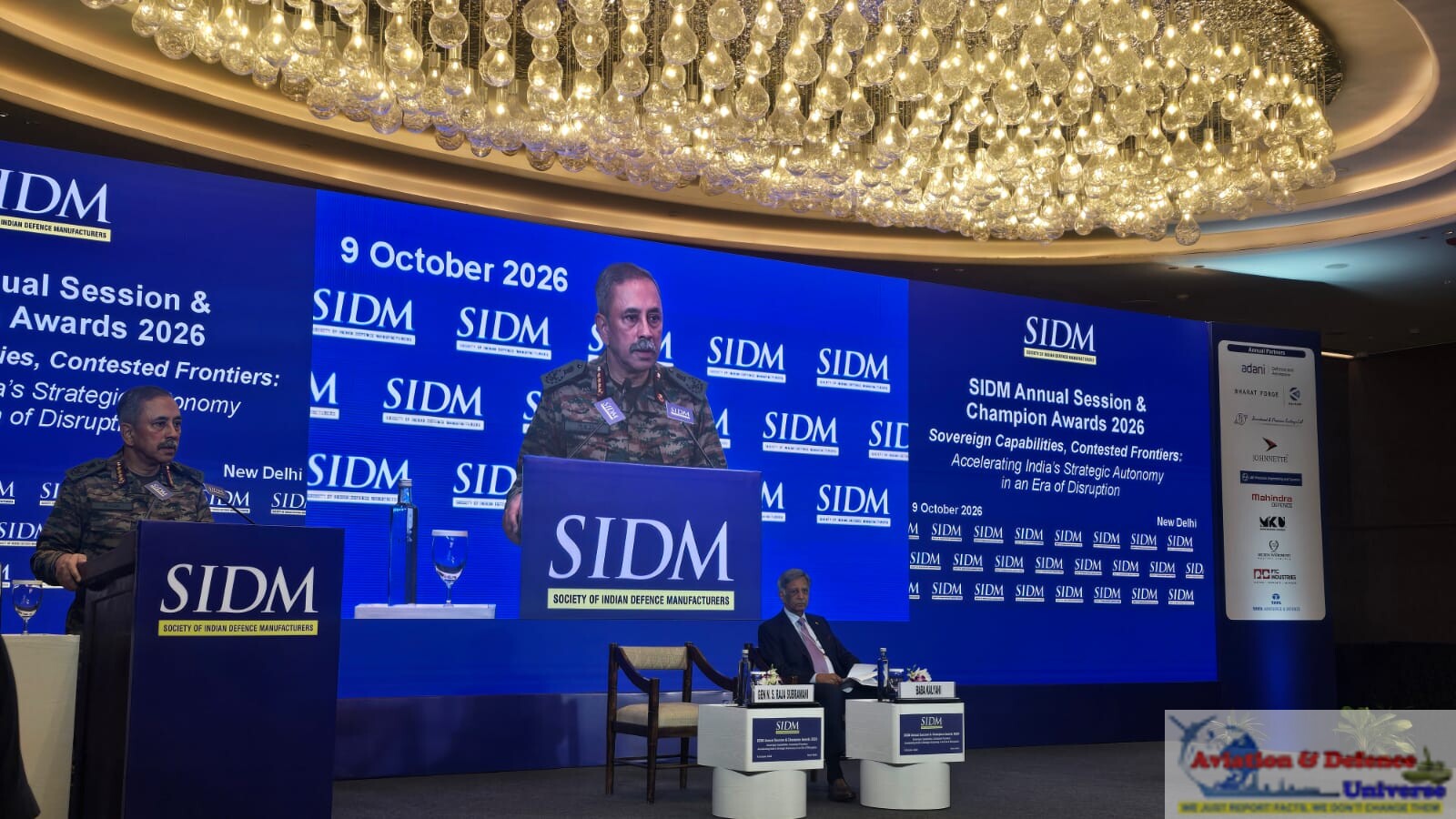
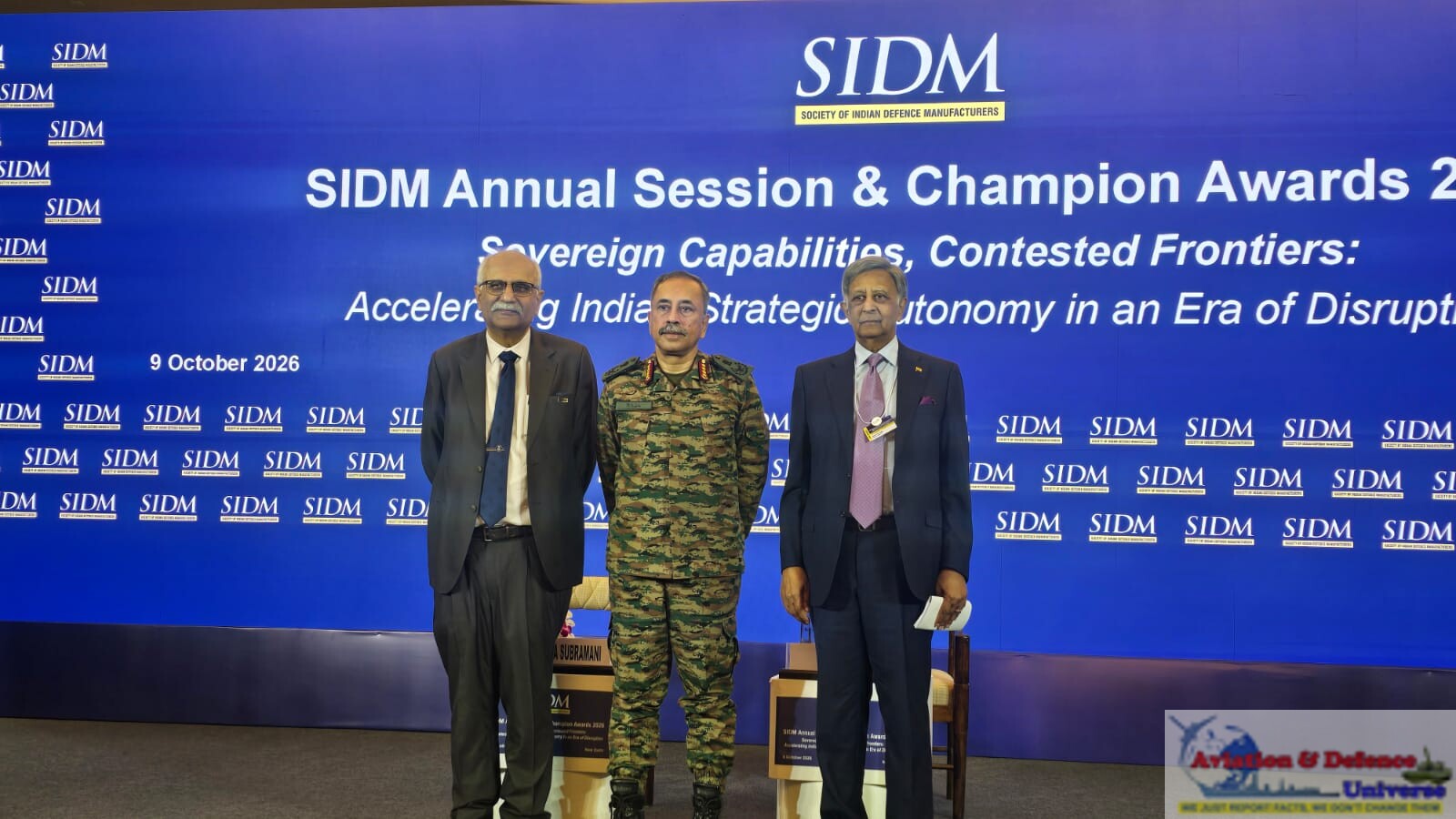
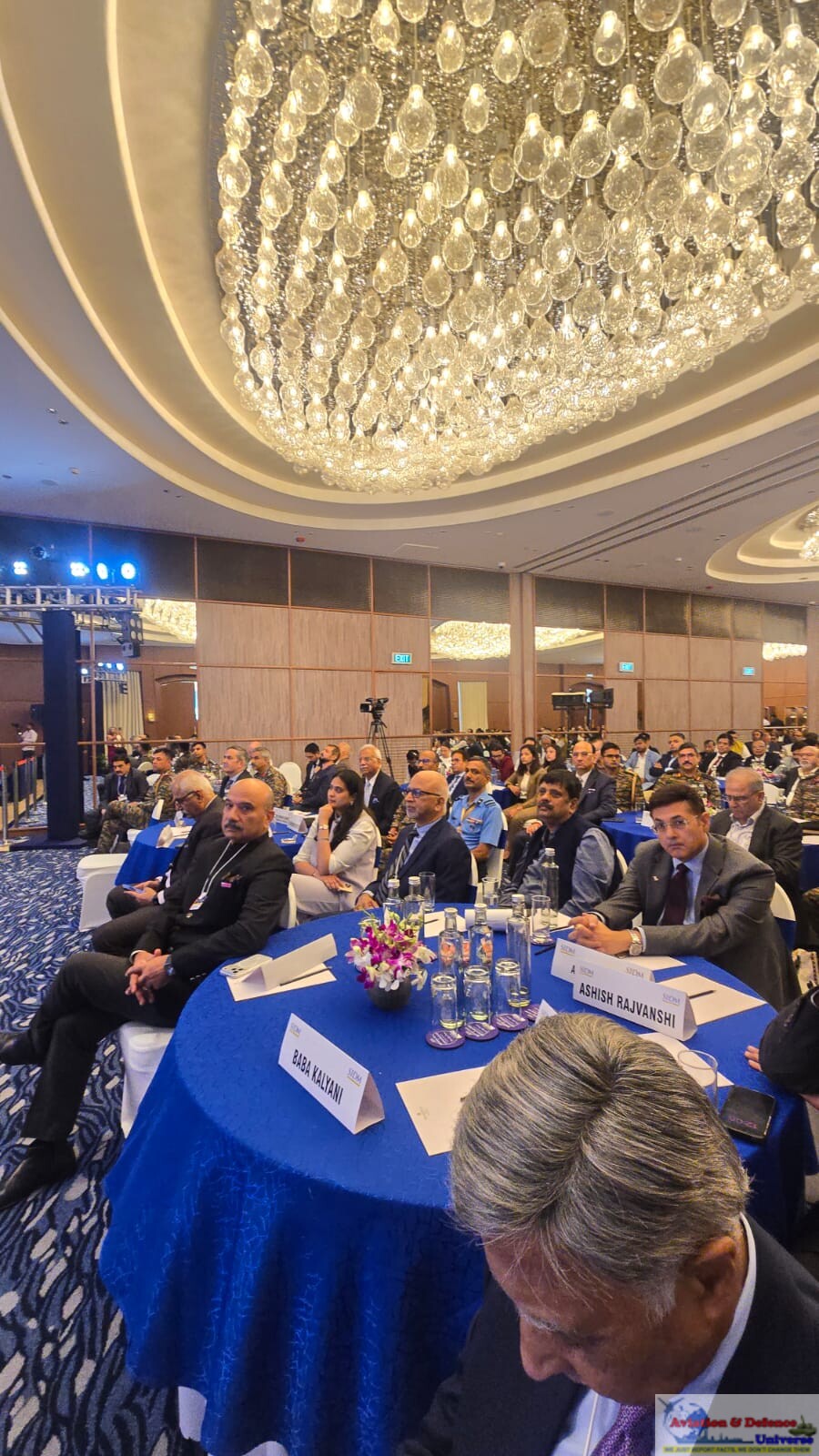
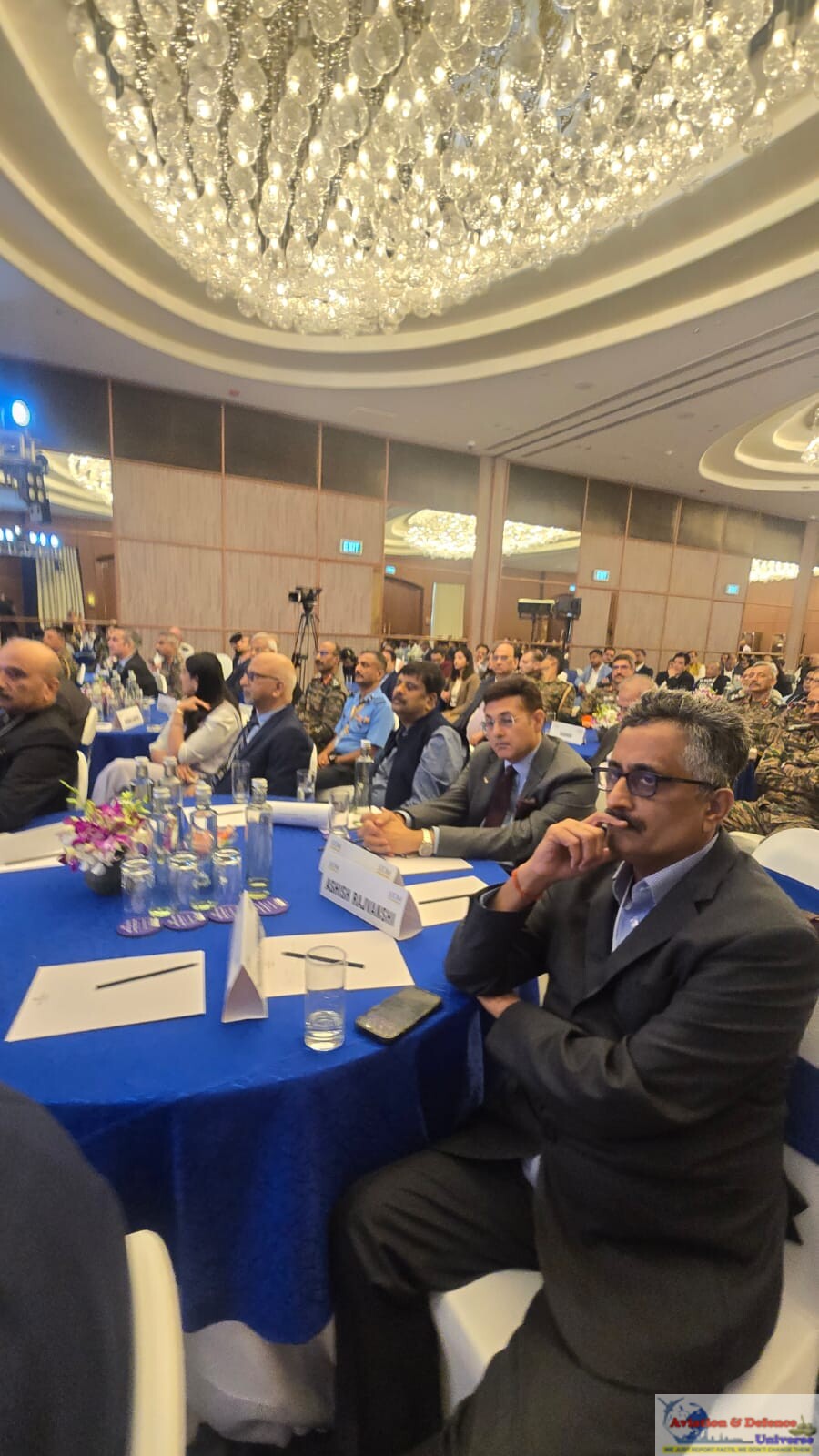
“I would have three asks from the industry: volume, scale and speed,” the CDS said, outlining a relationship in which the armed forces and manufacturers would increasingly work together on operational problems, rather than remain confined to conventional buyer–supplier transactions. at the inaugural session of the Society of Indian Defence Manufacturers’ (SIDM) Annual Session & Awards.
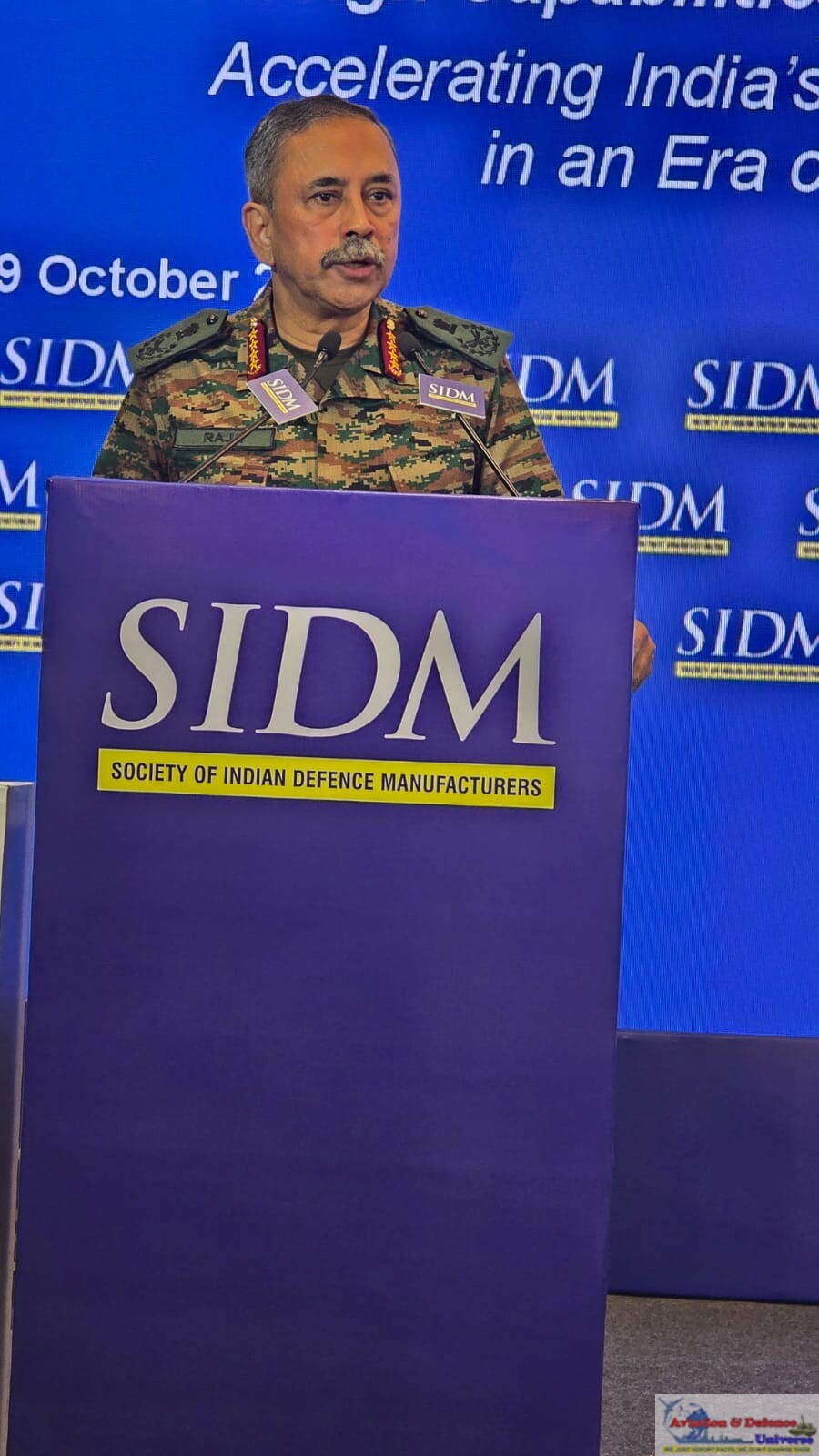 His address, followed by an interaction with industry representatives, connected the changing geopolitical environment with the practical requirements of military preparedness. Strategic autonomy, he argued, involves much more than possessing equipment. It requires dependable supply chains, ownership of critical technologies, access to data and the ability to sustain capabilities when external support becomes uncertain.
The CDS described a world undergoing simultaneous geopolitical, geoeconomic and technological disruption. Relationships between countries were increasingly shaped by changing interests, while developments far from India could affect essential supplies, prices and the everyday lives of citizens. “Weaponization of trade tariffs, weaponization of critical minerals, weaponization of supply chains makes it clear that all of us have to be autonomous,” he said.
However, he distinguished autonomy from attempting to manufacture everything domestically. “No nation in the world can afford to be totally autarkic. We can’t do everything ourselves,” he observed. India needed to identify what was strategically critical, develop control over those capabilities and rely on dependable partners where domestic production was neither feasible nor essential. He also highlighted the vulnerabilities accompanying global connectivity. Economic, financial, communications and energy networks had delivered efficiencies, but their interdependence had created new risks. At the same time, technologies once largely restricted to states were becoming accessible to non-state actors, reducing traditional military advantages. For industry, the implication was that assumptions about markets, technology and security could no longer remain static. Artificial intelligence was already challenging established economic models and would demand faster adaptation across the national ecosystem.
 The CDS placed jointness at the centre of the military response to these changes. “Jointness is not an administrative necessity. Jointness is an operational imperative,” he declared. The starting point for capability development, he explained, should be the operational effect that the armed forces wished to achieve. The question could no longer be confined to what the Army, Navy or Air Force needed individually. It had to encompass the capabilities required across land, sea, air, space, cyberspace, the electromagnetic spectrum and the cognitive domain.
He illustrated this through a connected operational sequence: a space-based sensor could detect a threat, a drone could provide further information, networks could transmit the data and an aircraft, ship or soldier could deliver the required effect.
“The advantage will go to the side which can firstly see, sense, decide and act faster,” he said.
Such an advantage depended on breaking organisational silos and ensuring that relevant information reached the decision-maker in time. Jointness, in this framework, was inseparable from multi-domain integration and the ability to employ a capability in one domain to generate an effect in another.
Data and artificial intelligence formed another major pillar of the address. The CDS cautioned that enthusiasm for AI needed to be matched by sustained work on the information underpinning it. “Artificial intelligence is useless unless you have that data,” he said, emphasising that operational data must be clean, trusted, secure and accessible.
He advocated sovereign data centres, sovereign cloud infrastructure and networks capable of moving information reliably. This did not necessarily require a single centralised database. Federated arrangements could provide resilience while allowing authorised decision-makers to access the information they needed.
 General-purpose models alone, he argued, would not meet every military requirement. India should use a combination of available models with appropriate safeguards for less sensitive applications and domestically developed, domain-specific models for critical tasks. “I would like the industry to work with us to ensure that we are able to develop our own AI models and own decision-making models,” he said. Multi-sensor fusion would be essential to this effort, bringing information from different sources together to give commanders a coherent operational picture. The armed forces would define the problem, while industry would be invited to help develop the solution. “We will provide the operational problem. I would like the industry to work with us to solve these problems.”
The discussion on deterrence brought the industrial dimension into sharper focus. Deterrence required the ability to impose costs on an adversary, but if conflict nevertheless occurred, India also needed the resilience to absorb costs and sustain the fight. That made manufacturing capacity, replenishment and technological control integral to national security. “It is not enough only to box products, assemble products,” the CDS said.
 He stressed that prime manufacturers needed ownership of their products and dependable, certified supply chains. Producing a weapon’s outer structure while remaining dependent on foreign propulsion and sensors would leave critical vulnerabilities unresolved. “There is no point owning a missile if the propulsion of the missile and the sensor of the missile are not yours,” he observed.
Intellectual property, therefore, needed greater attention in defence acquisition. Indigenous-content calculations alone could not answer whether India had the right to modify, upgrade, integrate or sustain a system. “Who owns the product? Do you have the ability to modify it? Do you have the ability to change it?” he asked. He linked these concerns with interoperability. Successive procurement programmes inevitably produced a variety of systems, but those systems needed to communicate with one another. Access to interface information and adaptable architectures was essential to connecting legacy equipment with future acquisitions.
The CDS then outlined priorities for offensive capability, placing affordable conventional long-range precision strike high on the agenda. These included cruise and ballistic missiles, longer-range bombs with adequate explosive payloads and extended-range multiple rocket launcher systems. “We cannot afford very, very expensive and exquisite systems. They have to be cost effective,” he said.
In the subsequent discussion, he gave industry a particularly concrete development benchmark: a precision missile initially capable of reaching 500–600 kilometres, at a cost below ₹5 crore, with scope to extend its range later. “Build it at a cost of less than 5 crores, so that we can have more and more, if possible even less than that,” he said. He urged manufacturers to address propulsion, propellants, explosives and other essential inputs alongside the weapon itself. A workable product meeting the requirement, he indicated, would create the basis for substantial orders.
 The CDS also sought rocket artillery reaching 300–400 kilometres and improvements in artillery ammunition that could extend range without requiring repeated changes to gun barrels. For the air and maritime domains, he highlighted longer-range air-to-air, air-to-ground, ship-to-ship and ship-to-land missiles. These weapons would require supporting capabilities, including space-based intelligence, surveillance and reconnaissance, synthetic aperture radar, positioning, navigation and timing, and communications. Unmanned systems and long-range weapons would not realise their full potential without those enablers.
On the defensive side, he referred to Mission Sudarshan Chakra and the need to combine active protection with measures that improved survivability. Effective counter-drone equipment and air defence systems needed to be accompanied by underground protection, dispersion and deception incorporated into operational planning. He invited industry to bring forward workable counter-drone and directed-energy solutions, with clearly established intellectual property, for further partnership and acquisition discussions.
Sustainment received equal emphasis. The CDS cautioned that dependence on a foreign original equipment manufacturer could continue long after a purchase, shaping repair, maintenance and availability throughout the equipment’s service life. “It’s not only a question of product development and product procurement; the more important aspect is its sustainment,” he said.
 He pointed to integrated lifecycle management and performance-based logistics as approaches under consideration to provide clearer demand signals and strengthen long-term support. Industry needed to plan for the full life of its products, rather than treat delivery as the end of its responsibility.
During the interaction, General Subramani called for a closer partnership between manufacturers and the services, supported by clearer indications of requirements over the next five to seven years and technology capability roadmaps. “We have to look at each other as industry partners,” he said. He urged companies to develop innovative products that could generate demand, while committing to greater interaction from the armed forces.
On research and development, he acknowledged DRDO’s contributions but argued that the organisation could not be expected to undertake every research task. Private companies, start-ups and MSMEs needed to expand their efforts, either independently or through partnerships that preserved the rights necessary to manufacture, modify and sustain products.
He identified software, cyber capabilities, AI, radio-frequency technologies and sensor-fusion applications as fields in which intellectual effort, skilled personnel and speed could be especially valuable. “Innovation in India is not a problem,” he said. The challenge is translating that innovation into outcomes that addressed the armed forces’ operational requirements.
Questions from industry brought procurement constraints into the discussion. Responding to concerns about software acquisition, the CDS acknowledged the need for suitable provisions and said work was underway on faster procurement approaches, including software as a service.
 He also agreed that Indian companies possessing their own intellectual property needed appropriate incentives. While acknowledging that the issue did not have an easy answer, he stressed the importance of applying procurement provisions intended to support genuine domestic development.
His response on the balance between urgent requirements and indigenous development was particularly striking. “As far as I’m concerned, if you can give me an Indian system which can work at 60% of the foreign system, I would be very happy to take it because I can iterate, I can develop,” he said.
The remark expressed a willingness to support an initially less capable Indian solution where continued development was possible and operational timelines allowed. It placed iterative improvement and domestic control firmly within the capability-development discussion. In a brief exchange with the Editor ADU after the session, he also defended positive indigenisation as a means of signalling future demand. The challenge, he said, was to balance timely delivery of an end product with encouragement for Indian industry to develop domestic capabilities.
Throughout the address, the CDS returned to a wider understanding of jointness—one extending beyond the three services to industry, government and the national innovation ecosystem. “We need to work out our problems together, design together, plan together and sustain together,” he said.
General Subramani’s address left industry with a demanding but tangible mission: turn innovation into affordable capability, capability into production at scale, and production into sustained military strength. His call for “volume, scale and speed” was matched by an equally consequential demand for ownership—of technology, intellectual property and the supply chains that keep weapons operational. For India’s defence manufacturers, the next measure of success will be the ability to deliver when required, improve when challenged and replenish when the nation needs to keep fighting.













































































-A4-Size-(2)_page-0001.jpg)