
















- From Brazil to the World: Embraer Unveils Expanding Defence Roadmap at Farnborough
- UAE, Czech Republic and Beyond: C-390’s Global March Gathers Pace
- C-390 Could Add New Wings to a Strategic Global South Partnership
- Why C-390 can be right choice for India’s MTA requirement
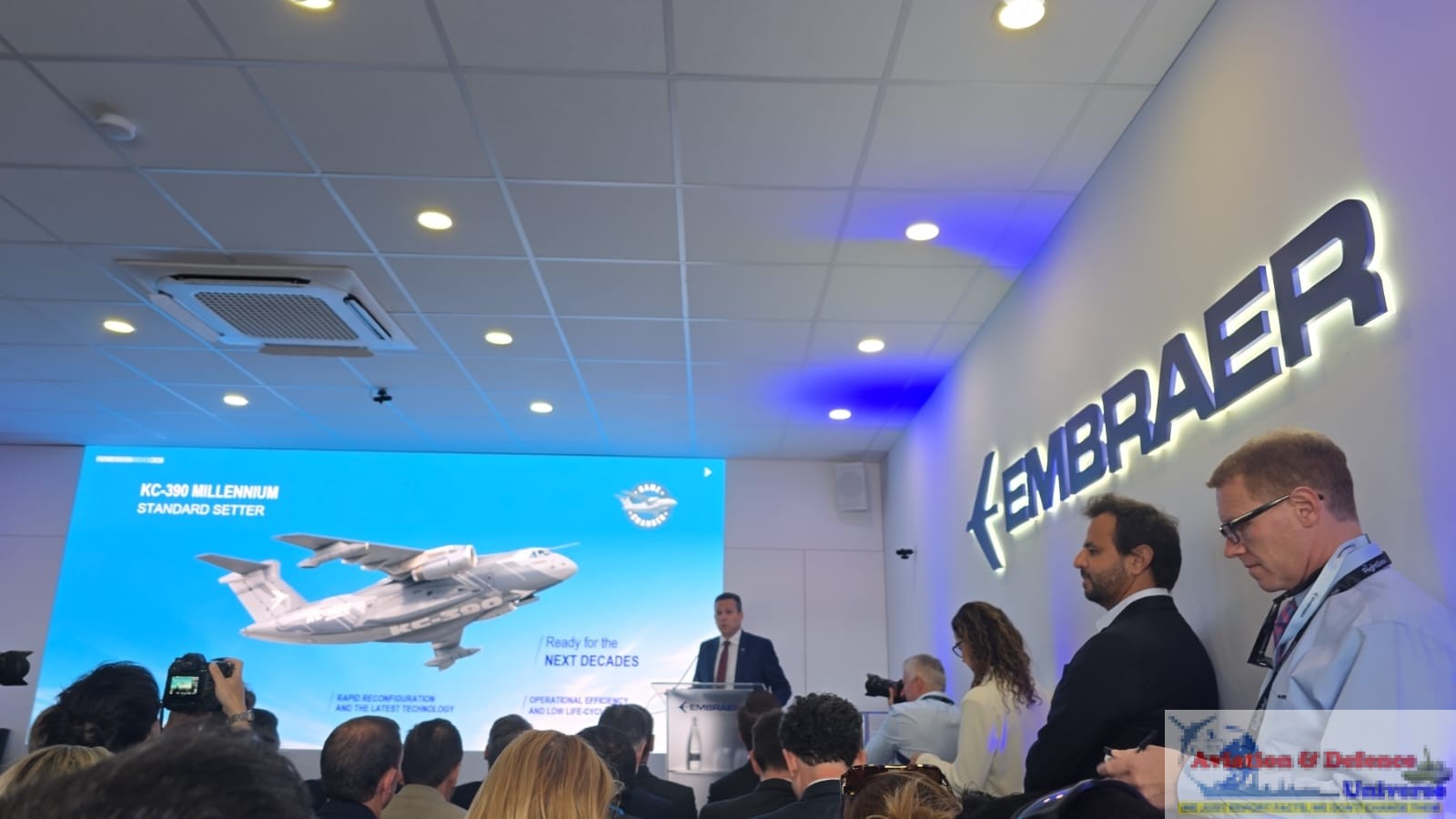
Farnborough, UK. 21 July 2026. Embraer Defense & Security used the global stage of Farnborough International Airshow 2026 to underline its rapidly expanding international footprint, announcing progress on the C-390 Millennium programme, increased Gripen production in Brazil and significant new capabilities for the A-29 Super Tucano. João Bosco Costa Junior, President & CEO of Embraer Defense & Security, delivered a fast-paced presentation that reflected what he described as the speed and efficiency of the company’s flagship military transport aircraft.
Opening on a lighter note, Costa Junior told the audience that he had been given a very specific mission for his Farnborough presentation. “The guys gave me a mission to deliver my presentation like a C-390 on a mission — the most efficient and fastest aeroplane in this category. So I will do so,” he said.
The Embraer defence chief made no attempt to hide the company’s confidence in the C-390 Millennium, describing it as the benchmark for the new generation of medium military transport aircraft and highlighting its growing international sales momentum.”This is the most efficient platform in its category. It’s delivering the best value proposition to the Air Forces worldwide,” he said, adding that Embraer was building “amazing momentum from a sales perspective.”
One of the biggest announcements concerned the United Arab Emirates, which has joined the expanding family of C-390 operators. Costa Junior announced that Embraer was formally kicking off work on the UAE contract, describing it as the company’s largest international contract for the aircraft. “I’m so glad to say that we are kicking off the C-390 UAE contract,” he announced.
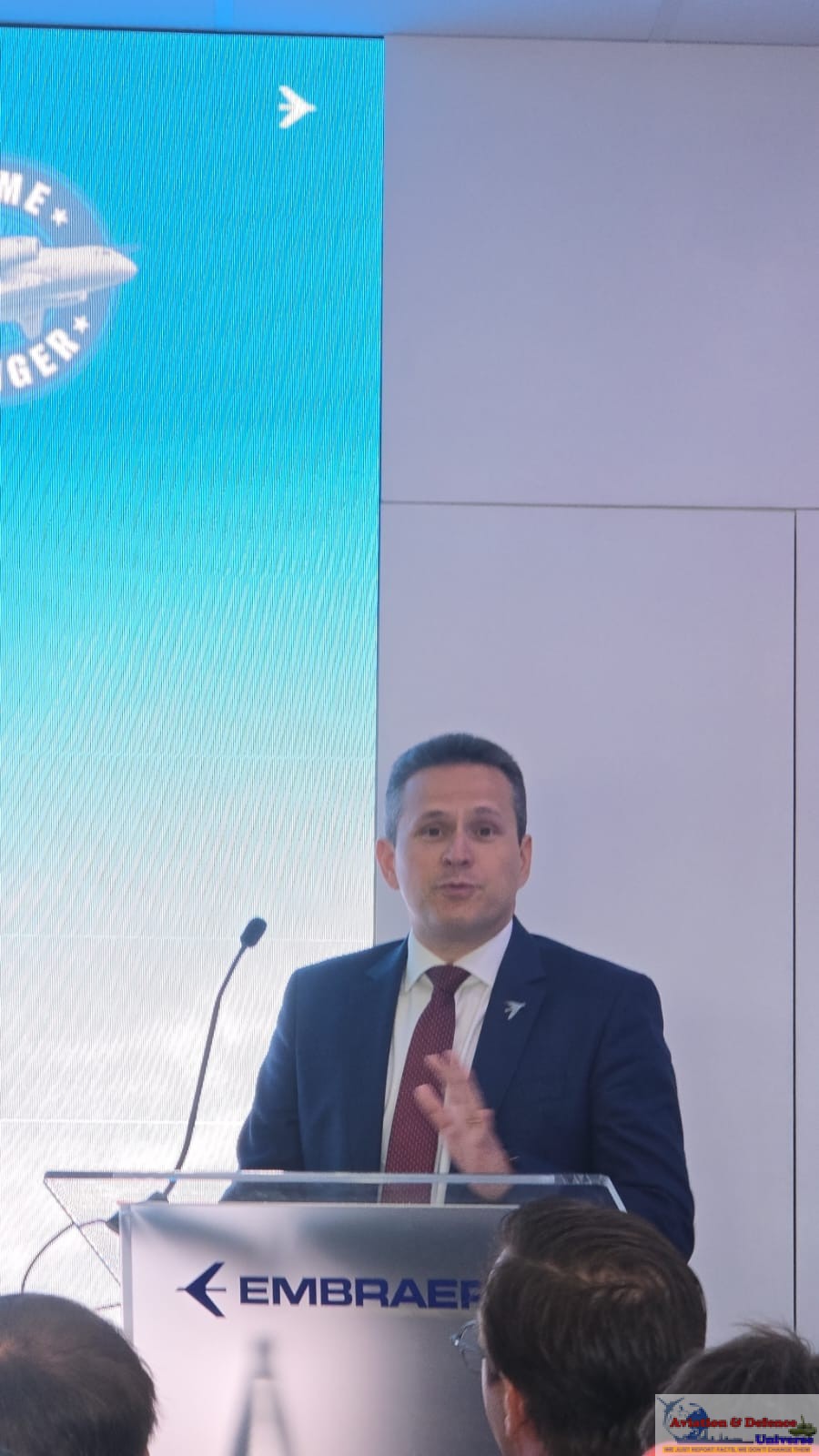 “This is the largest international contract. We are very happy with this momentum, and we are planning to deliver the first two units in 2028,” he said. The planned delivery schedule, according to Costa Junior, demonstrates Embraer’s ability to accelerate production as international demand for the aircraft grows. The company is ramping up its Brazilian production line to support the expanding global customer base. The C-390 has become central to Embraer’s defence growth strategy, positioning the Brazilian aerospace major as an increasingly significant competitor in the international military airlift and aerial refuelling market.
Embraer also highlighted the speed with which it has progressed on its commitment to the Czech Republic, with the first C-390 delivered only 20 months after the contract was signed. “Just 20 months after the signature, we have delivered another clear demonstration that Embraer is 100% focused on execution,” Costa Junior said. The aircraft was formally celebrated at Farnborough in a ceremony held a day earlier, marking another milestone in the expansion of the C-390’s European footprint.
For Embraer, the rapid progression from contract signature to delivery is intended to demonstrate not only the aircraft’s growing market acceptance but also the company’s ability to translate new orders into operational capability for customers at speed. Costa Junior stressed that the company’s defence ambitions extended well beyond the C-390 and the A-29 Super Tucano. In another major announcement, he revealed that Embraer and Saab would expand Gripen fighter production at Embraer’s Gavião Peixoto facility in Brazil. The increased production is intended specifically to support international demand rather than deliveries to the Brazilian Air Force.
“We are so glad to announce as well that we are expanding, together with Saab, the production rates in our facility at Gavião Peixoto to increase Saab’s capability to deliver more equipment in the world,” he said. Costa Junior announced that 20 additional aircraft would be added to the production plans at the Brazilian facility, on top of 16 aircraft already contracted for production there. “This is for the international market, not for the Brazilian Air Force. So we are adding, on top of the 16 already signed, 20 additional aeroplanes to be produced in our facility in Gavião Peixoto,” he said. The announcement further strengthens Brazil’s role within the global Gripen programme and demonstrates the growing industrial relationship between Embraer and Saab. It also positions the Gavião Peixoto facility as an increasingly important production hub capable of supporting future international fighter requirements.
Embraer also announced plans to further enhance the operational capabilities of the C-390 through a new international partnership. Costa Junior said the enhancement was being driven by requirements being expressed by prospective and existing customers around the world, presenting it as another example of the company’s ability to respond rapidly to changing military requirements. “We are receiving this demand from several countries around the globe, and this is another clear demonstration of how Embraer Defence is flexible and how Embraer Defence is agile,” he said.
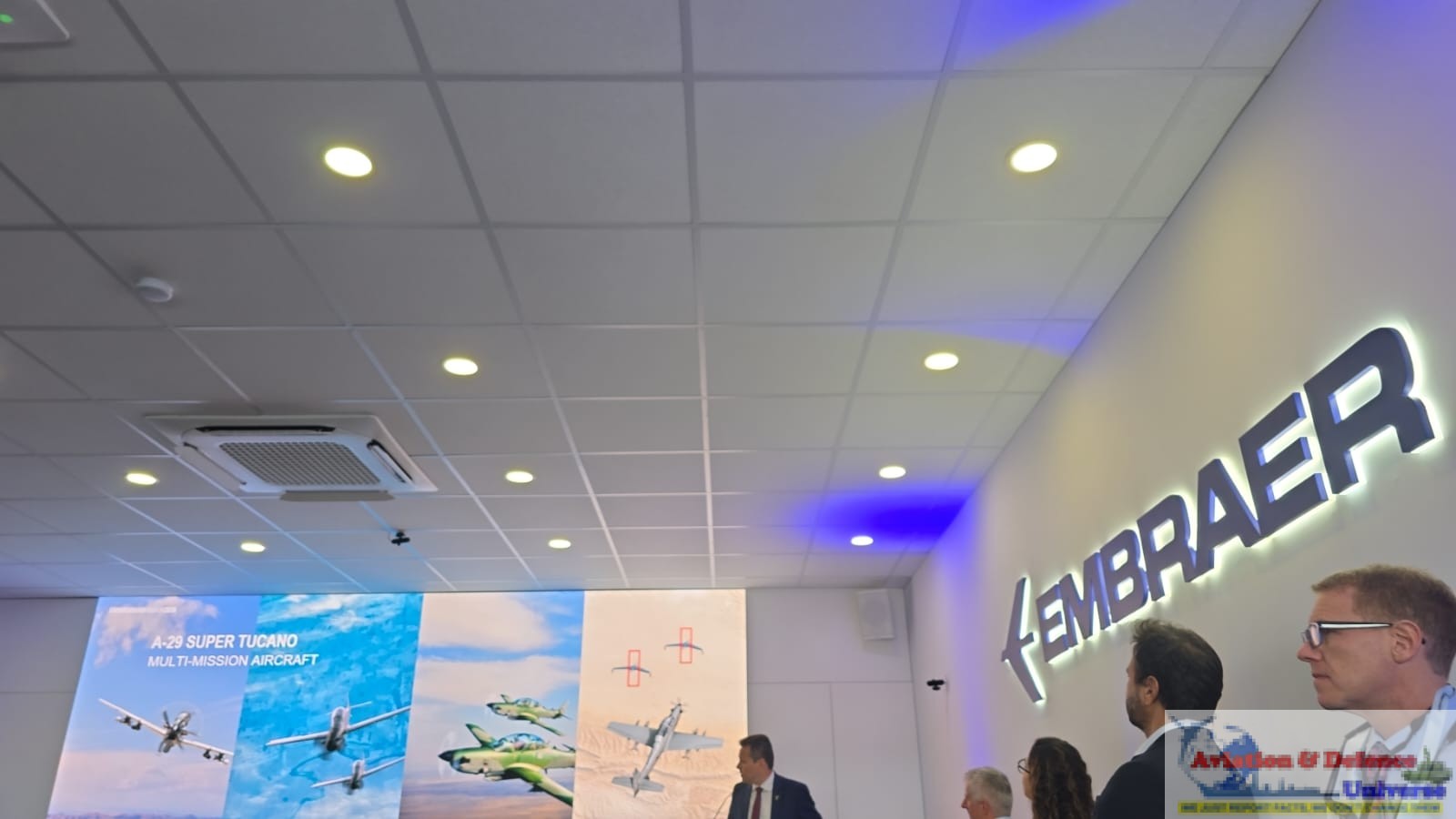 He added that Embraer’s engineers were already working with the partner company to integrate the new solution, which would bring additional operational capability to the C-390. The A-29 Super Tucano was the other major focus of the presentation. Costa Junior described the aircraft as a market leader that has maintained its position for two decades, supported by its ability to undertake multiple missions.
“The A-29 Super Tucano has been a market leader since it entered service — 20 years as a market leader,” he said. He highlighted the platform’s ability to conduct light attack, aerial reconnaissance and tactical training missions, while pointing to its more recent evolution into the counter-uncrewed aircraft systems mission. “It’s another multi-mission platform delivering very good success to customers — light attack missions, air reconnaissance and tactical training,” he said. The company, he added, was continuing to invest in the aircraft to ensure that it remained relevant against emerging threats.
Among the most significant announcements was a further enhancement package for the A-29 Super Tucano, reflecting the rapidly growing military requirement to counter drones and other uncrewed aerial threats. “I’m so proud to announce as well that we are enhancing the A-29 Super Tucano. We are adding some new capabilities,” Costa Junior announced. The planned improvements include fifth-generation avionics, a large-area display and a new video data link, strengthening the aircraft’s connectivity and situational awareness. Embraer is also adding a new capability involving a laser-guided air-to-air missile, intended to strengthen the Super Tucano’s role in counter-UAS operations.
The development is particularly significant given the lessons emerging from contemporary conflicts, where relatively inexpensive drones have created a growing requirement for affordable and flexible airborne interception solutions. The enhancement could further broaden the Super Tucano’s operational relevance beyond its established light attack, surveillance and training roles.
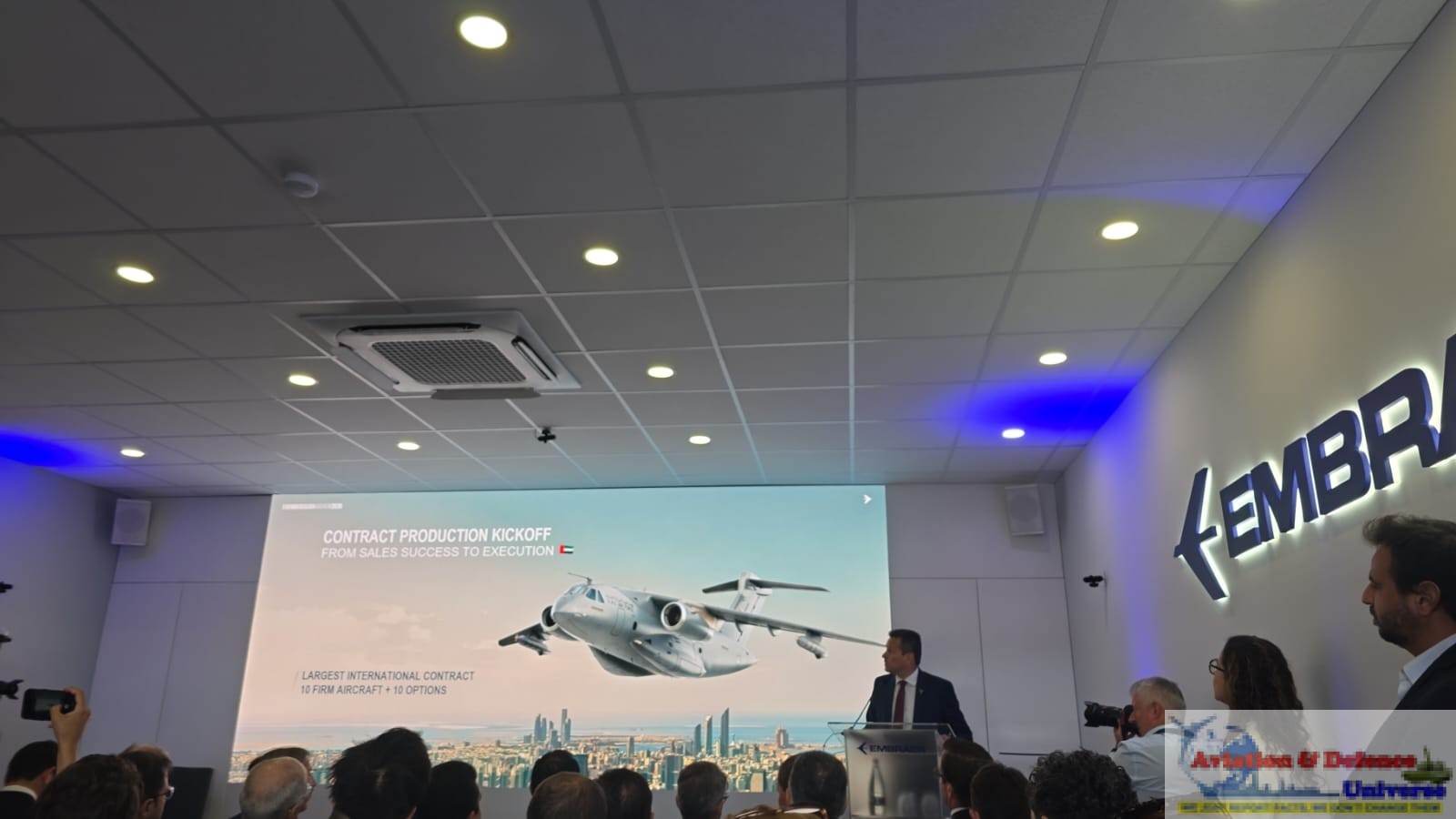 Costa Junior’s Farnborough presentation reflected an Embraer Defense & Security portfolio increasingly focused on international expansion. The C-390 is gaining momentum among air forces seeking a new-generation military transport platform, the Gripen partnership with Saab is expanding Brazil’s role in the global fighter supply chain, and the Super Tucano continues to evolve in response to new battlefield requirements. The common thread running through the announcements was speed — speed in securing international customers, moving contracts into production, delivering aircraft and adapting existing platforms to emerging operational needs.
For Embraer, Farnborough International Airshow 2026 provided an opportunity not merely to showcase aircraft but to demonstrate that its defence business is moving rapidly from individual platform successes towards a broader global industrial and operational footprint.
As Costa Junior’s presentation made clear, the company sees agility and execution as central to that strategy. From the first two C-390s planned for the UAE in 2028 and the rapid Czech delivery to additional Gripen production and a technologically enhanced Super Tucano, Embraer arrived at Farnborough with one overriding message: its defence portfolio is gaining momentum, and the company intends to move as fast as the aircraft it builds.
 India and Brazil have emerged as two of the most consequential voices of the Global South, combining continental scale, large populations, growing economies and considerable diplomatic influence. As leading democracies in Asia and Latin America respectively, the two countries share an interest in reshaping a global order still dominated by institutions and power structures created largely by the developed world. Their partnership through platforms such as BRICS, the G20, IBSA and BASIC gives them an important role in articulating the priorities of developing nations on issues ranging from reform of global governance and multilateral institutions to climate justice, energy security, food security and sustainable development. Both also seek greater strategic autonomy in an increasingly polarised world, preferring diversified partnerships over rigid geopolitical alignments.
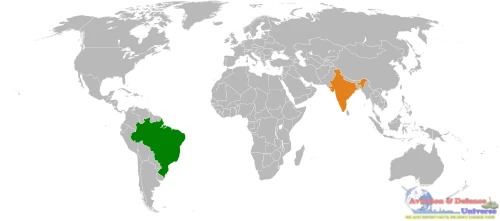 With India bringing its technological capabilities, rapidly expanding economy and strategic position in the Indo-Pacific, and Brazil contributing its leadership in Latin America, immense natural resources and influence in global food, energy and environmental debates, closer Indo-Brazilian cooperation can become a powerful pillar of South-South engagement. Their expanding collaboration in aerospace and defence, including the growing engagement with Embraer, adds another strategic dimension to this relationship, demonstrating how two major Global South powers can increasingly develop, manufacture and exchange advanced technologies rather than remaining merely markets for the traditional industrial powers.
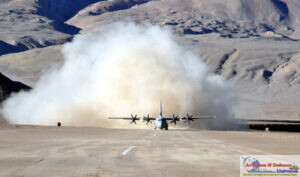
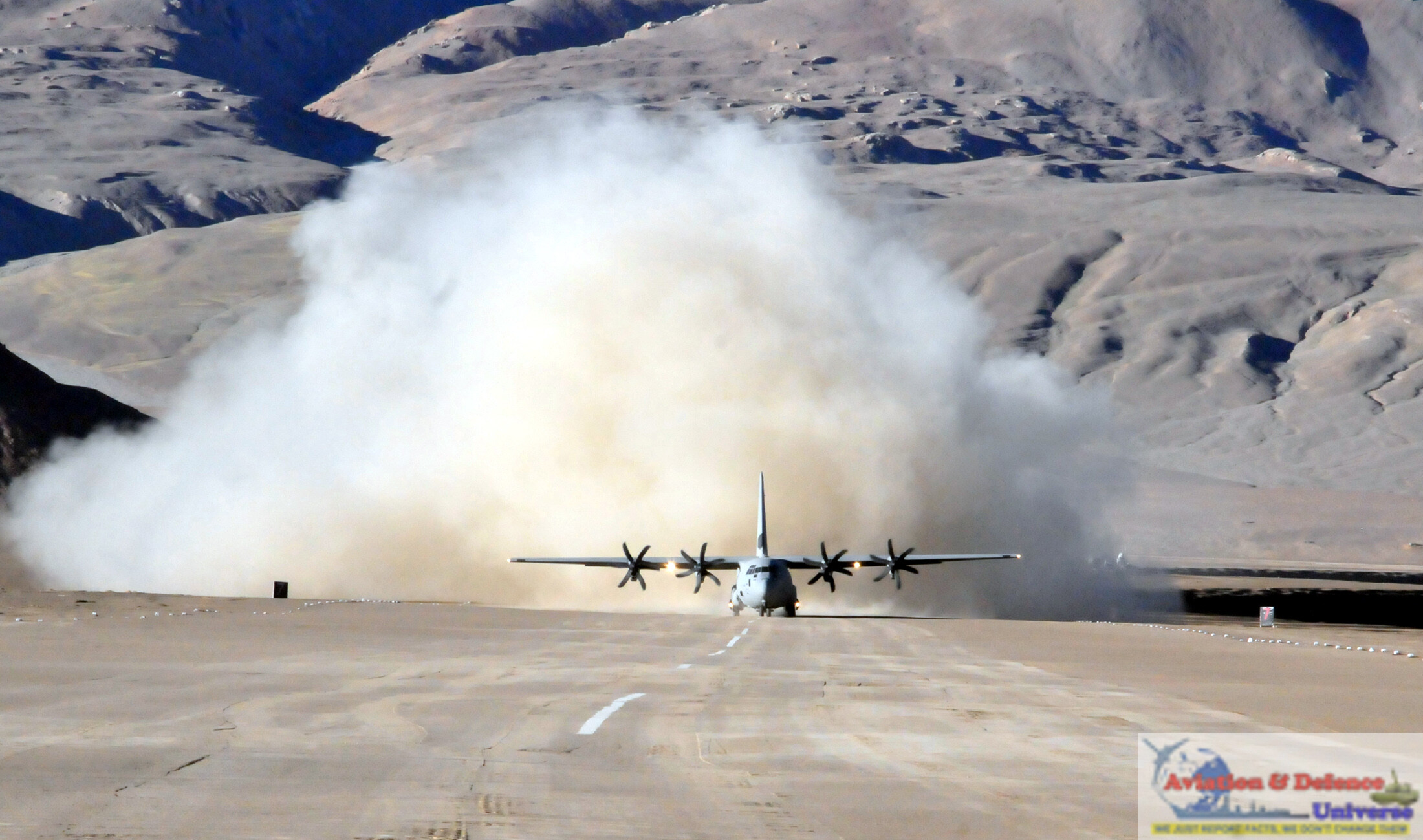
The C-390 Millennium could be a strong contender for the Indian Air Force’s Medium Transport Aircraft programme because its capabilities align closely with India’s need for speed, flexibility, payload and operations across diverse terrain. The aircraft can carry up to 26 tonnes, fly at around 470 knots, operate from temporary and unpaved runways, and undertake troop and cargo transport, airdrop, medical evacuation, search and rescue, humanitarian relief and firefighting missions; in the KC-390 configuration, it can also perform air-to-air refuelling as both tanker and receiver. These characteristics could be particularly valuable for an air force that must operate from Himalayan sectors and island territories to deserts and remote forward bases.
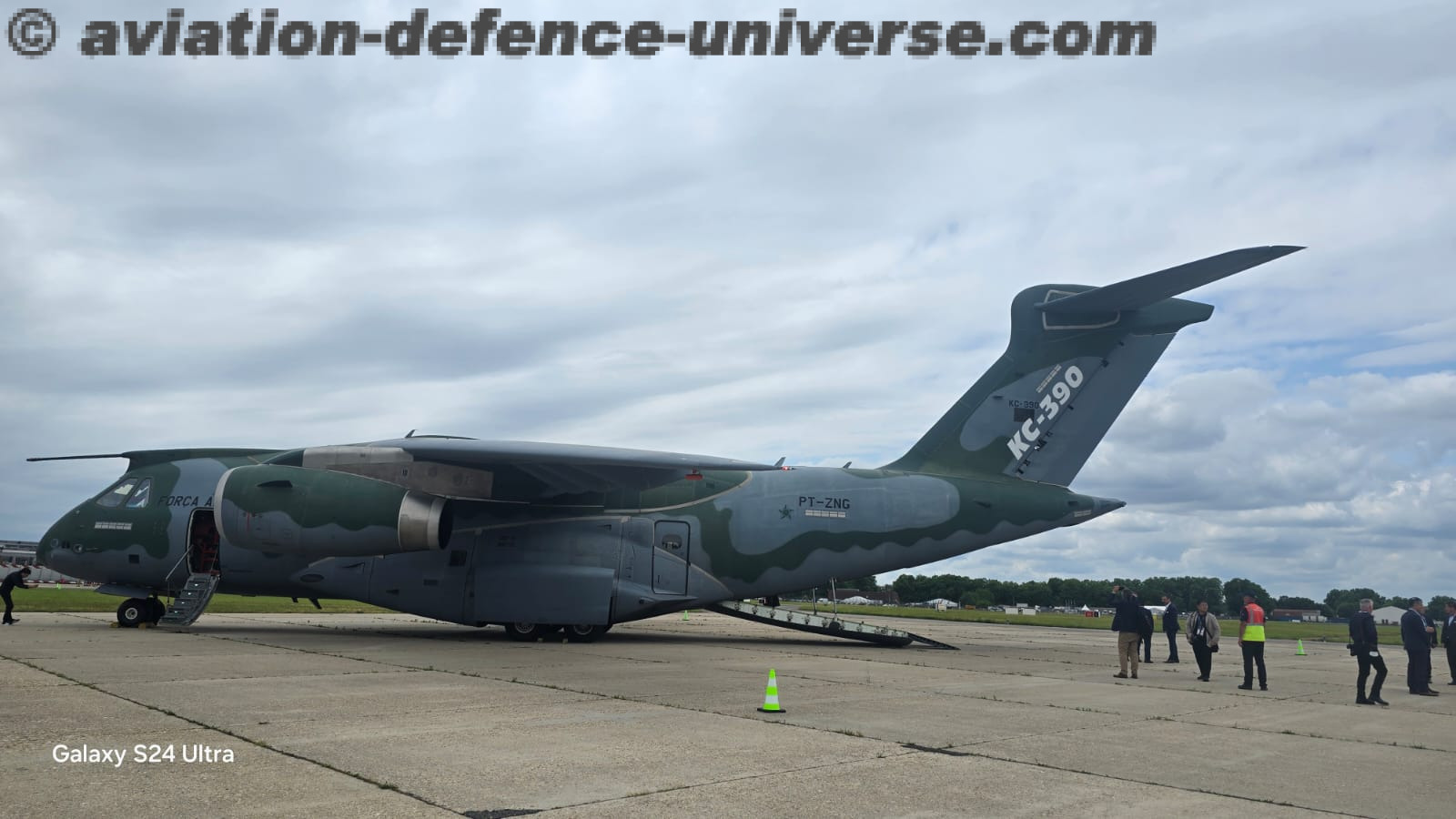 Equally important is the industrial proposition surrounding the aircraft. Embraer and Mahindra have agreed to pursue production and industrialisation of the C-390 in India and, if selected for the MTA programme, plan to develop an in-country MRO capability, potentially giving the programme a substantial Make in India and Atmanirbhar Bharat dimension while building domestic aerospace skills and long-term support capacity. With an in-service fleet recording mission-completion rates above 99 per cent, according to Embraer, and a growing international operator base, the C-390 offers India a combination of a modern platform, proven multi-mission capability and the prospect of a deeper indigenous industrial ecosystem—factors that could make it a compelling choice, subject ultimately to the IAF’s operational evaluation, procurement terms and comparative assessment of competing aircraft.
Embraer could emerge as one of India’s most natural Make in India aerospace partners, not merely because it has competitive aircraft to offer, but because its own journey mirrors many of India’s industrial ambitions. Brazil built Embraer into a globally respected aerospace manufacturer by combining indigenous engineering, international collaboration, a strong domestic supply chain and sustained investment in design and intellectual property — precisely the capabilities India now wants to deepen. Unlike a traditional buyer-seller arrangement, a partnership with Embraer could potentially create opportunities for genuine industrialisation, involving Indian manufacturing, component sourcing, engineering, maintenance and eventually integration into the company’s global supply chain. The proposed collaboration around the C-390 Millennium, particularly if accompanied by substantial local production, technology transfer, MRO and participation by Indian private and public-sector companies, could provide a powerful model of South-South aerospace cooperation. For India, the real attraction would therefore extend beyond acquiring an aircraft: it would be the opportunity to partner with a company that understands how an emerging economy can build a globally competitive aerospace industry and could help translate Make in India into Design, Develop and Make in India for the World.
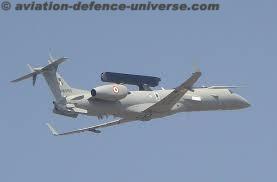 The Embraer ERJ-145 platform has already demonstrated the potential of Indo-Brazilian aerospace cooperation through India’s Netra Airborne Early Warning and Control (AEW&C) programme. Developed by DRDO’s Centre for Airborne Systems (CABS), the Netra Mk1 integrates an indigenous active electronically scanned array radar and sophisticated mission systems onto the Brazilian-built Embraer ERJ-145 aircraft, creating a strategically important airborne surveillance and battle-management capability for the Indian Air Force. The programme is a particularly relevant example of why Embraer can be a strong long-term partner for India: the company modified the aircraft to accommodate the complex mission suite, including structural and aerodynamic changes and an in-flight refuelling capability, while India retained ownership of the critical sensor and mission technologies. Netra has since become an important operational asset, demonstrating how an Embraer platform and Indian-developed systems can be successfully brought together to create a capability tailored specifically to the country’s requirements. As India and Brazil explore deeper cooperation around platforms such as the C-390 Millennium, the Netra experience provides an existing foundation of trust and technical collaboration — proving that the relationship need not begin with the MTA programme but can build upon an aerospace partnership that has already taken flight.
























































-A4-Size-(2)_page-0001.jpg)