


 18th BRICS Summit














- Digital, AI-Driven and Focused on the Full Aerospace Lifecycle
- Cyient Moves from being Engineering Partner to Lifecycle Partner
- Engineering Meets Intelligence: Vijay Pasupuleti on Cyient’s Aerospace Reinvention
By Sangeeta Saxena
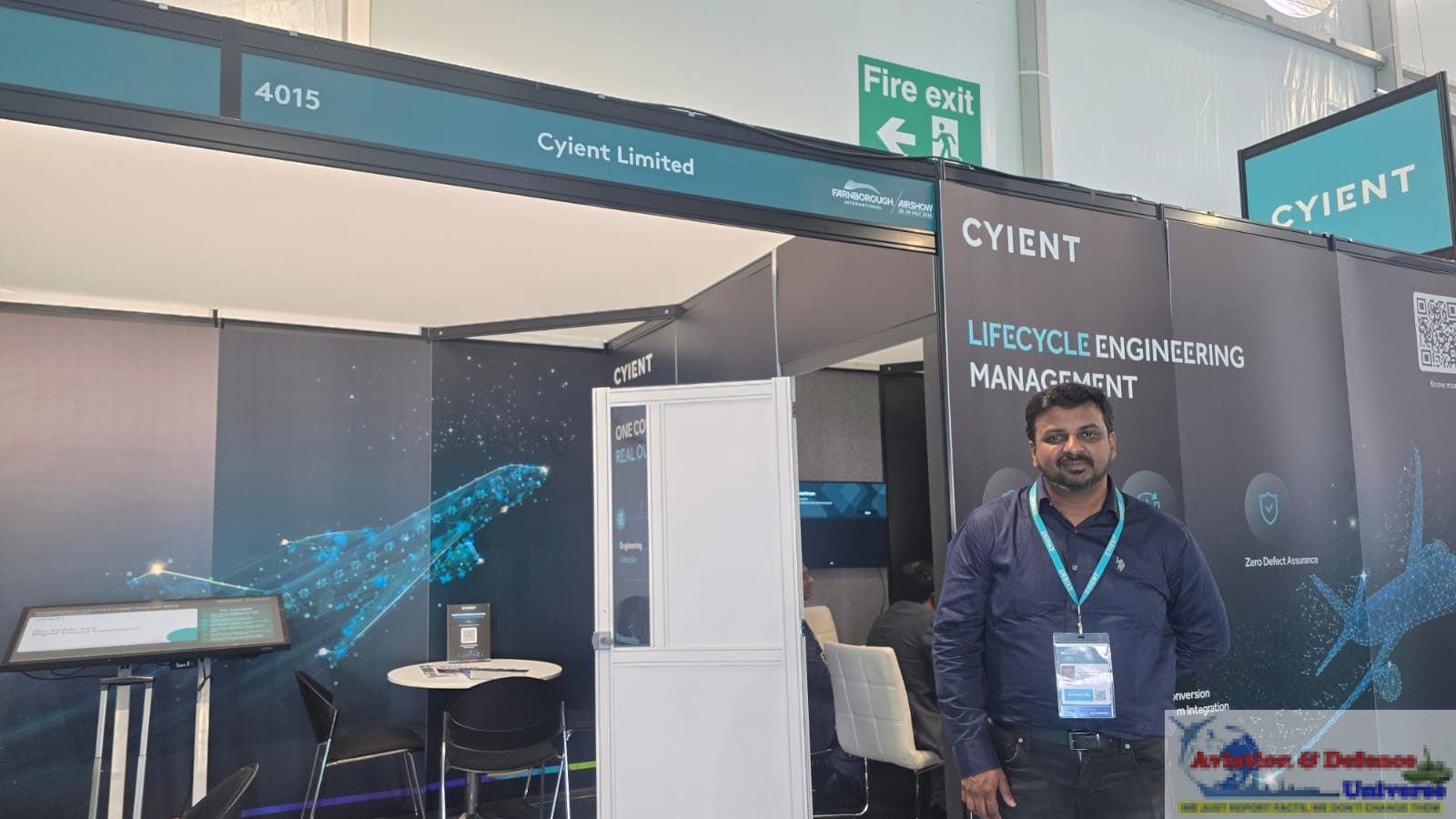
Farnborough. 26 July 2026. For decades, Cyient has been closely associated with engineering and design services for some of the world’s biggest aerospace companies. At Farnborough International Airshow 2026, however, the Indian technology major was making a deliberate effort to change that perception. The message from its pavilion was that Cyient no longer wants to be seen simply as an engineering-services provider—it wants to position itself as a lifecycle partner, supporting aerospace customers from concept and certification through digitalisation, supply chains, aftermarket and MRO.
Artificial intelligence sits at the heart of this transition. Cyient is investing in data infrastructure, developing its own Engineering Intelligent Platform, building digital solutions and applying AI to areas ranging from technical publications and predictive maintenance to asset management. Its expanding aerospace footprint also stretches across engines, structures, systems, avionics, interiors and the aftermarket.
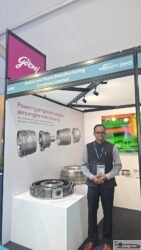
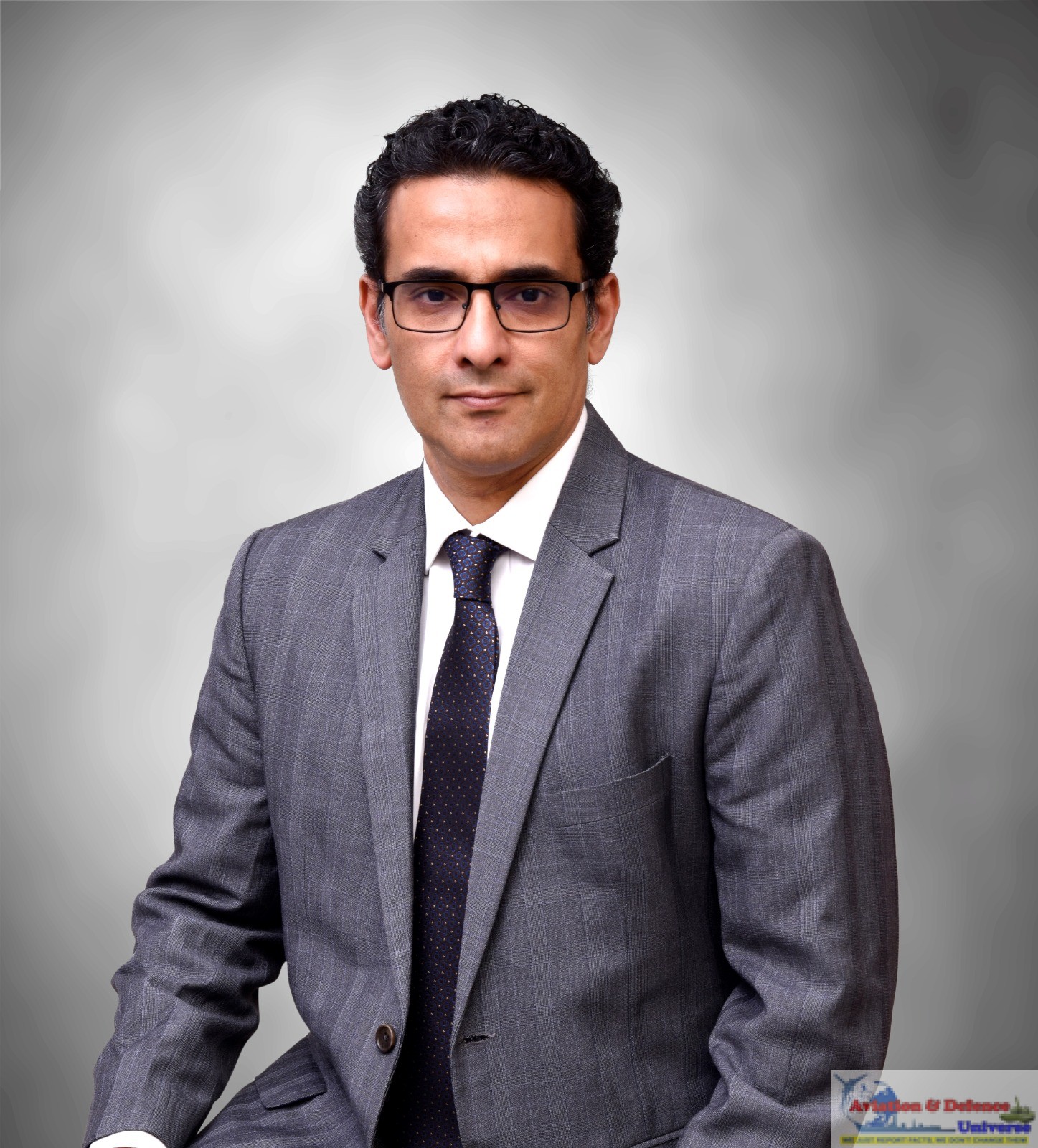
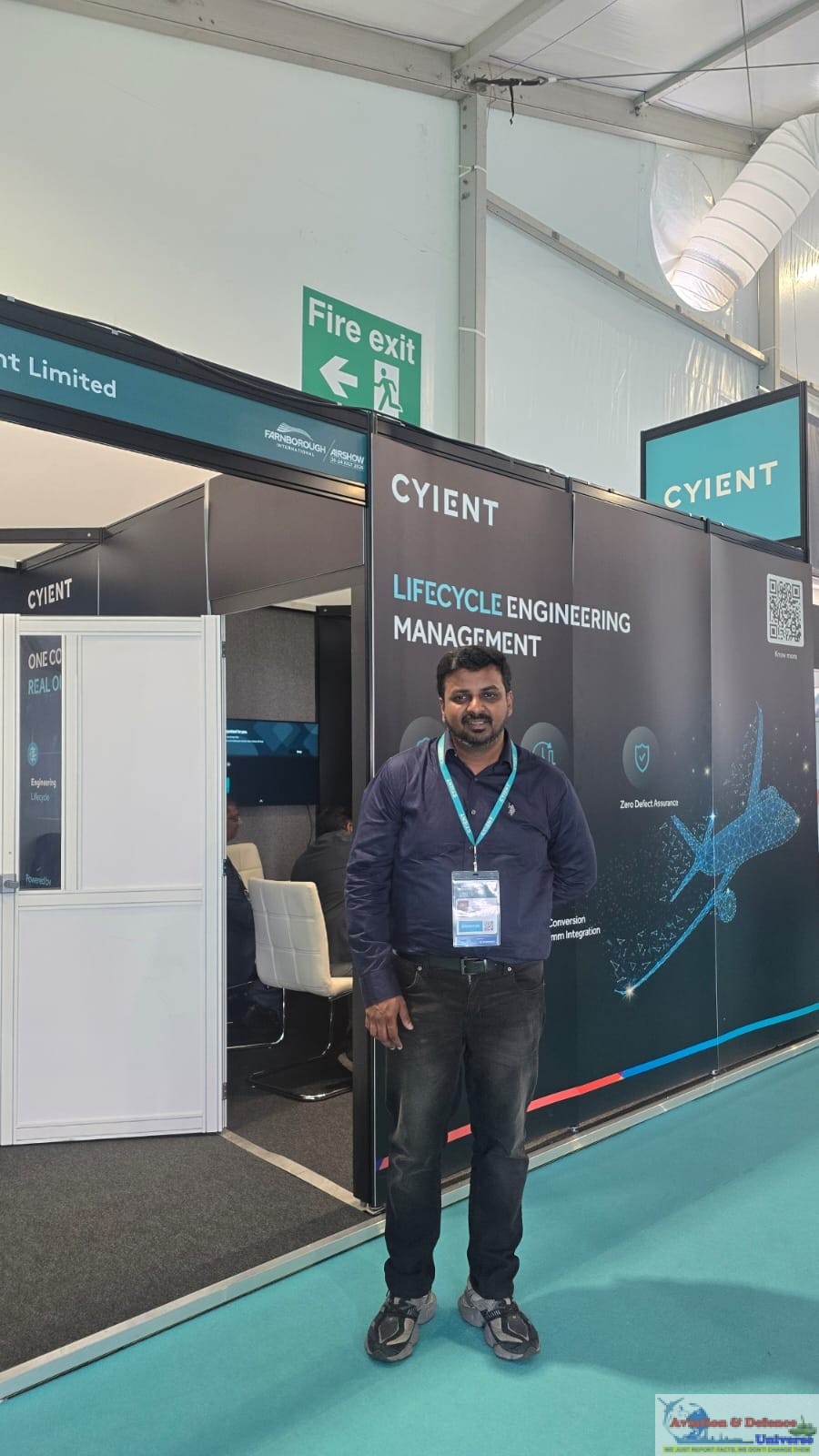 In an interaction with Aviation & Defence Universe (ADU) at Farnborough, Vijay Pasupuleti, Senior Marketing Manager – Transportation BU at Cyient, spoke about the company’s evolving identity, its growing AI and digital capabilities, work with global aerospace OEMs, intellectual property portfolio and why relationships built at events like Farnborough can sometimes take years before they translate into business.
ADU. Vijay, we are meeting at the Farnborough Airshow and Cyient has a significant presence here. What are you showcasing this year?
Vijay Pasupuleti. Cyient, as you already know, is a technology partner to aerospace OEMs. Now we are rebranding ourselves as a lifecycle partner. The concept is from concept to certification. We are investing in data centres and we are also building our own platform called the Engineering Intelligent Platform. Our technology teams have developed many solutions and we are growing strongly in AI. AI is now one of our main areas of focus. The rebranding around becoming a lifecycle partner is still underway, and probably in the next couple of months we will announce the new phase of Cyient, including the new website and positioning.
ADU. When you say a “new phase of Cyient”, what exactly will change?
Vijay Pasupuleti. It is basically a new era for us. Many people think Cyient is only into mechanical design services and that we are not part of digital services or AI. We have relationships with some aerospace companies that are more than 20 or 25 years old, and sometimes even those customers may not fully know the extent of our digital capabilities because they know us primarily through the work we have traditionally done for them. So we are conducting technology days, developing digital roadmaps and holding workshops with customers to showcase that Cyient is also strongly into digital and AI.
ADU. You mentioned that MRO and supply chain are now important areas of focus. Is Cyient creating an MRO business of its own or supporting existing aerospace OEMs?
Vijay Pasupuleti. We are not working as an airline MRO ourselves. We work with aerospace OEMs that already have MRO operations. We support areas such as technical publications and predictive maintenance. We also have an asset-management system on which we hold a patent. We work with large aerospace OEMs and have implemented our supply-chain solutions with them. We are not positioning ourselves as a third-party MRO operator.
ADU. So these are largely software and digital solutions developed by Cyient?
Vijay Pasupuleti. Yes. We develop solutions and can integrate CRM or enterprise systems with them. We built software using large language models with the help of Microsoft. Tasks that previously could take three or four days can potentially be completed in a day or even within hours. The idea is to optimise the process significantly.
ADU. We are now on the fourth day of Farnborough. What has the response been like?
Vijay Pasupuleti. The footfall has been very good, particularly from Day One. Our CTO gave a keynote on AI and human intelligence. Our positioning has also evolved over time. Earlier our tagline was “Designing Tomorrow Together.” Then it became “Intelligent Engineering.” Now we are moving towards “Embracing Intelligence”, combining human and AI expertise. That indicates where Cyient is heading.
ADU. Participating at a show like Farnborough requires significant effort. Has it generated  meaningful customer engagement?
Vijay Pasupuleti. Yes. We had pre-scheduled more than 60 meetings with existing customers, and we have also met almost 30 new potential customers. We have seen interest from North America and Japan as well, particularly in areas such as Urban Air Mobility. Senior industry leaders have stopped by our booth, sought time with us and engaged with the team. That has been a very positive response.
ADU. AI is clearly changing engineering itself. How do you see that transformation?
Vijay Pasupuleti. AI is changing the nature of work considerably. With AI, it becomes important to  understand how you interact with the technology and how you provide it with the right information. Prompting is important, but increasingly it is about how much relevant information you feed into the system. AI can then begin behaving according to the information and context it receives. We are also seeing agentic AI develop rapidly, where systems are increasingly able to understand patterns, information and how users operate.
ADU. Where does aftermarket fit into Cyient’s aerospace strategy?
Vijay Pasupuleti. Aftermarket encompasses several areas, including MRO, supply chain, predictive maintenance, technical publications and asset management. For example, large OEMs may have huge warehouses containing large numbers of assets. We have built solutions that allow those assets to be tagged, located and tracked. The system can identify where an asset is located, including across different locations globally.
ADU. Is that asset-management technology Cyient’s own intellectual property?
Vijay Pasupuleti. Yes, we hold a patent in asset management. Across aerospace and engineering, we have a significant patent portfolio.
ADU. Intellectual property must become increasingly important as Cyient moves from services towards lifecycle solutions?
Vijay Pasupuleti. Yes. That journey and our lifecycle-partnership positioning are areas to watch as we move forward.
ADU. Cyient already has a substantial international market. Apart from Europe, where is your aerospace footprint strongest?
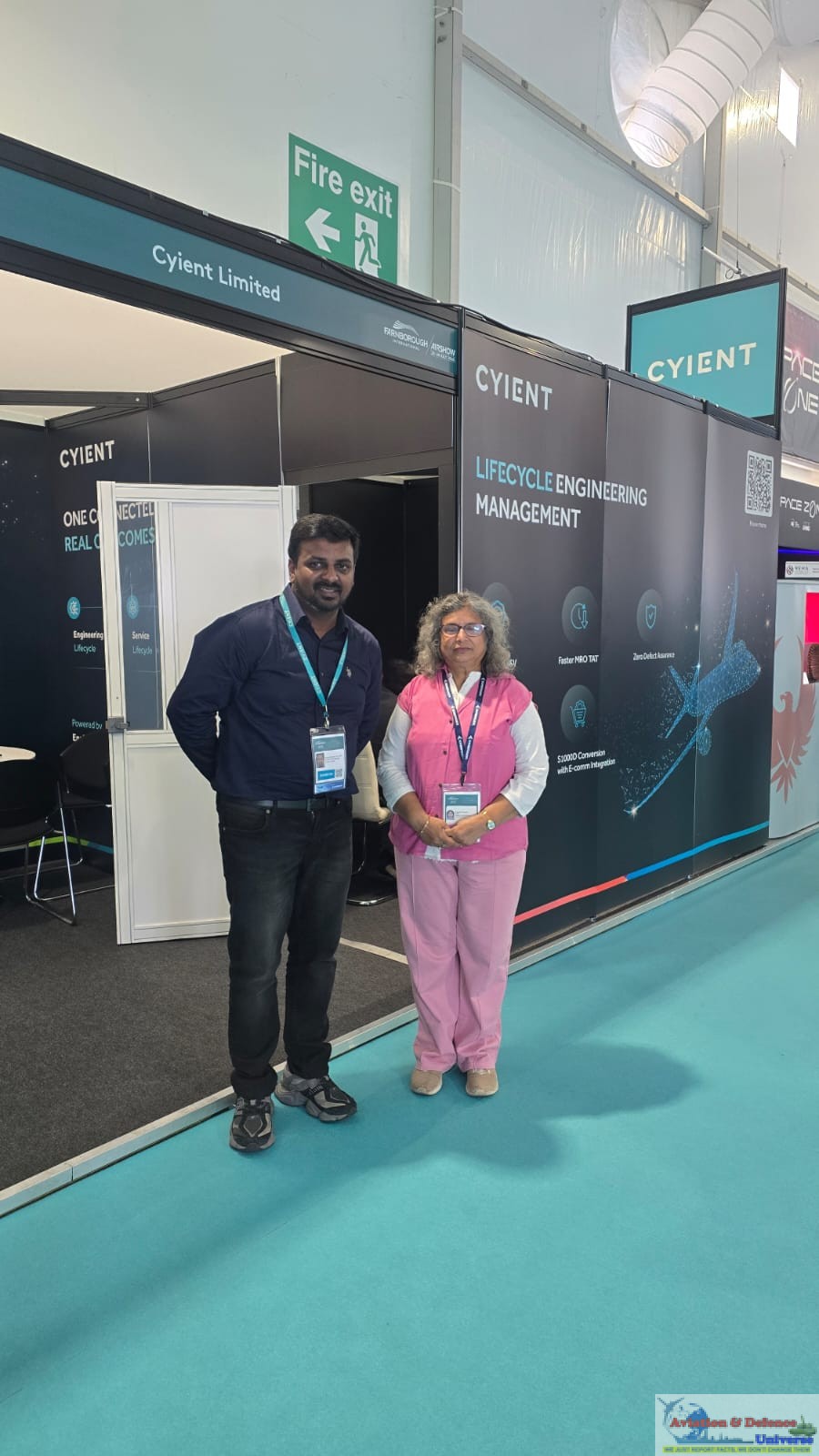
Vijay Pasupuleti. We have a strong presence in North America and Japan. We work with major aerospace OEMs as well as Tier-2 companies. We also have many customers in the United States and have recently onboarded several more customers there, including companies in areas such as Urban Air Mobility. Our presence has increased significantly over the last two years.
ADU. And here at Farnborough you have met another 30 prospective customers. But aerospace business rarely gets signed at the show itself, does it?
Vijay Pasupuleti. Exactly. You do not necessarily get the business at Farnborough itself. You meet people here and then continue those conversations. Aerospace is fundamentally about building trust. Customers explore your solutions, evaluate them and go through their own processes before committing. There are cases where we first met a company at an earlier Farnborough and the actual work came several years later. That shows how important long-term relationship-building and engagement are in this industry.
ADU. So capability opens the door, but relationships ultimately sustain the business?
Vijay Pasupuleti. Exactly. Capability is essential, but the relationship also matters. You can be extremely capable, but customers also have to want to work with you as a partner. That is an area where Cyient has done well.
 Cyient’s Farnborough 2026 message represents more than a branding exercise. It signals an attempt to redefine where the company sits in the aerospace value chain—from an engineering partner known primarily for design support to a technology-led lifecycle partner capable of supporting an aircraft and its ecosystem from concept to certification and through the aftermarket. AI is becoming central to that transformation. Whether speeding up technical publications through large language models, predicting maintenance requirements, tracking assets across global warehouses or developing digital roadmaps for aerospace customers, Cyient is looking to combine decades of engineering knowledge with a rapidly expanding digital toolkit. Its advantage may lie in the breadth built over years of working with global aerospace companies: engines with Japanese partners, structures linked to Airbus programmes, electrical systems for Boeing, avionics and electronics, technical publications, supply chains and MRO-related digital solutions.
But Pasupuleti’s comments also underline something that technology cannot accelerate quite so easily—trust. In aerospace, a meeting at Farnborough today may become a contract years later. Engineering capability gets a company into the conversation; consistent delivery and relationships keep it there. For Cyient, therefore, “Embracing Intelligence” is not simply about replacing engineering with AI. It is about combining human engineering expertise, proprietary technology, digital intelligence and long-term customer relationships into the next phase of the company’s aerospace journey.
As Told To Sangeeta Saxena



















































-A4-Size-(2)_page-0001.jpg)