


 18th BRICS Summit










- A Giant Takes Shape: Radia’s Windrunner Targets First Flight in 2030
- Six Chinooks in One Go: Wants to Rewrite the Rules of Strategic Airlift
- The World’s Largest Aircraft? Thad Bibb Explains Why Radia Is Building Windrunner
By Sangeeta Saxena
Farnborough. 26 July 2026. How big is big enough when the mission is to move cargo that today’s largest transport aircraft simply cannot accommodate? For Radia, the answer is Windrunner — an aircraft so enormous that its scale challenges conventional ideas of strategic airlift.
Designed as a dual-use civil and military cargo aircraft and targeted for first flight at the end of 2030, Windrunner is being conceived to move the world’s largest wind-turbine blades, outsized aerospace and infrastructure cargo and military equipment to places that are difficult to reach with existing heavy transports. Radia says the aircraft will have around seven times the cargo volume of a C-5 Galaxy and could transport six Chinook helicopters or four Ospreys in a single mission.
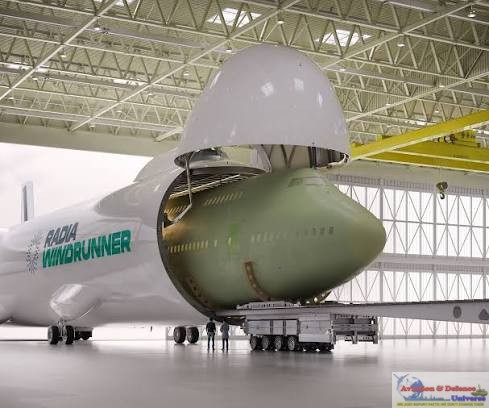 But it is Windrunner’s potential relevance to India that makes the proposition particularly interesting. With the Indian Air Force’s ageing IL-76 fleet eventually requiring replacement, India’s requirement to move heavy equipment into high-altitude border regions, and the country’s rapidly expanding renewable-energy and infrastructure sectors, Radia sees both military and commercial opportunities. The company is also looking at India for industrial partnerships, manufacturing and potential MRO.
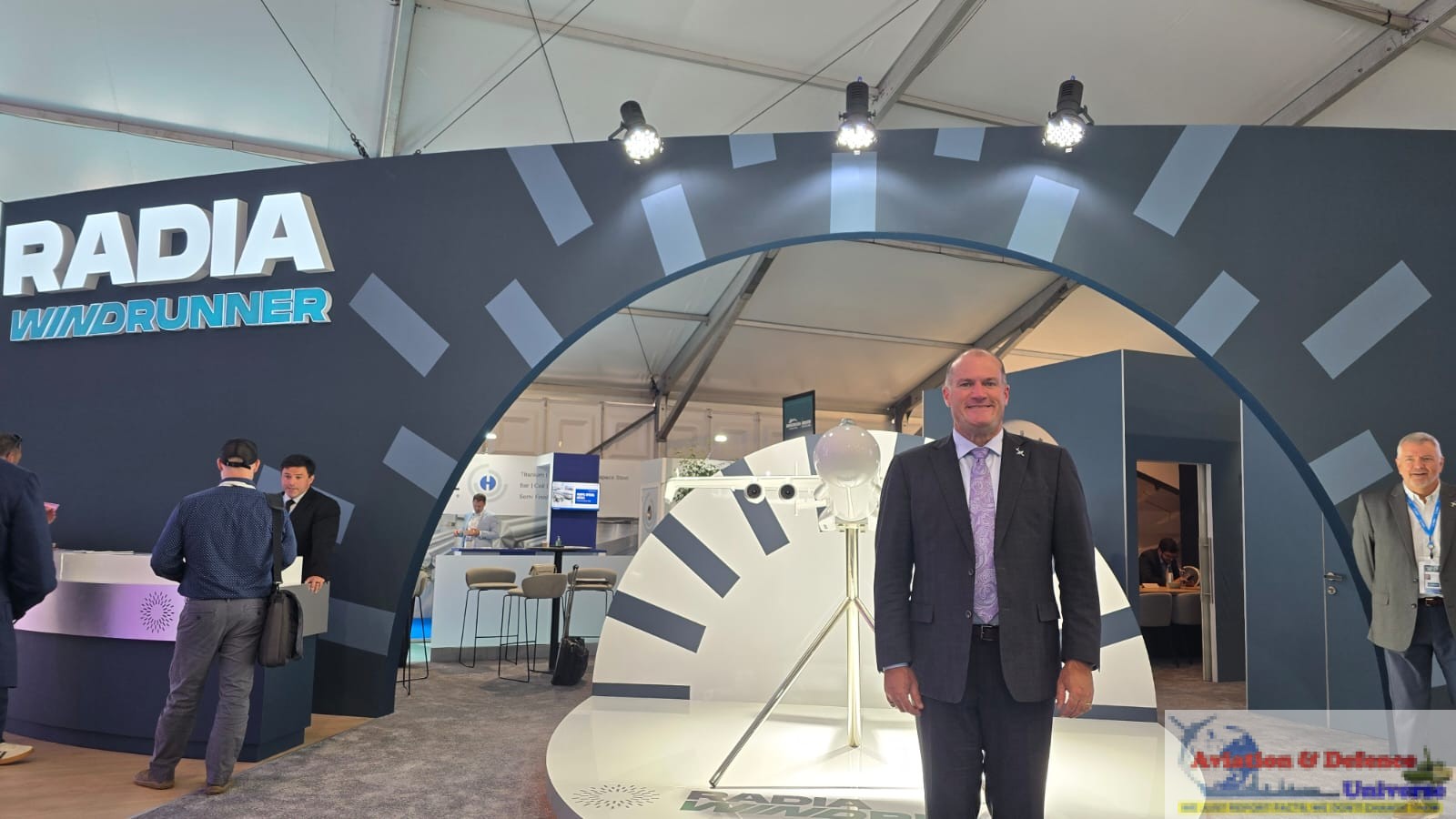
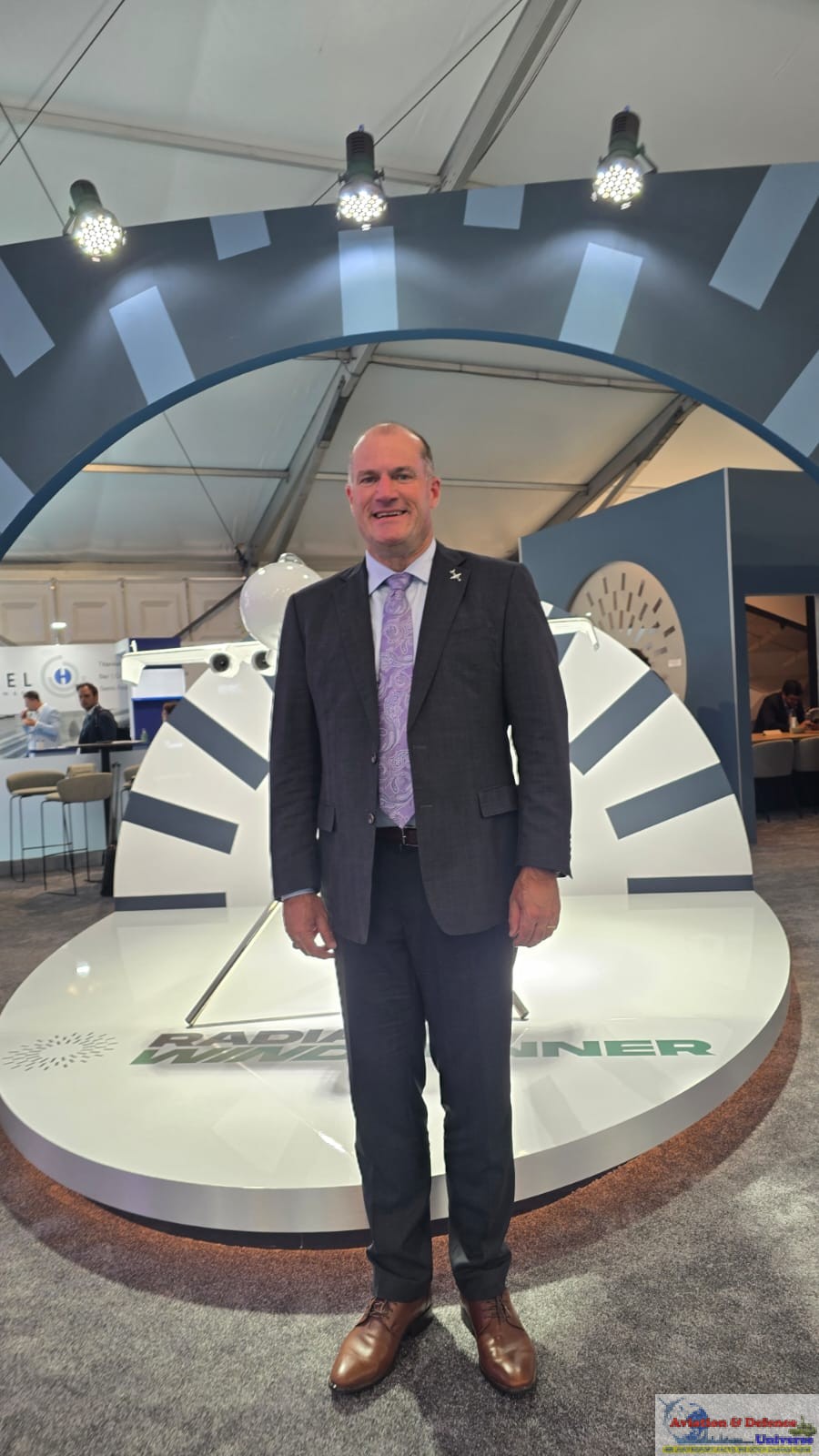
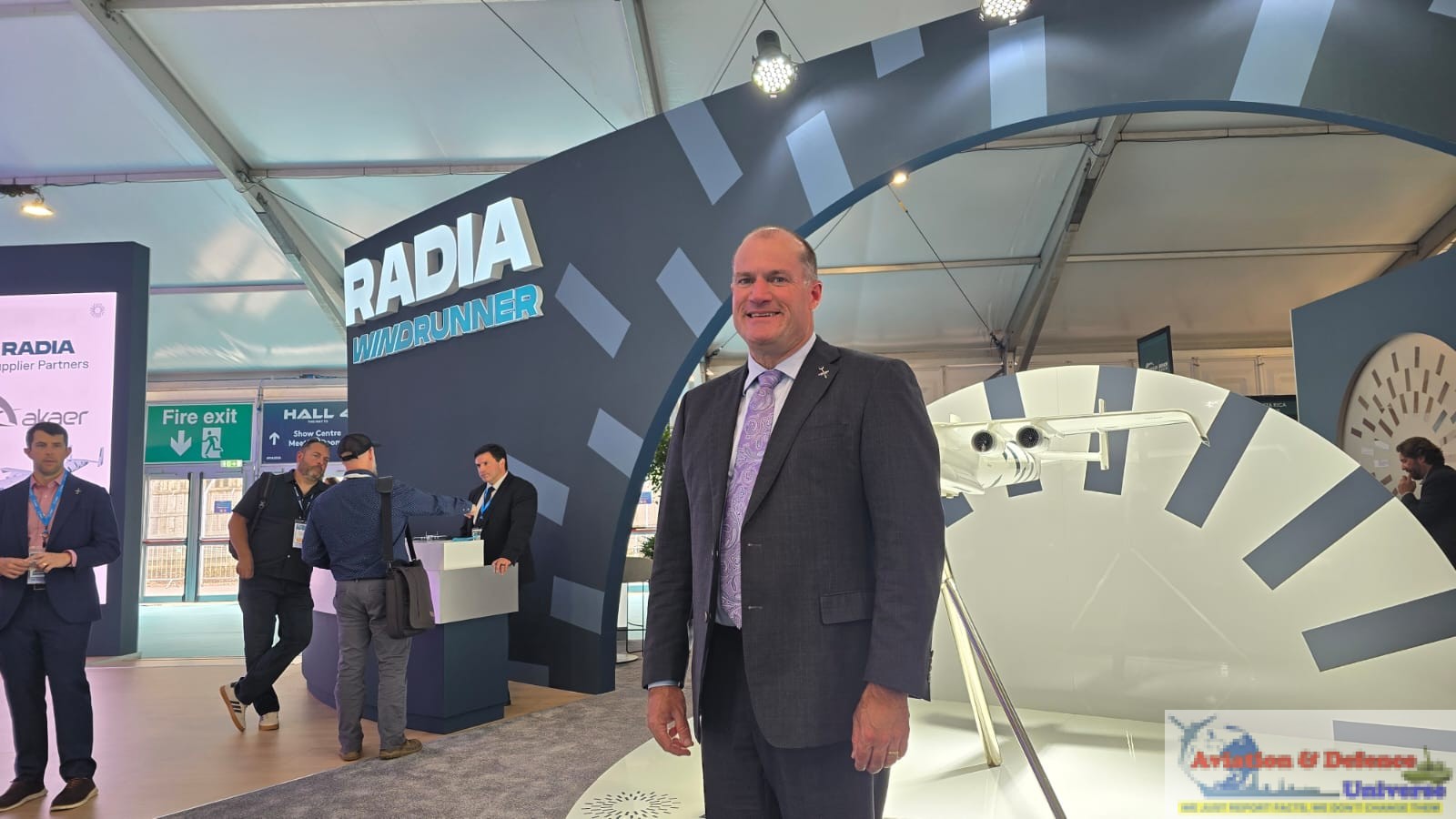
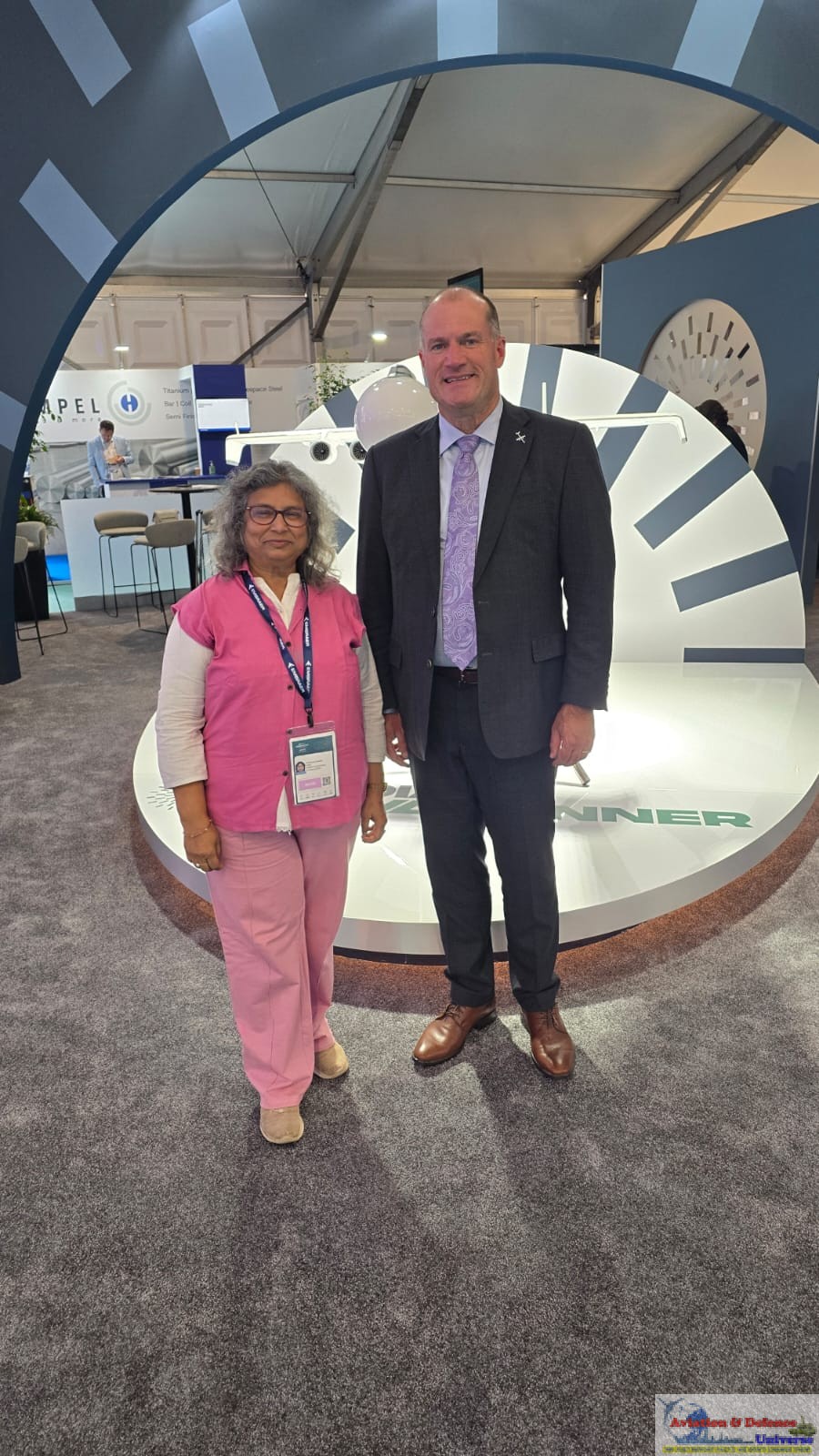
At the Farnborough International Airshow, Aviation & Defence Universe (ADU) caught up with Thad Bibb, Vice President of Business Development for Defence at Radia, for a conversation about the colossal aircraft, its military potential, the programme timeline, Indian opportunities and why Radia believes Windrunner belongs in a category of its own.
ADU. We are meeting here at Farnborough Airshow. What is Radia showcasing here?
Thad Bibb. Radia has the Windrunner. It will be the largest aircraft in the world and is scheduled to fly in 2030. We are very excited. It is seven times the volume of the C-5 Galaxy, so it is very big.
ADU. What sort of aircraft will Windrunner be and what missions will it be able to perform?
Thad Bibb. It is a dual-use aircraft, both civil and military, and it is a cargo aircraft. It has a very large volume and will also carry 160,000 pounds of cargo by mass. It can carry everything from the largest wind blades to things from the aerospace sector that need to be moved. For the military, it will be able to carry six Chinooks at a time or four Ospreys.
 ADU. Six Chinooks in one aircraft?
Thad Bibb. Yes, six Chinooks. So you can imagine just how big it is. We are very excited about the opportunity.
ADU. And 2030 remains the target?
Thad Bibb. Yes. The end of 2030 will be the first flight. It will start flying in 2031 and 2032. The ability to bring this to both civil and military sectors is very exciting.
ADU. Could Windrunner eventually also become an aerial refuelling aircraft?
Thad Bibb. Not this version. For the first version, our goal is to get out the minimum viable aircraft as soon as possible. We really feel there is a gap in airlift. It has been a number of years since an airlifter has been produced, and never at this size. We really think we will be able to move the biggest things to the hardest-to-reach places.
ADU. What is the current status of the programme?
Thad Bibb. We are securing our industrial partners. We have signed 24 industrial partners, which is very exciting, and we will enter the industrialisation phase later this fall. We will then be able to proceed with integration with our partners. We have been able to buy down the technology risk by using parts that are either certified and flying today, or by working with companies that have experience with and have certified parts very similar to what we are using. There is no brand-new technology. We are using existing composite technology, existing metallurgy and so on.
ADU. Where are these partners from?
Thad Bibb. The 24 companies are spread over multiple nations, mostly in Europe and the United States. We have one from Brazil, but we are very excited to work with India as well. We know India is a hub for aerospace and has exceptional technology and production facilities.
ADU. Where in India are you looking at partnerships?
Thad Bibb. We are working with a number of companies and hoping to partner in India, as well as in the other nations with which we are partnering.
ADU. Will final assembly be in the United States?
 Thad Bibb. The 24 partners we have right now are spread across Europe and the United States. We haven’t selected the final assembly location yet. We are in the final selection phase for final assembly.
ADU. Windrunner will essentially be a transporter. Armed forces already operate aircraft such as the C-17, while platforms such as the A400M are competing for future requirements. How will Windrunner be different from existing military transport aircraft?
Thad Bibb. We have talked to a number of senior officers in the Indian military as well as senior executives on the commercial side. What we have heard is that there is a real need for greater airlift as the IL-76s age. India has the biggest fleet of C-17s outside the United States, so we know India appreciates strategic airlift. But we also see the need as the IL-76s are replaced. Depending on the load, we can carry significantly more. As I said, think about the ability to carry six Chinooks. You can imagine the force multiplier the aircraft can become.
ADU. Airbus has also pitched the A400M to the Indian Armed Forces for the capability gap that will emerge as the IL-76 fleet is eventually phased out. How do you see Windrunner in comparison?
Thad Bibb. I think the A400M is an exceptional aeroplane, but this is really a different category of aeroplane altogether. It is just so much bigger and provides so much capability.
ADU. How much bigger is Windrunner compared with aircraft such as the C-17?
Thad Bibb. It is about 12 times bigger than the C-17 by volume and about seven times bigger than the C-5. The A400M, as you know, has a similar diameter to the C-17. It is much, much smaller.
ADU. India has some very demanding operational environments, particularly in its mountainous regions. How would Windrunner perform in such conditions?
 Thad Bibb. The exciting thing, as we have briefed people in India, is that they are very excited about the aircraft’s performance at high temperature and high pressure altitude. India has a need to get equipment up into the mountains. We are talking about 10,000-foot runways, high temperatures and high pressure altitude. The aircraft is very overpowered and has excellent performance.
ADU. Have you discussed Windrunner with Indian authorities?
Thad Bibb. We have been in discussions with a number of people, and they have all been very excited about the possibility of Windrunner in India. What we have heard from India is the need to move outsized military cargo to border regions high in the mountains. Windrunner can operate from 1,800-metre-long runways and dirt strips. That makes it very capable of moving cargo into those areas.
ADU. So the Indian opportunity extends well beyond defence?
Thad Bibb. Absolutely. I have had senior Indian executives tell me that they need Windrunner for wind energy and for moving larger wind blades onshore. They need it for hydro projects and dams to transport turbines and shafts. They need it across the board for outsized aviation cargo being delivered around the world. And as Prime Minister Modi continues to expand India’s security outlook beyond India and throughout the region, we really see Windrunner as being a key to that success.
ADU. Since wind energy is central to the original Windrunner concept, how does sustainability fit into the aircraft programme? Are there plans to make the aircraft compatible with Sustainable Aviation Fuel?
Thad Bibb. Our engines are normal fuel-burning engines. They are not electric engines, and we are not a hybrid. Where we help the environment is through the ability to provide more electrical energy from clean wind energy by enabling the deployment of larger wind blades. You get about a 30 per cent bump from the larger blades. There are also more locations throughout India where you can successfully deploy wind energy because it takes less wind to move the larger blades. You get more movement from the blades at lower wind speeds, which allows wind energy to be deployed in more places. It is also more profitable. It provides a cheaper way of getting more energy by using bigger blades.
ADU. Who will manufacture the engines for Windrunner?
Thad Bibb. We haven’t announced our engine supplier yet. It is one of the big three worldwide. We have been working with our engine partner for a number of years, and we are excited. Every announcement we make is exciting for us.
ADU. Is there anything you would like to add?
Thad Bibb. I think this is going to be an outstanding opportunity for Radia to continue to work with India. We look forward to partnering and manufacturing. I think there are MRO possibilities. We are obviously looking at sales or offering it as a service for the Indian government and for commercial industry as well.
ADU. Have you already connected with India’s MRO industry?
Thad Bibb. I would rather not comment on who we have contacted yet. But we are very interested in India, and we are just starting to have those conversations.
If Radia’s plans translate from drawing board to runway, Windrunner will not simply add another heavy transport aircraft to the global market. Its proposition is to create an entirely different class of outsized airlift — one capable of carrying cargo that currently has to be dismantled, transported by other means or cannot practically be moved at all. For India, that proposition has several dimensions. Militarily, the ability to transport outsized equipment towards remote and high-altitude regions could offer a significant strategic mobility advantage as the country considers the future of its ageing IL-76 fleet. Commercially, India’s expansion in renewable energy, hydropower, infrastructure and aerospace manufacturing creates an equally compelling requirement for moving exceptionally large cargo. And Radia clearly wants India to be more than a market. Bibb’s emphasis on potential Indian manufacturing partnerships and MRO opportunities points towards a wider industrial relationship if the programme progresses as planned.
The numbers surrounding Windrunner are attention-grabbing — six Chinooks, four Ospreys, a 160,000-pound payload and cargo volume far beyond today’s strategic transports. But perhaps its most consequential claim is much simpler: to move the biggest things to the hardest-to-reach places. If Windrunner achieves that when it takes to the skies, strategic airlift may have to acquire an entirely new definition.
As Told To Sangeeta Saxena



























































-A4-Size-(2)_page-0001.jpg)