


 18th BRICS Summit












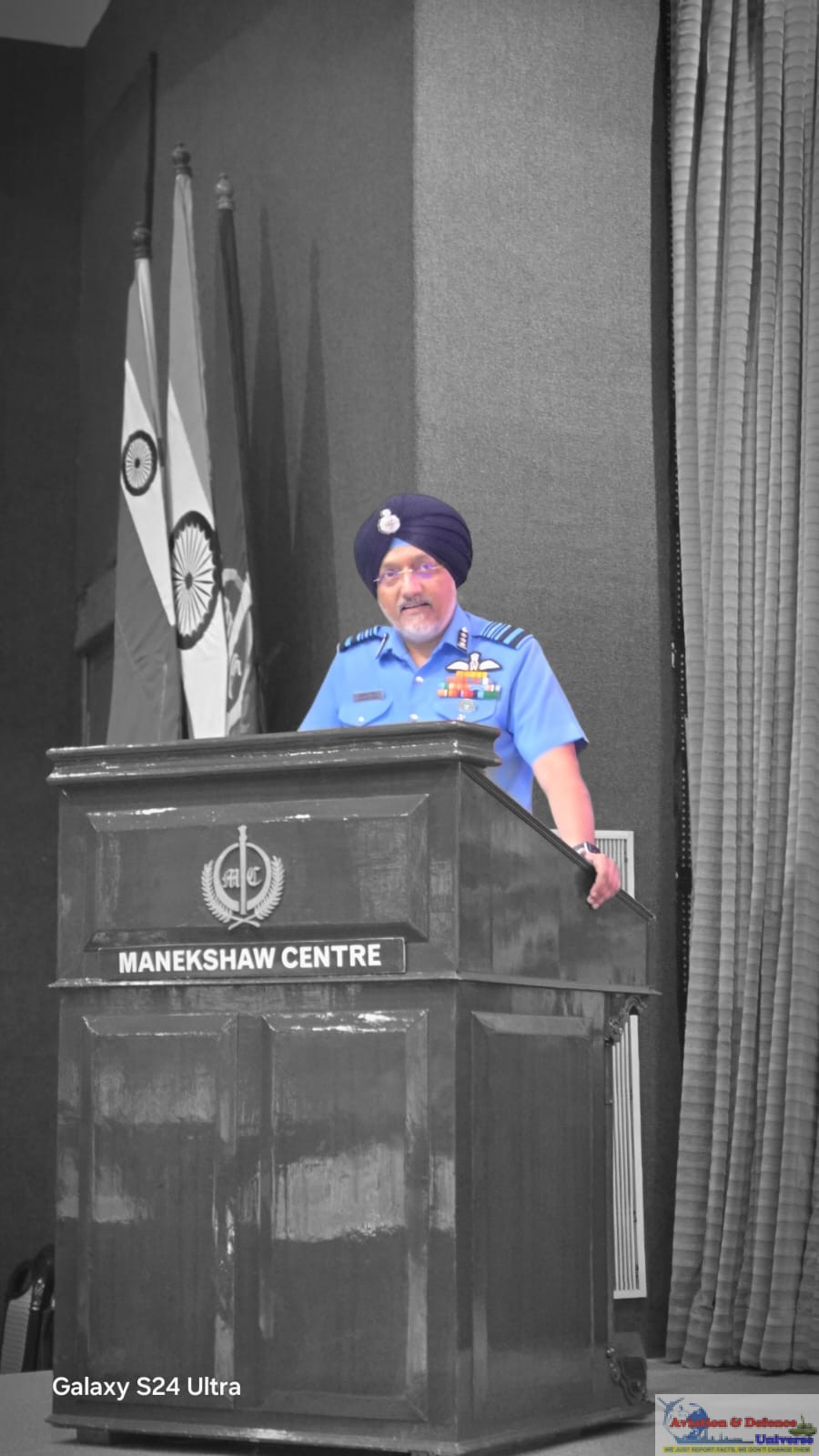
- Jointness Must Move From Coordination to Integrated Warfighting: Air Marshal Tejinder Singh
- India’s Next Military Leap: Unity of Command, Multi-Domain Operations & Decision Dominance
- India’s Future Wars Will Demand Information Superiority & Decision Dominance
By Sangeeta Saxena
New Delhi. 02 September 2026. Peace or war? For the military planner of tomorrow, the answer may increasingly be—neither and both. India’s Armed Forces are entering an era in which contestation is continuous, the distinction between peace and war is increasingly blurred, and the battlefield stretches far beyond land, sea and air into space, cyber, the electromagnetic spectrum, information and the cognitive domain.
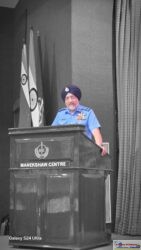
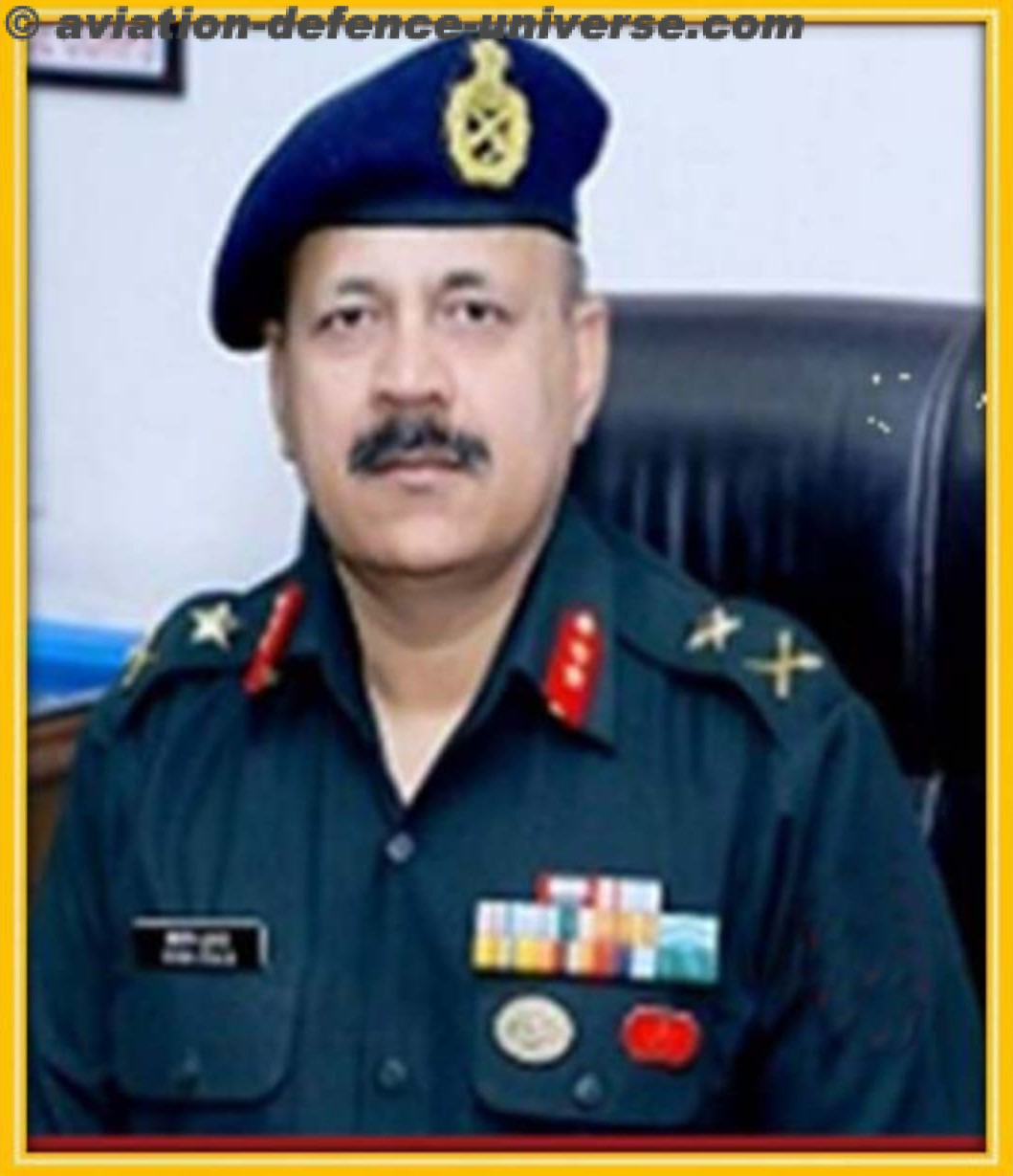
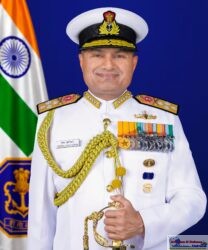
Against this rapidly transforming security landscape, Air Marshal Tejinder Singh, Chief of Integrated Defence Staff to the Chairman Chiefs of Staff Committee (CISC), Headquarters Integrated Defence Staff, used his address at the 2nd Annual Trident Lecture of the Centre for Joint Warfare Studies (CENJOWS) to lay out a compelling case for the next stage of India’s military transformation—deeper jointness, integrated capability development, multi-domain operations, technology-enabled warfighting, information superiority and faster decision-making. As India advances towards Viksit Bharat 2047, he argued, its expanding economic, technological and geopolitical interests will inevitably create responsibilities for the Armed Forces that extend well beyond simply guarding national territory.
The New Reality: Contestation Never Stops
Air Marshal Tejinder Singh began by drawing attention to the expanding “grey zone” in which it is becoming increasingly difficult to determine whether a nation is technically at peace or at war. He referred to the concept of “contestation”—a state in which strategic competition remains permanently active and has to be managed continuously. In his words, contestation has to be managed “24×7.”
For India, this is particularly relevant. Economic security, technological competition, maritime resilience, protection of critical infrastructure, supply-chain security and information integrity can no longer be viewed as peripheral security concerns. They have become integral components of national security itself.
When a Natural Disaster Begins to Look Like War
The CISC illustrated the expanding dimensions of national security through his own operational experience during the devastating glacial lake outburst and floods in the eastern sector. Connectivity was badly disrupted. Civilians, soldiers and personnel of the paramilitary forces were stranded, requiring an extensive helicopter rescue and coordination effort.
An operations room was activated, officers coordinated with the civil administration and continuous communication was maintained with the Command headquarters. It was, Air Marshal Singh recalled, one of the toughest tasks, but also deeply satisfying because numerous lives could be rescued. The experience demonstrated how the Armed Forces increasingly find themselves responding to crises that may not constitute traditional warfare but can impose war-like operational demands.
Future Success Will Depend on Integration
Air Marshal Tejinder Singh said India’s operational experience has repeatedly demonstrated the value of joint action. Recent operations, he noted, have highlighted the importance of coordinated planning, seamless execution and integrated national effort. But he also delivered a message of confidence, particularly to younger officers.
While the Armed Forces must remain self-critical, debate shortcomings and constantly demand more of themselves, they should not lose sight of their institutional record. India’s Services, he stressed, have fought their conflicts together, with the first military operation of independent India itself being a joint operation. Every operation provides lessons, but one enduring truth, he said, is becoming increasingly clear – Future military success will depend upon India’s ability to integrate capabilities, institutions, logistics, leadership and decision-making across the national security architecture.
From Kargil to Jointness
The CISC then traced India’s institutional journey towards greater jointness. The Kargil conflict of 1999, he said, was a defining moment. While the Armed Forces achieved victory under exceptionally challenging circumstances, the conflict highlighted the requirement to strengthen higher defence management and institutionalise greater inter-Service cooperation. The recommendations that followed laid the foundations for one of independent India’s most significant phases of defence reform, culminating in the establishment of Headquarters Integrated Defence Staff in 2001.
HQ IDS at 25: From Coordination to Integration
Air Marshal Singh pointed out that HQ IDS is completing 25 years on October 1, marking an important milestone in India’s jointness journey. Over the years, HQ IDS has evolved into a principal tri-Service institution involved in areas including joint planning, capability development, prioritisation, logistics, doctrine and training. Institutional developments such as the Defence Cyber Agency, Defence Space Agency and Armed Forces Special Operations Division reflected growing recognition that many national-security challenges transcend individual Service boundaries and require integrated responses. The establishment of the Chief of Defence Staff and Department of Military Affairs represented another decisive milestone in creating the institutional framework necessary to accelerate integration.
From Aspiration to Strategic Priority
Air Marshal Tejinder Singh credited India’s first Chief of Defence Staff, General Bipin Rawat, with laying the foundations for this transformation. “He transformed jointness from a long-held aspiration into a national strategic priority,” the CISC said. Those efforts, he added, were subsequently carried forward as India’s military leadership continued the process of integration. But the real change goes deeper than organisational restructuring.
India’s focus, he explained, has moved beyond simply improving coordination towards creating a defence force that can plan together, develop capabilities together, sustain itself jointly and ultimately fight in an integrated manner.
Jointness has also expanded beyond the Army, Navy and Air Force to encompass closer collaboration with the Department of Military Affairs, DRDO, industry, academia and other national institutions. Innovation and technology induction, he stressed, remain among the highest priorities alongside jointness.
The Next Phase: From Jointness to Integration
According to the CISC, India’s transformation is not a collection of isolated reforms. It represents continuity—successive military leaderships building upon common strategic objectives. The challenge now is to deepen integration across every facet of military capability. And this becomes increasingly urgent because the character of war itself is changing. Nations now operate across a continuum of constant competition and contestation in which non-traditional and non-kinetic measures are interspersed with conventional kinetic action.The boundary between peace and war has consequently blurred. The Armed Forces must therefore remain constantly vigilant, agile and equipped to fight tomorrow’s war, while capability development must take place within increasingly compressed timelines.
Integrated Capability Development: A Potential ‘Watershed Moment’
One of the most significant announcements in Air Marshal Singh’s address concerned integrated capability planning. He said HQ IDS, working with the three Services, is progressing an Integrated Capability Development Plan designed to provide a long-term view of capability development across domains within a single synergised framework.The CISC described its potential significance in emphatic terms, “This will be perhaps a watershed moment in jointness.” Such an approach could fundamentally alter capability planning by moving away from predominantly Service-specific requirements towards a broader assessment of the military effects India needs to generate collectively.
Service-Specific Execution Is No Longer Enough
The second major contour of transformation identified by Air Marshal Singh was unified action against the adversary. Traditional concepts based primarily upon joint planning followed by Service-specific execution, he argued, are no longer adequate for the demands of modern warfare. Organisational structures therefore need to evolve to support multi-domain operations. This represents a profound change. Jointness cannot stop at three Services coordinating their independent campaigns. The operational architecture itself increasingly has to integrate effects across domains.
Land, Air and Sea Are No Longer Enough
For Air Marshal Tejinder Singh, multi-domain operations encompass the traditional domains of land, air and maritime warfare, alongside what he deliberately termed the non-traditional domains of space, cyber and cognitive warfare. He cautioned against continuing to describe these as merely “emerging” domains. They have already arrived. The contemporary battlespace, he said, has become “complex, cluttered and highly contested.” Any changes to India’s warfighting concepts, planning methodologies or military structures must consequently be adaptable to this multi-domain reality.
Space, Cyber, EW and Cognitive Warfare: No Longer Just Enablers
One of the strongest formulations in the speech concerned the changing role of non-traditional domains. Space, cyber, electronic warfare and cognitive capabilities, Air Marshal Singh argued, can no longer be treated simply as supporting enablers for conventional forces. They have to be integrated with traditional military capabilities to create what he evocatively described as an, “impregnable shield alongside the sharp spear in defence of our nation.” That phrase encapsulated the transformation he was describing. Future military power will emerge not from choosing between kinetic and non-kinetic capability, but from combining them into an integrated architecture capable of protecting the force while simultaneously generating decisive effects against an adversary.
Drones, AI and Quantum Are Changing the Rules
Technology, the CISC emphasised, is fundamentally shaping how future wars will be fought. The expanding use of unmanned systems, drones and counter-drone technologies requires the Armed Forces to revisit established concepts of operations. Artificial intelligence is increasingly being employed to shrink decision cycles, while technologies such as quantum are either approaching operational relevance or already beginning to enter military thinking. India’s military transformation must therefore remain aligned with the pace of technological change rather than attempting to retrofit new technologies into outdated operational structures.
Doctrine Must Change Alongside Technology
Technology alone, however, cannot create transformation. Air Marshal Singh said HQ IDS has consequently placed emphasis on joint doctrines, standard operating procedures and future-aligned professional military education. He referred to a recently concluded future warfare course conducted under the aegis of HQ IDS, designed to expose middle- and senior-ranking officers to non-traditional domains and the evolving nature of conflict. The future officer, therefore, will need to understand far more than the traditional characteristics of his or her own Service. The commander of tomorrow will have to think across domains.
Information Superiority to Decision Dominance
The demands of modern warfare, the CISC said, require extremely rapid decision-making. He identified information superiority and decision dominance as critical pillars of multi-domain operations. That makes communications infrastructure central to India’s transformation.The current battlefield requires robust, encrypted and seamless communications and networks capable of moving information quickly and securely across forces and domains. Administrative restructuring by itself will not deliver the desired transformation. “Reforms would have to be anchored on robust technologies, networks and communications,” he stressed.
‘There Are No Differences Between the Three Services’
Towards the end of his address, Air Marshal Tejinder Singh tackled one of the most frequently discussed issues surrounding India’s jointness debate—the perception of fundamental differences among the Army, Navy and Air Force. Drawing upon his own experience in joint appointments, he was unequivocal. “There are no differences between the three services,” he said with what he described as “utmost honesty and conviction”. The Services naturally have different perspectives because they conduct warfare differently. That professional divergence, however, should not be mistaken for institutional conflict.
Air Marshal Singh said that even in the toughest situations, when representatives of the Services came together, they were able—sometimes within minutes or half an hour—to find a solution that served the best interests of the nation. He specifically urged the younger generation, as well as the media, to keep this distinction in mind when discussing India’s Armed Forces.
The CISC’s address at the 2nd Annual Trident Lecture was, in essence, a roadmap from jointness to integration—and from integration to multi-domain warfighting. India’s security environment no longer permits defence planning to remain confined to the familiar boundaries of land, sea and air. The nation must prepare for a state of continuous contestation in which economic security, supply chains, technology, critical infrastructure and information integrity are inseparable from conventional defence.
Its Armed Forces must be able to integrate kinetic and non-kinetic effects; connect land, maritime and air power with space, cyber, electronic warfare and cognitive capabilities; compress capability-development timelines; and build the networks necessary to turn information superiority into decision dominance. And organisational reform cannot be an end in itself. The ultimate measure of jointness will be whether India’s Armed Forces can plan together, build capability together, communicate seamlessly, make decisions faster and generate unified effects when the nation requires them.
As HQ IDS approaches a quarter century of its journey, the next phase is therefore not merely about making the three Services more joint. It is about building an Indian military capable of operating as an integrated, technologically empowered and multi-domain force in a world where contestation never really stops. In Air Marshal Tejinder Singh’s vision, the shield and spear of tomorrow will be forged from the same elements—jointness, technology, networks, information superiority and national resolve.












































































-A4-Size-(2)_page-0001.jpg)