











- Ready for the Marathon: Admiral Swaminathan Calls for Industrial Endurance
- Build Faster, Build Stronger: Naval Chief’s Message to Defence Manufacturers
- From Shipyards to the Seabed: Navy Chief Outlines India’s Capability Challenge
- “Let’s Be Partners for Life”: Navy Chief Calls for Lasting Industrial Cooperation
By Sangeeta Saxena
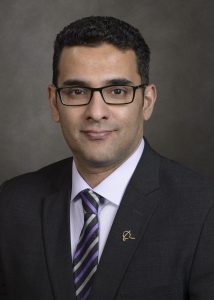
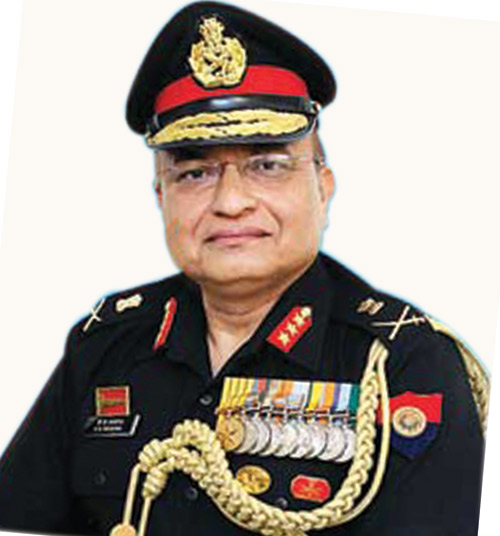
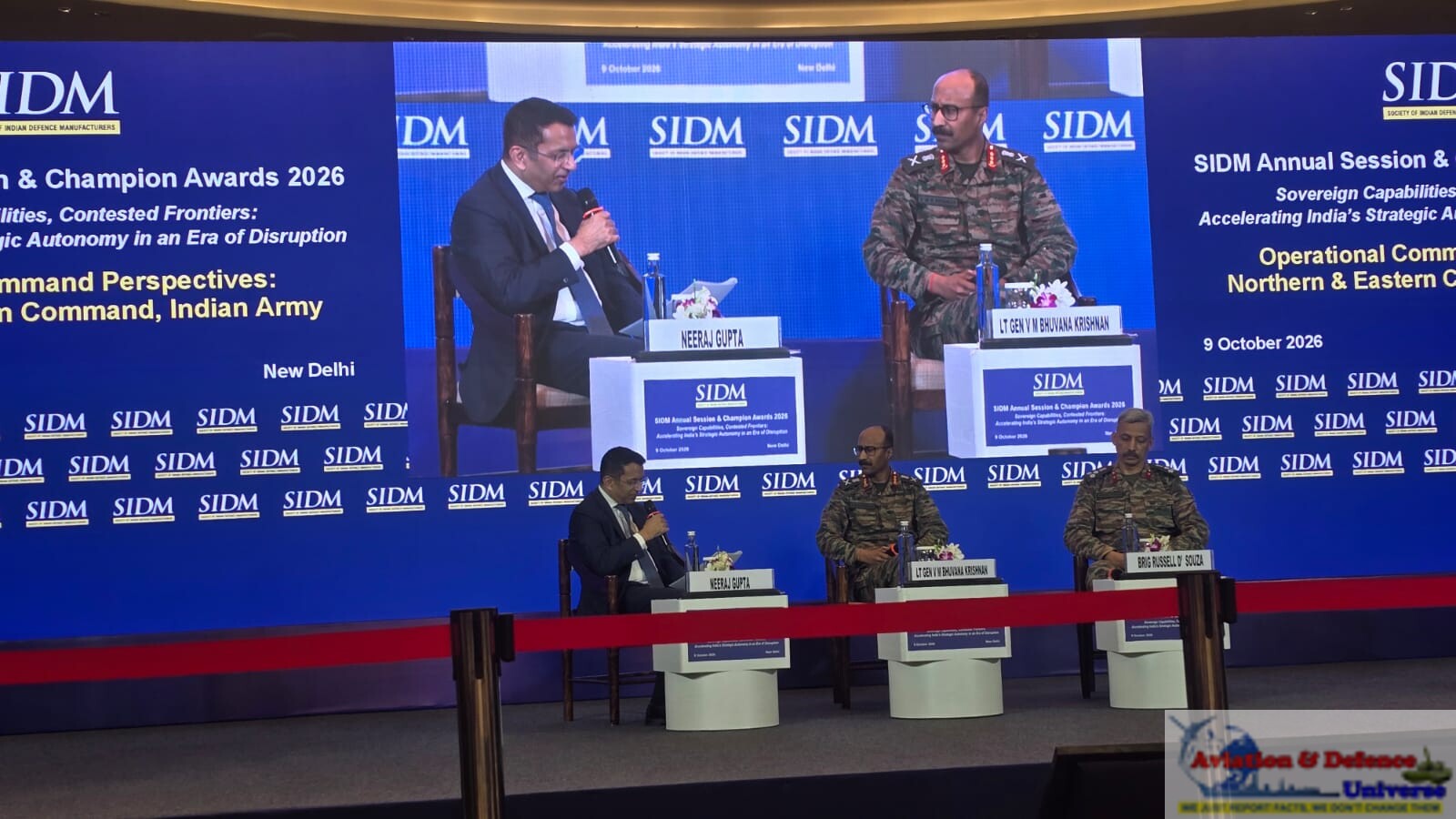
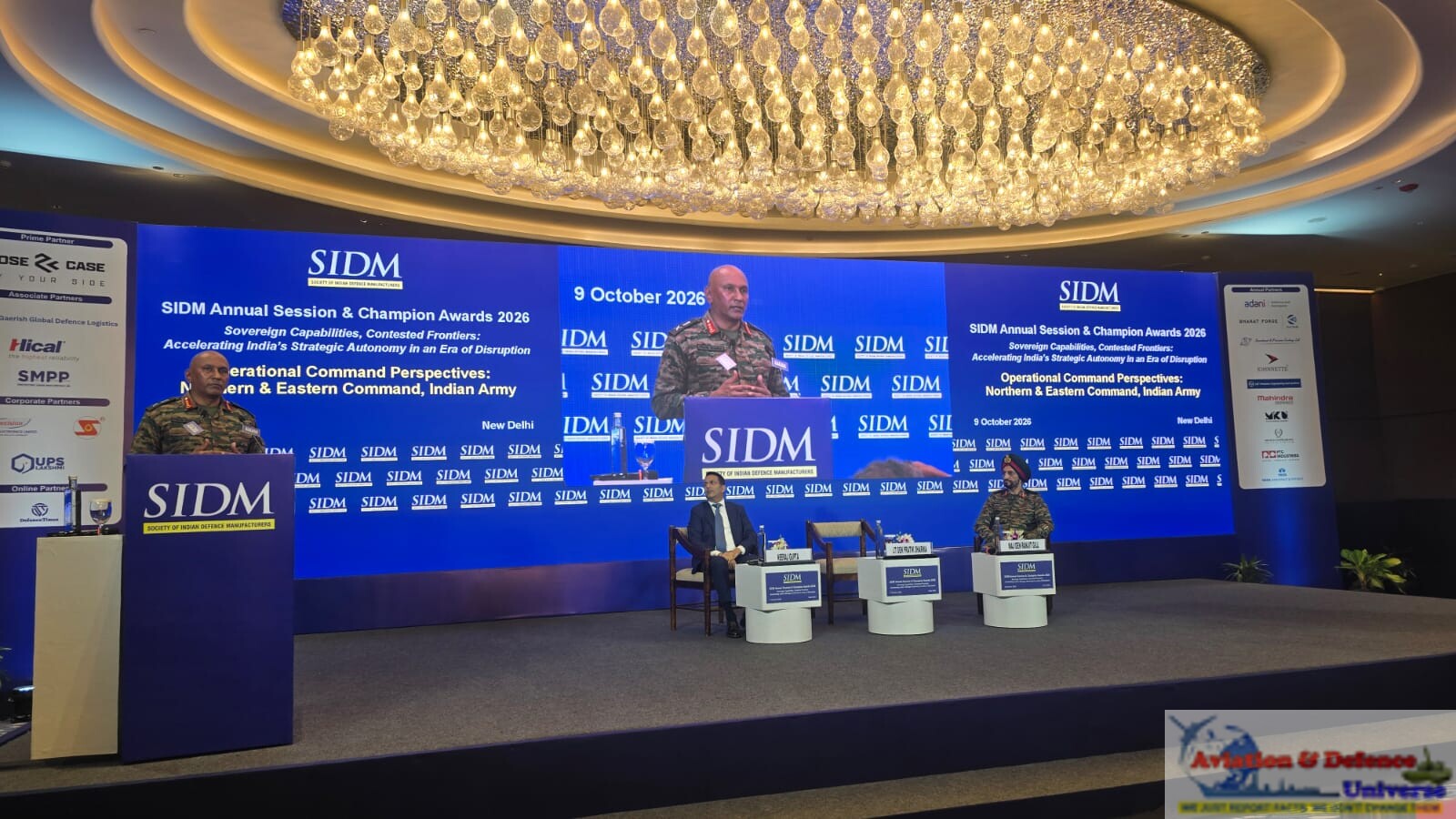
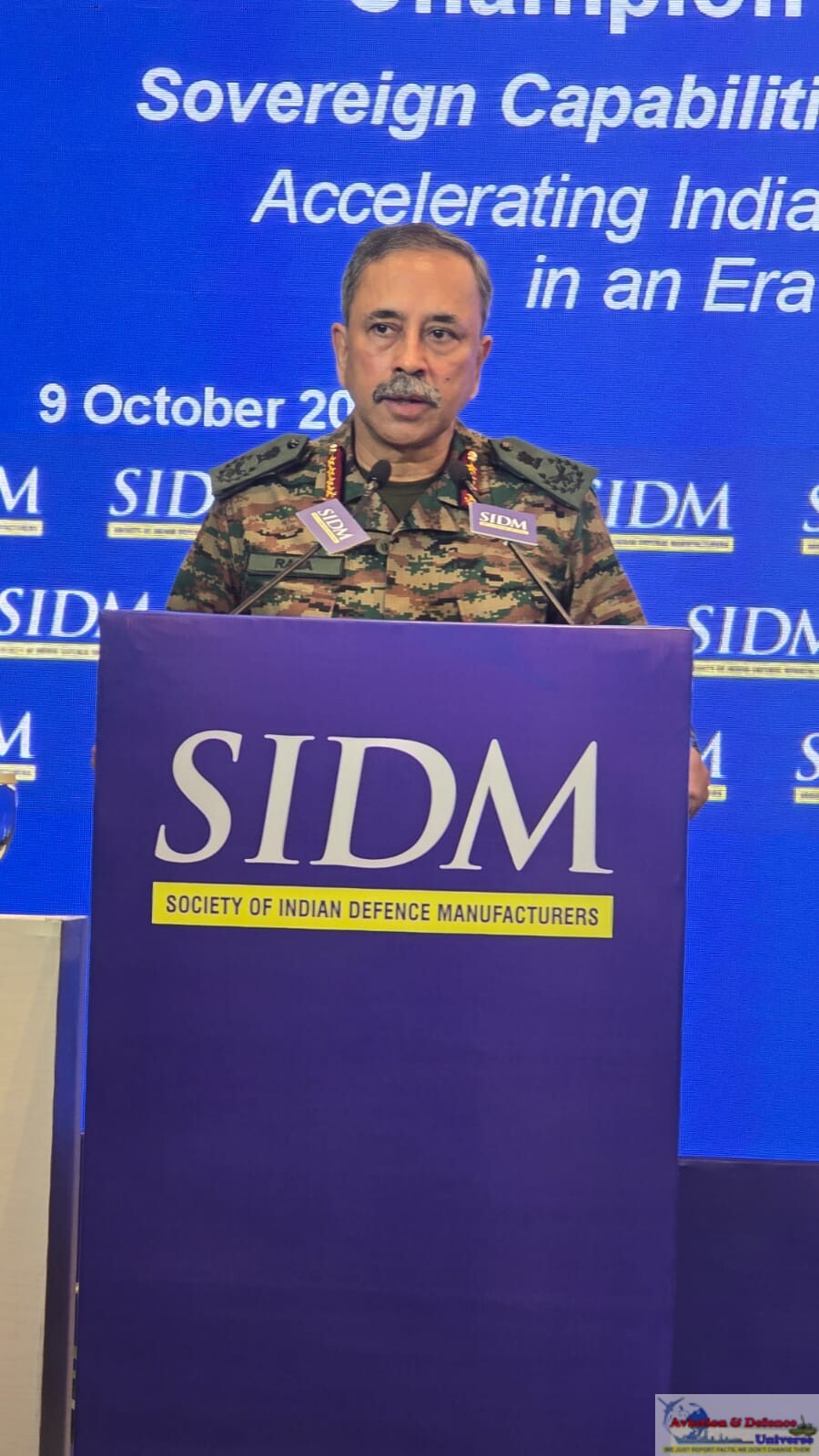
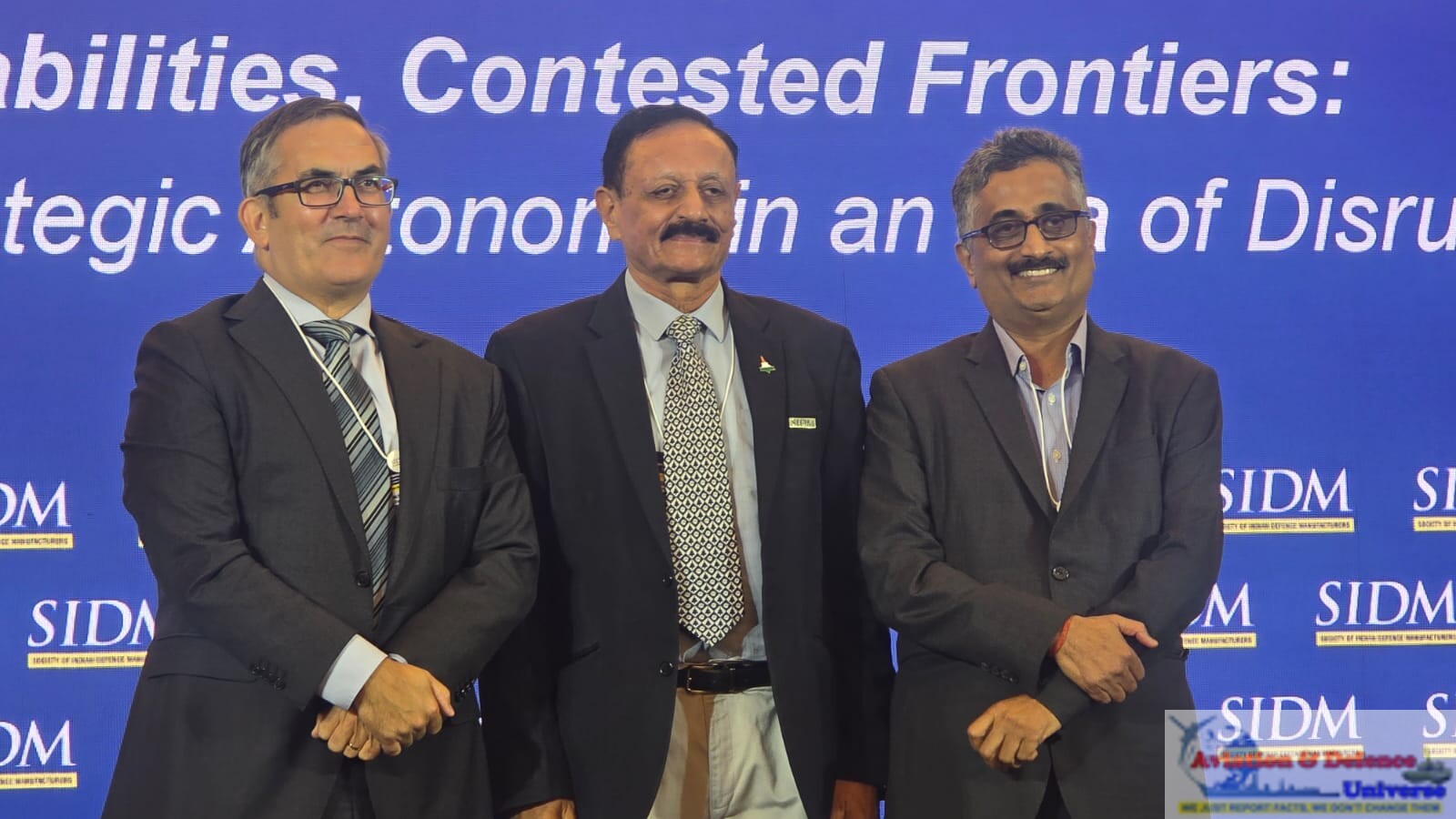
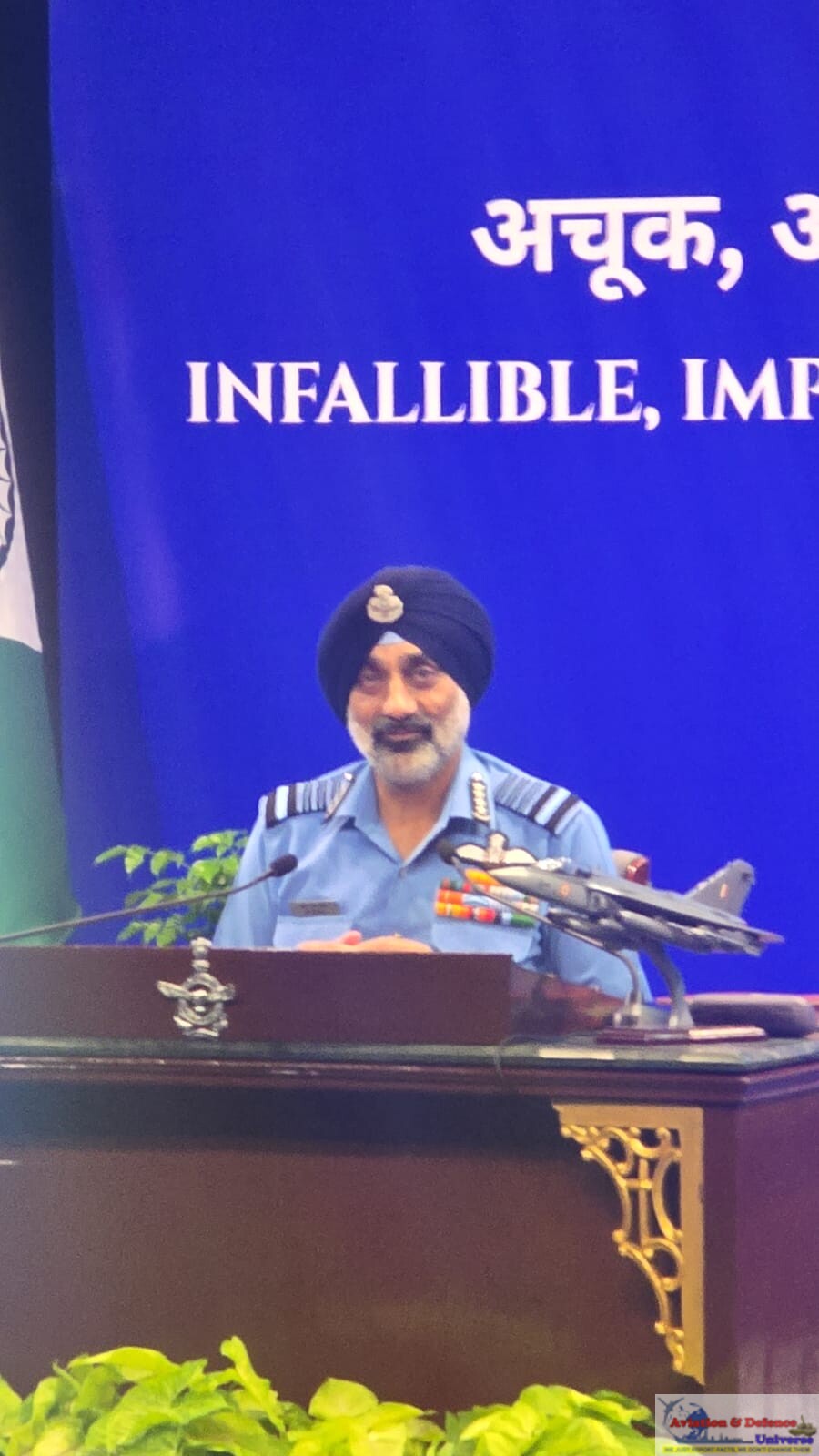
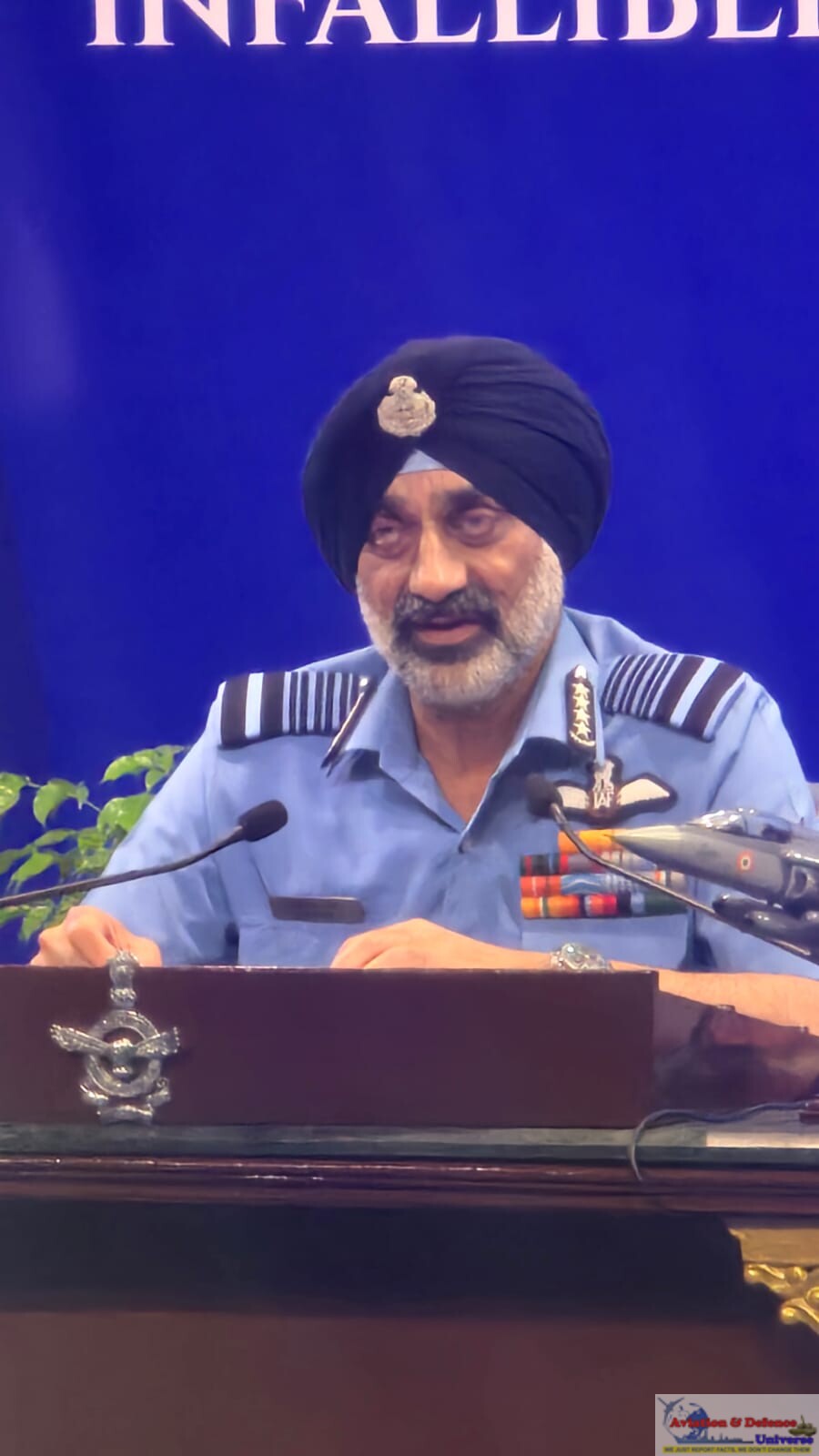
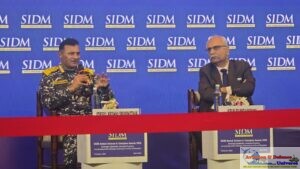
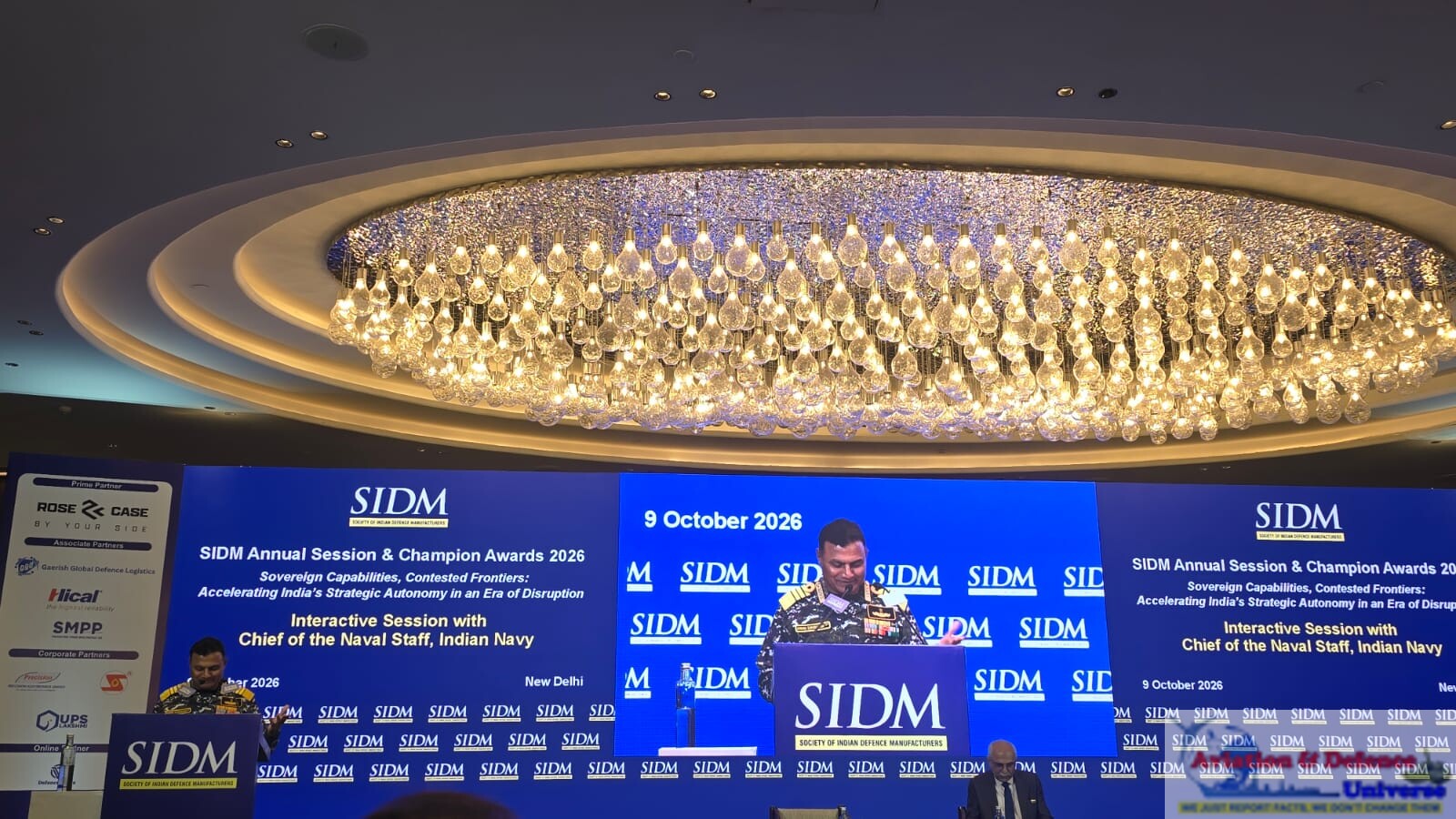
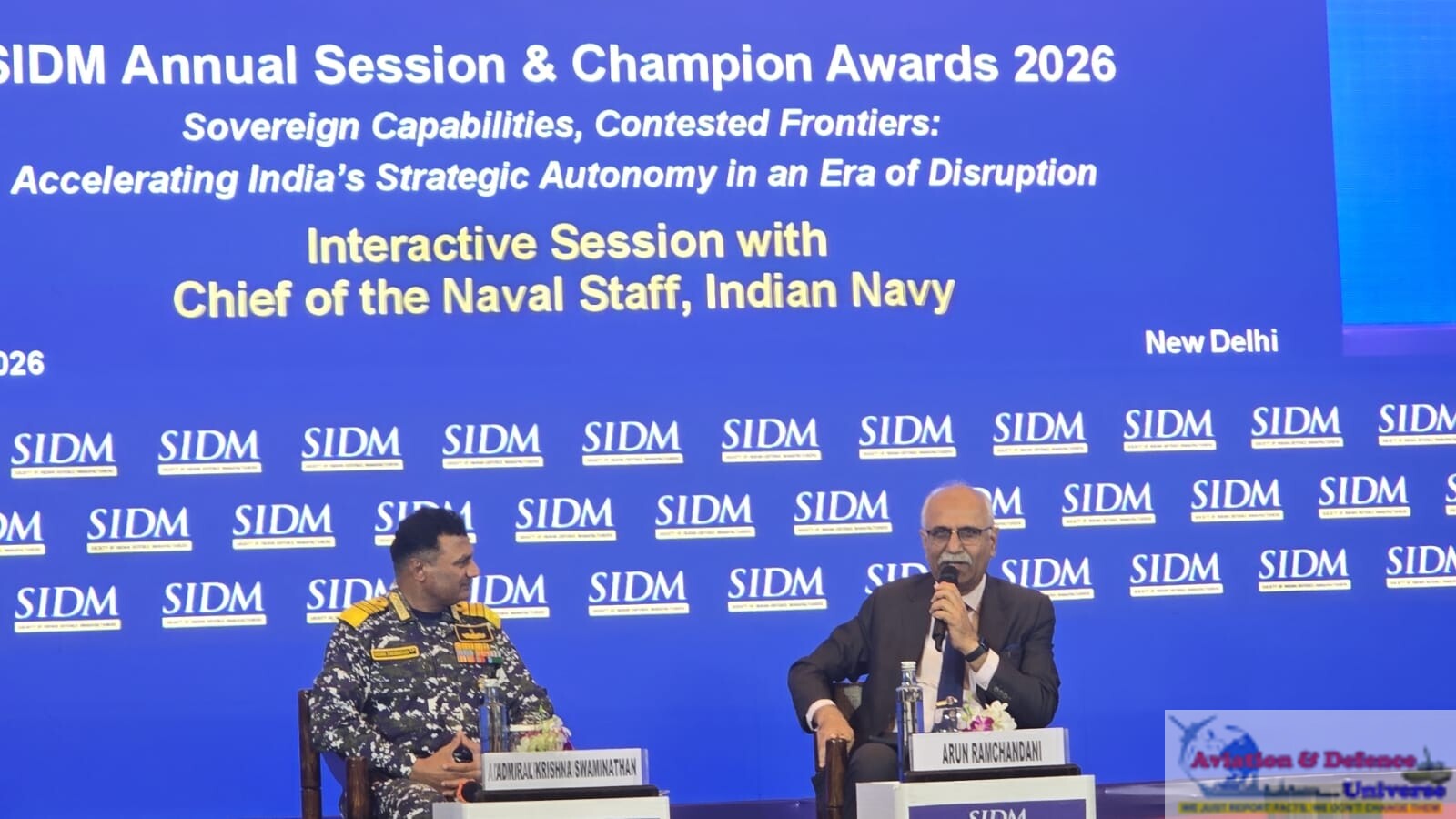
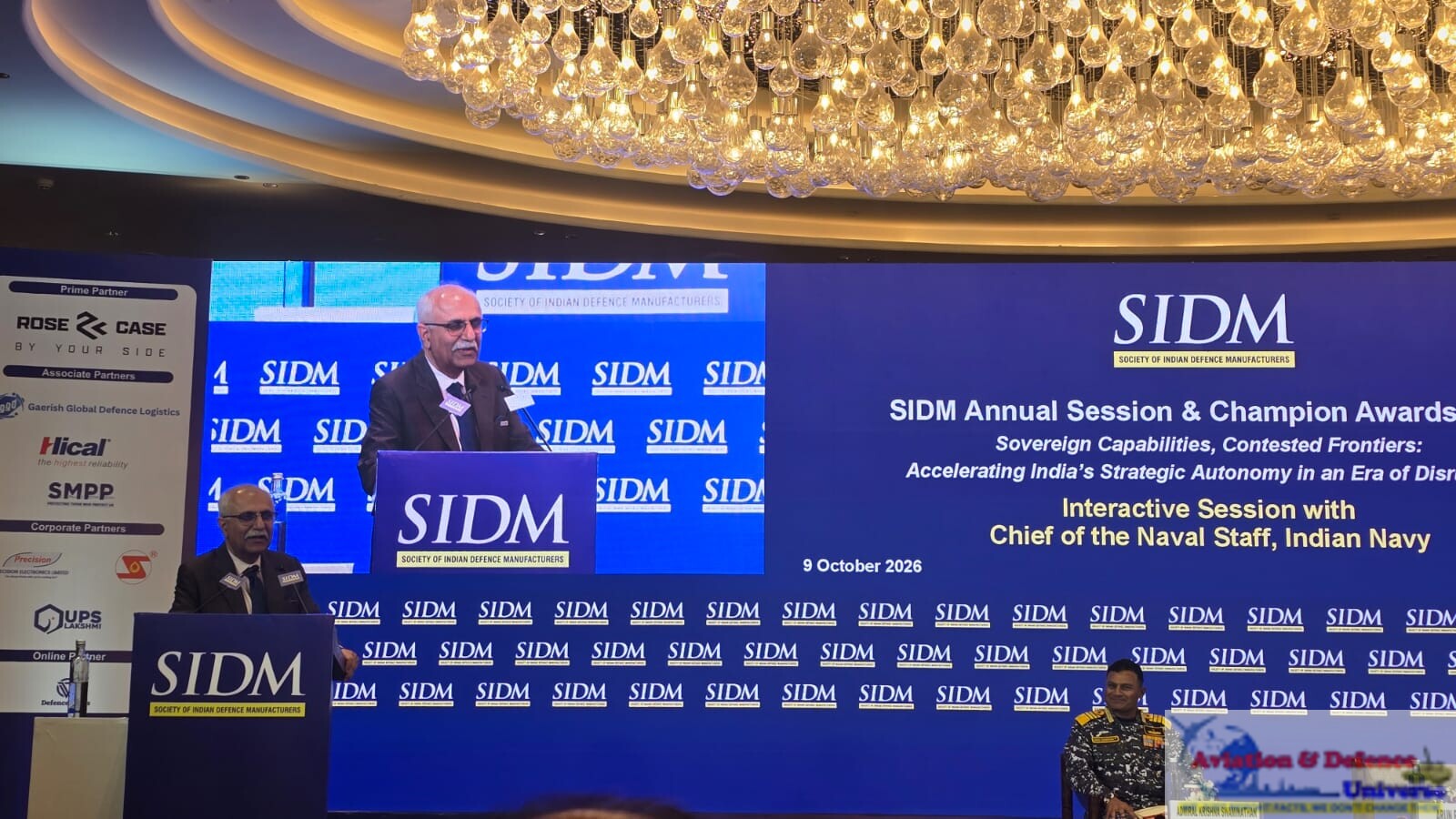
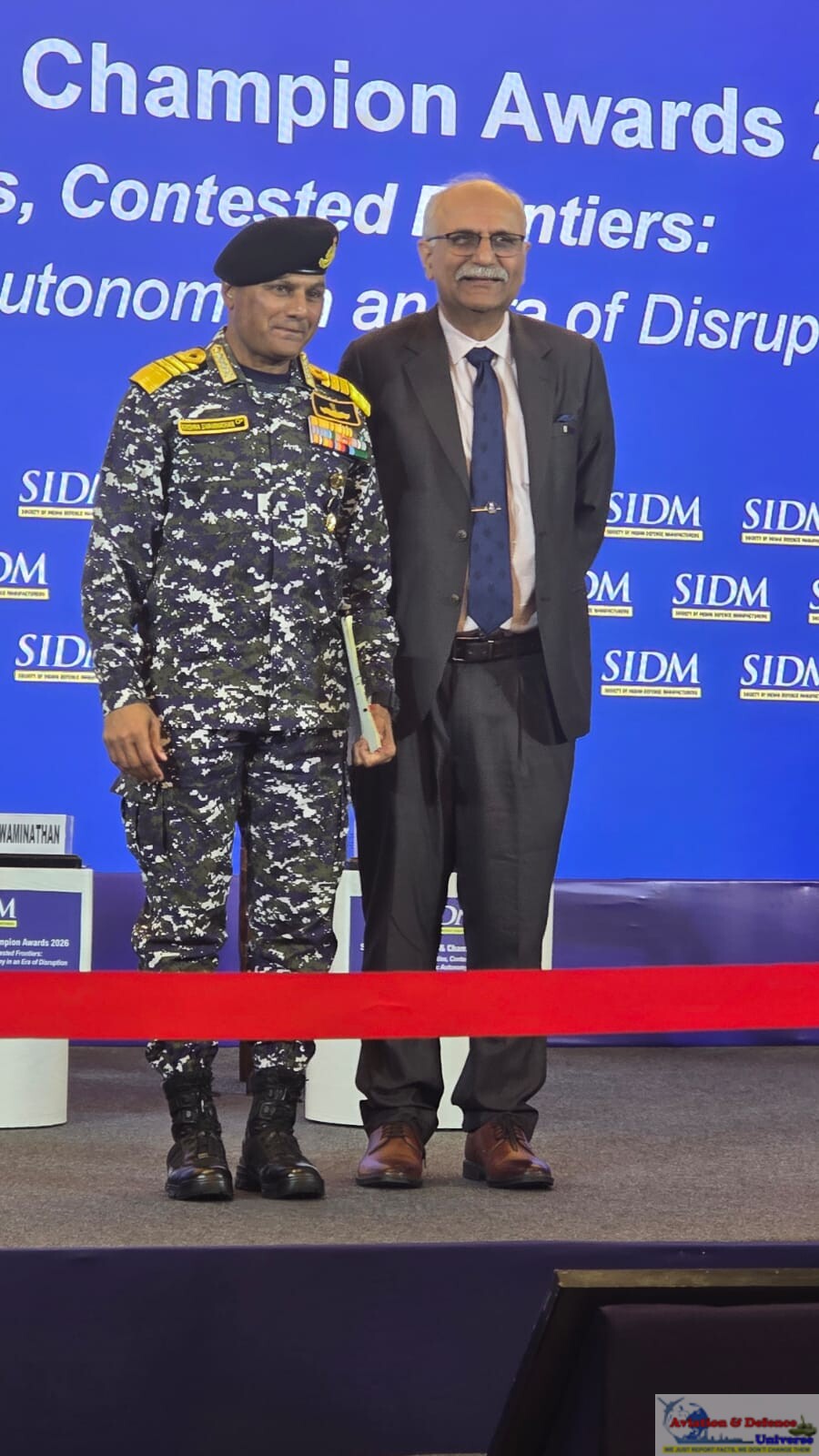
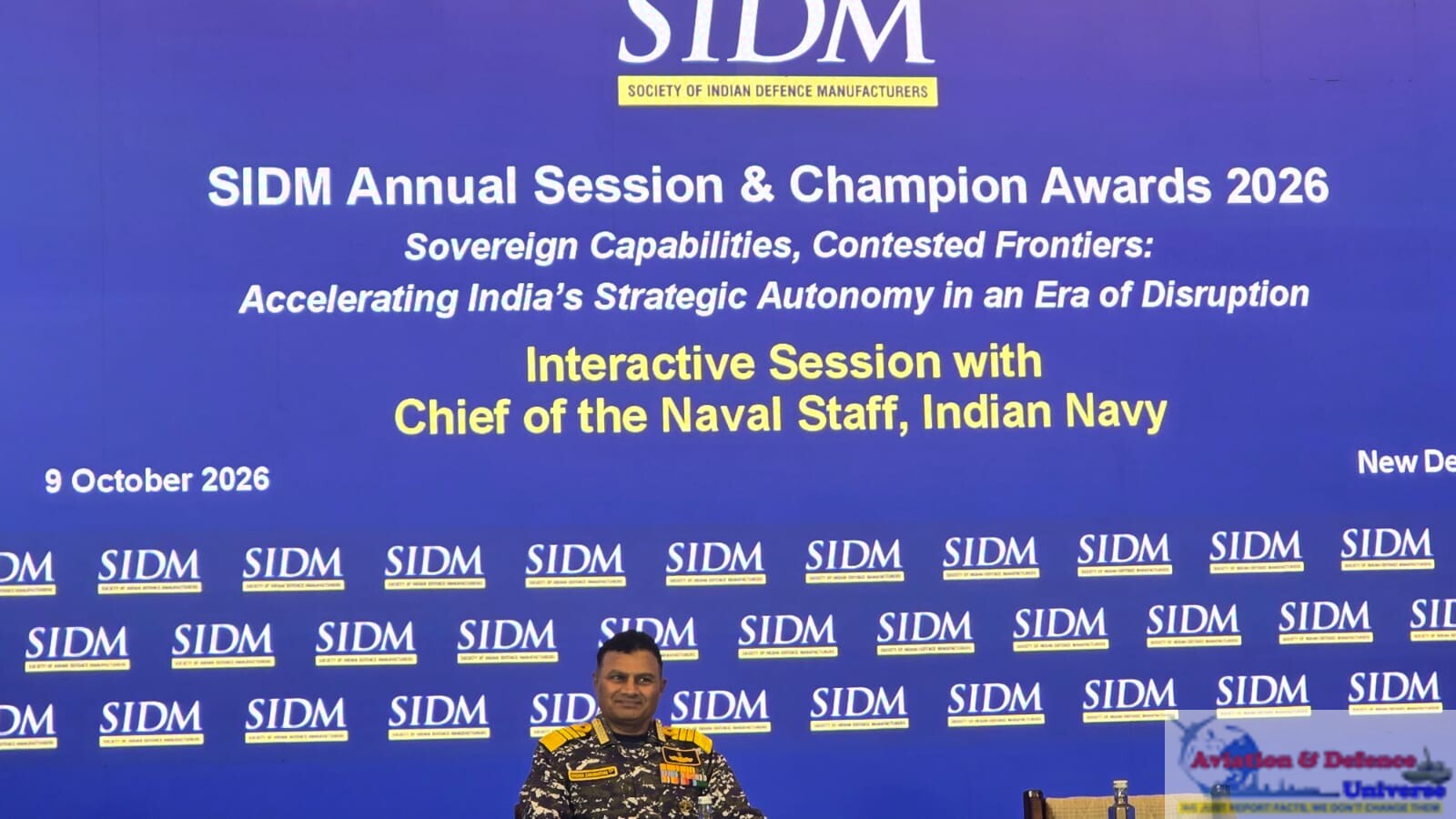
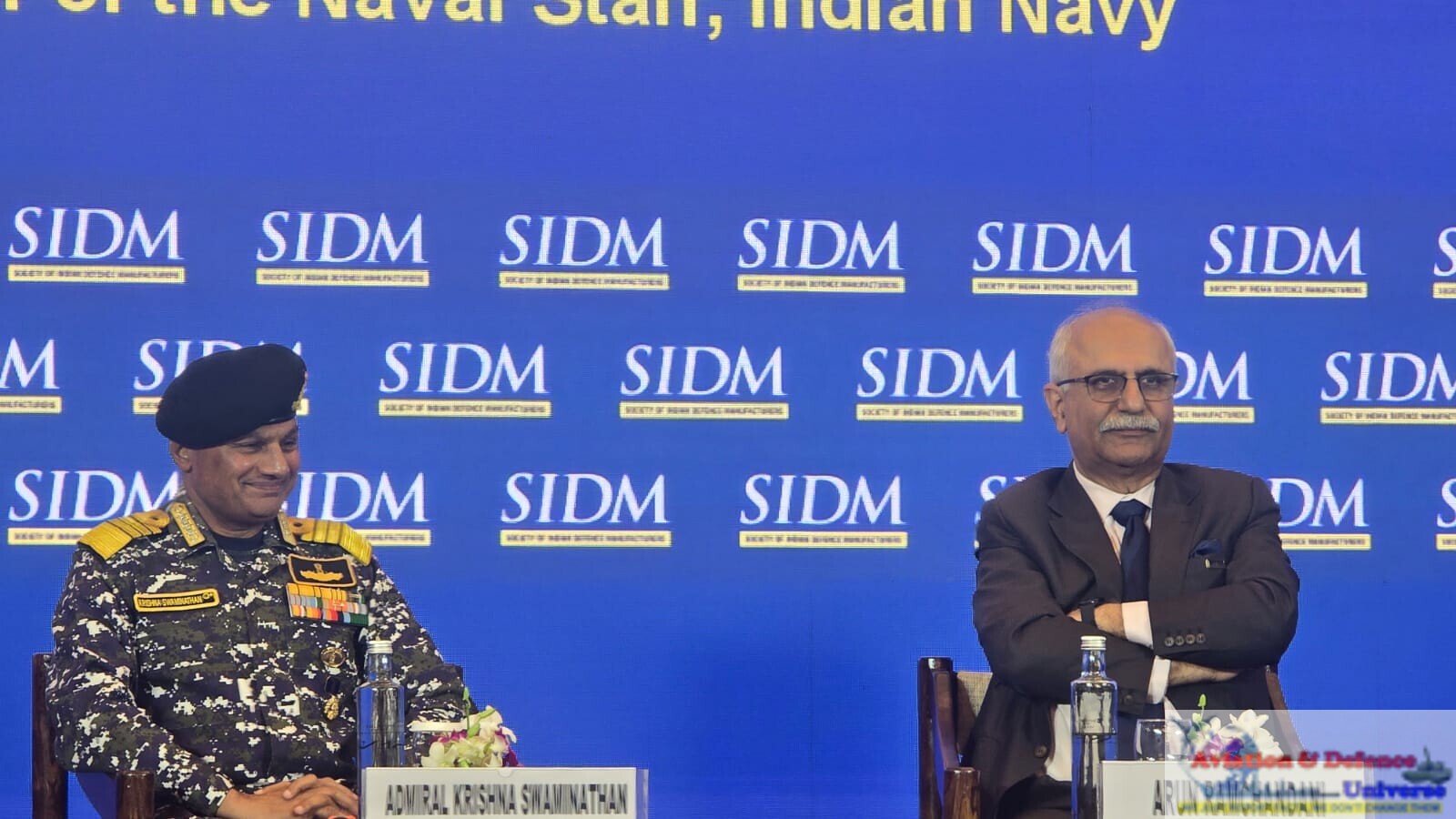
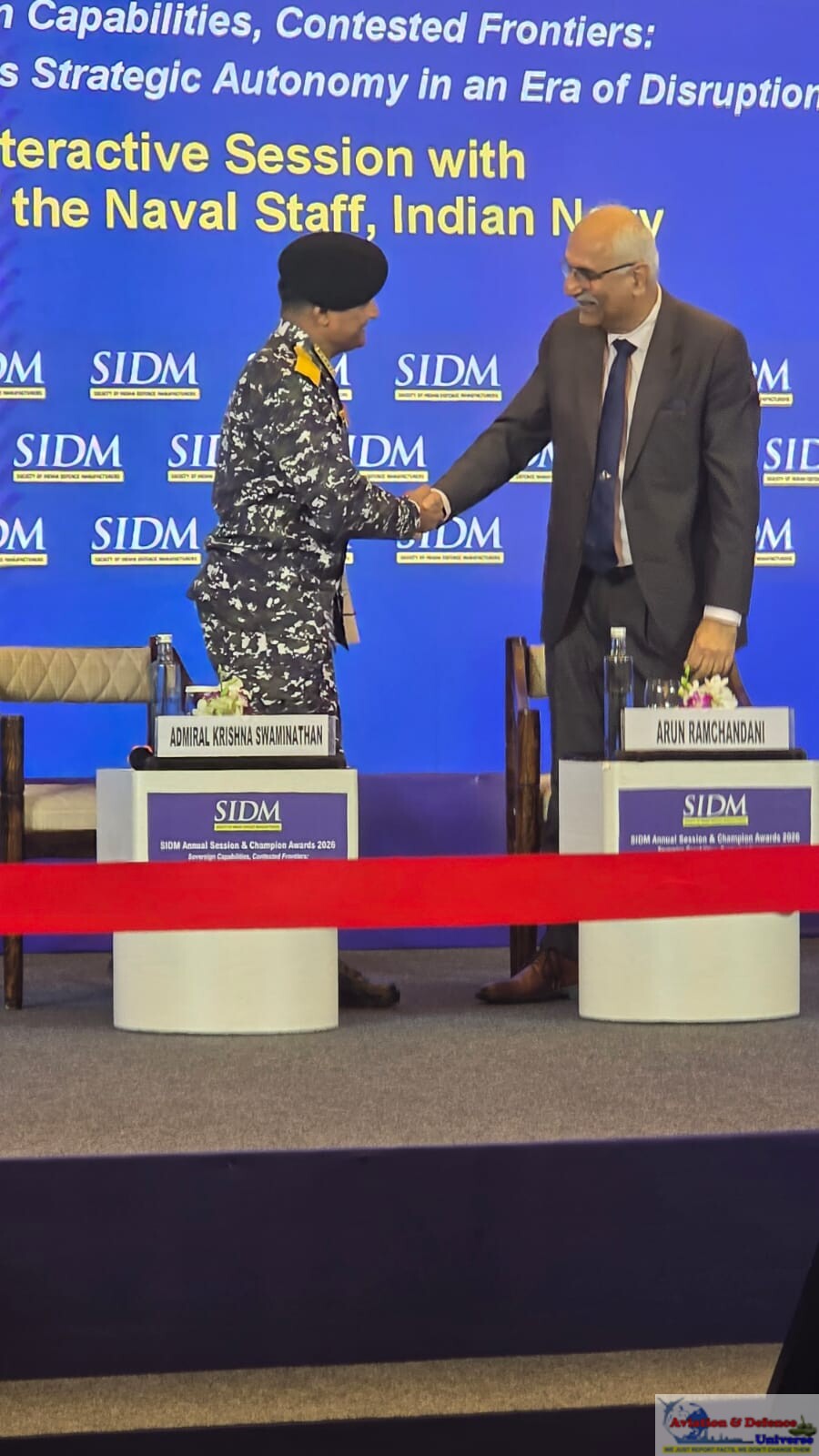
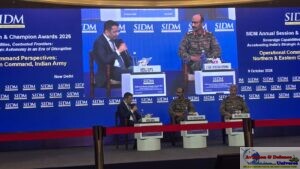
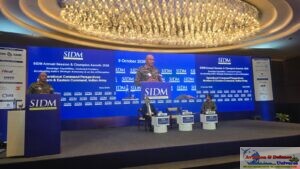
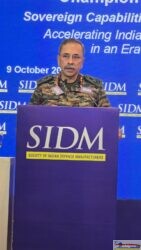
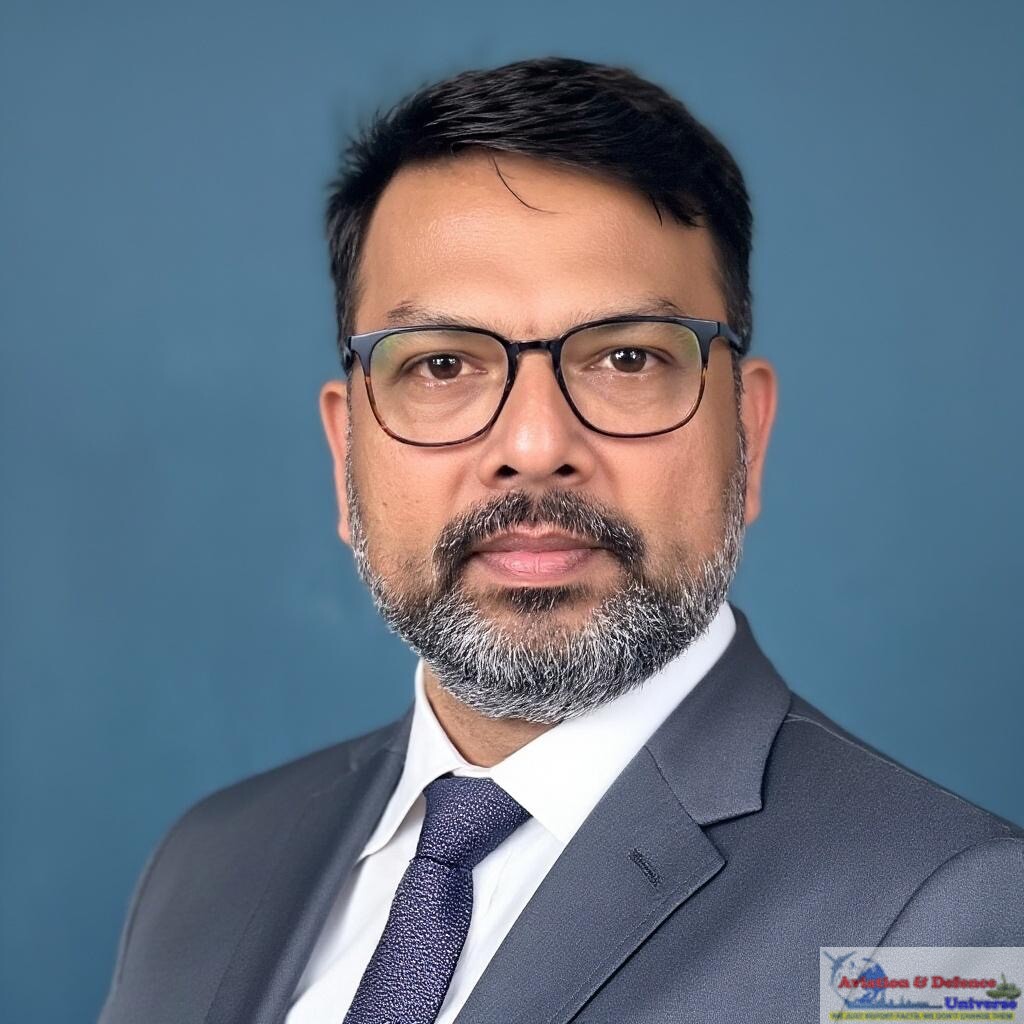
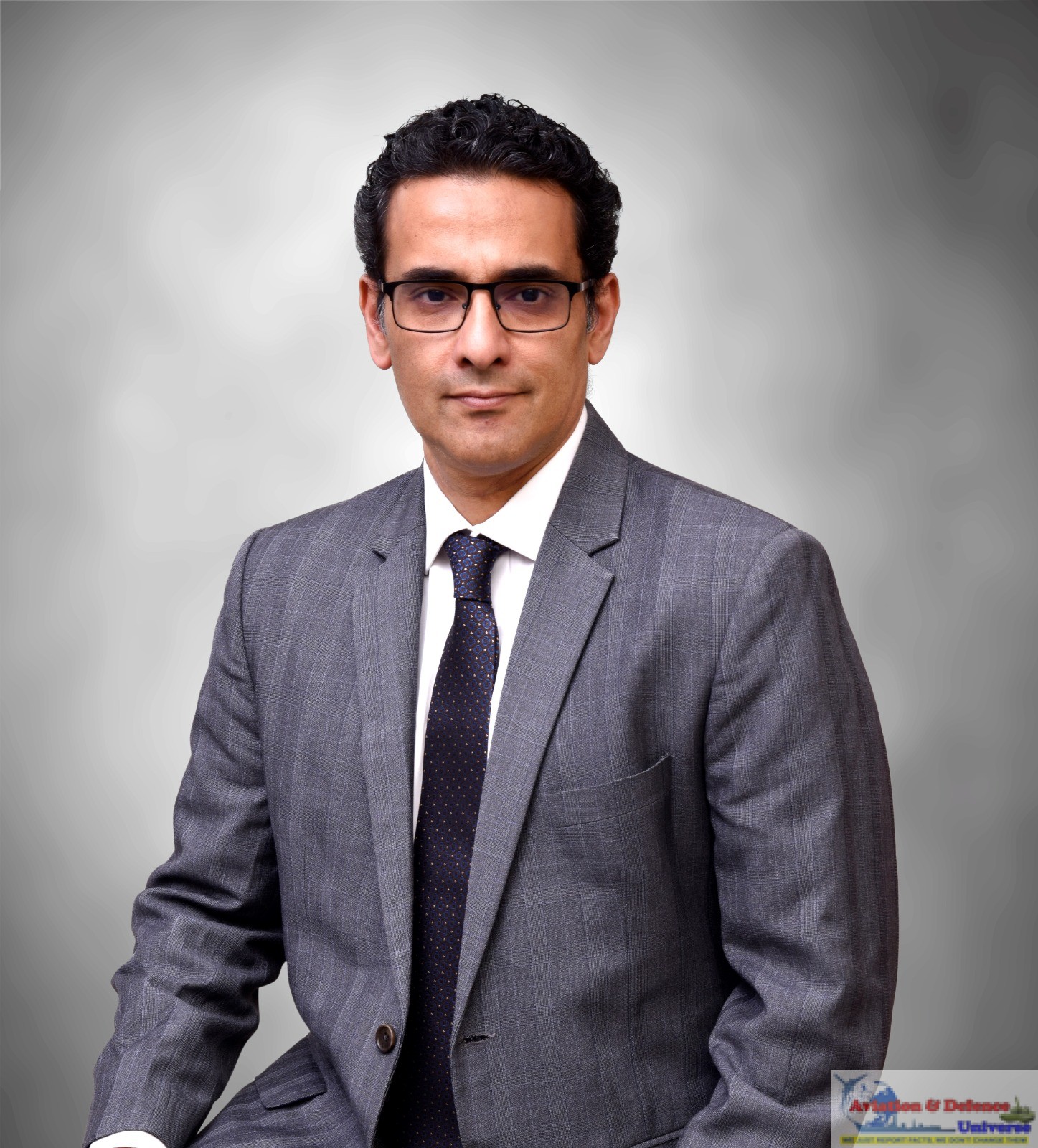
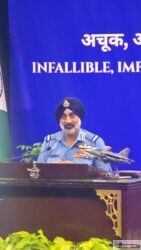
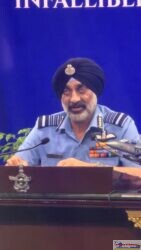
New Delhi. 09 October 2026. The next test of Indian naval power will be fought as much through industrial endurance as operational readiness. Addressing SIDM’s Annual Conclave and Awards, Chief of the Naval Staff Admiral Krishna Swaminathan, PVSM, AVSM, VSM, called on defence manufacturers to develop original technologies, deliver reliable equipment faster and prepare production lines for the demands of 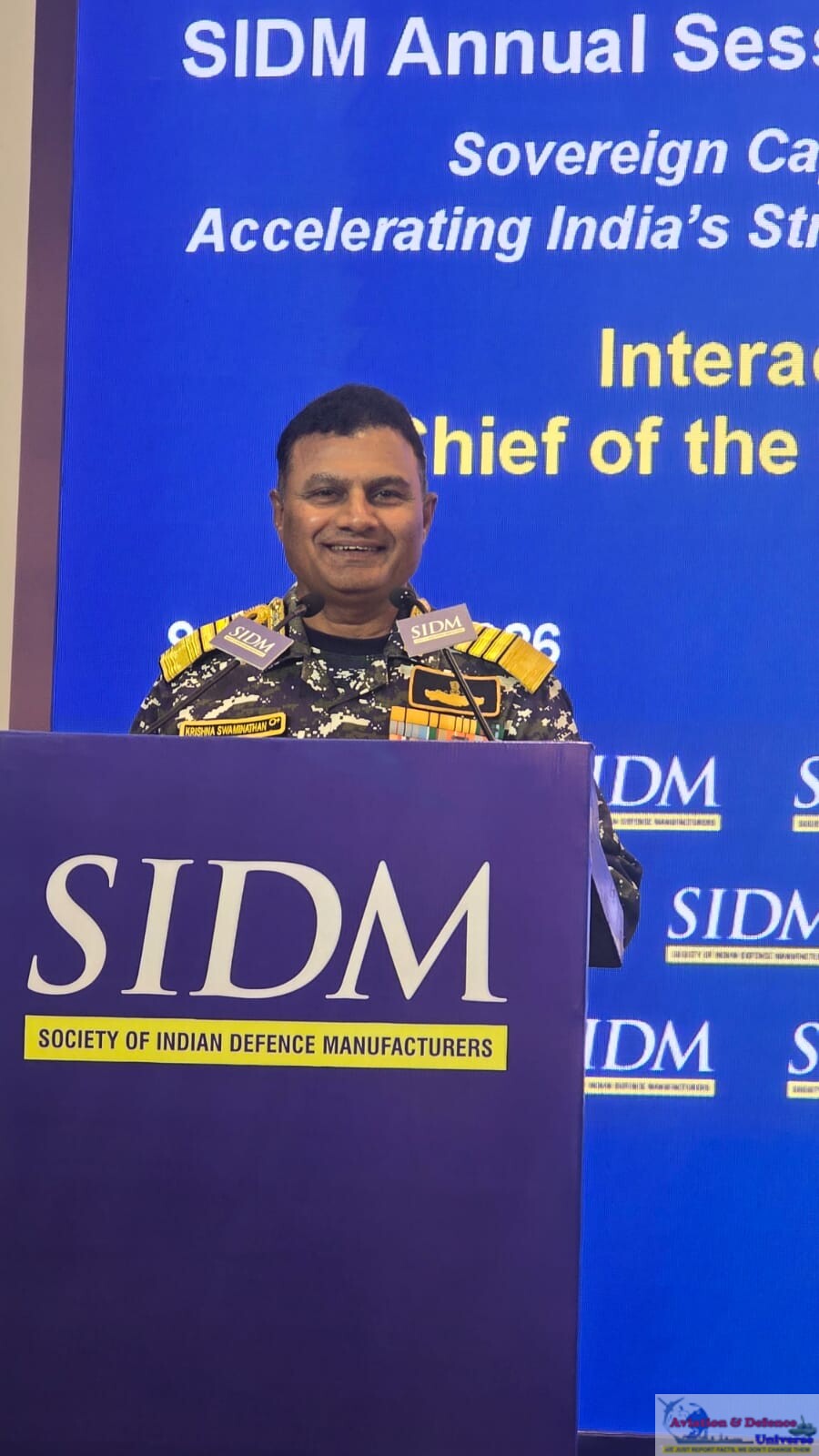 prolonged conflict. His proposition was direct: the Navy wanted industry to see it as a collaborator, sharing the journey from an operational problem to a deployable capability. He was in conversation with Arun T Ramchandani, Sr VP & Head – L&T Precision Engineering & Systems, Senior Vice President Larsen & Toubro.
“We cannot prepare only for a sprint. We have to be ready for the marathon as well,” he said, linking contemporary conflict with the need for sustained supplies, resilient production and equipment that could remain effective through changing threats. The address and subsequent interaction ranged from warship construction and autonomous systems to undersea cables, start-up funding and the practical meaning of self-reliance. Across these subjects, the Chief emphasised a common requirement: a deeper, more responsive relationship between the Navy and the industrial ecosystem supporting it.
Maritime security underpins national prosperity
Admiral Swaminathan began by recognising SIDM’s contribution to bringing government, industry and other stakeholders together to translate policy intent into military capability.
He then placed naval modernisation in its wider national context. With approximately 95 per cent of India’s trade by volume moving by sea, he said, maritime security was a prerequisite for economic growth and development.
What happened at sea affected the country’s prosperity and security directly. The Navy’s industrial requirements therefore had to be understood against an increasingly contested maritime environment, rather than viewed solely as a series of equipment purchases.
He identified three defining features of that environment: an expanding battlespace, rapid technological change and prolonged conflict.
A battlespace extending beyond ships and submarines
The traditional surface, underwater and air domains remained contested by submarines, missiles, air power, precision weapons and unmanned systems. But maritime operations now extended into space, cyberspace, the seabed and the cognitive domain.
 Commercial surveillance and accessible weapons technologies were making ships easier to detect and target, including by non-state actors. Cyberattacks could disrupt ports and logistics, while damage to submarine cables could affect connectivity far beyond the location of the incident.
The information environment introduced another vulnerability. Deepfakes, fabricated material and coordinated disinformation could influence perceptions and decision-making at speed. The implication, the Chief explained, was that the Navy’s vulnerabilities—and those of the nation—extended across the infrastructure and networks supporting maritime activity.
Technology changes faster than acquisition cycles
Admiral Swaminathan highlighted the speed at which autonomous systems, artificial intelligence, sensors and commercially available technologies were altering military operations. Recent conflicts had demonstrated how drones could be adapted quickly in response to countermeasures. They had also shown the challenge of attacks combining different weapons, including drones, cruise missiles and ballistic missiles. The ability to adopt, integrate and scale technology would increasingly shape operational advantage.
Yet he cautioned against assuming that every new technology would retain its initial effectiveness. A system could enjoy a first-mover advantage until an adversary developed a countermeasure. The Navy needed to assess which technologies could mature into enduring capabilities, and how much to invest in them. The central difficulty was matching rapid technological change with the much longer timelines required to acquire major platforms.
Industrial endurance for prolonged operations
The Chief’s third theme was protraction. Conflicts could continue for months or years, while grey-zone pressure could accumulate without crossing the threshold of conventional war. A Navy preparing for that environment needed both the speed to respond and the endurance to sustain operations. He distinguished scale from surge. Scale meant producing enough to meet planned requirements; surge meant expanding output rapidly during a contingency.
 Production lines, supply-chain control and intellectual-property ownership were therefore important operational enablers. Stocks could not provide an unlimited answer, particularly when equipment and munitions had shelf lives. Industry needed to replenish requirements while operations continued.
Four commitments from the Navy
Admiral Swaminathan presented four ways in which the Navy would support industry. First, it would provide greater visibility of future capability requirements and procurement direction through its maritime strategy, indigenisation plans and technology roadmaps. Manufacturers needed to understand where the Navy was heading so they could prepare meaningful responses.
Second, it would offer clearer access to operational problems. He highlighted iDEX and the Navy’s continuing engagement with industry, academia and innovators through problem statements and innovation initiatives.
Third, the Navy would provide faster feedback, giving developers better access to users and enabling mid-course corrections.
Fourth, it would remain involved throughout the development cycle, from conceptualisation and prototyping to testing, validation and induction.
“We want to be co-developers of everything that we do,” he said. The purpose was to avoid a relationship in which the Navy saw a product only after development had ended. Earlier involvement could help both sides identify shortcomings and refine a solution against the actual operational requirement.
Four expectations from industry
In return, the Chief outlined four priorities for manufacturers: deep-technology innovation and design ownership; scale, quality and timely delivery; rapid upgrades and life-cycle support; and surge capacity.
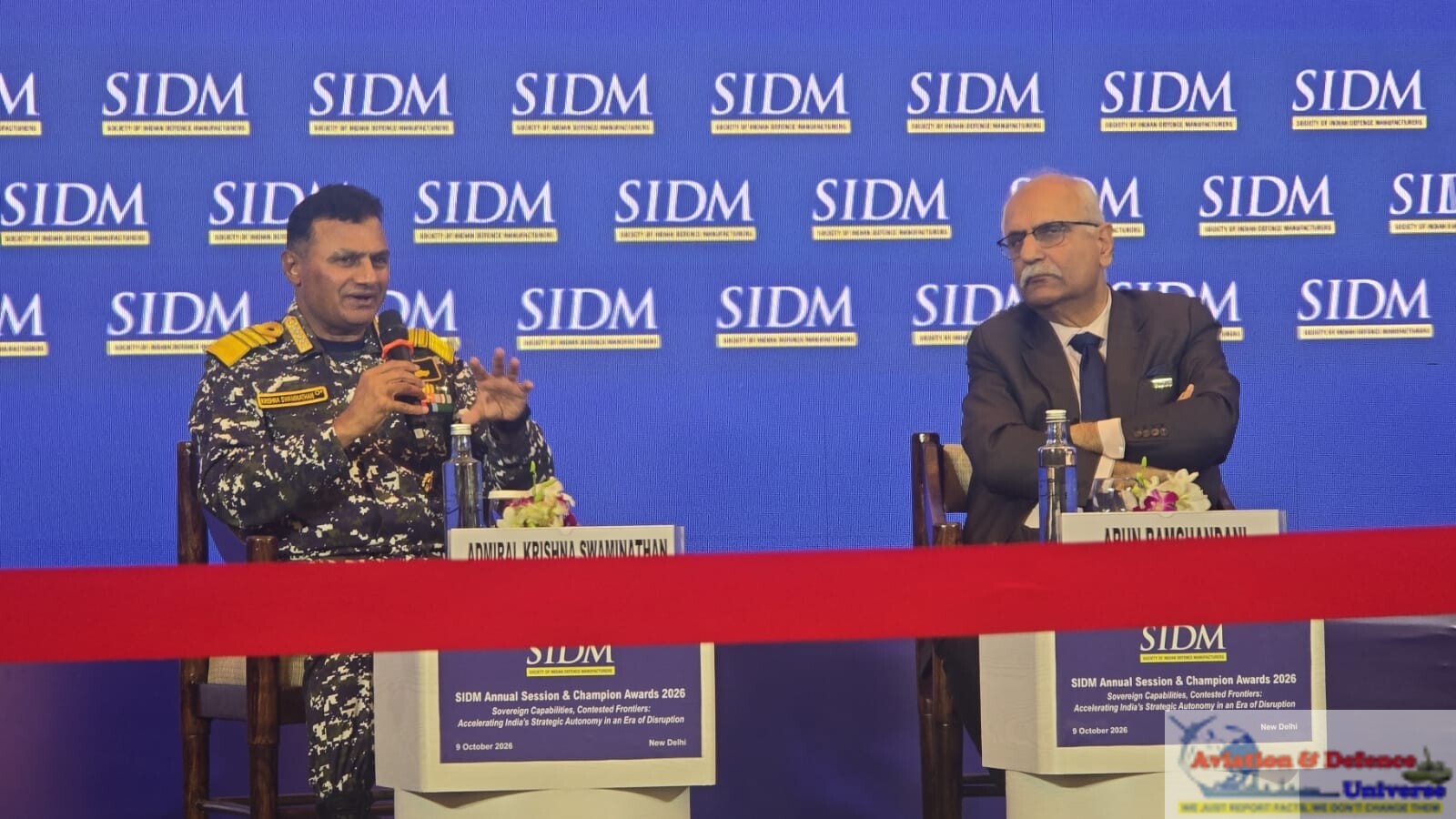 He called for greater investment in research and development, particularly in sovereign technologies and niche capabilities. India needed more original solutions, he argued, rather than relying predominantly on adapting technologies observed elsewhere. The Navy was prepared to share its operational problems and work with developers exploring new approaches, including emerging fields such as quantum technology.“We’re not wedded to any platform or any weapon,” he said, emphasising that the objective was to solve an operational problem through technology. He also expressed willingness to support iterative development where a promising system could improve through successive versions.
Equipment must prove itself at sea
Admiral Swaminathan drew a sharp distinction between a convincing design, a laboratory demonstration and dependable performance at sea. Naval equipment faced demanding environmental conditions and needed hardening, robustness and reliability. Manufacturers had to invest accordingly. A fleeting opportunity to gain the initiative could depend on a system working at precisely the right moment. That reliability could only be built through consistent performance, rather than assumed from a successful demonstration. Publicity and claims about capability were insufficient. The equipment had to work in the conditions encountered by deployed platforms and personnel.
Design for decades of upgrades
The Chief highlighted the mismatch between the time required to build a ship and the speed of technological evolution. Even during construction, systems could be overtaken by newer generations. Modular designs needed to accommodate improvements before delivery and throughout service. A warship could remain operational for approximately 40 years, he observed. Its continued effectiveness depended on the ability to replace or upgrade what it carried, supported by manufacturers capable of sustaining that process. Life-cycle support was therefore part of the capability itself. Industry needed to think beyond induction to the platform’s continuing relevance over decades.
Operations, capability and people
 Asked about his principal priorities, Admiral Swaminathan identified operations, capability development and personnel.The Navy was deploying wherever national interests required it, including supporting maritime security and the movement of essential supplies from the Gulf region. Ensuring that the force remained equipped and capable of fulfilling those responsibilities was his foremost priority. Alongside current operations, the Navy had to plan for the geopolitical and technological environment it might face 10–15 years ahead. Its perspective planning drew on engagement with other government agencies to connect future force structure with the anticipated strategic setting. The third priority was preparing personnel. Selection, training and professional orientation had to keep pace with an increasingly complex battlespace.
Pool shipbuilding capacity to deliver faster
The discussion on capital acquisition brought one of the Chief’s strongest messages to industry: delivery timelines were too long. He recognised the need for oversight when spending public money and acknowledged the competing demands faced by a developing country. Procurement reform remained important, but industrial delivery also required attention.
Admiral Swaminathan urged public- and private-sector manufacturers to pool complementary capabilities, enabling parallel production rather than relying excessively on sequential delivery.Where several ships of one class were ordered, he wanted industry to examine how multiple production lines could deliver more of them within a shorter period.
The infrastructure of public-sector enterprises and the agility of private companies could form a mutually beneficial combination. Faster delivery could also improve fleet planning, supply-chain management and life-cycle support.
Integrating disruptive technologies into a mixed fleet
 Asked about autonomous underwater vehicles, artificial intelligence and other emerging technologies, the Chief explained that integration was complicated by the Navy’s mix of older and newer platforms. The Navy was working with industry and academia on AI, quantum technologies, autonomy and cyber capabilities. The challenge was to bring these efforts together into systems suitable for deployment aboard ships, submarines, aircraft and with other operational elements.
Innovation mechanisms and dedicated task forces were supporting this work. However, investment decisions had to account for technological maturity, countermeasures and the requirements of mass deployment. The force could not replace major platforms every time a technology changed; it needed a structure that could absorb change intelligently.
Undersea cables require national resilience
An audience question addressed the capabilities needed for undersea-cable surveillance and repair. Admiral Swaminathan distinguished between the Navy’s role in maintaining the maritime security environment and the responsibility for cable health and telecommunications infrastructure.The Navy sustained surveillance and maritime domain awareness through deployments, monitoring activity and maintaining a security presence. Cable repair and associated resilience required wider national investment and coordination.
He cautioned that commercially infrequent demand should not be the only basis for deciding whether India needed such a capability. Strategic value could lie in having it available when required. “It doesn’t matter if you never use it. But if you do need it, you have it, and it’s yours,” he said. The discussion framed indigenous repair capability as a preparedness requirement, rather than announcing a new programme.
Partnerships extend beyond the first order
 Responding to a manufacturer already contributing to naval projects, the Chief encouraged companies to expand their engagement, improve manufacturing and strengthen after-sales service. He made clear that the Navy could not guarantee contracts. Nevertheless, it wanted capable firms to succeed and participate in a wider range of requirements through appropriate channels. “Let’s be partners for life,” he said, describing the long-term relationship he wanted with industry. The quality of service and continued support mattered alongside the quality of the original product.
Start-up funding and fair evaluation
A representative of Sarla Aviation raised concerns about funding for heavy-payload UAV development through iDEX open challenges and the time taken by evaluation processes.
 The Chief noted that funding rules were determined by government policy. Where a promising project justified additional support, the Navy was willing to engage the government and make the case. On timelines, he explained that fairness to competing developers sometimes required reasonable extensions. The Navy sought consistent terms while retaining room to consider the circumstances of promising projects.
He also acknowledged that its experience with industry varied: some developers demonstrated strong effort and direction, while others did not deliver the progress expected. His assurance was one of engagement and support within the Navy’s remit, rather than a commitment to increased funding or fixed review deadlines.
Admiral Swaminathan’s message linked maritime readiness with the strength of the industrial base behind it. Original technology, reliable equipment, faster construction, sustained upgrades and surge production would all contribute to the Navy’s ability to protect national interests. His offer to industry was equally clear: bring credible ideas and committed execution, and work with the Navy from the beginning. The partnership must deliver both the capability to act today and the endurance to keep acting when the challenge becomes a marathon.

































































-A4-Size-(2)_page-0001.jpg)