

 Israel, Greece and Cyprus Deepen Defence Cooperation at Trilateral Meeting









- Why EVIA AERO Wants Regional Airports to Generate and Store Their Own Power
- One Airport Energy System, Civilian and Defence Uses: The EVIA AERO Pitch
- What Happens to Aircraft Batteries After They Stop Flying? EVIA AERO Sees a Second Life at Airports
By Anna Jordy
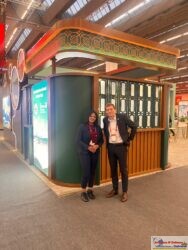
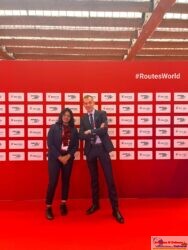
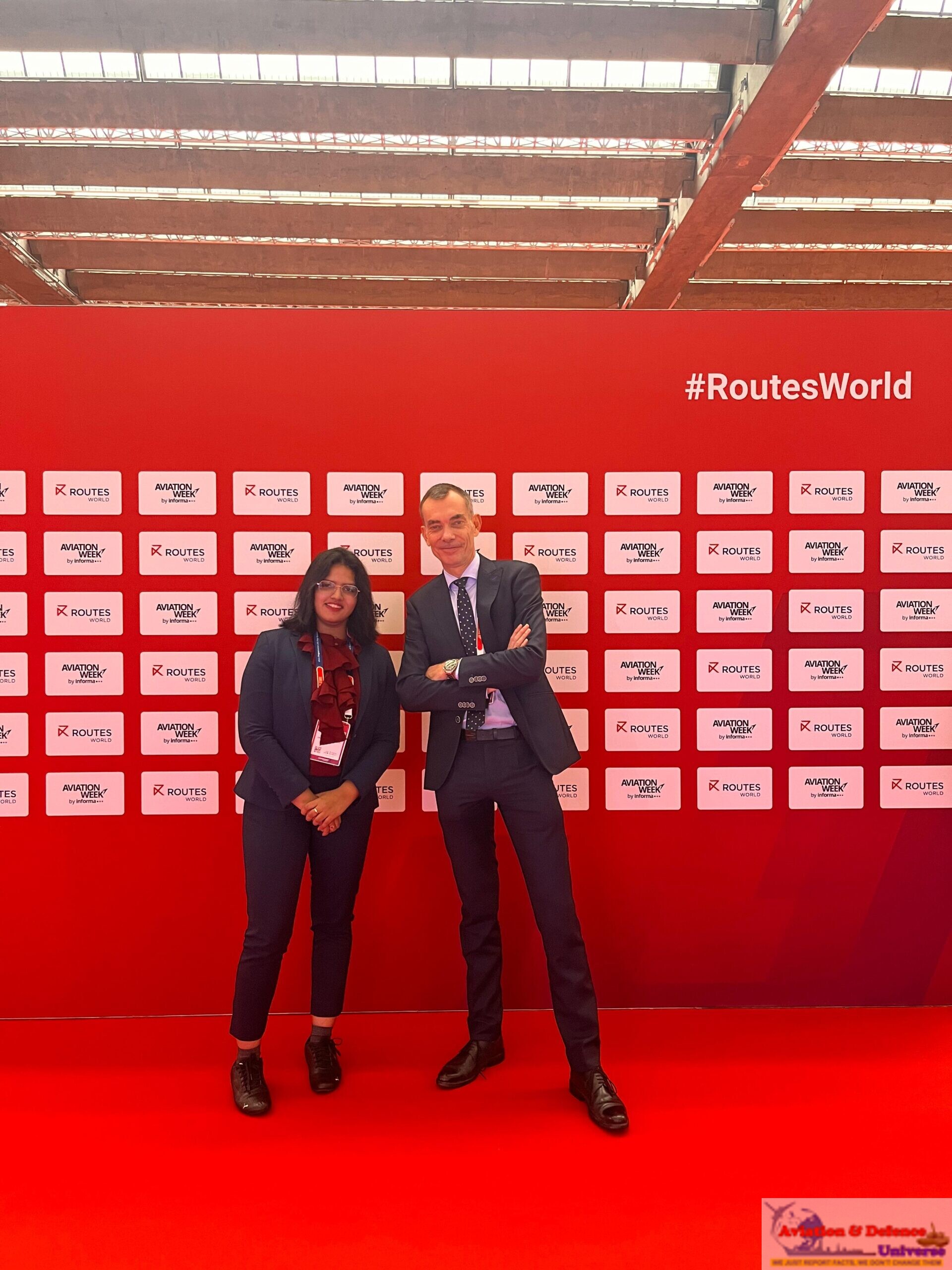
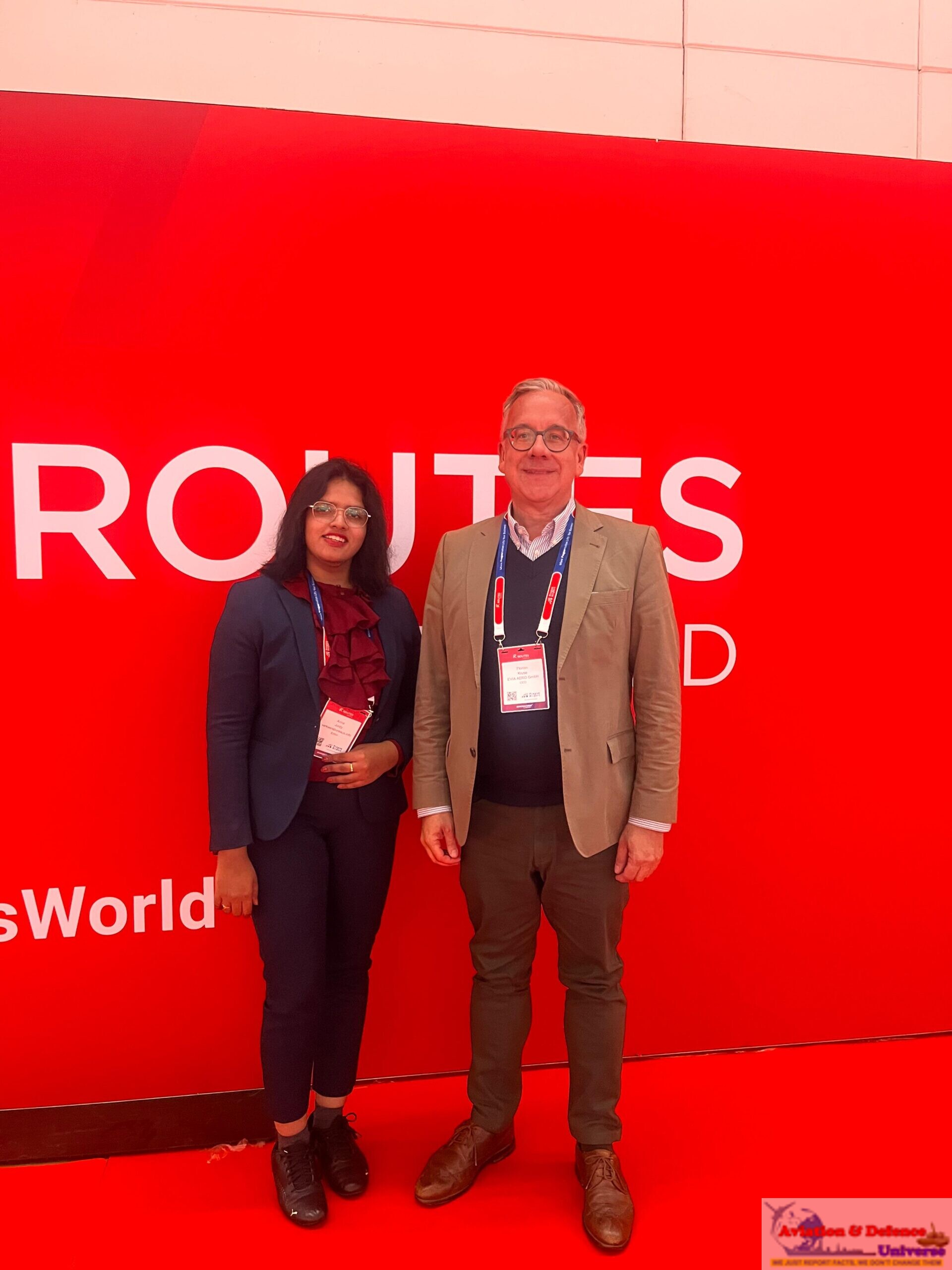
Frankfurt, Germany. 30 October 2026. When the war in Ukraine showed that attackers target power networks, European airports learned an uncomfortable lesson: without electricity, a runway is just concrete. At Routes World 2026 in Frankfurt, Florian Kruse, CEO, EVIA AERO GmbH, explained how his company turns that vulnerability into a business built on energy resilience and electric aviation.
Kruse, formerly chief commercial officer of Bremen Airport, founded EVIA AERO GmbH about six years ago during the pandemic. He expected regional airports to emerge from COVID with fewer airlines, fewer routes and weaker finances, leaving little room to invest. His answer was a holistic model: operate sustainable electric and hydrogen-electric aircraft, and make sure airports have the energy to serve them.
The security case came later. According to Kruse, NATO has made clear that airports are critical infrastructure that must keep operating in a crisis. EVIA AERO GmbH invests in photovoltaic farms of ten hectares or more, battery systems of five to fifteen megawatts, and charging points at the apron and runway. Together they can make an airport independent of the public grid, so operations continue even if the surrounding municipality loses power.
Dual use is central to the pitch. Kruse said the same installations can supply a hospital in an emergency, charge drones, or power military vehicles overnight. With oil prices rising, he argued, diesel may not suffice in a prolonged crisis, which strengthens the case for stored electrical energy. He added that Eastern European airports are firmly in NATO’s focus, and that EVIA has signed its first contract in that region. Germany, Poland and Italy are also priority markets.
He was frank about the pace. Infrastructure projects take a long time in Europe, he said, and a pure greenfield solar project is no longer bankable on its own. It works when combined with battery storage and committed buyers. EVIA AERO GmbH therefore sells power under long-term agreements to aircraft operators, maintenance firms, logistics companies and car rental providers.
Aircraft are the second pillar. EVIA AERO GmbH has signed six manufacturers with six different products, from four-seat trainers and Cessna conversion kits to a nine-seat regional aircraft, the US-built Electra, amphibious seaplanes and a new helicopter. Spreading the bets is deliberate, Kruse said, noting that developers such as Lilium have gone bankrupt. Backing several platforms improves the odds that some are certified.
He pointed to Heart Aerospace, whose 30-seat demonstrator flew for roughly 27 minutes in August, as evidence that the technology is more than slideware. Asked about batteries, he said aviation packs are retired from aircraft at around 85 to 90 percent capacity and can enjoy a second life as stationary storage at airports for years.
On finance, EVIA AERO GmbH acts as an investor rather than a developer. Energy projects are bankable, he said, while aircraft are financed individually, through a European aviation fund created for sustainable flight and through products that slice a sub-€10 million aircraft into stakes starting at €50,000.
Kruse does not expect a third large-aircraft maker to challenge Airbus and Boeing. In his view the incumbents run their own sustainable-aviation programmes and will wait for certification before buying promising companies. He also predicted that Chinese manufacturers could certify aircraft earlier than Western rivals.
Maintenance is changing too: mechanics trained on combustion engines will need electric-motor certifications. Beyond Europe, EVIA AERO GmbH has interfaces to companies in Australia and Argentina and wants the system replicated worldwide. Whether grid-independent airports become standard in a more dangerous era remains to be seen. Kruse’s message is that energy security and sustainability now point in the same direction.