


 Israel, Greece and Cyprus Deepen Defence Cooperation at Trilateral Meeting





























- Makes Its Pitch for New Routes, Cargo and Aircraft Maintenance
- Eyes India Links, Northern Defence Logistics and a New Cargo Hub
By Sangeeta Saxena
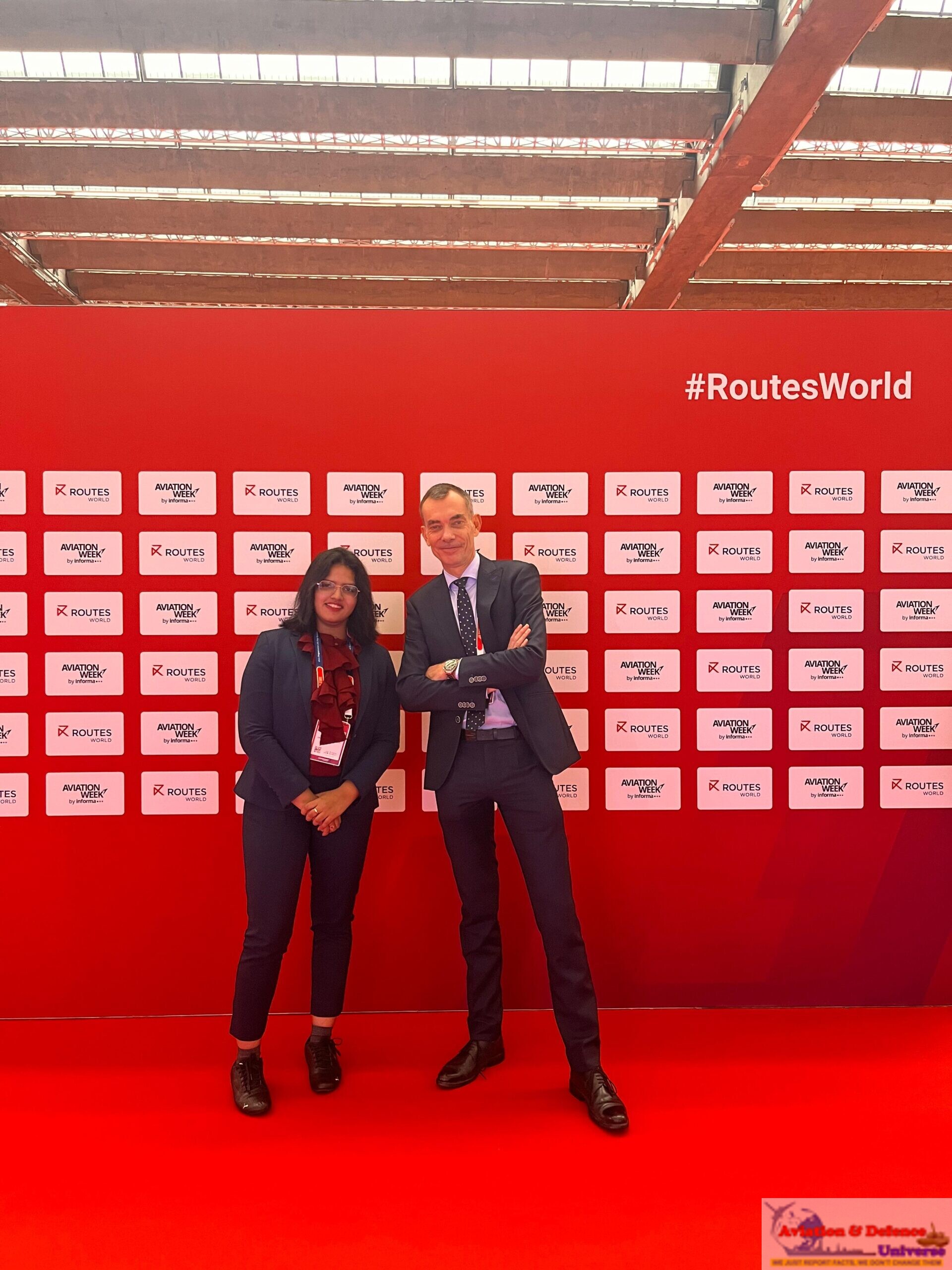
Frankfurt, Germany. 01 November 2026. Edmonton International Airport is building on two fronts: the long-range connections that its fast-growing population wants, and the logistics demands of Canada’s push into the north. At Routes World 2026 in Frankfurt, Adrian Warchola, Director, Air Service Development, Edmonton International Airport, outlined how the airport is matching routes to demand and where India fits into its plans.
The starting point is demographics. Edmonton is currently the fastest-growing metropolitan region in North America among cities of more than 500,000 people, and that growth requires strong air service. In recent days and weeks the airport has seen seven new route announcements, which it reads as significant airline confidence in the market.
India is firmly on the list. The airport sees strong momentum in markets including India, the Middle East, Southeast Asia and China, none of which it yet serves with a direct flight. Rather than target a single Indian city, the team is looking at the region as a whole and at gateways that can serve multiple points, so the hub concept is central. Discussions at Routes have been positive, and the airport is open to working with any airline, including a national carrier from India, provided the timing works on both ends.
Travelers between Edmonton and India already have options. They can connect through Canada’s main gateways, through the new Frankfurt service, or on KLM’s year-round link via Amsterdam. Many Edmonton residents use Europe as a connecting hub to India and the Middle East, and the airport wants to make those journeys more efficient, possibly through a hub in Asia or the Middle East. Traffic to the Middle East has softened, Warchola said, amid the geopolitical situation.
The latest addition is Discover Airlines, part of the Lufthansa Group, which will fly from Frankfurt to Edmonton from June 2027, announced last week. Frankfurt offers the world access to Edmonton, which positions itself as the gateway to the Canadian Rockies and Canada’s North. Last week Air Canada announced service via Newark to New York, driven by demand from the local business community, and Porter Airlines is adding Puerto Vallarta, Los Cabos, Phoenix and Las Vegas this winter.
The northern location carries strategic weight. Edmonton is the northernmost major airport in North America and describes itself as a gateway to the north. With the Government of Canada making a large investment in defence infrastructure in the north, much of the billions of dollars in capital spending heading north will flow through Edmonton, Warchola said, giving the airport a critical role in logistics as well as in visiting-friends-and-family and leisure traffic.
Cargo is the next growth phase. An international cargo hub is under development, with a first phase of 300 million dollars, intended to handle large aircraft and serve demand between Asia, Europe and North America. The Government of Canada provided seed funding, private investment is flowing into the airport campus, and the airport has land available for maintenance, repair and overhaul operators. Its team will be at MRO Europe next week, building on Alberta’s engineering and manufacturing base and working on a pipeline of aircraft maintenance engineers.
Capacity is not a constraint. Edmonton is a 24-hour airport that is not slot-constrained, with gate and customs access at any time. With around 8 million passengers a year, it is Canada’s fifth busiest airport and the country’s largest by land area at 7,000 acres. Domestic and international traffic is combined by a single linear terminal which also includes a US pre-clearance facility.
Non-aeronautical income is supported by that land, including an outlet mall, hotels, a casino and a golf course, which helps revenue to be diversified and fees for airlines to be reduced. The airport is predominantly characterised by domestic traffic, a development that has been advantageous as Canada–US travel has experienced a moderation in its intensity and has achieved a recovery of passenger numbers to those recorded in 2019. The population is diverse. There is strong immigration. This is drawn by affordability and job prospects. Airlines value this as a balanced demand mix. The company’s commitment to customer experience, as demonstrated by its consistently strong Airport Service Quality scores and attention to even the most minute details, such as the cleanliness of washrooms, is a reflection of its hospitality-oriented approach.