



















- From Belly Cargo to Boarding Gates: Vienna Makes Its Case for India
- Vienna’s Eastern Ambition: Belina Neumann on India, Airlines and New Routes
- A Pause, Not a Goodbye: Vienna Airport Seeks to Reconnect with India
By Anna Jordy
Frankfurt, Germany. 25 October 2026. A direct flight may be coming off the schedule, but Vienna Airport’s interest in India remains firmly on the departure board. As Air India prepares to end its Delhi–Vienna service on 1 November, the Austrian gateway is looking for new airline partnerships, stronger cargo flows and a compelling business case to reconnect the two markets.
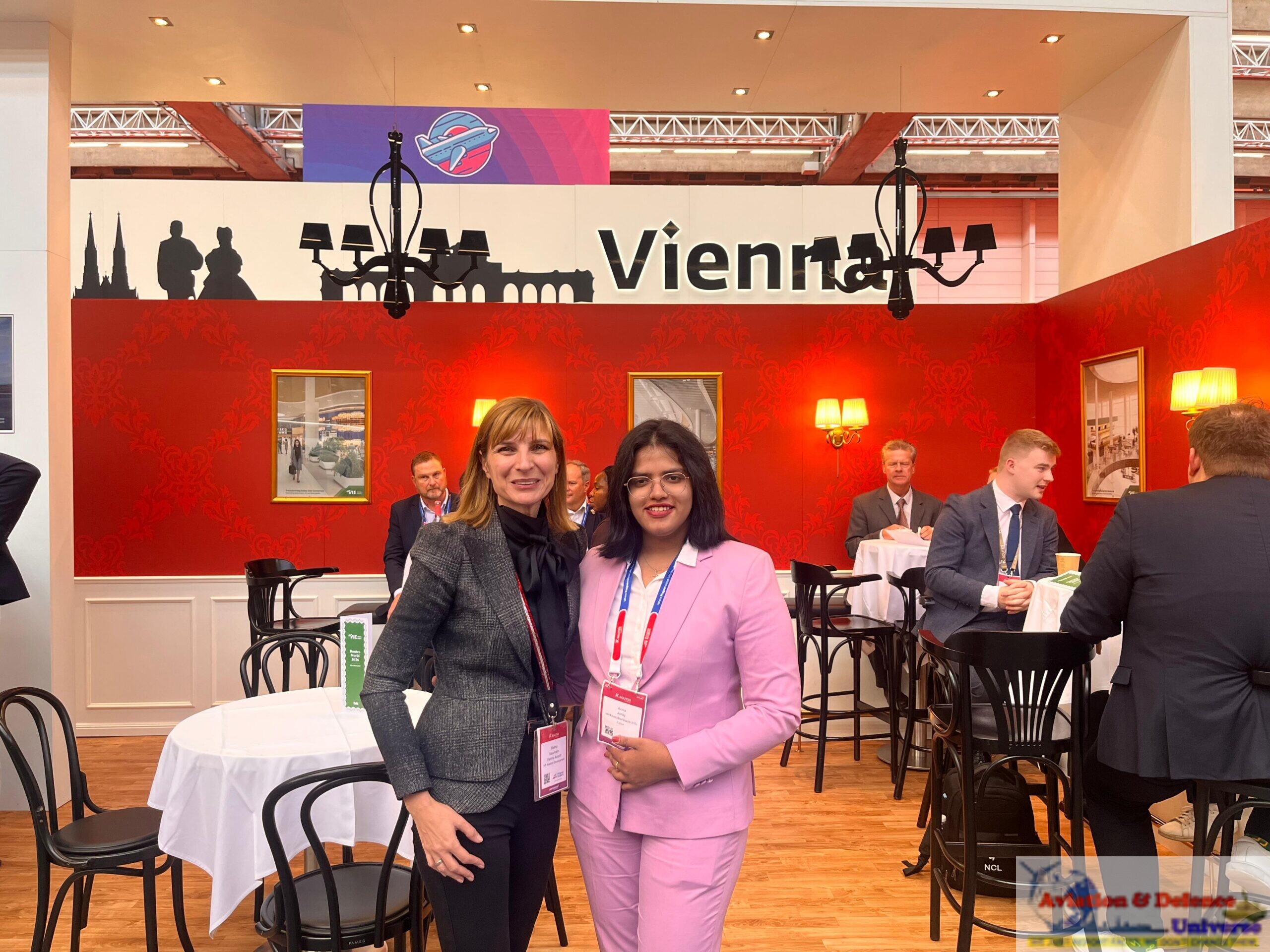
For Belina Neumann, Vice President Aviation Development at Vienna Airport, the loss of the direct service is a setback, but also a reason to redouble efforts to restore connectivity. Speaking on the sidelines of Routes World 2026 in Frankfurt, she described India as “a very interesting market” and outlined a strategy that brings together airlines, businesses, tourism bodies and governments.
The end of the Delhi service comes at a challenging time for long-haul operators. Neumann noted that Vienna was not alone in facing a reduction in connectivity, with Copenhagen also affected. Airspace restrictions, longer operating routes and fuel costs have placed pressure on airline schedules and route economics, making the task of sustaining services more complex.
Looking towards IndiGo
Vienna Airport’s search for a new connection has brought IndiGo into focus. Neumann confirmed that the airport was in discussions with the Indian carrier and hoped to build on its existing relationships with the airline’s leadership. She pointed to Vienna Airport executive Julian Jäger’s familiarity with IndiGo CEO Willie Walsh as a relationship the airport intended to develop. For Vienna, the objective extends beyond adding another destination to a route map: direct air links support business, tourism, investment and the wider economy.
The conversation also touched on the potential for cooperation involving Austrian Airlines, Vienna’s home carrier. Neumann acknowledged the possibilities a codeshare could offer, though no arrangement was announced. Air India’s continued use of Vienna as a stopover on selected long-haul flights was also discussed as a way in which the city could remain connected to the airline’s wider network, even as the dedicated Delhi service ended.
Austrian Airlines and Vienna’s hub ambitions
Austrian Airlines remains central to Vienna Airport’s long-haul plans. Neumann said the carrier accounted for around 48 per cent of the airport’s market and viewed its fleet renewal as an important commitment to Vienna’s future as a hub. The airline’s transition from Boeing 767s to Boeing 787s offers new possibilities for long-distance operations. Neumann said Austrian Airlines CEO Annette Mann had hinted at news for the following year, although no new route had been announced.
Vienna’s location in Central Europe, she suggested, gives the airport an opportunity to connect passengers travelling between the region and markets further east. Its catchment area extends beyond Austria to parts of Hungary, Slovakia and southern Czechia, offering airlines access to a broader pool of travellers.
The airport also benefits from Vienna’s role as a diplomatic and international meetings centre. United Nations offices, major medical congresses and activity in fields such as radiology and pharmaceuticals all contribute to travel demand.
Cargo strengthens the case
For Neumann, a successful long-haul route is built on more than passenger numbers. Belly cargo, carried in the hold of passenger aircraft, can make a significant contribution to a service’s overall economics. That makes trade an important part of Vienna’s argument for restoring direct Indian connectivity. The discussion touched on the potential of the European Union–India trade relationship and the role that air cargo could play as commercial links develop.
Cargo was also described as an early indicator of changes in the global economy: freight volumes can respond quickly to disruption, with passenger demand sometimes following later. For an airline assessing a new route, the strength of the cargo market can therefore be an important part of the calculation.
Neumann’s team takes a broad approach when making that case. In addition to speaking with airlines and airports at potential destinations, Vienna Airport engages chambers of commerce, ambassadors, tourism representatives and government stakeholders. The aim is to understand demand and bring together the organisations that could help a route succeed.
A competitive gateway
Neumann was candid about the challenges Vienna faces in attracting services. Austria’s air travel tax, she said, remains a concern, and a significant reduction or abolition would improve the airport’s competitive position. She pointed to nearby Bratislava, where there is no such tax, as an example of the pressures Vienna must consider.
Yet Vienna’s appeal, in her view, also rests on the experience it offers passengers. She described self-service baggage drop-off as a “game changer”, giving travellers more time to relax before security. She also highlighted the airport’s 2,500-square-metre lounge, which she said had won best-lounge awards for three consecutive years.
A wider long-haul wish list
India is part of a larger ambition to diversify Vienna’s international network. Neumann said approximately 86 per cent of the airport’s traffic was European, making long-haul growth a priority.
Among the destinations on Vienna’s wish list were São Paulo, where she saw potential supported by growing Brazilian visitor numbers, as well as Hanoi, Ho Chi Minh City, Phuket, Bali and Miami. A return of services to Hong Kong or Guangzhou was also among the airport’s aspirations.
For Vienna, each potential route must bring together airline capacity, passenger demand, cargo opportunities and a sustainable commercial proposition. India, with its expanding aviation market and strong economic links to Europe, remains an important part of that conversation.
As Routes World brought airports and airlines together in Frankfurt, Neumann’s message was one of determined engagement. Vienna may be preparing to lose its direct Delhi service, but its sights remain set on India. The next connection will depend on an airline willing to share that ambition—and on a partnership strong enough to turn Vienna’s call into a flight.