


 Israel, Greece and Cyprus Deepen Defence Cooperation at Trilateral Meeting

























- Air France’s Alexandre Serain on India, Gulf Competition and the Economics of a New Route
- What Air France Looks for When an Indian Airport Pitches a New Route
- Air France Keeps India in Focus as Longer Flight Paths Sustain Gulf Hub Competition
By Anna Jordy
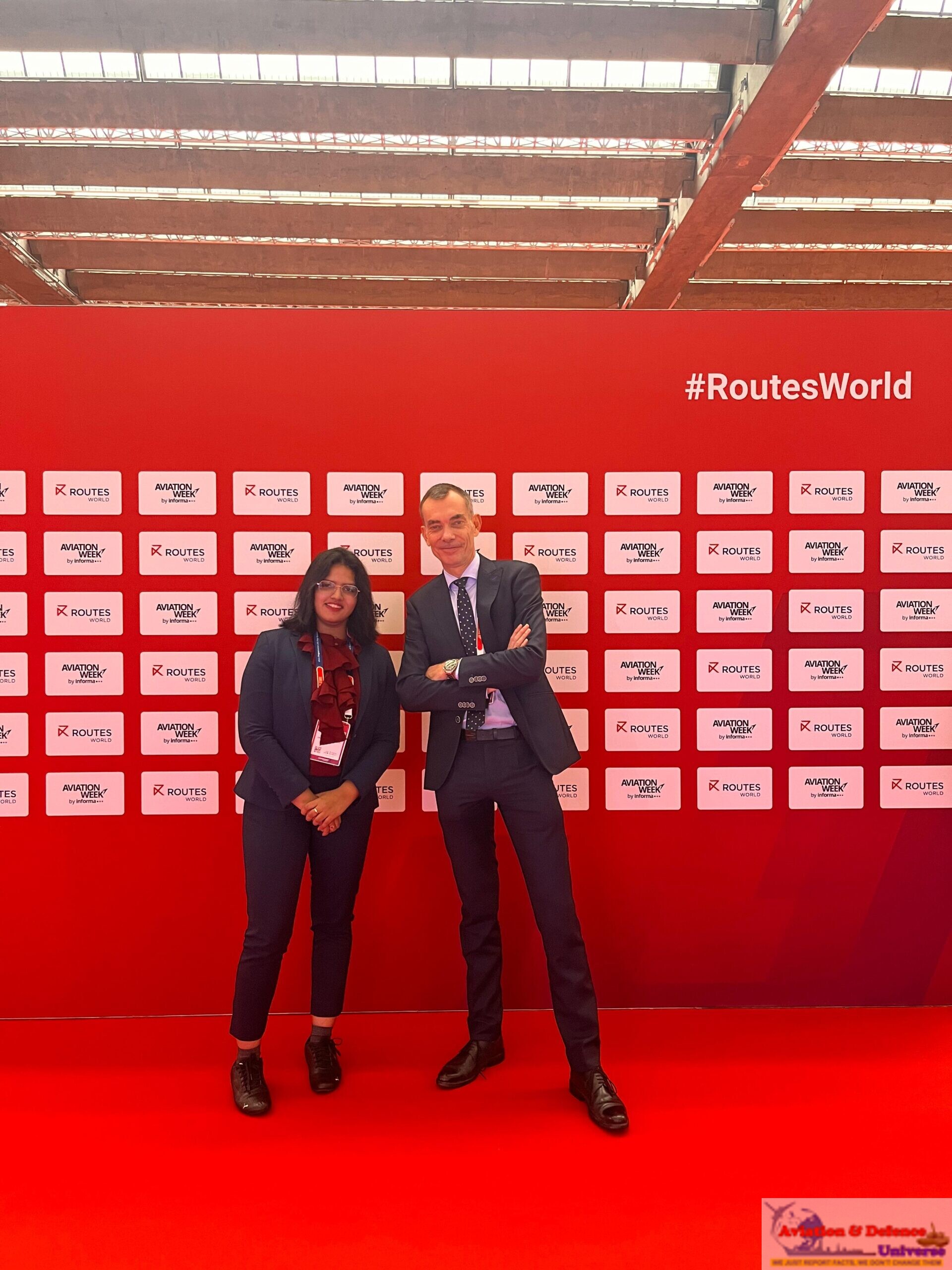
Frankfurt, Germany. 31 October 2026. India continues to be a significant market for Air France-KLM, and the airline is keen to expand there when the appropriate occasion presents itself. At Routes World 2026 in Frankfurt, Alexandre Serain, Director of Network Planning for Medium Haul at Air France, shared insights on the carrier’s route selection process, fleet balancing strategies, and approach to addressing airspace tensions in the Middle East.
Serain would not name any specific new Indian destination. Air France judges every point by what it brings to the wider network, he explained, and Indian traffic scores well on that test: passengers connect well at Paris and continue to North Atlantic destinations, France and other points. That strong outbound flow is something the airline wants to feed throughout its network.
For travelers from India, the French regional network is a selling point. Air France connects more than ten French airports to Paris, so each flight from India offers many onward options, and at quite a few of those airports it is the only carrier providing a hub connection. KLM, a strong partner, can help feed those destinations where needed. Serain said he could not say what share of India–France traffic flies Air France, or whether passengers are mainly families, students or business travelers.
The Gulf question matters to travelers from India, many of whom transit through hubs such as Dubai or Abu Dhabi. Asked whether tensions in Middle East airspace are pushing passengers towards Air France, Serain said geopolitical turmoil does not help any airline. He doubted that Gulf carriers are being hit hard, noting that demand through those hubs remains visible in the data and will probably rise as the situation improves and fleets become available.
He also pointed to a disadvantage. Air France cannot overfly a number of countries, which lengthens its flights to Eastern, Asian and Middle Eastern destinations. As a result, a connecting journey via a Gulf hub often adds little to overall travel time compared with a direct flight, which helps explain why those routings stay competitive.
Serain described two tests that Air France uses to choose destinations. So, the first one is about demand for the route between a point and Paris. The second considers what value the destination adds to the entire network, including onward traffic through Charles de Gaulle Airport. He said that when an airport asks an airline to fly there, the idea is not automatically accepted. Air France looks at how many people want to fly there, talks to its local sales teams about if it is for work or for fun, and talks to the airport about when flights can take place, the rules, and how things will work.
It can take a long time. Serain said that relationships built at events like this one can take years to work. For a given season, preliminary discussions generally occur approximately 12 months in advance, and the network decision itself can take several months, followed by operational verifications including crew and airport preparedness.
For existing routes, the airline looks at how well it is doing, how much competition it has and what the market says it will do, and then changes how many seats it offers on different flights. As destinations peak at different times, with leisure routes being particularly popular in July and August, capacity that is freed up on one route can be redeployed to another. Serain said that Air France serves more than 100 destinations with a fleet of roughly 200–300 aircraft, split fairly evenly between wide-body long-haul and narrow-body types, while maintaining a margin for technical issues.
In terms of future developments, Air France declared one or two weeks ago that it will launch services to Nashville and San Diego in summer 2027. Investment in newer aircraft and refurbished cabins, particularly La Première and business class, is key to creating a premium passenger experience, according to Serain. This experience begins before boarding, with investment in dedicated airport lanes.
The passenger mix also matters. Before the pandemic, business travel was much heavier, but it has since grown, with business travel picking up again. For Indian airports and operators, the key point is that Air France makes decisions based on data, patience, and network fit rather than headline demand alone, and that India remains a market in which it intends to grow once conditions allow.