














- Journey from Modest Fleet to Blue-Water Power
- Voyage from Dependence to Atmanirbharta : Thinks Big & Builds At home
- Proud Past, a Powerful Present and Challenging Seas Ahead
By Cmde Ranjit B Rai (Retd.)
New Delhi. 14 August 2026. Eighty years of freedom, eighty years of transformation—and at sea, few journeys mirror India’s rise as dramatically as that of the Indian Navy. From inheriting a modest collection of sloops, frigates, minesweepers and auxiliary vessels at Independence to operating aircraft carriers, submarines, sophisticated surface combatants and an increasingly indigenous arsenal today, the Navy’s voyage has been one of quiet determination, technological ambition and growing strategic reach. On India’s 80th Independence Day, let’s looks back with pride at a service that learnt early to think big, design at home and build in India, even when resources were scarce. But my gaze is equally fixed on the horizon, where missiles, drones, cyber warfare, artificial intelligence, quantum technologies and an increasingly complex Indian Ocean security environment are redefining maritime power. The story, therefore, is not merely of how far the Indian Navy has sailed—it is about how prepared it is for the turbulent waters ahead.
 The Indian Navy’s story began when it was christened as the Royal Indian Marine (RIM) and then the Royal Indian Navy (RIN) in 1934 by a Royal Proclamation. Few officers led by Engineering Sub Lt DN Mukherji were sent to UK from 1923 for training and the Training Ship Dufferin was set up in 1927 to augment British Merchant ships manning with Indian officers when passenger traffic from UK to Australia grew. Commissioned off Bombay, the Dufferin was India’s first dedicated floating training ship. It played a foundational role in shaping Indian merchant marine and naval officers before it was decommissioned on April 15, 1972. When the Second World War broke out in 1939 the RIN’s strength was just 9,000 with 6 sloops and few minesweepers and this was rapidly increased to 39,000 personnel and 29 fighting platforms and some sixty officers joined from Dufferin led by Admiral Ram Dass Katari Dufferin No 1, later Chief of the Naval Staff in 1950. The RIN ‘s stellar service in that war in the Red Sea and East Asia gained laurels from South East Asia’s Commander in Chief Admiral Lord Louis Mountbatten.
After the partition of India in 1947, the divided naval fleet of India consisted of merely four sloops, two frigates, one corvette, 12 minesweepers, one survey ship and other auxiliary vessels. The proposal for expansion of the Indian Navy (Naval Plans Paper 1/47) was brought out as early as August 25, 1947 which envisaged two light fleet carriers, three cruisers, eight destroyers, four submarines and other smaller vessels. Sadly, this ambitious plan got scaled down over the next decade. Despite low budgets the Indian Navy grew with self-help. The Indian Navy acquired the 9,000-ton INS Delhi (HMS Achilles) in 1948 with twin six-inch guns and twelve warships from Britain between 1950-1960. These were three Black wood-class Type 14 anti-submarine frigates (Kuthar, Kirpan and Khukri), three Leopard-class Type 41 anti-aircraft frigates (Brahmaputra, Beas and Betwa) and two Whitby-class Type 12 surface escort frigates (Trishul and Talwar) and the 10,000-ton INS Mysore (HMS Gambia) in 1958 with triple six inch guns and the 18,000 ton aircraft carrier Vikrant (Ex HMS Hercules) in 1962. It blooded the Navy to man and command large ships.
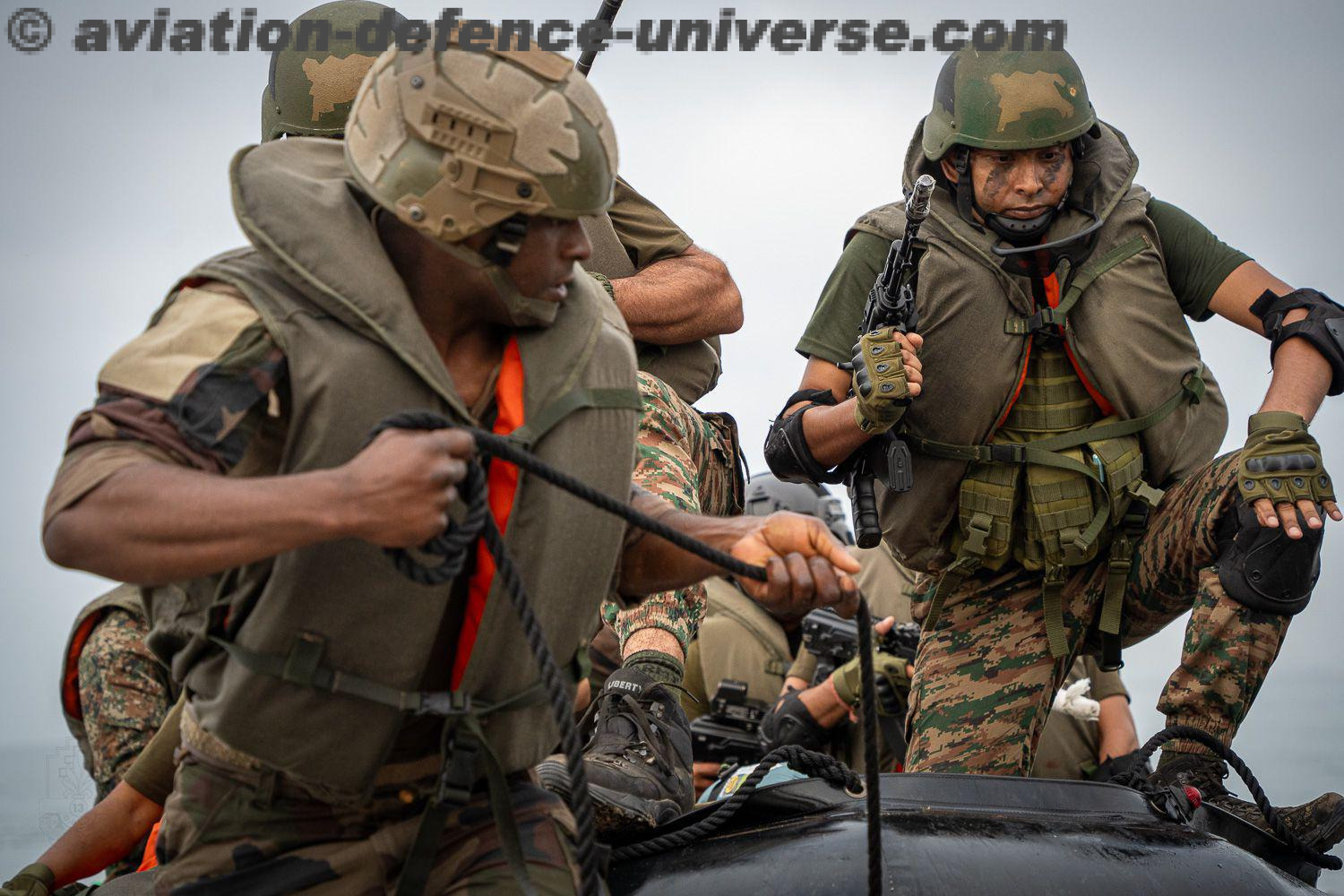
The officers and sailors who went to UK and stood by ships in British shipyards led to the foundation to think ‘big and build ships in India’ which is now Atamnirbharta as they had imbibed ship building experience. This is why, though Navy is the smallest service with 68,000 uniformed men and women today with only 18% of the Defence Budget, it boasts of 150 warships and submarines and all latest warships including the 40,000 ton aircraft carrier INS Vikrant and conventual and three nuclear submarines all built in India. Despite this the Indian Navy was not allowed to take part in the 1965 war but proved its mettle in the 1971 Indo-Pak war and became a builder’s Navy soon after it commissioned the 3,000-ton Leander INS Nilgiri in 1973.
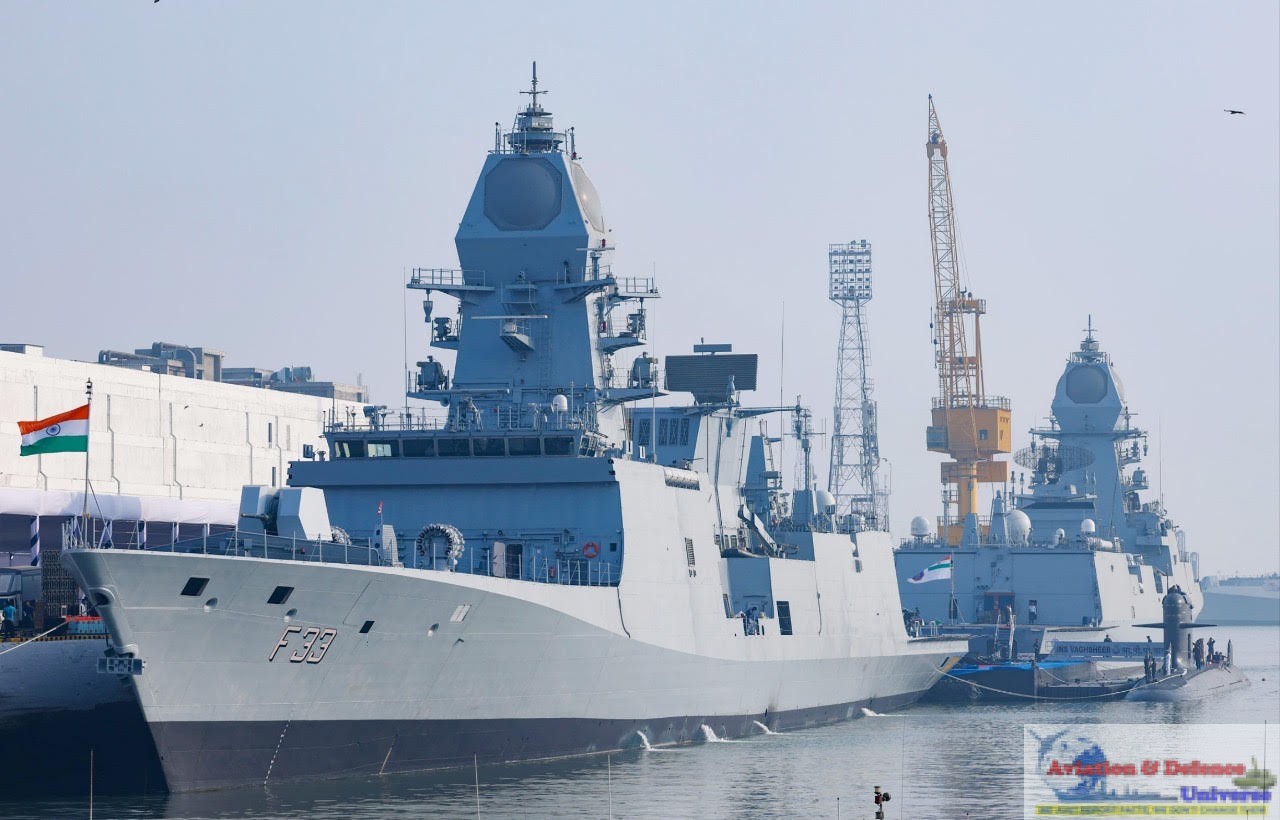 The Navy built a defence eco-system with shipyards and fawned the Brahmos missile programme with the DRDO for all the three services and for exports, the Barak LR SAMs, advanced EW systems like Shakti and established a ship and submarine design bureau and an in-house R&D group called the Weapons Electronics Engineering Systems Establishment (WEESE). Much of its work is classified and DRDO scientists have joined it. The Indian Navy launched its first dedicated communication satellite, GSAT-7 (also known as Rukmini) in 2013 by the Indian Space Research Organisation (ISRO) from Kourou, French Guiana, marking it India’s first dedicated multi-band military space asset for maritime domain awareness and data transfers. The other services followed much later.
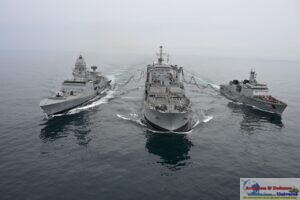
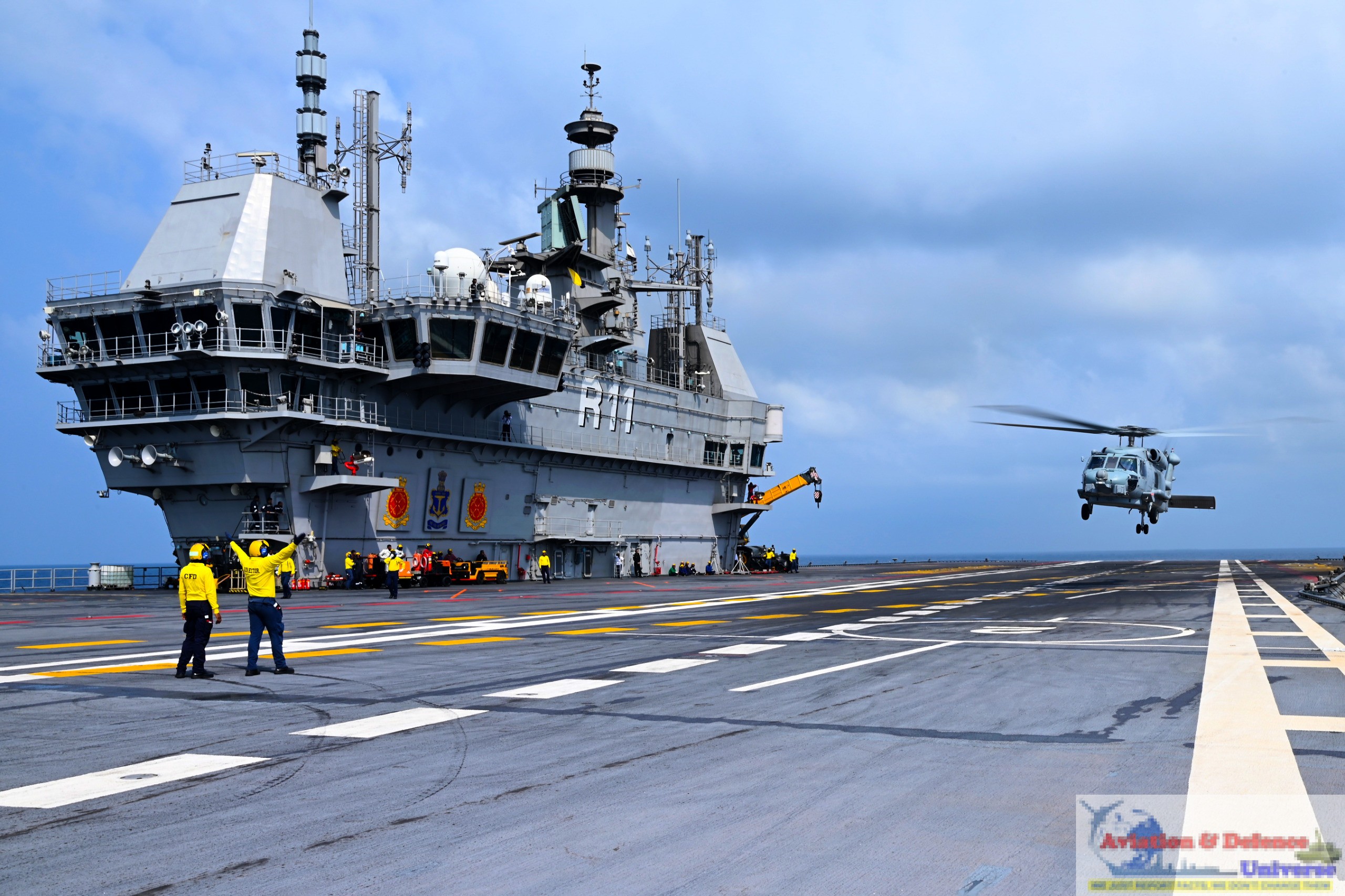
A defining characteristic of the Navy’s march into the future is its air arm since inception and currently with 12 MR P8is and two aircraft carriers (one built in India) ensures its transition from a force dependent on imported platforms to one driven by indigenous design, construction, and technological innovation which has been supported by Prime Minister Narendra Modi. Hailing from the maritime state of Gujarat with the longest 2,400 km coast line next to Pakistan he knows the importance of maritime strength. Over fifty-nine Indian frontline naval warships and aircraft carrier INS Vikrant are designed domestically by the Warship Design Bureau and built at Indian shipyards. Large frigates equipped with long-range BrahMos supersonic land and sea and land attack and Barak AA missiles, home-built torpedoes and Shakti integrated electronic warfare systems form the backbone of the surface fleet. These platforms will increasingly operate as part of a network-centric force with submarines.
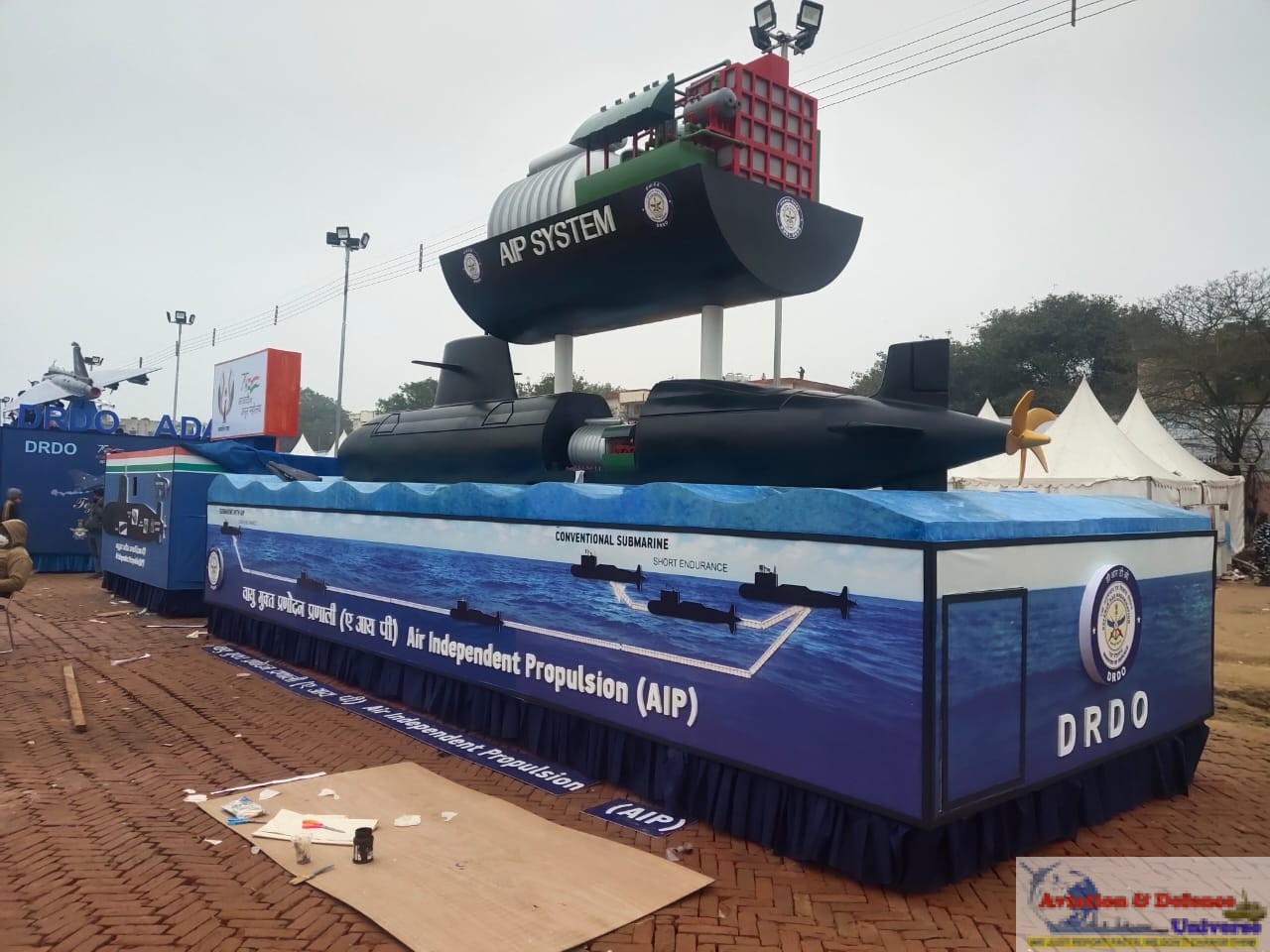 The image of war has shaped military and maritime thinking through wars and every war ushers in new technology, weapons and the need for revised strategy and tactics, called Revolution in Military Affairs (RMA). The recent Russia versus Ukraine, and USA and Israel versus Iran shows the first shots of tomorrow’s wars are more likely to be launched through the air with missiles and drones striking strategic targets miles away and cyberattacks to wreck command and control centres and power grids. Naval platforms will have to be capable to launch missiles and drones at extended ranges. Op Sindoor in 2025 was a small example in which Pakistan was mesmerised by missiles and drones from land and air using inertial navigation and Kalman Filters with GPS for accurate attacks. India’s detector to shooter system Akashteer proved, and is being upgraded with the Sudarshan Chakra.
The 21st century is well upon us. The Indian Navy as the largest preferred Net Security Provider in the Indian Ocean Region (IOR) is tasked by PM Modi’s initiative of Mutual and Holistic Advancement for Security and Growth Across Regions (MAHASAGAR). The post-World War II global architecture is becoming unsustainable and UN is powerless. The international security and strategic gravity of global influence is shifting, and new powers are emerging. India is one of them and the Indian Navy’s force-level ambitions—articulated through the Maritime Capability Perspective Plan (MCPP) is contributing to India’s rise with the overarching combat-credible, technology-driven, blue-water force translated into steel, sensors, weapons and hulls entering service with a tempo. India no longer faces the prospect of two separate conventional wars with China and Pakistan as in the past, but instead, an increasingly coordinated Pakistan with China providing intelligence, surveillance, cyber capabilities, satellite support, electronic warfare and diplomatic backing. China is beefing up the Pakistan Navy with AIP submarines and ships. Pakistan, a nuclear power has signed a mutual security pact with Saudi Arabia and Turkey. Pakistan’s senior leadership role in the Middle East war as the interlocutor for USA and Israel’s war against Iran has given it grist to try to form a NATO type grouping with Qatar and Turkey. Egypt also wants to join, which will increase India’s and its Navy’s security challenges.
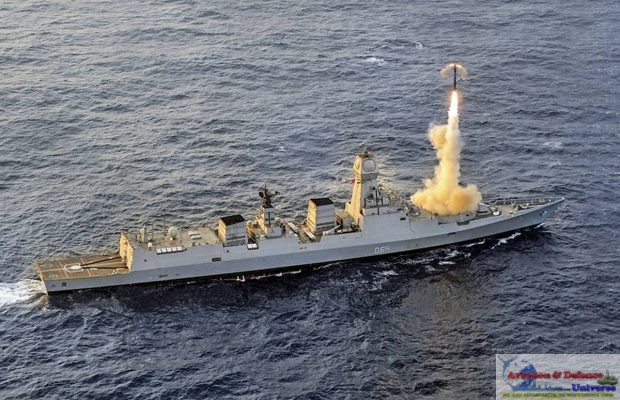 The Navy is up to it and has tested Quantum communications and AI systems in its larger platforms. Navy’s aircraft carriers INS Vikramaditya and Vikrant will soon fly the Rafales and continue with MiG-29s and Kamovs with varied missiles and the Navy has inducted 24 MH-60R helicopters and proved itself in HADR and multiple exercises with world’s navies. India’s Air Chief, Air Chief Marshal AP Singh has complimented the Navy’s ways and enjoined the Indian Air Force to learn from it. He was possibly referring to the Navy’s turn to the private sector to help in its Indigenisation programme from the 1970s which has paid ‘dividends’. The Air Force is now increasingly looking to the private sector for manufacturing as it has depended solely on Hindustan Aeronautics Ltd (HAL). The Indian Navy’s force-level ambitions and the overarching vision of a combat-credible, technology-driven, blue-water force—are now translating into steel, sensors, weapons and hulls entering service at an unprecedented tempo though the yards are waiting orders to maintain the tempo.
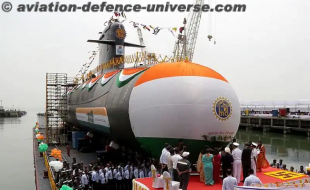
The period 2025–2026 for the Navy covers the most concentrated dose of commissioning not merely in a numerical expansion, but a It represents a generational shift toward network-centric, multi-domain, quantum and AI endowed survivable platforms. The decisive pivot to indigenous shipbuilding, with Mazagon Docks Ltd, GRSE, Cochin, Goa and Hindustan Shipyard Ltd, and private yards like Larsen &Toubro Ltd (L&T) and Titagarh Rail Systems are delivering platforms across the spectrum in Atamnirbharta. Ambitious targets have been set as the 2026 slate is adding 18 more warships, to last years 13. The last of seven Project 17A, 6,800 ton Brahmos and Barak fitted Vindhyagiri from GRSE and two Talwar class from GSL and Arnala- and Mahe-class ASW Multi-Purpose and Offshore Vessels (MPVs and OPVs) will be commissioned this year. The third SSBN Arisudan commissioned in April this year and modern training ships and tankers and support ships will strengthen India’s maritime posture across to provide Sea control in the Indian Ocean Region (IOR), deterrence and strategic stability, littoral warfare and coastal security. Hydrographic dominance is adding and underwater domain awareness (UDA) is getting attention with missile tracking and intelligence ships of the DRDO. The nation can celebrate its 80th Independence Day with pride as its Navy has progressed with well-conceived planning and execution in the last 80 years and it now has women power at sea.
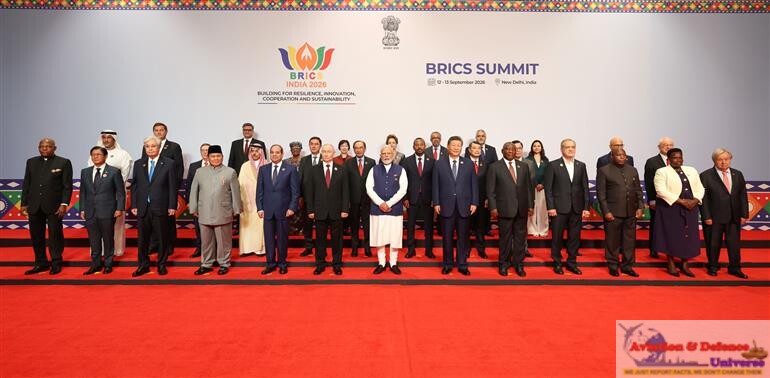
 The Indian Navy’s future is being shaped by a strategic vision that extends well beyond fleet expansion. It is evolving into a technologically advanced, networked, and self-reliant maritime force capable of protecting India’s national interests across the Indian Ocean Region (IOR) and contributing to stability in the wider Indo-Pacific with strategic partnerships to create a force prepared for the complex security environment of the twenty-first century. India’s expanding economic interests, dependence on maritime trade, and growing geopolitical influence in the QUAD and BRICS have elevated the importance of sea power. Nearly 95 percent of India’s trade by volume and over 70 percent by value is transported by sea, while the country’s energy security relies heavily on uninterrupted maritime supply routes. The Middle East war and closure of the Hormuz and Bab El Mandeb demonstrated the nation’s dependence on energy imports and the Indian Navy has become an instrument of national power, tasked not only with defending India’s coastline but also with safeguarding Sea Lines of Communication (SLOCs), ensuring freedom of navigation, protecting offshore assets, and supporting national diplomacy.
A defining characteristic of the Navy’s march to the future is its transition from a force dependent on imported platforms to one driven by indigenous design, construction, and technological innovation, highlighted by Prime Minister Narendra Modi in Atamnirbharta. All fifty Indian frontline naval warships and aircraft carrier INS Vikrant are designed domestically by the Warship Design Bureau and built at Indian shipyards. Large frigates equipped with long-range BrahMos supersonic cruise sea and land attack and Barak AA missiles, torpedoes and Shakti integrated electronic warfare systems l form the backbone of the surface fleet. These platforms will increasingly destroyers and operate as part of a network-centric force. The 21st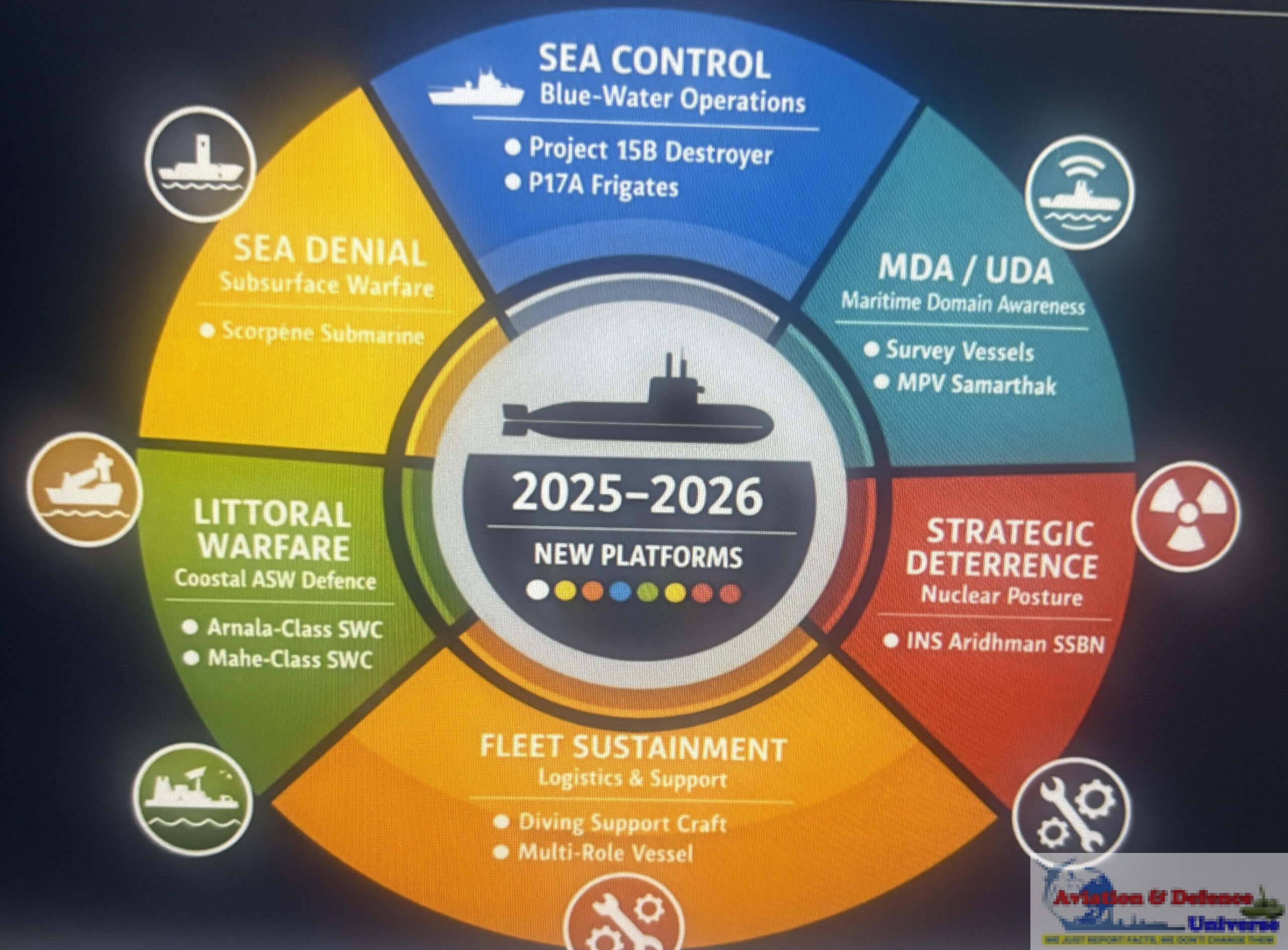 century is upon us. The post-World War II global architecture is becoming unsustainable. The international security and strategic environment is changing. The centre of gravity of global influence is shifting, and new powers are emerging. India is one of them. Despite the odds, India has withstood internal and external challenges to preserve its democratic and constitutional ethos. Its diversity and pluralism have grown while being firmly rooted in its civilisational heritage. As a result, the states of India are more empowered today than before. More than half its population, larger than the combined size of Europe and the US, is under the age of thirty. The transformation underway in India will unleash powerful impulses beyond India’s borders. This will profoundly impact the world’s political, social, cultural and economic systems. As India rises and finds its rightful place on the world stage, its unique identity, traditions and value systems will become critical to global peace and stability. India is looking ahead to mark the centenary year of its post-independence existence. How India thinks will matter. How India acts will matter even more.
China too, has a clear interest in the IOR as much of its energy trade from West Africa and the Gulf has to pass through the important shipping lanes and choke points of the Indian Ocean, and is therefore vulnerable to disruption. China is systematically developing overland routes for its energy via Pakistan and Myanmar to offset this disadvantage. It is also no surprise that China is establishing footholds all over the IOR, with an eye on the future. China has a long-term desire to have a permanent presence of its naval forces in this region. This is evident from its naval modernisation plans which envisage a large fleet of nuclear submarines and blue water assets. This is not something that we can stop but our strategy certainly needs to factor in these developments. China’s success in making inroads into IOR countries and Africa can be attributed to ‘deep pockets’ and its ‘no strings attached’ policy with regard to aid.
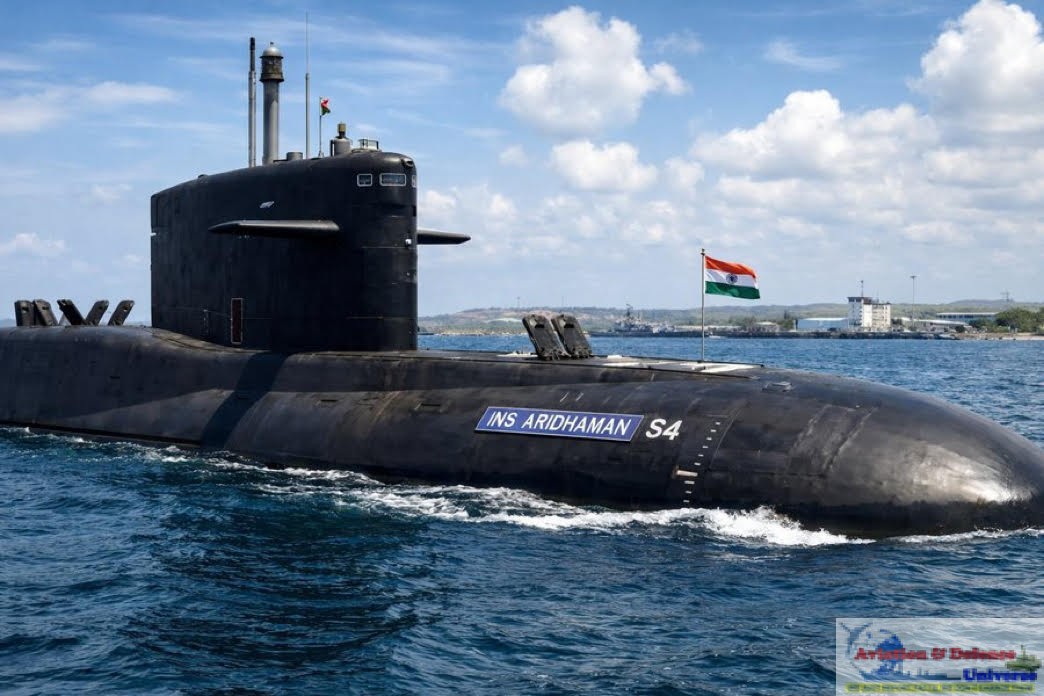 As India celebrates its 80th Independence Day, the Indian Navy’s journey offers both a reason for pride and a reminder that maritime strength can never be taken for granted. From a small post-Independence fleet to a force increasingly built around Indian-designed warships, indigenous weapons, nuclear submarines, aircraft carriers and network-centric capabilities, the Navy has steadily transformed itself into an important instrument of national power. Its early embrace of indigenous shipbuilding and partnership with Indian industry has created foundations that are now bearing fruit in the country’s drive for Atmanirbharta.
Yet the next chapter could prove more demanding than the last. The changing character of warfare, the proliferation of missiles and drones, cyber and electronic warfare, China’s expanding maritime footprint and growing strategic complexities across the Indian Ocean are creating a battlespace where technological superiority, information dominance and preparedness will be decisive. The Navy’s future, therefore, cannot be measured simply by the number of ships flying the White Ensign, but by their survivability, connectivity, firepower and ability to dominate an increasingly contested maritime domain.
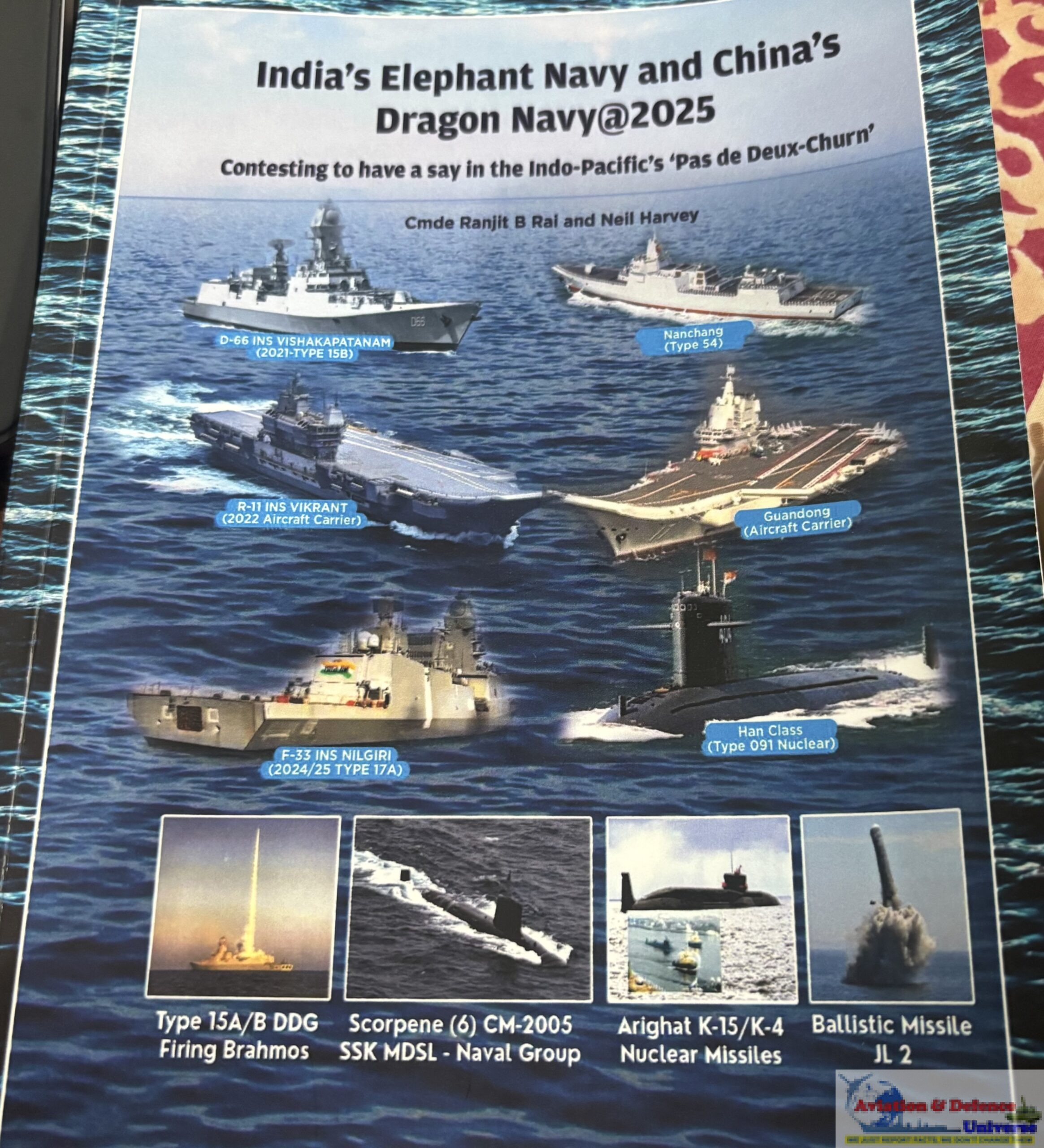 With new platforms entering service, indigenous shipyards delivering increasingly sophisticated vessels and emerging technologies such as AI and quantum communications finding their way into naval capabilities, the Indian Navy is sailing towards its next era with considerable momentum. As India looks beyond its 80th year of Independence towards the centenary of 2047, its economic rise and strategic influence will remain inseparable from the security of the seas around it. The Navy that once learnt to “think big and build ships in India” must now think farther, move faster and remain ready for threats that may arrive from above, below, across—and increasingly, beyond—the seas.
(Cmde Ranjit B Rai is author of India’s Elephant and China’s Dragon Navy@2025 ISBN 978-83-49934-73-3 and curates a Maritime Museum at C 443 Defence Colony in Delhi. The views in the article are solely the author’s. He can be contacted at editor.adu@gmail.com).
Pictures Courtesy : Rahul Vatsayan








































































-A4-Size-(2)_page-0001.jpg)