
















- From Japan’s Earthquakes to the Mediterranean Crisis: Lessons in Saving Lives
- Global Search and Rescue Experts Advocate Innovation, Coordination and Preparedness
- Data, Discipline and Innovation Take Centre Stage at Disaster Management Plenary
By Sangeeta Saxena
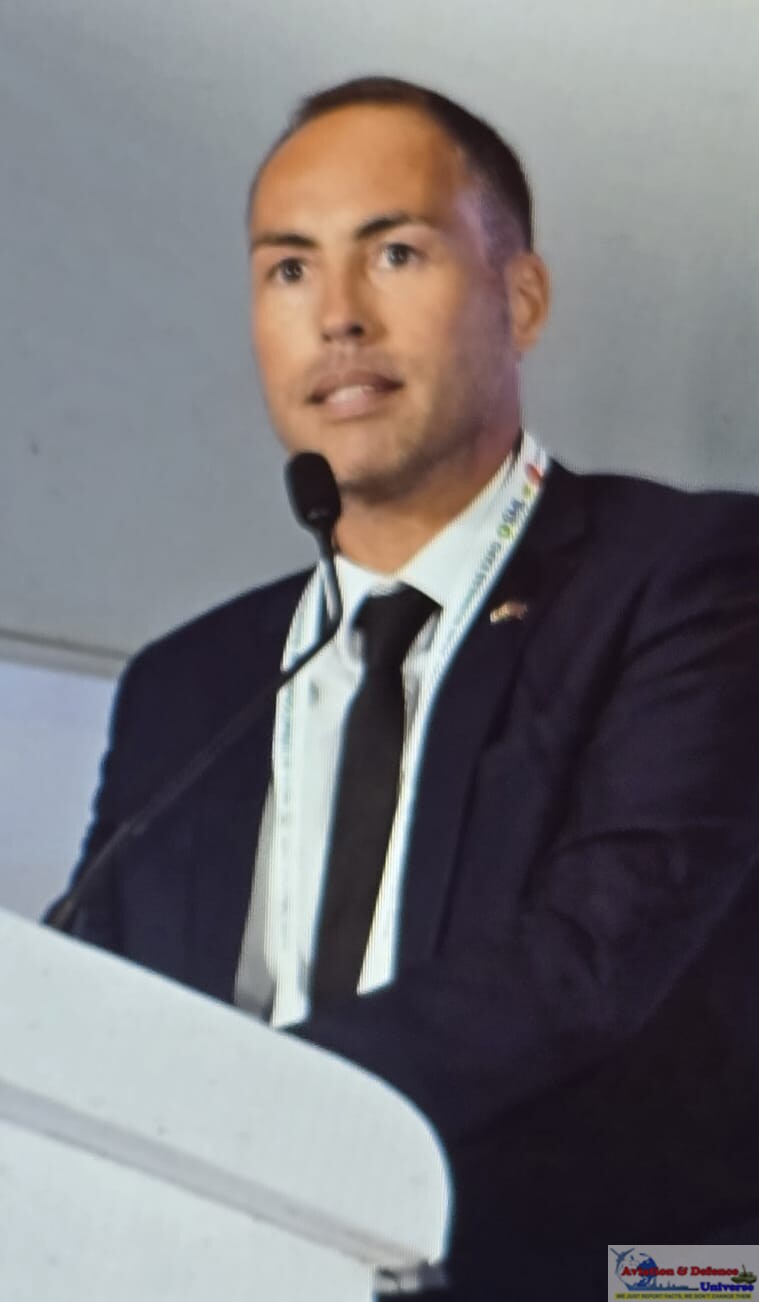
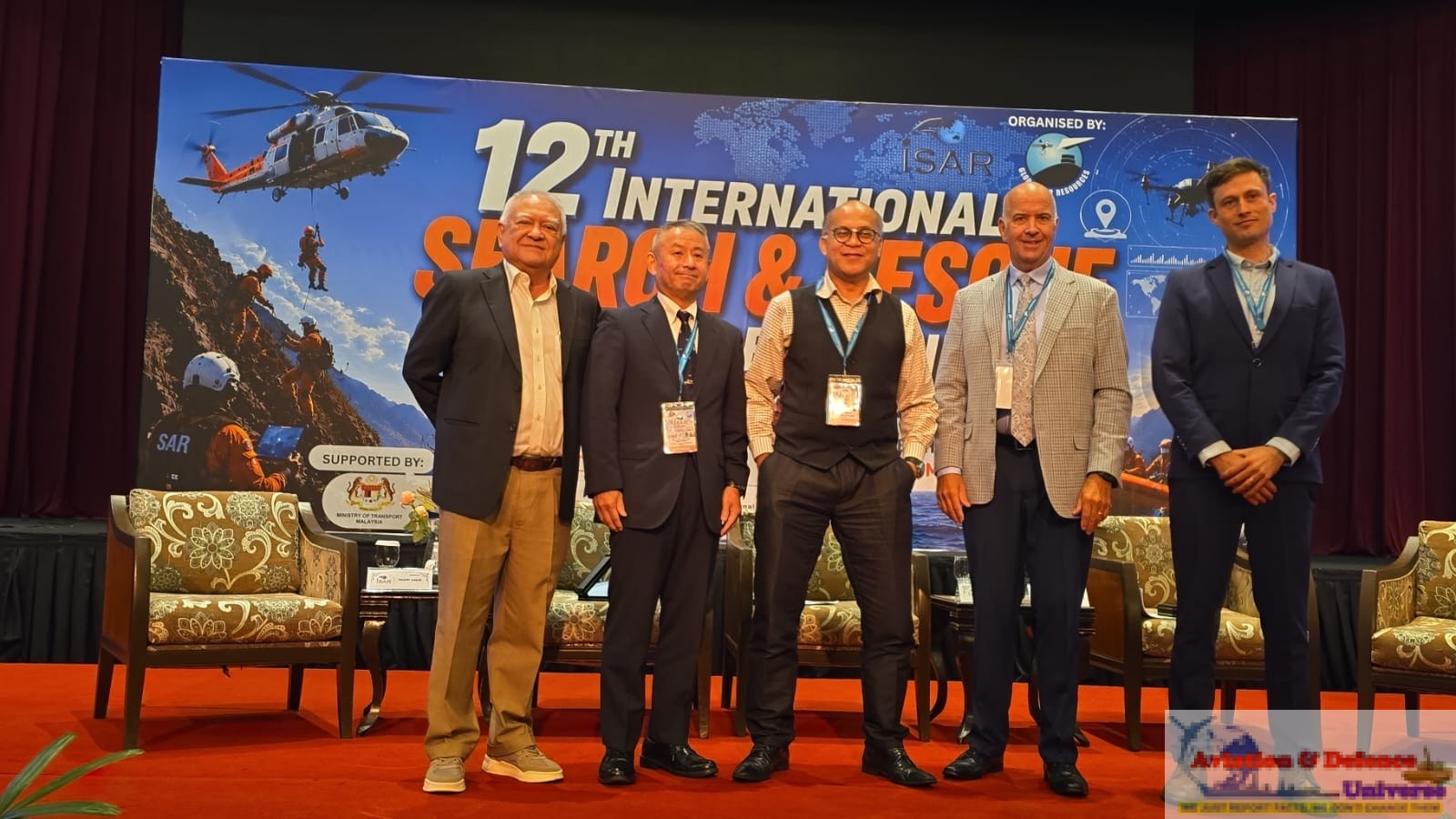
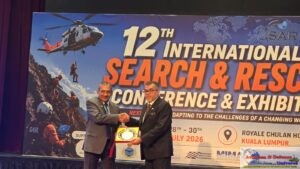
Kuala Lumpur. 29 July 2026. Disasters rarely arrive with warning, but the ability to respond swiftly, intelligently and collaboratively often determines whether communities recover or suffer greater tragedy. That central message resonated throughout Plenary Session 4 on Disaster Management at iSAR 2026, where internationally renowned search and rescue practitioners shared decades of operational experience drawn from earthquakes, tsunamis, maritime humanitarian crises and large-scale rescue operations. Moderated by Adjunct Professor Nazery Khalid, the session brought together Maj. Gen. (R) Koji Hiratsuka, CEO of Navicom Aviation Corporation, Japan; Jamie Stirling, President of SAR-1 Inc. and former Ontario Provincial Police search and rescue commander from Canada; and Orlando Max Avis, SAR Manager at SOS Méditerranée, France. Together, they explored how disaster management has evolved through better planning, technology, scientific analysis, aviation assets and operational innovation, while emphasising that preparedness, coordination and continual learning remain the foundations of saving lives.
Japan’s Three Decades of Learning from Catastrophe
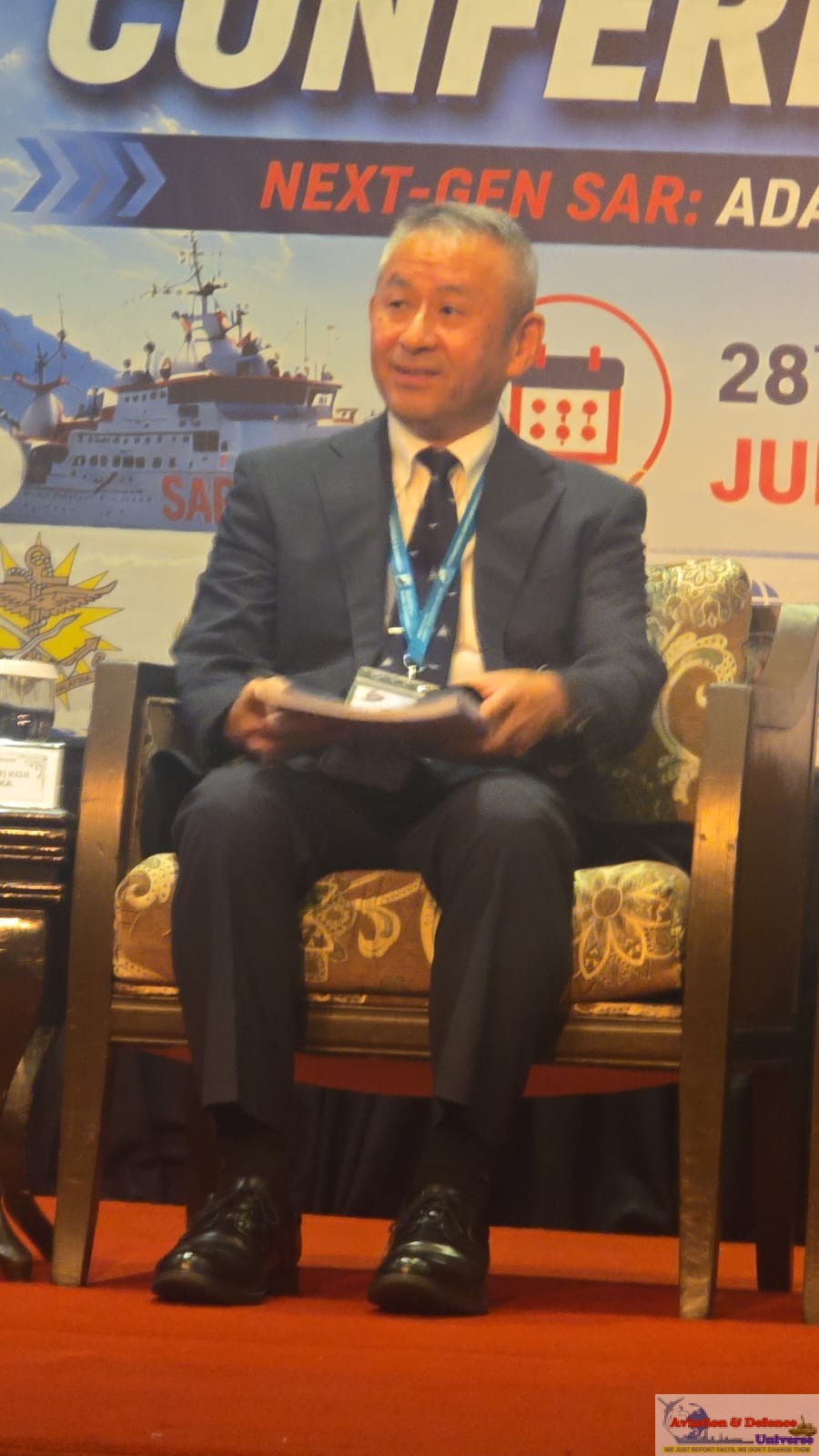 Opening the plenary, Maj. Gen. (R) Koji Hiratsuka, CEO of Navicom Aviation Corporation, reflected on more than three decades of Japan’s experience in responding to devastating earthquakes and other natural disasters. His presentation, “Japan’s Large-Scale Disaster Response – Operational Evolution Over the Past 30 Years,” traced the country’s transformation from an inadequately prepared disaster response system in 1995 to one that today integrates aviation, drones, satellite communications and multi-agency coordination.
Recalling Japan’s most recent seismic event, he observed, “When I asked ChatGPT how many large-scale disasters we had in the past 30 years, ChatGPT answered six. But yesterday, we had seven cases,” referring to the fresh earthquake that had struck Kumamoto, leaving dozens missing and thousands displaced. Looking back at the 1995 Great Hanshin-Awaji Earthquake, Hiratsuka described a nation caught unprepared.
“More than 6,000 people lost their lives. At that moment, the Japanese government and local governments were not ready at all. Crisis management was considered primarily the responsibility of local governments,” he said. The fragmented approach meant that fire services, police, emergency services and aviation units did not operate as an integrated force, while helicopter capability itself remained limited. “Only big cities had helicopters. The number of aircraft was only 33. Deployment was slow. We were not ready yet. Command chain and air control systems—we didn’t have any.” The experience fundamentally changed Japan’s thinking. “We recognised aircraft are very useful for this kind of mission. We accelerated helicopter operations. We also understood reinforcement for support missions and established those systems. We also realised helicopters should not only transport patients but also doctors.”
The 2011 Great East Japan Earthquake marked another defining moment. Describing the unprecedented scale of destruction, Hiratsuka noted, “More than 500 kilometres of coastline were affected by earthquake and tsunami. Access to the affected areas was very difficult. Lifelines were devastated.” Unlike 1995, however, Japan’s institutional response had matured. “The central government took the lead. Simultaneous deployment from the fire department, police, military and coast guard was done.” He highlighted how aviation became indispensable. “Due to damaged roads, ports and land facilities, support to affected areas heavily relied on aircraft. This became Japan’s largest integrated aviation operation.”
The nuclear emergency that followed added further complexity. “The second stage of the nuclear accident really made the situation complex. We needed to deploy disaster medical assistance teams to the frontline. Information and communication were very difficult because of damaged infrastructure, but they were essential for efficient and effective operations.” Reflecting on the lessons, Hiratsuka remarked, “This became a big turning point. We realised the whole world has to prepare for the unexpected.”
Aviation Comes of Age
One of the most striking statistics presented during the session illustrated the scale of Japan’s aviation response. “More than 500 aircraft participated in this operation. It became the largest aircraft operation in Japan’s history.” The operation rescued more than 2,300 people by air within a month, yet it also exposed continuing challenges. “Limited infrastructure such as landing zones, airports and logistics remained major tasks. Communication and control were not only important for mission efficiency but also for safety.”
Turning to the 2016 Kumamoto Earthquake, Hiratsuka described how Japan’s response continued evolving. The earthquake struck twice within thirty hours. “Magnitude 7 earthquakes hit twice within 30 hours. Kumamoto people were prepared for the second one.” The disaster also highlighted the importance of caring for evacuees.
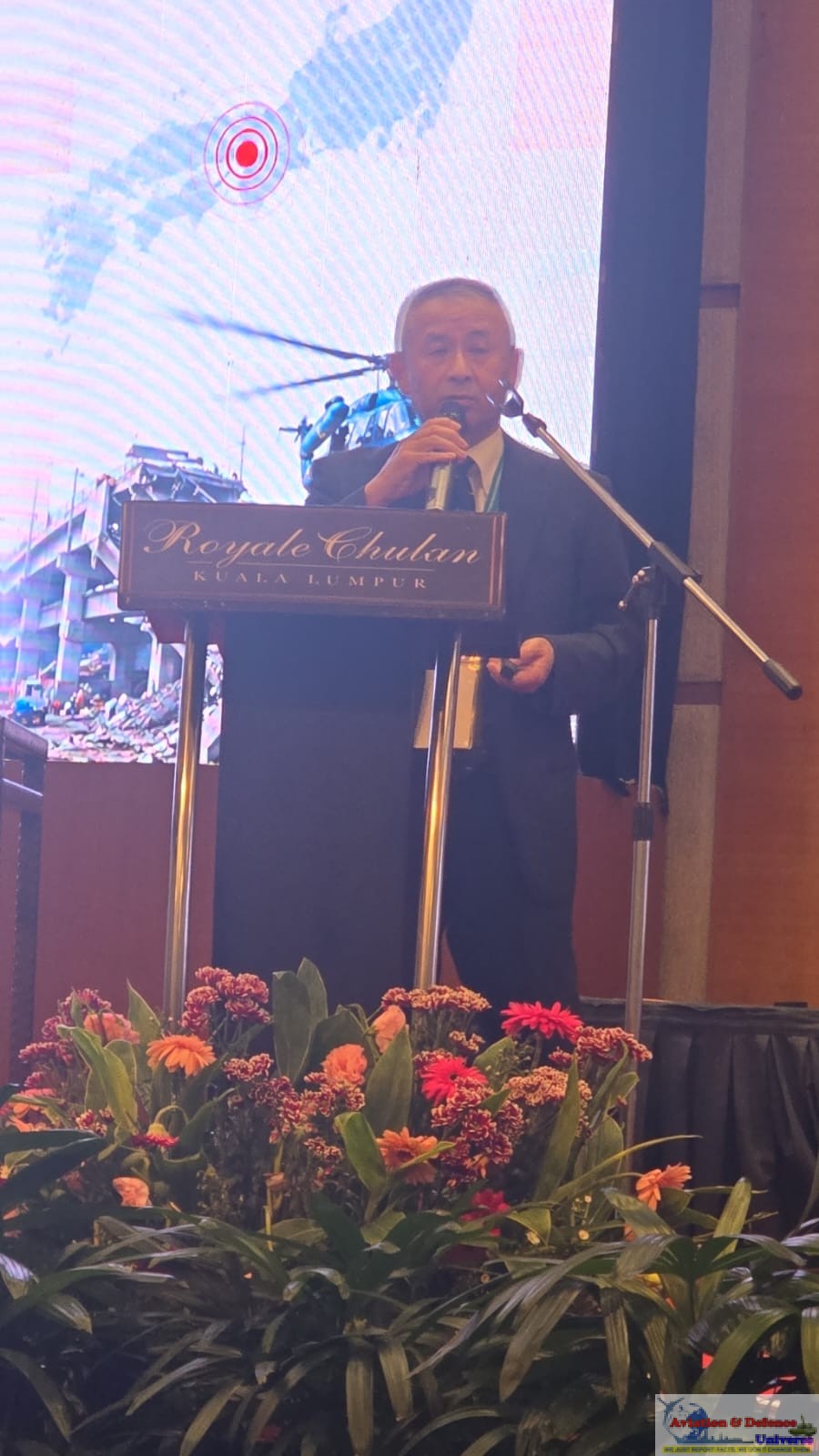 “Temporary shelters are acceptable for one or two nights, but after ten days or two weeks they become a serious problem. Sadly, some survivors lost their lives because of those harsh conditions.” Medical aviation capabilities also evolved. “Medical helicopters normally fly patients from accident sites to hospitals. During this disaster, because local hospitals were overloaded, patients had to be flown to hospitals much farther away. That was the first case of such an operation.” Perhaps equally significant was the emergence of drones. “The drone—a newcomer—was deployed. It was the first case of drone use in that kind of disaster situation.”
The 2024 Noto Peninsula Earthquake reinforced the importance of aviation, satellite communications and unmanned systems. Hiratsuka explained, “Because of geographical characteristics, access to affected areas heavily relied on air.” He added, “Satellite communication was very helpful to keep communication between the command centre and the government. Everybody noticed drones were another option to obtain information when ground troops faced difficult or dangerous situations.”
Summarising three decades of operational evolution, Hiratsuka argued that disaster management itself had fundamentally changed. “The goal has changed from perfect protection to surviving the initial impact and mitigating damage.” He stressed the importance of mission planning. “Mission planning is so important. Review, research, study and planning are all essential.” He also warned that Japan’s future disasters could exceed current capabilities. “The next large-scale disaster may exceed our capability.” Pointing to demographic challenges, he cautioned, “Japan is facing population decline. Pilots and maintenance personnel are becoming very important issues.”
His concluding message centred on preparedness through continuous learning. “Research, study, planning and review train young people to take care of the next challenge. Technology makes activities easier, but logistics, human resources and operational infrastructure remain equally important.”
The Science Behind Search and Rescue: Jamie Stirling Calls for Data-Driven Operations
Transitioning from Japan’s operational evolution in disaster response, moderator Adj. Prof. Nazery Khalid introduced the second speaker , Jamie Stirling, President of SAR-1 Corporation, who is providing training, consulting and national standard programmes in Canada, to speak about the science of search and rescue. You’ve heard about the art part of it, so let’s listen to the scientific part of it.”
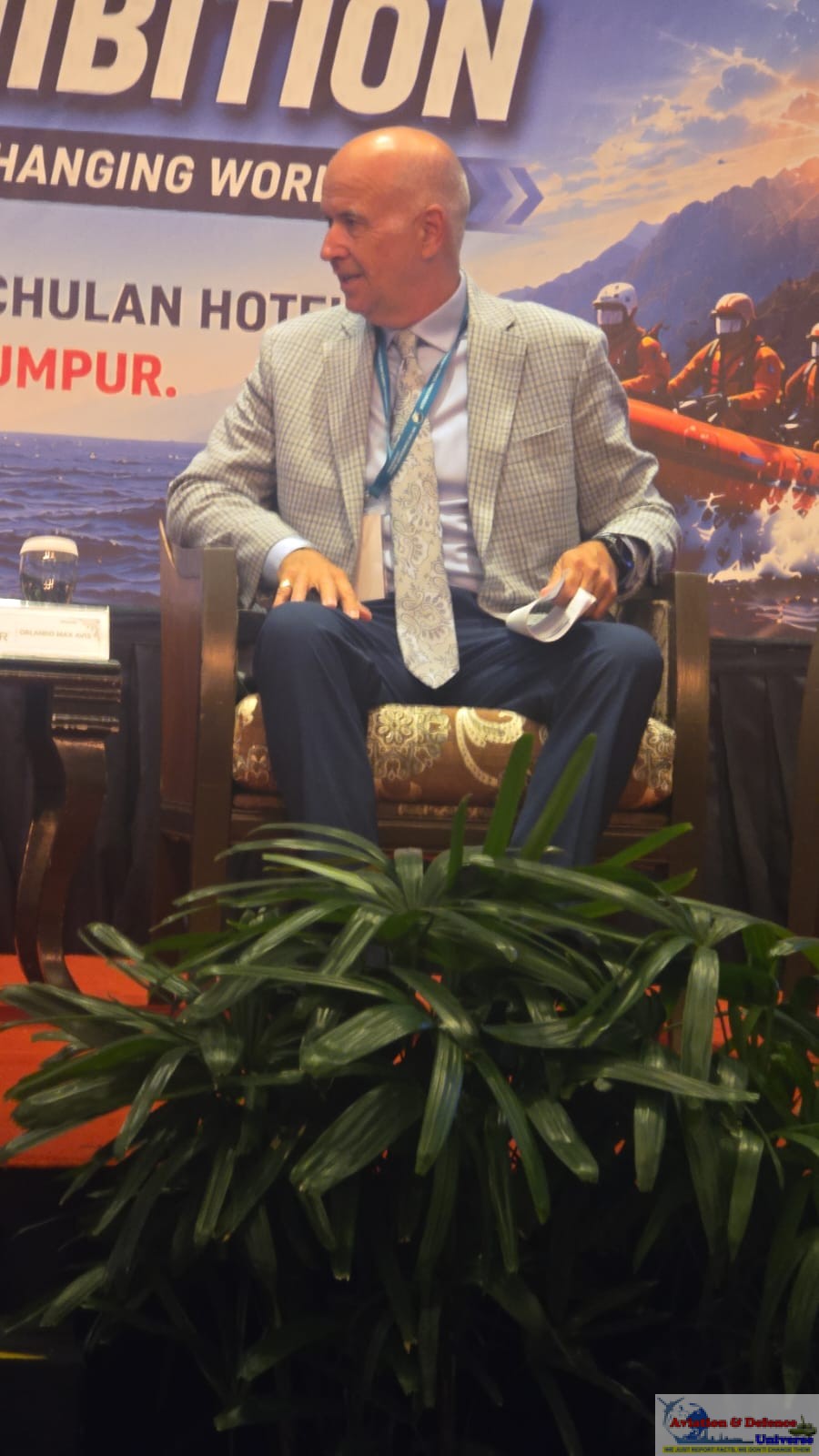 Taking the podium, Jamie Stirling, President of SAR-1 Inc. and a retired officer of the Ontario Provincial Police, shifted the discussion from operational lessons to scientific methodology. His presentation, “The Science of Search and Rescue,” focused on replacing assumptions with evidence, intuition with analysis, and isolated actions with systematic planning. Opening his address, Stirling remarked that search and rescue has often been misunderstood. “People often think search and rescue is about going out and looking for someone. It isn’t. Search and rescue is about making decisions based on evidence, probability and understanding human behaviour.” He explained that every successful rescue begins long before search teams are deployed. “The first search decision is not where to search. The first search decision is whether you understand the problem correctly.”
Science Reduces Uncertainty
Stirling emphasised that search and rescue is fundamentally a science of reducing uncertainty. “Our objective is not simply to search more. Our objective is to search smarter. He explained that modern search planning combines behavioural science, terrain analysis, statistical modelling and operational experience. “Search planning is the process of reducing uncertainty through evidence-based decision making.” Rather than deploying every available team immediately, planners should first analyse available information. “Information is your first rescue resource.” According to Stirling, every piece of information contributes to narrowing the search area. “Every clue changes probability. Every new fact changes your search plan.”
Technology Supports—It Does Not Replace—Decision Making
Addressing the increasing use of technology, Stirling cautioned against assuming that sophisticated equipment alone guarantees success. “Technology doesn’t replace decision-making. Technology supports decision-making.” Whether using drones, satellite imagery or artificial intelligence, responders must first understand what information they are seeking. “If you don’t know the question you’re asking, technology won’t provide the answer.” He stressed that data should always drive operational decisions “Data allows us to manage uncertainty. Without data, we’re simply guessing.”
Human Behaviour Remains Central
While technology has transformed search operations, Stirling reminded delegates that people remain at the heart of every rescue. “Searching is about people, and people don’t always behave logically.” Understanding how lost persons behave significantly improves operational effectiveness. “Behavioural profiling helps us understand where people are likely—not where we think they should be.” He explained that decades of research have identified predictable behavioural patterns among children, elderly persons, hikers and individuals suffering from cognitive impairments. Applying those patterns scientifically enables search managers to allocate scarce resources more efficiently.
Planning Determines Success
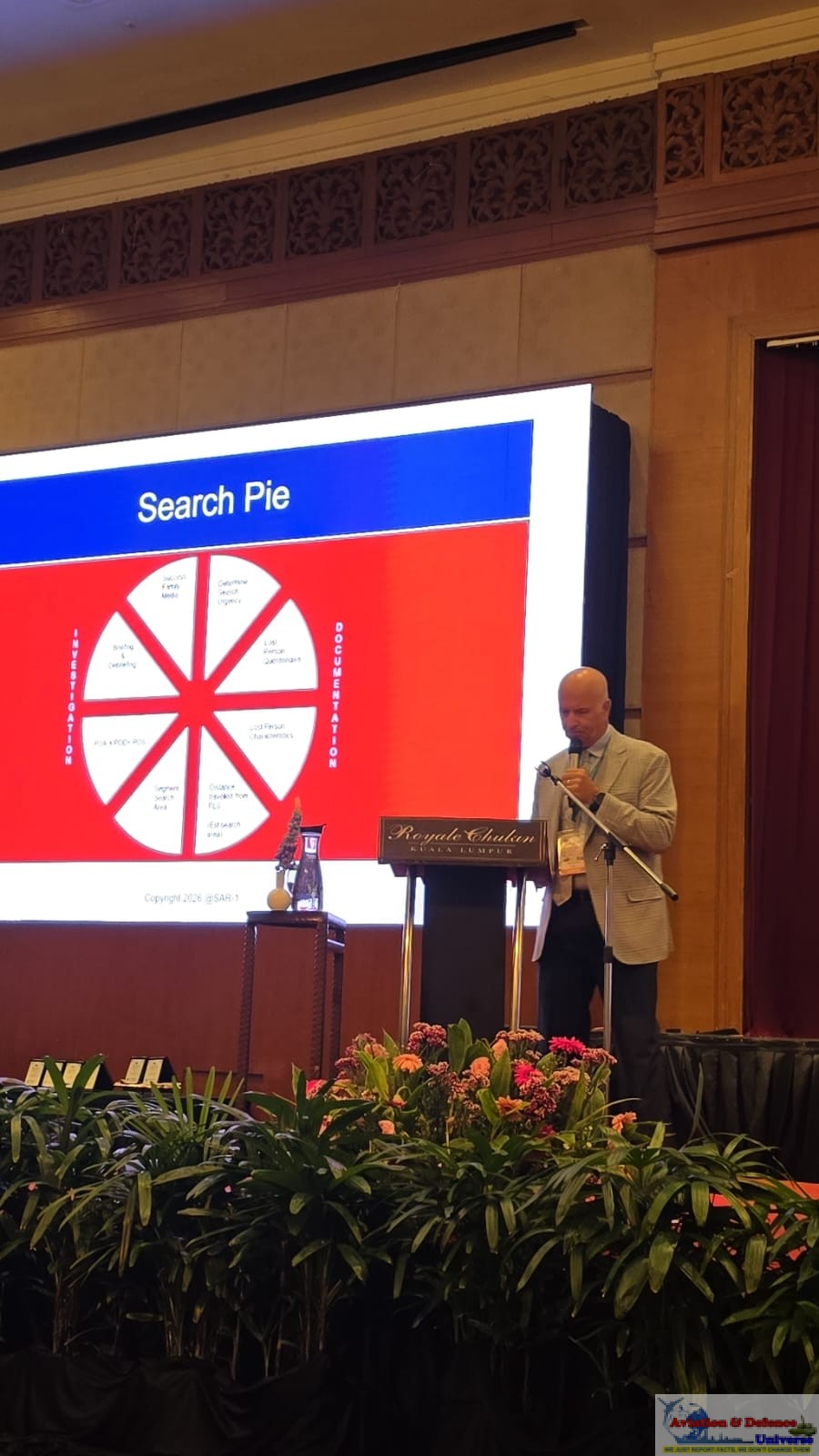 One of Stirling’s strongest messages concerned preparation before disasters occur. “You cannot improvise excellence during a disaster.” He argued that effective search and rescue depends upon rigorous planning, regular exercises and continual evaluation. “Training creates competence. Exercises create confidence. Reviews create improvement.” Every operation, successful or otherwise, should become a learning opportunity. “Every search teaches us something. If we fail to learn from it, then we have wasted the experience.”
Interoperability Saves Lives
Stirling also highlighted the importance of agencies working together seamlessly. “No organisation conducts search and rescue alone.” Police, firefighters, aviation operators, volunteers, medical teams and local communities all contribute to successful outcomes. “The best search organisations are those that share information quickly and make decisions together.”nHe argued that future SAR capability depends upon standardisation, common operating procedures and interoperable communication systems.
Concluding his presentation, Stirling urged delegates never to become complacent. “The science continues to evolve because people continue to learn.” He encouraged every SAR organisation to invest equally in research, training and operational evaluation. “Our responsibility is to ensure that every search is better than the one before.” His closing thought captured the spirit of the session. “Science doesn’t remove uncertainty completely. It simply helps us make better decisions, faster—and better decisions save lives.”
Innovating Humanitarian Mass Rescue Operations
Following Jamie Stirling’s presentation on the science of search and rescue, Orlando Max Avis, SAR Manager at SOS Méditerranée, France, brought delegates to one of the world’s most challenging humanitarian rescue environments—the Mediterranean Sea. His presentation, “Innovations in Humanitarian MROs – Tactical Developments & Application to Other Contexts,” examined how new tactical approaches, crowd management and risk-based decision-making are helping rescue organisations save more lives during mass maritime rescue operations involving overcrowded migrant vessels.
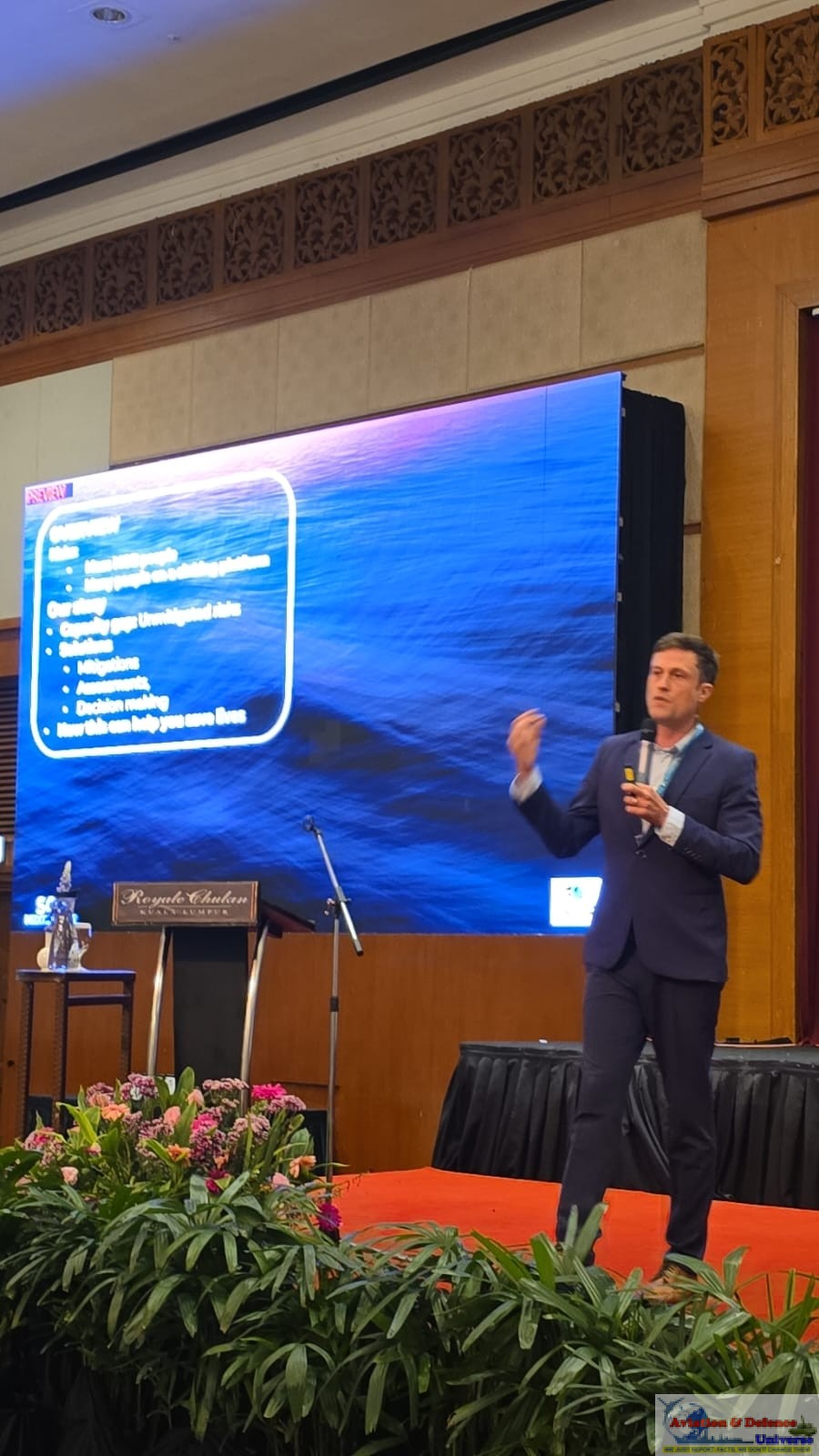
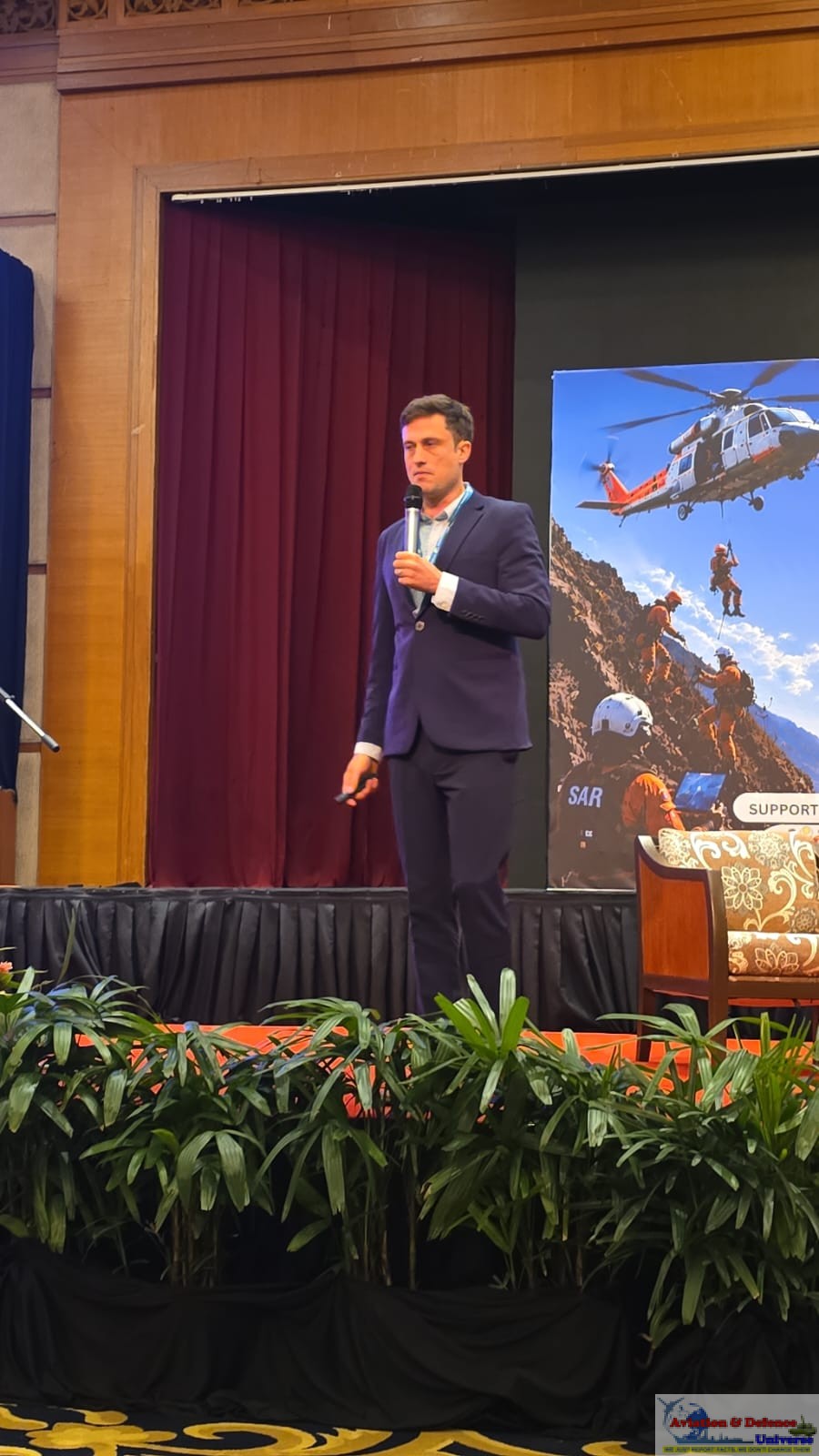 Introducing his presentation, Avis set out three clear objectives. “I’m going to go into a lot of detail here, but if I can leave you with three points, by the end of this presentation, it will have been a success. The first one is I believe that there’s a significant capacity gap in tactical MRO management when it comes to mass MROs… The second point is that we have solutions… And the third thing is that we work very hard on integrating this into other rescue services in different contexts.”
He explained that the presentation would take the audience through SOS Méditerranée’s operational experience, the risks encountered during rescues, the solutions developed over years of field operations and how these lessons could be transferred to other rescue organisations worldwide. “I can’t teach you how to do rescue in 20 minutes, but I just want to give you a sense of the details so you understand that there are possibilities and dreams out there, and hopes—not just hopes—but actions that we can take to save more lives more effectively and bridge these capacity gaps.”
Providing an overview of the organisation’s work, Avis said SOS Méditerranée has become one of the leading humanitarian search and rescue organisations operating in the Mediterranean. “We’ve saved 41,000 to actually 42,000 people since 2016.” He described the wide variety of rescue scenarios encountered. “We respond to a whole bunch of different targets… one fishing trawler had 725 people on board… another inflatable boat carried 192 people. If you do the maths… that’s more than eight tonnes on a very thin bit of plywood in the high seas.”
Understanding the Risks Before the Rescue
Avis argued that effective rescue begins with understanding the risks created by overcrowded vessels. Describing one tragic incident, he said: “Seven and a half tonnes… those eight tonnes of weight… cracked the boat in half.” Inside such vessels, he explained, conditions resemble a stadium crowd disaster.
“You have more than nine people per square metre… forces are transmitted through the crowd… if someone falls down… people have no choice but to stand on them or be crushed themselves.” The consequences can be devastating. “We had one rescue with 21 people dead inside the boat, crushed to death.”
Fuel carried aboard creates another hazard.
 “The fuel starts doing chemical burns… I had a guy… who pulled his trousers down to show me the burn, and his skin came off with his trousers.” Summing up the situation, Avis observed: “That is the type of situation we’re in. Not compatible with human life. One of the presentation’s most striking insights was that poorly executed rescue operations can unintentionally increase danger. Showing footage from an early rescue mission, Avis candidly admitted mistakes made by his own organisation. “We’re demonstrating our mistakes here, so go easy on us.”
He continued, “That wasn’t acceptable to us. That is the status quo. That is a sea captain trained to the current standard of rescue, doing the best they could based on those standards—and it’s not acceptable.”Another phenomenon repeatedly observed was panic triggered by the arrival of rescuers. “Everyone sees that you’re going to help… but actually it’s getting worse initially.” Working with behavioural specialists led to an important realisation. “Panic doesn’t exist without an escape route.” By approaching one side of the vessel, rescuers unintentionally caused everyone to move in the same direction. “I’ve increased the weight… I’ve increased crushing… and I can result in people in the water.”
Turning Victims into Rescue Assets
Avis explained that the organisation fundamentally changed its philosophy. “The only way of managing these rescues effectively… is crowd control.” Rather than treating people solely as victims, rescuers encourage them to become part of the rescue solution. “It’s turning those 120 people into rescue assets instead of the people being rescued.” The primary objective becomes prevention rather than extraction. “Our primary objective initially is prevention… we do that with effective crowd control.” Introducing himself calmly to frightened passengers forms part of that strategy. “Hello, my name is Max… I’m here to help you… I’m not being aggressive, but I am being assertive. I’m showing you that I’m in control of the situation.”
Stabilise First, Rescue Second
 Another innovation developed by SOS Méditerranée is prioritising stabilisation before evacuation. “Stabilisation is not rescue.” Instead, rescuers first seek to make vessels more buoyant and reduce immediate risks. “Our objective here is just to get weight off that sinking platform, get it more buoyant and floating for longer.” Crowd control also reduces crushing. “Once the density is reduced, the risk of crushing goes down.” Dynamic risk assessments guide every decision. “We use risk assessments… to ensure a shared mental model… It also drives mitigation.” Thinking Before Acting. Avis stressed that rescuers must understand not only their equipment but also its consequences. “You need to know your tools.” He illustrated this using life jackets.
“Life jackets get people floating. If I distribute life jackets on a boat where people are being crushed to death… I’m going to make the situation worse because I’m going to decrease the space available.” He added, “We treat the whole boat as the casualty.”
Sharing Knowledge Across the World
Perhaps the most optimistic part of the presentation focused on transferring these lessons globally. “What’s the most exciting part of this work is integrating this into existing systems.” He believes even modest improvements can have dramatic humanitarian impact. “If good quality rescue—even one per cent— applies… we can actually save a tonne of lives.” SOS Méditerranée now works with airports, coast guards and patrol vessel operators to integrate these concepts. “We’re trying to strengthen the toolkit of experts.” Rather than replacing existing procedures, the organisation seeks to enhance them. “We’re not trying to replace anything—we’re trying to integrate them into what exists already.”
Creativity Saves Lives
Drawing on operational experience, Avis emphasised that successful rescue often depends upon adaptability. “Being creative and adaptive in these situations is not just ideal—it’s essential.” He described crews improvising by redistributing life jackets and even turning survivors into rescuers during large-scale incidents. The organisation now combines online learning, tabletop exercises, live drills, evaluations and operational standards to improve rescue capability. His long-term ambition is clear. “My dream isn’t just to do localised training but rather to create standards for each of these areas that experience a high risk of MROs.”
A Call for Global Collaboration
Concluding his address, Avis returned to the three themes with which he began. “I wanted to convince you that there’s unmitigated risks and a capacity gap in MRO… We talked about solutions… assessments, mitigations, crowd control and offloading… we looked at application to other contexts.” His final appeal encapsulated the spirit of the entire plenary. “If there’s large numbers of mass rescue operations with people on sinking platforms in your context, I think that by working together we can rescue twice as many people in half the time—and I think that’s meaningful.”
Plenary Session 4 demonstrated that effective disaster management is no longer defined solely by courage and rapid response, but by preparation, scientific planning, technological innovation and the ability to learn continuously from every crisis. From Japan’s three decades of institutional evolution in earthquake response, to Canada’s evidence-based approach to search planning, and France’s pioneering humanitarian rescue techniques in the Mediterranean, the session highlighted a common truth: saving lives depends on integrating people, technology, logistics and leadership into one coordinated response. While disasters may be inevitable, the experts agreed that their human cost can be dramatically reduced through better planning, stronger partnerships, smarter decision-making and a willingness to innovate. As search and rescue operations become increasingly complex, the future belongs to organisations that remain adaptable, collaborative and committed to transforming hard-















































-A4-Size-(2)_page-0001.jpg)