




























- India Ahead of the Curve in Airport Technology, but Integration Remains the Challenge
- From Check-in to Take-off: Technology Set to Transform Every Airport Touchpoint
- AI, 5G and Seamless Journeys: Airport Modernisation Summit Maps the Future of Aviation
- Connected, Predictive and Secure: Experts Reimagine Next-Generation Airport Operations
By Sangeeta Saxena
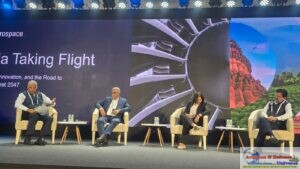
New Delhi. 15 July 2026. Technology may be transforming airports at unprecedented speed, but the real challenge is no longer the availability of innovation—it is making multiple technologies, legacy infrastructure, airlines, airports, regulators and passengers work together as one connected ecosystem. This emerged as the central theme of a high-powered panel discussion on “Role of Technology in Airport Transformation – Discussing Emerging Trends Shaping the Next Gen Airport Operation & Management” on Day One of the 9th Annual Airport Modernization Summit in New Delhi.
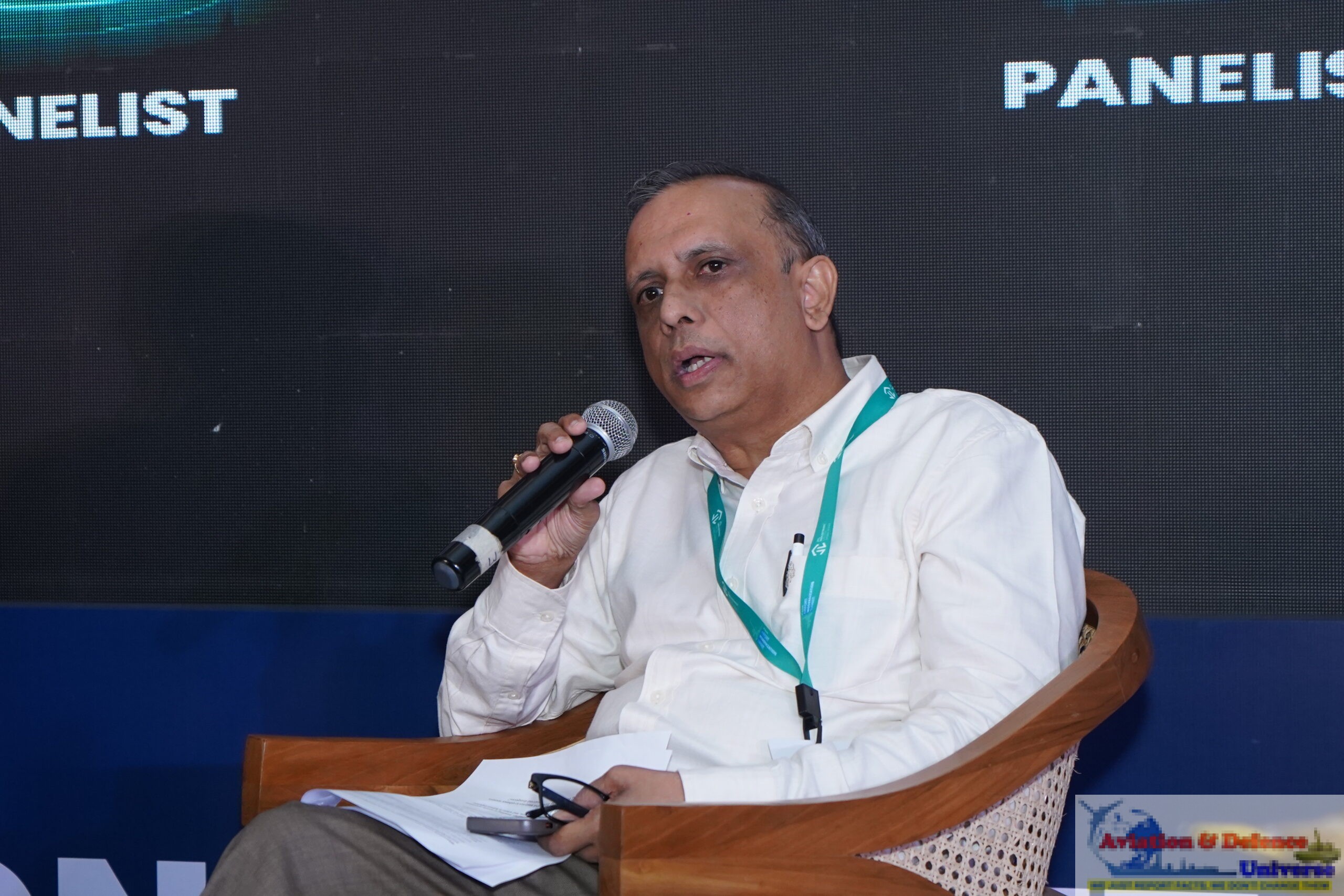 Moderated by Sundar Natarajan, Head – Strategy, Communications & Institutional Relations, Digi Yatra Foundation, the panel brought together Sudhir Bajpai, Head of IP Business Development & Solutioning, Nokia India, Nepal and Bhutan; Goutam Mukherjee, Regional Director, India & Subcontinent, Amadeus; and Manish Kumar, Managing Director, STRATACACHE Asia-Pacific. From AI-powered decision-making and autonomous networks to biometric journeys, self-service baggage processing and the challenge of modernising civil enclaves at defence airports, the discussion explored what it will really take to transform technology promises into seamless, secure and scalable airport operations.
What Problem Are We Really Trying to Solve?
Opening the conversation, Sundar Natarajan cut through the buzzwords surrounding airport technology and posed a deliberately practical question: what is the single biggest operational problem that technology must solve at a functioning airport? He asked the panel to look beyond presentations and focus on, “Not from a PowerPoint presentation, but from genuinely helping passengers in live airport operations.” The question went to the heart of airport modernisation: technology is meaningful only when it reduces friction, improves efficiency and makes the passenger journey easier.
Airports Are Among the World’s Most Complex Ecosystems
Responding first, Goutam Mukherjee described airports as extraordinarily complex environments where technologies of varying maturity must coexist. Modern aircraft themselves, he pointed out, have effectively become airborne data centres. “When an A350 or an A380 flies, today we call them flying data centres because they have so much data.” When these aircraft land, they connect with an equally complex network of airport, airline and operational systems. Having worked with airport IT since 2008, Mukherjee said he had  witnessed an extraordinary transformation in India. “Indian airports are, I think, way ahead of other airports globally in terms of IT and technology intervention.” Yet their complexity creates a unique challenge. An airport cannot modernise in isolation because it must accommodate airlines, ground handlers and other stakeholders operating at different levels of technological maturity. “When an airport comes with implementing new technology, they have to take everyone because you cannot refuse an airline or a ground handler because they are not up to date with the technology.” Airport CEOs and CIOs therefore face multiple simultaneous expectations: improving operational efficiency, enabling passenger connectivity, satisfying airlines and reducing friction throughout the journey.
The Passenger Journey Starts Long Before the Airport
Mukherjee explained that technology companies such as Amadeus increasingly view travel as one continuous journey rather than a collection of isolated transactions. The passenger’s digital interaction begins months before departure, when they first search for a destination or flight. But the physical journey truly begins when they arrive at the airport. “The airport has to accept that passenger seamlessly, process the passenger’s data as well as the baggage, and ensure that he is in the aircraft in the shortest time.”
The objective, he said, is to connect every touchpoint and allow information—including data required by government agencies—to flow securely and seamlessly. But no single company can accomplish this alone. “The entire ecosystem has to come and work in a very collaborative manner. And that is the challenge today.”
Without the Network, There is No Smart Airport
Moving from passenger experience to the infrastructure that enables it, Sudhir Bajpai stressed that modern airport applications can function only when supported by highly reliable connectivity. Whether airports deploy IoT sensors, baggage systems, passenger applications or AI platforms, all these technologies continuously generate and exchange enormous volumes of data. His message was unequivocal, “Without technology, you cannot improve efficiency.” But beneath that technology sits an often-invisible foundation. “What we are seeing is that the reliable network is very, very important.”
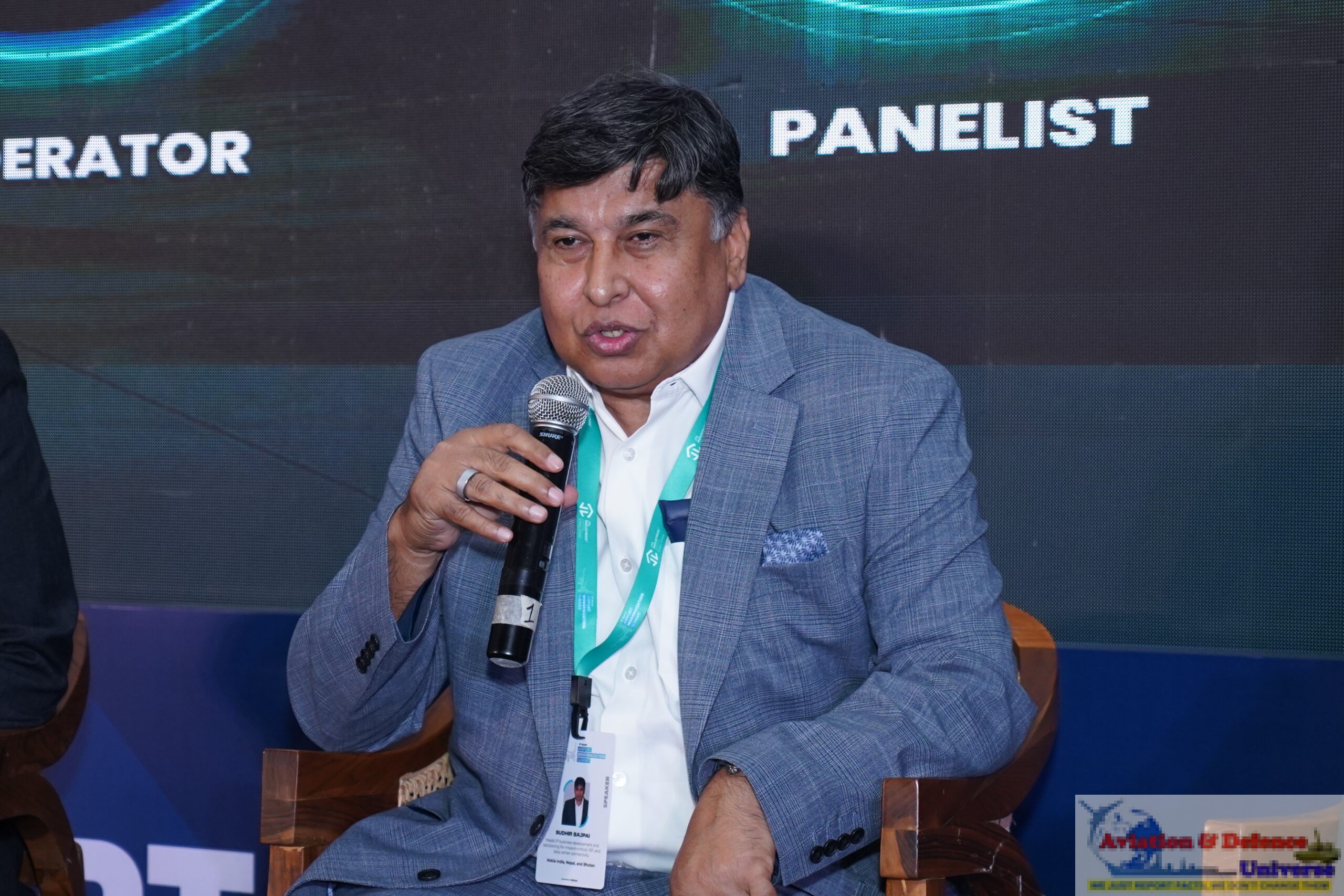 Bajpai explained that airports increasingly need to converge IT and operational technology while supporting systems ranging from Wi-Fi and ticketing to IoT-enabled operational platforms. The next evolution, he argued, lies in moving towards networks capable of identifying problems before they disrupt operations. “Globally, people are building autonomous networks, self-healing networks.” Instead of waiting for congestion to develop and then deploying personnel to manage it, intelligent systems should anticipate the problem. “Your network should tell you, your application should tell you that there is going to be a long queue, to solve the problem in a proactive manner.” The transition, therefore, is from reactive airport management to predictive operations.
Stop Working in Silos
For Manish Kumar, the greatest obstacle to genuine airport modernisation is fragmentation. He argued that the airport of the future will not be defined simply by who constructs the biggest terminal, but by who creates the most intelligent and integrated ecosystem. The solution, he said, begins with a fundamental change: “Stop working in silos and be a connected system.” Today, functions such as security, baggage and passenger information often operate independently. Kumar argued that these systems must begin communicating with each other. Once integrated, AI could move from analysing information to taking operational decisions. He illustrated, “AI can tell and make decisions based on the traffic—open two extra gates. In 30 minutes, there is going to be excess traffic at Gate 18 or Terminal 3.” For him, true airport modernisation means creating an uninterrupted digital journey. “It has to be a journey which is connected from your entrance at the airport all the way to the boarding gate.” Only when all these elements are connected, he argued, can airports genuinely claim to have been modernised.
Technology Exists—Adoption Remains the Bottleneck
Natarajan challenged the panel on a persistent problem: airports worldwide frequently showcase individual success stories, but relatively few have managed to orchestrate all their technologies into one unified passenger experience.
 Kumar agreed that the problem is no longer a shortage of technology. “We bring technology. We have all the technology. Technologies are there. We need to see how quickly we can adopt it.” He pointed to procurement and implementation timelines as major constraints, noting that even a relatively straightforward technology solution can take 12 to 16 months to move through the process. For airports to create what he called a seamless, connected “nervous system”, the acquisition and adoption of technology must become faster. “We are talking digital; we need to go beyond. And we need to execute the technology.”
DigiYatra Shows Collaboration Can Work
Mukherjee offered a somewhat more optimistic assessment, arguing that India’s aviation ecosystem has already demonstrated its ability to bring complex stakeholders together. He cited DigiYatra as a powerful example. “DigiYatra would not have been possible if airlines had resisted it. “Airports made significant investments in the infrastructure needed to enable the platform, while airlines, government agencies and technology partners collectively helped create the ecosystem. For Mukherjee, the lesson was clear: technology adoption accelerates when passengers receive tangible value and greater control over their journeys. “When there is a value add, when the passengers get to control their journey in their hand, then I think this happens.” He also highlighted the growing enthusiasm across airlines, airports, hotels and online travel platforms to collectively solve industry challenges, noting that India’s enormous aviation growth will be impossible to sustain without such collaboration.
India Moves Towards Seamless Check-in and Baggage Processing
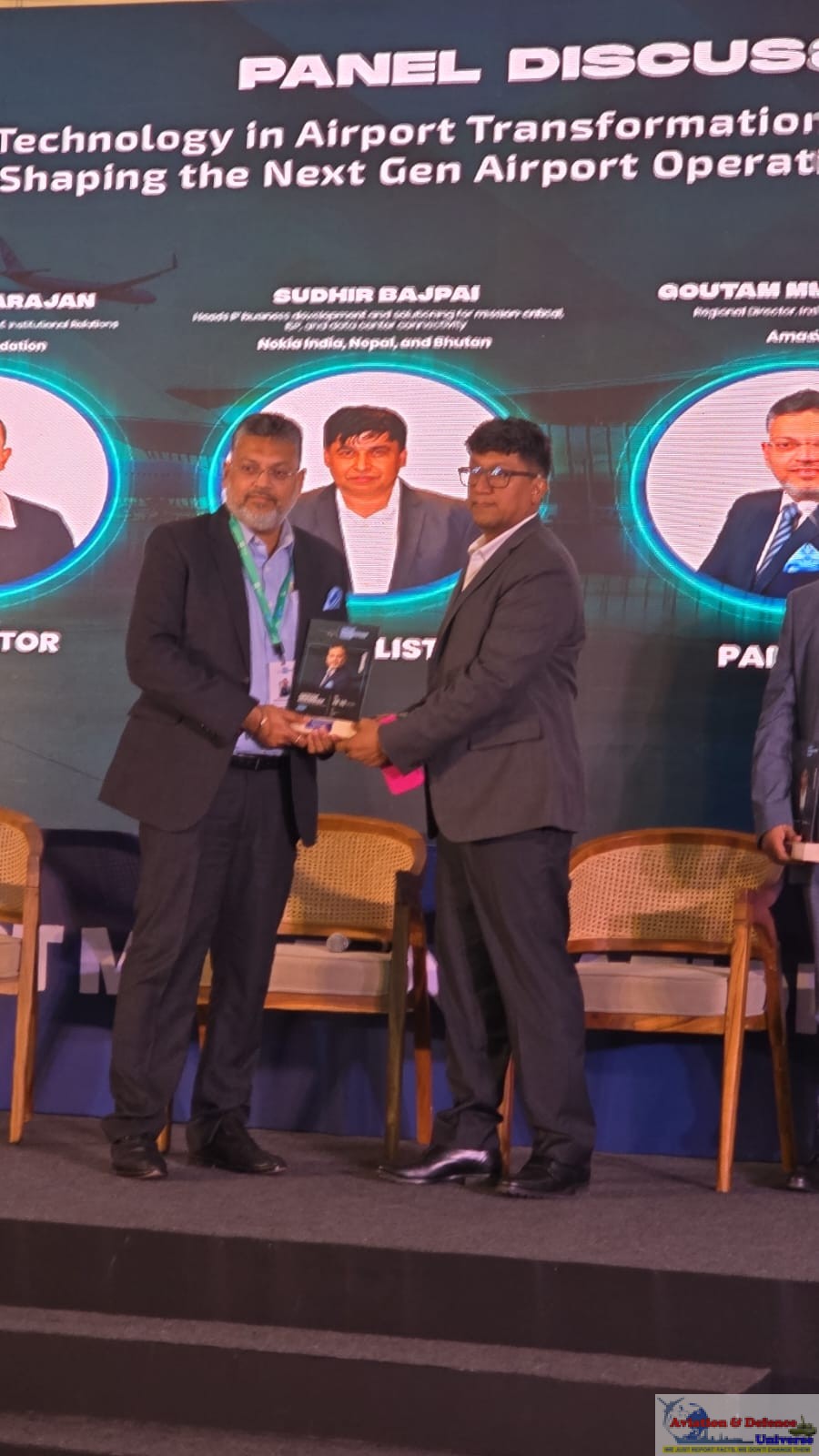 Mukherjee also placed India’s technological progress within the broader evolution from Airport 1.0 towards increasingly connected and intelligent airport models. While artificial intelligence and machine learning have existed conceptually for decades, he noted that the industry is still only beginning to unlock their full potential. Indian airports, however, are progressing rapidly in passenger processing. He pointed to the growing adoption of self-service baggage systems, observing that Mumbai’s Terminal 2 was moving towards deploying self-bag-drop capabilities across check-in positions involving more than 50 airlines. The transformation cannot happen overnight, he cautioned, “It’s a two-year journey… so it cannot happen overnight. But we are in the journey.” With seamless check-in, self-bag-drop and biometric passenger processing increasingly coming together, he argued that Indian airports are steadily advancing along the airport technology maturity curve.
Innovation Must Coexist with Regulation
The discussion also examined one of aviation technology’s most persistent dilemmas—the relationship between innovation and regulation. Natarajan noted that innovation often moves faster than regulatory frameworks, while airports operate under multiple layers of oversight covering safety, security and economics. For new technologies to scale, the panel agreed, they must meet extremely demanding security and reliability requirements. Mukherjee pointed to the progression of DigiYatra from domestic to international travel as an example of why some innovations require time. “The challenges which we have to cross, those barriers—it takes time. And we have to make it a bulletproof system.” The challenge is therefore to innovate quickly without compromising the security standards upon which aviation depends.
5G and the Invisible Infrastructure Behind AI
Returning to the technological foundation of next-generation airports, Bajpai stressed that network infrastructure is often noticed only when it fails. “If the internet is down or there is an electricity failure, you are there in the news. So the invisible piece has to be taken care of with a lot of importance.” Future airport networks, he said, must simultaneously deliver security, speed, reliability and low latency. Private wireless connectivity, IoT sensors and robust IP backbones will therefore be essential if airports are to deploy AI-driven applications at scale. “The 5G technology, sensors and an IP/MPLS backbone are obviously going to play a very important role in this problem for AI.”
The Next Challenge: Making Old and New Technology Work Together
Asked which emerging technologies would have the greatest impact on airport operations, Kumar identified a less glamorous but critically important challenge—interoperability. “The biggest challenge will be how to get the old technology and new technology to work together.”Airports cannot simply discard every legacy system each time a new innovation emerges. Many existing technologies remain robust and operationally essential.The challenge for airport CTOs, therefore, will be finding the right balance. “The world is moving towards AI. But there are some technologies which are robust. How do you get the new AI technology to work with the existing system?” For Kumar, solving this compatibility puzzle may be one of the defining technology challenges facing airport modernisation.
One Country, Many Airports, Many Realities
 Summing up the formal discussion, Natarajan identified heterogeneity as the common thread running through the conversation. India’s airports differ enormously in size, infrastructure, technological maturity, passenger profile and operational environment. The country also has extraordinary linguistic and geographic diversity, while around 80 per cent of its aviation traffic is domestic. There can therefore be no simplistic one-size-fits-all blueprint for airport transformation. Technology must be scalable and adaptable enough to serve everything from the country’s largest metropolitan hubs to smaller regional airports.
The discussion took an important turn during the audience member asked the panel how difficult it is to modernise airports where commercial operations coexist with military aviation, citing examples such as Pune and Agra. The panel acknowledged that India already has extensive experience operating civil enclaves within defence airports.
Natarajan noted that operational responsibilities between civilian and defence authorities are generally clearly demarcated, with civil agencies typically managing passenger-facing infrastructure while defence authorities may retain responsibility for areas including air traffic control and navigation. “The responsibilities of the defence and the civil establishment are also clearly demarcated… those playbooks are really well written. It is just a question of implementing it.” From a network perspective, Bajpai acknowledged that modernising legacy infrastructure is never simple but stressed that carefully planned migration can minimise disruption. “Migration is never going to be easy in any way.” However, he added, “We always try to plan the migration strategy which is zero downtime. That means all the legacy applications are working at the same time you are upgrading to a new standard.”
Kumar agreed that technological modernisation is fundamentally an issue of adaptability. “If it can be done at a commercial airport, there is no reason why it cannot be done at a military airport.” The real question, he suggested, is how readily regulatory structures allow new technologies to be adopted within sensitive operating environments. The panel ultimately viewed defence aviation not as an obstacle to technological modernisation but as an ecosystem with a long history of driving advanced technological standards and operational innovation.
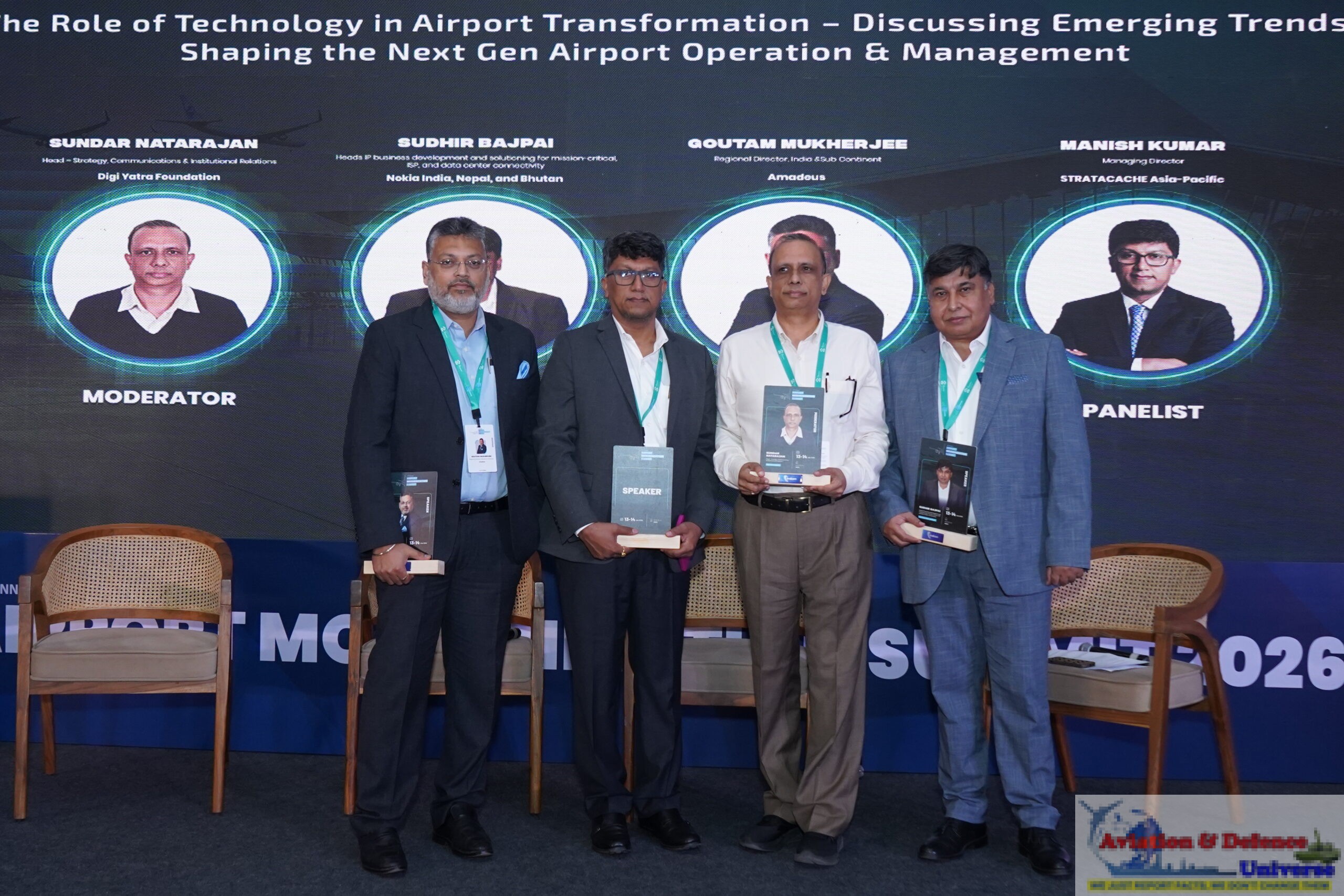 The Day One panel at the 9th Annual Airport Modernization Summit made it clear that the next revolution in airport technology will not come from any single breakthrough. AI without reliable networks cannot function. Biometrics without stakeholder collaboration cannot scale. Intelligent applications cannot deliver their full potential while data remains trapped in organisational silos, and new technology cannot simply replace every legacy system overnight.
The airport of tomorrow will therefore be defined by orchestration—the ability to connect airlines, airports, security, baggage, networks, passenger information, AI and legacy infrastructure into one resilient digital ecosystem. India’s airports have already demonstrated a willingness to embrace technologies such as DigiYatra, self-service processing and increasingly intelligent operational platforms. The next challenge is to connect these individual successes at scale. If that can be achieved, technology will cease to be something passengers consciously encounter at every checkpoint. Instead, it will become the invisible force that predicts congestion, removes friction, protects data and quietly carries every traveller from the terminal entrance to the aircraft door.




















































































-A4-Size-(2)_page-0001.jpg)