













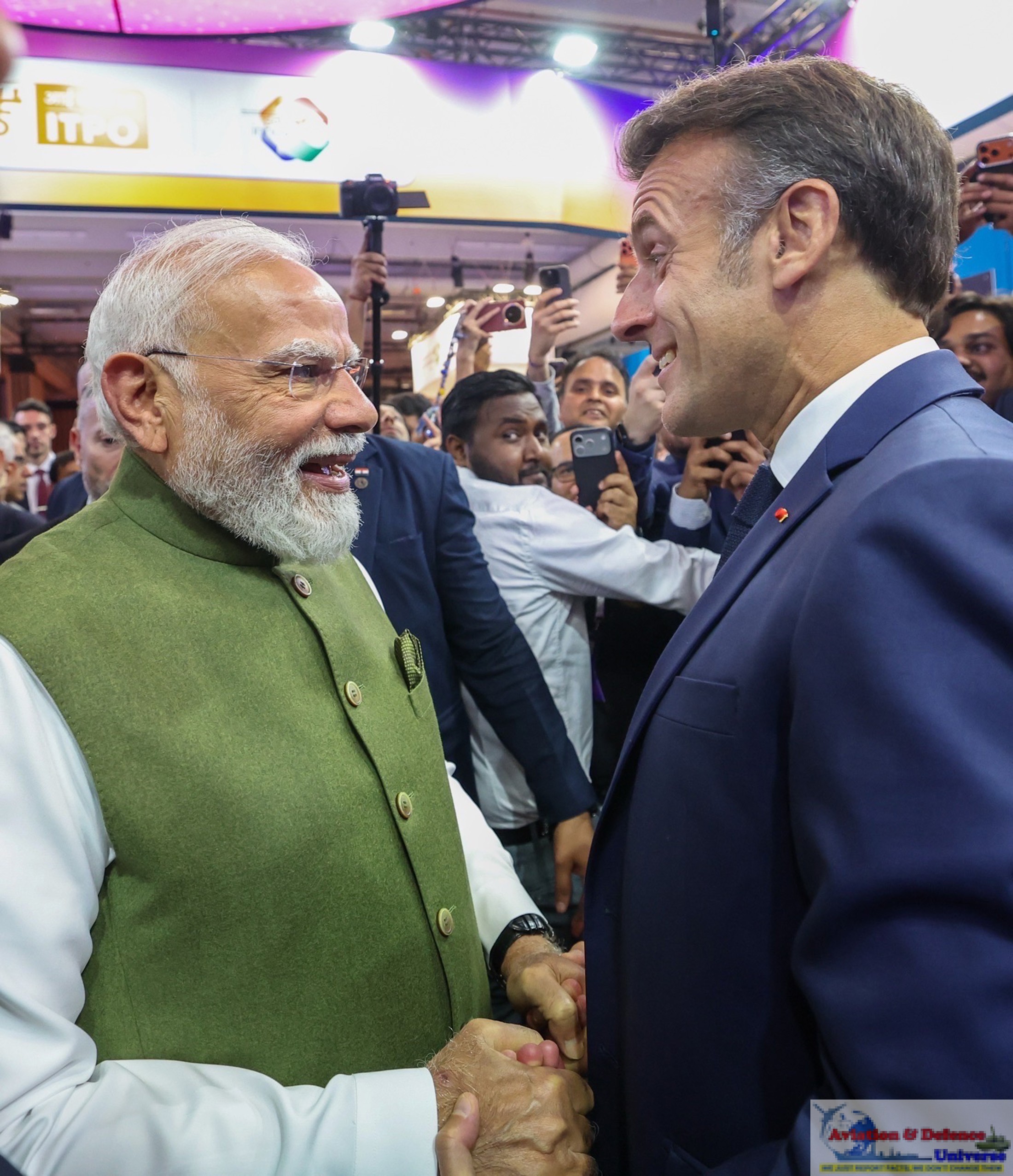
- Nice, Evian, Paris: Three Cities, One Strategic Message
- India and France Translate Strategic Trust into Strategic Outcomes
- Strategic Alliance to Strategic Partnership to Strategic Delivery Examined
By Theertha Panachoor
 Hyderabad. 22 June 2026. The easiest thing to miss about India’s relationship with France is how little it needs a summit to function. Over the twelve months before Prime Minister Modi landed in Nice on 13 June 2026, the two countries had held their 38th Strategic Dialogue, their sixth Annual Defence Dialogue, a Maritime Cooperation Dialogue, a Military Sub-Committee meeting, and exercises across army, navy and air force. The relationship had already been elevated to a “Special Global Strategic Partnership” in Mumbai in February. A visit was not needed to prove the partnership was active. What it was needed for was something more specific: to demonstrate that the political ambition attached to February’s upgrade could translate into signed agreements, measurable targets and institutions with calendars. Over five days in Nice, Evian and Paris, bilateral talks with Macron at Villa Kerylos, the G7 summit, and VivaTech, where India participated as the designated AI Country Partner, it did.
Some bilateral partnerships are defined by scale, others by dependence. The India-France relationship has instead been characterised by consistency. Over nearly three decades, cooperation in defence, civil nuclear energy and space has continued across changes of government in both countries and through shifts in the international system. The June visit therefore carried a more specific purpose: determining whether the political ambitions announced in February could be translated into institutions, programmes and long-term cooperation.
The June Agenda
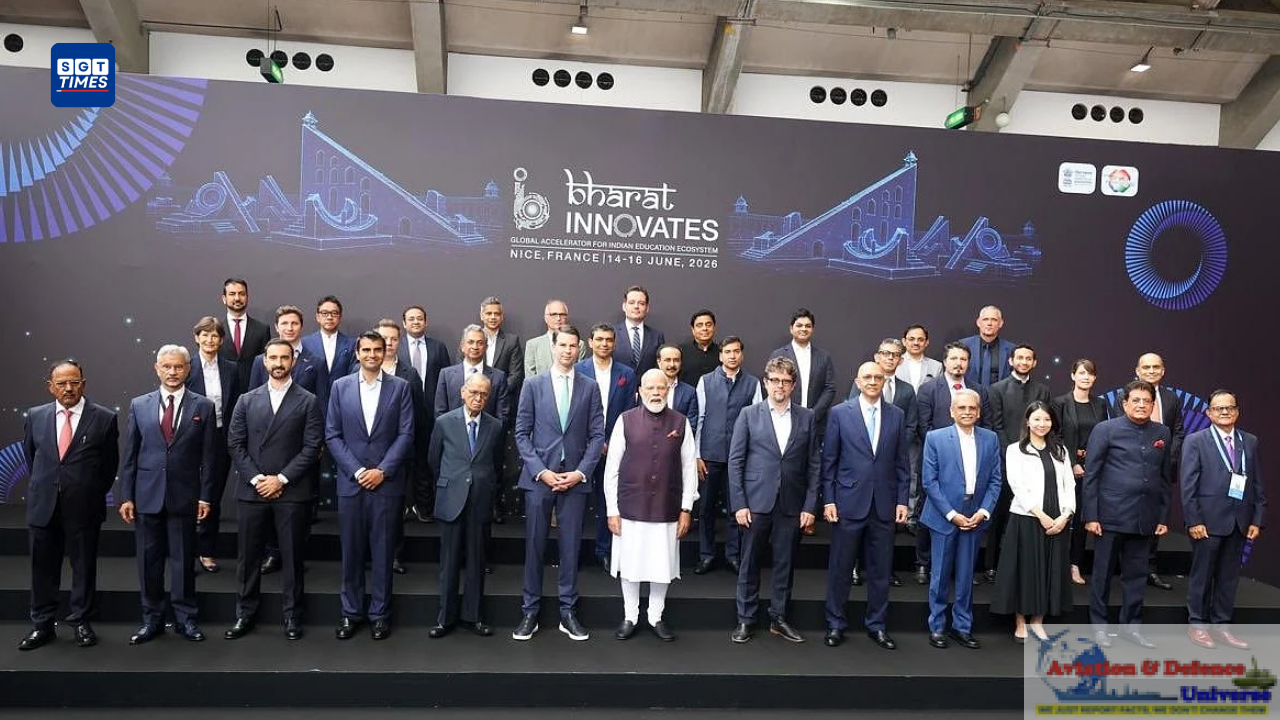
The itinerary itself reflected the ambitions announced earlier in the year. Modi and Macron met at Villa Kerylos in Nice on 14 June and jointly inaugurated Bharat Innovates 2026 at the Palais des Expositions 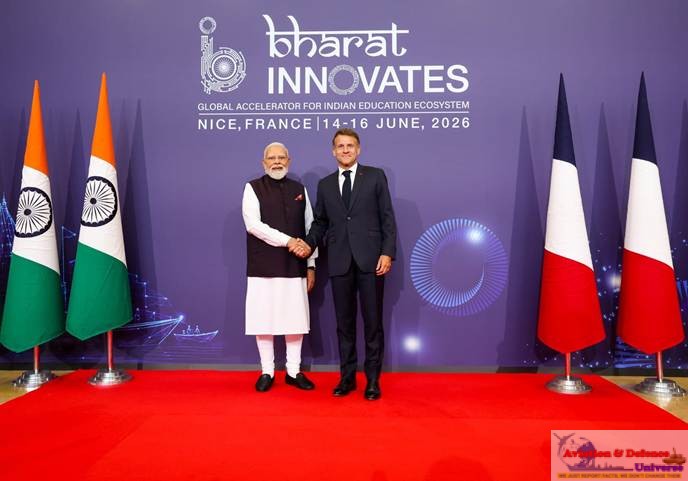 before Prime Minister Modi travelled to Evian for the G7 Summit and subsequently to Paris for VivaTech. Each engagement addressed a different dimension of the relationship: Nice dealt with bilateral and strategic issues, Bharat Innovates with technology ecosystems and investment, the G7 with wider questions of global governance and VivaTech with artificial intelligence and emerging technologies, where India participated as the officially designated AI Country Partner and Modi presented India’s MANAV framework.
What emerged from this sequence was a diplomatic agenda unusually broad in its scope. Defence cooperation, deep technology, artificial intelligence, trade, civil nuclear energy and space were discussed not as separate topics but as interconnected areas of cooperation. That breadth reflected a deliberate effort, visible in both the February summit and the June meetings, to treat the partnership as a single integrated agenda rather than a set of parallel tracks that happen to share a flag.
Beyond Procurement
The joint statement issued after the bilateral talks in Nice emphasised co-development and co-production of advanced technologies and defence platforms, an emphasis that marks a shift in the relationship. The Rafale acquisition, which has defined bilateral defence cooperation for much of the past decade, remained fundamentally a procurement programme. The joint venture between Bharat Electronics Limited (BEL) and Safran announced in February 2026 to produce HAMMER precision-guided munitions in India represents a different stage of engagement, while Safran’s LEAP engine MRO facility, the first time any global engine OEM has established deep-level servicing operations in India, points towards a longer-term industrial presence. The direction of travel is from acquisition to production, from delivery to maintenance, from platforms to the industrial ecosystems that sustain them. The Nice summit also produced a General Security Agreement on the Exchange and Protection of Classified Information, a significant milestone that enables deeper operational cooperation across defence and intelligence domains.
France occupies a distinctive position among India’s defence partners because it combines technological capability with a willingness to invest in industrial partnerships. What emerged from Modi’s latest visit, therefore, matters less for the possibility of new contracts and more for what it suggests about the direction of cooperation. Future projects will depend on manufacturing capacity, supply chains, maintenance ecosystems and research partnerships.
Innovation Enters the Partnership
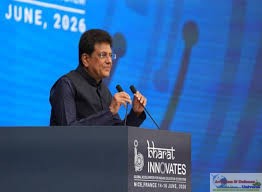
Bharat Innovates 2026 offered perhaps the clearest indication of how the relationship is evolving. The first overseas edition of India’s flagship deep-tech showcase brought together more than 120 Indian deep-tech startups and.more than 20 Institutes of Excellence, among them IITs, IISc and other premier institutions, in Nice from 14-16 June, drawing more than 350 investors and venture capitalists from around the world. The objective was not to display finished technologies but to create opportunities for validation, investment, manufacturing partnerships and market access in a European setting. In doing so, the event placed innovation and technology entrepreneurship within the centre of the bilateral agenda rather than at its margins.
The emphasis was notable because traditional strategic partnerships often revolve around established industries and finished products. Bharat Innovates focused instead on technologies still moving through development and commercialisation. The event brought together startups, innovators, venture capital funds and academic institutions from India, France and other countries, with sectors key to India-France bilateral relations such as energy, smart cities and mobility, space, and health.
These outcomes matter less for their number than for what they reveal about the direction of the relationship. India and France are beginning to cooperate earlier in the innovation cycle, before technologies reach the stage of procurement or commercial maturity. Research partnerships, investment networks and university collaborations are becoming part of the bilateral relationship alongside defence and strategic cooperation. That shift helps explain why Bharat Innovates occupied such a prominent place in the June meetings. The event reflected a growing effort to connect research, capital and industrial capability across both countries.
Institutions and Timelines
Several of the June outcomes were less visible than Bharat Innovates or the bilateral announcements, but they may prove more consequential over time. India and France agreed to set up a High-level Mechanism to double bilateral trade within five years, giving the economic relationship a measurable objective rather than a general aspiration. The two sides also adopted an “Innovation Roadmap 2030” to give the partnership a long-term direction, intended to guide cooperation in technology, academic mobility and industrial collaboration over the remainder of the decade. Unlike summit declarations, these initiatives introduce deadlines, institutions and points against which progress can be assessed.
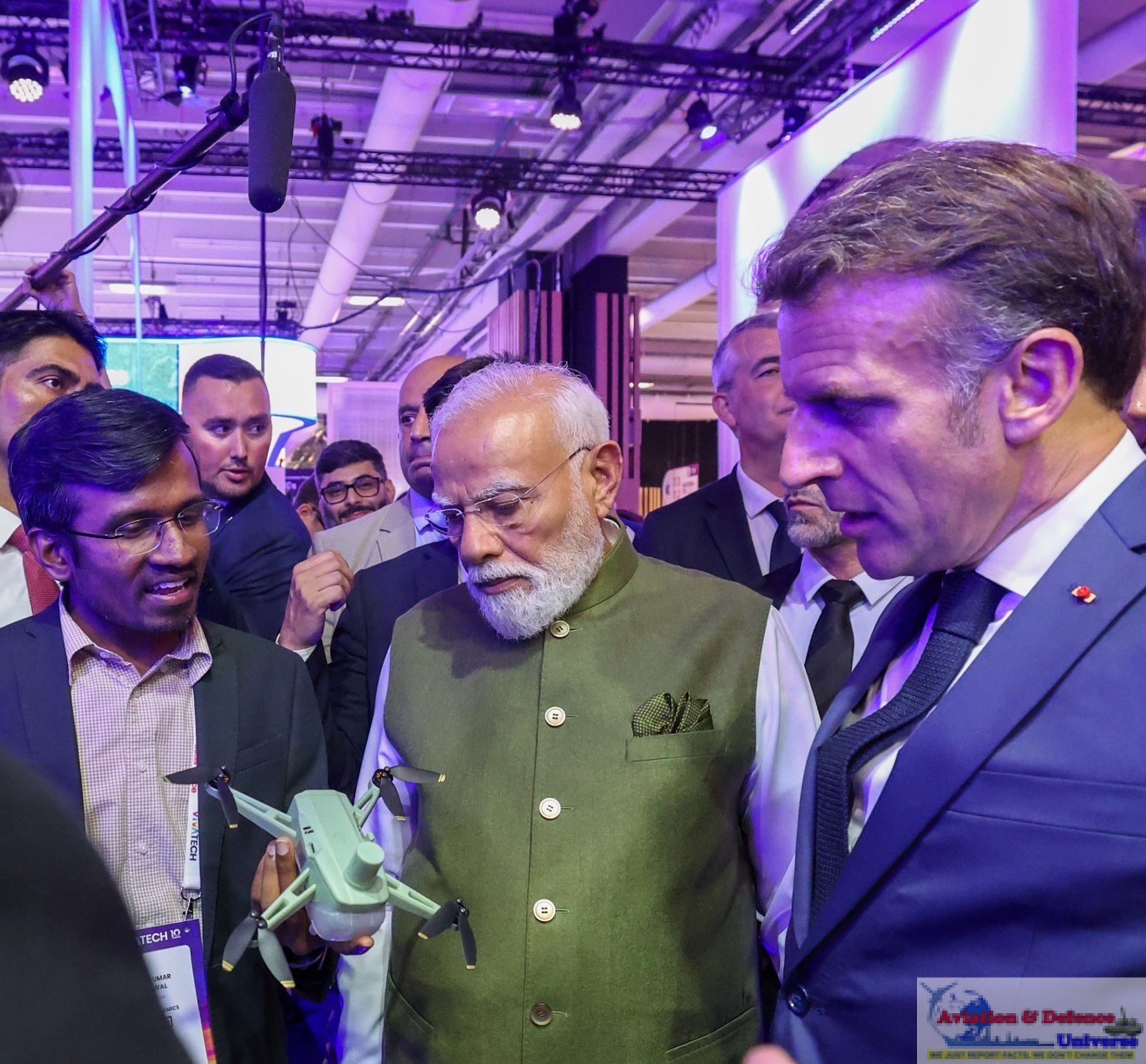
The same approach appeared in other sectors. Space cooperation expanded into areas such as human spaceflight and space situational awareness, formalised through a new ISRO-CNES Letter of Intent on microgravity research and human space exploration, while both leaders noted the rich legacy of cooperation in the space sector and discussed ways to expand private sector collaboration in space. In civil nuclear energy, they noted that India’s SHANTI Act creates new opportunities for collaboration, including on small and advanced modular reactors. The SHANTI Act, 2025, replaced the Atomic Energy Act, 1962 and the Civil Liability for Nuclear Damage Act, 2010, and enabled limited private participation in the nuclear sector. Jaitapur remains unresolved, but the discussion has become more focused on the regulatory and commercial conditions needed for progress. Both leaders appreciated the continued expansion of UPI in France, as well as the signing of 19 agreements among institutions in the innovation ecosystems of both countries.
These developments do not guarantee implementation, but they do make implementation easier to measure. Trade now has a target, innovation, a timeline and several sectors with a clearer set of priorities. That may ultimately prove more important than the announcements themselves. Strategic partnerships often struggle not because they lack ambition, but because they lack mechanisms capable of carrying that ambition beyond the summit.
What Comes NextThe June visit did not redefine the India-France relationship. The foundations have been built over nearly three decades and were reinforced by the Horizon 2047 Roadmap and the Special Global Strategic Partnership announced in February. What it did was to provide a clearer sense of how both governments intend to organise cooperation across defence, technology, innovation, trade and industrial development.
 What happens next will depend on execution. The trade mechanism must become operational. The Innovation Roadmap 2030 must influence policy decisions and investment choices. Bharat Innovates will be judged by whether the partnerships announced in Nice remain active several years from now. In civil nuclear energy, the reference to India’s SHANTI Act suggests renewed interest in areas such as small and advanced modular reactors, while Jaitapur remains the largest unresolved project in the relationship.
India and France today possess a level of political trust, industrial cooperation and institutional continuity that few of India’s strategic partnerships can match. Those advantages now have a deadline attached to them: five years to double trade, a decade-long Innovation Roadmap, a classified information agreement in force, and a SHANTI Act that has opened the nuclear conversation in ways it was not open before. The meetings in Nice, Evian and Paris did not remake a relationship. They gave one that was already running a more precise set of things to run towards. Whether that precision survives contact with the budgets, elections and competing priorities of the next five years is the only question that will matter when someone sits down to write the next version of this story.


































































-A4-Size-(2)_page-0001.jpg)