






























- From Cloud to Command: Sovereign Data Centres as India’s Strategic Imperative
- Data, Defence and Digital Sovereignty: Experts Chart India’s Strategic Roadmap
- Winning Tomorrow’s Wars Begins with Owning Today’s Data
By Sangeeta Saxena
New Delhi. 11 July 2026. For decades, strategic infrastructure meant highways, ports, airfields and power grids. Today, a new form of infrastructure is quietly becoming just as critical to national security—the data centre. As artificial intelligence, cloud computing, satellite imagery, quantum technologies and digital warfare reshape the character of conflict, the ability to generate, process, store and secure data within sovereign boundaries is emerging as one of the defining pillars of national power.
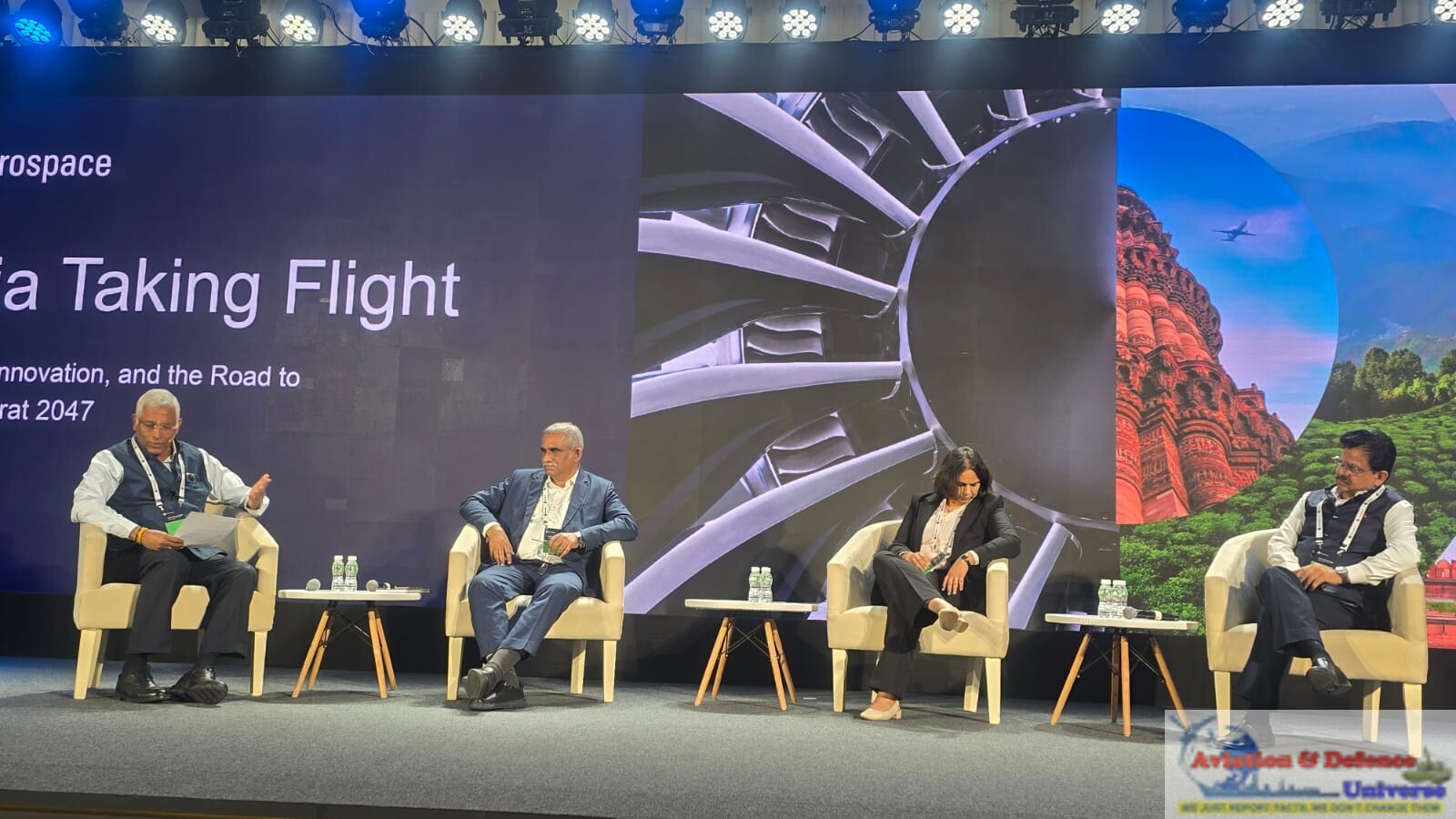
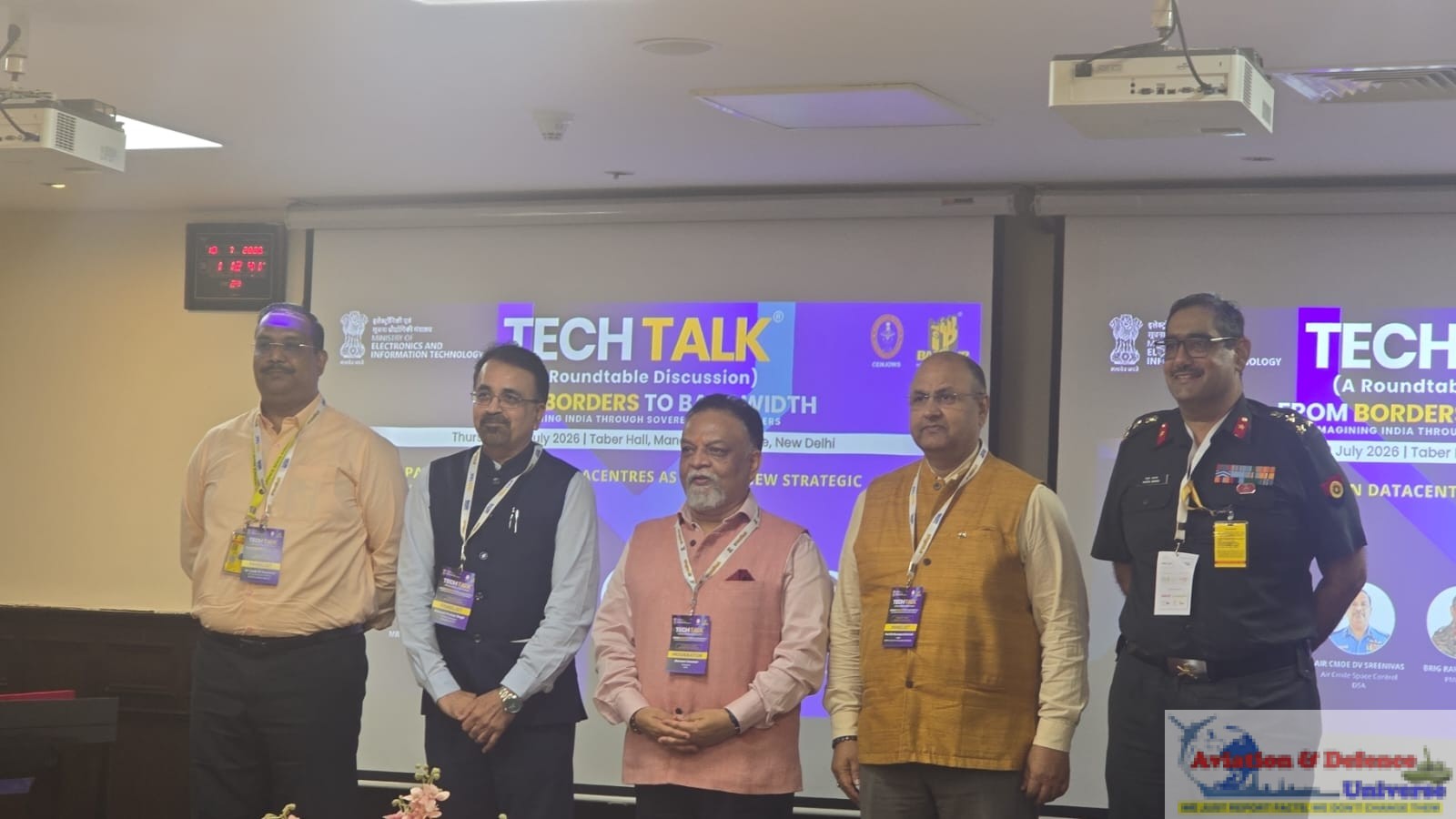
 This shift formed the centrepiece of an engrossing roundtable discussion on “Sovereign Data Centres as India’s New Strategic Infrastructure,” organised by CENJOWS and IP Bazaar, where senior military leaders, space scientists, technology entrepreneurs and digital infrastructure experts converged to examine how India can move from being one of the world’s largest generators of data to becoming a true digital power. While the panellists represented diverse sectors—from defence communications and space technology to cloud infrastructure and semiconductor ecosystems—they converged on one unmistakable conclusion: India cannot aspire to strategic autonomy while remaining dependent on foreign-controlled digital infrastructure.
Brigadier Rahul Anand , currently serving as Brigadier Project Management Organisation, Defence Communication Network, and Commandant, Defence Communication Agency, Air Commodore DV Sreenivas, Air Cmde Space Control, DSA, Manesh Pratap Singh, Country Manager, Breadboard, Prof. Ramakant Dwivedi, Head, MERI Centre for International Studies were the speakers and Naveen Coomar, President, RIPA moderated the round table.
Data Has Become a Strategic Weapon
The discussion began with an acknowledgement by the moderator Naveen Coomar, that the character of warfare has undergone a profound transformation. Information superiority now complements military superiority. The nation that owns and controls data increasingly enjoys an advantage not only in intelligence gathering but also in decision-making, logistics, cyber operations, autonomous systems and artificial intelligence.
The moderator observed that while India has successfully built globally acclaimed digital public infrastructure through initiatives such as Aadhaar, UPI and Digital India, the country now faces the far more complex challenge of ensuring that the infrastructure supporting this digital revolution remains under sovereign control.
The panel argued that digital sovereignty is no longer merely a technological aspiration. It is a national security requirement.
Border Communications Reveal the Larger Challenge
 One of the most compelling interventions came from the defence communications perspective, where concerns were raised over the persistent communication gaps along India’s borders. Brig. Rahul Anand pointed out that personnel deployed in several border regions often receive stronger mobile connectivity from networks operating across India’s borders than from domestic telecom providers. This, he argued, represents not merely an inconvenience but a strategic vulnerability that deserves urgent national attention. While initiatives such as the Digital Bharat Nidhi have attempted to bridge communication gaps in remote regions, significant work remains before India achieves truly resilient border communications. He emphasised that infrastructure development must keep pace with evolving security challenges. The global technological landscape is advancing rapidly, and India cannot afford to remain reactive.
Policy Stability Matters as Much as Technology
The discussion then shifted towards policy architecture. The panel acknowledged that India has undertaken major legislative reforms through the Telecommunications Act, Digital Personal Data Protection legislation and national digital communication policies. Yet, speakers argued that policy alone is insufficient unless it offers predictability.
Technology companies, infrastructure providers and investors require regulatory certainty to undertake investments whose returns may take a decade or longer to materialise. Frequent policy changes or regulatory ambiguities discourage long-term innovation and weaken indigenous capability development. Equally important, the regulatory framework must remain transparent and technology-neutral, allowing both public and private sectors to contribute towards national capability without distorting competition.
The Danger of Foreign-Owned Clouds
Perhaps the strongest consensus emerged around India’s dependence on foreign cloud providers. The panellist Dr. Ramakant Dwivedi challenged the commonly held assumption that merely locating servers inside India guarantees digital sovereignty. He explained that if a cloud provider is headquartered abroad, the legal jurisdiction governing that company may still provide foreign governments with varying degrees of access to data. Thus, geographical localisation alone does not guarantee sovereign control.
The discussion cited international examples where even technologically advanced nations are increasingly reassessing dependence on overseas cloud infrastructure for sensitive government and defence applications. Data ownership, the panel observed, is becoming as strategically significant as territorial sovereignty itself.
Data is the New Gold
The discussion repeatedly returned to one phrase that captured the essence of the entire session: “Data is the new gold.” Unlike conventional resources, data gains value through analysis rather than extraction. Artificial intelligence, predictive analytics, battlefield awareness and national decision-making all depend on the ability to convert raw data into actionable intelligence. The panellists argued that if India continues generating enormous volumes of data while relying on external entities for processing, storage or analytical platforms, much of the strategic value ultimately accrues elsewhere. Consequently, sovereign data centres must evolve beyond being commercial facilities. They must become strategic national assets comparable to ports, naval dockyards, airbases and power grids.
India Must Own the Entire Digital Stack
 If there was one message that resonated throughout the discussion, it was that digital sovereignty cannot be achieved by merely owning data centres. The hardware, software, operating systems, processors, communication networks, cloud infrastructure, encryption protocols and even the standards governing digital technologies must increasingly come under indigenous control. The panellists warned that India currently excels in consuming digital technologies but remains dependent on foreign ecosystems for many of the foundational layers that power them. That dependence, they argued, creates vulnerabilities that may not become apparent until geopolitical tensions escalate or supply chains are disrupted.
Dr. Dwivedi succinctly captured the challenge by asking whether Indian telecom companies are truly manufacturers or merely assemblers. While several domestic companies manufacture telecom equipment, the critical chipsets, embedded firmware and intellectual property largely originate overseas. Unless India controls the complete technology stack—from intellectual property and semiconductor design to manufacturing and software—it can never be entirely certain of the integrity of the systems upon which national security increasingly depends.
Innovation Must Become a National Mission
The panel observed that India’s greatest strength lies not in a shortage of talent or capital but in translating research into deployable products. Government initiatives such as the India 6G Alliance, the National Quantum Mission and the India AI Mission were widely welcomed as important steps. However, several speakers stressed that these initiatives must now move beyond announcements and demonstrators to create technologies that can be deployed at scale.
He remarked that technology has little value until it becomes a product that solves real-world problems. Patents, prototypes and laboratory demonstrations are essential milestones, but strategic capability emerges only when innovation enters production and becomes part of national infrastructure.
Strategic Autonomy, Not Digital Isolation
A recurring theme throughout the session was that sovereign infrastructure does not imply technological isolation. The speakers rejected the notion that India should disconnect itself from the global technology ecosystem. Instead, they advocated what they described as strategic autonomy—building sufficient domestic capability to ensure that partnerships remain a matter of choice rather than necessity.
 Dr. Dwivedi observed that India should continue collaborating with trusted international partners while simultaneously reducing excessive dependence on any single country or technology provider. Such an approach mirrors India’s long-standing strategic philosophy in foreign policy and defence cooperation.
India already possesses several structural advantages, including one of the world’s largest digital user bases, globally respected software talent, mature digital public infrastructure, a thriving startup ecosystem and rapidly expanding AI capabilities. Yet being the world’s largest digital marketplace does not automatically make India a digital power.
To become one, the country must invest in sovereign data centres, trusted cloud infrastructure, cyber security, AI computing capacity and indigenous digital platforms.
Learning from ISRO’s Indigenous Journey
Adding an important perspective, Air Cmde DV Sreenivas from DSA, illustrated how India’s space programme offers valuable lessons for digital sovereignty. Tracing India’s journey from the early days of remote sensing to today’s AI-enabled geospatial systems, he explained that India’s real strength lies not merely in collecting satellite imagery but in generating intelligence from it.
Images, he observed, are only numbers. Their strategic value emerges when decades of scientific expertise, indigenous algorithms and domain knowledge transform those numbers into actionable information. He recalled how, in the early 1990s, analysing a relatively small volume of satellite data required weeks of effort using massive computing infrastructure. Today, the same work can be completed within hours through advances in computing, AI and digital processing.
The Importance of Indigenous Platforms
 He described this philosophy as one of technological redundancy—ensuring that critical national capabilities never depend upon the continued availability of any foreign system. Drawing upon India’s experience in satellite development, he explained how the country progressively moved from foreign-assisted hardware to indigenous spacecraft, before ultimately developing its own software ecosystems and processing capabilities. Similar thinking, he suggested, must now guide India’s broader digital infrastructure strategy.
Artificial Intelligence Needs Indian Data
Artificial intelligence occupied a central place in the discussion. While acknowledging AI’s transformative potential, speakers cautioned against excessive dependence on externally trained models that may neither reflect India’s operational realities nor adequately protect sensitive information. Military AI systems, they argued, cannot rely solely upon generic Large Language Models developed for commercial applications.
Instead, India’s armed forces require specialised AI models trained on secure domestic datasets, hosted within sovereign infrastructure and tailored to operational requirements such as battlefield decision support, logistics optimisation, cyber defence and intelligence analysis.
Brig. Rahul Anand explained that while commercial AI models may be suitable for administrative applications, operational military systems demand entirely different architectures supported by secure, air-gapped networks and nationally controlled computing infrastructure.
Multiple Data Centres for National Resilience
 Air Cmde Sreenivas also explored the future architecture of defence data infrastructure. Rather than relying upon a single national repository, the speakers advocated geographically distributed data centres connected through secure military communications. Such an approach would prevent any one facility from becoming a critical vulnerability while ensuring operational continuity during conflict or natural disasters.
These facilities would remain fully owned, secured and operated by the armed forces, with robust encryption and resilient communication networks designed specifically for military requirements. The panel argued that sovereign infrastructure must therefore be evaluated not merely in terms of computing capacity but also resilience, redundancy and survivability under wartime conditions.
From Digital Consumer to Digital Power
Perhaps the strongest message emerging from this segment of the discussion was that India’s digital future cannot be secured through incremental improvements alone. The country must aspire to become not merely a consumer of global technologies but a creator of globally trusted digital infrastructure.
Doing so will require sustained investments in research, indigenous innovation, secure cloud ecosystems, advanced computing, AI platforms and cyber resilience, supported by predictable policies and long-term public-private collaboration.
For the panel, sovereign data centres are therefore not simply buildings housing servers. They represent the physical foundation upon which India’s strategic autonomy in the digital age will increasingly rest.
Government Must Become the First Strategic Customer
As the discussion progressed from technology to policy, the conversation acquired a distinctly economic dimension. The panellists argued that India’s ambition to achieve digital sovereignty cannot be realised through innovation alone. It requires a market, sustained demand and patient capital.
Industry representative, Manesh Pratap Singh repeatedly stressed that private investment naturally follows commercial certainty. While venture capital and private equity have shown growing interest in India’s deep-tech ecosystem, investors remain hesitant to finance technologies whose commercial adoption is uncertain or dependent upon changing policy priorities.
 He argued that the single biggest contribution the Government of India can make is not merely funding research but providing assured long-term demand. If domestic companies developing strategic technologies receive guaranteed procurement commitments over ten years, investors will be willing to finance innovation at scale. Such procurement commitments, he suggested, could create for India’s digital infrastructure sector what outsourcing demand from the United States created for India’s IT industry in the 1990s.
The recommendation resonated across the panel. Strategic technologies require long gestation periods, and unlike commercial software, they cannot survive on short-term market dynamics alone. The government, therefore, must act as an anchor customer capable of absorbing early technological risks while enabling domestic firms to mature into globally competitive enterprises.
Collaboration Rather than Isolation
While advocating indigenous capability, the speakers consistently rejected technological isolationism. India’s objective, they argued, should not be to recreate every technology independently but to identify those domains where sovereign ownership is indispensable. Critical technologies—including encryption, communications, operating systems, semiconductor capability, AI platforms and defence data infrastructure—deserve priority. Beyond these, India should continue collaborating internationally while steadily increasing domestic value addition.
 Brig. Anand observed that digital sovereignty is not a binary choice between complete dependence and complete isolation. Instead, it requires mapping technological criticalities and progressively indigenising those components that directly influence national security.
The discussion also dispelled the perception that defence organisations are unwilling to work with private innovators. Responding to questions from the audience, the panellists clarified that once a technology demonstrates credible proof of concept, the armed forces are prepared to collaborate, including by facilitating access to operationally relevant datasets under secure conditions. Synthetic datasets, archived information and carefully curated operational data are increasingly being used to train indigenous AI systems while maintaining security safeguards.
Building an Ecosystem, Not Just Companies
The discussion repeatedly returned to the need for ecosystem thinking. Rather than viewing sovereign data centres as isolated infrastructure projects, the speakers envisioned an integrated ecosystem connecting defence users, academia, research institutions, startups, established industry and policymakers.
Such collaboration, they argued, would allow emerging technologies to move more rapidly from laboratories to operational deployment. It would also enable India to build domestic expertise across the entire value chain—from semiconductor design and cloud infrastructure to AI applications, cyber security and secure communications.
He reiterated that technological leadership has always emerged through sustained collaboration between scientific institutions, industry and government agencies. India’s space programme itself, he noted, is a testament to decades of patient investment, indigenous research and institutional continuity.
Audience Questions Add Practical Perspective
The interactive session added further depth to the debate. One participant questioned how long-term private investment could be encouraged when policy frameworks continue to evolve. The panel acknowledged the concern but noted that India has steadily moved towards more transparent regulatory systems. At the same  time, they emphasised that stronger collaboration between government, academia and industry would remain essential for creating confidence among investors. Another audience member, representing the emerging AI infrastructure sector, sought clarity on future defence demand for data centres, AI computing and quantum technologies. The response offered valuable insight into the Armed Forces’ evolving digital architecture.
The panel explained that future military data centres would remain entirely sovereign, operating on secure, geographically distributed infrastructure connected through encrypted military communication networks. Artificial intelligence applications would increasingly rely on specialised Large Language Models and Small Language Models trained specifically for military requirements, while quantum technologies are already being pursued through multiple national initiatives in collaboration with research institutions.
A National Security Imperative
By the conclusion of the discussion, one message stood out with remarkable clarity: sovereign data centres are no longer an IT infrastructure issue. They are strategic infrastructure in the same league as ports, highways, airfields, satellite networks and energy grids. As warfare becomes increasingly data-driven and artificial intelligence assumes a greater role in military decision-making, nations capable of controlling their own digital ecosystems will enjoy significant strategic advantages.
India has already demonstrated its ability to build globally admired digital public infrastructure. The next challenge lies in ensuring that the infrastructure underpinning this digital transformation remains secure,  trusted and nationally controlled. The panel concluded that digital sovereignty will ultimately depend not upon isolated technological breakthroughs but upon sustained investments across the entire ecosystem—research, innovation, manufacturing, policy, procurement, human capital and strategic partnerships. Sovereign data centres represent only one element of this broader transformation, but they may well become the foundation upon which India’s future digital power is built.
The panel on “Sovereign Data Centres as India’s New Strategic Infrastructure” highlighted a fundamental shift in the way nations must think about security in the digital age. Data has emerged as a strategic resource whose value extends far beyond commercial applications into defence preparedness, cyber resilience, artificial intelligence and geopolitical influence. While India possesses immense strengths in digital public infrastructure, software talent and innovation, the speakers agreed that true strategic autonomy will require ownership of the complete digital ecosystem—from communications and cloud infrastructure to semiconductors, AI platforms and secure sovereign data centres. Their collective message was unequivocal: the nation’s digital future cannot rest on borrowed infrastructure. Building trusted, indigenous and resilient digital capabilities has become an essential pillar of India’s national security architecture












































































-A4-Size-(2)_page-0001.jpg)