












- Airbus, France and Italy Back India’s Rise as an Aerospace Manufacturing Hub
- Airbus Sees India as Strategic Sourcing Base, France and Italy Deepen Industrial Ties
- Hyderabad: Where Global Aerospace Meets Make in India
By Sangeeta Saxena
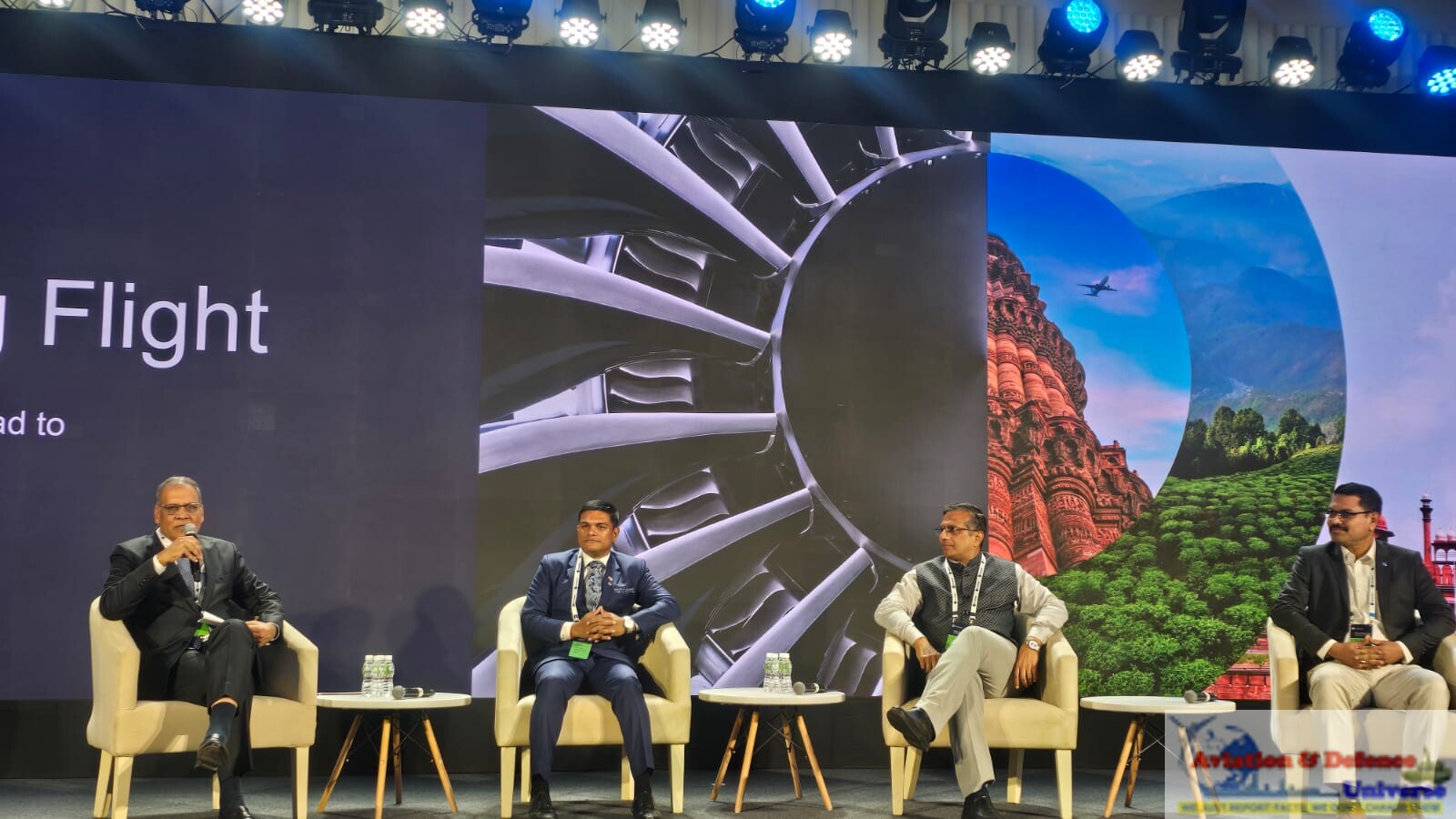
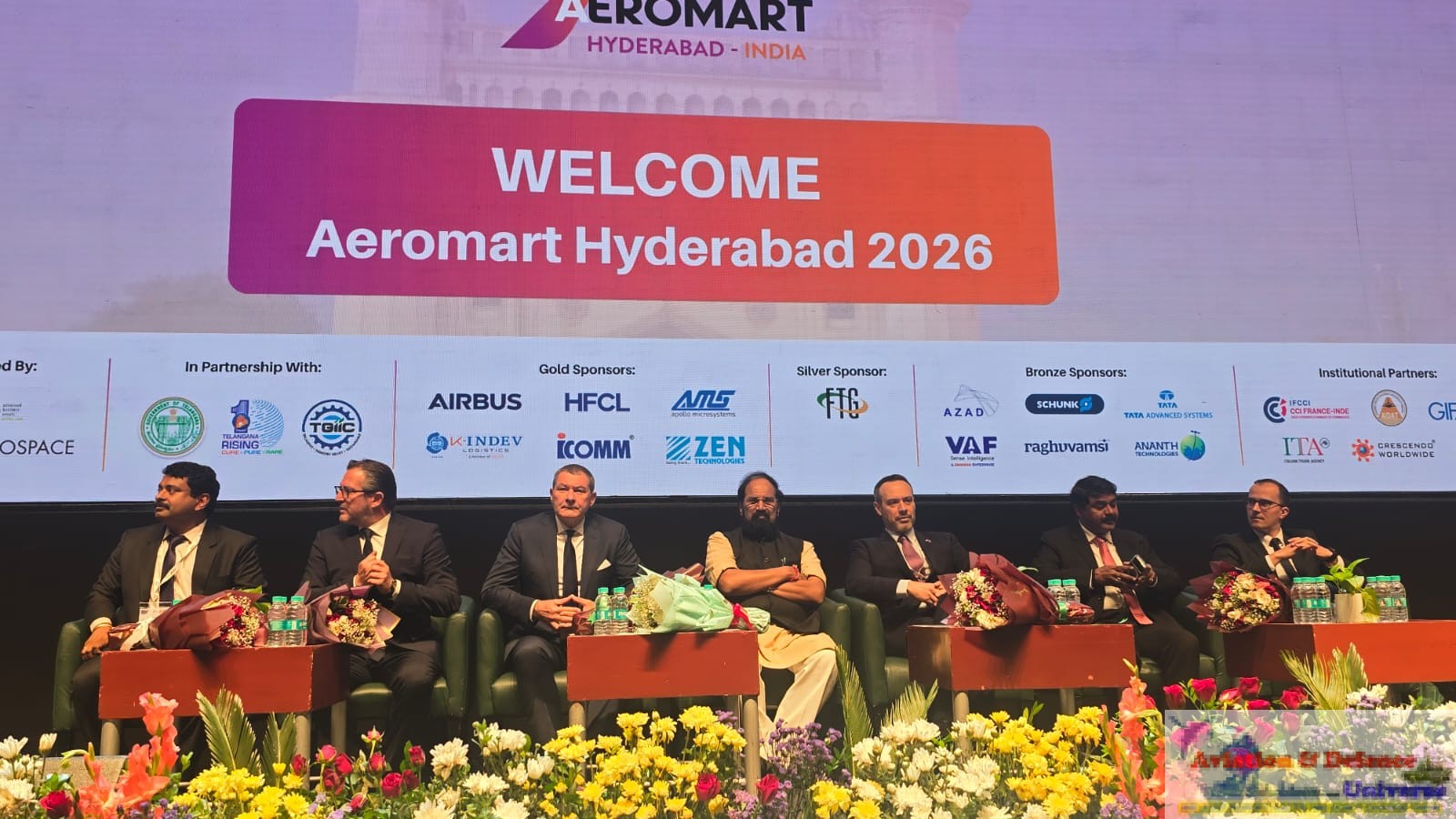
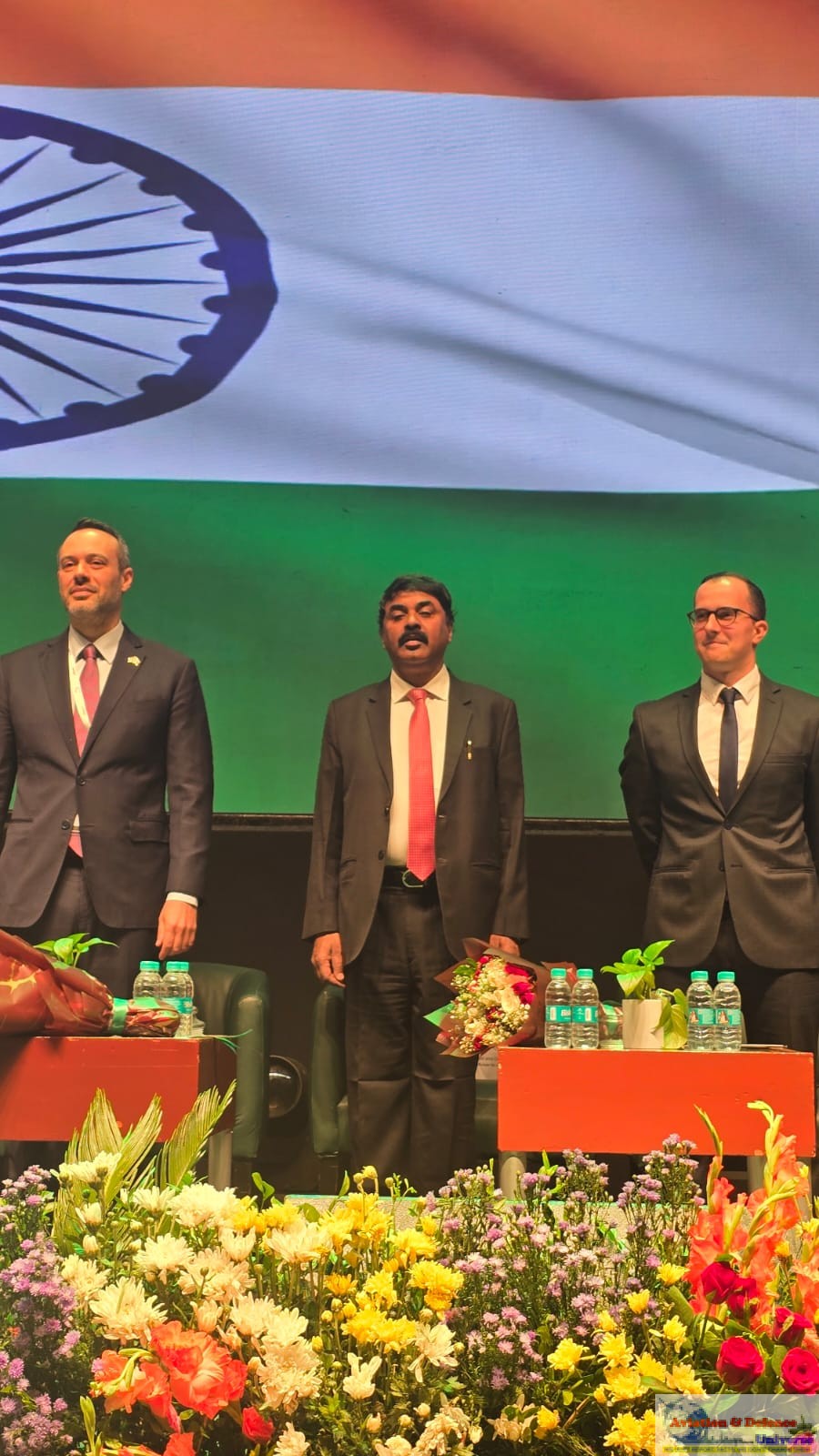
Hyderabad. 30 June 2026. While the opening session of Aeromart Hyderabad 2026 highlighted Telangana’s vision and India’s emergence as a global aerospace manufacturing powerhouse, the other part of the inaugural session shifted the spotlight to the international partnerships that are fuelling this transformation. Bringing together senior representatives from Airbus, one of the world’s leading aerospace companies, and the Consuls General of France and Italy, the session underscored how India’s aerospace ambitions are 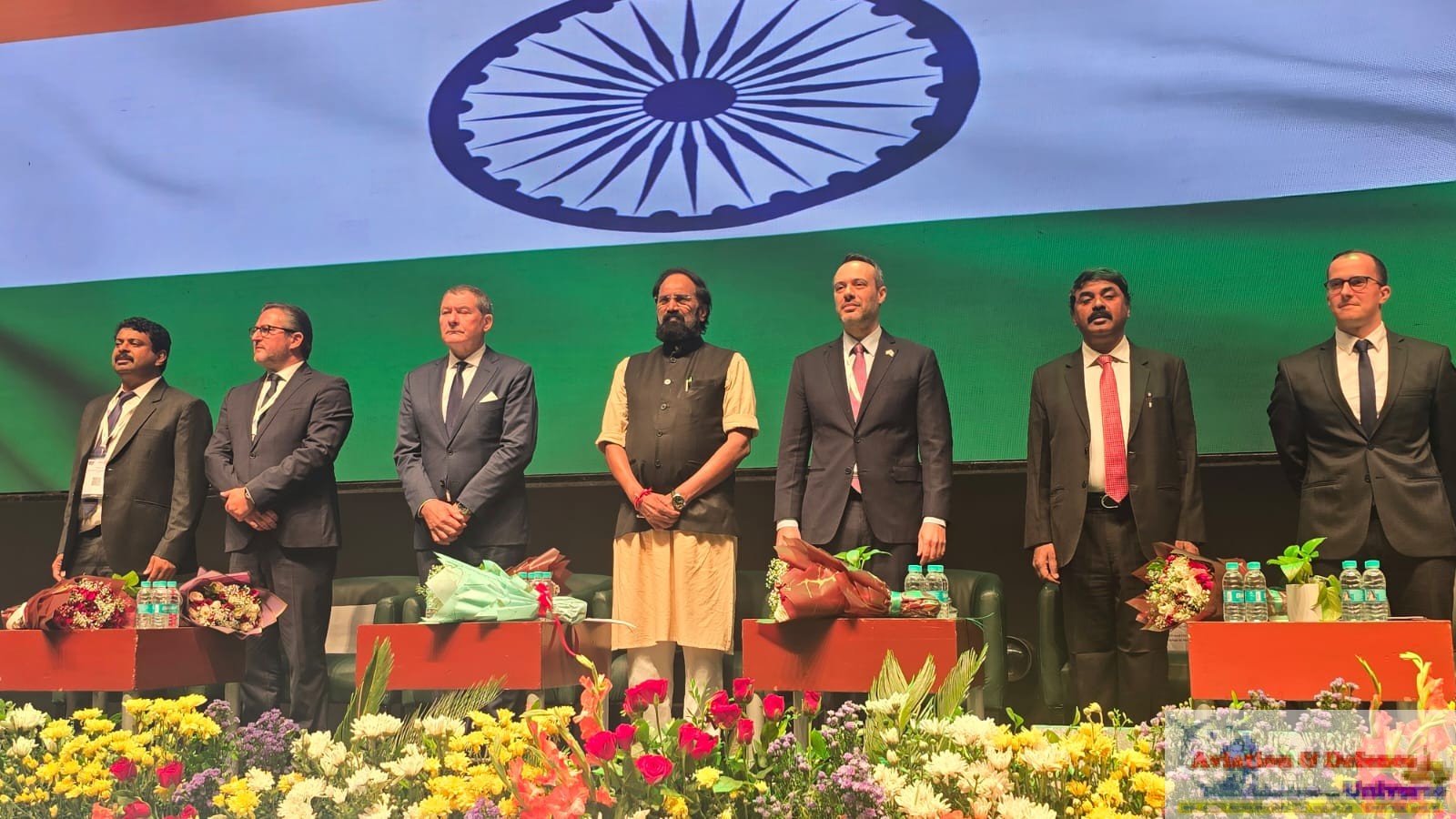 increasingly being strengthened through strategic global collaborations. The addresses by Andrea Schwartz, Head of Regional Procurement, Airbus, Marc Lamy, Consul General of France, and Giandomenico Milano, Consul General of Italy, reflected a common belief that India is no longer viewed merely as a high-growth aviation market but as a trusted partner for design, engineering, manufacturing, innovation and resilient global supply chains. Together, the three speakers outlined a compelling roadmap for deeper industrial cooperation, technology partnerships, co-development and investment, reaffirming that the future of global aerospace will be built through strong international alliances with India at their core.
The aerospace partnership between India and Italy is steadily emerging as a dynamic pillar of bilateral strategic cooperation, bringing together Italy’s globally acclaimed strengths in precision engineering, advanced manufacturing, avionics, helicopters, space technologies and aerospace systems with India’s rapidly expanding industrial base, engineering talent and innovation ecosystem. As both nations deepen their Special Strategic Partnership, collaboration is increasingly shifting from conventional trade to co-development, co-production, technology transfer and resilient supply-chain integration. Italian companies are actively exploring opportunities in Make in India and Atmanirbhar Bharat, while Indian manufacturers are becoming valuable partners in global aerospace value chains. Adani and Leonardo partnership is a feather in this cap. With shared ambitions in advanced materials, artificial intelligence, unmanned systems, space technologies and next-generation manufacturing, the Indo-Italian aerospace relationship is evolving into a future-focused alliance that promises to accelerate innovation, industrial growth and global competitiveness for both nations.
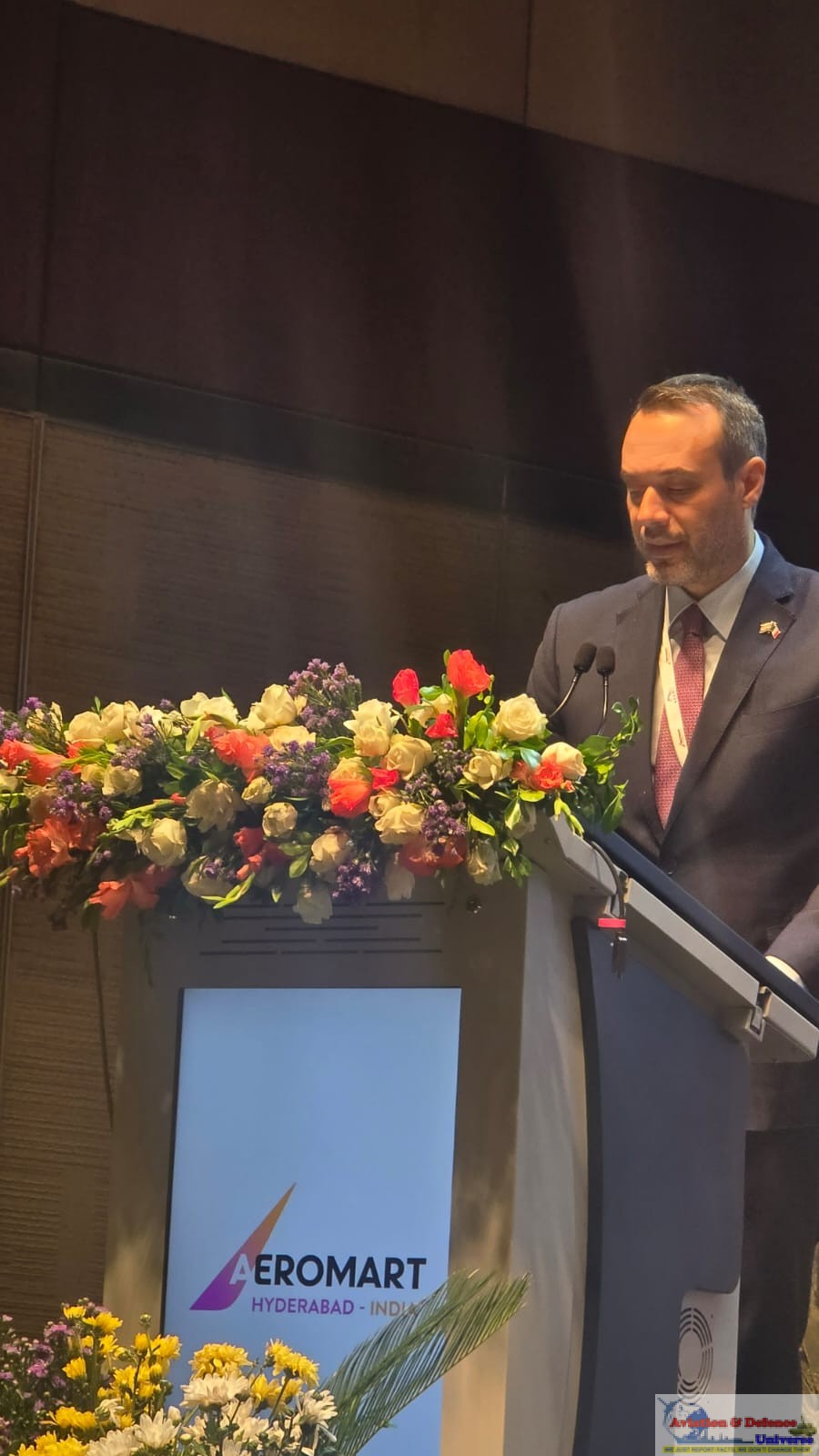 Delivering the special address of the inaugural session, Giandomenico (John Domenico) Milano, Consul General of Italy, presented a compelling vision of the expanding aerospace and defence partnership between India and Italy. He emphasised that the relationship has evolved beyond trade into one centred on co-development, innovation and long-term industrial collaboration.
Welcoming delegates to Aeromart Hyderabad 2026, Milano highlighted the significance of the strong Italian industry presence at the convention. Setting the tone for his address, he remarked, “The presence of Italian companies here today sends a very clear message. We are here to develop technologies together, manufacture together, invest together and participate together in a global aerospace supply chain.” He then made one of the keynote statements of his address, underlining Italy’s changing perception of India. Describing the foundation of the bilateral relationship, Milano stated, “Italy does not see India as merely a market. Italy sees India as a strategic industrial partner.” Reflecting on the growing engagement between the two countries, he noted that this was the second major aerospace delegation he had accompanied to Hyderabad within a year.
Speaking about the continuity of industrial engagement, he said, “I am particularly proud that this is the second major aerospace delegation that I have accompanied to Hyderabad in less than a year. Following our visit in September to Hyderabad, Bengaluru and New Delhi, we have returned today with new companies, new technologies and new opportunities.” Milano was equally keen to point out that cooperation was flowing in both directions. Highlighting India’s growing international engagement, he observed, “Last month, I was delighted to see IN-SPACe lead a delegation of nine leading Indian companies to Venice for the Space Meetings Veneto. It was a highly successful mission that created fresh opportunities for collaboration and partnership.”
He said these exchanges reflected Italy’s long-term commitment to India’s aerospace ambitions. Reaffirming Italy’s commitment, Milano remarked, “This continuity reflects Italy’s long-term commitment to India’s aerospace ecosystem and our determination to build structured industrial partnerships.” Turning to the broader diplomatic landscape, he referred to the recent meeting between the Prime Ministers of India and Italy. Highlighting the strengthening political relationship, he said, “Last month Prime Minister Narendra Modi visited Rome and met Prime Minister Giorgia Meloni. During that visit, our leaders elevated bilateral relations to a Special Strategic Partnership, the highest level within our bilateral framework.”
 Explaining the significance of this development, Milano observed, “Building upon the Joint Strategic Action Plan 2025–2029, this partnership provides a stronger framework for cooperation in defence, aerospace, space, advanced manufacturing, critical technologies, artificial intelligence, research and resilient supply chains.”
Milano described the complementary strengths that make India and Italy natural industrial partners. Contrasting the capabilities of both countries, he remarked, “Italy brings specialised engineering, advanced industrial technologies, manufacturing excellence and a strong culture of innovation. India brings engineering talent, industrial dynamism, expanding demand and one of the world’s most vibrant research ecosystems.” Summing up this synergy in a memorable phrase, he declared, “This is the natural meeting point between ‘Made in Italy’ and ‘Make in India’.”
He also pointed to the ambitious bilateral trade target agreed by both governments. Looking ahead, Milano said, “Our leaders have reaffirmed the objective of reaching and exceeding €20 billion in bilateral trade by 2029. Achieving that objective will require stronger industrial collaboration, investment and technology partnerships, with aerospace and defence playing a central role.” He expressed optimism that the proposed EU–India Free Trade Agreement would further strengthen cooperation. Speaking about future economic integration, he observed, “The EU–India Free Trade Agreement will create a more favourable environment not only for trade but, more importantly, for investment and long-term industrial cooperation.”
Milano then identified four major trends that he believes will define the future of Italy–India aerospace collaboration. Introducing the roadmap, he stated, “The first trend is the movement towards co-production and co-development. The second is the rapid growth of commercial space cooperation. The third is supply-chain localisation and integration, and the fourth is collaboration in next-generation technologies including artificial intelligence, autonomous systems, digital engineering, advanced materials and green propulsion.”
He stressed that future cooperation must extend well beyond manufacturing. Calling for deeper collaboration, Milano said, “Italy and India should work together by connecting companies, universities, research centres, start-ups and testing facilities. We should promote joint research, talent mobility and the transformation of promising technologies from laboratories into industrial production.” Describing India as one of the world’s most attractive aerospace destinations, he highlighted its expanding capabilities.
Reflecting on India’s rise, he remarked, “India is emerging as one of the world’s most important aerospace markets and manufacturing locations. Its expanding civil aviation sector, growing defence capabilities, ambitious space programme and strong engineering base are creating opportunities across the entire value chain.” He added that Italy’s capabilities complement India’s industrial strengths perfectly. Highlighting the scope for partnership, Milano observed, “Italy brings internationally recognised capabilities in specialised machinery, precision components, avionics, helicopters, automation, testing, advanced materials and space technologies. This combination makes our countries natural partners in aerospace and defence.”
Concluding his address, Milano reminded delegates that lasting strategic partnerships are built not merely through political declarations but through sustained industrial engagement. Delivering the closing message of the inaugural session, he said, “Strategic partnerships are not built through declarations. They are built through contracts, investments, joint ventures, research programmes and relationships of trust. “Encouraging delegates to maximise the opportunities available during Aeromart Hyderabad 2026, he concluded, “Exchange ideas, identify complementarities, discuss concrete projects and explore opportunities for joint manufacturing, investment, research and technology development.”
 The aerospace partnership between India and France stands as one of the most enduring and strategically significant bilateral collaborations in the world. Built over decades on a foundation of mutual trust, technology sharing and industrial cooperation, the relationship has evolved far beyond buyer-seller dynamics into one of co-development, co-production and long-term capability building. From the iconic Rafale fighter aircraft and Scorpène submarines to Airbus’ expanding manufacturing and engineering footprint, Safran’s investments in propulsion and maintenance, MBDA’s missiles on Rafale, it’s joint venture with L&T and the growing participation of French companies in India’s Make in India and Atmanirbhar Bharat initiatives, the partnership spans the entire aerospace and defence value chain. Today, as global supply chains undergo transformation, Indo-French cooperation is entering a new era—one driven by joint innovation, advanced manufacturing, research and development, space collaboration and resilient industrial ecosystems, making both nations indispensable partners in shaping the future of global aerospace.
Continuing the international narrative of the inaugural session, Marc Lamy, Consul General of France in Bangalore, highlighted the enduring strategic partnership between France and India, describing aerospace and defence as among the strongest pillars of bilateral cooperation. His address reflected France’s confidence in Telangana’s emergence as one of the world’s most promising aerospace destinations and reaffirmed the commitment of French industry to India’s long-term industrial growth. Welcoming delegates to Aeromart Hyderabad 2026, Lamy expressed his appreciation for the opportunity to witness Hyderabad’s continuing transformation into a global aerospace hub. Opening his address, he said, “Honourable Minister, distinguished guests, ladies and gentlemen, a very good day to all of you.” He began by recognising Telangana’s growing role within the international aerospace supply chain, noting that global manufacturers increasingly view Hyderabad as a preferred destination for aerospace production and engineering.
Highlighting this transformation, he remarked, “I would like to welcome you to one of the world’s fastest-growing aerospace supply chains, with leading companies already operating successfully from Telangana.” Lamy observed that Aeromart Hyderabad itself had become evidence of Telangana’s remarkable industrial progress. Commending the efforts of the state government, he said, “The growing scale of Aeromart Hyderabad is a clear recognition of Telangana’s increasing importance as an international aerospace hub. The work carried out by the Government of Telangana in transforming Hyderabad into a global aerospace destination has been remarkable.” He noted that Hyderabad had rapidly established itself as one of India’s foremost aviation centres through the successful hosting of major international events.
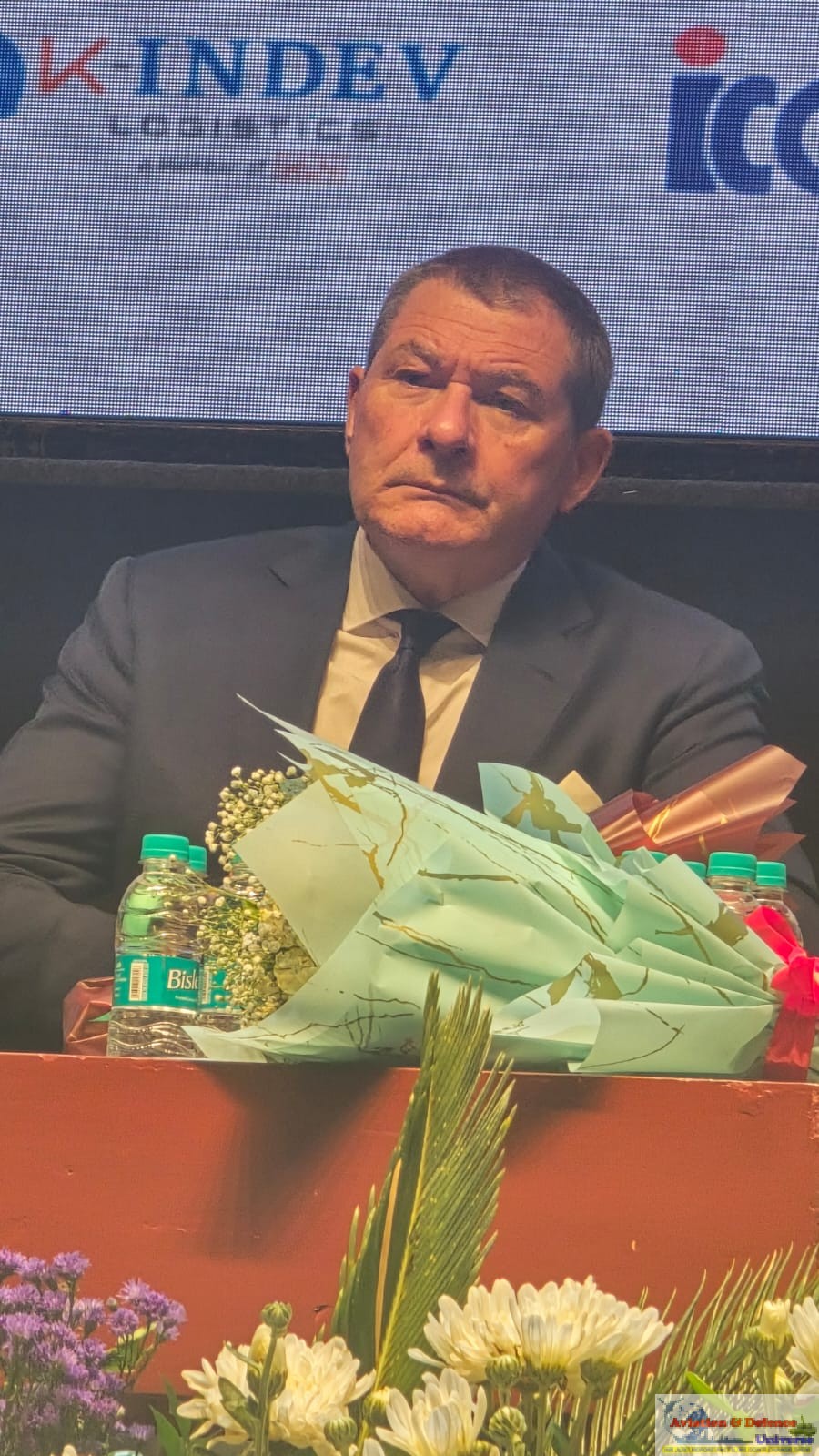 Reflecting on the city’s growing global stature, he observed, “Following the successful organisation of Wings India earlier this year, Hyderabad has firmly established itself on the global aviation map.” Turning to bilateral relations, Lamy emphasised that France has consistently regarded India as one of its closest strategic partners in aerospace and defence. Reaffirming France’s commitment, he remarked, “It gives me great satisfaction that France remains one of India’s principal partners in the aeronautical sector, and equally an important partner for Telangana.”
According to Lamy, French companies have steadily expanded their engagement with India, moving beyond exports to establish manufacturing, engineering and innovation capabilities within the country. Describing this long-term approach, he said, “French aerospace companies have committed themselves not only to India as a major market but also as a centre for production, engineering, innovation and long-term industrial cooperation.” Among these companies, Airbus remains one of the strongest examples of Indo-French industrial collaboration. Highlighting Airbus’ longstanding presence, he observed: “Airbus has been partnering with India for more than fifty years and continues to expand its industrial footprint, contributing significantly to India’s aerospace ecosystem.”
Lamy explained that the relationship between France and India has matured considerably over recent years, extending beyond commercial ties into a comprehensive strategic partnership encompassing defence, technology, innovation and industrial collaboration. Speaking about this evolution, he remarked, “Our partnership has evolved into a comprehensive strategic relationship built on mutual trust, shared innovation and long-term industrial cooperation.” He stressed that aerospace and defence remain among the defining pillars of this partnership. Summarising their importance, he stated, “Aeronautics and defence continue to be among the core pillars of the strategic partnership between France and India.”
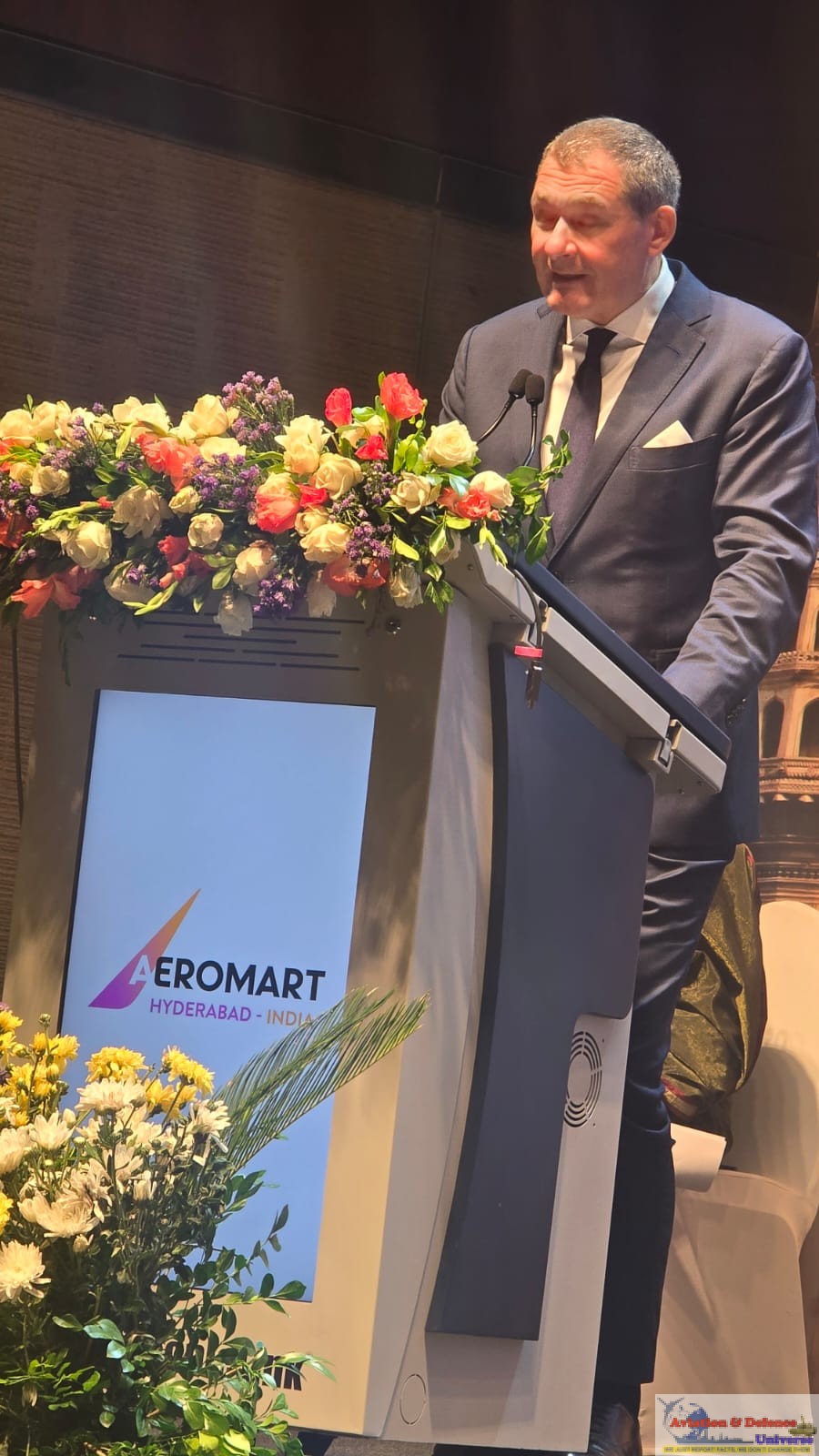 Lamy’s address complemented the messages delivered earlier by Italy and Airbus, reinforcing a common international perspective: India is no longer viewed merely as a destination for aerospace sales but as an indispensable partner in global manufacturing, engineering, research and supply-chain development.
The partnership between Airbus and India has evolved over more than five decades into one of the most comprehensive and strategically important relationships in the global aerospace industry. What began as an aircraft supplier-customer relationship has transformed into a deep industrial partnership encompassing aircraft manufacturing, engineering, digital technologies, research and development, maintenance, skill development and supply-chain integration. Today, Airbus sources billions of dollars’ worth of aerospace components and services annually from India, while thousands of Indian engineers contribute to the design, development and support of Airbus programmes worldwide. Through landmark initiatives such as the C-295 transport aircraft manufacturing programme, the establishment of Final Assembly Lines in India, expanding collaborations with Indian suppliers, and sustained investments in innovation and talent, Airbus has become a key contributor to the country’s Make in India and Atmanirbhar Bharat vision. As India emerges as one of the world’s fastest-growing aviation markets and a global manufacturing hub, the Airbus–India partnership is increasingly defined by co-development, localisation and shared technological advancement, making it a model for international aerospace collaboration.
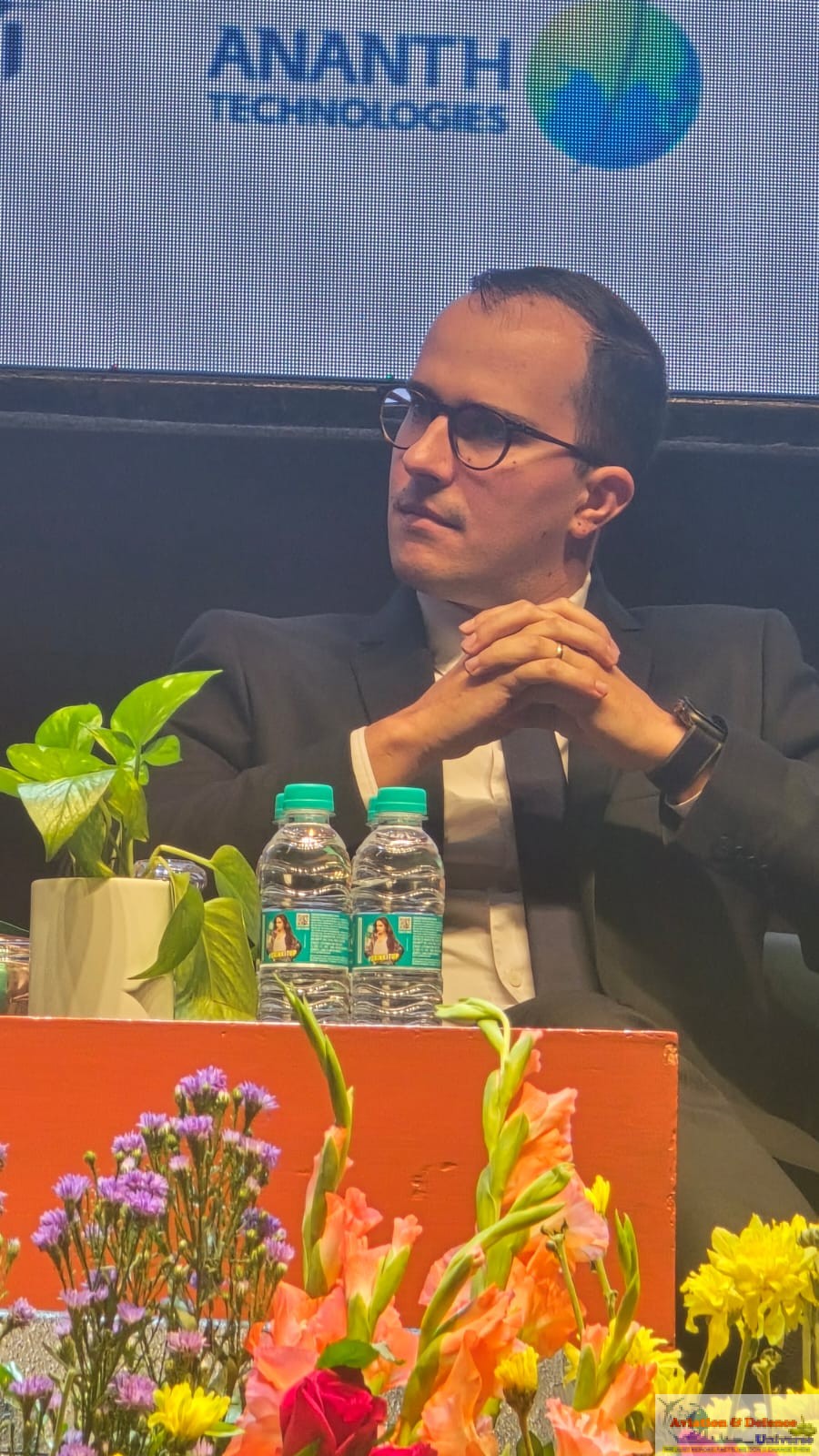 Delivering the keynote industry address, Andrea Schwartz, Head of Regional Procurement, Airbus, painted a compelling picture of India’s rapidly expanding role in the global aerospace industry, describing the country as one of Airbus’ most important long-term industrial partners.
Introducing Airbus’ global vision, he highlighted the company’s overarching purpose. Explaining Airbus’ philosophy, Schwartz remarked, “Our purpose is simple yet profound—we pioneer sustainable aerospace for a safe and united world. Achieving that vision requires a strong and resilient supply chain, and India will play a defining role in helping us pioneer aerospace for decades to come.” He then presented the global outlook for commercial aviation, explaining that the demand for new aircraft would continue to grow steadily over the next two decades. Highlighting the unprecedented market opportunity, he observed, “Global air travel is expected to grow by 3.6 per cent annually over the next twenty years. Consequently, the global commercial fleet will almost double—from 25,000 aircraft today to around 49,000 aircraft by 2044.”
Putting those numbers into perspective, Schwartz illustrated the enormous production challenge facing the aerospace industry. Emphasising the scale of manufacturing required, he said, “Collectively, our industry will need to deliver more than 43,000 aircraft over the next twenty years. Think about that for a moment—that is over 2,000 aircraft every year or six aircraft every single day.” Turning his attention to India, he noted that the country’s aviation growth is expected to significantly outpace global averages.
Describing India’s remarkable trajectory, Schwartz stated, “While global aviation is expected to grow at 3.6 per cent annually, India’s domestic air travel is projected to grow at an astonishing 8.9 per cent every year, the highest growth rate among all major aviation markets.” He added that India’s fleet expansion alone would create unprecedented opportunities for the aerospace manufacturing ecosystem. Highlighting future aircraft demand, he remarked, “India alone will require more than 3,200 new aircraft over the next twenty years, and our current order backlog already reflects this tremendous demand.” Explaining Airbus’ leadership in the Indian market, Schwartz pointed to the company’s dominant market share. Reiterating Airbus’ position, he said, “Nearly 70 per cent of all aircraft ordered by Indian airlines are Airbus aircraft, and Indian carriers today account for 14 per cent of Airbus’ global commercial aircraft backlog. Together, we are providing the wings for India’s economic ascent.”
Moving beyond civil aviation, he highlighted the enormous opportunities emerging in India’s defence sector. Speaking about defence modernisation, Schwartz observed, “India’s defence budget today stands at US$84 billion annually, making it the world’s fifth-largest. We foresee an opportunity of approximately US$14 billion over the next fifteen years across transport aircraft, helicopters and combat enablers.”
Summarising India’s overall opportunity, he stated, “Whether we speak about civil aviation, defence or space, the opportunities in India are simply unmatched.” Schwartz attributed much of this transformation to the policy support extended by the Government of India. Recognising the government’s vision, he remarked, “This growth has not happened in a vacuum. It has been orchestrated by a visionary and supportive government through policy reforms that have consistently improved the ease of doing business.” He cited the rapid expansion of India’s airport infrastructure as evidence of this transformation.
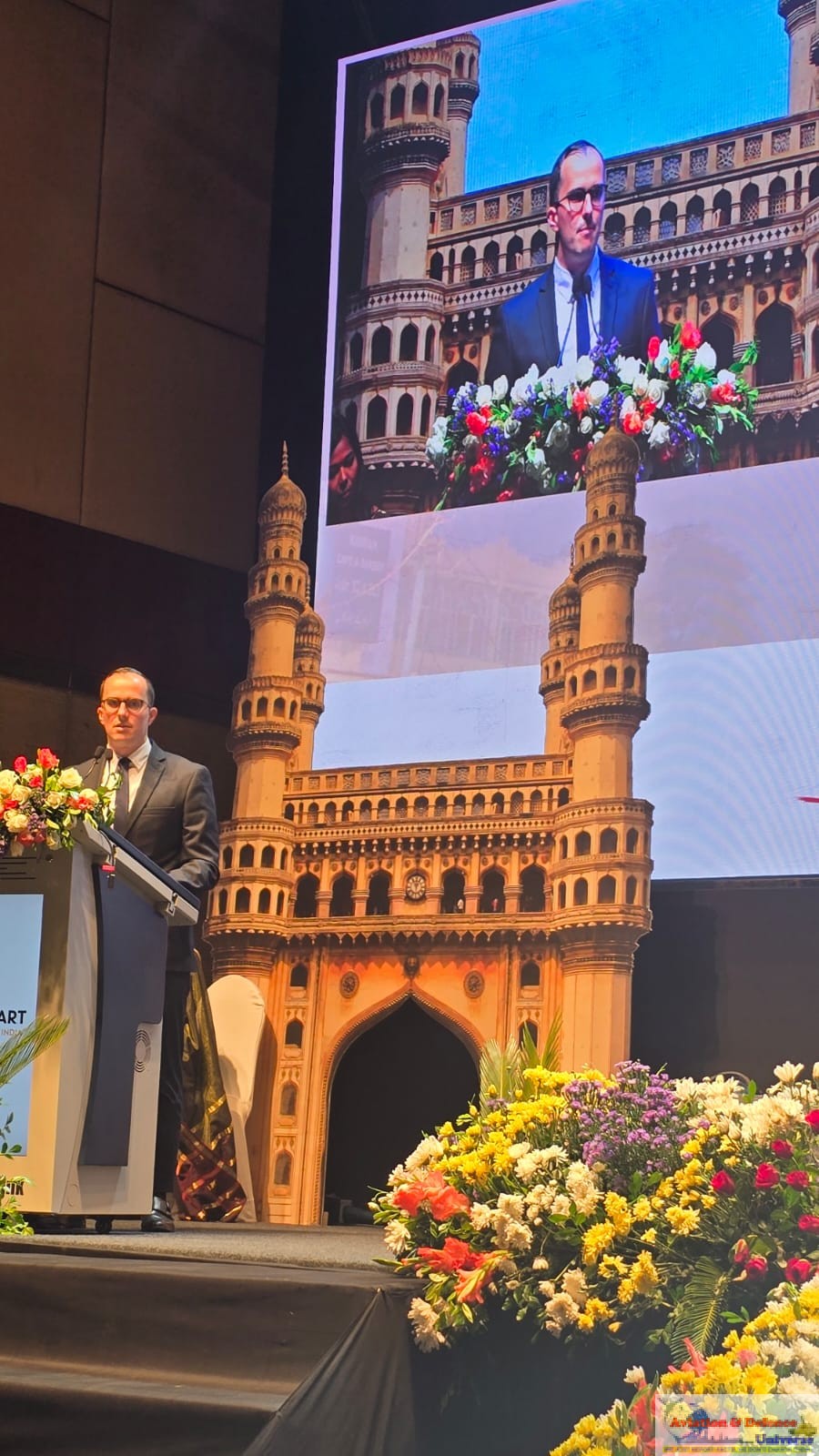 Highlighting infrastructure growth, he said, “The number of airports has increased from 74 in 2014 to more than 160 today, with a clear roadmap to reach 350 to 400 airports by 2047.” Turning to defence procurement reforms, Schwartz said Airbus viewed India’s localisation requirements not as constraints but as catalysts for industrial growth. Sharing Airbus’ perspective, he observed, “I do not see localisation requirements as a blocker. I see them as an opportunity and a catalyst.” He pointed to Airbus’ expanding industrial footprint in India as proof of that commitment. Illustrating Airbus’ partnerships, Schwartz noted, “These policies have encouraged partnerships such as the Tata Advanced Systems C-295 programme, the Final Assembly Line at Vadodara, and more recently the H125 helicopter Final Assembly Line at Vemagal.” Explaining Airbus’ long-term sourcing strategy, he delivered one of the keynote’s most significant messages. He stated, “India is not just a market. It is one of Airbus’ most important and most promising sourcing bases.”
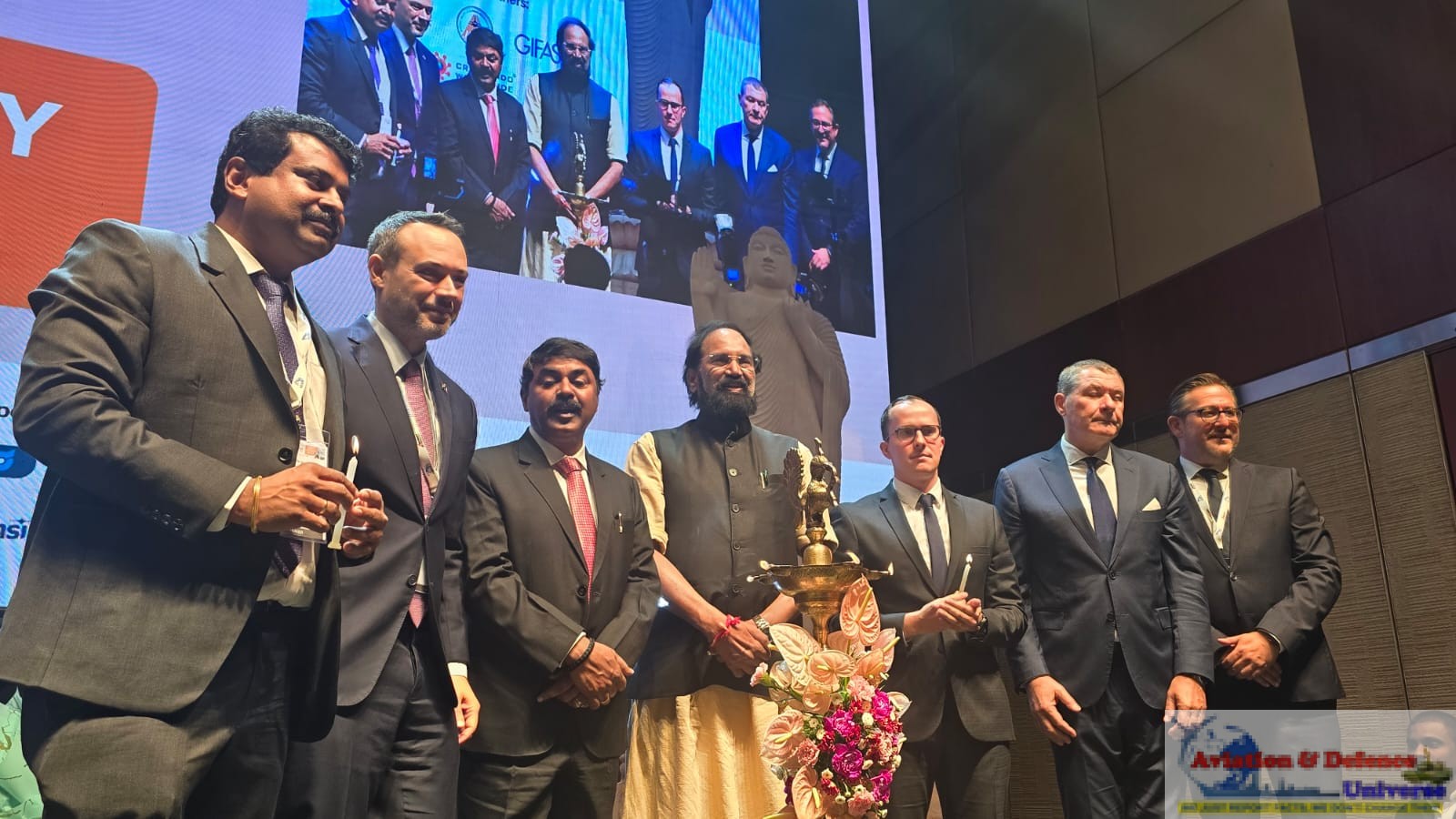 The second part of the inaugural session of Aeromart Hyderabad 2026 demonstrated that the future of aerospace will be shaped not only by technological breakthroughs but by enduring international partnerships built on trust, innovation and shared industrial ambitions. The addresses by Airbus, France and Italy reflected a remarkable convergence of vision—one that sees India as far more than a rapidly expanding aviation market. Instead, India is increasingly recognised as a strategic partner for global manufacturing, engineering excellence, research, technology development and resilient supply chains. As Airbus deepens its industrial footprint, France reinforces a decades-old aerospace alliance and Italy expands its strategic engagement under a new bilateral framework, the message was unequivocal: India’s aerospace ecosystem has matured into a globally trusted destination for co-development, co-production and next-generation innovation. Aeromart Hyderabad 2026 has thus become more than a business convention—it is a catalyst for forging the international partnerships that will define the next era of global aerospace and defence.









































-A4-Size-(2)_page-0001.jpg)